ASTRONOMY PROGRAM PACK, I. Auersbacher, 41 King Street A2, Belleville, NJ 07109; for the TS-2068; $14.95.
When you are showing off your computer to someone who is not a computer user, what type of program do you select? A spreadsheet program? A database? A word processor? No, you’ll probably pick out your best game program with bells, whistles and blinking lights.
Some programs are designed to be more substantive than merely impressive. Most of my computer software is either educational or utilitarian. I enjoy making my computer work for me rather than entertain me.
The Astronomy Program Pack falls into this useful category. One tape contains six programs that astronomers, astronomy educators and others will find both helpful and easy to use.
“Ephemeris” is an ostentatious yet accurate title. “The” Ephemeris is an annual book published jointly by the Naval Observatory in the U.S. and by the Royal Greenwich Observatory in the U.K. It contains calculations for the positions of the Sun, Moon, and planets for each day of the year. So does this program. One peculiarity of the output is the calculation of geocentric positions in non-standard units. The right ascension of the celestial objects is given in degrees and minutes instead of hours and minutes. The user accustomed to the latter must divide the output by fifteen to obtain the positions in more familiar terms.
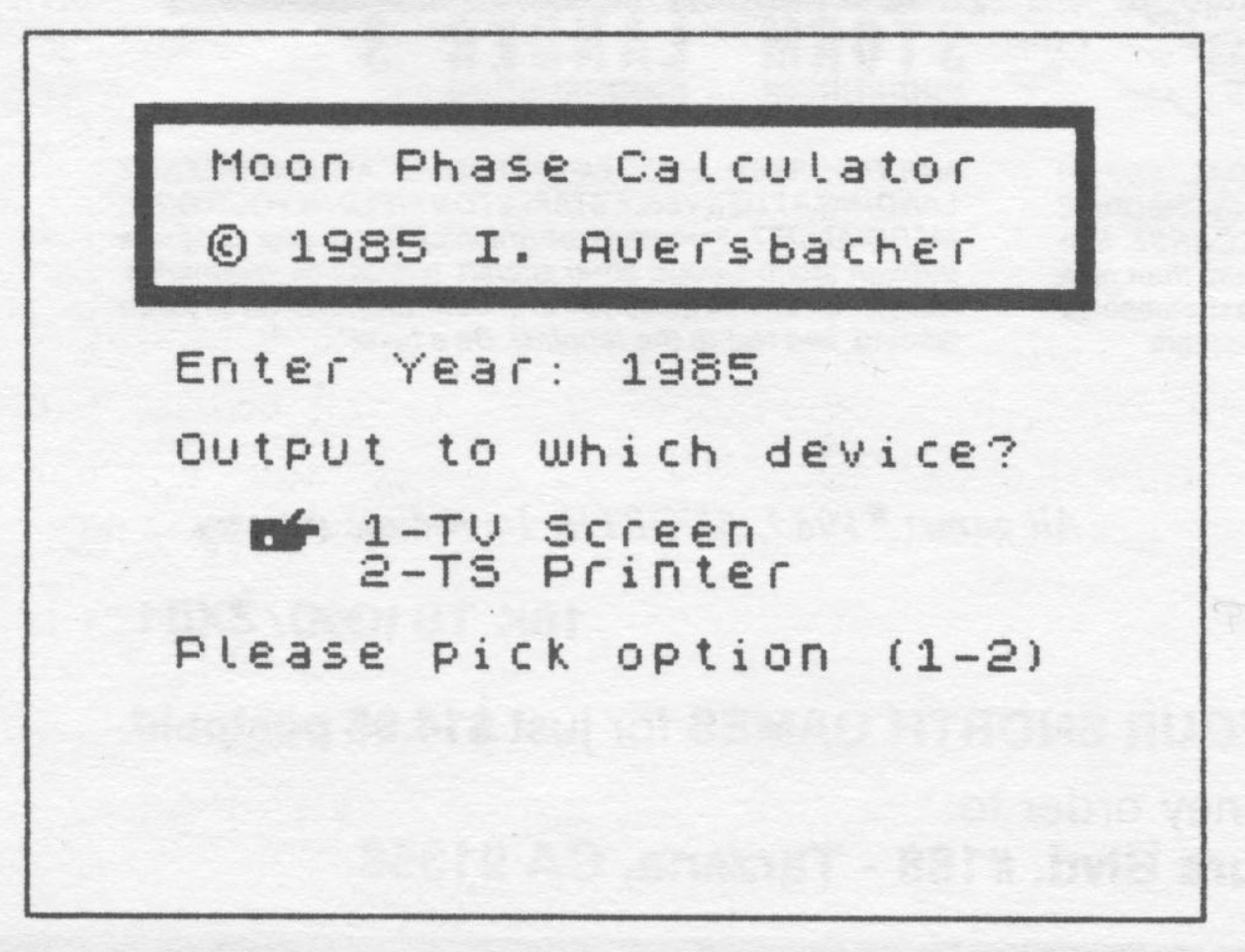
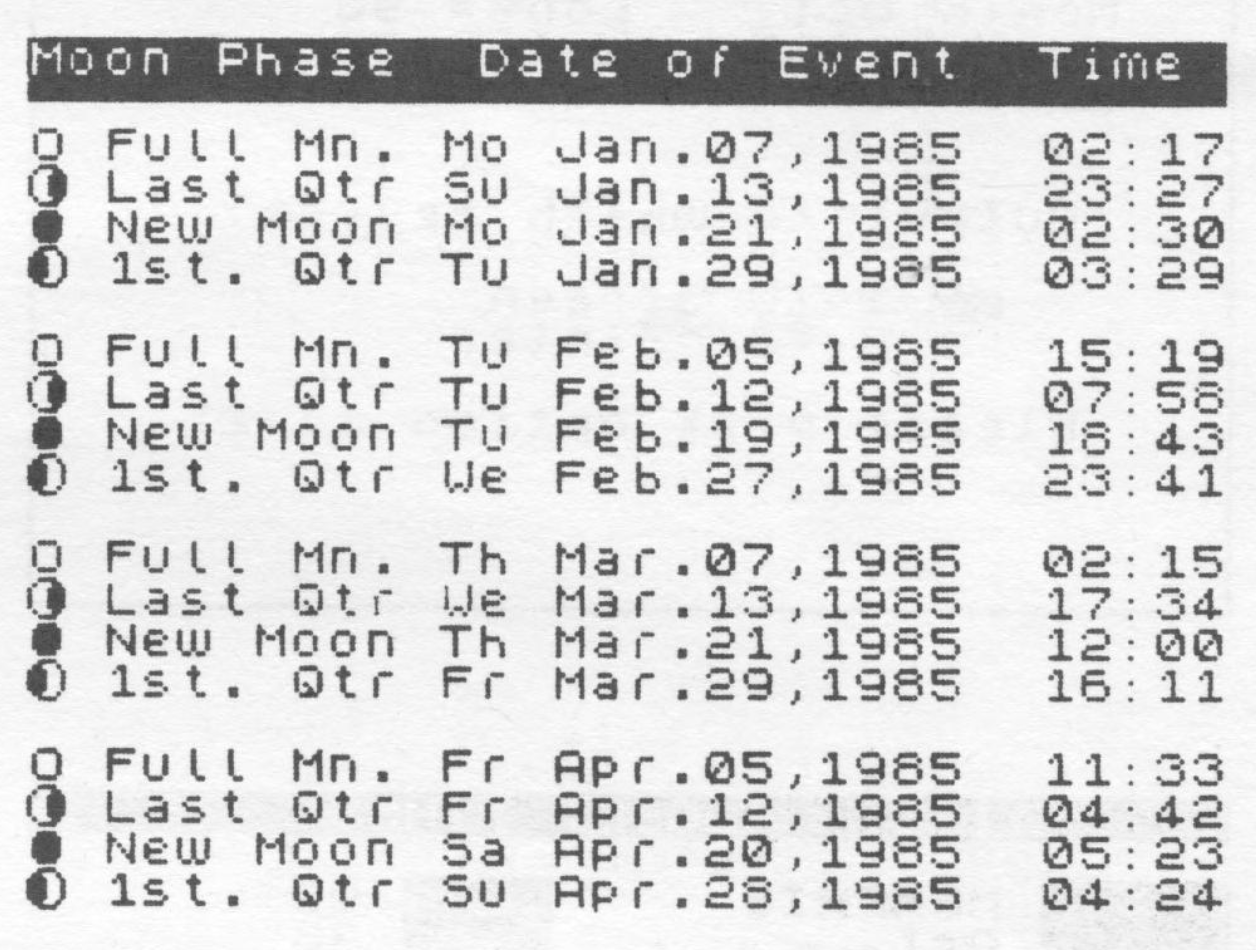
“Moon” is a mild disappointment. This program calculates the dates of moon phases. A more ambitious program would be to calculate the rising and setting times of the Moon. This is a difficult task because of the rapid movement of the Moon, but, I daresay, beyond the skill of the programmer.
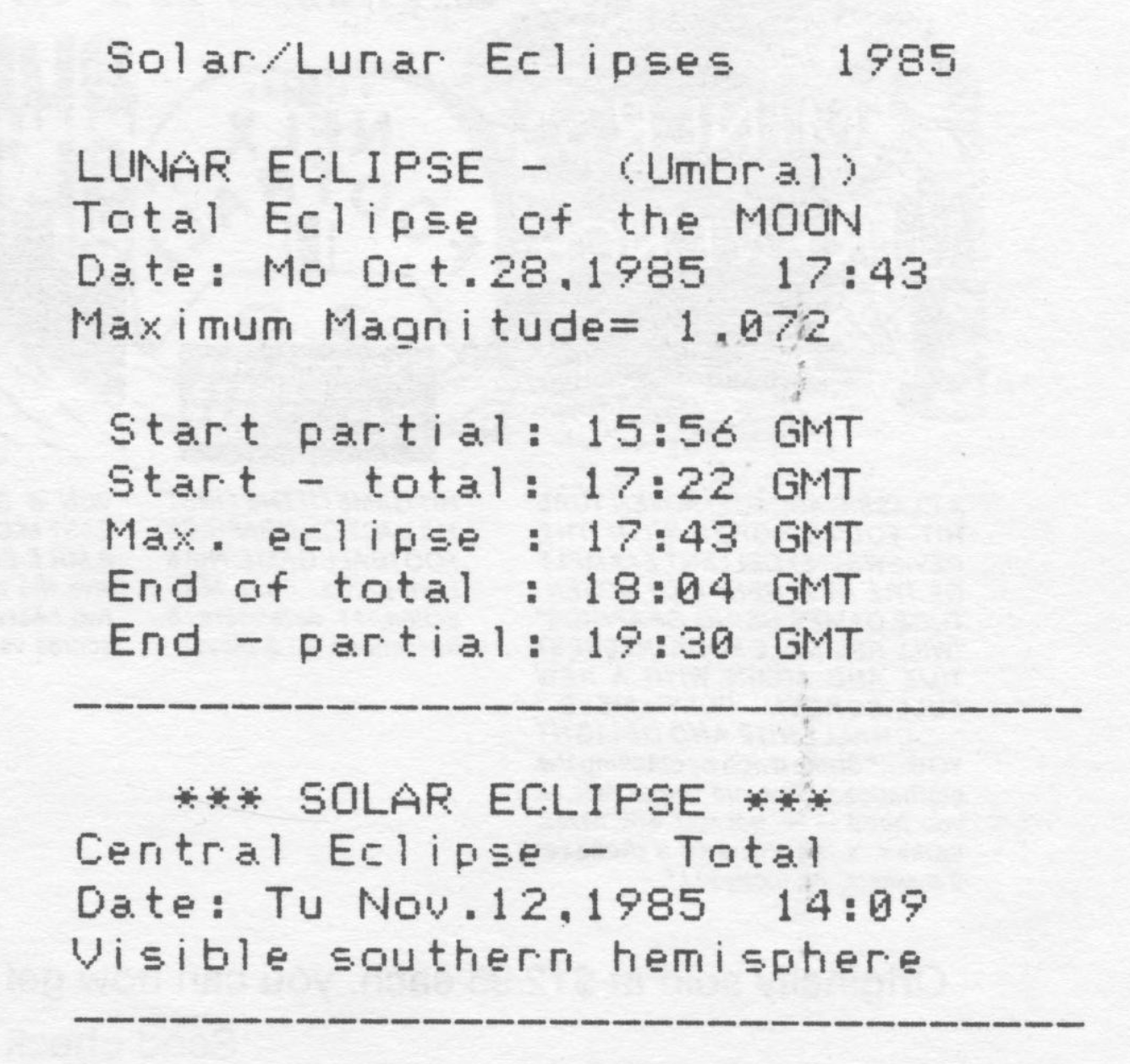
“Eclipse” is a real surprise. I have seen few attempts at calculating solar and lunar eclipse circumstances by any developer of Timex-Sinclair or Spectrum astronomy software. This program is by far the most thorough and most accurate in a challenging area.
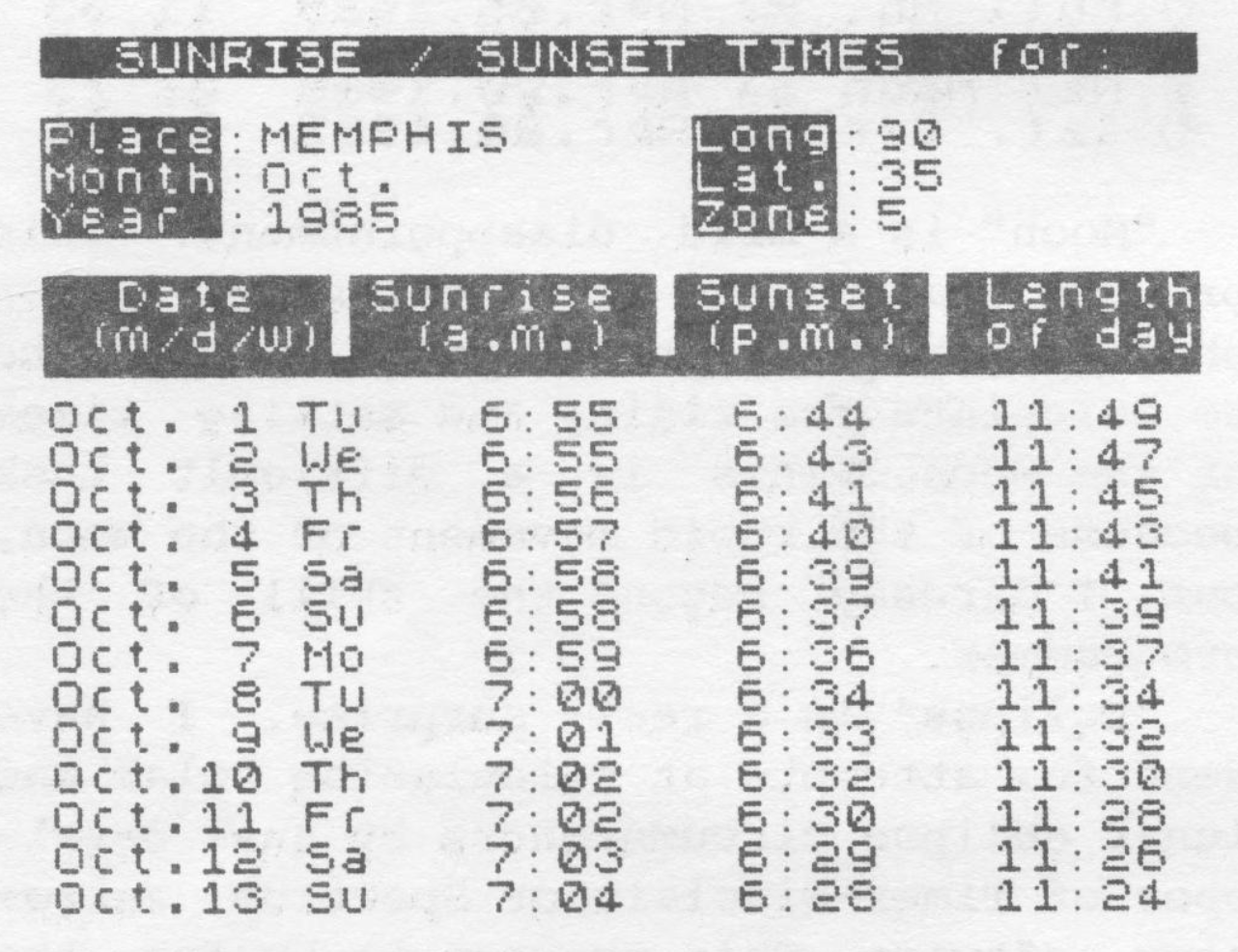
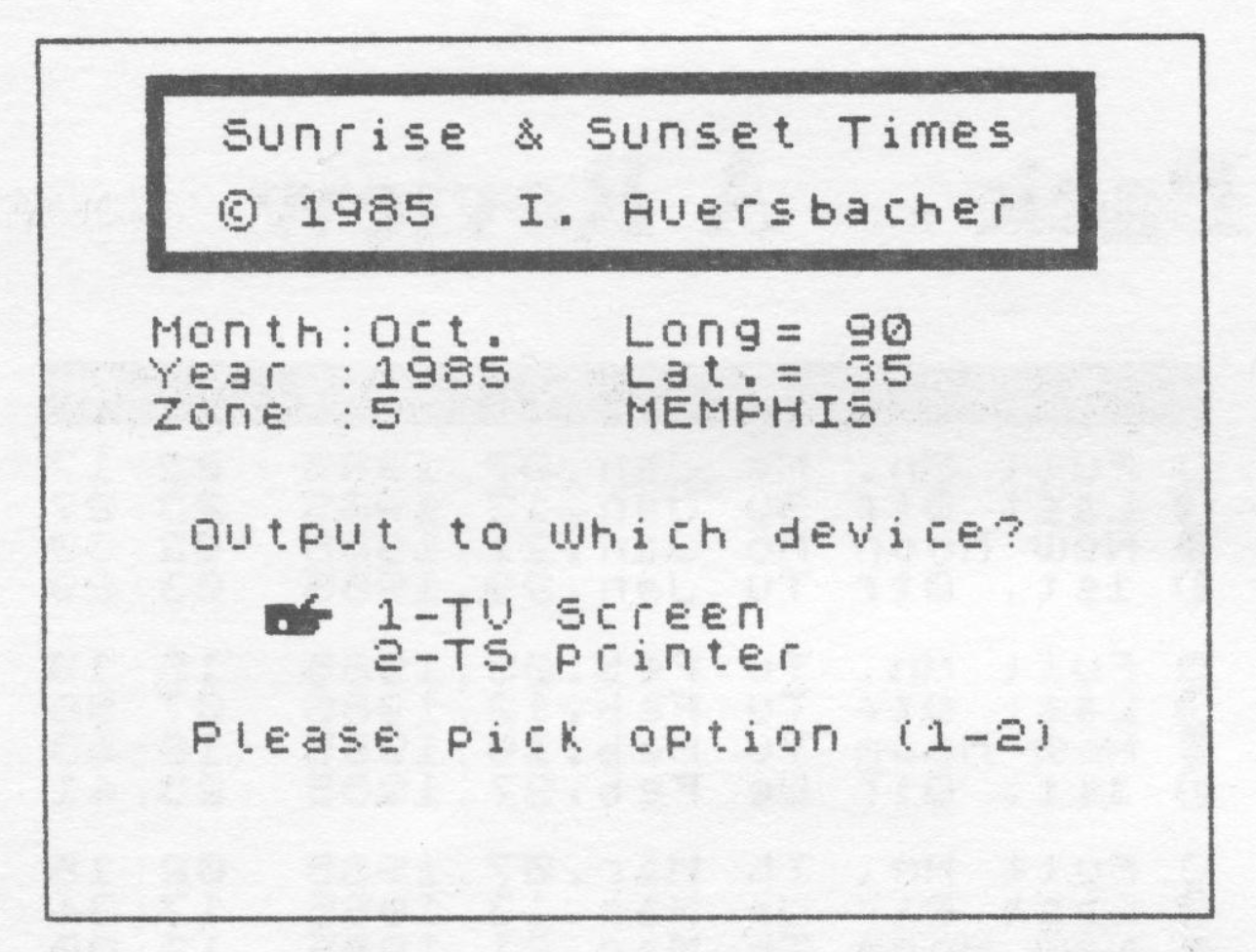
“Sun” will tell you local sunrise/sunset and length of daylight times. This program is in good agreement with the calculations made by a local Naval Air Stattion. A one minute difference is the most that was usually observed.
“Seasons” is a program likely to be of use only to a limited number of users. It will tell you the exact moment of the vernal and autumnal equinoxes and the summer and winter solstices for any year if you can’t wait for a local television weather forecaster to inform you.
“Calendar” is of use to astronomers who need to know how many days have elapsed between certain events. The Gregorian Calendar is difficult to work with in this respect. The Julian Calendar is used for such calculations. The “Calendar” program converts between the two and also draws an accurate monthly calendar on the screen for a wide range of dates.
The documentation contains background material describing the concepts involved. All program output can be seen on the screen or sent to the printer. All six programs operate from identical formats that require only minimal keyboard input. The Astronomy Pack is a good substitute for expensive alternative sources of the information it provides.