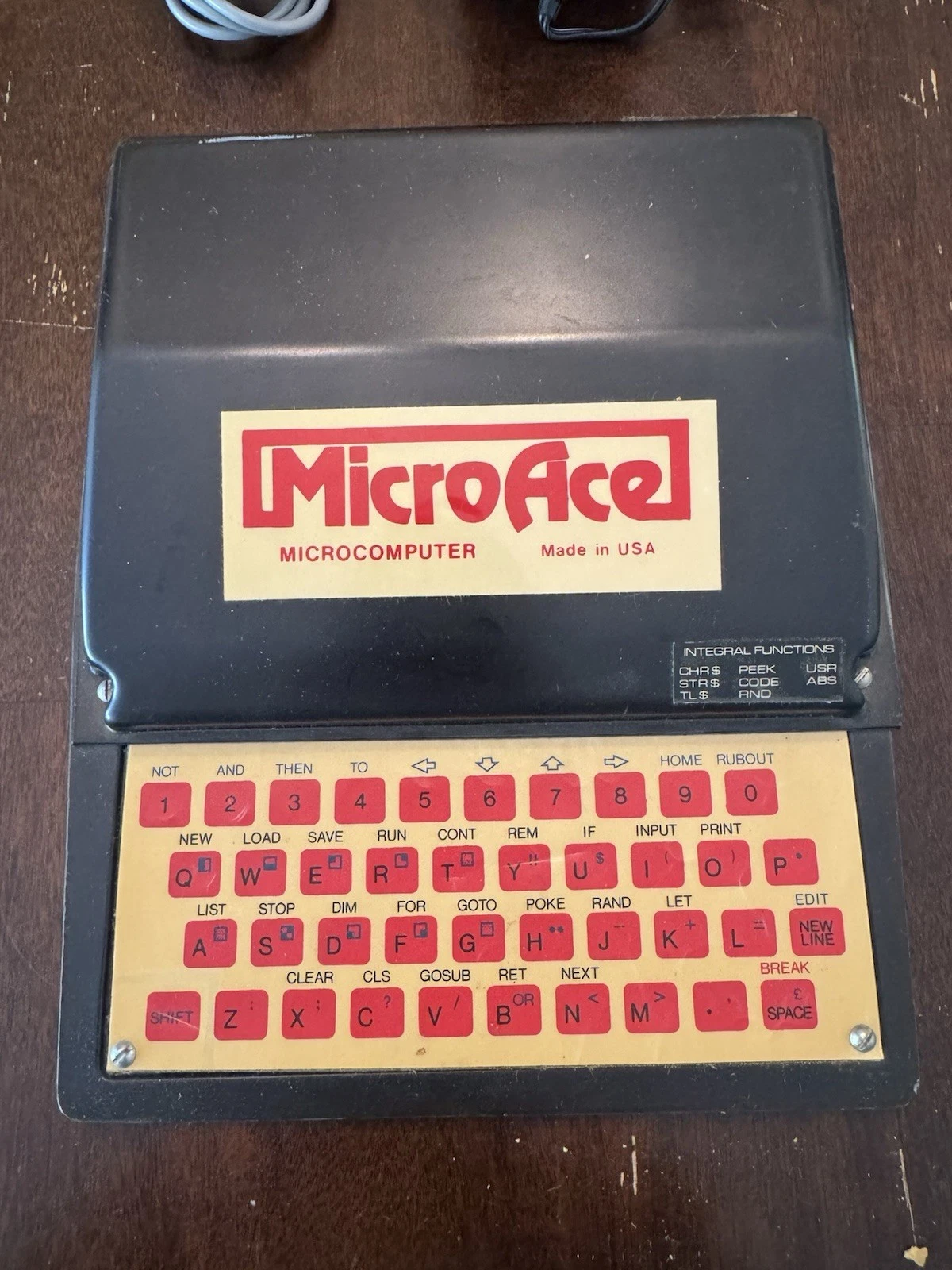
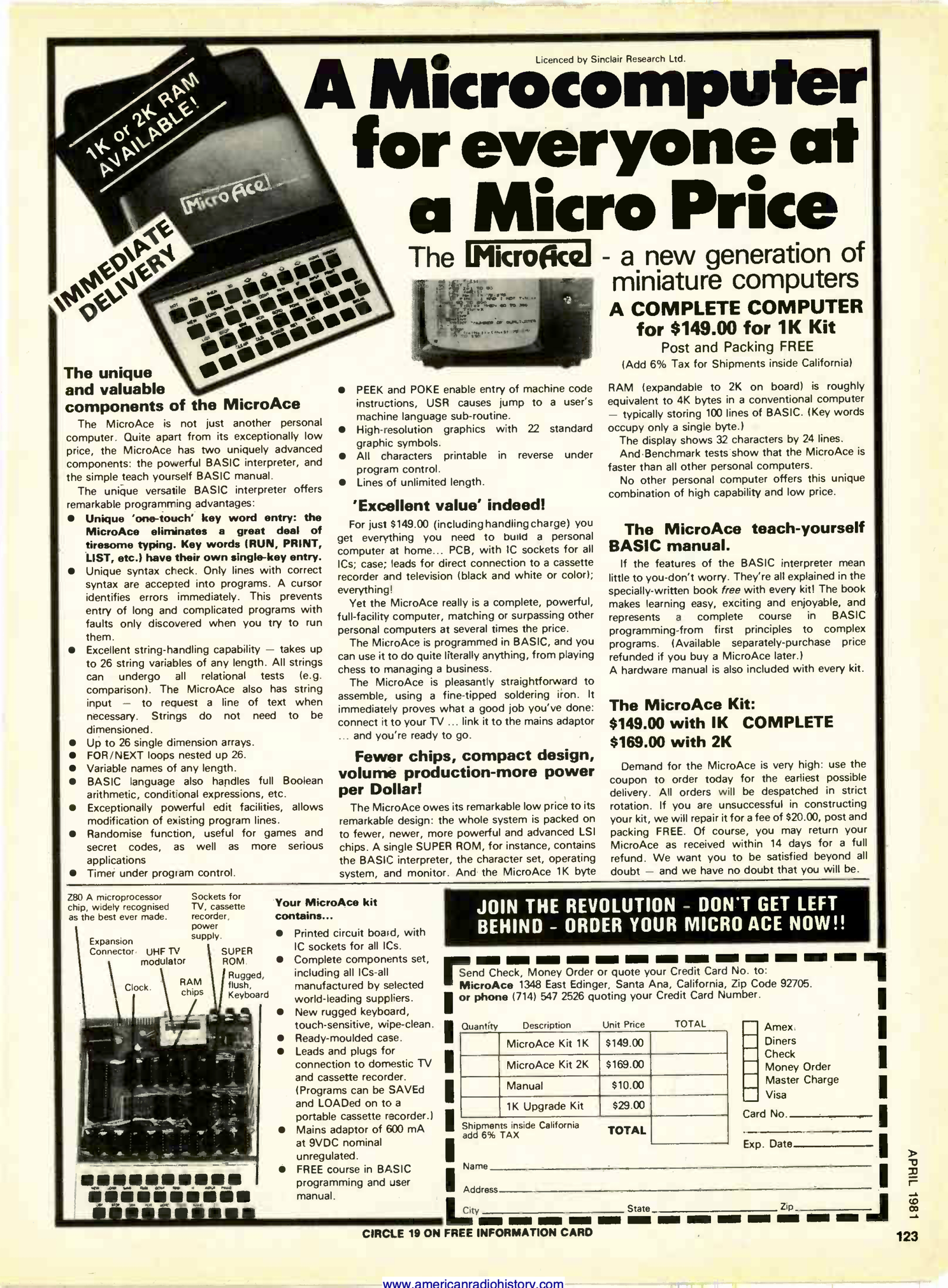
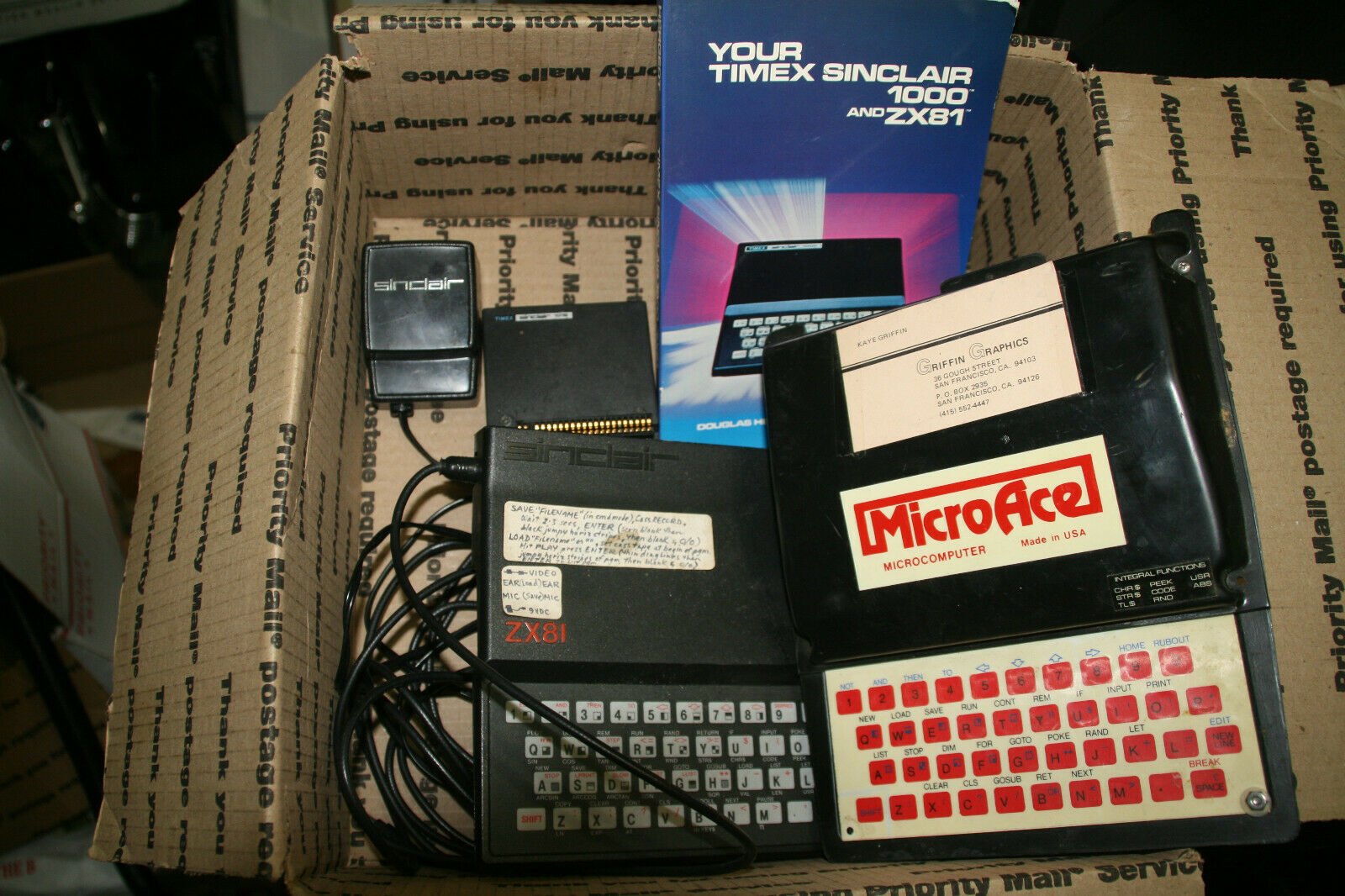
The MicroAce was a copy of the Sinclair ZX80, sold in the United States as a kit by MicroAce of Santa Ana, California, the American arm of the British company CompShop. It began as an unlicensed copy; after Sinclair sued, it was sold in the US under licence. InfoWorld described the kit as “licensed from Sinclair Research, Ltd.” The 1K kit cost $149 and the 2K kit $169, at a time when the assembled ZX80 cost $199.95.
According to Alfred Milgram, president of Melbourne House, interviewed by David Ahl in SYNC in the spring of 1981, “The people at CompShop have a history of copying. The guy behind MicroAce is the guy who runs CompShop in the U.K.” CompShop had earlier copied the Ohio Scientific Superboard and sold it in Britain as the UK101.
When Sinclair launched the ZX80, Milgram said, “they figured here was a golden opportunity to save on development costs and come out with effectively the same machine. They copied the ROM, byte for byte, moved the circuits about, cleaned it up a bit, and moved the RAM memory away from the heat sink. The case is black instead of white, and they were going to market it in the U.K. for £ 50 as opposed to £ 70, the price of the ZX80.”
Differences from the ZX80
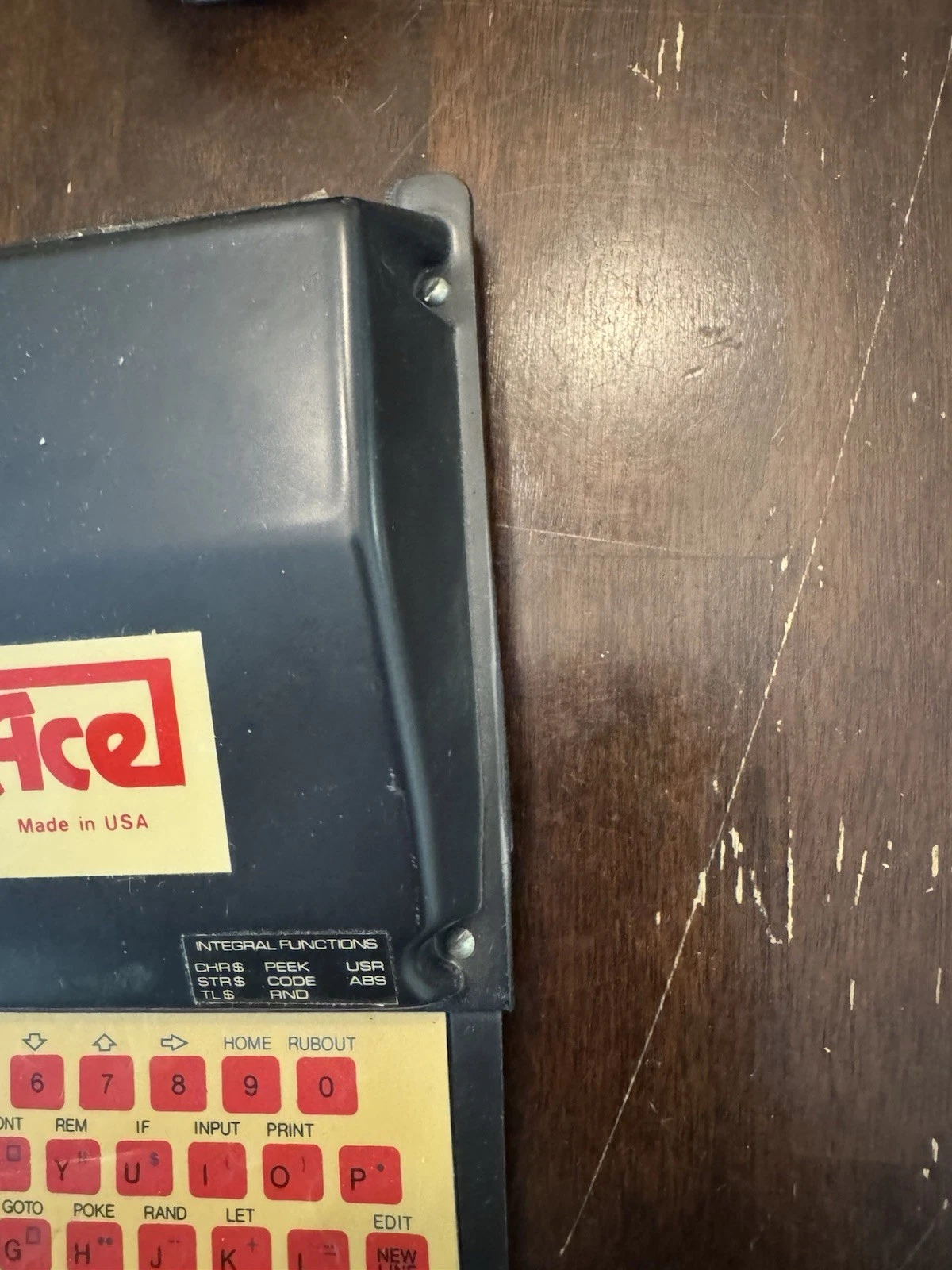
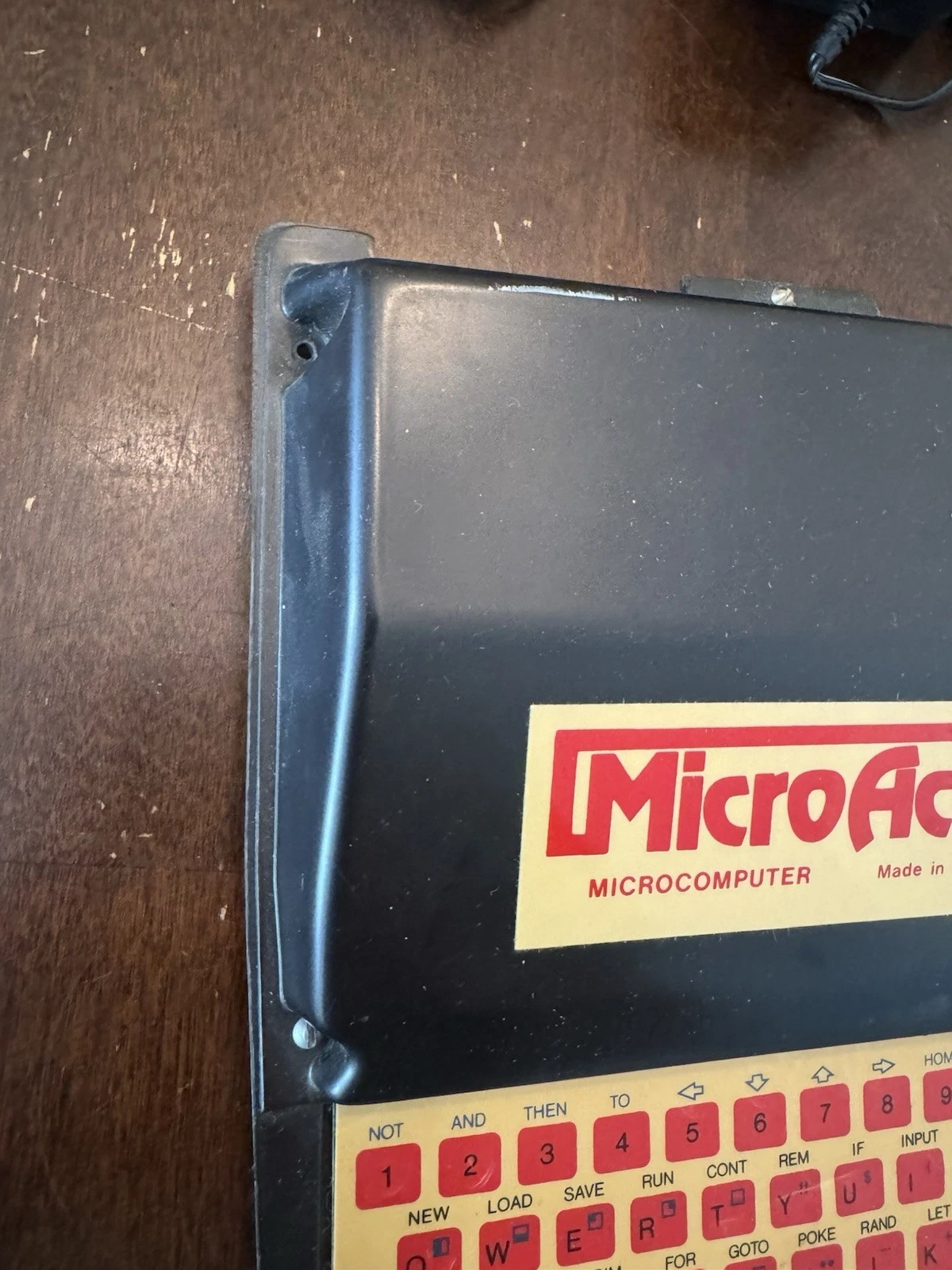
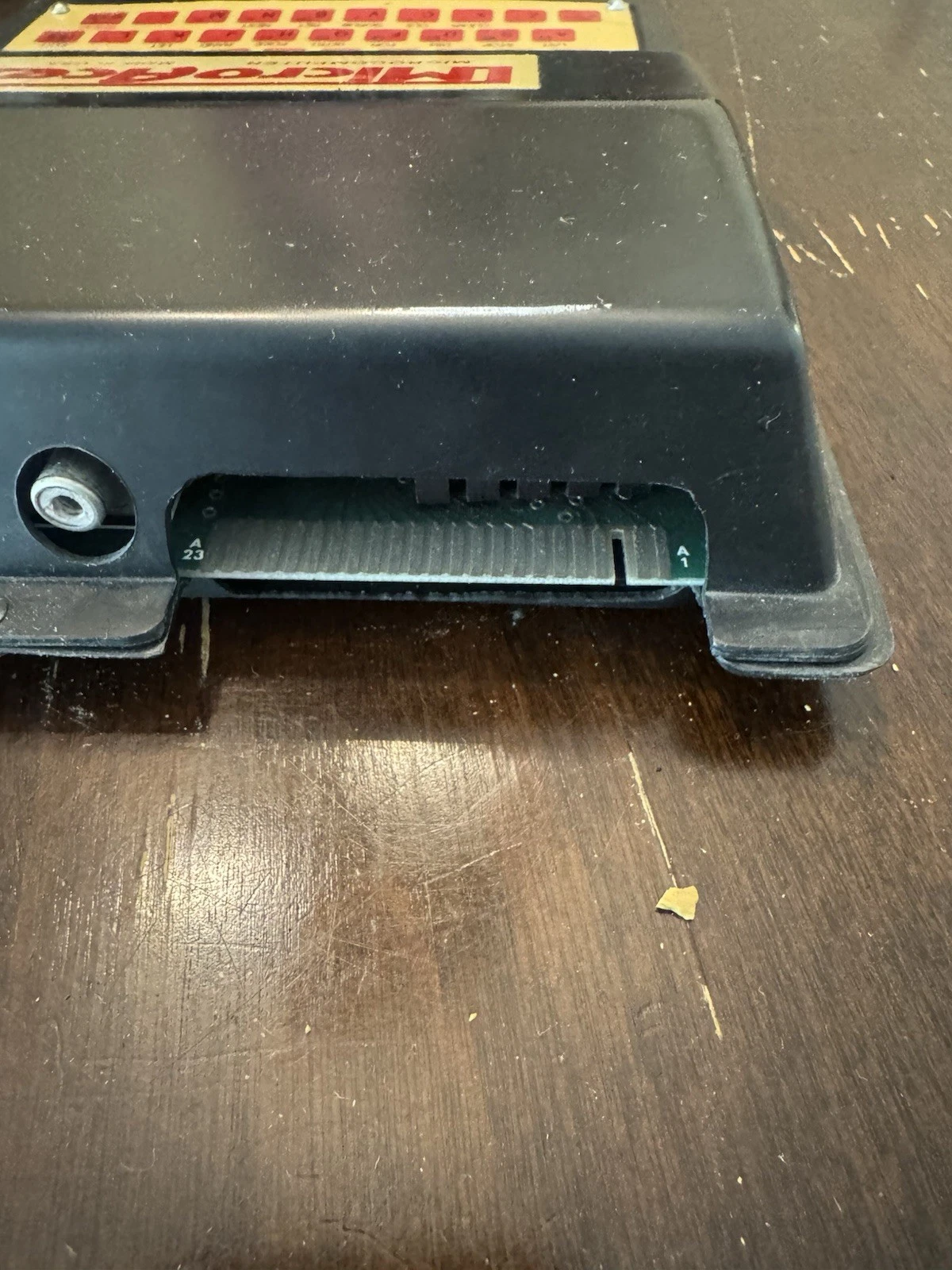
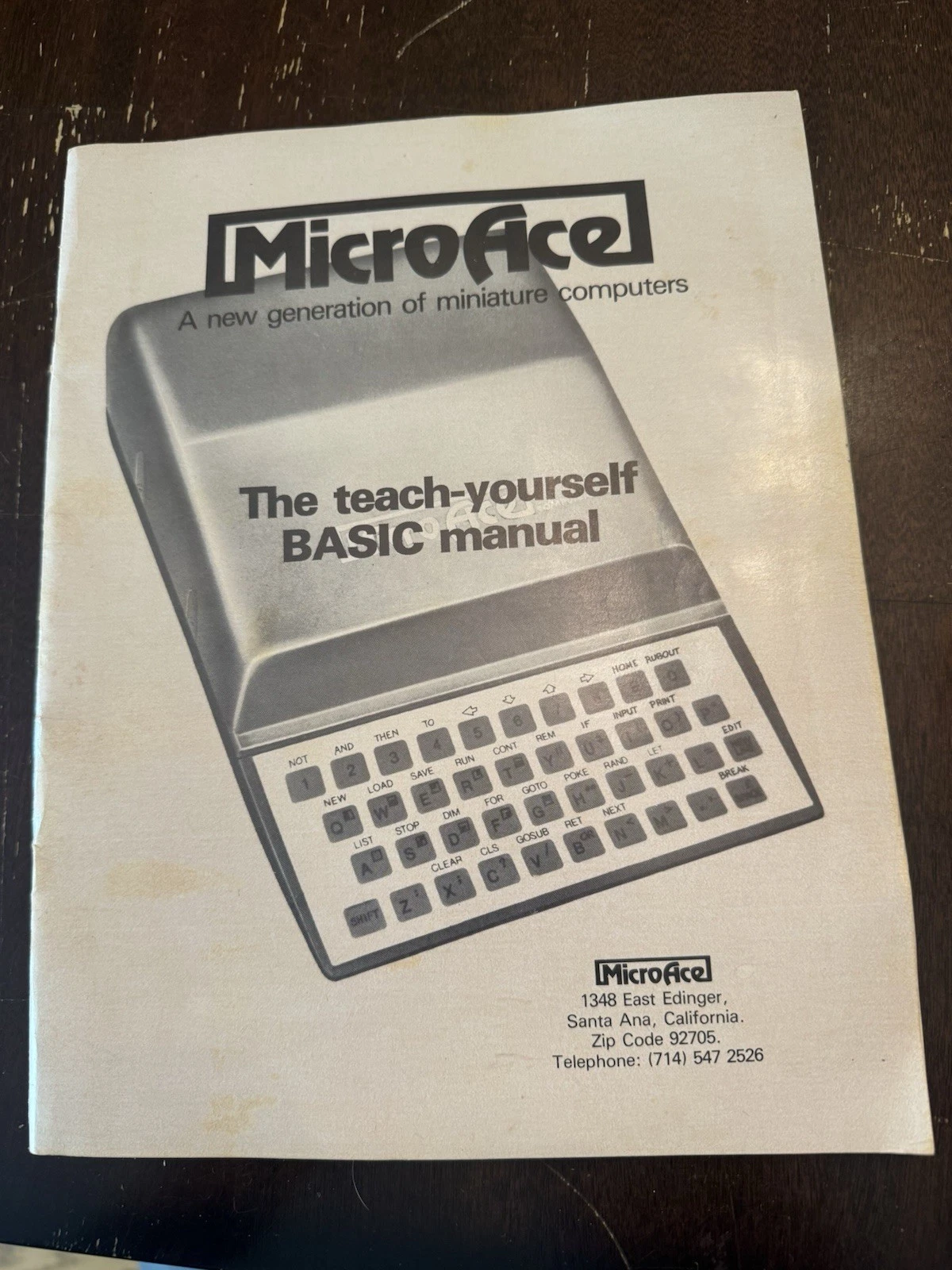
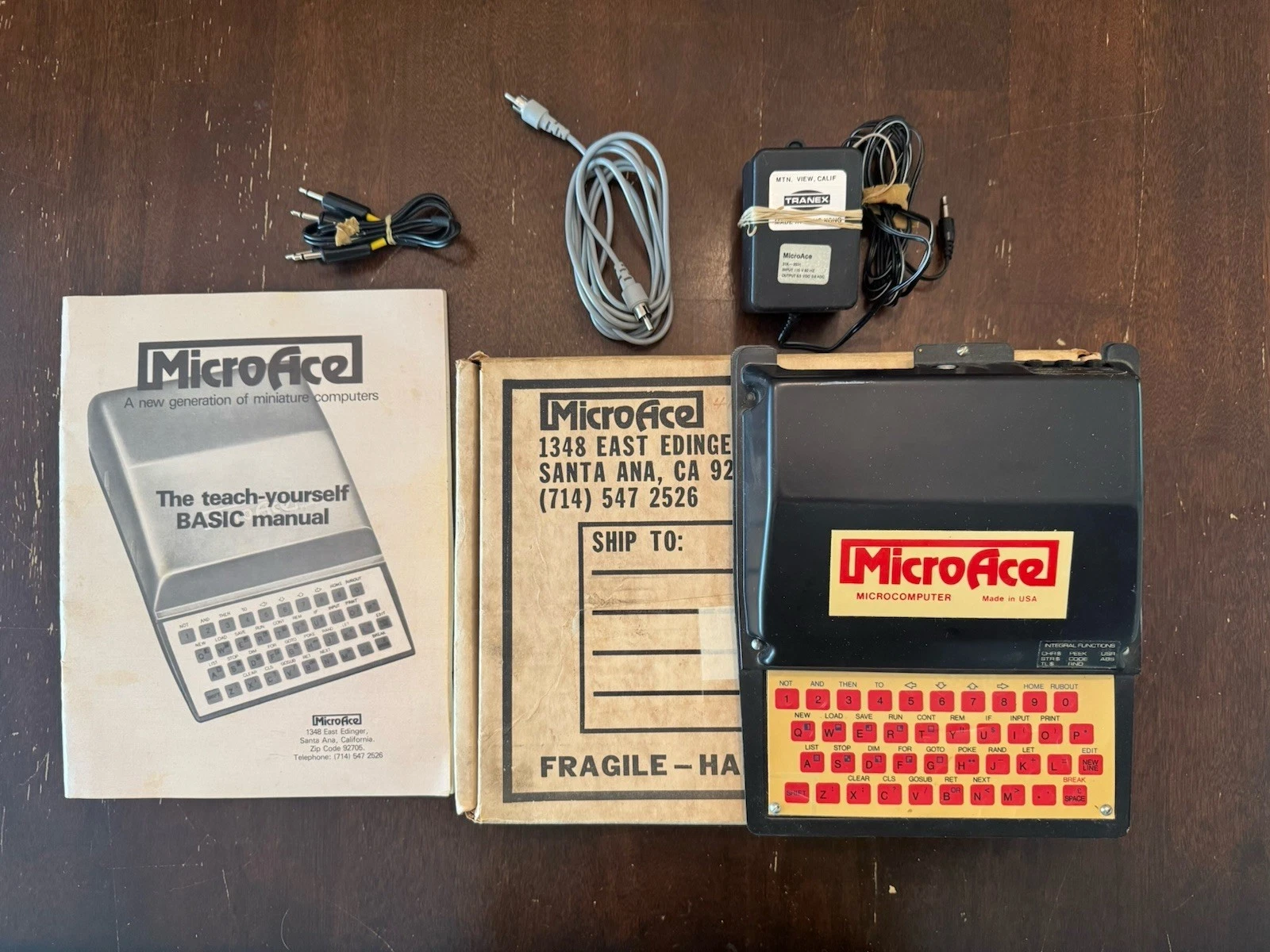
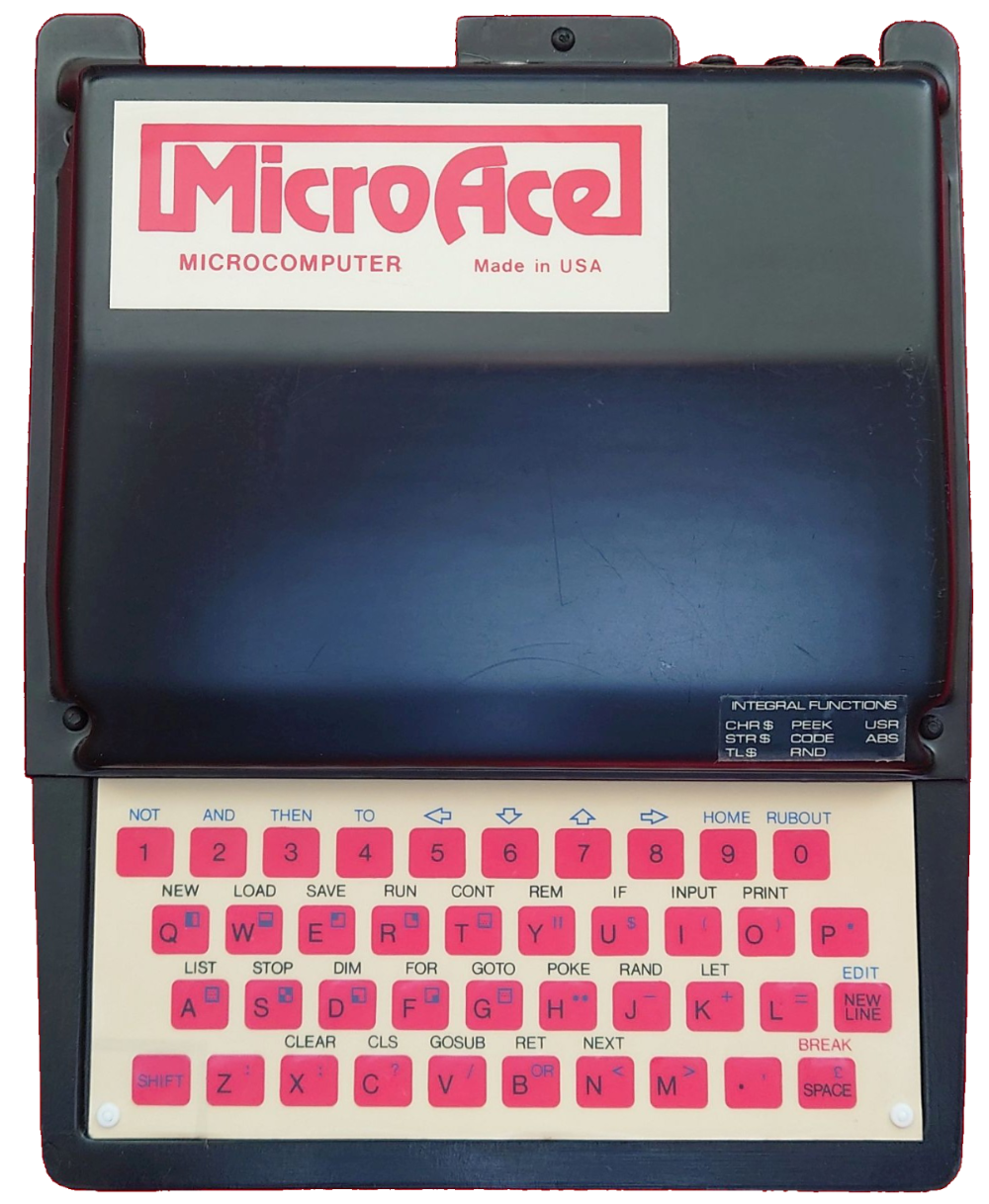
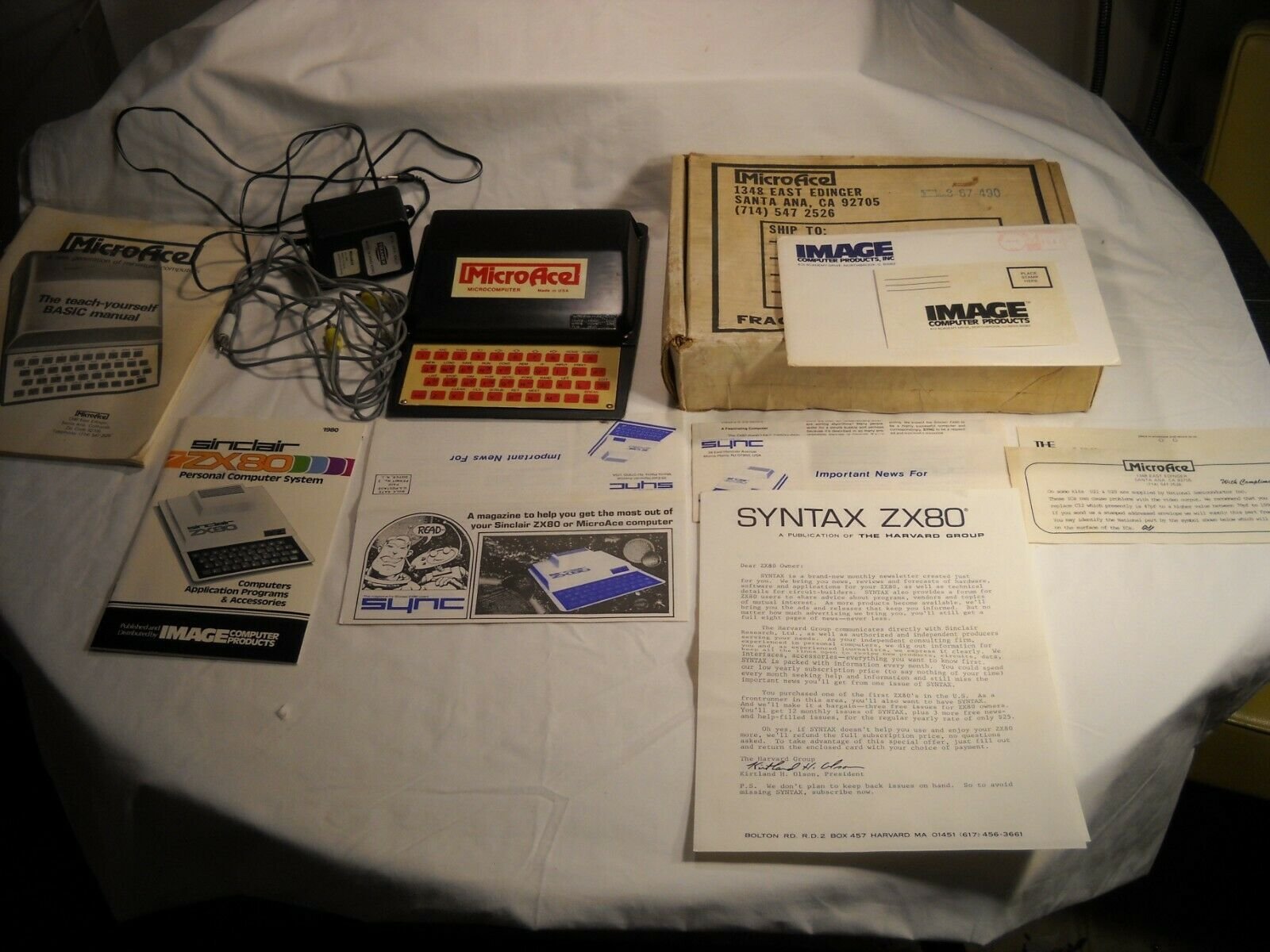
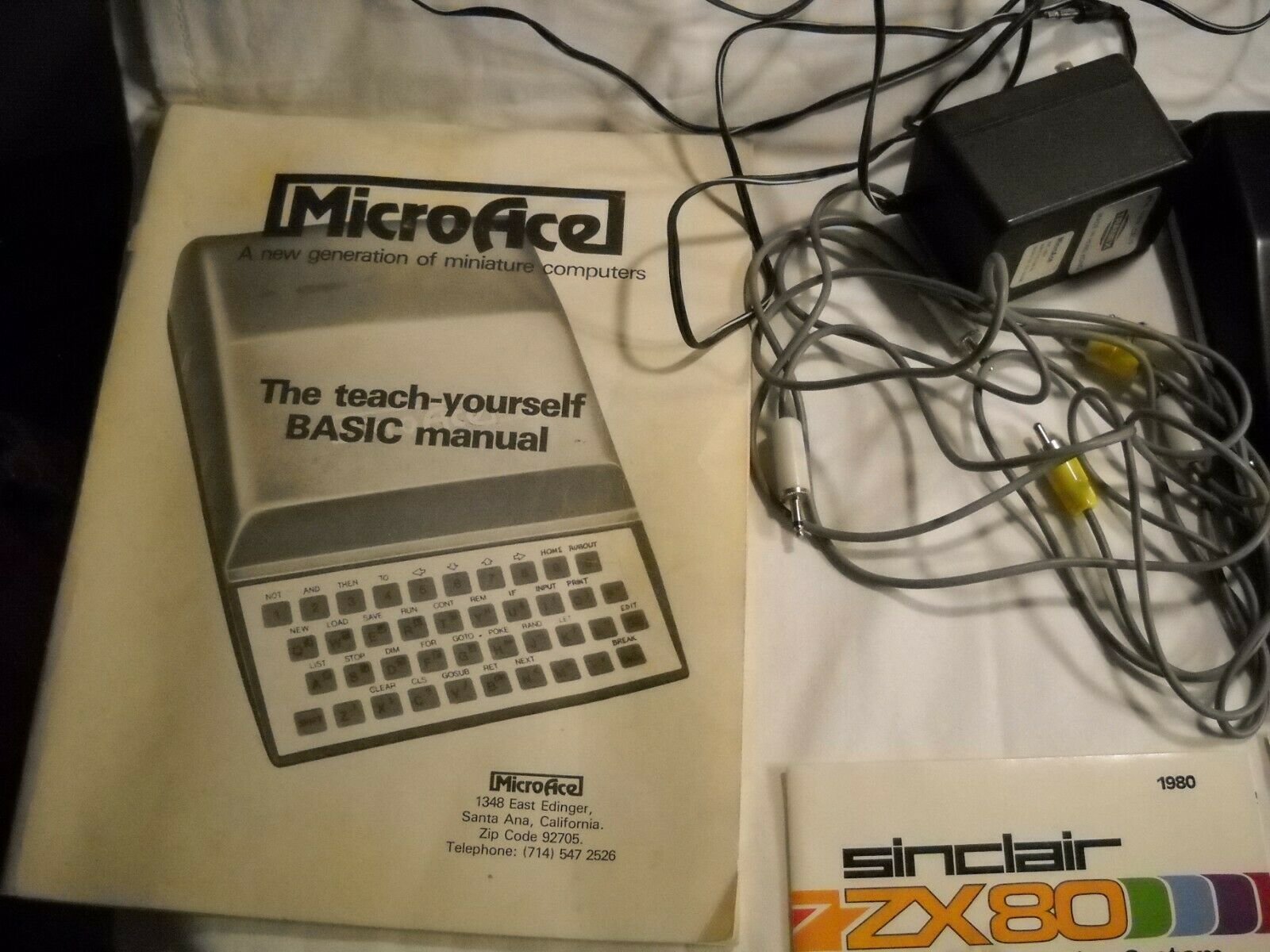
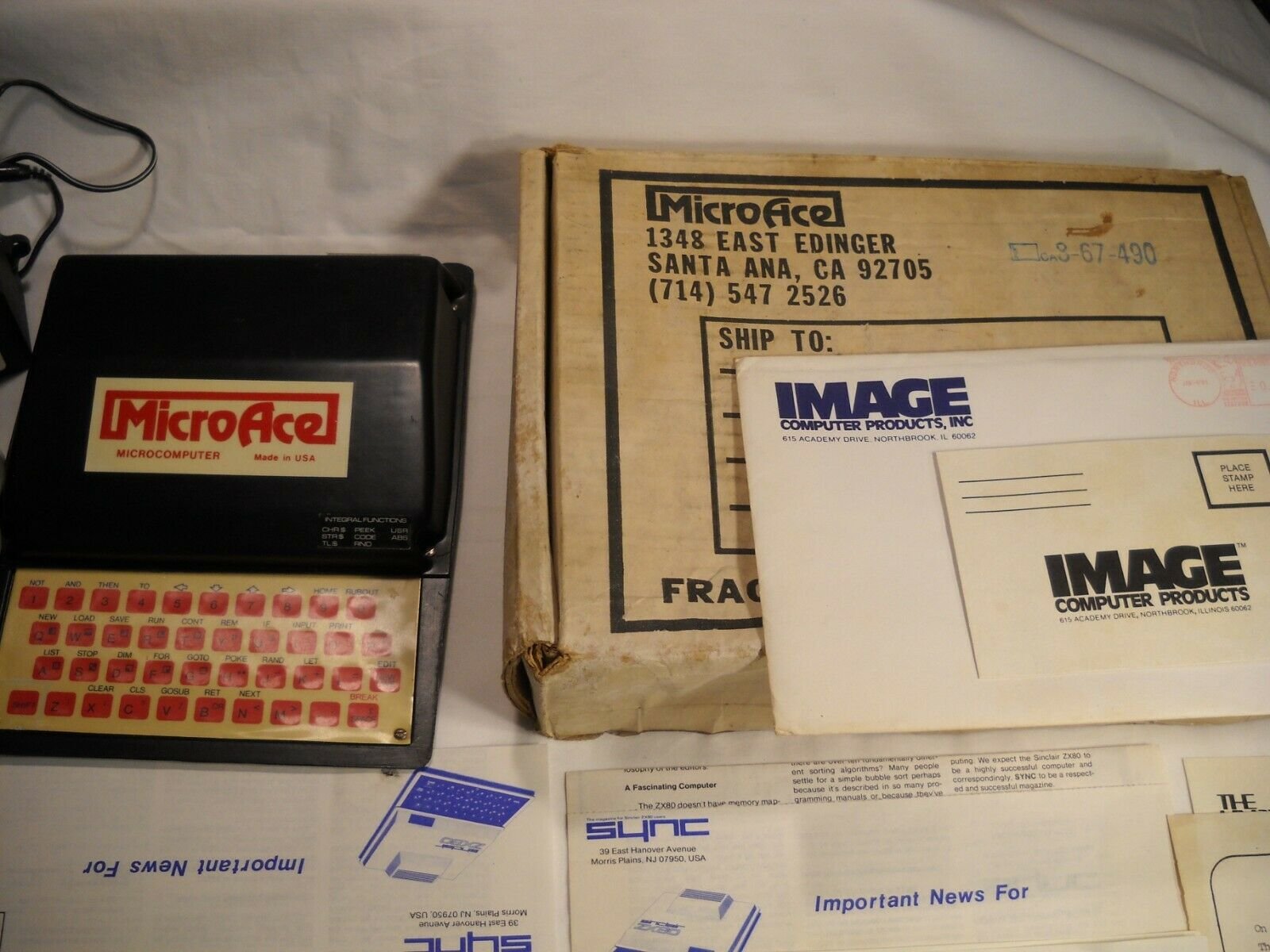
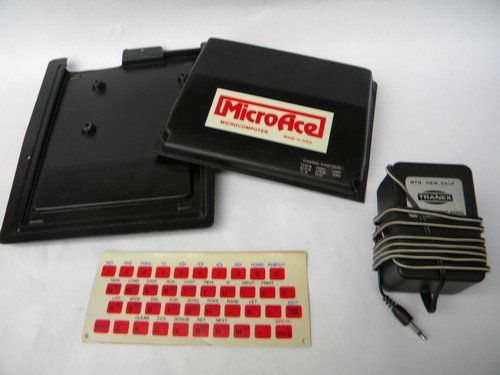
The MicroAce differed from the ZX80 most in its looks. The case was black, and, as the photographs below show, the keys were red on a cream keyboard, with a “Made in USA” label on the case.
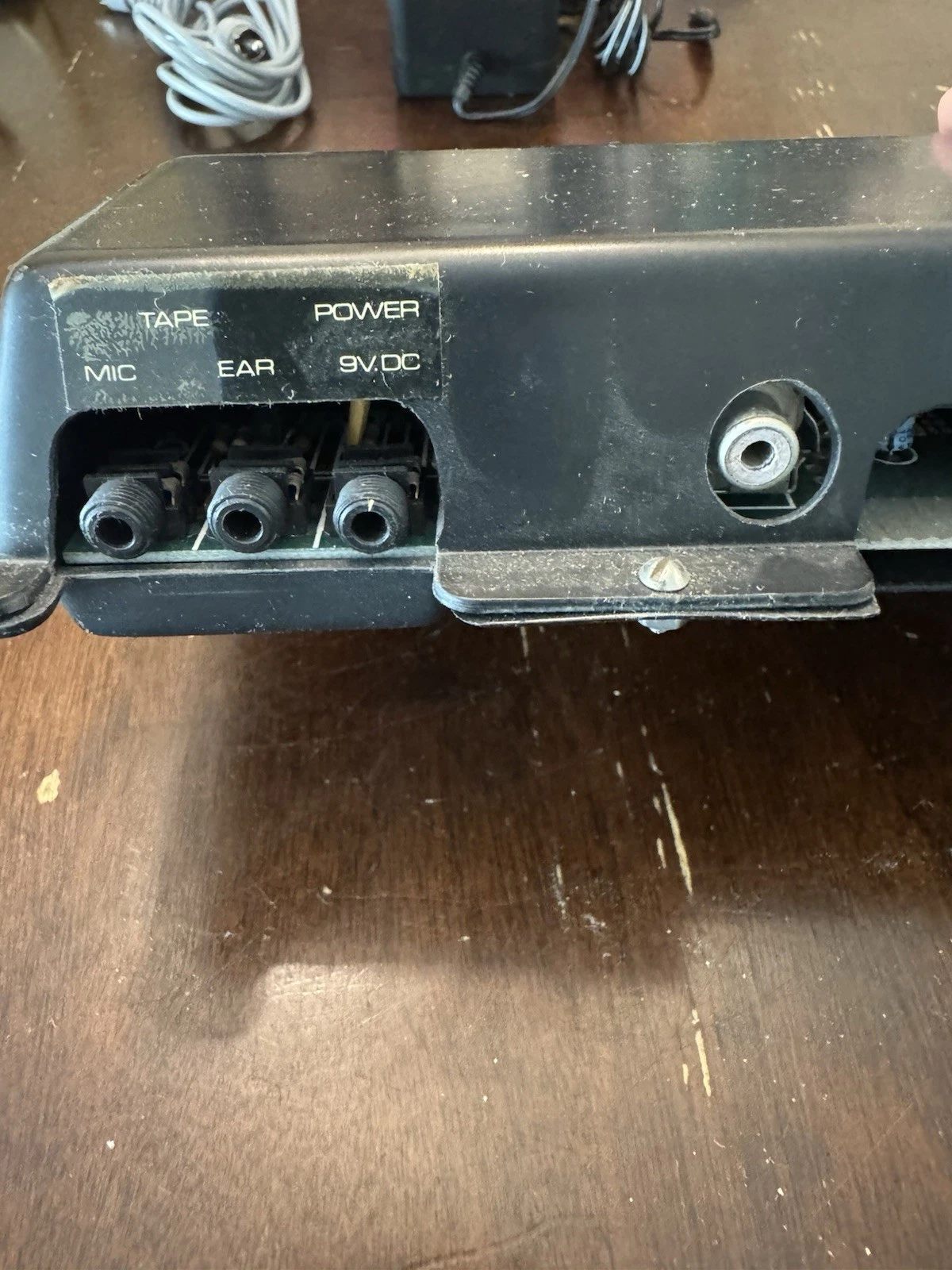
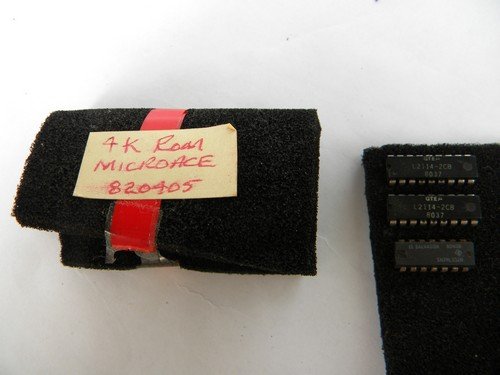
Inside, the 1K MicroAce had room for “2 more memory chips to expand to 2K on board.” It used a UHF modulator; Cliff Danielson noted that “the MicroAce uses an UHF (channel 34) instead of a VHF (channel 2 or 3) modulator.”
Two data lines to the ROM were swapped. MicroAce published a simple modification that let owners fit Sinclair’s 8K ROM: “Cut the track going to pin 13 (data line 3) and the one going to pin 14 (data line 4).” SYNC printed the same steps with a diagram in Using the MicroAce with Sinclair Accessories.
Bill Clark, MicroAce technician, says the only difference between the 2 ROMs is that data pins 3 & 4 have been swapped. Otherwise, the two ROMs are identical and are software compatible, meaning that the same software will work on both. They are not hardware compatible, however; you can’t put a MicroAce ROM in a ZX80 because of the switched data lines.
Dear Editor, Syntax ZX80, June 1981, p. 11-12
Building the Kit
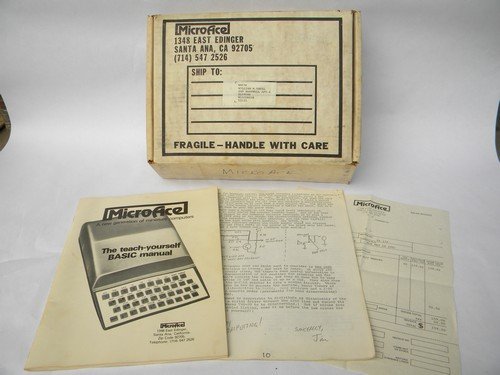
Laura McLaughlin built a 2K MicroAce for the first issue of SYNC. She found it “takes approximately 7 hours” to build, measures about 8½″ × 7″ × 1½″ and weighs 13 ounces. The kit came with an errata sheet, the parts list was wrong (it listed 11 diodes; 9 were used), and the instructions were sparse. For kits that would not work, MicroAce offered a guarantee: for a flat fee of $20 it would repair the computer and return it.
Owners shared fixes in the newsletters. Irving Chaiet’s Trouble-shooting Your MicroAce went through the circuit chip by chip, and SYNC readers reported that the 74LS365 keyboard chip was easily damaged by static.
Copyright Lawsuit
The only account of the lawsuit on the site is Milgram’s. He said that Sinclair “sued them for breach of copyright: stealing the ROM and the keyboard.” The judge, he said, “said in effect, ‘I can’t read the ROM. Nobody can read the ROM. The ROM is not copyrightable. But the keyboard: that’s the same keyboard, anyone can see that.’ They settled out of court.”
Under the settlement, Milgram said, Sinclair “allowed them to market it as long as they didn’t sell it in the U.K., only sold it in kit form, and complied with the restrictions on advertising.”
The two companies kept arguing. In March 1981 Syntax reported that, according to Nigel Searle of Sinclair, “Compshop has violated the terms of their agreement.” MicroAce’s Andy Fisher denied it. SYNC remarked that there was “no love lost between the two companies even though they have a rather close business licensing arrangement.”
Sales
MicroAce sold its kits by mail order. Kilobaud’s ZX80 review in December 1980 noted advertisements for the MicroAce, “which bears a striking resemblance to the ZX-80, for $149.00 in kit form.” By November 1980 Syntax counted “nearly 4000 units in the US” of the ZX80 and MicroAce together.
When Milgram asked why MicroAce was not visible in the magazines, David Ahl, publisher of Creative Computing and SYNC, answered: “Strictly by mail order. They have been restricted by Sinclair from advertising in a certain group of publications that Sinclair has reserved for itself. Sinclair has more or less picked the top one or two magazines in each individual field and left the balance to MicroAce which is a policy, in my mind, to defeat MicroAce.” MicroAce did advertise in SYNC itself.
By June 1981 MicroAce also had a shop: Syntax reported that “MicroAce’s Santa Ana shop will expand to sell other personal computer brands.”
Upgrades from MicroAce
- An 8K ROM, licensed from Sinclair, for $35. Some shipped with the bug of Sinclair’s first 8K ROMs: one owner found it “has the same bug that Sinclair’s had trouble with.” Sinclair later offered owners a good 8K ROM in exchange for the defective one and $10.
- 16K RAM: Sinclair’s pack plugged into a 1K MicroAce, but a 2K machine first had to have its extra 1K and U17 removed. MicroAce planned its own 16K board with three extra connector slots.
- A video upgrade that gave the ZX80 and MicroAce the ZX81’s SLOW mode, priced at $29.50. SYNC’s reviewer said it would “turn it into a ZX81 for only $29,” while a Syntax reader warned it was not for beginners.
In May 1981 MicroAce announced a MicroAce II kit with 16K of RAM, the 8K ROM and a large keyboard, due by August. By the summer SYNC reported that MicroAce was “not planning at the present time to offer a MicroAce II.”
The End of the MicroAce
The ZX81, at $99.95 as a kit, undercut the MicroAce. In August 1981 Syntax reported that MicroAce was phasing out its kits: “Sinclair didn’t renew MicroAce’s license,” according to Bill Clark of MicroAce, who added, “We can’t compete with the ZX81 in price.” Danielson later remembered it differently: “Via mutual agreement”, MicroAce stopped selling the computer.
MicroAce went on selling upgrades for a few more months. It discontinued its U.S. operations in mid-December 1981. Kevin Hawkins of MicroAce said that “No legal action forces the withdrawal”; MicroAce could not compete with the ZX81. CompShop, the parent company, carried on in Britain, and repairs for MicroAce owners were handed to an outside repairer.
Further Reading
- An Interview with Alfred Milgram, David Ahl (SYNC, March/April 1981)
- The Times They are a’ Changing: The Building of a MicroAce, Laura L. McLaughlin (SYNC, January/February 1981)
- The MicroAce Computer, Delmar Searls (BYTE, April 1981)
- Using the 8K ROM, 16K RAM on MicroAces (Syntax, April 1981)
- MicroAce Out of Business in US (Syntax, January 1982)