
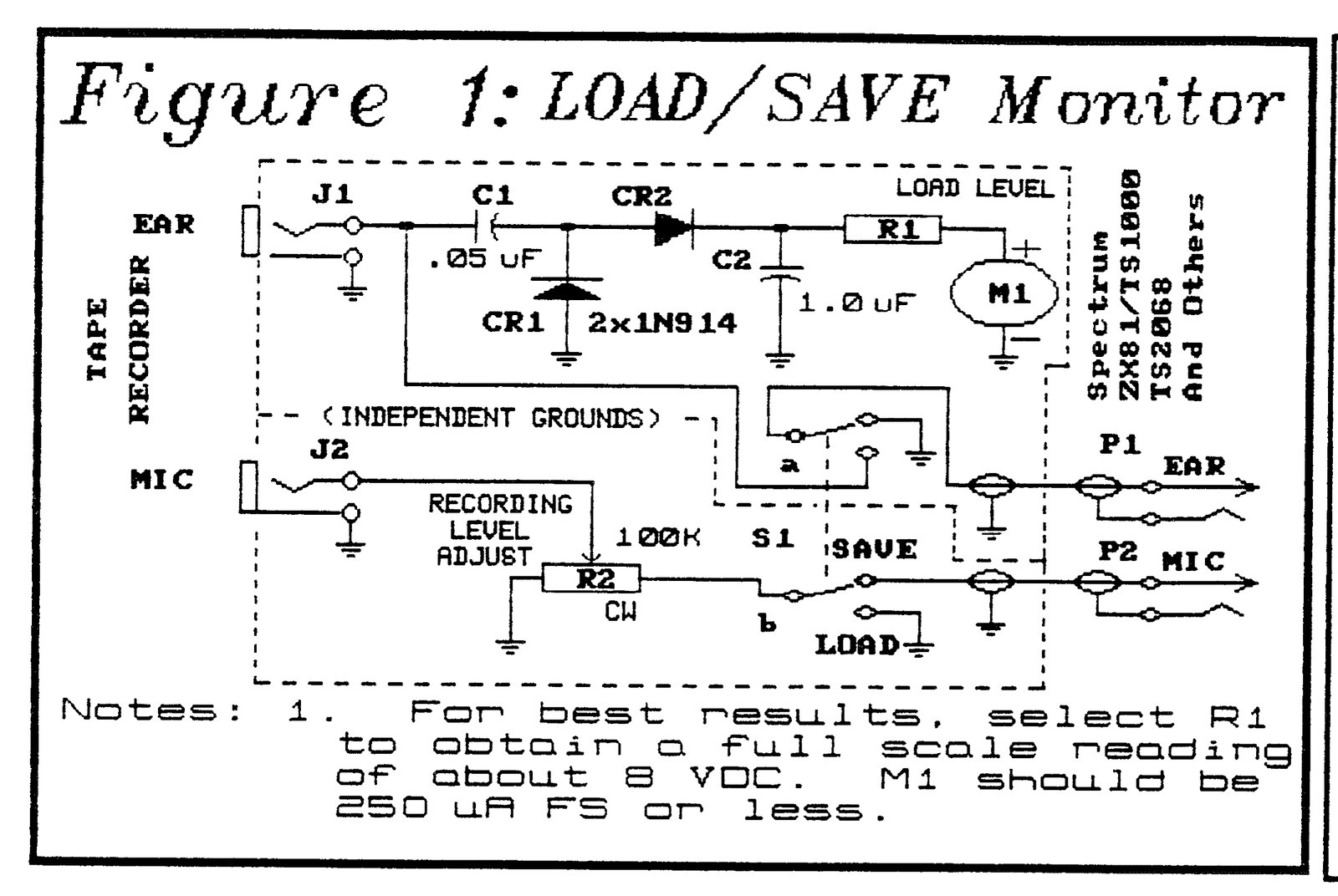
One problem is the feedback generated by most cassettes recorders. So you have to pull one of the EAR plugs when SAVEing.
A second is feeding the cassette recorder too strong a signal. For the ZX81/TS1000 this is seldom a problem, its signal is weak, The TS2068 puts out a relatively ear-splitting signal.
A third is getting the right amount of signal to the computer for successful LOAD. The ZX81/TS1000 is very finicky. It is so obstinate that a commercial tape will seldom LOAD with setting the user found to be optimum.
A TS2068 needs about 6 V. P-P for best results, though this range is quite wide. The level for the ZX81/TS1000 is near 1 V. P-P.
The first problem is solved by using a switch instead of pulling an EAR connection. Other things can be done, like grounding out stray signals.
The second problem is solved by potentiometer R2 which allows you to control the signal strength heard by the recorder.
The third problem is solved by a Peak-to-Peak voltmeter for the EAR signal so you can see what you are getting before attempting to LOAD. Sometime you can even adjust the level on the fly to salvage a cassette that fades out.
Unless you really have horrible tapes, this will solve your problem. Of course you might have an equally horrible recorder. In that case, this monitor comes in handy for finding out what hind of output you are getting.
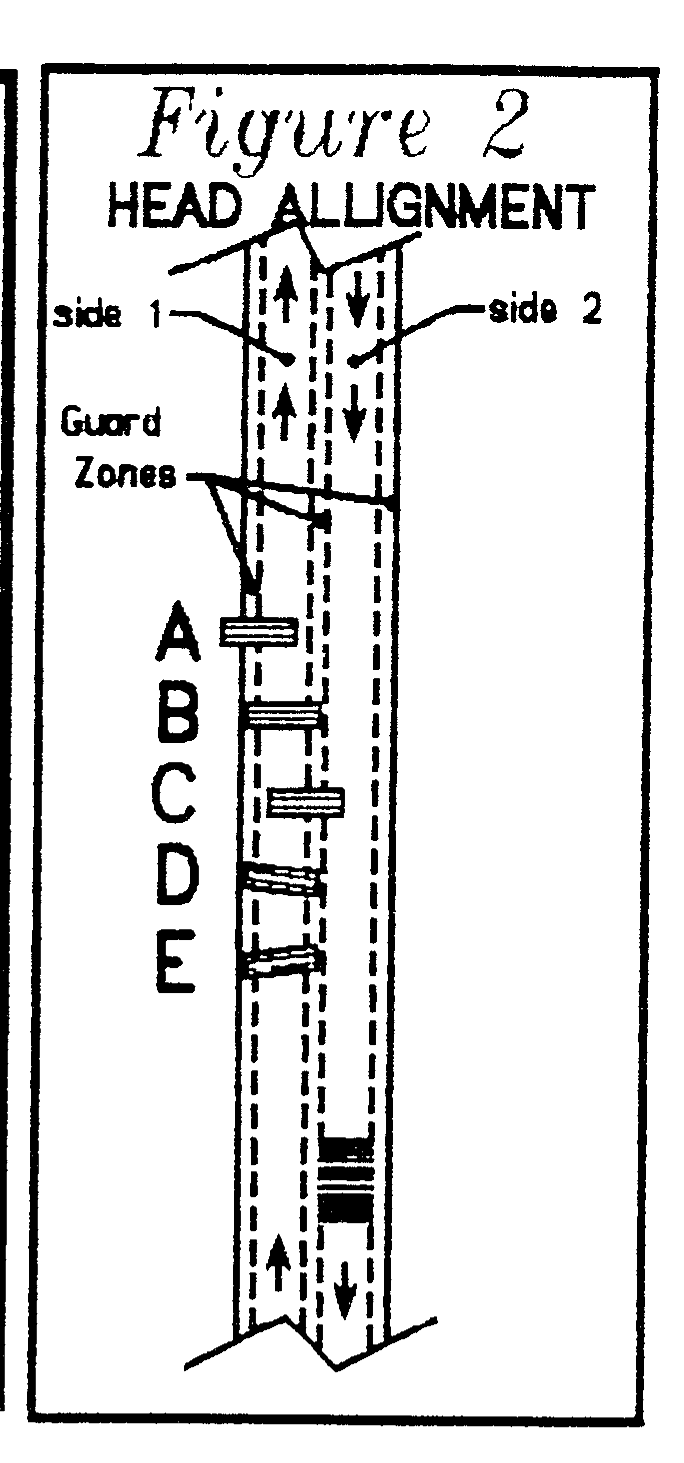
There has been a lot said about head alignment being the major cause. Oscilloscope picture Fig. 2 shows this unlikely. The effect of head misalignment is not severe it rounds off the corners and reduces signal strength. In severe cases like (C, D, E) more than one magnetized strip is seen by the head. Luckily, this is almost never the case.
Signal conditioners like WINKY Board are best used to salvage tapes made on bad recorders.