
Computus Interruptus
It has been long time since I’ve received any Timex/Sinclair related mail (and since I spent happy hours each weekend chatting with people who called to discuss my articles). That was a fun and interesting time.
I have no problem with your reprinting my work; it’s nice to know it’s still “living on”. Use it in good health.
When you publish the reprints, I’d very much appreciate your sending me a courtesy copy of the issues that contain them. Not only is it nice to see the work reprinted, but I might be able to spot transcription errors (depends on how well my memory works). I do know that the original SINCUS News articles had some transcription errors from my original manuscript.
SINCUS does still exist, though they no longer publish a newsletter. Most of the members are now users of MS-DOS machines, but at least one member continues to accumulate old Timex computers and is still busy working on projects with them.
I never had an opportunity to work with any of the TS-2068 disk interfaces, though I did partially design one, though that was one project I never finished. It was to work with a bank switching unit that added memory banks to the system beyond the three that came built into the 2068, and used the bank switching software that Timex installed in the computer for the Bank Expansion Unit that they never released. I did have that part reasonably well debugged, but our interests change. In any case, are the TS-2068 drive systems difficult to come by these days? What prices do they go for?
I’m not sure which of my articles you have, but I published quite few on building Spectrum Emulator cartridges to make the TS-2068 run Spectrum software from Britain, and on ways to interface Spectrum peripherals to the TS-2068. We spent a lot of time using the Sinclair Interface One and Microdrive with the TS-2068. They were not quite as fast as a disk drive, but there were tons of available software that used the Microdrive, particularly assemblers and compilers, so they were the choice for me. The unfortunate consequence of that was that my path diverged from those who chose the peripherals made specifically for the TS-2068. That’s why I asked you about the disk interfaces. It sounds as if you have a lot of experience in some of the things I never had the opportunity to check out.
This may or may not be of interest to you, but are you aware that there are Spectrum Emulator programs that allow other computers to run programs for the Sinclair Spectrum? There are several that run on MS-DOS machines, one for the Amiga, and even one to run on UNIX workstations under X-Windows. The emulator programs are about impossible to find on Bulletin Boards in the US, since there were not a lot of TS-2068/Spectrum Emulator users in the first place, and the people using the emulator programs are mostly former Spectrum users. But in Europe and elsewhere, there are a great number of enthusiasts using these things. If you have or can get access to an INTERNET account, there’s a very active USENET discussion going on in the comp.sys.sinclair newsgroup, and there’s an FTP site in Slovena(!!) from which it’s possible to FTP literally hundreds of Spectrum games and utilities for use with the emulator programs.
The emulator programs themselves are capable of running even faster than the TS-2068/Spectrum ran, if they are run on a moderately fast machine. I have to tell my emulator to slow itself down, if I’m playing a game and want to be able to keep up when I reach “tough” parts of a game. One of the emulators, written by a fellow in the Netherlands, is shareware, and the registered version actually allows you to build a simple circuit that plugs into the printer port of a PC, which allows your old tapes to be LOADed into the PC from a cassette recorder! His emulation is so good that even the speedloaded programs load without problems. I was pretty tickled tp watch it work the first time I tried it. Of course, you can set the emulator to SAVE/LOAD from disk, so the tape interface is just for converting your old tapes.
Well, I didn’t mean to babble on like that, but since you’re looking for publishable material, I thought you might find that bit of information to be worth a second look. I wish you the best of luck with your publication and am glad to see that the Timex/Sinclair machines are still running strong. Take care.
Wes Brzozowski
Endicott, NY
We thank you for the excellent CI series and we appreciate the information you provided.
Basically, there are two DOS interfaces for the TS-2068, one is LarKen that can operate up to four 800K disk drives and a 256K LarKen RAMDISK (SRAM). Spectrum, OS-64(64-column), Dohany’s corrected TS-2068 and Spectrum EPROMs can be plugged in the doc board socket. Oliger DOS can operate up to four drives and up to 255 tracks per side and is compatible with the EPROMs. The JLO is still available from The John Oliger Co. I assume that you’ve heard of the 32-bit Quantum Leap and the Z-88 computers from Sir Clive.
We do know of Carlos Delhez EMU’s, they are available from our vendors. Editor
Smith’s Chart
On my latest issue of ZQA!, there was inscribed “Your last issue”. Since I do not wish this to be so, there is attached to this note a renewal check for $12 payable to you Since your organization is the last great hopes I certainly intend to do what I can to keep it alive.
One other thing: I am enclosing a couple of tapes which you may not find too usual. They are the programs (also enclosed) for machine construction of the Smith Chart by the 2068. There ought to be a library somewhere for storing such trivia. I don’t know whom of your chairmen serves as the librarian for such, so I ask that you route this to the cognizant keeper.
This is original enough that I have been granted copyright on the base program, but this is only self-protection for me.
Not many of your readers may be interested in this; but the chart, made into a calculator was much used in my working years as a microwave engineer in components and systems. The machine-generated charts are oval (or, more precisely, elliptical), and this is inherent in these machines, so I have gathered from the many books and articles I’ve read on these computers. But the programs are interesting, so I think, in the use of the DRAW command and in the tic-mark generations (not too well spelled out in the available literature).
Application is straightforward, after program insertion, it takes a long time for first results to show on the CRT screen; why? I do not know.
Should there not be a collector for documents like this, may I be one of many to suggest such an office? As one whose interest in computers is primarily computation rather than games, I should appreciate your letting me know what comes of this.
Edwin N. Phillips
Orange City, FL
The tape was forwarded to our TS-2068 Librarian, D. G. Smith, and is presented in this issue for those who understand it and appreciate the work that was involved. The TS-2068 is slow when it comes to PLOTting from mathematical expressions as in line 2010. I have used similar charts for acoustics that are not as involved as microwaves including reflections, standing waves and so on. We thank you for sharing the program with us. Editor
It’s Olde English
Why is there a ” b ” instead of a letter ” v ” in your masthead.
R. Arthur Gindin
Princeton, WV
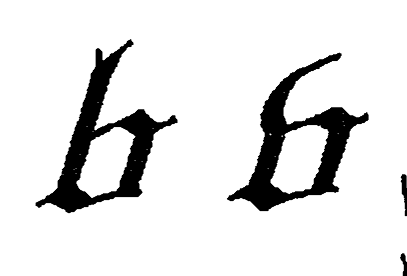
We though that ‘Old English’ fonts were the appropriate characters to use for Sir Clive computers, albeit some characters are difficult to discern. You were not the first to ask this question. Editor