
World News & Information 1.1
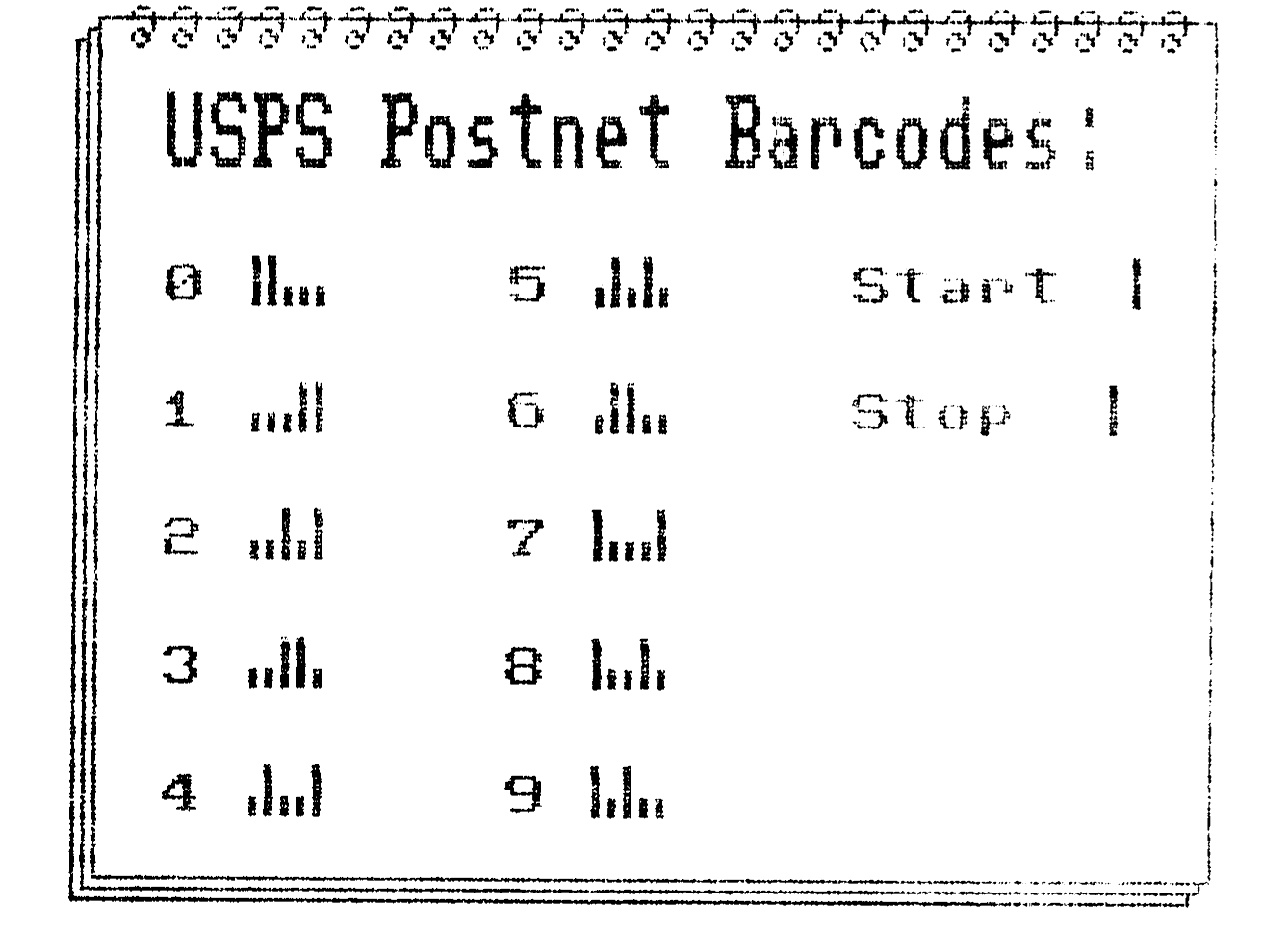
Have you noticed lately that more and more mail arrives at your house with that mysterious barcode printed beneath your address? Have you ever tried to “decode” it? Well, it is a tough nut to crack, so let’s take a look at the code the USPS calls Postnet.
Postnet is a barcode which contains an addresses ZIP+4 Zip code and a Checksum digit. Each digit is represented by five short or tall bars as shown in the chart above. A complete Postnet barcode consists of the nine ZIP+4 digits, a Start and Stop (tall) bar and a Checksum digit. The Checksum digit is added to the end and is calculated as follows:
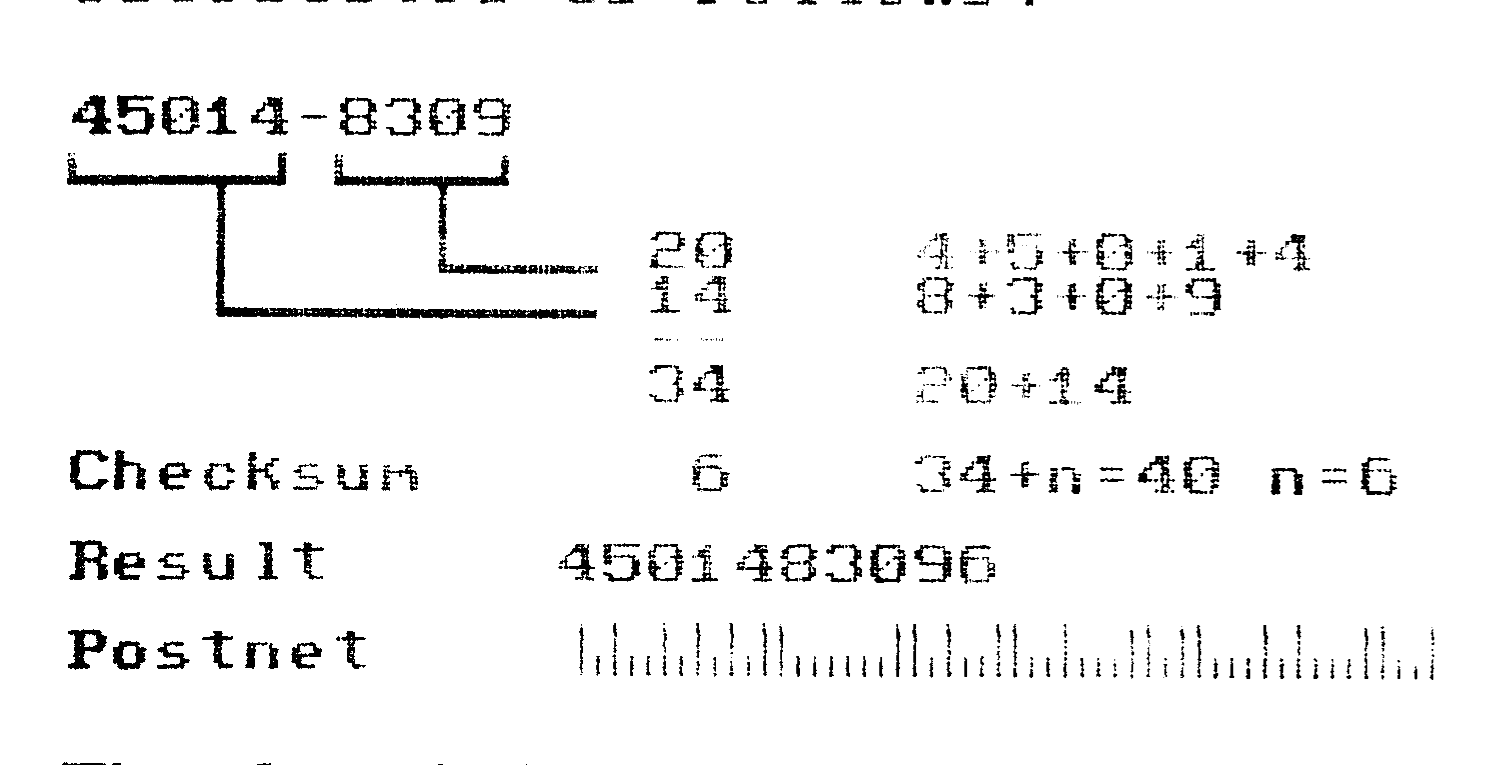
The first five ZIP code digits are added together along with the four “+4” digits. Next, we take this sum and find the difference between it and the next highest multiple of ten. Therefore, the Checksum digit for our example is 6.
Now, all we have left to do is concatenate the Start bar, ZIP+4, Checksum and Stop bar and there you have the Postnet code.
Now, let’s put this to practical use using a graphics creation program. First begin by drawing out your Postnet code on paper using the codes to the left. Then create each bar pixel by pixel with your program.
I have found that for my printer each “Tall” bar needs to be 10 pixels high and 1 pixel wide. Each “Short” bar is 4 pixels high and also 1 pixel wide. The space between each bar is two pixels wide. This will produce a Postnet barcode that is within the 22 ±2 bars per inch which is specified by the United States Postal Service.
To create the Postnet barcode of my own ZIP code, I used The Print Factory‘s “Creator” program. The resulting graphic could then be added to a “First Edition” file or a “Labeler” label!
Here is a sample label I created using “Creator” and “Labeler”:
Sinclair World Gazette
1580 Gelhot Drive
#234
Fairfield, OH
45014-8309
Finally, Postnet not only saves the US Postal Service money (which in turn keeps the price of stamps down) but it also helps businesses save money on bulk mailing costs.
For more information on Postnet rules and regulations, contact your local US Post Office and they will be happy to assist you.
–MJ Felerski