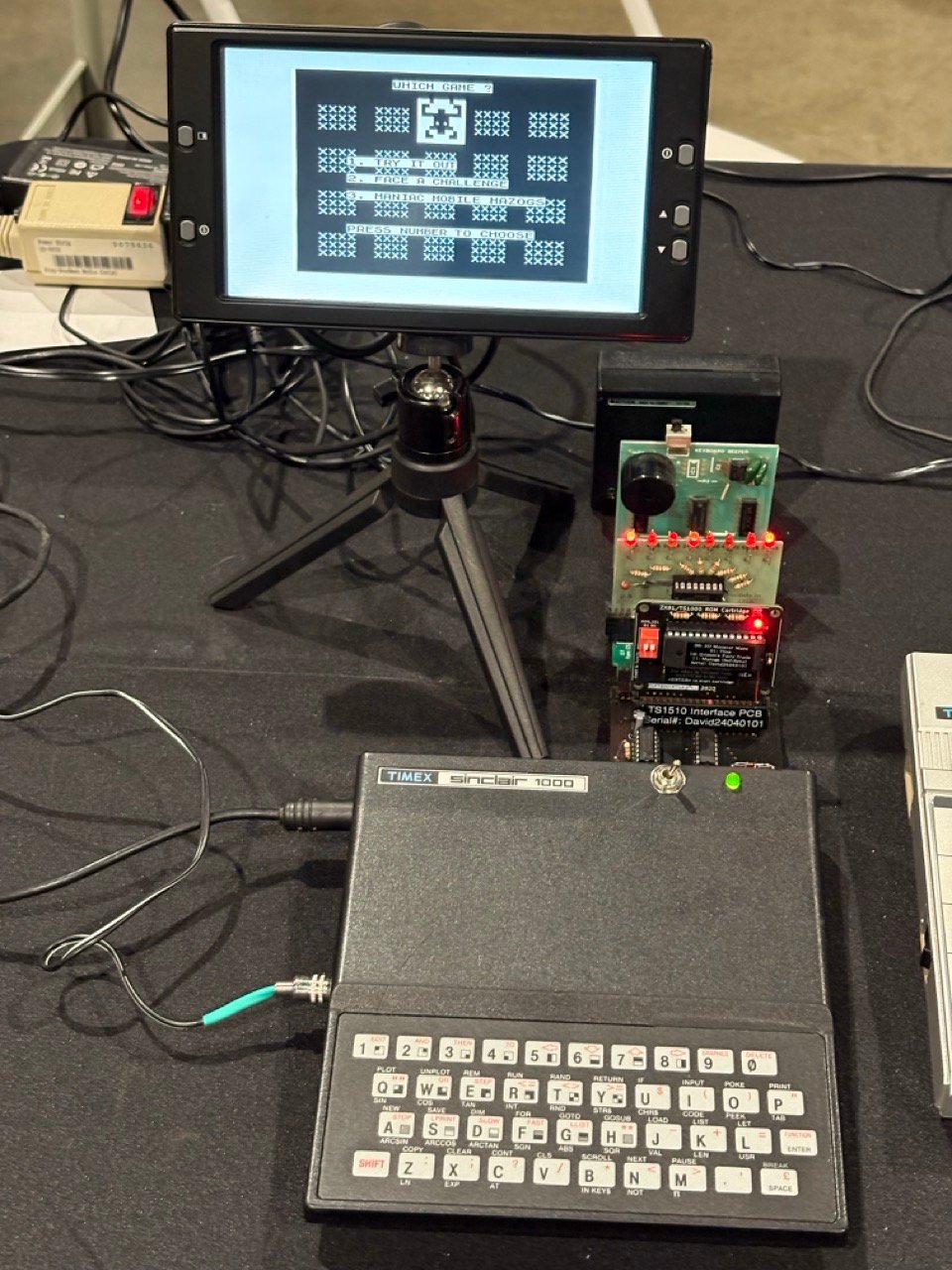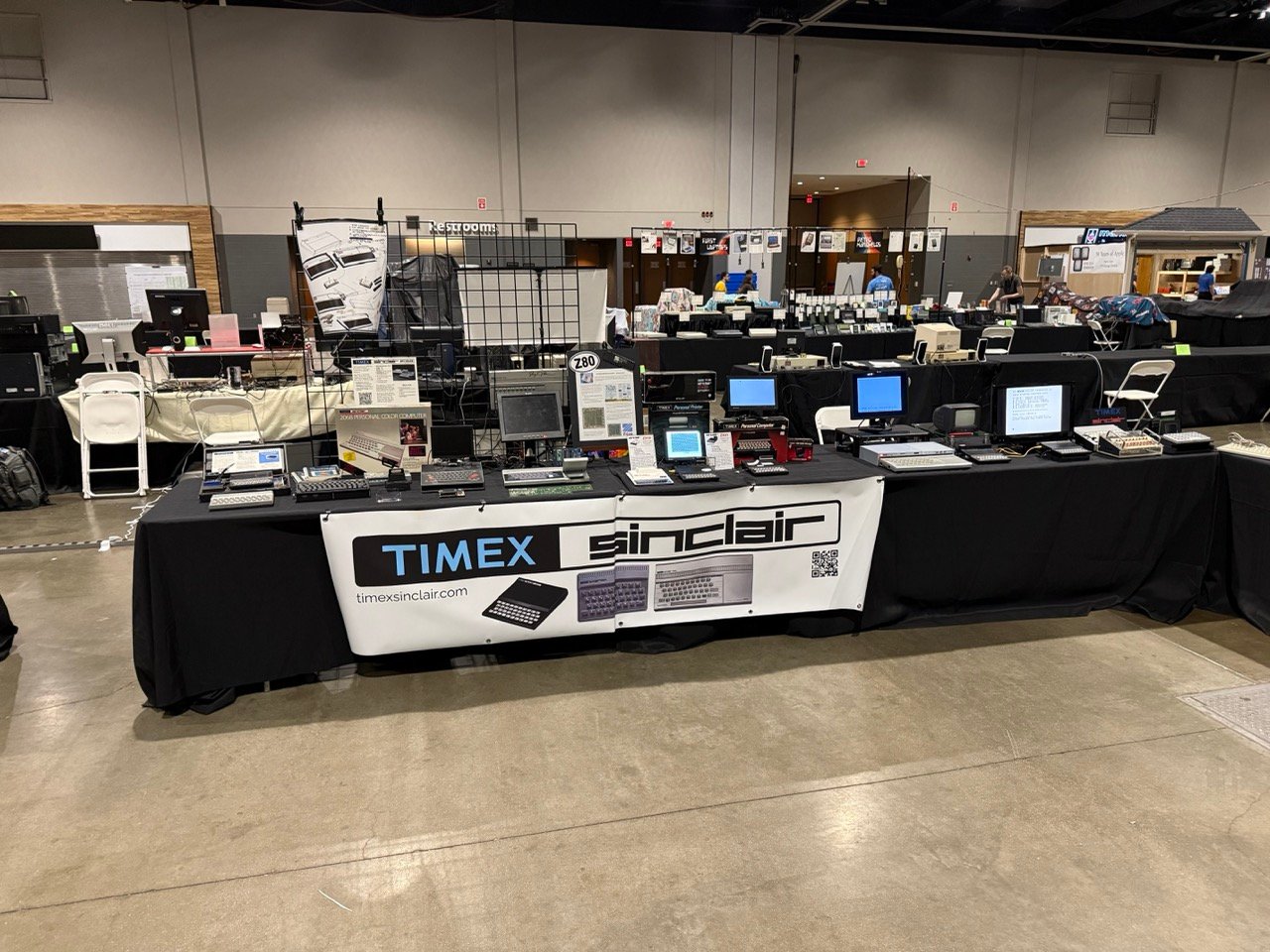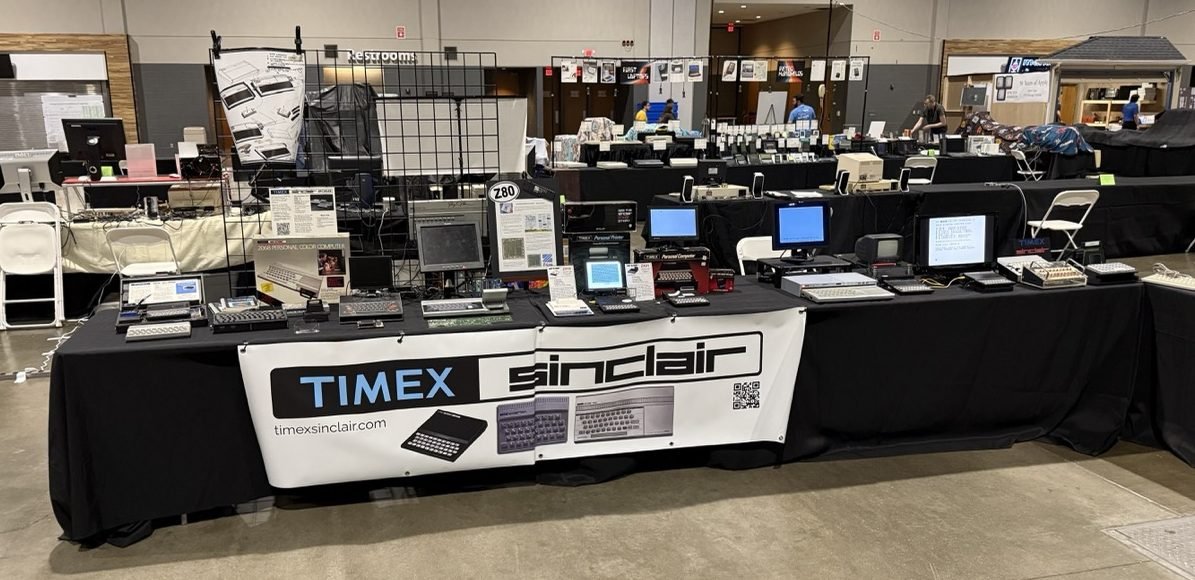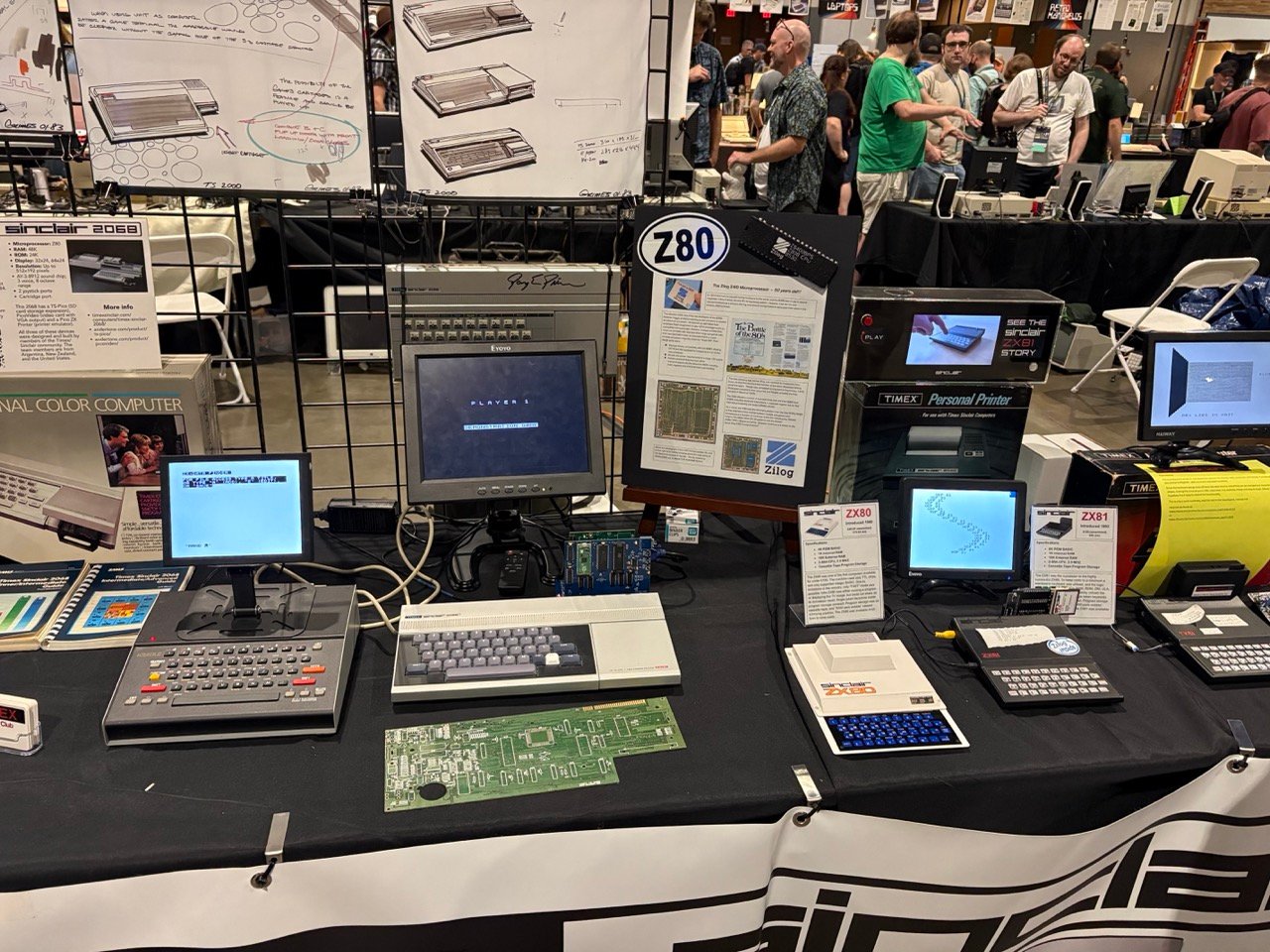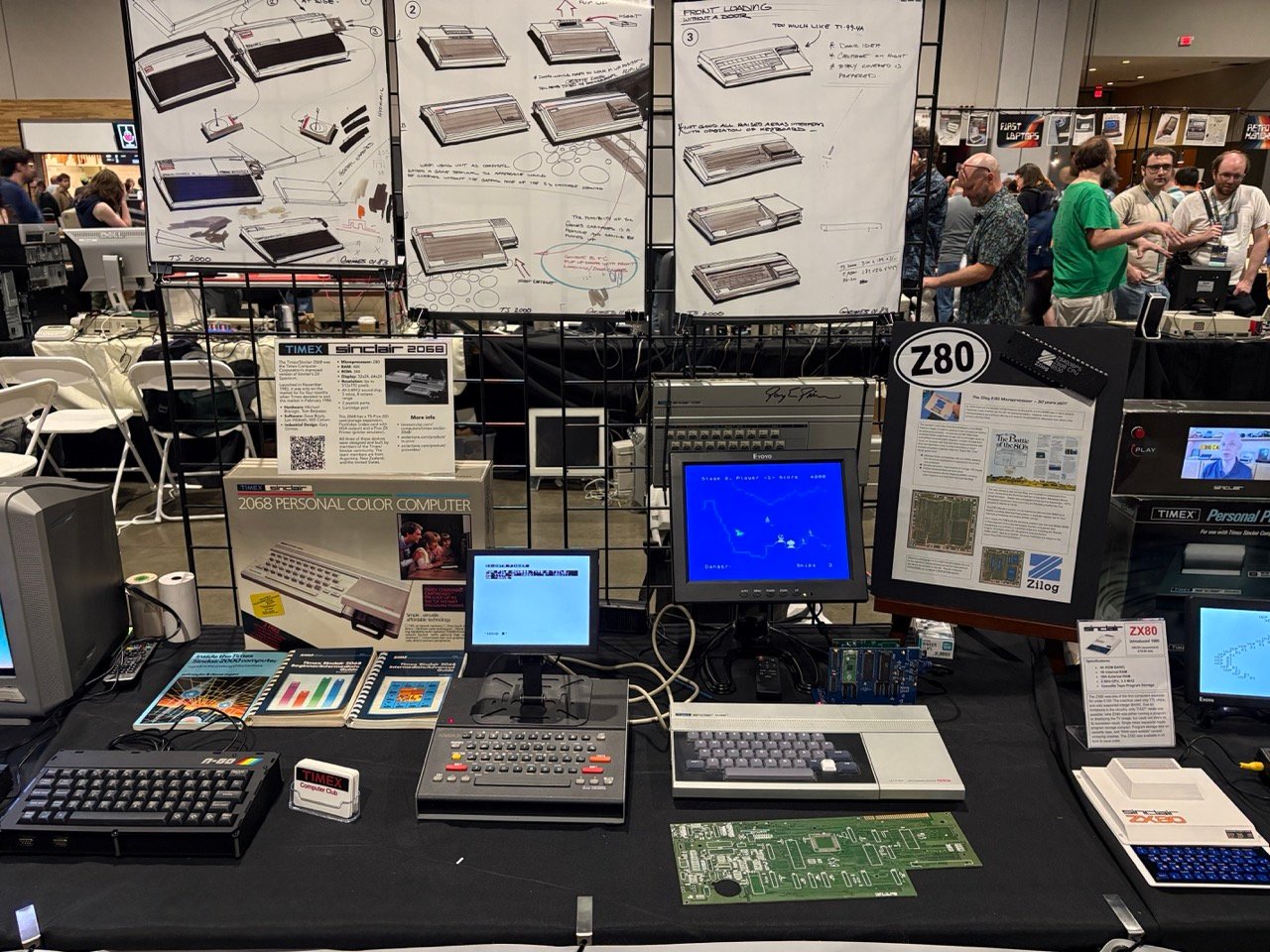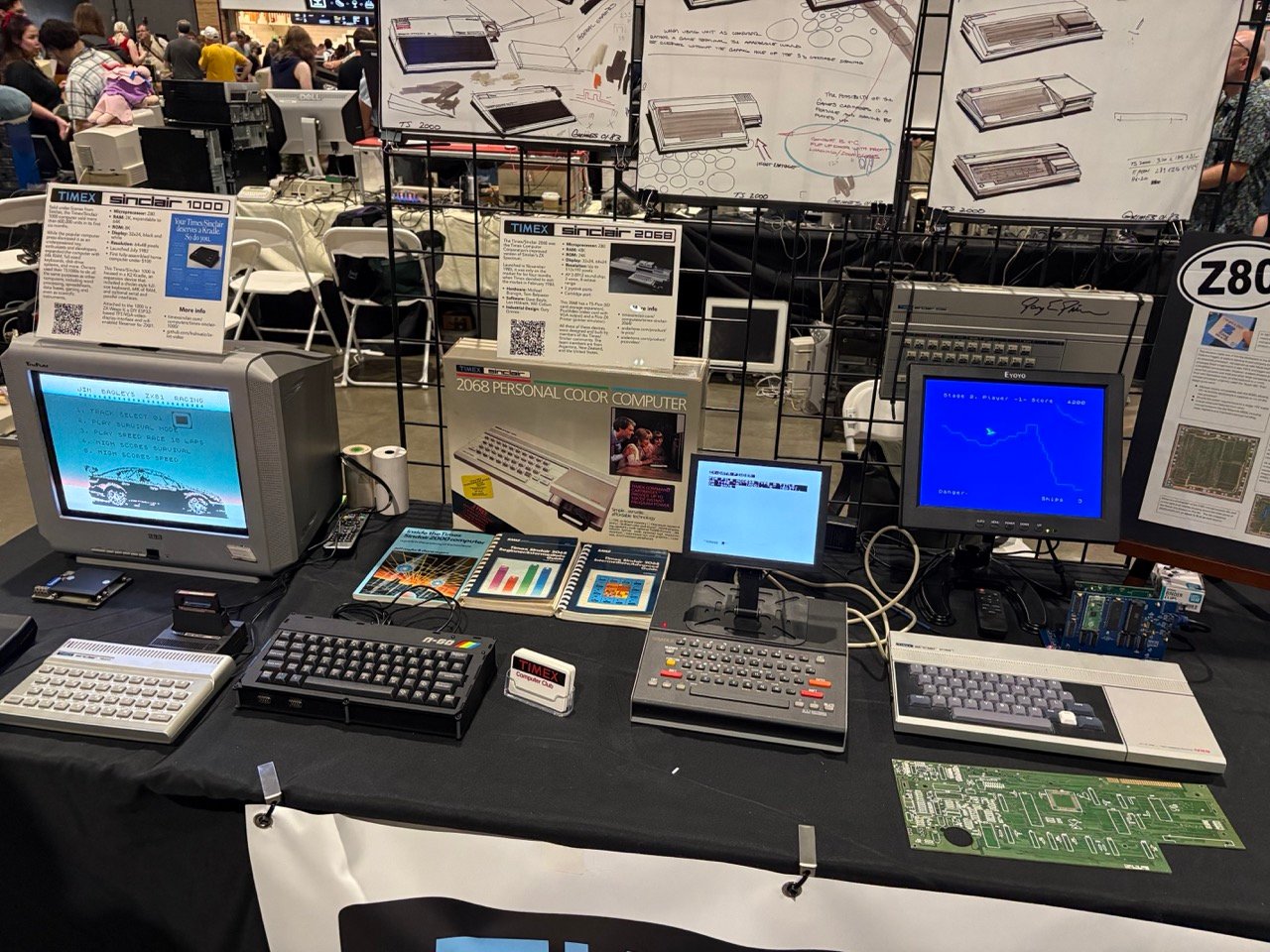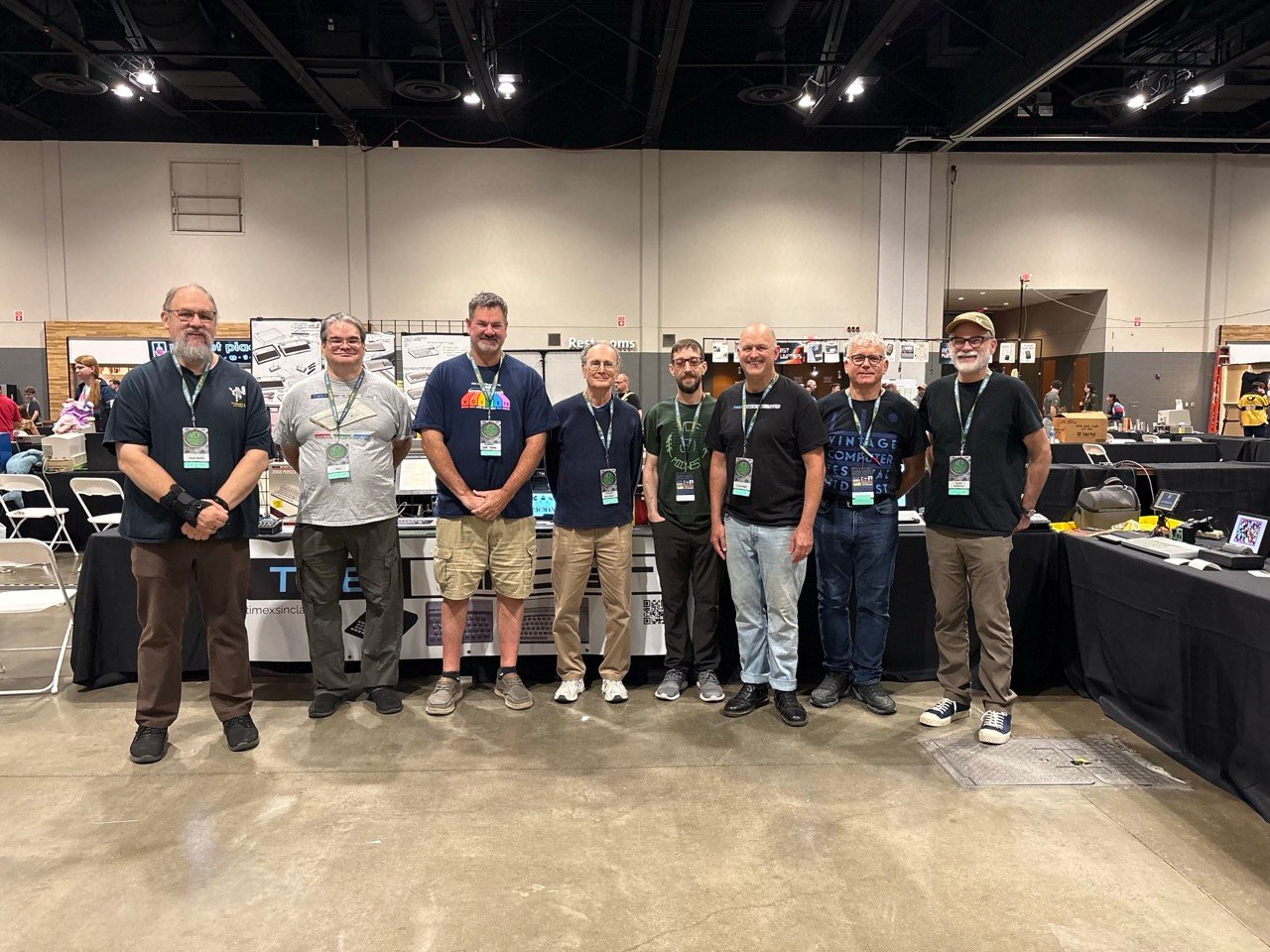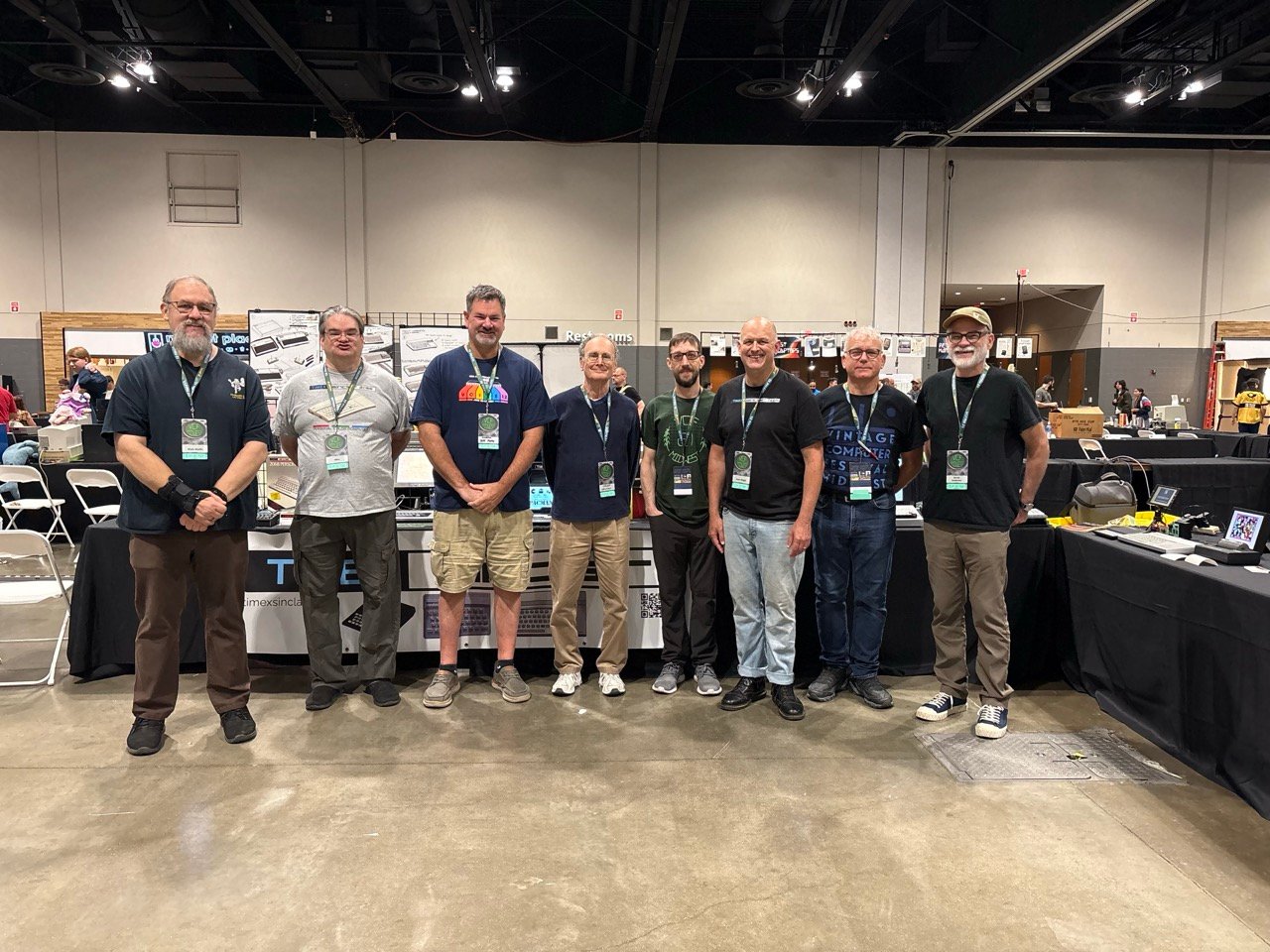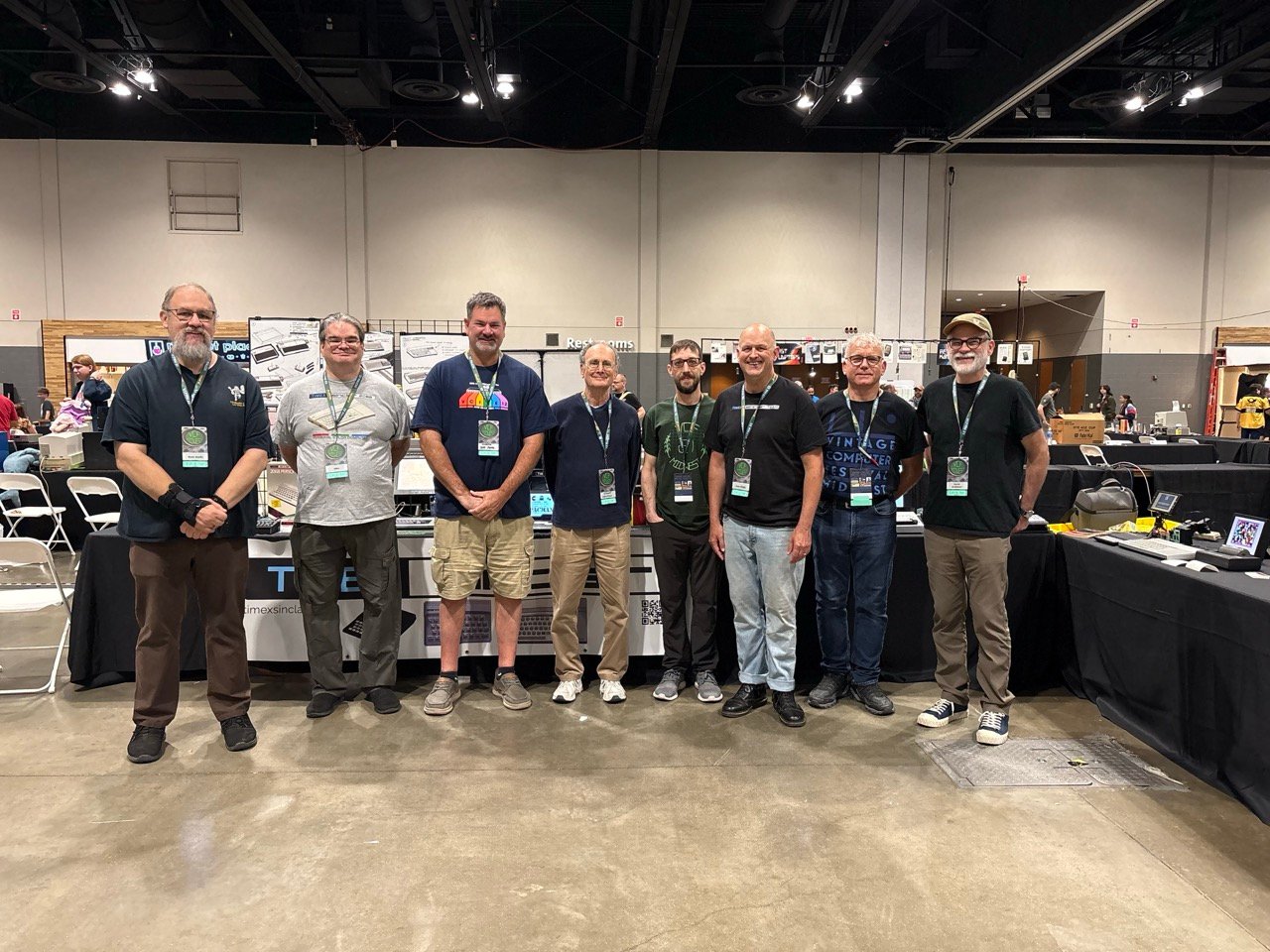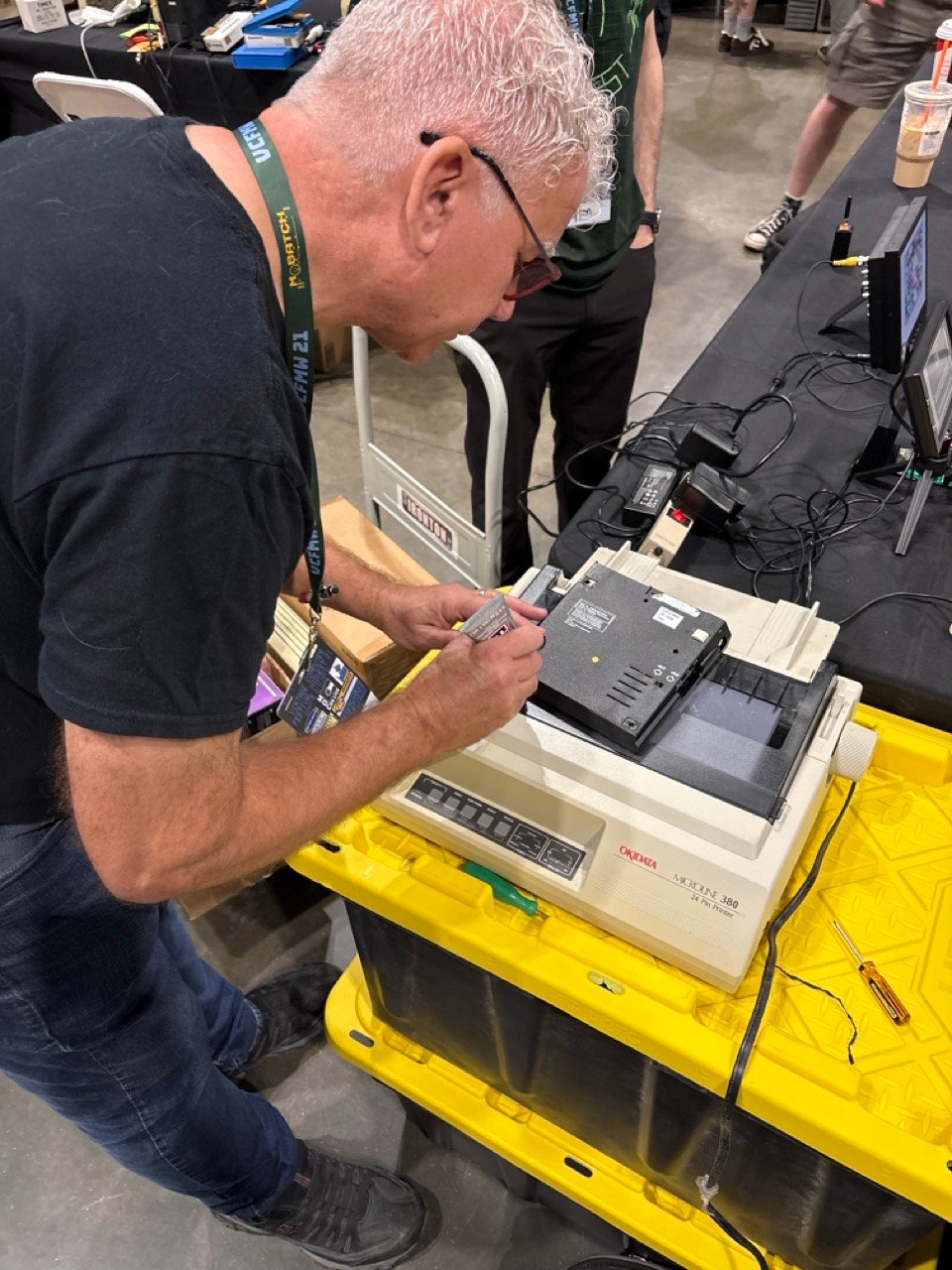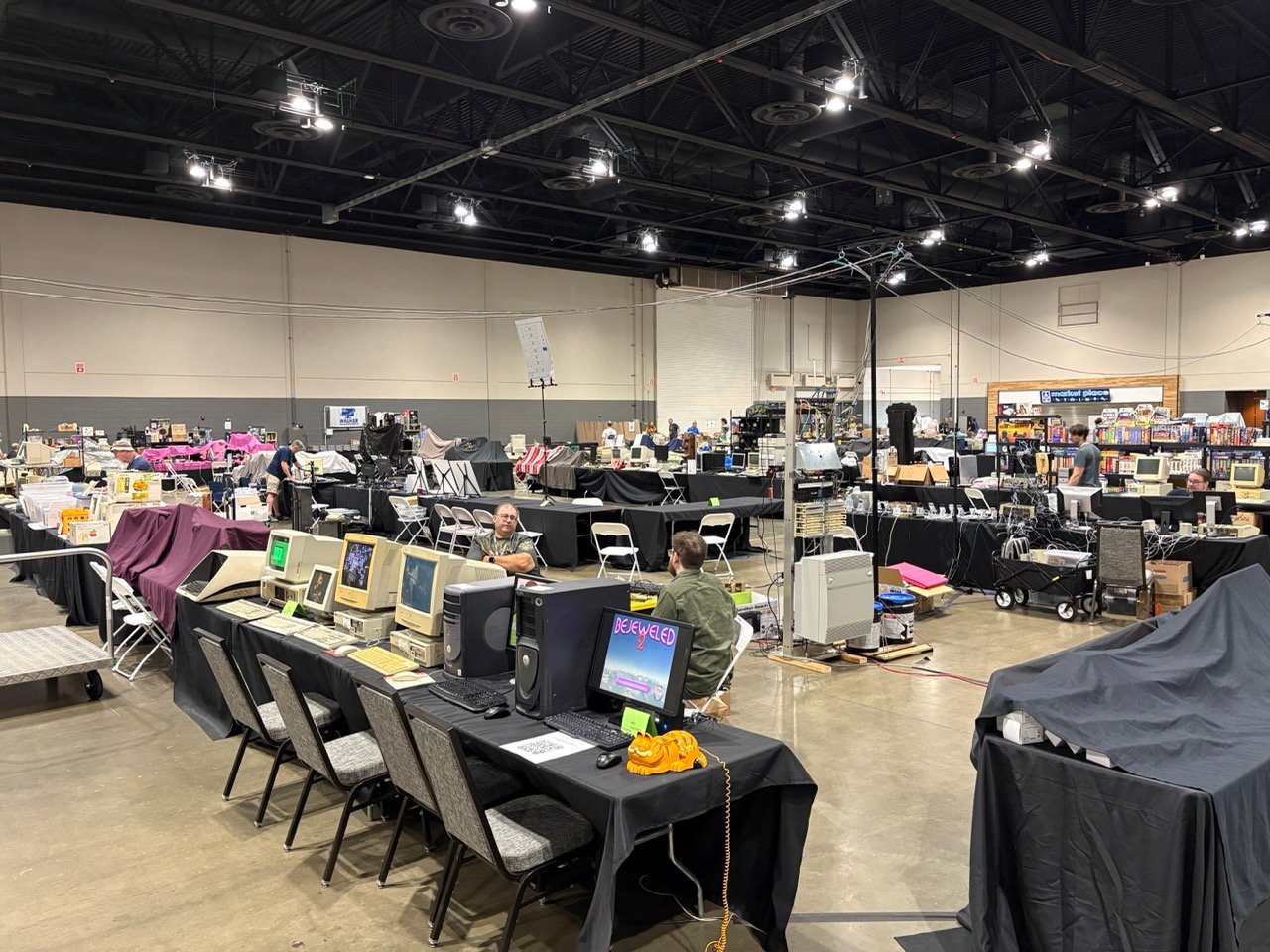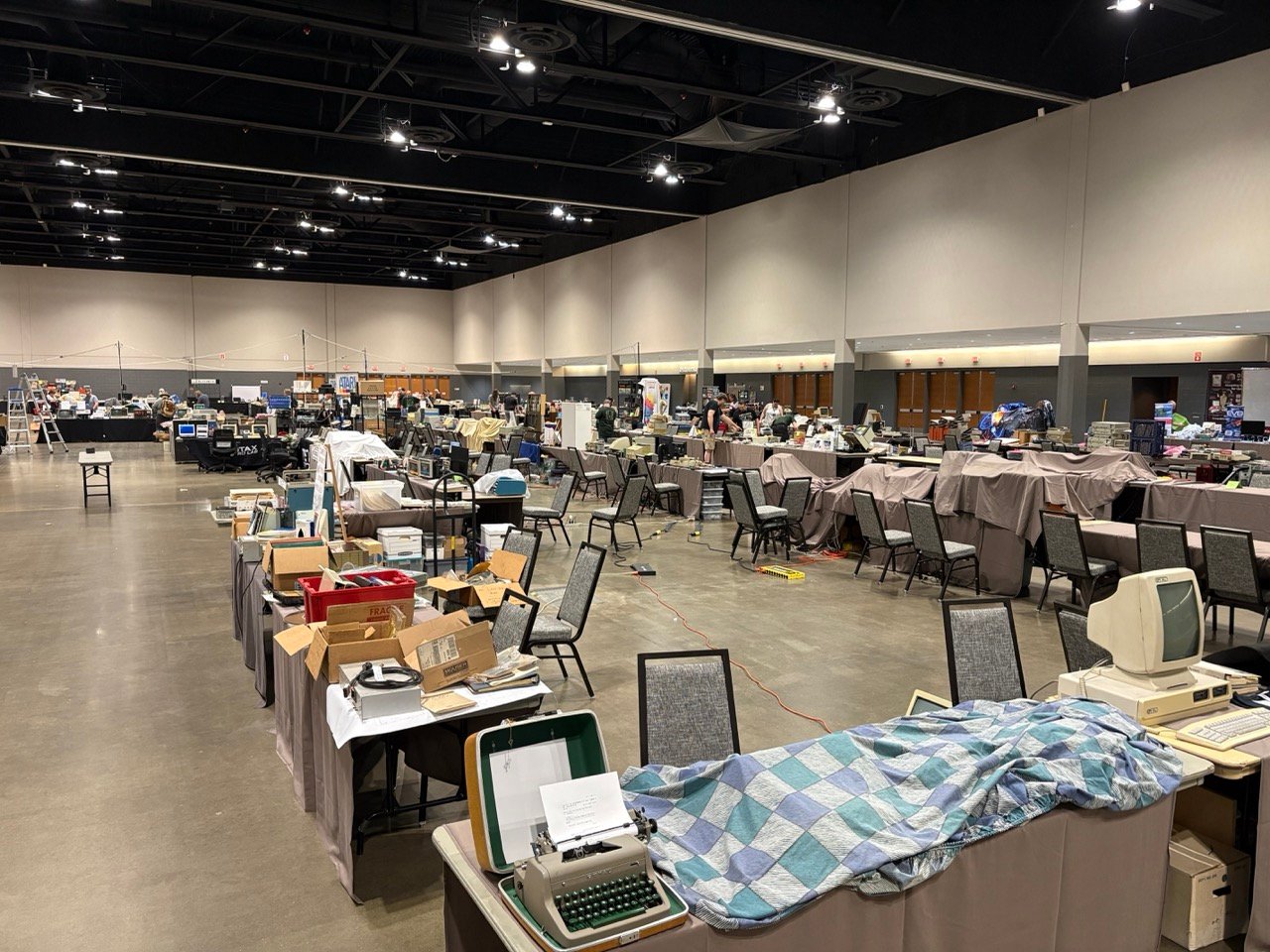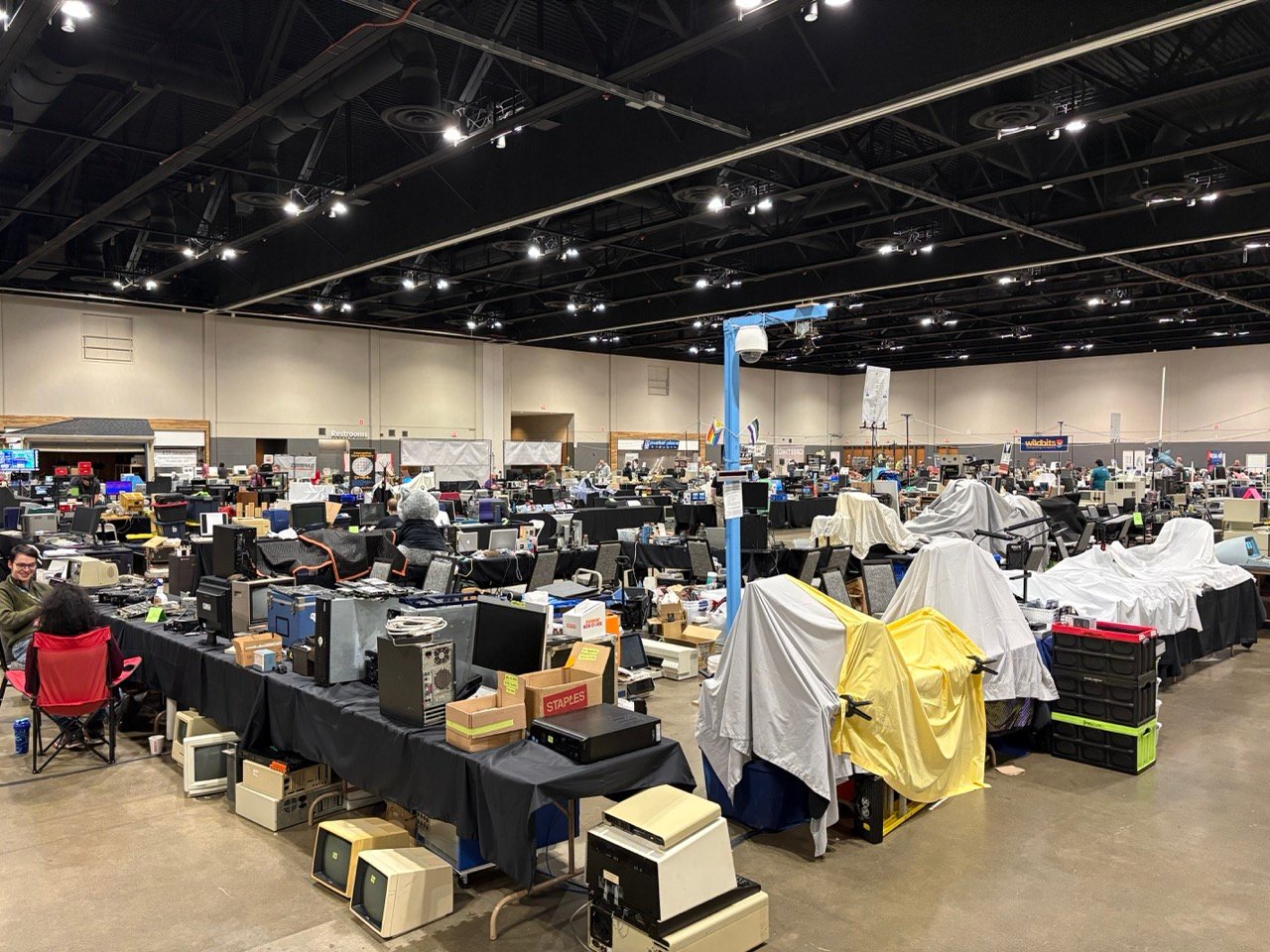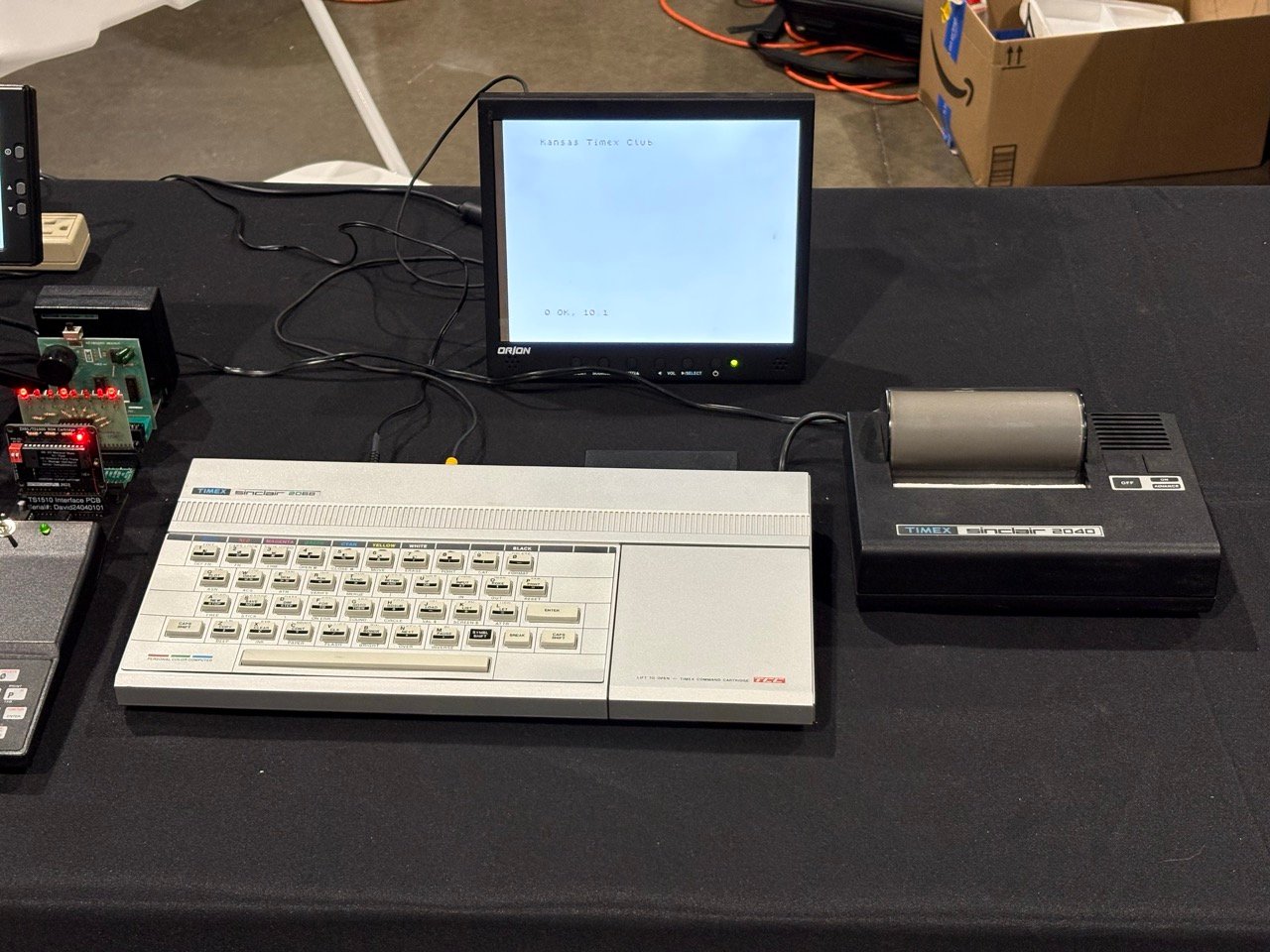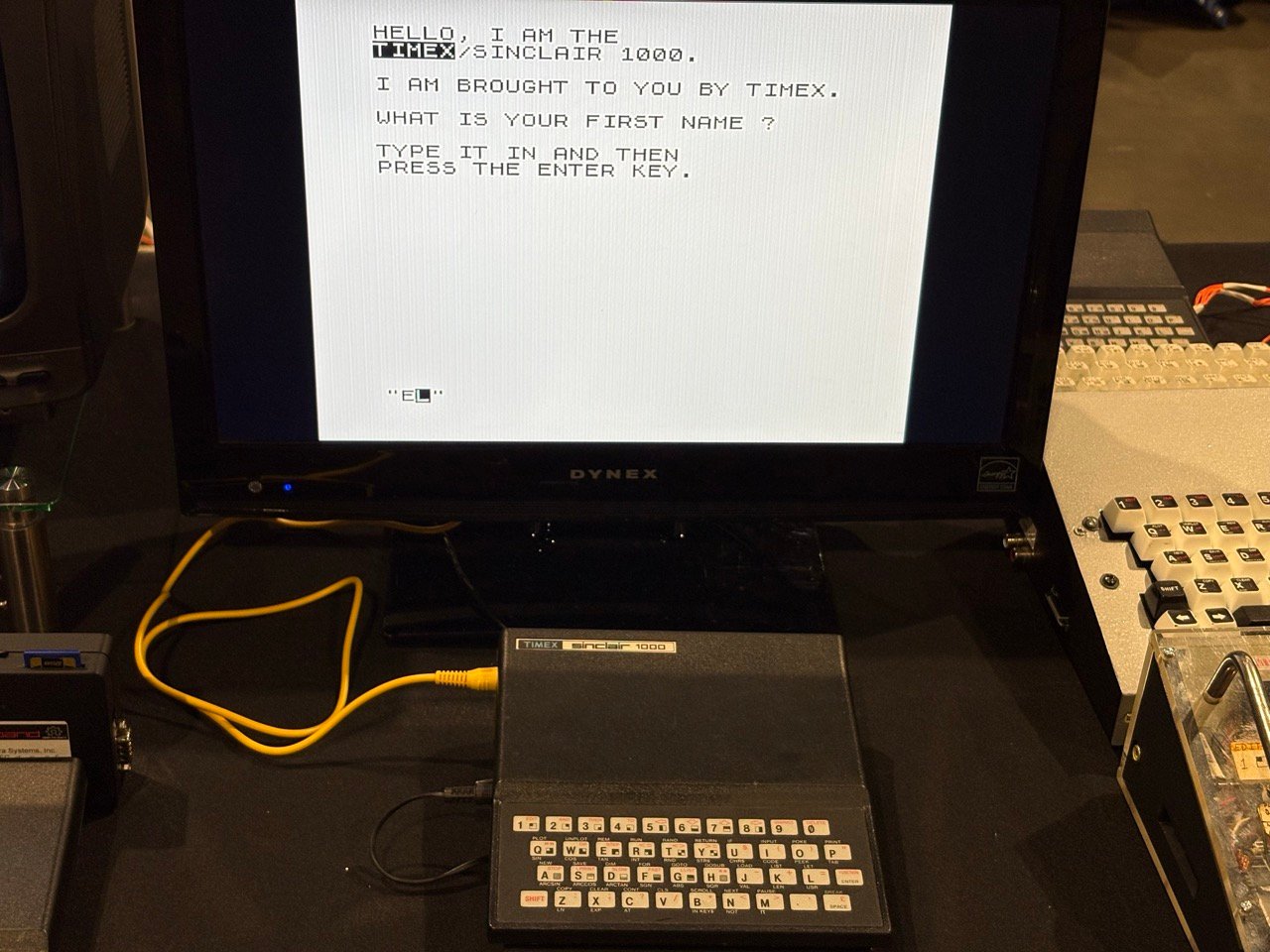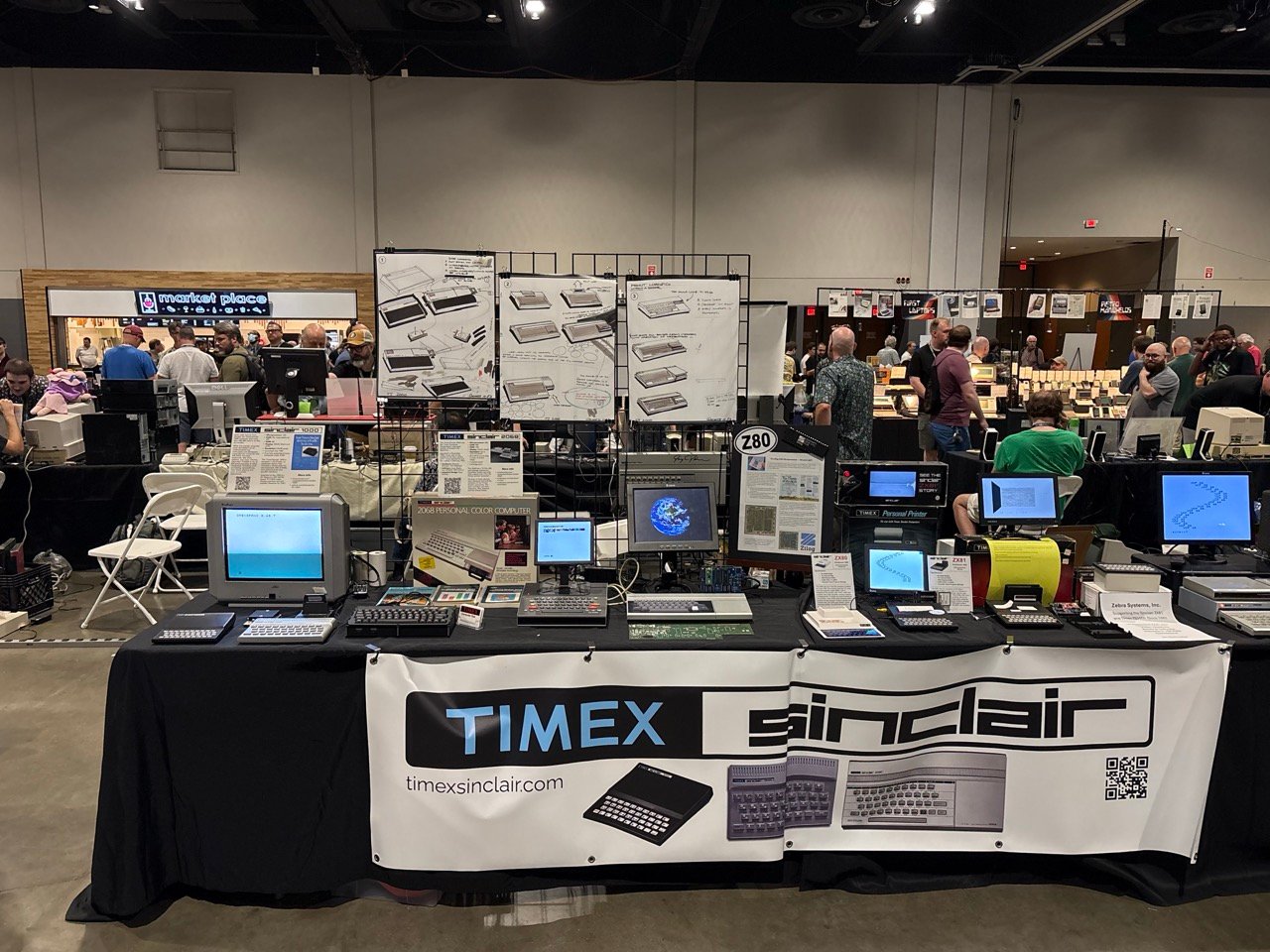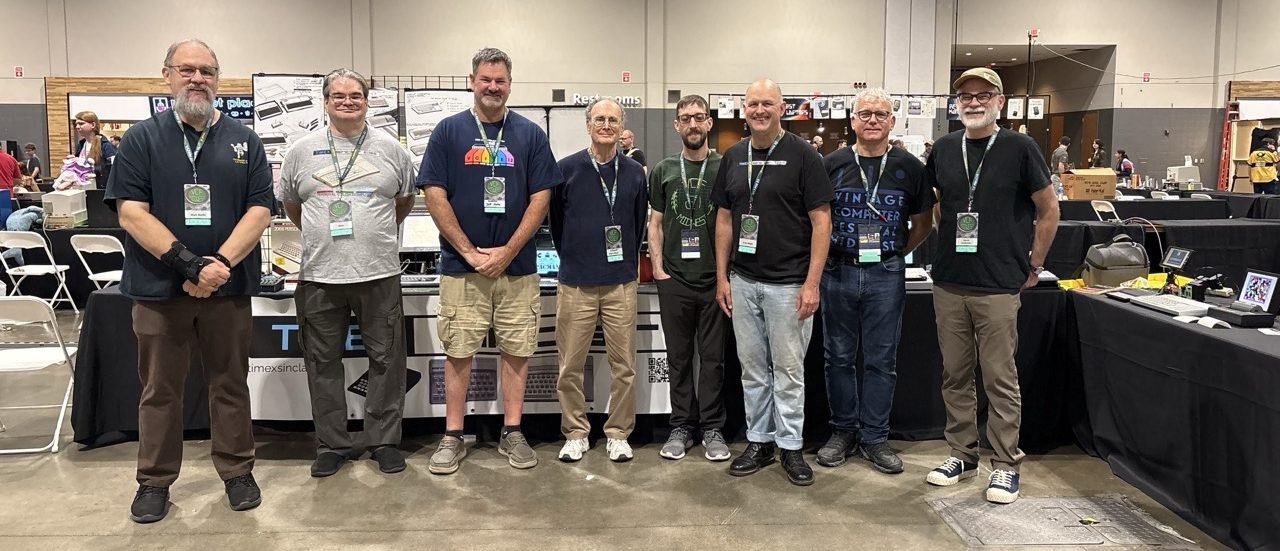
Members of the Timex/Sinclair Online User Group returned to VCF Midwest for a second year, taking three tables with Evan Wright’s table beside them. The show itself was larger than in 2025, having expanded into another wall unit of the convention center.
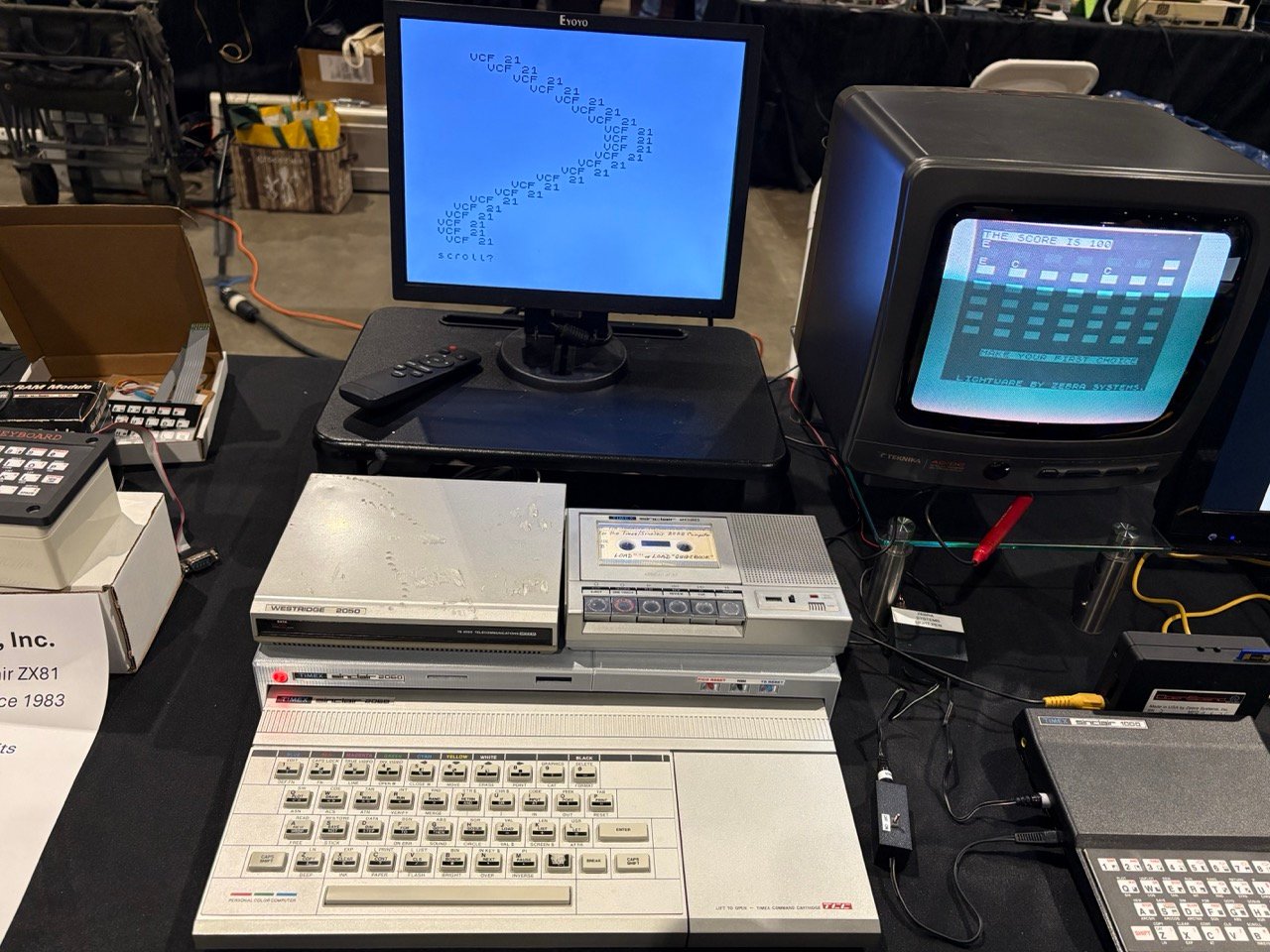
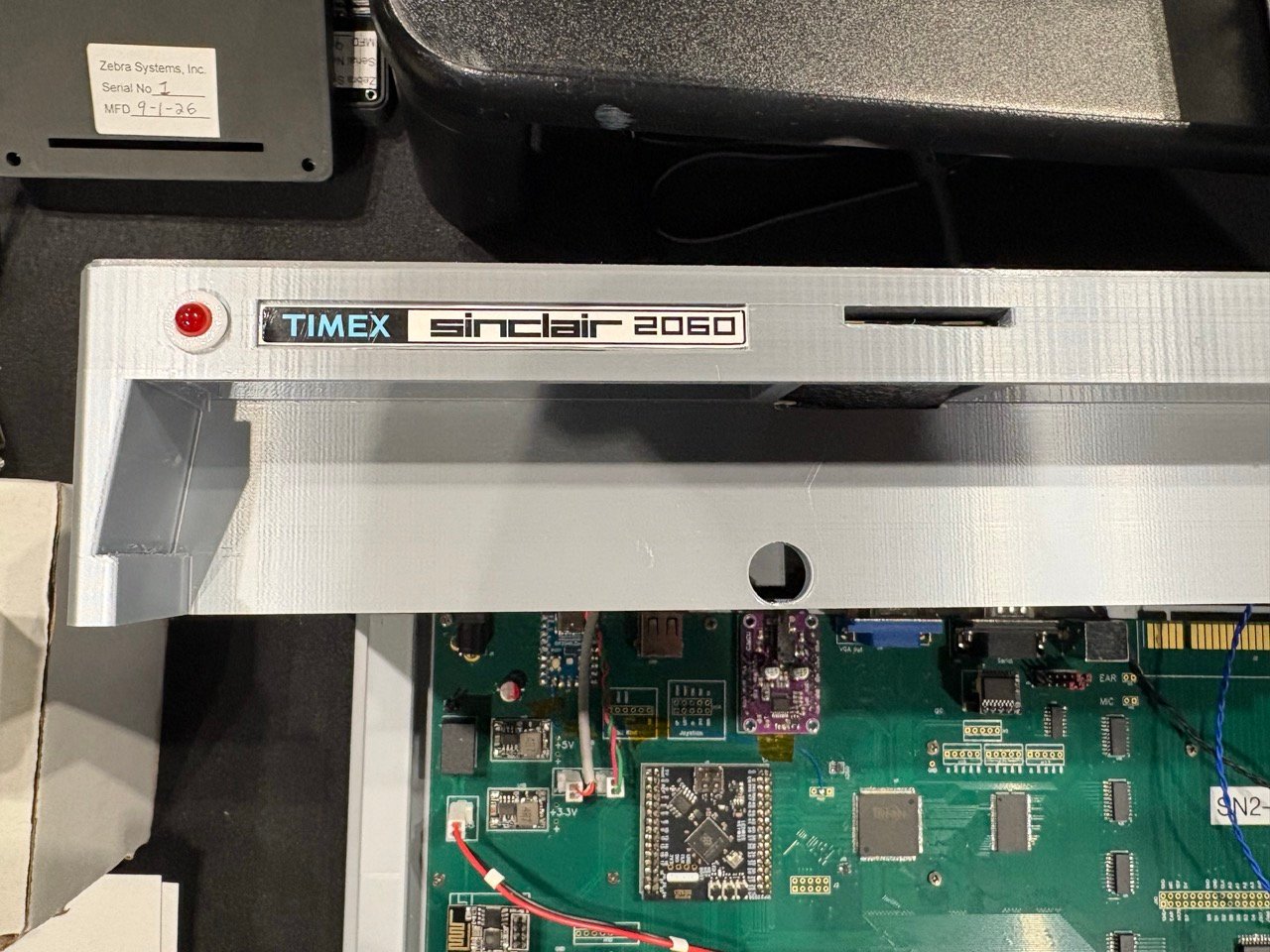
Where the 2025 display leaned toward showing the machines, the 2026 display leaned toward showing what people are building for them: storage and video hardware designed in the last two years, restorations, and a working prototype of the 2060 Bus Expansion Unit.
What was exhibited
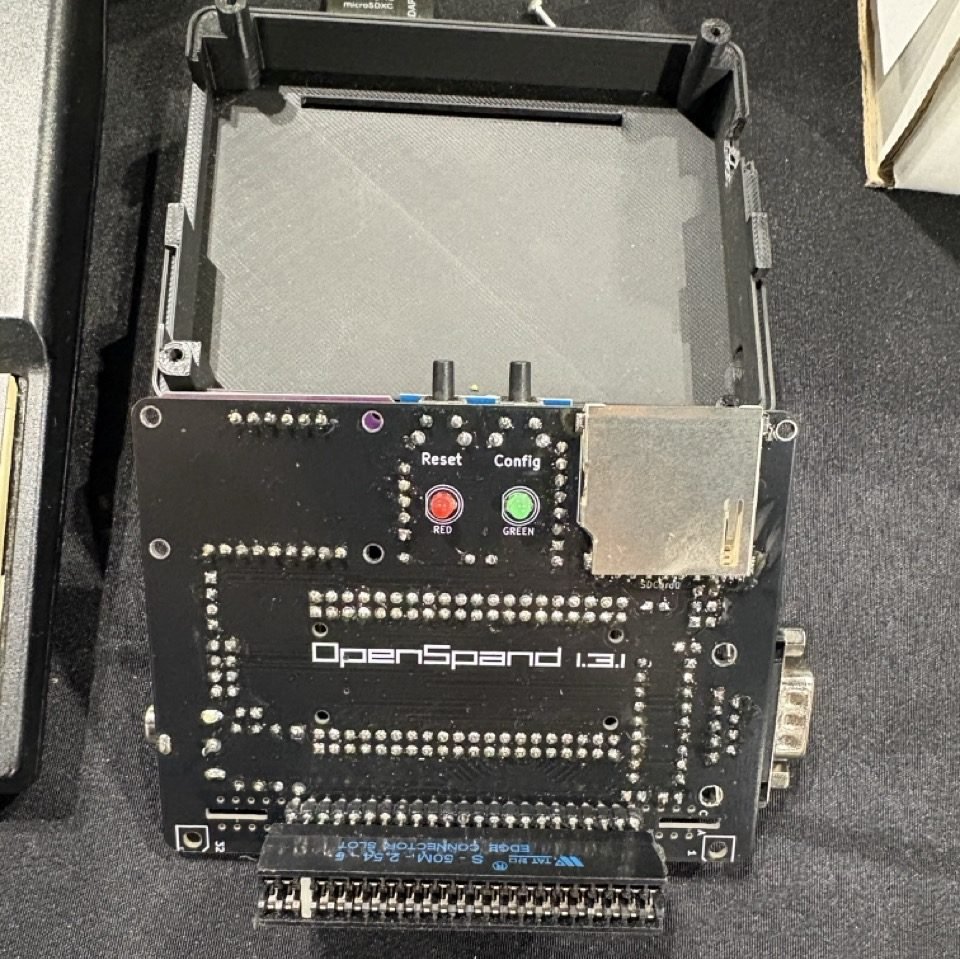
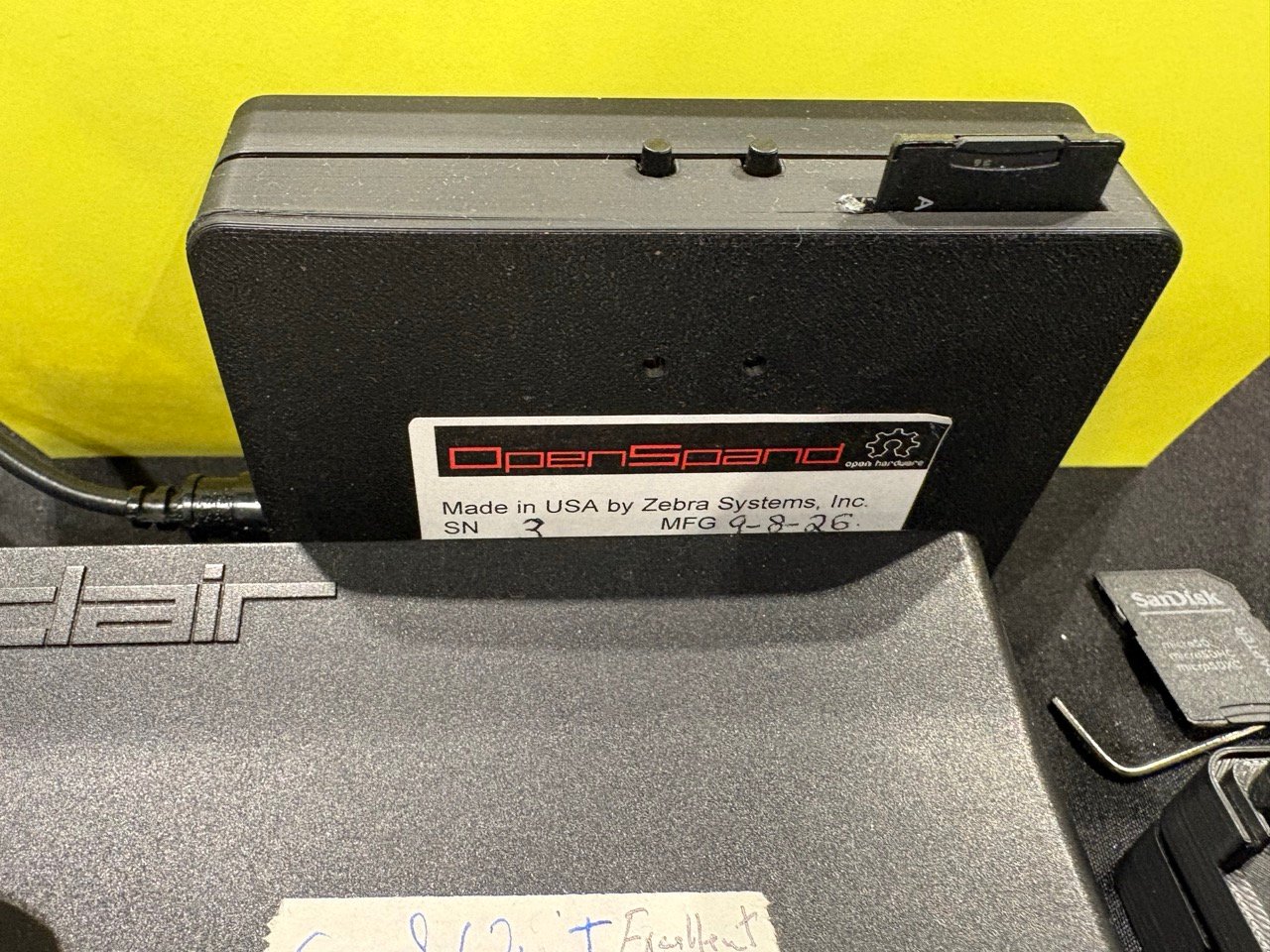
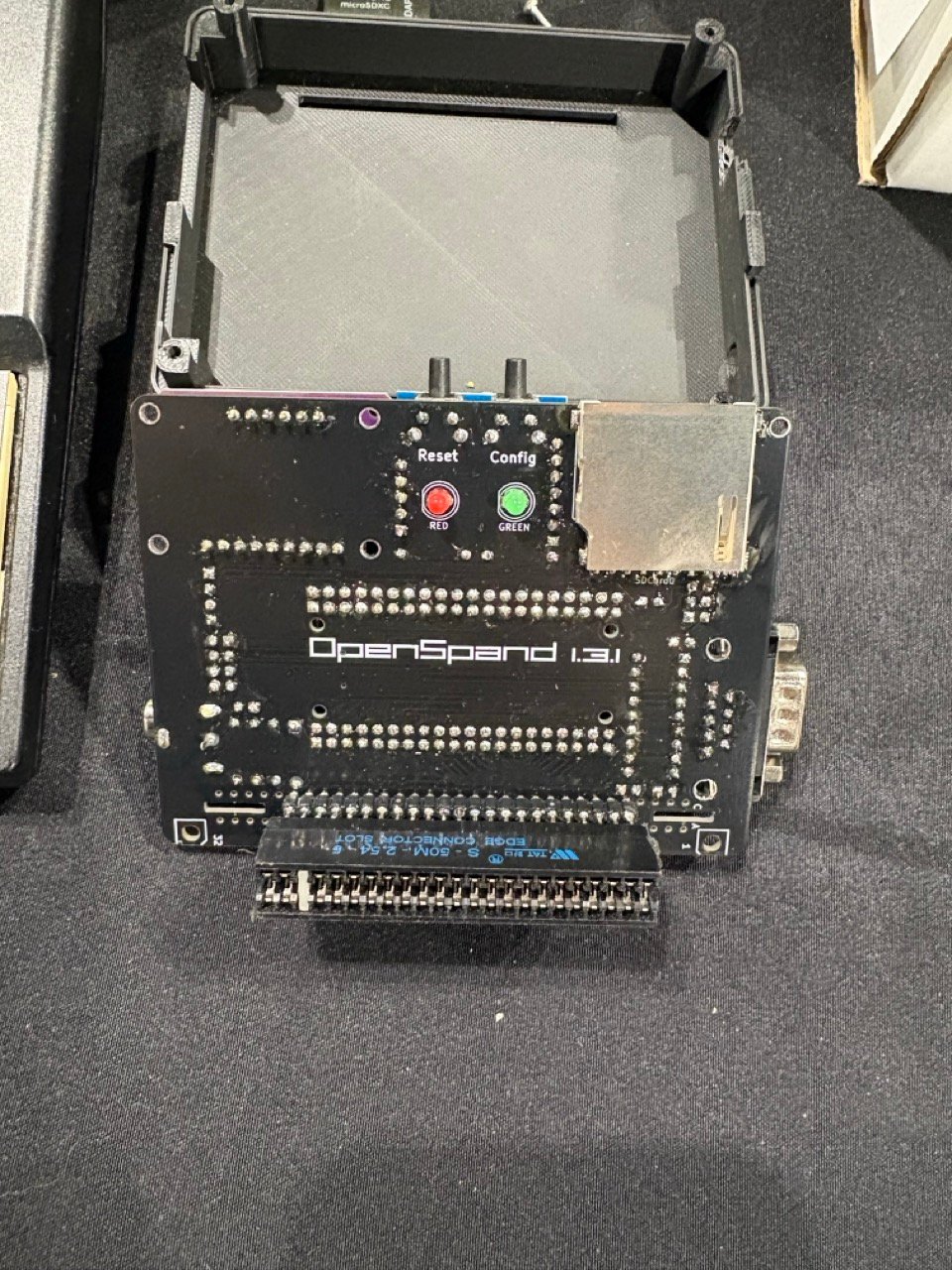
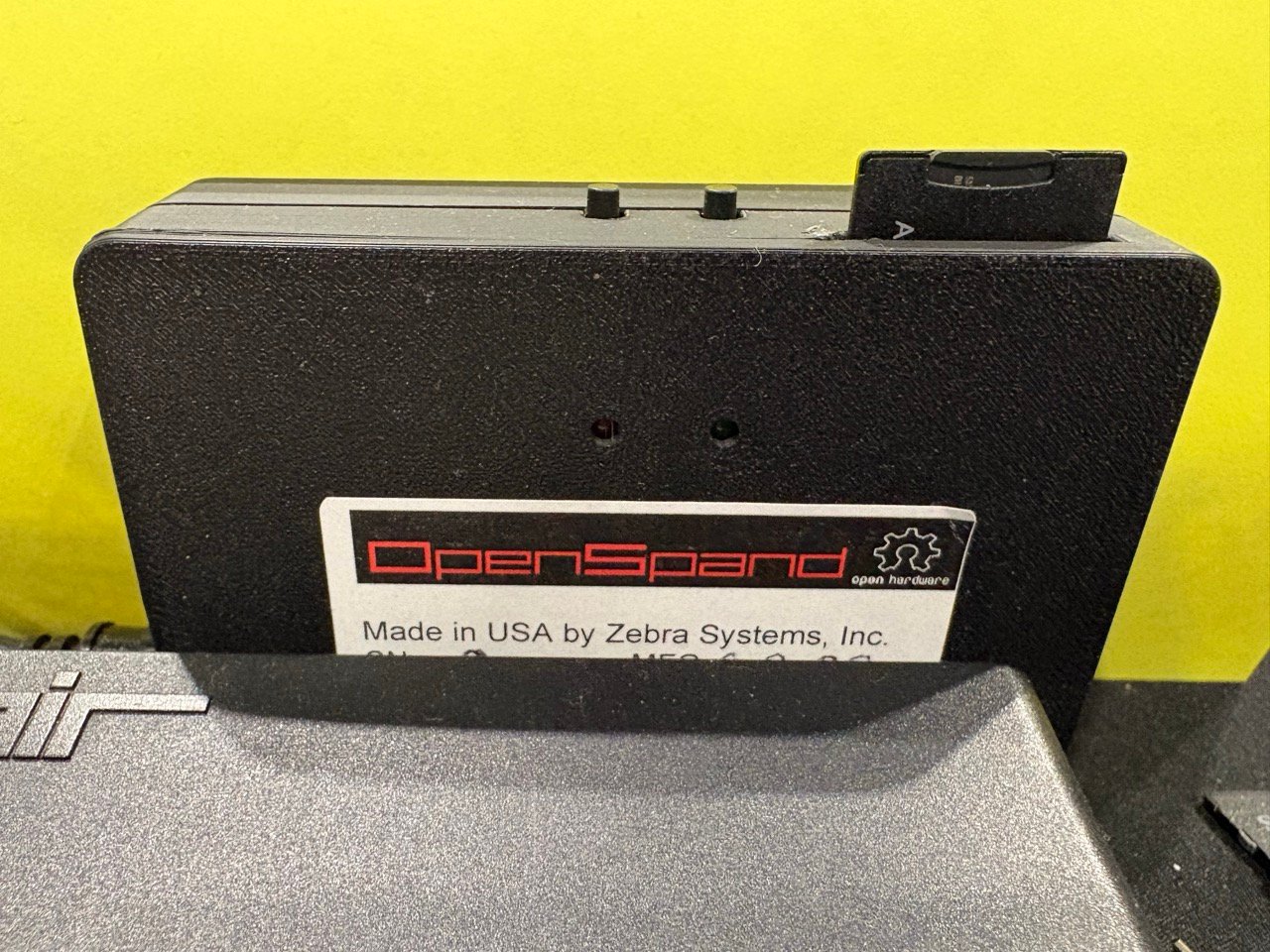
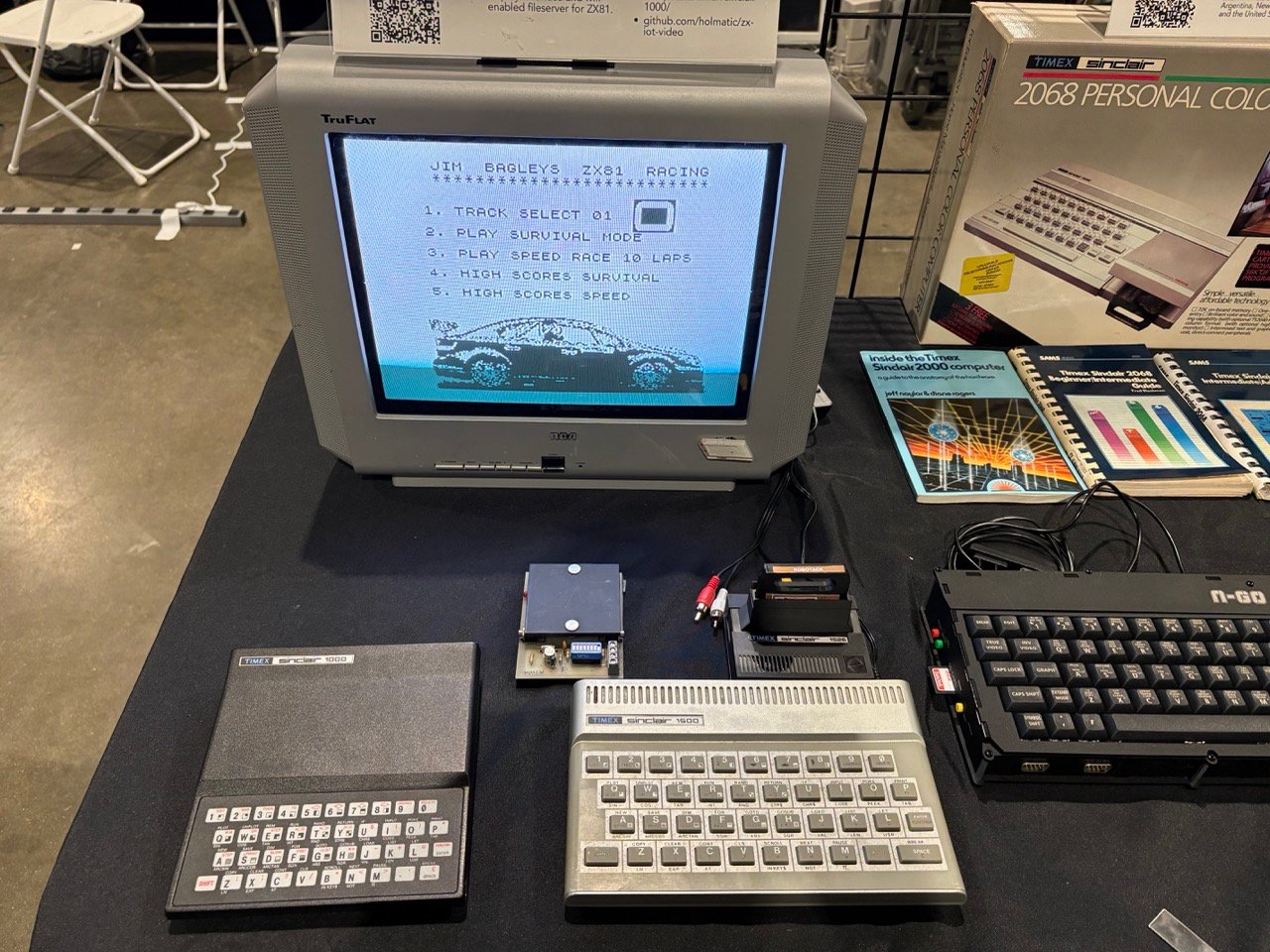
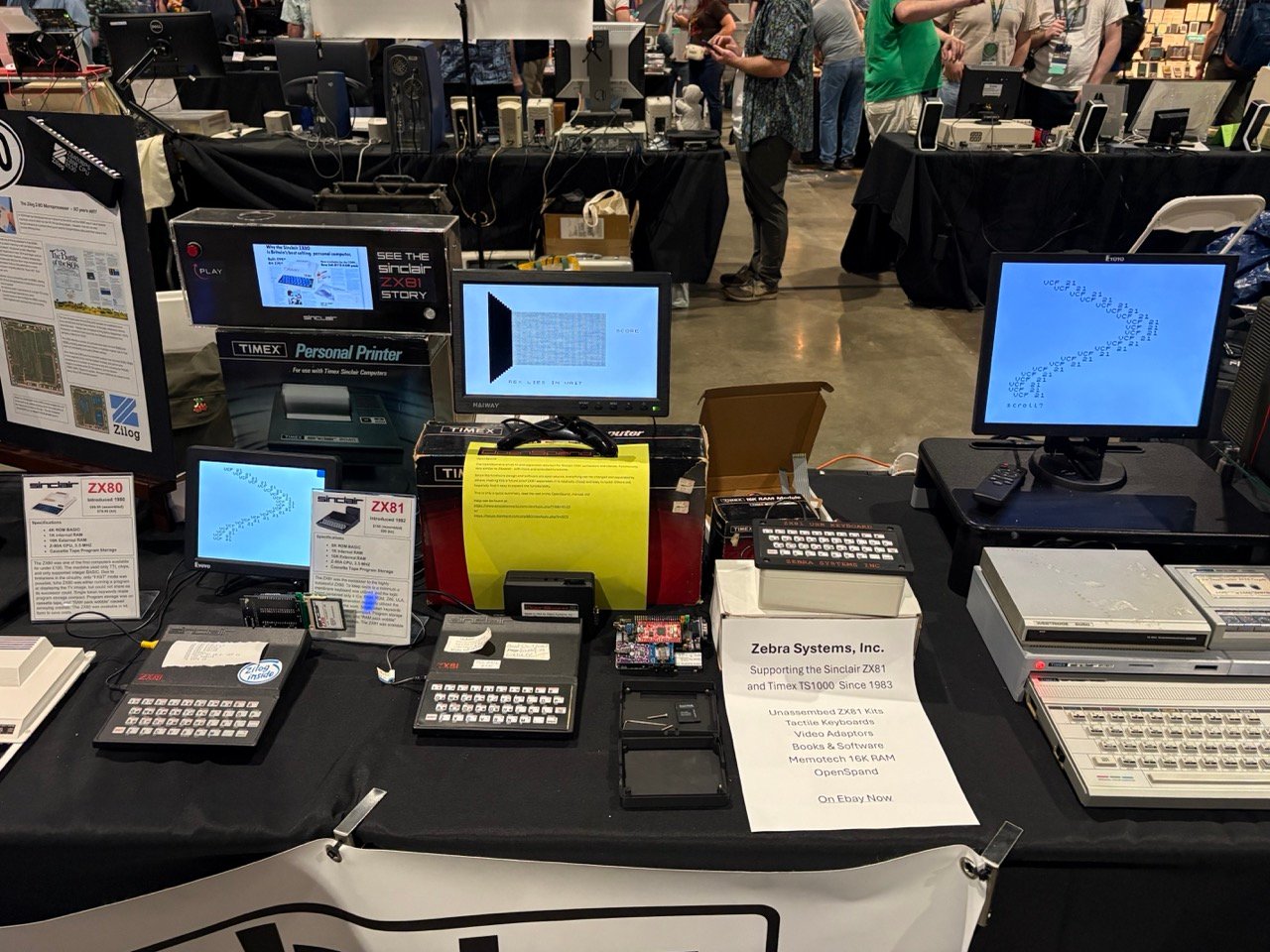
- Stewart Newfeld: assembled OpenSpand modules, Adam Klotblixt’s open source ZX81 expansion, which adds SD card storage and generates composite video by replicating most of the ULA’s display logic
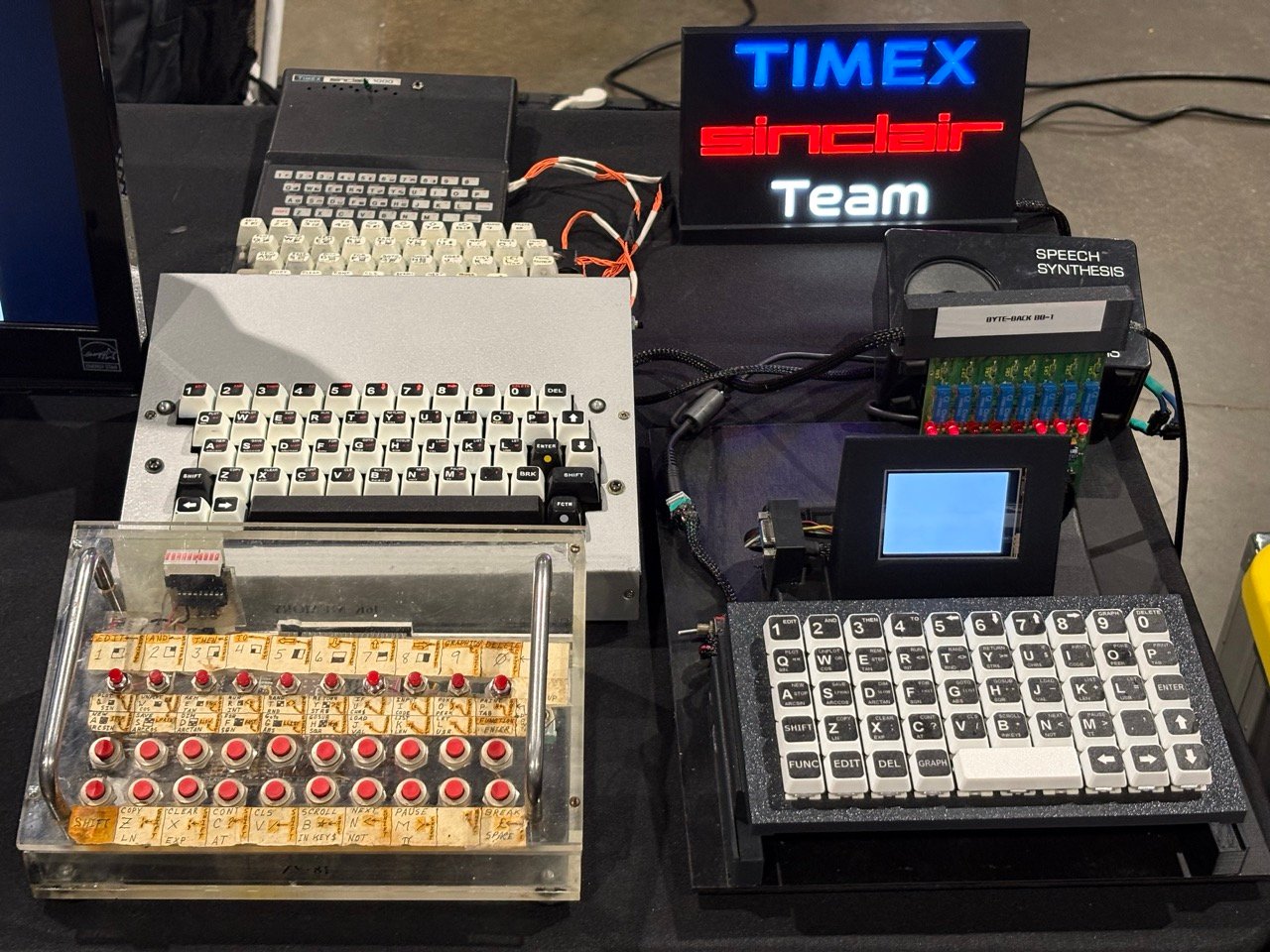
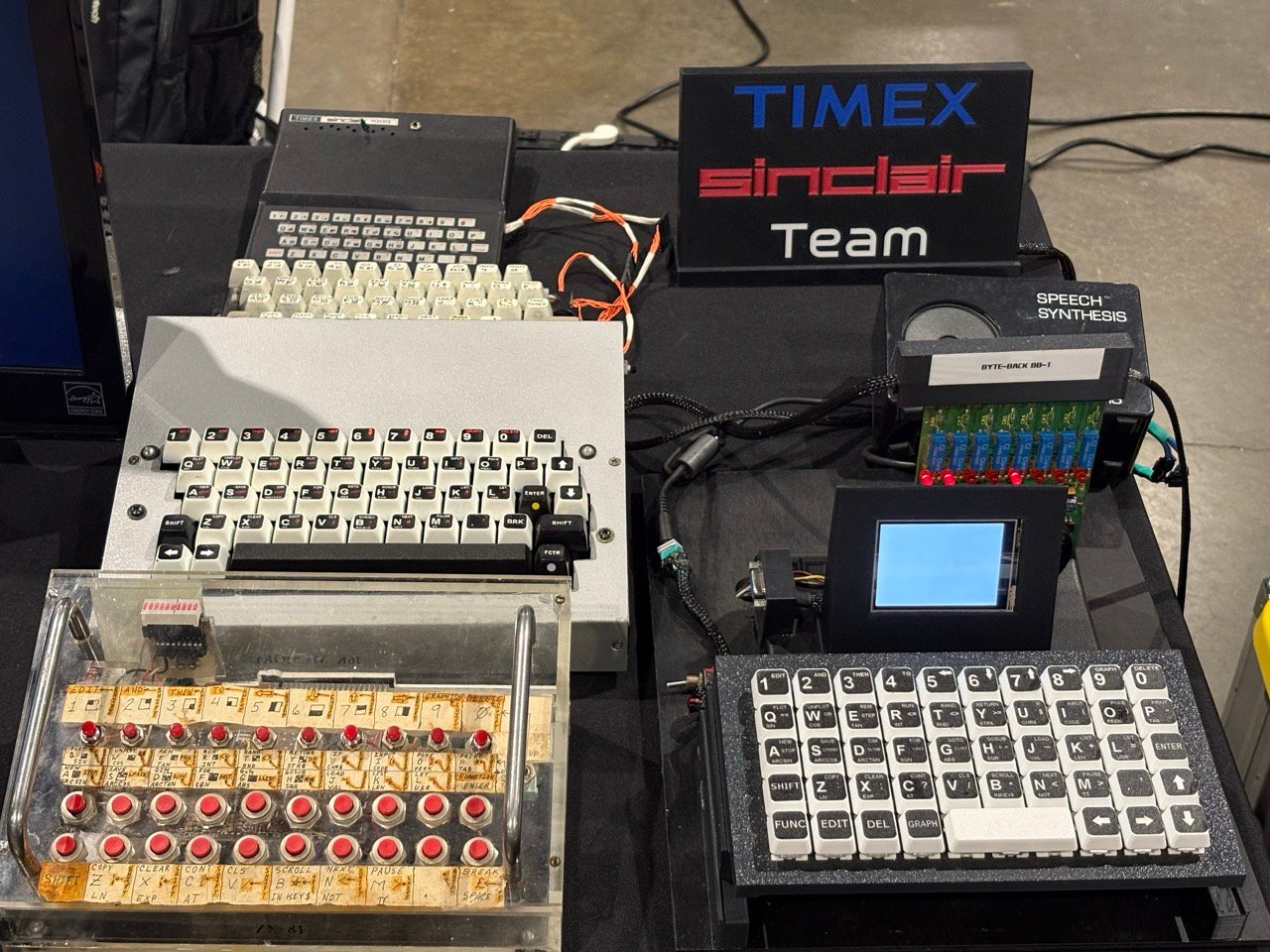
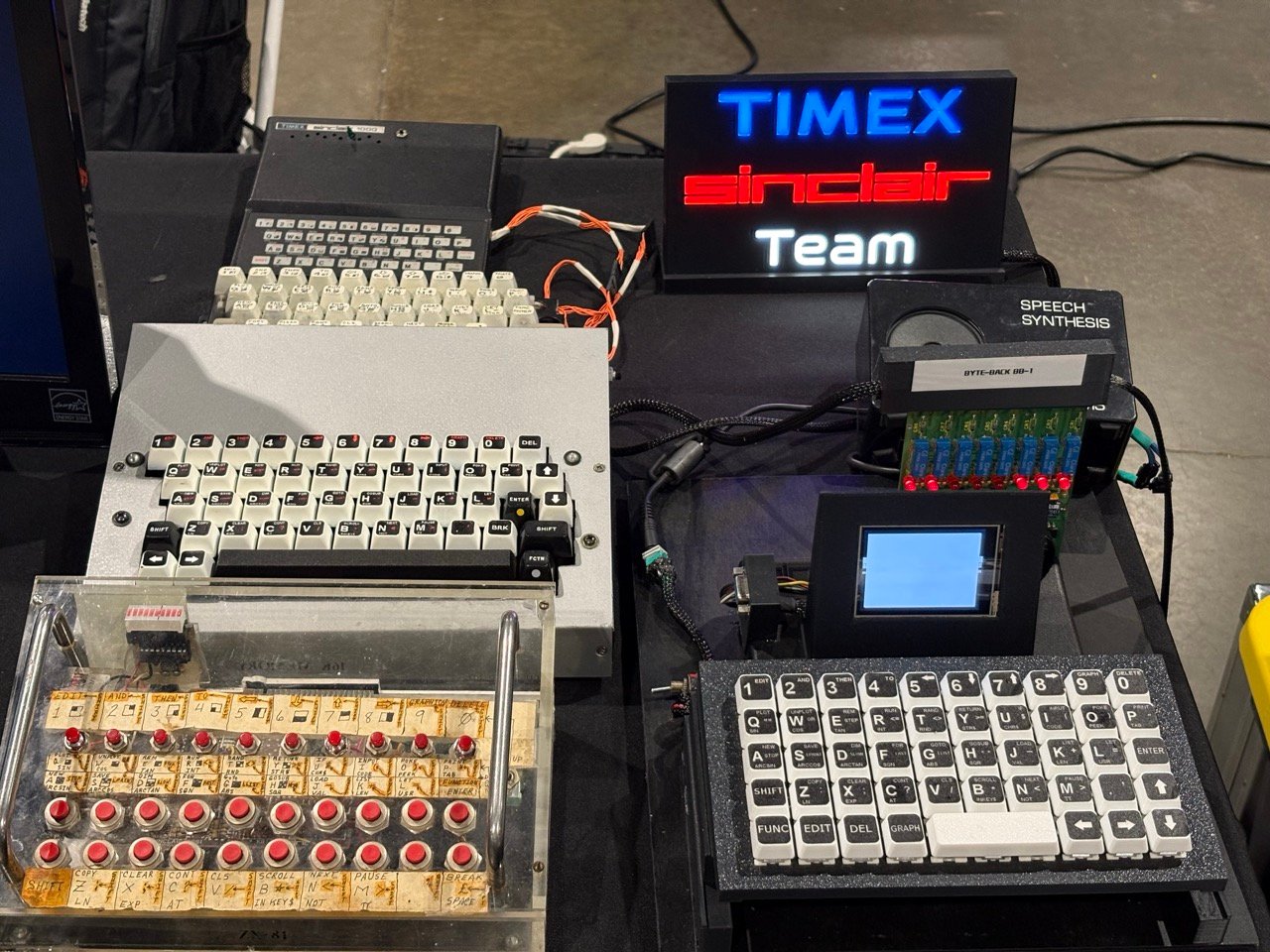
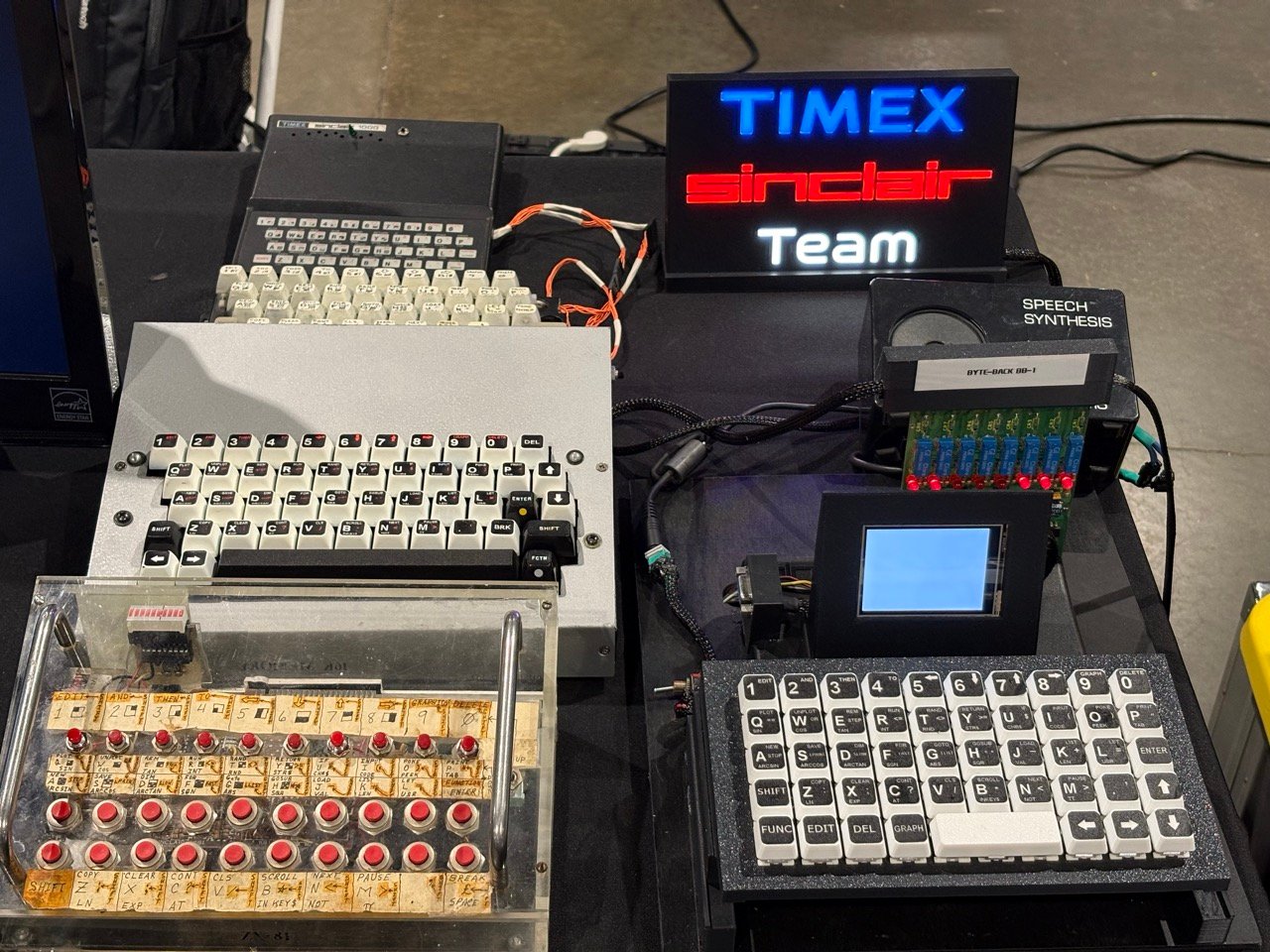
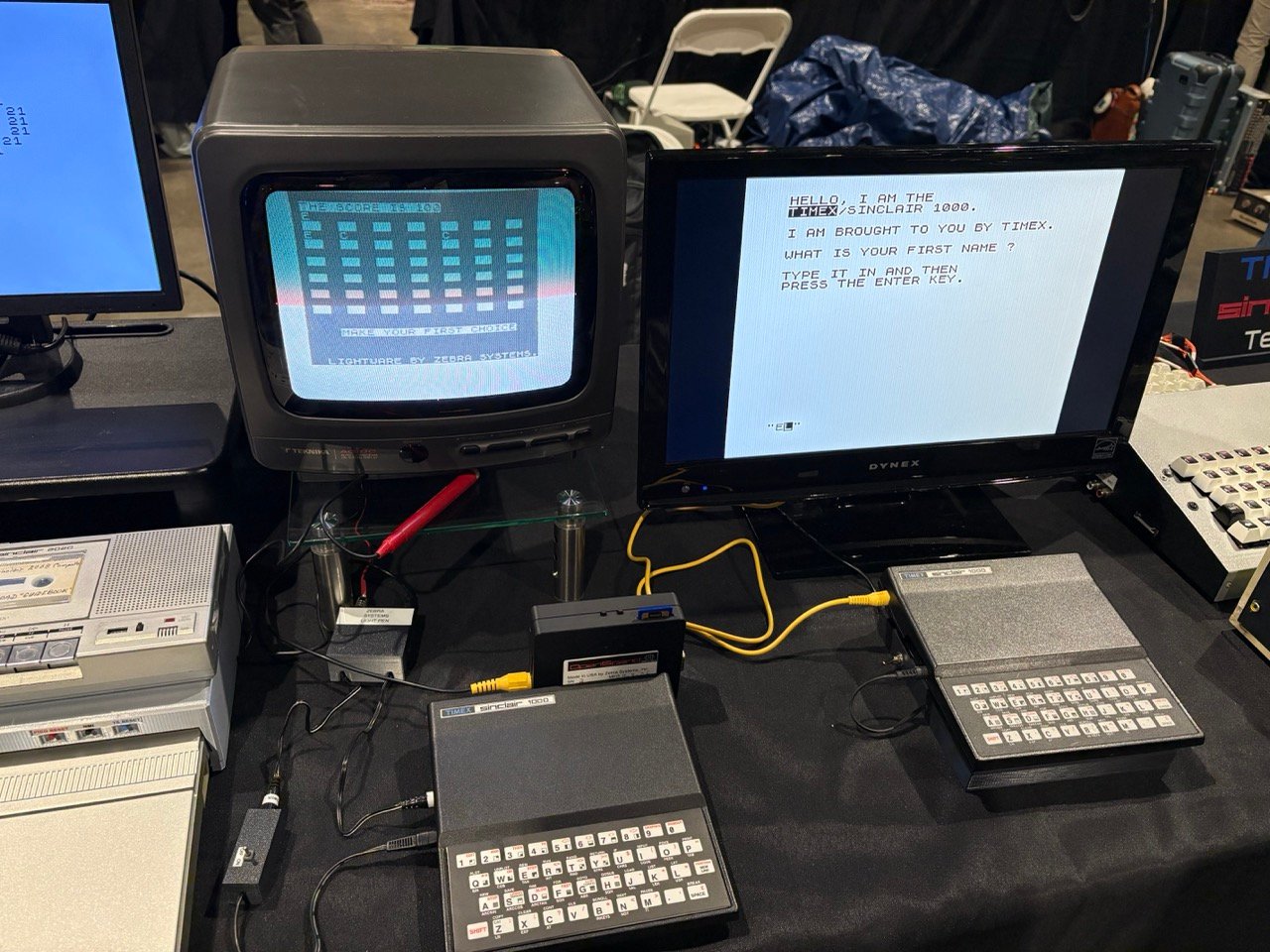
- Joe VandeZande: a Timex in-store retail demonstrator for the TS 1000; a ZX81 rehoused in hand-cut plexiglass with a Radio Shack switch keyboard, from Bob Swoger’s collection; homebrew and 3D-printed keyboards; a ZX81 running a Zebra Systems light pen; and a machine driving a lighted sign and a speech synthesizer through a Byte-Back BB-1 control module
- Jeff Fetta: a 3D-printed ZX80 reproduction, a compact flash storage board with a patched ROM of his own design, and a refaced point-of-purchase video display running the ZX81 story
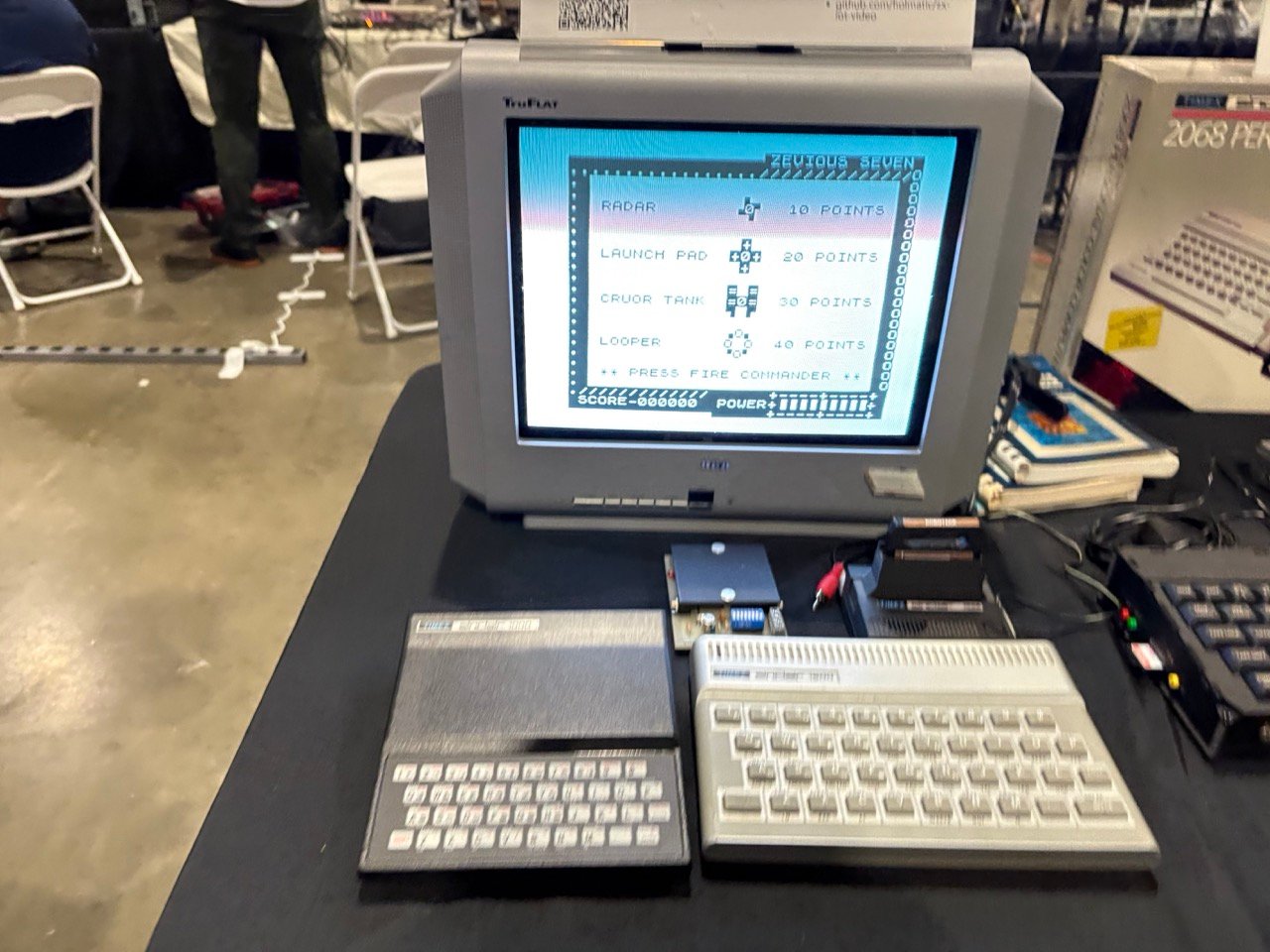
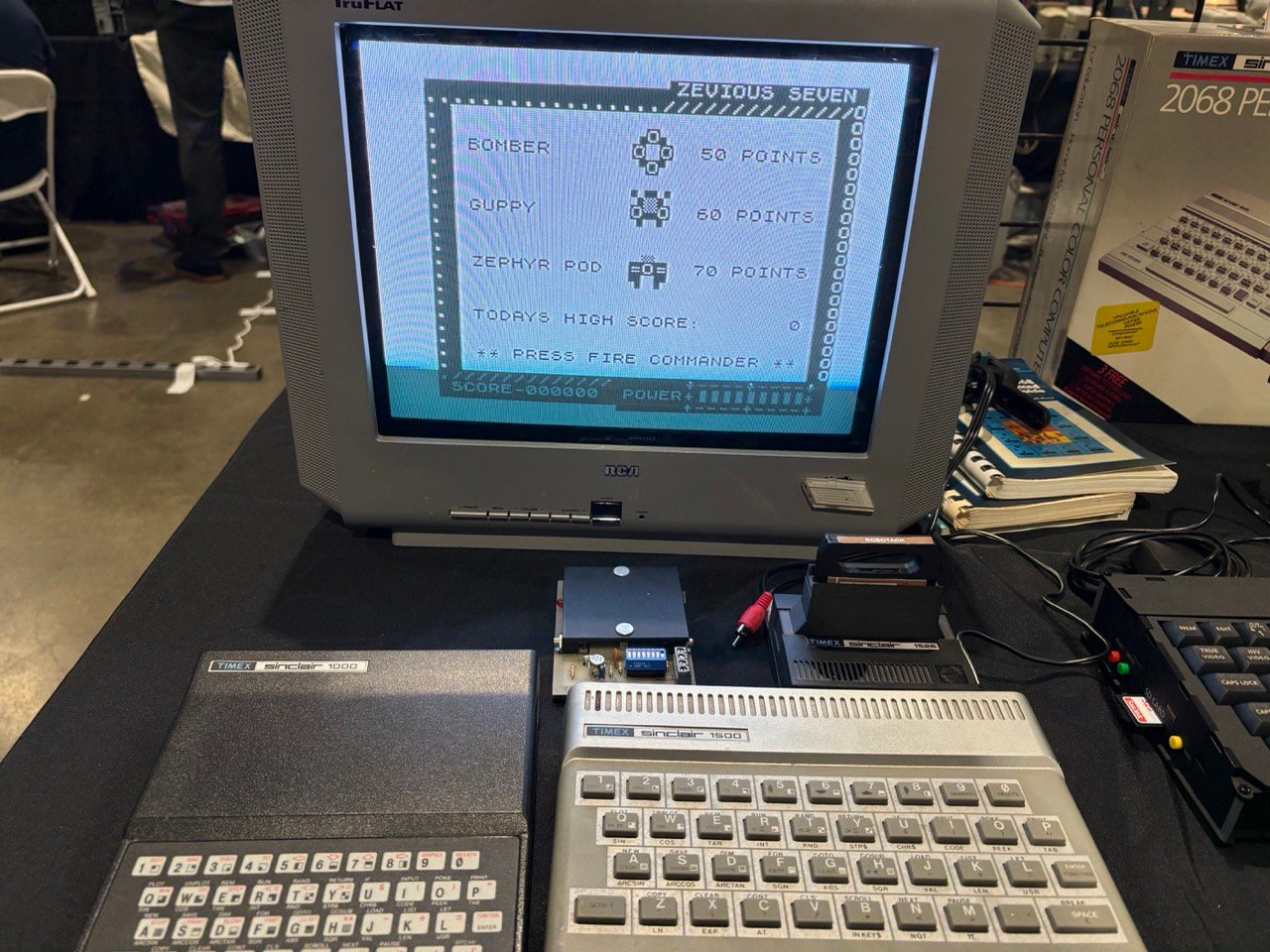
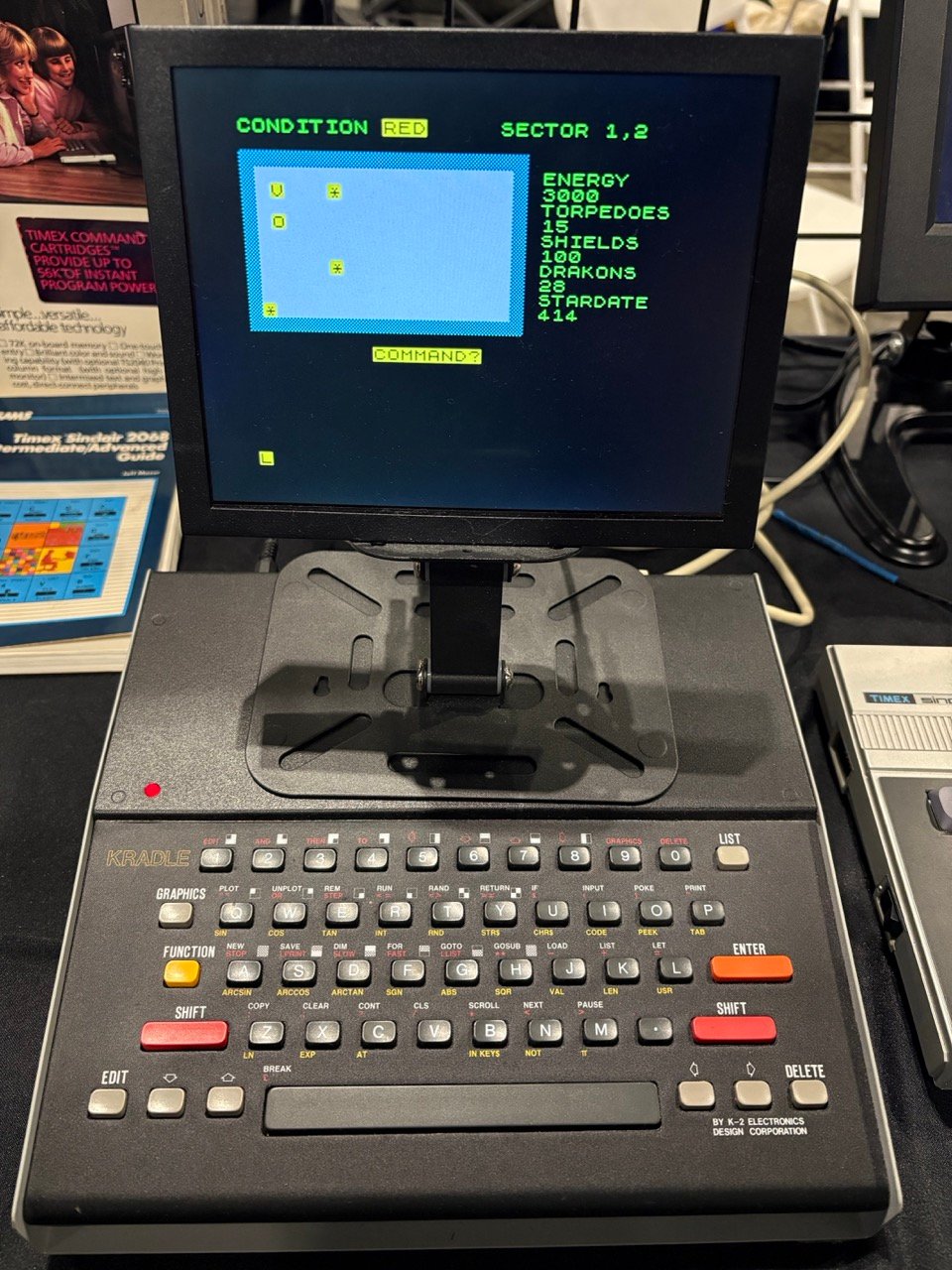
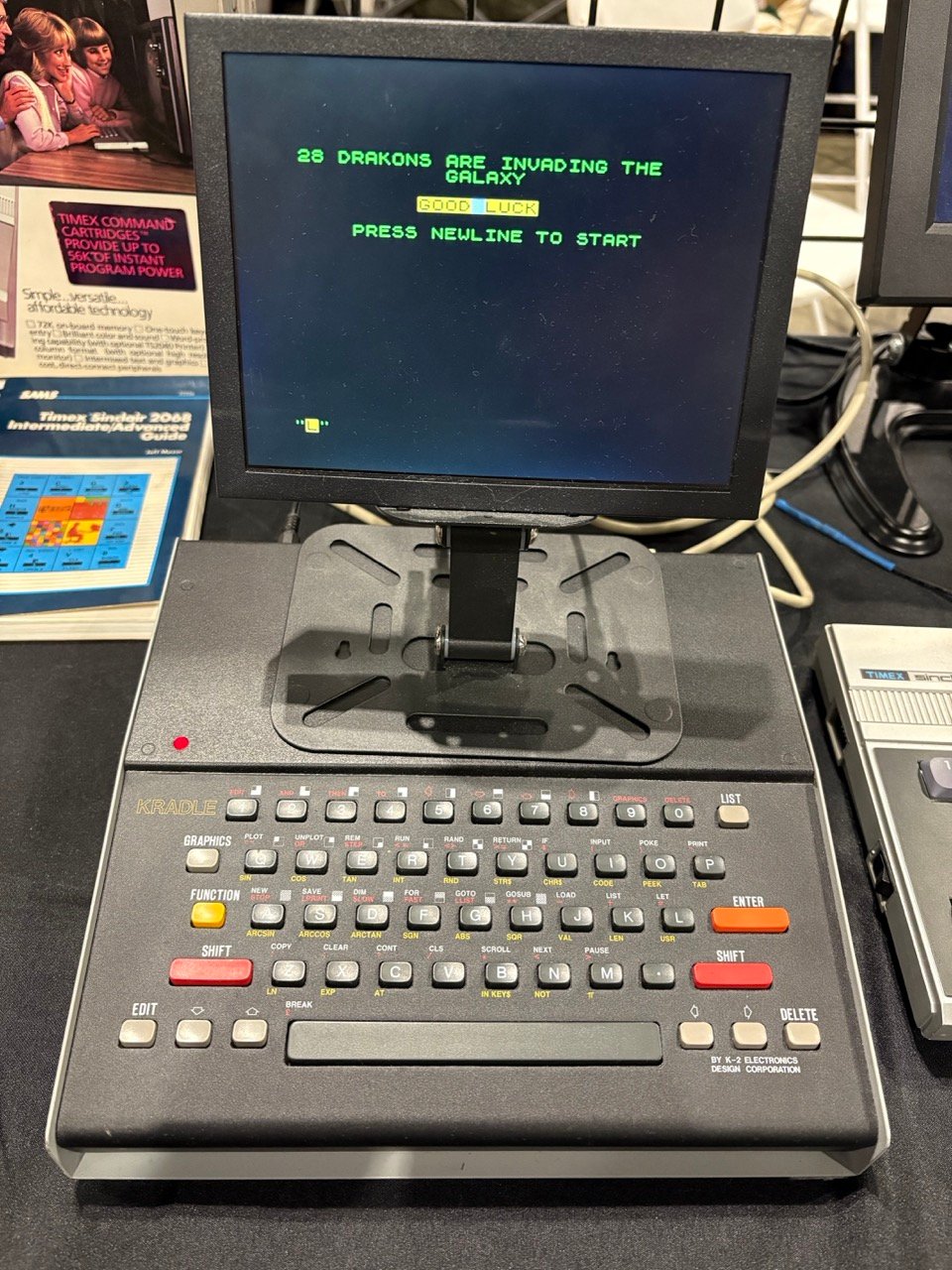
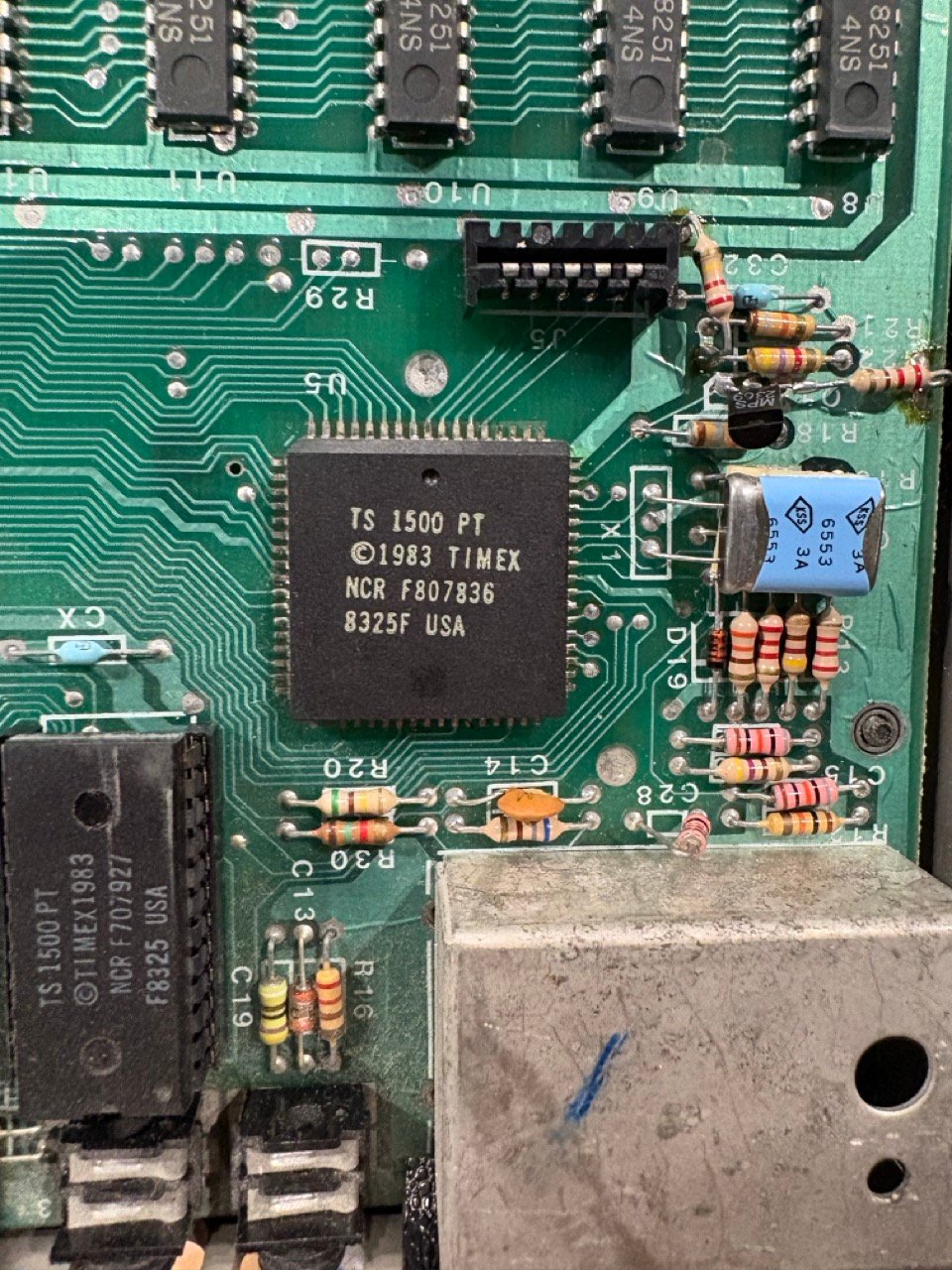
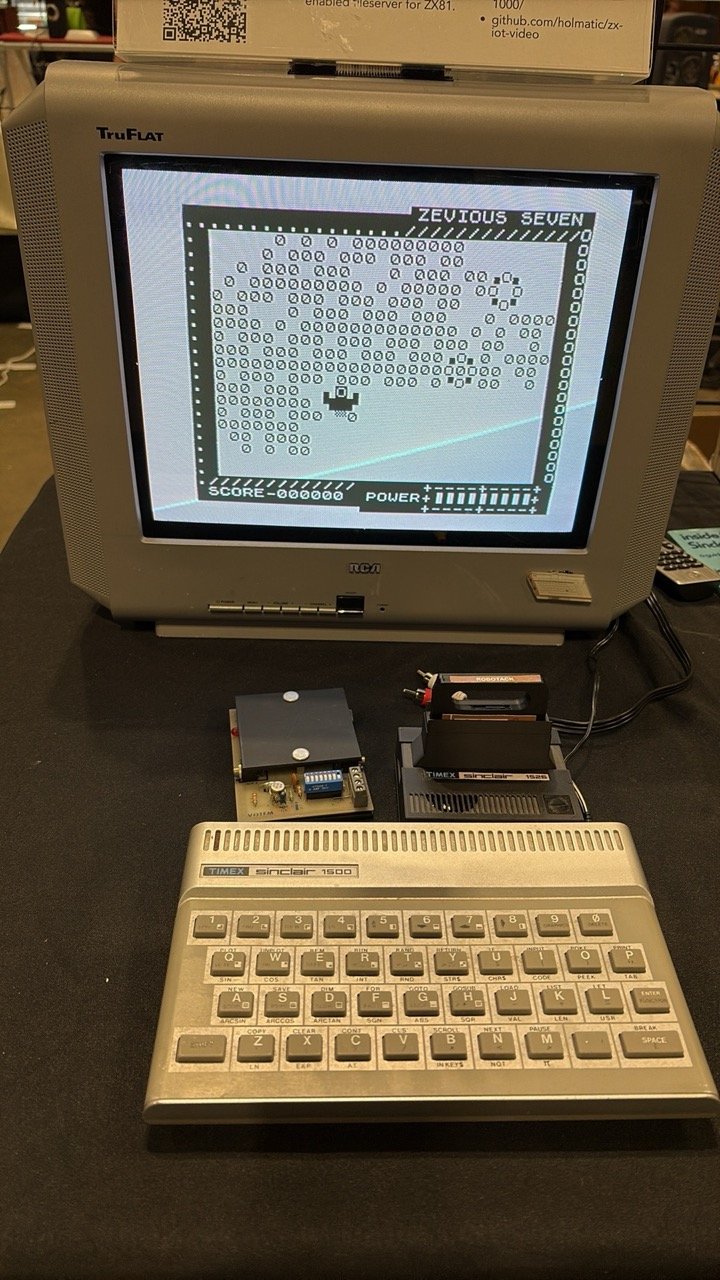
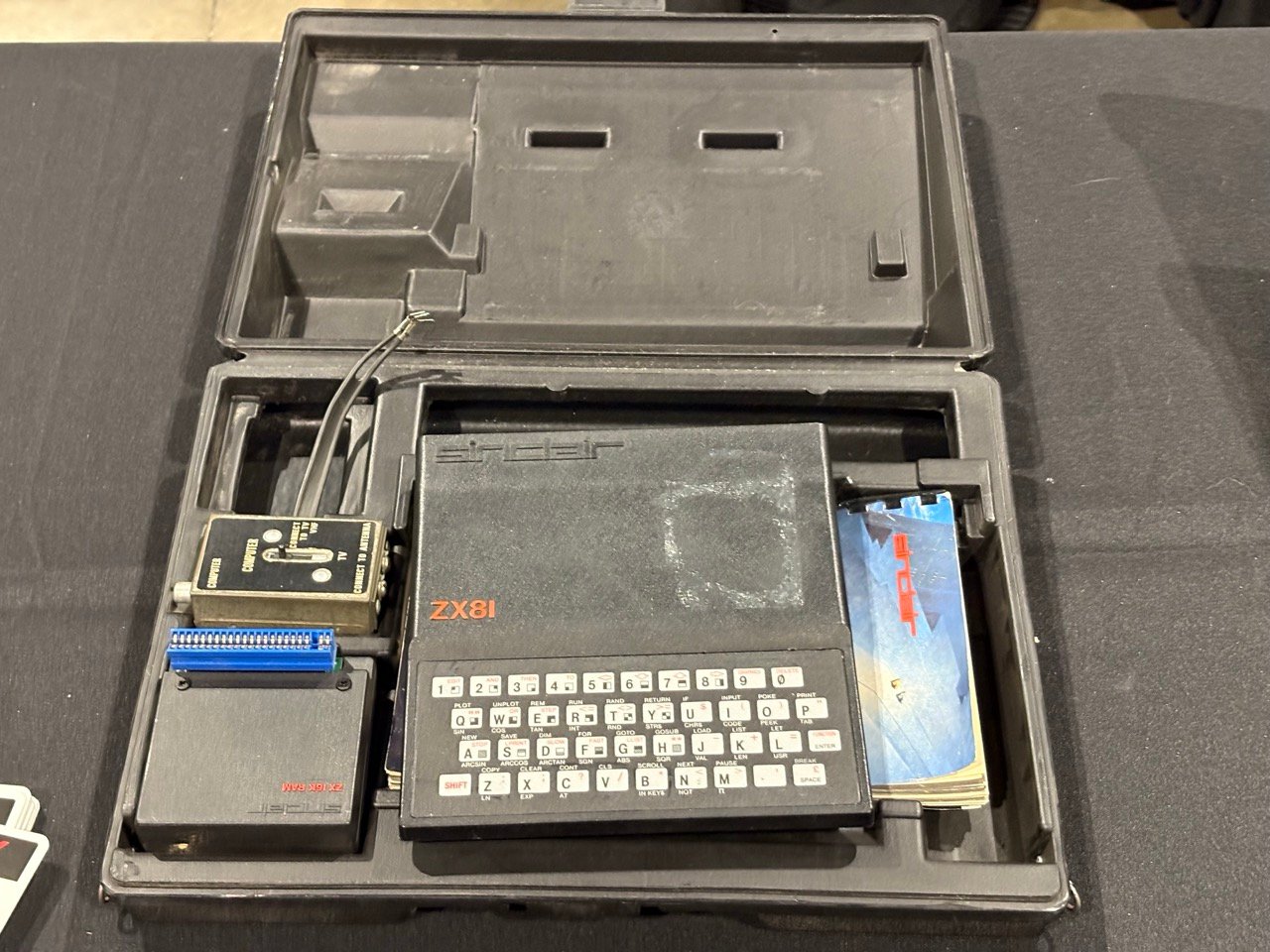
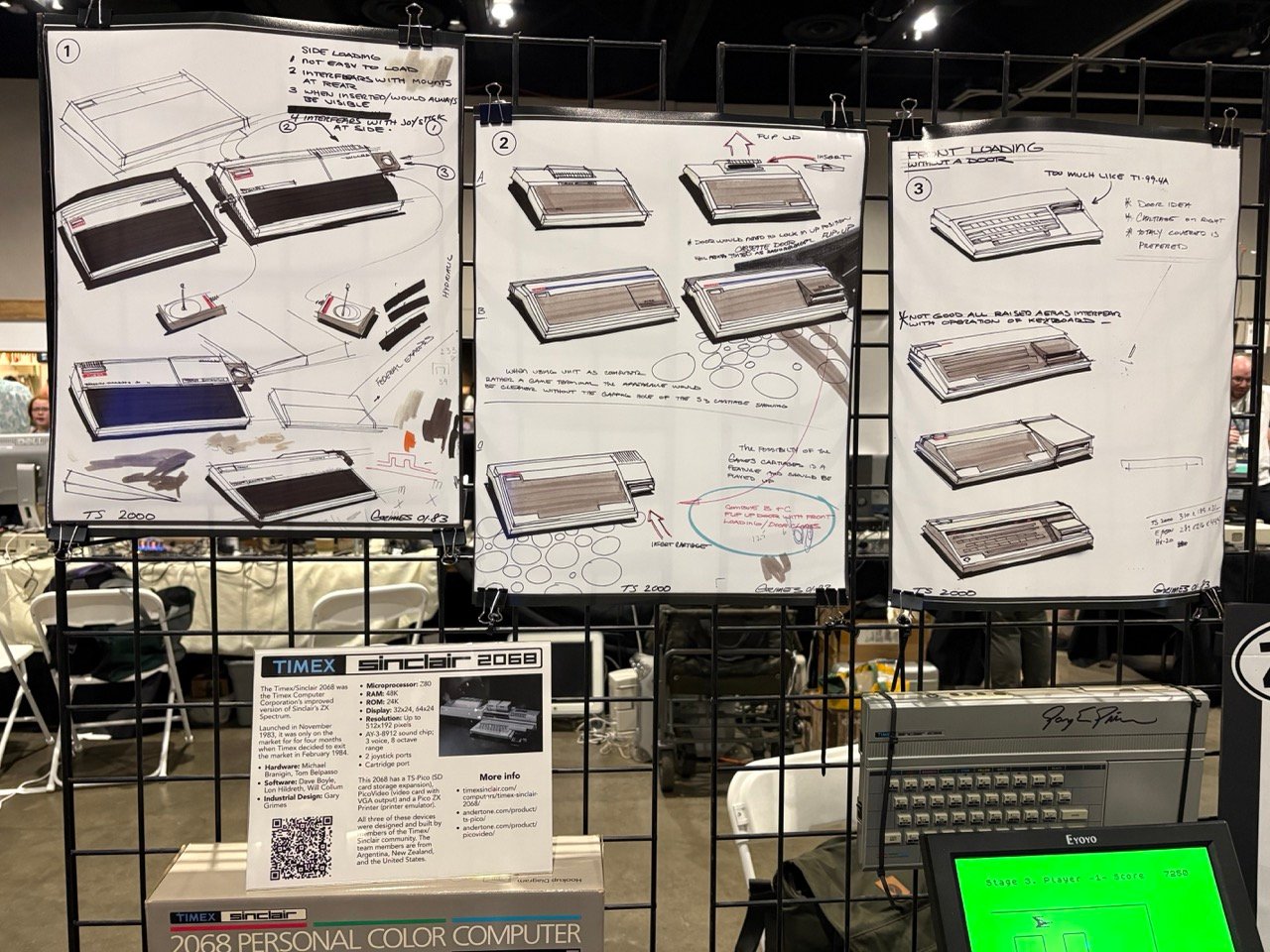
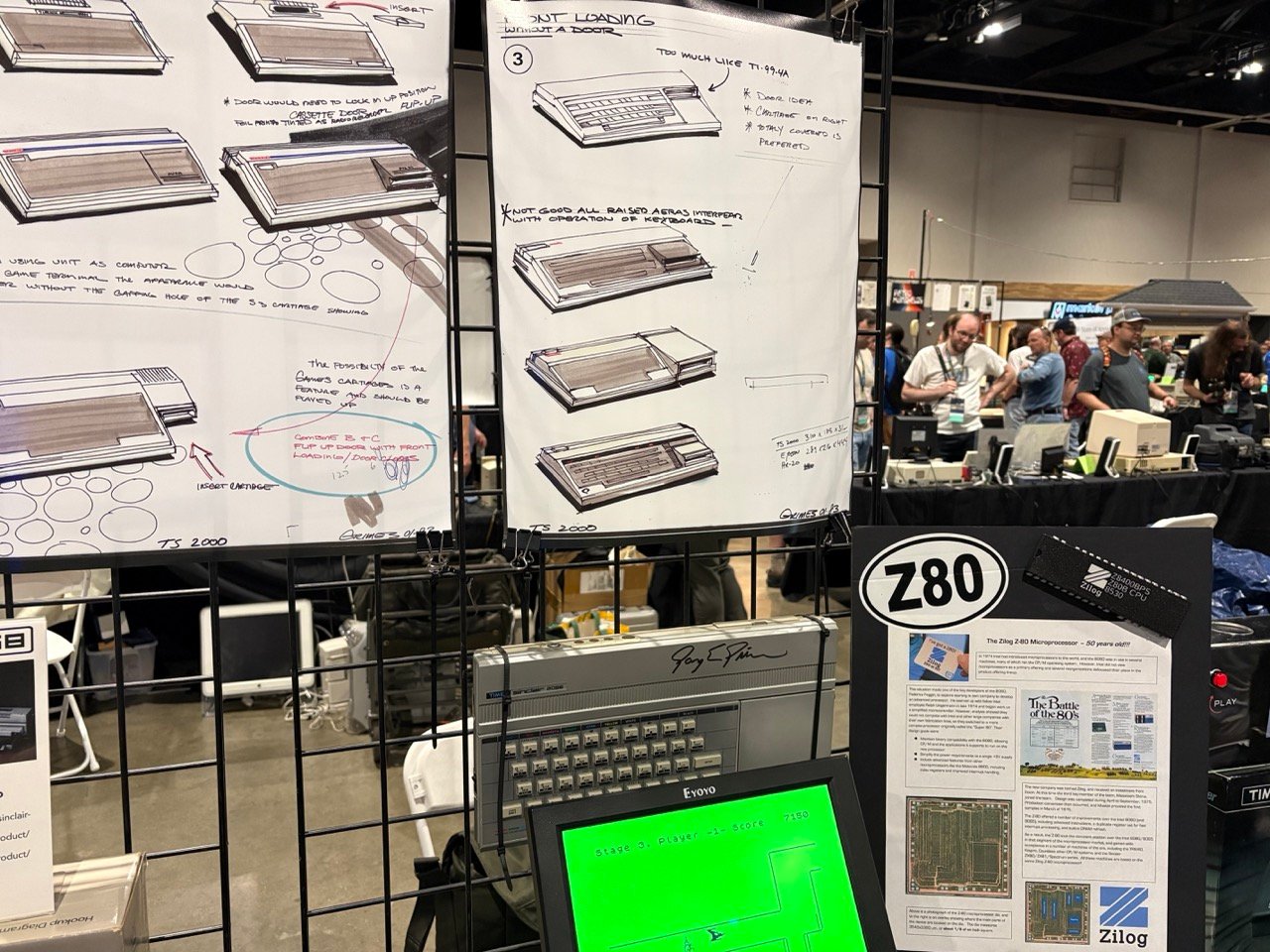
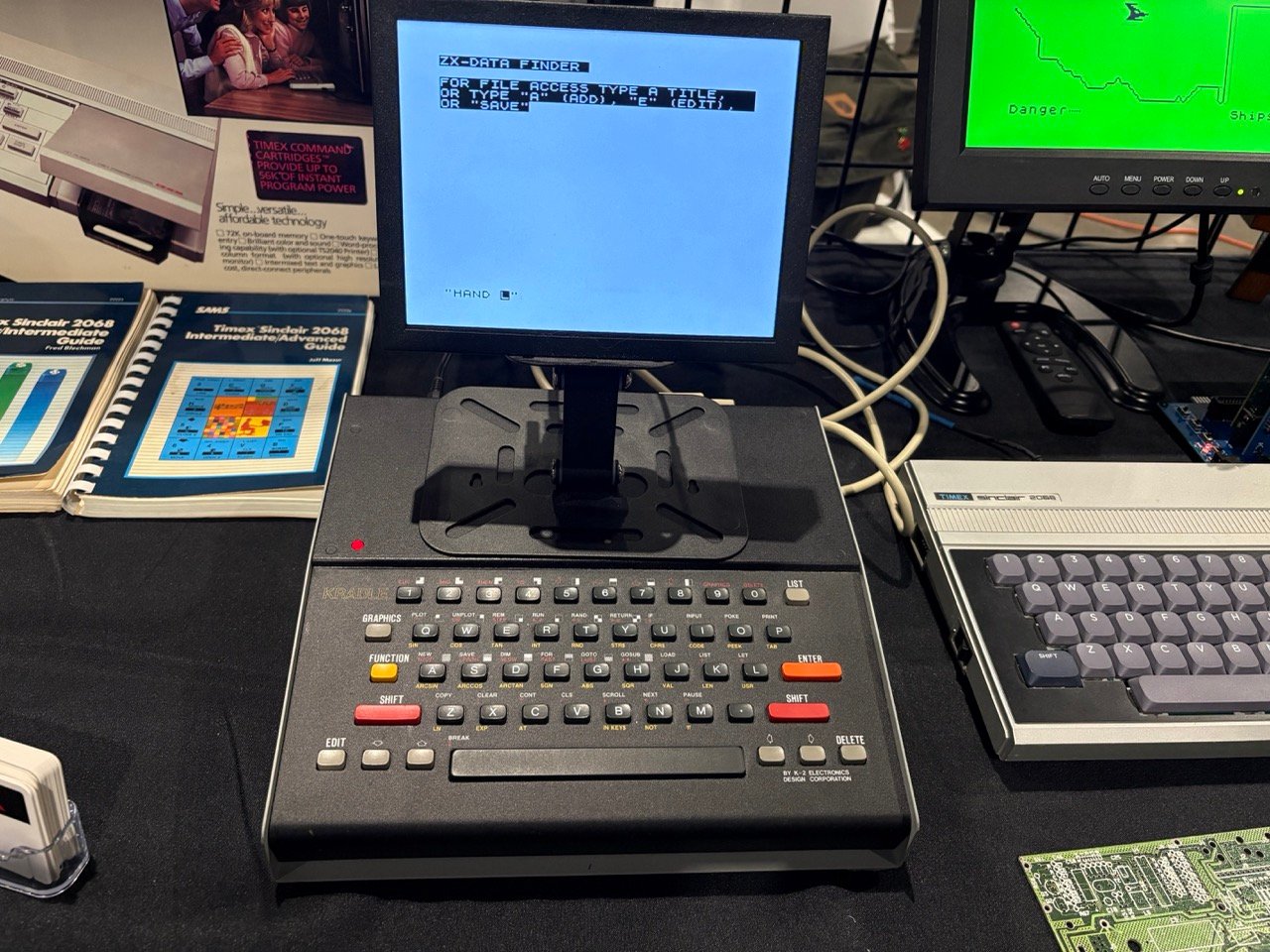
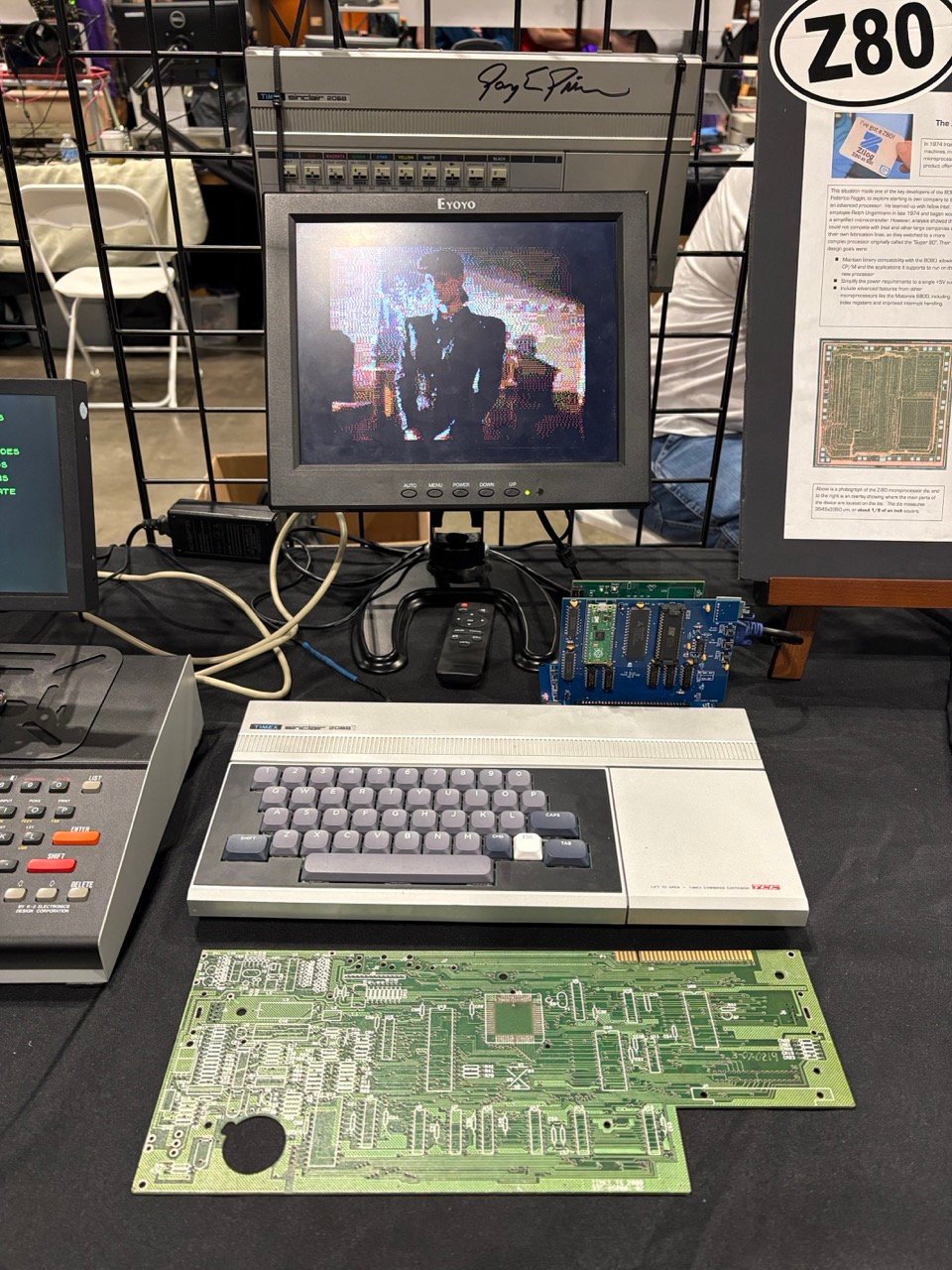
- David Anderson: a TS 1500 with a TS 1526; a TS 2068 with a TS-Pico and PicoVideo running Jon Becker’s ECMview and his port of Berserk; a K-2 Electronics Kradle fitted with a ZX-Wespi-V; a VOTEM; a TS 2068 signed by designer Gary Grimes with three of his January 1983 design worksheets; and a TS 1050 carrying case
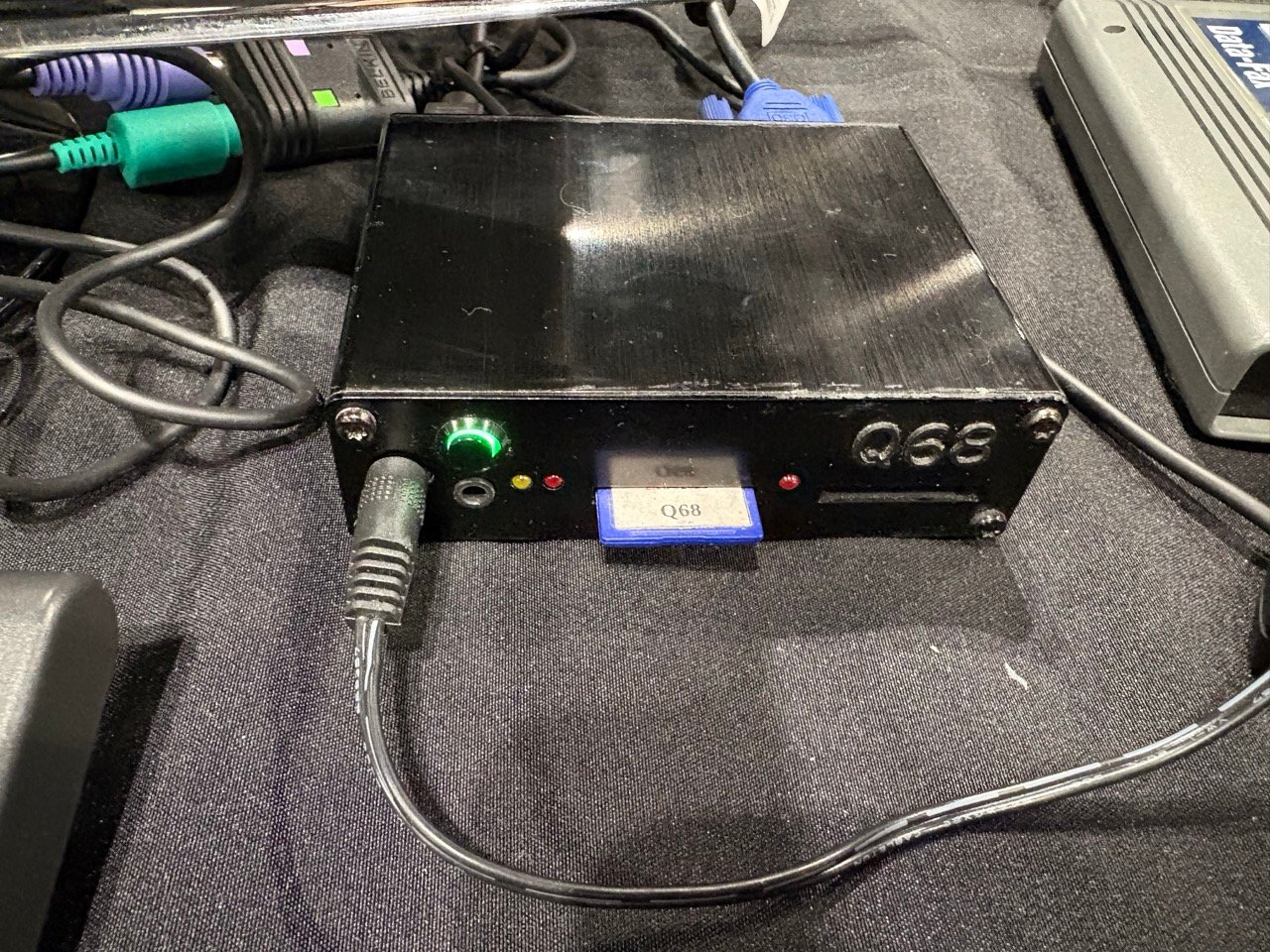
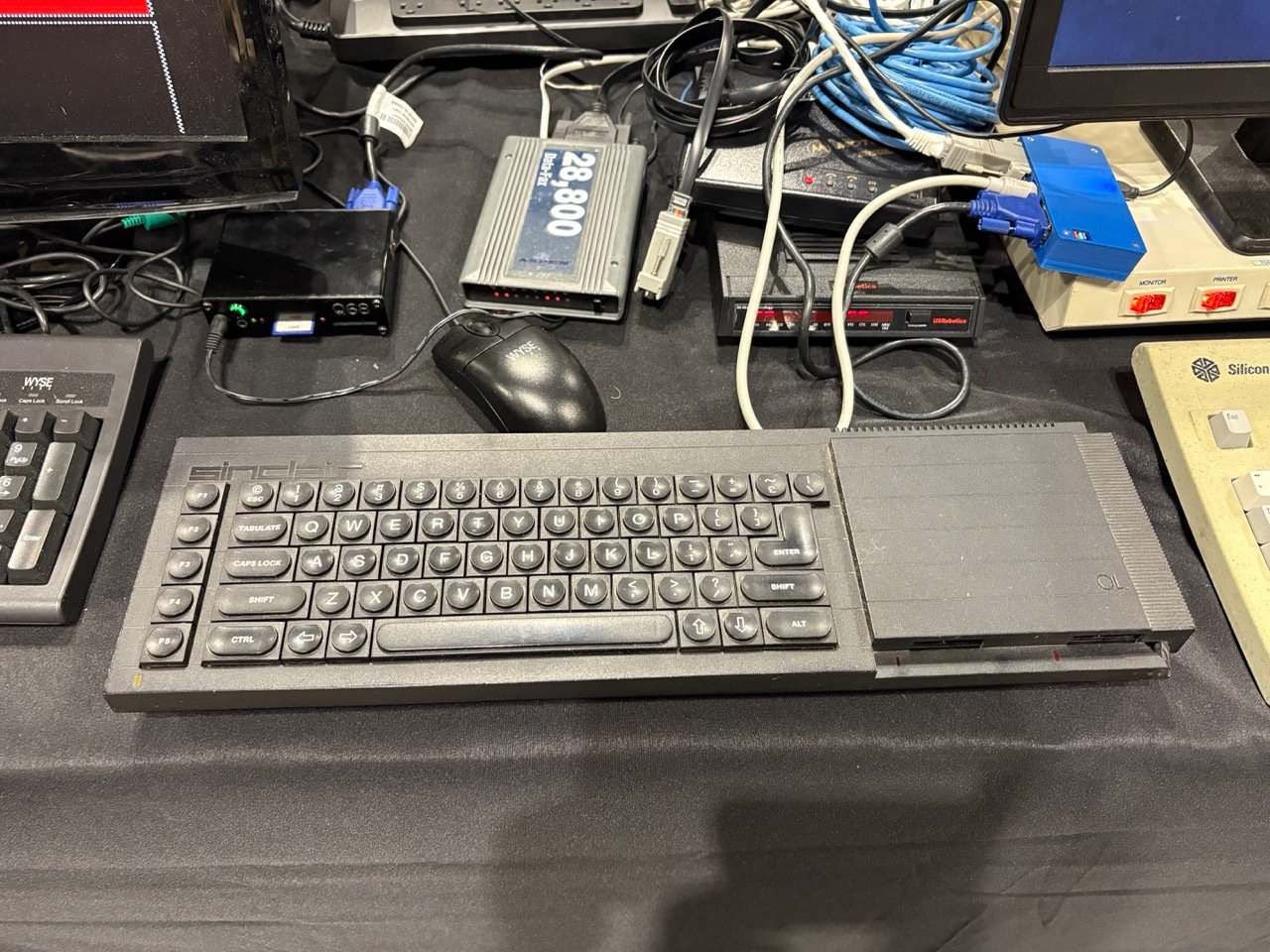
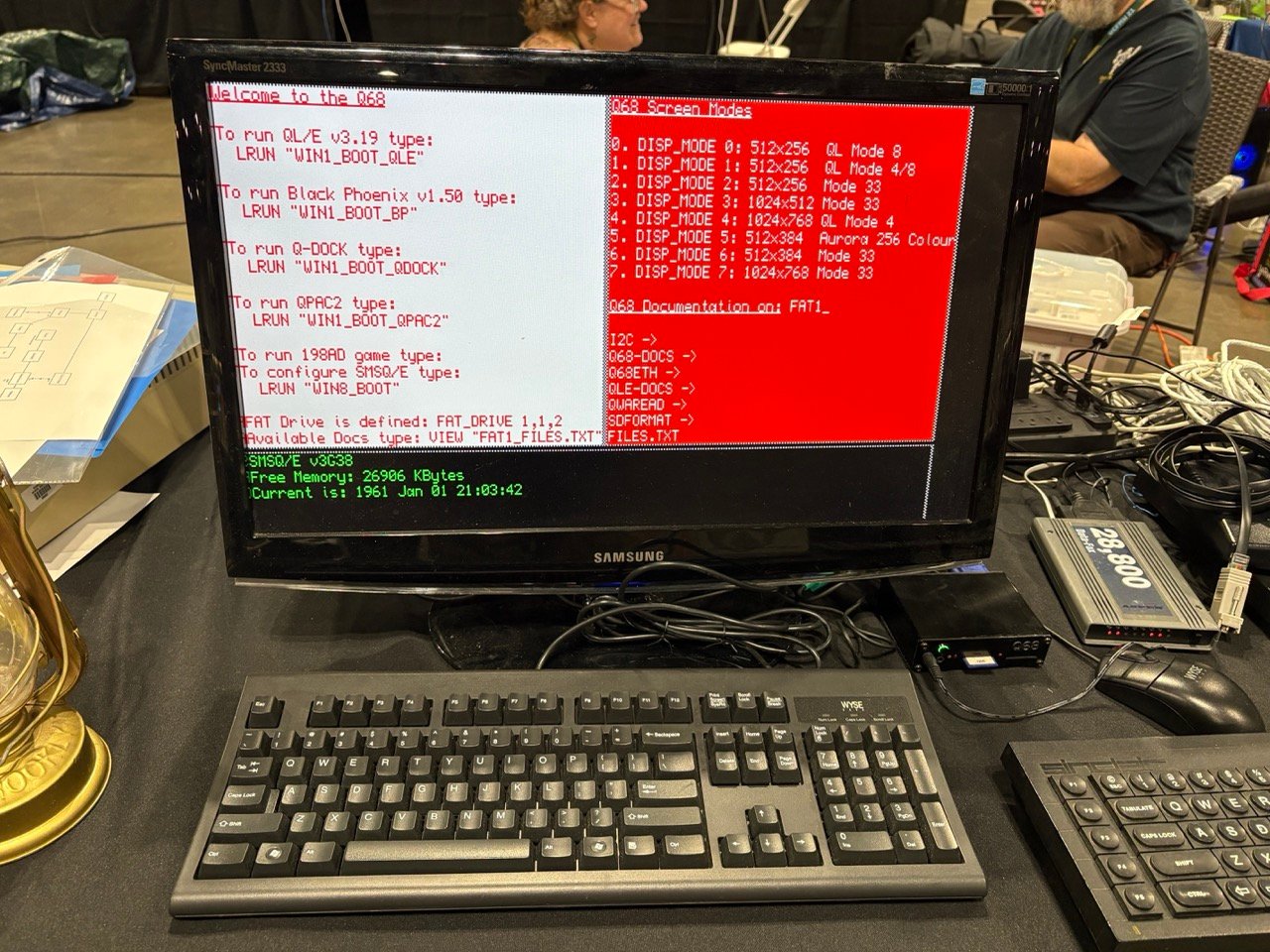
- Mark Martin: Sinclair QL machines and a Q68
- Evan Wright: Lantern, his text-adventure authoring system and cross-compiler for classic 8-bit machines
- David Green: the CRT display used with the TS 1500
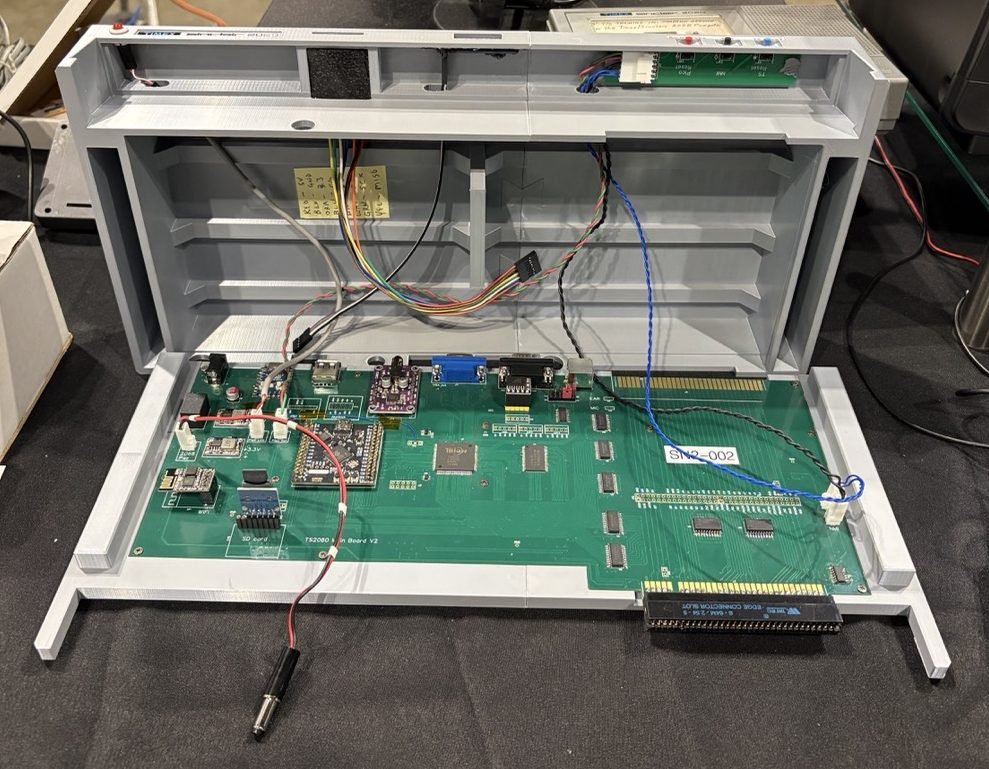
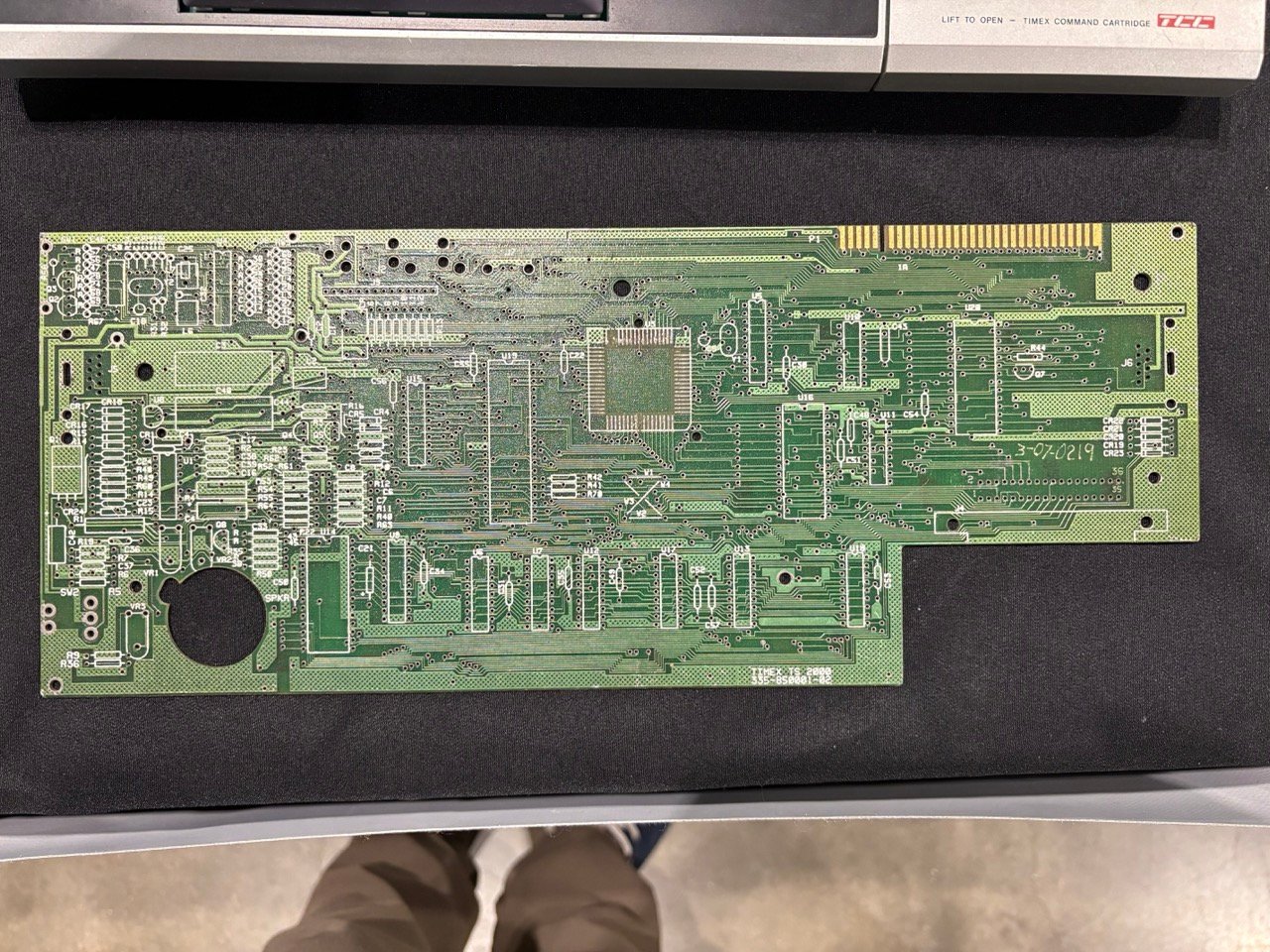
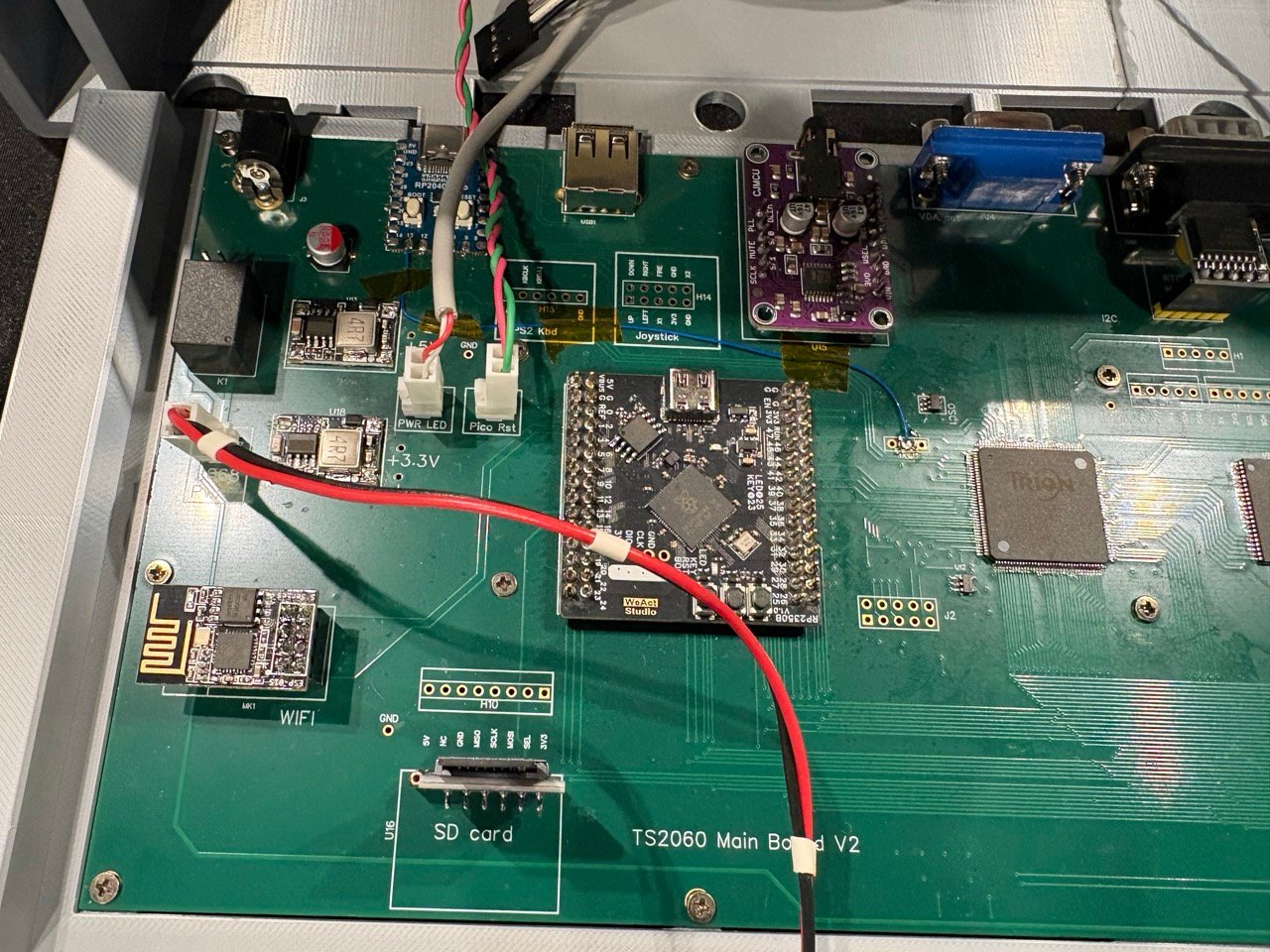
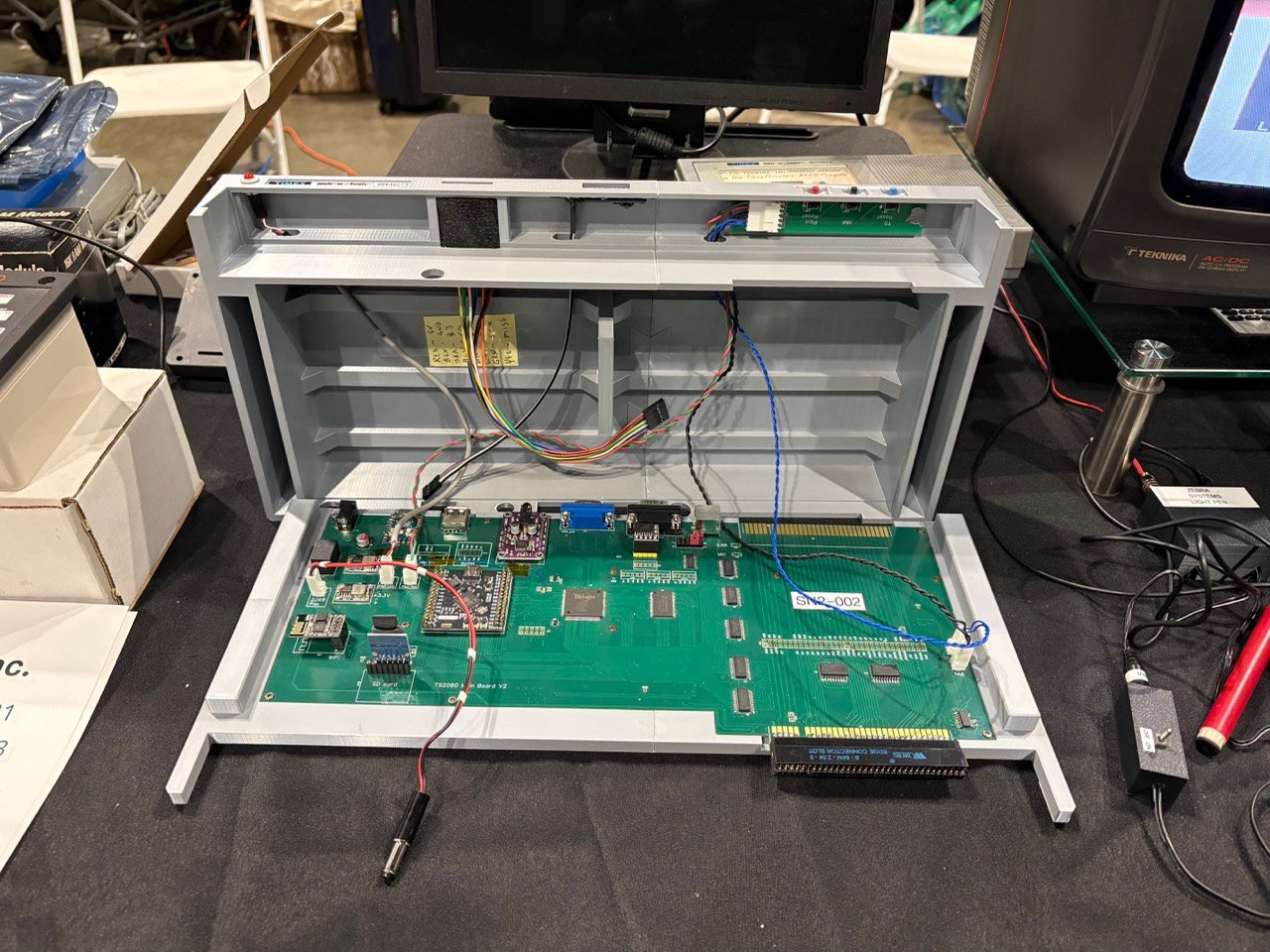
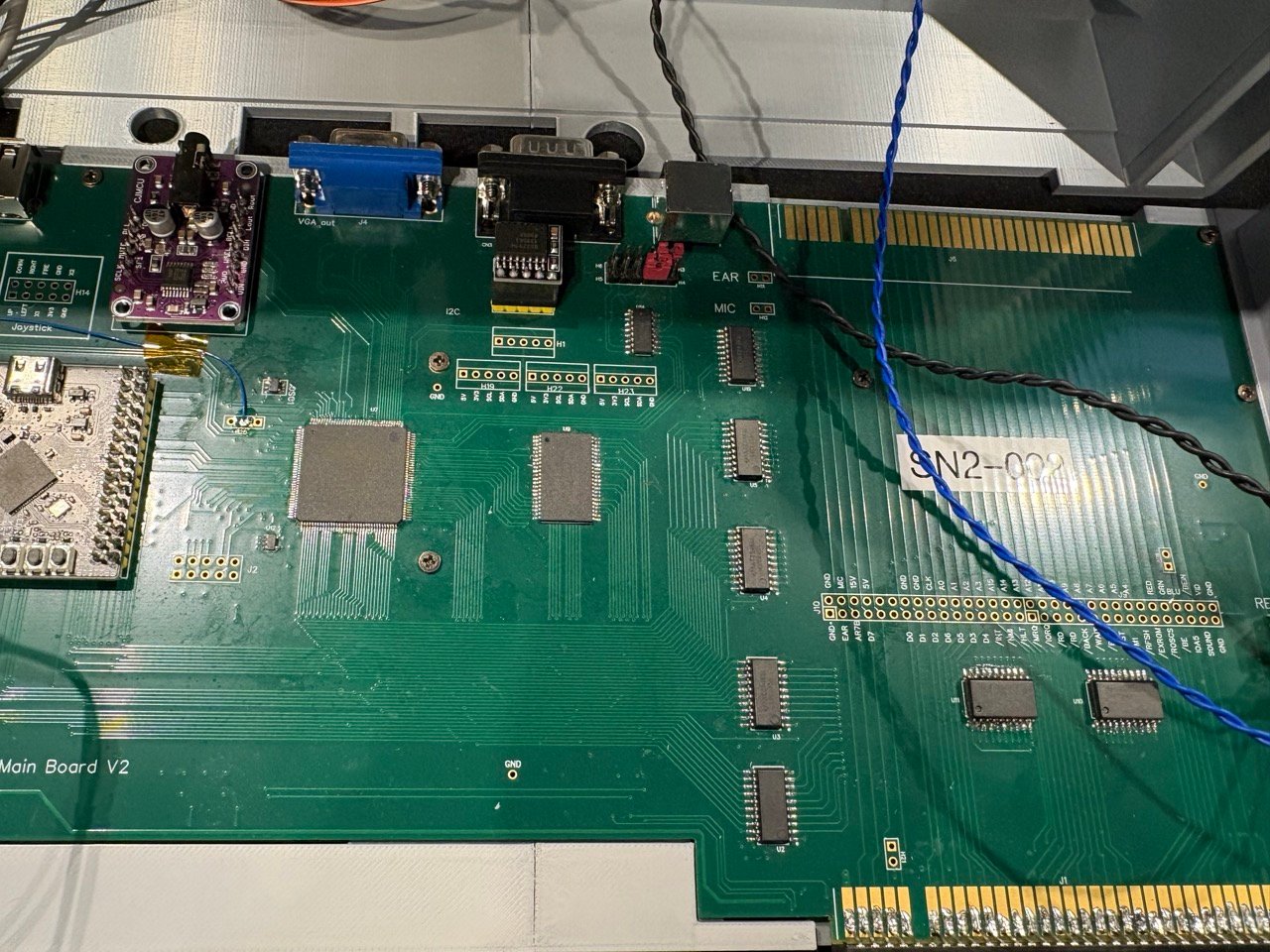
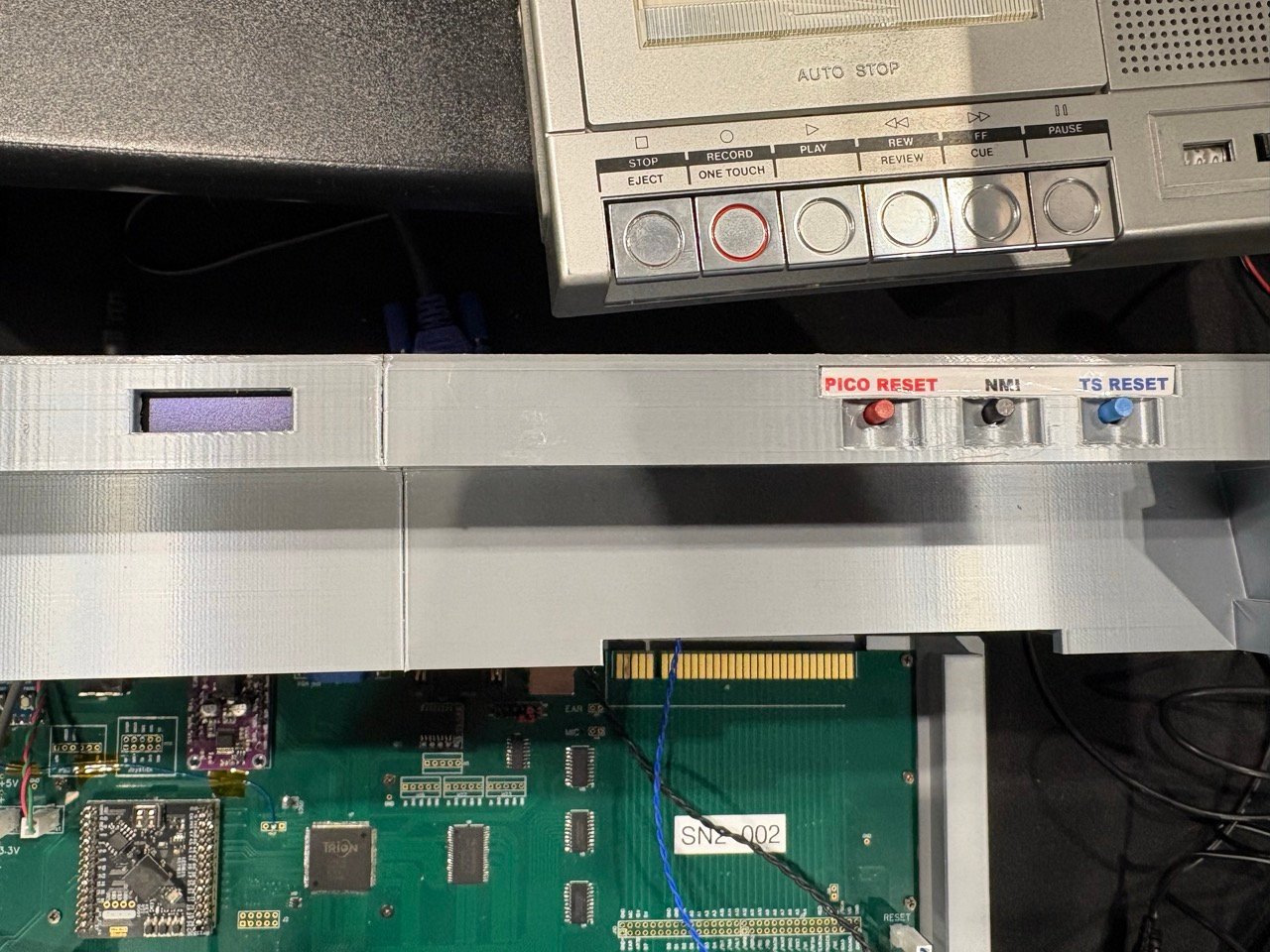
- The group: a working prototype of the re-imagined TS 2060 Bus Expansion Unit, with Jeff Burrell’s FPGA board in an enclosure designed and printed by Joe VandeZande
Also at the show
Peyton Bratton came to help run the display.
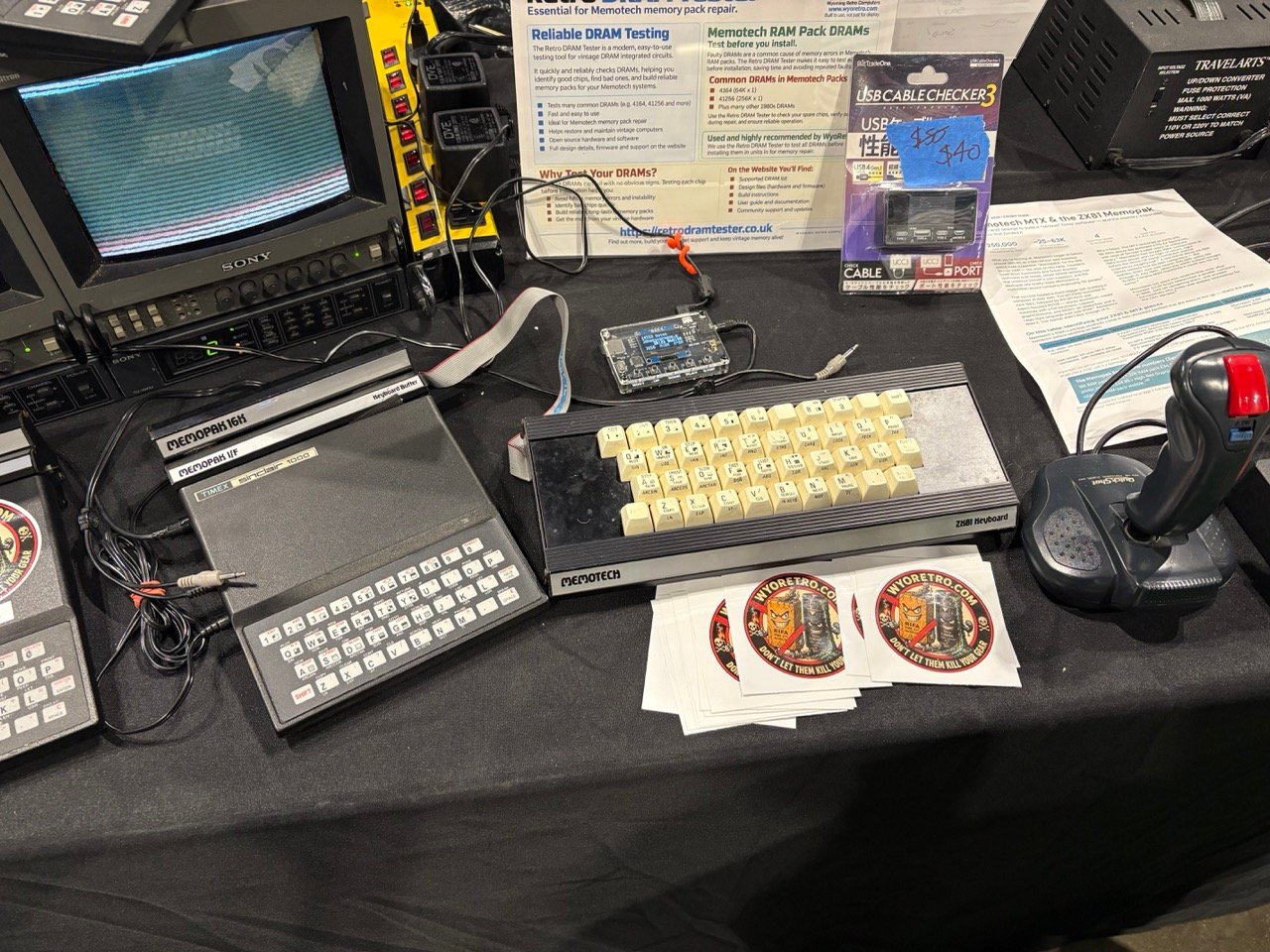
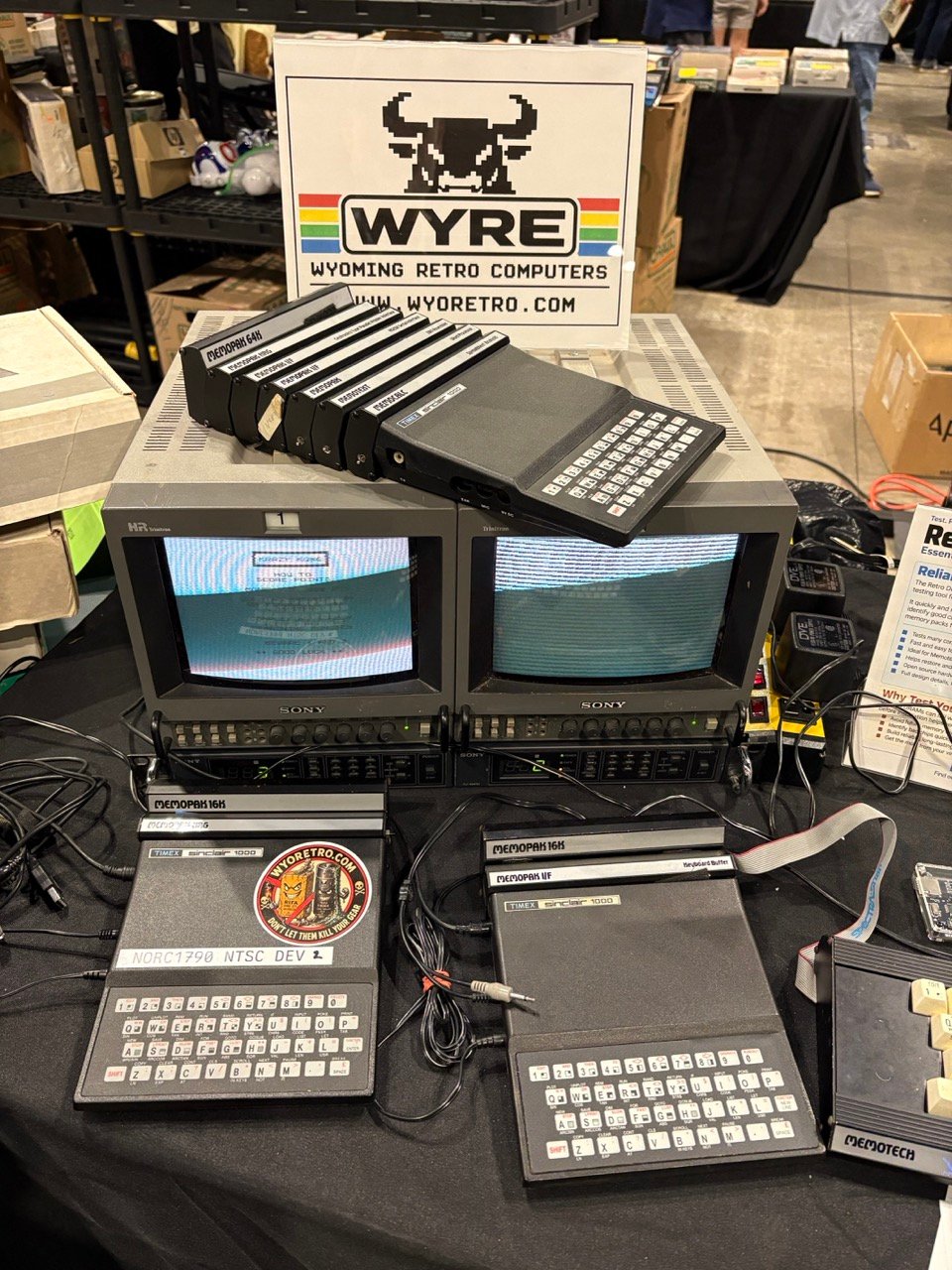
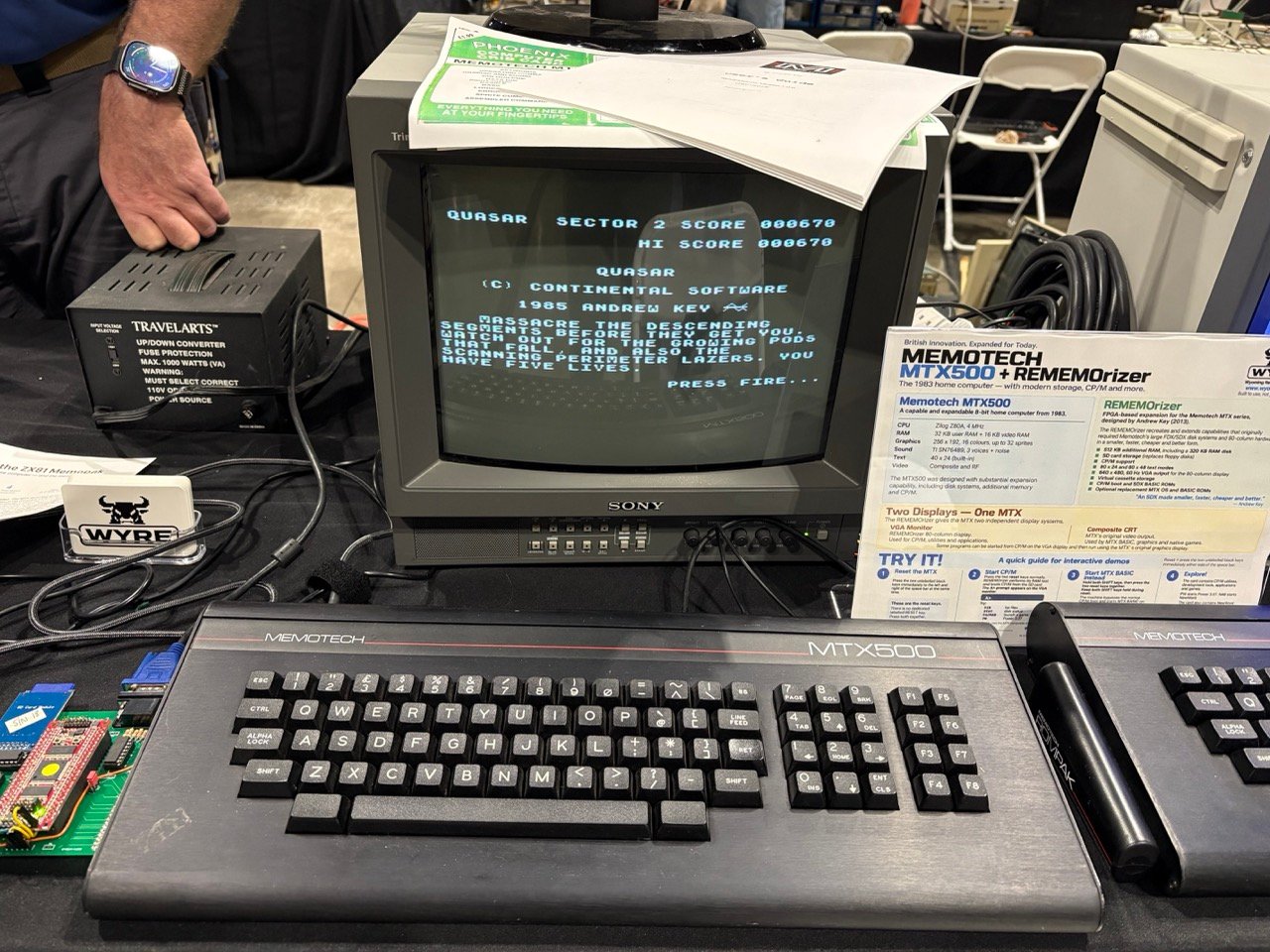
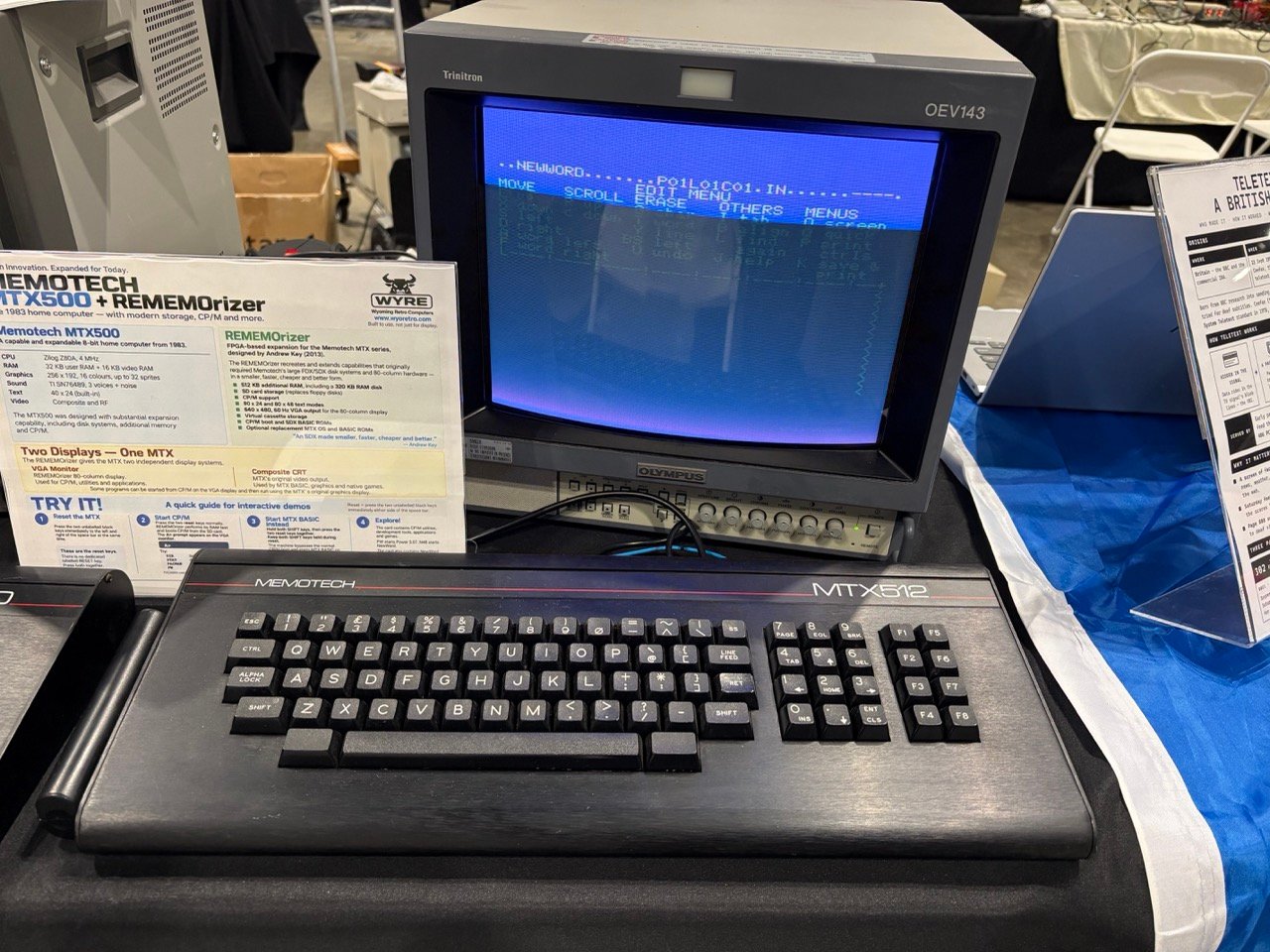
Nick of Wyoming Retro showed a near-complete Memotech lineup in its extruded aluminum cases, along with two MTX computers, and does test and repair work on Memotech RAM packs. American Retro exhibited test equipment, replacement keyboard membranes and ULA replacements for the ZX81 and Spectrum.
David Spinnett and Don Crawford’s Timex Sinclair 1526 — a horizontal redesign of the OpenSpand in a 3D-printed case matching the TS 1510 — was running on the group’s tables.