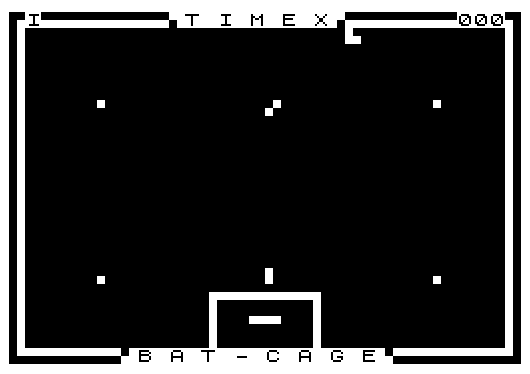
Bat Cage

Products: Bat Cage
Date: 1983
Type: Cassette
Platform(s): TS 1000
Tags: Arcade, Game

Bat Cage is an action game in which the player catches a falling egg and then traps a bat inside a cage. The program is driven almost entirely by machine code embedded in the REM statement at line 1, with BASIC serving only as a loader that calls the routine via USR 17387 at line 10. The machine code handles all gameplay logic, graphics rendering, collision detection, and input processing directly. A SAVE command at line 20 preserves the program, and RUN 10 at line 30 restarts the game loop.


Program Analysis

Program Structure

The BASIC listing is minimal by design, consisting of just three lines:

  1. 1 REM — contains the entire machine code payload (several hundred bytes) embedded as the body of the remark.
  2. 10 LET K=USR 17387 — transfers control to the machine code. The address 17387 (decimal) corresponds to the start of the machine code bytes stored in the REM line’s data area.
  3. 20 SAVE "CAGE" — saves the program to tape.
  4. 30 RUN 10 — restarts the program by jumping to line 10.

All game logic — movement, collision detection, graphics, timing, and scoring — is implemented entirely in the machine code within the REM statement. BASIC is used solely as a vehicle to load and launch that code.

Machine Code Embedding via REM

Storing machine code in a REM statement is a well-established technique. The BASIC interpreter skips REM line content entirely, so arbitrary binary data can be placed there without interference. The USR function at line 10 computes the Z80 entry point address (17387) and performs a CALL to it, handing control to the machine code. The return value is stored in K, though the game does not use it in BASIC.

Machine Code Analysis

The REM data is a dense Z80 routine. Notable structural features visible in the hex stream include:

  • CB-prefixed instructions — extensive use of CB opcodes indicates heavy reliance on bit manipulation instructions (BIT, SET, RES, RLC, etc.), consistent with sprite/character-level graphics and flag-based state machines.
  • ED-prefixed instructionsED opcodes appear frequently, covering 16-bit loads (LD BC,(nn), LD DE,(nn)), block moves (LDIR), and LD A,R / LD A,I used for pseudo-random number generation or timing.
  • Block memory operations — sequences ending in \ED\B0 (LDIR) suggest bulk copying of sprite or screen data.
  • Internal subroutine calls — numerous CD xx xx (CALL) instructions with targets within the REM block point to a well-structured internal subroutine architecture covering rendering, input reading, collision, and movement.
  • Address constants — repeated references to addresses in the 43xx and 44xx hex range (roughly 17000–17600 decimal) indicate game-state variables stored within or just after the REM block itself.

Key Address Map (inferred)

Hex AddressDecimalInferred Role
43CB17355Sprite/object X or position low byte
43CC17356Sprite/object Y or position high byte
43CD17357Secondary object coordinate
43D017360Game state / direction flag
43D117361Velocity or delta counter
43D217362Additional state variable
44B617590Screen buffer or sprite data table
44D817624Graphics/shape data

Notable Techniques

  • LD A,R (ED 5F) — used as a source of pseudo-randomness by reading the Z80 refresh register, a common technique for seeding movement or timing variation without a dedicated RNG.
  • Bit-field state machine — the heavy use of BIT, SET, and RES on single bytes (visible in the CB 4x, CB 5x, CB 6x, CB 7x ranges) suggests individual bits of state bytes encode direction, phase, and collision flags compactly.
  • Self-contained variable storage — game variables are stored at fixed offsets within the REM block’s memory region rather than in BASIC variables, avoiding BASIC overhead entirely.
  • Loop unrolling with DJNZ — several 10 Fx byte pairs (DJNZ with negative offset) implement tight delay or drawing loops without BASIC’s overhead.
  • Exx / DI shadow registersD9 (EXX) appears in the code, indicating use of the Z80 alternate register set for temporary storage during interrupt-sensitive sections.

BASIC Idioms

The use of LET K=USR 17387 rather than a bare RAND USR is a minor stylistic choice; both transfer control identically. The RUN 10 at line 30 provides a simple restart mechanism: if the machine code ever returns to BASIC (e.g., after a game over), the program loops back to re-invoke the machine code rather than halting.

Bugs and Anomalies

No significant BASIC-level bugs are present. The program is straightforward as a loader. Any bugs would reside entirely within the machine code and cannot be fully assessed from a static hex listing alone.

Content

Appears On

Related Products

Catch the egg and put the bat in the cage. Then fight off the other bats trying to rescue the...

Related Articles

Related Content

Image Gallery

Bat Cage

Source Code

   1 REM \CB


Bat Cage

Products: Bat Cage
Date: 1983
Type: Cassette
Platform(s): TS 1000
Tags: Arcade, Game

Bat Cage is an action game in which the player catches a falling egg and then traps a bat inside a cage. The program is driven almost entirely by machine code embedded in the REM statement at line 1, with BASIC serving only as a loader that calls the routine via USR 17387 at line 10. The machine code handles all gameplay logic, graphics rendering, collision detection, and input processing directly. A SAVE command at line 20 preserves the program, and RUN 10 at line 30 restarts the game loop.


Program Analysis

Program Structure

The BASIC listing is minimal by design, consisting of just three lines:

  1. 1 REM — contains the entire machine code payload (several hundred bytes) embedded as the body of the remark.
  2. 10 LET K=USR 17387 — transfers control to the machine code. The address 17387 (decimal) corresponds to the start of the machine code bytes stored in the REM line’s data area.
  3. 20 SAVE "CAGE" — saves the program to tape.
  4. 30 RUN 10 — restarts the program by jumping to line 10.

All game logic — movement, collision detection, graphics, timing, and scoring — is implemented entirely in the machine code within the REM statement. BASIC is used solely as a vehicle to load and launch that code.

Machine Code Embedding via REM

Storing machine code in a REM statement is a well-established technique. The BASIC interpreter skips REM line content entirely, so arbitrary binary data can be placed there without interference. The USR function at line 10 computes the Z80 entry point address (17387) and performs a CALL to it, handing control to the machine code. The return value is stored in K, though the game does not use it in BASIC.

Machine Code Analysis

The REM data is a dense Z80 routine. Notable structural features visible in the hex stream include:

  • CB-prefixed instructions — extensive use of CB opcodes indicates heavy reliance on bit manipulation instructions (BIT, SET, RES, RLC, etc.), consistent with sprite/character-level graphics and flag-based state machines.
  • ED-prefixed instructionsED opcodes appear frequently, covering 16-bit loads (LD BC,(nn), LD DE,(nn)), block moves (LDIR), and LD A,R / LD A,I used for pseudo-random number generation or timing.
  • Block memory operations — sequences ending in \ED\B0 (LDIR) suggest bulk copying of sprite or screen data.
  • Internal subroutine calls — numerous CD xx xx (CALL) instructions with targets within the REM block point to a well-structured internal subroutine architecture covering rendering, input reading, collision, and movement.
  • Address constants — repeated references to addresses in the 43xx and 44xx hex range (roughly 17000–17600 decimal) indicate game-state variables stored within or just after the REM block itself.

Key Address Map (inferred)

Hex AddressDecimalInferred Role
43CB17355Sprite/object X or position low byte
43CC17356Sprite/object Y or position high byte
43CD17357Secondary object coordinate
43D017360Game state / direction flag
43D117361Velocity or delta counter
43D217362Additional state variable
44B617590Screen buffer or sprite data table
44D817624Graphics/shape data

Notable Techniques

  • LD A,R (ED 5F) — used as a source of pseudo-randomness by reading the Z80 refresh register, a common technique for seeding movement or timing variation without a dedicated RNG.
  • Bit-field state machine — the heavy use of BIT, SET, and RES on single bytes (visible in the CB 4x, CB 5x, CB 6x, CB 7x ranges) suggests individual bits of state bytes encode direction, phase, and collision flags compactly.
  • Self-contained variable storage — game variables are stored at fixed offsets within the REM block’s memory region rather than in BASIC variables, avoiding BASIC overhead entirely.
  • Loop unrolling with DJNZ — several 10 Fx byte pairs (DJNZ with negative offset) implement tight delay or drawing loops without BASIC’s overhead.
  • Exx / DI shadow registersD9 (EXX) appears in the code, indicating use of the Z80 alternate register set for temporary storage during interrupt-sensitive sections.

BASIC Idioms

The use of LET K=USR 17387 rather than a bare RAND USR is a minor stylistic choice; both transfer control identically. The RUN 10 at line 30 provides a simple restart mechanism: if the machine code ever returns to BASIC (e.g., after a game over), the program loops back to re-invoke the machine code rather than halting.

Bugs and Anomalies

No significant BASIC-level bugs are present. The program is straightforward as a loader. Any bugs would reside entirely within the machine code and cannot be fully assessed from a static hex listing alone.

Content

Appears On

Related Products

Catch the egg and put the bat in the cage. Then fight off the other bats trying to rescue the...

Related Articles

Related Content

Image Gallery

Bat Cage

Source Code

   1 REM \CB\38\30\0A\CB\39\30\03\3E\87\C9\3E\04\C9\CB\39\30\03\3E\02\C9\3E\01\C9\0E\80\06\02\E5\79\AE\77\23\10\FA\E1\C9\ED\43\CB\43\22\CD\43\C9\CB\6C\28\32\21\D0\43\AF\BE\C8\2B\3E\E8\BE\C8\77\EB\2A\CB\43\22\E7\43\21\D3\43\3A\D1\43\C6\15\86\D8\77\13\AF\12\C9\12\C9\79\FE\37\C8\D5\E1\0C\CB\47\28\0E\23\18\0B\0D\C8\79\D5\E1\CB\47\28\02\2B\1B\CD\A7\40\4F\EB\CD\82\40\4F\18\61\CD\BB\02\ED\4B\CB\43\ED\5B\CD\43\CB\5D\28\A5\CB\65\20\58\CB\5C\28\C5\7C\EB\11\21\00\CB\67\28\1F\CB\4F\CA\91\43\78\FE\26\C8\04\E5\0F\30\1B\19\D1\CD\A7\40\C5\0E\03\CD\9C\40\EB\CD\9C\40\18\13\05\C8\E5\78\0F\30\03\A7\ED\52\D1\CD\A7\40\EB\07\38\E2\C5\CD\9A\40\C1\CB\41\C8\0E\04\CD\5C\41\EB\0E\01\06\02\79\AE\77\23\23\10\F9\C9\11\D1\43\CB\6D\20\06\1A\A7\C8\3D\18\08\CB\45\C0\1A\FE\23\C8\3C\47\3A\D0\43\A7\C8\3E\1C\80\32\B7\44\78\12\C9\3A\D0\43\A7\C0\E5\2A\D5\43\7E\FE\03\28\0D\3C\FE\26\30\03\77\E1\C9\36\1C\2B\18\EE\36\1D\21\D5\43\35\2B\34\34\2B\AF\77\2B\CB\3E\E1\C9\CD\FB\40\C1\CB\09\30\02\AF\47\C5\21\3C\40\01\50\40\D9\21\D7\43\4E\23\46\04\0C\11\00\28\78\BA\CC\82\44\3A\D4\43\BD\38\0A\1E\80\3A\D0\43\AA\B8\CC\81\44\3E\21\B8\28\56\30\20\2F\B8\28\54\38\1A\3E\17\B9\28\51\30\24\2F\B9\28\4F\38\14\3E\24\B9\28\50\30\50\2F\B9\28\46\38\4A\79\FE\3C\28\08\30\0A\ED\5F\2F\B8\20\04\79\ED\44\4F\3A\CC\43\B8\28\04\2F\B8\20\65\3A\CB\43\3D\B9\30\5E\C6\04\B9\30\0B\C6\01\2F\B9\30\53\C6\04\B9\38\4E\18\6E\CB\C3\18\AE\CB\C2\18\AA\CB\CB\18\0A\CB\CA\18\06\CB\D3\18\02\CB\D2\CB\7B\20\71\CB\43\20\67\CB\4B\20\20\CB\53\20\1C\CD\15\43\F1\F5\B3\A2\AA\CB\47\28\09\F5\78\ED\44\47\CD\8A\41\F1\CB\4F\28\09\CD\8A\41\79\ED\44\4F\18\04\CB\57\20\F3\CD\3B\43\3E\E8\BD\DA\B6\41\3A\D1\43\A7\CA\CB\41\0E\0F\CB\7B\28\02\0E\0A\47\79\3D\20\FD\10\FA\C3\CB\41\CB\7B\28\26\CB\78\20\D6\ED\5F\FE\C0\30\3D\FE\95\30\30\3E\20\32\D0\43\78\ED\44\47\18\C1\7B\B2\D1\B2\57\3A\D2\43\5F\D5\5A\18\B4\3E\E6\32\CF\43\C6\02\95\28\AA\C5\4F\AF\47\E5\D1\1B\23\ED\B0\C1\2B\18\9C\C5\FE\80\D4\7A\44\C1\18\CC\C5\4F\3A\D1\43\CB\3F\81\30\02\06\FF\2F\A0\28\06\47\CD\8A\41\10\FB\C1\18\B3\1E\80\3A\CC\43\FE\21\D8\20\02\CB\C3\3A\CB\43\FE\14\30\03\CB\83\C9\FE\25\30\F9\FE\18\30\02\CB\CB\FE\21\D8\CB\D3\C9\E5\70\2B\71\3E\80\A3\5F\16\FF\3A\CF\43\BD\30\01\14\CB\78\28\03\78\2F\47\CB\79\28\03\79\2F\4F\CD\82\40\AB\A2\F5\CD\7C\43\E5\D9\5E\23\56\EB\0A\AE\77\E1\F1\02\AE\77\EB\72\2B\73\23\23\03\D9\E1\23\C9\58\79\80\01\00\05\51\CB\23\CB\12\10\FA\21\D8\44\19\51\5F\19\C9\CD\3A\44\01\20\00\11\B6\44\21\5A\44\ED\B0\0E\1E\11\CB\43\21\AD\43\ED\B0\CD\3A\44\C9\1C\24\38\47\E8\20\12\80\00\D8\D4\44\1D\03\13\13\13\EA\EA\13\EA\EA\27\13\27\EA\D6\13\D6\EA\1C\24\38\47\E8\20\12\80\00\D8\D4\44\CB\F9\CD\F7\25\10\E2\E9\10\1E\06\E8\0A\DB\C5\F6\CD\0F\83\81\CD\2B\0F\CD\2A\0A\11\CB\43\06\16\C5\D5\01\20\00\CD\6B\0B\D1\C1\10\F4\11\85\05\3E\80\21\B6\44\06\15\C5\06\1E\72\23\77\23\10\FC\73\23\23\C1\10\F1\11\01\00\D5\21\17\21\E5\23\01\00\0C\CD\47\44\11\00\01\CD\45\44\E1\CD\45\44\CD\94\43\C3\B9\41\2A\CB\43\11\01\00\01\00\04\18\02\06\07\E5\D9\C1\CD\82\40\F5\CD\7C\43\F1\AE\77\D9\19\10\EF\C9\03\07\2E\03\03\03\03\03\03\03\03\04\39\00\2E\00\32\00\2A\00\3D\87\03\03\03\03\03\03\03\1C\1C\1C\84\01\1E\26\ED\43\E7\43\78\ED\44\47\C9
  10 LET K=USR 17387
  20 SAVE "CAG%E"
  30 RUN 10

Note: Type-in program listings on this website use ZMAKEBAS notation for graphics characters.

People

No people associated with this content.

Scroll to Top
A\CBE\C9E\C9\CBE

Bat Cage

Products: Bat Cage
Date: 1983
Type: Cassette
Platform(s): TS 1000
Tags: Arcade, Game

Bat Cage is an action game in which the player catches a falling egg and then traps a bat inside a cage. The program is driven almost entirely by machine code embedded in the REM statement at line 1, with BASIC serving only as a loader that calls the routine via USR 17387 at line 10. The machine code handles all gameplay logic, graphics rendering, collision detection, and input processing directly. A SAVE command at line 20 preserves the program, and RUN 10 at line 30 restarts the game loop.


Program Analysis

Program Structure

The BASIC listing is minimal by design, consisting of just three lines:

  1. 1 REM — contains the entire machine code payload (several hundred bytes) embedded as the body of the remark.
  2. 10 LET K=USR 17387 — transfers control to the machine code. The address 17387 (decimal) corresponds to the start of the machine code bytes stored in the REM line’s data area.
  3. 20 SAVE "CAGE" — saves the program to tape.
  4. 30 RUN 10 — restarts the program by jumping to line 10.

All game logic — movement, collision detection, graphics, timing, and scoring — is implemented entirely in the machine code within the REM statement. BASIC is used solely as a vehicle to load and launch that code.

Machine Code Embedding via REM

Storing machine code in a REM statement is a well-established technique. The BASIC interpreter skips REM line content entirely, so arbitrary binary data can be placed there without interference. The USR function at line 10 computes the Z80 entry point address (17387) and performs a CALL to it, handing control to the machine code. The return value is stored in K, though the game does not use it in BASIC.

Machine Code Analysis

The REM data is a dense Z80 routine. Notable structural features visible in the hex stream include:

  • CB-prefixed instructions — extensive use of CB opcodes indicates heavy reliance on bit manipulation instructions (BIT, SET, RES, RLC, etc.), consistent with sprite/character-level graphics and flag-based state machines.
  • ED-prefixed instructionsED opcodes appear frequently, covering 16-bit loads (LD BC,(nn), LD DE,(nn)), block moves (LDIR), and LD A,R / LD A,I used for pseudo-random number generation or timing.
  • Block memory operations — sequences ending in \ED\B0 (LDIR) suggest bulk copying of sprite or screen data.
  • Internal subroutine calls — numerous CD xx xx (CALL) instructions with targets within the REM block point to a well-structured internal subroutine architecture covering rendering, input reading, collision, and movement.
  • Address constants — repeated references to addresses in the 43xx and 44xx hex range (roughly 17000–17600 decimal) indicate game-state variables stored within or just after the REM block itself.

Key Address Map (inferred)

Hex AddressDecimalInferred Role
43CB17355Sprite/object X or position low byte
43CC17356Sprite/object Y or position high byte
43CD17357Secondary object coordinate
43D017360Game state / direction flag
43D117361Velocity or delta counter
43D217362Additional state variable
44B617590Screen buffer or sprite data table
44D817624Graphics/shape data

Notable Techniques

  • LD A,R (ED 5F) — used as a source of pseudo-randomness by reading the Z80 refresh register, a common technique for seeding movement or timing variation without a dedicated RNG.
  • Bit-field state machine — the heavy use of BIT, SET, and RES on single bytes (visible in the CB 4x, CB 5x, CB 6x, CB 7x ranges) suggests individual bits of state bytes encode direction, phase, and collision flags compactly.
  • Self-contained variable storage — game variables are stored at fixed offsets within the REM block’s memory region rather than in BASIC variables, avoiding BASIC overhead entirely.
  • Loop unrolling with DJNZ — several 10 Fx byte pairs (DJNZ with negative offset) implement tight delay or drawing loops without BASIC’s overhead.
  • Exx / DI shadow registersD9 (EXX) appears in the code, indicating use of the Z80 alternate register set for temporary storage during interrupt-sensitive sections.

BASIC Idioms

The use of LET K=USR 17387 rather than a bare RAND USR is a minor stylistic choice; both transfer control identically. The RUN 10 at line 30 provides a simple restart mechanism: if the machine code ever returns to BASIC (e.g., after a game over), the program loops back to re-invoke the machine code rather than halting.

Bugs and Anomalies

No significant BASIC-level bugs are present. The program is straightforward as a loader. Any bugs would reside entirely within the machine code and cannot be fully assessed from a static hex listing alone.

Content

Appears On

Related Products

Catch the egg and put the bat in the cage. Then fight off the other bats trying to rescue the...

Related Articles

Related Content

Image Gallery

Bat Cage

Source Code

   1 REM \CB\38\30\0A\CB\39\30\03\3E\87\C9\3E\04\C9\CB\39\30\03\3E\02\C9\3E\01\C9\0E\80\06\02\E5\79\AE\77\23\10\FA\E1\C9\ED\43\CB\43\22\CD\43\C9\CB\6C\28\32\21\D0\43\AF\BE\C8\2B\3E\E8\BE\C8\77\EB\2A\CB\43\22\E7\43\21\D3\43\3A\D1\43\C6\15\86\D8\77\13\AF\12\C9\12\C9\79\FE\37\C8\D5\E1\0C\CB\47\28\0E\23\18\0B\0D\C8\79\D5\E1\CB\47\28\02\2B\1B\CD\A7\40\4F\EB\CD\82\40\4F\18\61\CD\BB\02\ED\4B\CB\43\ED\5B\CD\43\CB\5D\28\A5\CB\65\20\58\CB\5C\28\C5\7C\EB\11\21\00\CB\67\28\1F\CB\4F\CA\91\43\78\FE\26\C8\04\E5\0F\30\1B\19\D1\CD\A7\40\C5\0E\03\CD\9C\40\EB\CD\9C\40\18\13\05\C8\E5\78\0F\30\03\A7\ED\52\D1\CD\A7\40\EB\07\38\E2\C5\CD\9A\40\C1\CB\41\C8\0E\04\CD\5C\41\EB\0E\01\06\02\79\AE\77\23\23\10\F9\C9\11\D1\43\CB\6D\20\06\1A\A7\C8\3D\18\08\CB\45\C0\1A\FE\23\C8\3C\47\3A\D0\43\A7\C8\3E\1C\80\32\B7\44\78\12\C9\3A\D0\43\A7\C0\E5\2A\D5\43\7E\FE\03\28\0D\3C\FE\26\30\03\77\E1\C9\36\1C\2B\18\EE\36\1D\21\D5\43\35\2B\34\34\2B\AF\77\2B\CB\3E\E1\C9\CD\FB\40\C1\CB\09\30\02\AF\47\C5\21\3C\40\01\50\40\D9\21\D7\43\4E\23\46\04\0C\11\00\28\78\BA\CC\82\44\3A\D4\43\BD\38\0A\1E\80\3A\D0\43\AA\B8\CC\81\44\3E\21\B8\28\56\30\20\2F\B8\28\54\38\1A\3E\17\B9\28\51\30\24\2F\B9\28\4F\38\14\3E\24\B9\28\50\30\50\2F\B9\28\46\38\4A\79\FE\3C\28\08\30\0A\ED\5F\2F\B8\20\04\79\ED\44\4F\3A\CC\43\B8\28\04\2F\B8\20\65\3A\CB\43\3D\B9\30\5E\C6\04\B9\30\0B\C6\01\2F\B9\30\53\C6\04\B9\38\4E\18\6E\CB\C3\18\AE\CB\C2\18\AA\CB\CB\18\0A\CB\CA\18\06\CB\D3\18\02\CB\D2\CB\7B\20\71\CB\43\20\67\CB\4B\20\20\CB\53\20\1C\CD\15\43\F1\F5\B3\A2\AA\CB\47\28\09\F5\78\ED\44\47\CD\8A\41\F1\CB\4F\28\09\CD\8A\41\79\ED\44\4F\18\04\CB\57\20\F3\CD\3B\43\3E\E8\BD\DA\B6\41\3A\D1\43\A7\CA\CB\41\0E\0F\CB\7B\28\02\0E\0A\47\79\3D\20\FD\10\FA\C3\CB\41\CB\7B\28\26\CB\78\20\D6\ED\5F\FE\C0\30\3D\FE\95\30\30\3E\20\32\D0\43\78\ED\44\47\18\C1\7B\B2\D1\B2\57\3A\D2\43\5F\D5\5A\18\B4\3E\E6\32\CF\43\C6\02\95\28\AA\C5\4F\AF\47\E5\D1\1B\23\ED\B0\C1\2B\18\9C\C5\FE\80\D4\7A\44\C1\18\CC\C5\4F\3A\D1\43\CB\3F\81\30\02\06\FF\2F\A0\28\06\47\CD\8A\41\10\FB\C1\18\B3\1E\80\3A\CC\43\FE\21\D8\20\02\CB\C3\3A\CB\43\FE\14\30\03\CB\83\C9\FE\25\30\F9\FE\18\30\02\CB\CB\FE\21\D8\CB\D3\C9\E5\70\2B\71\3E\80\A3\5F\16\FF\3A\CF\43\BD\30\01\14\CB\78\28\03\78\2F\47\CB\79\28\03\79\2F\4F\CD\82\40\AB\A2\F5\CD\7C\43\E5\D9\5E\23\56\EB\0A\AE\77\E1\F1\02\AE\77\EB\72\2B\73\23\23\03\D9\E1\23\C9\58\79\80\01\00\05\51\CB\23\CB\12\10\FA\21\D8\44\19\51\5F\19\C9\CD\3A\44\01\20\00\11\B6\44\21\5A\44\ED\B0\0E\1E\11\CB\43\21\AD\43\ED\B0\CD\3A\44\C9\1C\24\38\47\E8\20\12\80\00\D8\D4\44\1D\03\13\13\13\EA\EA\13\EA\EA\27\13\27\EA\D6\13\D6\EA\1C\24\38\47\E8\20\12\80\00\D8\D4\44\CB\F9\CD\F7\25\10\E2\E9\10\1E\06\E8\0A\DB\C5\F6\CD\0F\83\81\CD\2B\0F\CD\2A\0A\11\CB\43\06\16\C5\D5\01\20\00\CD\6B\0B\D1\C1\10\F4\11\85\05\3E\80\21\B6\44\06\15\C5\06\1E\72\23\77\23\10\FC\73\23\23\C1\10\F1\11\01\00\D5\21\17\21\E5\23\01\00\0C\CD\47\44\11\00\01\CD\45\44\E1\CD\45\44\CD\94\43\C3\B9\41\2A\CB\43\11\01\00\01\00\04\18\02\06\07\E5\D9\C1\CD\82\40\F5\CD\7C\43\F1\AE\77\D9\19\10\EF\C9\03\07\2E\03\03\03\03\03\03\03\03\04\39\00\2E\00\32\00\2A\00\3D\87\03\03\03\03\03\03\03\1C\1C\1C\84\01\1E\26\ED\43\E7\43\78\ED\44\47\C9
  10 LET K=USR 17387
  20 SAVE "CAG%E"
  30 RUN 10

Note: Type-in program listings on this website use ZMAKEBAS notation for graphics characters.

People

No people associated with this content.

Scroll to Top
\C9E itemtype='https://schema.org/Blog' itemscope='itemscope' class="wp-singular computer_media-template-default single single-computer_media postid-51862 wp-custom-logo wp-embed-responsive wp-theme-astra wp-child-theme-astra-child ast-desktop ast-separate-container ast-left-sidebar astra-4.12.6 group-blog ast-blog-single-style-1 ast-custom-post-type ast-single-post ast-inherit-site-logo-transparent ast-hfb-header ast-full-width-primary-header ast-box-layout ast-normal-title-enabled astra-addon-4.12.4"\C9

Bat Cage

Products: Bat Cage
Date: 1983
Type: Cassette
Platform(s): TS 1000
Tags: Arcade, Game

Bat Cage is an action game in which the player catches a falling egg and then traps a bat inside a cage. The program is driven almost entirely by machine code embedded in the REM statement at line 1, with BASIC serving only as a loader that calls the routine via USR 17387 at line 10. The machine code handles all gameplay logic, graphics rendering, collision detection, and input processing directly. A SAVE command at line 20 preserves the program, and RUN 10 at line 30 restarts the game loop.


Program Analysis

Program Structure

The BASIC listing is minimal by design, consisting of just three lines:

  1. 1 REM — contains the entire machine code payload (several hundred bytes) embedded as the body of the remark.
  2. 10 LET K=USR 17387 — transfers control to the machine code. The address 17387 (decimal) corresponds to the start of the machine code bytes stored in the REM line’s data area.
  3. 20 SAVE "CAGE" — saves the program to tape.
  4. 30 RUN 10 — restarts the program by jumping to line 10.

All game logic — movement, collision detection, graphics, timing, and scoring — is implemented entirely in the machine code within the REM statement. BASIC is used solely as a vehicle to load and launch that code.

Machine Code Embedding via REM

Storing machine code in a REM statement is a well-established technique. The BASIC interpreter skips REM line content entirely, so arbitrary binary data can be placed there without interference. The USR function at line 10 computes the Z80 entry point address (17387) and performs a CALL to it, handing control to the machine code. The return value is stored in K, though the game does not use it in BASIC.

Machine Code Analysis

The REM data is a dense Z80 routine. Notable structural features visible in the hex stream include:

  • CB-prefixed instructions — extensive use of CB opcodes indicates heavy reliance on bit manipulation instructions (BIT, SET, RES, RLC, etc.), consistent with sprite/character-level graphics and flag-based state machines.
  • ED-prefixed instructionsED opcodes appear frequently, covering 16-bit loads (LD BC,(nn), LD DE,(nn)), block moves (LDIR), and LD A,R / LD A,I used for pseudo-random number generation or timing.
  • Block memory operations — sequences ending in \ED\B0 (LDIR) suggest bulk copying of sprite or screen data.
  • Internal subroutine calls — numerous CD xx xx (CALL) instructions with targets within the REM block point to a well-structured internal subroutine architecture covering rendering, input reading, collision, and movement.
  • Address constants — repeated references to addresses in the 43xx and 44xx hex range (roughly 17000–17600 decimal) indicate game-state variables stored within or just after the REM block itself.

Key Address Map (inferred)

Hex AddressDecimalInferred Role
43CB17355Sprite/object X or position low byte
43CC17356Sprite/object Y or position high byte
43CD17357Secondary object coordinate
43D017360Game state / direction flag
43D117361Velocity or delta counter
43D217362Additional state variable
44B617590Screen buffer or sprite data table
44D817624Graphics/shape data

Notable Techniques

  • LD A,R (ED 5F) — used as a source of pseudo-randomness by reading the Z80 refresh register, a common technique for seeding movement or timing variation without a dedicated RNG.
  • Bit-field state machine — the heavy use of BIT, SET, and RES on single bytes (visible in the CB 4x, CB 5x, CB 6x, CB 7x ranges) suggests individual bits of state bytes encode direction, phase, and collision flags compactly.
  • Self-contained variable storage — game variables are stored at fixed offsets within the REM block’s memory region rather than in BASIC variables, avoiding BASIC overhead entirely.
  • Loop unrolling with DJNZ — several 10 Fx byte pairs (DJNZ with negative offset) implement tight delay or drawing loops without BASIC’s overhead.
  • Exx / DI shadow registersD9 (EXX) appears in the code, indicating use of the Z80 alternate register set for temporary storage during interrupt-sensitive sections.

BASIC Idioms

The use of LET K=USR 17387 rather than a bare RAND USR is a minor stylistic choice; both transfer control identically. The RUN 10 at line 30 provides a simple restart mechanism: if the machine code ever returns to BASIC (e.g., after a game over), the program loops back to re-invoke the machine code rather than halting.

Bugs and Anomalies

No significant BASIC-level bugs are present. The program is straightforward as a loader. Any bugs would reside entirely within the machine code and cannot be fully assessed from a static hex listing alone.

Content

Appears On

Related Products

Catch the egg and put the bat in the cage. Then fight off the other bats trying to rescue the...

Related Articles

Related Content

Image Gallery

Bat Cage

Source Code

   1 REM \CB\38\30\0A\CB\39\30\03\3E\87\C9\3E\04\C9\CB\39\30\03\3E\02\C9\3E\01\C9\0E\80\06\02\E5\79\AE\77\23\10\FA\E1\C9\ED\43\CB\43\22\CD\43\C9\CB\6C\28\32\21\D0\43\AF\BE\C8\2B\3E\E8\BE\C8\77\EB\2A\CB\43\22\E7\43\21\D3\43\3A\D1\43\C6\15\86\D8\77\13\AF\12\C9\12\C9\79\FE\37\C8\D5\E1\0C\CB\47\28\0E\23\18\0B\0D\C8\79\D5\E1\CB\47\28\02\2B\1B\CD\A7\40\4F\EB\CD\82\40\4F\18\61\CD\BB\02\ED\4B\CB\43\ED\5B\CD\43\CB\5D\28\A5\CB\65\20\58\CB\5C\28\C5\7C\EB\11\21\00\CB\67\28\1F\CB\4F\CA\91\43\78\FE\26\C8\04\E5\0F\30\1B\19\D1\CD\A7\40\C5\0E\03\CD\9C\40\EB\CD\9C\40\18\13\05\C8\E5\78\0F\30\03\A7\ED\52\D1\CD\A7\40\EB\07\38\E2\C5\CD\9A\40\C1\CB\41\C8\0E\04\CD\5C\41\EB\0E\01\06\02\79\AE\77\23\23\10\F9\C9\11\D1\43\CB\6D\20\06\1A\A7\C8\3D\18\08\CB\45\C0\1A\FE\23\C8\3C\47\3A\D0\43\A7\C8\3E\1C\80\32\B7\44\78\12\C9\3A\D0\43\A7\C0\E5\2A\D5\43\7E\FE\03\28\0D\3C\FE\26\30\03\77\E1\C9\36\1C\2B\18\EE\36\1D\21\D5\43\35\2B\34\34\2B\AF\77\2B\CB\3E\E1\C9\CD\FB\40\C1\CB\09\30\02\AF\47\C5\21\3C\40\01\50\40\D9\21\D7\43\4E\23\46\04\0C\11\00\28\78\BA\CC\82\44\3A\D4\43\BD\38\0A\1E\80\3A\D0\43\AA\B8\CC\81\44\3E\21\B8\28\56\30\20\2F\B8\28\54\38\1A\3E\17\B9\28\51\30\24\2F\B9\28\4F\38\14\3E\24\B9\28\50\30\50\2F\B9\28\46\38\4A\79\FE\3C\28\08\30\0A\ED\5F\2F\B8\20\04\79\ED\44\4F\3A\CC\43\B8\28\04\2F\B8\20\65\3A\CB\43\3D\B9\30\5E\C6\04\B9\30\0B\C6\01\2F\B9\30\53\C6\04\B9\38\4E\18\6E\CB\C3\18\AE\CB\C2\18\AA\CB\CB\18\0A\CB\CA\18\06\CB\D3\18\02\CB\D2\CB\7B\20\71\CB\43\20\67\CB\4B\20\20\CB\53\20\1C\CD\15\43\F1\F5\B3\A2\AA\CB\47\28\09\F5\78\ED\44\47\CD\8A\41\F1\CB\4F\28\09\CD\8A\41\79\ED\44\4F\18\04\CB\57\20\F3\CD\3B\43\3E\E8\BD\DA\B6\41\3A\D1\43\A7\CA\CB\41\0E\0F\CB\7B\28\02\0E\0A\47\79\3D\20\FD\10\FA\C3\CB\41\CB\7B\28\26\CB\78\20\D6\ED\5F\FE\C0\30\3D\FE\95\30\30\3E\20\32\D0\43\78\ED\44\47\18\C1\7B\B2\D1\B2\57\3A\D2\43\5F\D5\5A\18\B4\3E\E6\32\CF\43\C6\02\95\28\AA\C5\4F\AF\47\E5\D1\1B\23\ED\B0\C1\2B\18\9C\C5\FE\80\D4\7A\44\C1\18\CC\C5\4F\3A\D1\43\CB\3F\81\30\02\06\FF\2F\A0\28\06\47\CD\8A\41\10\FB\C1\18\B3\1E\80\3A\CC\43\FE\21\D8\20\02\CB\C3\3A\CB\43\FE\14\30\03\CB\83\C9\FE\25\30\F9\FE\18\30\02\CB\CB\FE\21\D8\CB\D3\C9\E5\70\2B\71\3E\80\A3\5F\16\FF\3A\CF\43\BD\30\01\14\CB\78\28\03\78\2F\47\CB\79\28\03\79\2F\4F\CD\82\40\AB\A2\F5\CD\7C\43\E5\D9\5E\23\56\EB\0A\AE\77\E1\F1\02\AE\77\EB\72\2B\73\23\23\03\D9\E1\23\C9\58\79\80\01\00\05\51\CB\23\CB\12\10\FA\21\D8\44\19\51\5F\19\C9\CD\3A\44\01\20\00\11\B6\44\21\5A\44\ED\B0\0E\1E\11\CB\43\21\AD\43\ED\B0\CD\3A\44\C9\1C\24\38\47\E8\20\12\80\00\D8\D4\44\1D\03\13\13\13\EA\EA\13\EA\EA\27\13\27\EA\D6\13\D6\EA\1C\24\38\47\E8\20\12\80\00\D8\D4\44\CB\F9\CD\F7\25\10\E2\E9\10\1E\06\E8\0A\DB\C5\F6\CD\0F\83\81\CD\2B\0F\CD\2A\0A\11\CB\43\06\16\C5\D5\01\20\00\CD\6B\0B\D1\C1\10\F4\11\85\05\3E\80\21\B6\44\06\15\C5\06\1E\72\23\77\23\10\FC\73\23\23\C1\10\F1\11\01\00\D5\21\17\21\E5\23\01\00\0C\CD\47\44\11\00\01\CD\45\44\E1\CD\45\44\CD\94\43\C3\B9\41\2A\CB\43\11\01\00\01\00\04\18\02\06\07\E5\D9\C1\CD\82\40\F5\CD\7C\43\F1\AE\77\D9\19\10\EF\C9\03\07\2E\03\03\03\03\03\03\03\03\04\39\00\2E\00\32\00\2A\00\3D\87\03\03\03\03\03\03\03\1C\1C\1C\84\01\1E\26\ED\43\E7\43\78\ED\44\47\C9
  10 LET K=USR 17387
  20 SAVE "CAG%E"
  30 RUN 10

Note: Type-in program listings on this website use ZMAKEBAS notation for graphics characters.

People

No people associated with this content.

Scroll to Top
E

Bat Cage

Products: Bat Cage
Date: 1983
Type: Cassette
Platform(s): TS 1000
Tags: Arcade, Game

Bat Cage is an action game in which the player catches a falling egg and then traps a bat inside a cage. The program is driven almost entirely by machine code embedded in the REM statement at line 1, with BASIC serving only as a loader that calls the routine via USR 17387 at line 10. The machine code handles all gameplay logic, graphics rendering, collision detection, and input processing directly. A SAVE command at line 20 preserves the program, and RUN 10 at line 30 restarts the game loop.


Program Analysis

Program Structure

The BASIC listing is minimal by design, consisting of just three lines:

  1. 1 REM — contains the entire machine code payload (several hundred bytes) embedded as the body of the remark.
  2. 10 LET K=USR 17387 — transfers control to the machine code. The address 17387 (decimal) corresponds to the start of the machine code bytes stored in the REM line’s data area.
  3. 20 SAVE "CAGE" — saves the program to tape.
  4. 30 RUN 10 — restarts the program by jumping to line 10.

All game logic — movement, collision detection, graphics, timing, and scoring — is implemented entirely in the machine code within the REM statement. BASIC is used solely as a vehicle to load and launch that code.

Machine Code Embedding via REM

Storing machine code in a REM statement is a well-established technique. The BASIC interpreter skips REM line content entirely, so arbitrary binary data can be placed there without interference. The USR function at line 10 computes the Z80 entry point address (17387) and performs a CALL to it, handing control to the machine code. The return value is stored in K, though the game does not use it in BASIC.

Machine Code Analysis

The REM data is a dense Z80 routine. Notable structural features visible in the hex stream include:

  • CB-prefixed instructions — extensive use of CB opcodes indicates heavy reliance on bit manipulation instructions (BIT, SET, RES, RLC, etc.), consistent with sprite/character-level graphics and flag-based state machines.
  • ED-prefixed instructionsED opcodes appear frequently, covering 16-bit loads (LD BC,(nn), LD DE,(nn)), block moves (LDIR), and LD A,R / LD A,I used for pseudo-random number generation or timing.
  • Block memory operations — sequences ending in \ED\B0 (LDIR) suggest bulk copying of sprite or screen data.
  • Internal subroutine calls — numerous CD xx xx (CALL) instructions with targets within the REM block point to a well-structured internal subroutine architecture covering rendering, input reading, collision, and movement.
  • Address constants — repeated references to addresses in the 43xx and 44xx hex range (roughly 17000–17600 decimal) indicate game-state variables stored within or just after the REM block itself.

Key Address Map (inferred)

Hex AddressDecimalInferred Role
43CB17355Sprite/object X or position low byte
43CC17356Sprite/object Y or position high byte
43CD17357Secondary object coordinate
43D017360Game state / direction flag
43D117361Velocity or delta counter
43D217362Additional state variable
44B617590Screen buffer or sprite data table
44D817624Graphics/shape data

Notable Techniques

  • LD A,R (ED 5F) — used as a source of pseudo-randomness by reading the Z80 refresh register, a common technique for seeding movement or timing variation without a dedicated RNG.
  • Bit-field state machine — the heavy use of BIT, SET, and RES on single bytes (visible in the CB 4x, CB 5x, CB 6x, CB 7x ranges) suggests individual bits of state bytes encode direction, phase, and collision flags compactly.
  • Self-contained variable storage — game variables are stored at fixed offsets within the REM block’s memory region rather than in BASIC variables, avoiding BASIC overhead entirely.
  • Loop unrolling with DJNZ — several 10 Fx byte pairs (DJNZ with negative offset) implement tight delay or drawing loops without BASIC’s overhead.
  • Exx / DI shadow registersD9 (EXX) appears in the code, indicating use of the Z80 alternate register set for temporary storage during interrupt-sensitive sections.

BASIC Idioms

The use of LET K=USR 17387 rather than a bare RAND USR is a minor stylistic choice; both transfer control identically. The RUN 10 at line 30 provides a simple restart mechanism: if the machine code ever returns to BASIC (e.g., after a game over), the program loops back to re-invoke the machine code rather than halting.

Bugs and Anomalies

No significant BASIC-level bugs are present. The program is straightforward as a loader. Any bugs would reside entirely within the machine code and cannot be fully assessed from a static hex listing alone.

Content

Appears On

Related Products

Catch the egg and put the bat in the cage. Then fight off the other bats trying to rescue the...

Related Articles

Related Content

Image Gallery

Bat Cage

Source Code

   1 REM \CB\38\30\0A\CB\39\30\03\3E\87\C9\3E\04\C9\CB\39\30\03\3E\02\C9\3E\01\C9\0E\80\06\02\E5\79\AE\77\23\10\FA\E1\C9\ED\43\CB\43\22\CD\43\C9\CB\6C\28\32\21\D0\43\AF\BE\C8\2B\3E\E8\BE\C8\77\EB\2A\CB\43\22\E7\43\21\D3\43\3A\D1\43\C6\15\86\D8\77\13\AF\12\C9\12\C9\79\FE\37\C8\D5\E1\0C\CB\47\28\0E\23\18\0B\0D\C8\79\D5\E1\CB\47\28\02\2B\1B\CD\A7\40\4F\EB\CD\82\40\4F\18\61\CD\BB\02\ED\4B\CB\43\ED\5B\CD\43\CB\5D\28\A5\CB\65\20\58\CB\5C\28\C5\7C\EB\11\21\00\CB\67\28\1F\CB\4F\CA\91\43\78\FE\26\C8\04\E5\0F\30\1B\19\D1\CD\A7\40\C5\0E\03\CD\9C\40\EB\CD\9C\40\18\13\05\C8\E5\78\0F\30\03\A7\ED\52\D1\CD\A7\40\EB\07\38\E2\C5\CD\9A\40\C1\CB\41\C8\0E\04\CD\5C\41\EB\0E\01\06\02\79\AE\77\23\23\10\F9\C9\11\D1\43\CB\6D\20\06\1A\A7\C8\3D\18\08\CB\45\C0\1A\FE\23\C8\3C\47\3A\D0\43\A7\C8\3E\1C\80\32\B7\44\78\12\C9\3A\D0\43\A7\C0\E5\2A\D5\43\7E\FE\03\28\0D\3C\FE\26\30\03\77\E1\C9\36\1C\2B\18\EE\36\1D\21\D5\43\35\2B\34\34\2B\AF\77\2B\CB\3E\E1\C9\CD\FB\40\C1\CB\09\30\02\AF\47\C5\21\3C\40\01\50\40\D9\21\D7\43\4E\23\46\04\0C\11\00\28\78\BA\CC\82\44\3A\D4\43\BD\38\0A\1E\80\3A\D0\43\AA\B8\CC\81\44\3E\21\B8\28\56\30\20\2F\B8\28\54\38\1A\3E\17\B9\28\51\30\24\2F\B9\28\4F\38\14\3E\24\B9\28\50\30\50\2F\B9\28\46\38\4A\79\FE\3C\28\08\30\0A\ED\5F\2F\B8\20\04\79\ED\44\4F\3A\CC\43\B8\28\04\2F\B8\20\65\3A\CB\43\3D\B9\30\5E\C6\04\B9\30\0B\C6\01\2F\B9\30\53\C6\04\B9\38\4E\18\6E\CB\C3\18\AE\CB\C2\18\AA\CB\CB\18\0A\CB\CA\18\06\CB\D3\18\02\CB\D2\CB\7B\20\71\CB\43\20\67\CB\4B\20\20\CB\53\20\1C\CD\15\43\F1\F5\B3\A2\AA\CB\47\28\09\F5\78\ED\44\47\CD\8A\41\F1\CB\4F\28\09\CD\8A\41\79\ED\44\4F\18\04\CB\57\20\F3\CD\3B\43\3E\E8\BD\DA\B6\41\3A\D1\43\A7\CA\CB\41\0E\0F\CB\7B\28\02\0E\0A\47\79\3D\20\FD\10\FA\C3\CB\41\CB\7B\28\26\CB\78\20\D6\ED\5F\FE\C0\30\3D\FE\95\30\30\3E\20\32\D0\43\78\ED\44\47\18\C1\7B\B2\D1\B2\57\3A\D2\43\5F\D5\5A\18\B4\3E\E6\32\CF\43\C6\02\95\28\AA\C5\4F\AF\47\E5\D1\1B\23\ED\B0\C1\2B\18\9C\C5\FE\80\D4\7A\44\C1\18\CC\C5\4F\3A\D1\43\CB\3F\81\30\02\06\FF\2F\A0\28\06\47\CD\8A\41\10\FB\C1\18\B3\1E\80\3A\CC\43\FE\21\D8\20\02\CB\C3\3A\CB\43\FE\14\30\03\CB\83\C9\FE\25\30\F9\FE\18\30\02\CB\CB\FE\21\D8\CB\D3\C9\E5\70\2B\71\3E\80\A3\5F\16\FF\3A\CF\43\BD\30\01\14\CB\78\28\03\78\2F\47\CB\79\28\03\79\2F\4F\CD\82\40\AB\A2\F5\CD\7C\43\E5\D9\5E\23\56\EB\0A\AE\77\E1\F1\02\AE\77\EB\72\2B\73\23\23\03\D9\E1\23\C9\58\79\80\01\00\05\51\CB\23\CB\12\10\FA\21\D8\44\19\51\5F\19\C9\CD\3A\44\01\20\00\11\B6\44\21\5A\44\ED\B0\0E\1E\11\CB\43\21\AD\43\ED\B0\CD\3A\44\C9\1C\24\38\47\E8\20\12\80\00\D8\D4\44\1D\03\13\13\13\EA\EA\13\EA\EA\27\13\27\EA\D6\13\D6\EA\1C\24\38\47\E8\20\12\80\00\D8\D4\44\CB\F9\CD\F7\25\10\E2\E9\10\1E\06\E8\0A\DB\C5\F6\CD\0F\83\81\CD\2B\0F\CD\2A\0A\11\CB\43\06\16\C5\D5\01\20\00\CD\6B\0B\D1\C1\10\F4\11\85\05\3E\80\21\B6\44\06\15\C5\06\1E\72\23\77\23\10\FC\73\23\23\C1\10\F1\11\01\00\D5\21\17\21\E5\23\01\00\0C\CD\47\44\11\00\01\CD\45\44\E1\CD\45\44\CD\94\43\C3\B9\41\2A\CB\43\11\01\00\01\00\04\18\02\06\07\E5\D9\C1\CD\82\40\F5\CD\7C\43\F1\AE\77\D9\19\10\EF\C9\03\07\2E\03\03\03\03\03\03\03\03\04\39\00\2E\00\32\00\2A\00\3D\87\03\03\03\03\03\03\03\1C\1C\1C\84\01\1E\26\ED\43\E7\43\78\ED\44\47\C9
  10 LET K=USR 17387
  20 SAVE "CAG%E"
  30 RUN 10

Note: Type-in program listings on this website use ZMAKEBAS notation for graphics characters.

People

No people associated with this content.

Scroll to Top
\E5\AE\FA\E1\C9\ED\CB\CD\C9\CBC\D0\AF\BE\C8

Bat Cage

Products: Bat Cage
Date: 1983
Type: Cassette
Platform(s): TS 1000
Tags: Arcade, Game

Bat Cage is an action game in which the player catches a falling egg and then traps a bat inside a cage. The program is driven almost entirely by machine code embedded in the REM statement at line 1, with BASIC serving only as a loader that calls the routine via USR 17387 at line 10. The machine code handles all gameplay logic, graphics rendering, collision detection, and input processing directly. A SAVE command at line 20 preserves the program, and RUN 10 at line 30 restarts the game loop.


Program Analysis

Program Structure

The BASIC listing is minimal by design, consisting of just three lines:

  1. 1 REM — contains the entire machine code payload (several hundred bytes) embedded as the body of the remark.
  2. 10 LET K=USR 17387 — transfers control to the machine code. The address 17387 (decimal) corresponds to the start of the machine code bytes stored in the REM line’s data area.
  3. 20 SAVE "CAGE" — saves the program to tape.
  4. 30 RUN 10 — restarts the program by jumping to line 10.

All game logic — movement, collision detection, graphics, timing, and scoring — is implemented entirely in the machine code within the REM statement. BASIC is used solely as a vehicle to load and launch that code.

Machine Code Embedding via REM

Storing machine code in a REM statement is a well-established technique. The BASIC interpreter skips REM line content entirely, so arbitrary binary data can be placed there without interference. The USR function at line 10 computes the Z80 entry point address (17387) and performs a CALL to it, handing control to the machine code. The return value is stored in K, though the game does not use it in BASIC.

Machine Code Analysis

The REM data is a dense Z80 routine. Notable structural features visible in the hex stream include:

  • CB-prefixed instructions — extensive use of CB opcodes indicates heavy reliance on bit manipulation instructions (BIT, SET, RES, RLC, etc.), consistent with sprite/character-level graphics and flag-based state machines.
  • ED-prefixed instructionsED opcodes appear frequently, covering 16-bit loads (LD BC,(nn), LD DE,(nn)), block moves (LDIR), and LD A,R / LD A,I used for pseudo-random number generation or timing.
  • Block memory operations — sequences ending in \ED\B0 (LDIR) suggest bulk copying of sprite or screen data.
  • Internal subroutine calls — numerous CD xx xx (CALL) instructions with targets within the REM block point to a well-structured internal subroutine architecture covering rendering, input reading, collision, and movement.
  • Address constants — repeated references to addresses in the 43xx and 44xx hex range (roughly 17000–17600 decimal) indicate game-state variables stored within or just after the REM block itself.

Key Address Map (inferred)

Hex AddressDecimalInferred Role
43CB17355Sprite/object X or position low byte
43CC17356Sprite/object Y or position high byte
43CD17357Secondary object coordinate
43D017360Game state / direction flag
43D117361Velocity or delta counter
43D217362Additional state variable
44B617590Screen buffer or sprite data table
44D817624Graphics/shape data

Notable Techniques

  • LD A,R (ED 5F) — used as a source of pseudo-randomness by reading the Z80 refresh register, a common technique for seeding movement or timing variation without a dedicated RNG.
  • Bit-field state machine — the heavy use of BIT, SET, and RES on single bytes (visible in the CB 4x, CB 5x, CB 6x, CB 7x ranges) suggests individual bits of state bytes encode direction, phase, and collision flags compactly.
  • Self-contained variable storage — game variables are stored at fixed offsets within the REM block’s memory region rather than in BASIC variables, avoiding BASIC overhead entirely.
  • Loop unrolling with DJNZ — several 10 Fx byte pairs (DJNZ with negative offset) implement tight delay or drawing loops without BASIC’s overhead.
  • Exx / DI shadow registersD9 (EXX) appears in the code, indicating use of the Z80 alternate register set for temporary storage during interrupt-sensitive sections.

BASIC Idioms

The use of LET K=USR 17387 rather than a bare RAND USR is a minor stylistic choice; both transfer control identically. The RUN 10 at line 30 provides a simple restart mechanism: if the machine code ever returns to BASIC (e.g., after a game over), the program loops back to re-invoke the machine code rather than halting.

Bugs and Anomalies

No significant BASIC-level bugs are present. The program is straightforward as a loader. Any bugs would reside entirely within the machine code and cannot be fully assessed from a static hex listing alone.

Content

Appears On

Related Products

Catch the egg and put the bat in the cage. Then fight off the other bats trying to rescue the...

Related Articles

Related Content

Image Gallery

Bat Cage

Source Code

   1 REM \CB\38\30\0A\CB\39\30\03\3E\87\C9\3E\04\C9\CB\39\30\03\3E\02\C9\3E\01\C9\0E\80\06\02\E5\79\AE\77\23\10\FA\E1\C9\ED\43\CB\43\22\CD\43\C9\CB\6C\28\32\21\D0\43\AF\BE\C8\2B\3E\E8\BE\C8\77\EB\2A\CB\43\22\E7\43\21\D3\43\3A\D1\43\C6\15\86\D8\77\13\AF\12\C9\12\C9\79\FE\37\C8\D5\E1\0C\CB\47\28\0E\23\18\0B\0D\C8\79\D5\E1\CB\47\28\02\2B\1B\CD\A7\40\4F\EB\CD\82\40\4F\18\61\CD\BB\02\ED\4B\CB\43\ED\5B\CD\43\CB\5D\28\A5\CB\65\20\58\CB\5C\28\C5\7C\EB\11\21\00\CB\67\28\1F\CB\4F\CA\91\43\78\FE\26\C8\04\E5\0F\30\1B\19\D1\CD\A7\40\C5\0E\03\CD\9C\40\EB\CD\9C\40\18\13\05\C8\E5\78\0F\30\03\A7\ED\52\D1\CD\A7\40\EB\07\38\E2\C5\CD\9A\40\C1\CB\41\C8\0E\04\CD\5C\41\EB\0E\01\06\02\79\AE\77\23\23\10\F9\C9\11\D1\43\CB\6D\20\06\1A\A7\C8\3D\18\08\CB\45\C0\1A\FE\23\C8\3C\47\3A\D0\43\A7\C8\3E\1C\80\32\B7\44\78\12\C9\3A\D0\43\A7\C0\E5\2A\D5\43\7E\FE\03\28\0D\3C\FE\26\30\03\77\E1\C9\36\1C\2B\18\EE\36\1D\21\D5\43\35\2B\34\34\2B\AF\77\2B\CB\3E\E1\C9\CD\FB\40\C1\CB\09\30\02\AF\47\C5\21\3C\40\01\50\40\D9\21\D7\43\4E\23\46\04\0C\11\00\28\78\BA\CC\82\44\3A\D4\43\BD\38\0A\1E\80\3A\D0\43\AA\B8\CC\81\44\3E\21\B8\28\56\30\20\2F\B8\28\54\38\1A\3E\17\B9\28\51\30\24\2F\B9\28\4F\38\14\3E\24\B9\28\50\30\50\2F\B9\28\46\38\4A\79\FE\3C\28\08\30\0A\ED\5F\2F\B8\20\04\79\ED\44\4F\3A\CC\43\B8\28\04\2F\B8\20\65\3A\CB\43\3D\B9\30\5E\C6\04\B9\30\0B\C6\01\2F\B9\30\53\C6\04\B9\38\4E\18\6E\CB\C3\18\AE\CB\C2\18\AA\CB\CB\18\0A\CB\CA\18\06\CB\D3\18\02\CB\D2\CB\7B\20\71\CB\43\20\67\CB\4B\20\20\CB\53\20\1C\CD\15\43\F1\F5\B3\A2\AA\CB\47\28\09\F5\78\ED\44\47\CD\8A\41\F1\CB\4F\28\09\CD\8A\41\79\ED\44\4F\18\04\CB\57\20\F3\CD\3B\43\3E\E8\BD\DA\B6\41\3A\D1\43\A7\CA\CB\41\0E\0F\CB\7B\28\02\0E\0A\47\79\3D\20\FD\10\FA\C3\CB\41\CB\7B\28\26\CB\78\20\D6\ED\5F\FE\C0\30\3D\FE\95\30\30\3E\20\32\D0\43\78\ED\44\47\18\C1\7B\B2\D1\B2\57\3A\D2\43\5F\D5\5A\18\B4\3E\E6\32\CF\43\C6\02\95\28\AA\C5\4F\AF\47\E5\D1\1B\23\ED\B0\C1\2B\18\9C\C5\FE\80\D4\7A\44\C1\18\CC\C5\4F\3A\D1\43\CB\3F\81\30\02\06\FF\2F\A0\28\06\47\CD\8A\41\10\FB\C1\18\B3\1E\80\3A\CC\43\FE\21\D8\20\02\CB\C3\3A\CB\43\FE\14\30\03\CB\83\C9\FE\25\30\F9\FE\18\30\02\CB\CB\FE\21\D8\CB\D3\C9\E5\70\2B\71\3E\80\A3\5F\16\FF\3A\CF\43\BD\30\01\14\CB\78\28\03\78\2F\47\CB\79\28\03\79\2F\4F\CD\82\40\AB\A2\F5\CD\7C\43\E5\D9\5E\23\56\EB\0A\AE\77\E1\F1\02\AE\77\EB\72\2B\73\23\23\03\D9\E1\23\C9\58\79\80\01\00\05\51\CB\23\CB\12\10\FA\21\D8\44\19\51\5F\19\C9\CD\3A\44\01\20\00\11\B6\44\21\5A\44\ED\B0\0E\1E\11\CB\43\21\AD\43\ED\B0\CD\3A\44\C9\1C\24\38\47\E8\20\12\80\00\D8\D4\44\1D\03\13\13\13\EA\EA\13\EA\EA\27\13\27\EA\D6\13\D6\EA\1C\24\38\47\E8\20\12\80\00\D8\D4\44\CB\F9\CD\F7\25\10\E2\E9\10\1E\06\E8\0A\DB\C5\F6\CD\0F\83\81\CD\2B\0F\CD\2A\0A\11\CB\43\06\16\C5\D5\01\20\00\CD\6B\0B\D1\C1\10\F4\11\85\05\3E\80\21\B6\44\06\15\C5\06\1E\72\23\77\23\10\FC\73\23\23\C1\10\F1\11\01\00\D5\21\17\21\E5\23\01\00\0C\CD\47\44\11\00\01\CD\45\44\E1\CD\45\44\CD\94\43\C3\B9\41\2A\CB\43\11\01\00\01\00\04\18\02\06\07\E5\D9\C1\CD\82\40\F5\CD\7C\43\F1\AE\77\D9\19\10\EF\C9\03\07\2E\03\03\03\03\03\03\03\03\04\39\00\2E\00\32\00\2A\00\3D\87\03\03\03\03\03\03\03\1C\1C\1C\84\01\1E\26\ED\43\E7\43\78\ED\44\47\C9
  10 LET K=USR 17387
  20 SAVE "CAG%E"
  30 RUN 10

Note: Type-in program listings on this website use ZMAKEBAS notation for graphics characters.

People

No people associated with this content.

Scroll to Top
BE\E8\BE\C8\EB

Bat Cage

Products: Bat Cage
Date: 1983
Type: Cassette
Platform(s): TS 1000
Tags: Arcade, Game

Bat Cage is an action game in which the player catches a falling egg and then traps a bat inside a cage. The program is driven almost entirely by machine code embedded in the REM statement at line 1, with BASIC serving only as a loader that calls the routine via USR 17387 at line 10. The machine code handles all gameplay logic, graphics rendering, collision detection, and input processing directly. A SAVE command at line 20 preserves the program, and RUN 10 at line 30 restarts the game loop.


Program Analysis

Program Structure

The BASIC listing is minimal by design, consisting of just three lines:

  1. 1 REM — contains the entire machine code payload (several hundred bytes) embedded as the body of the remark.
  2. 10 LET K=USR 17387 — transfers control to the machine code. The address 17387 (decimal) corresponds to the start of the machine code bytes stored in the REM line’s data area.
  3. 20 SAVE "CAGE" — saves the program to tape.
  4. 30 RUN 10 — restarts the program by jumping to line 10.

All game logic — movement, collision detection, graphics, timing, and scoring — is implemented entirely in the machine code within the REM statement. BASIC is used solely as a vehicle to load and launch that code.

Machine Code Embedding via REM

Storing machine code in a REM statement is a well-established technique. The BASIC interpreter skips REM line content entirely, so arbitrary binary data can be placed there without interference. The USR function at line 10 computes the Z80 entry point address (17387) and performs a CALL to it, handing control to the machine code. The return value is stored in K, though the game does not use it in BASIC.

Machine Code Analysis

The REM data is a dense Z80 routine. Notable structural features visible in the hex stream include:

  • CB-prefixed instructions — extensive use of CB opcodes indicates heavy reliance on bit manipulation instructions (BIT, SET, RES, RLC, etc.), consistent with sprite/character-level graphics and flag-based state machines.
  • ED-prefixed instructionsED opcodes appear frequently, covering 16-bit loads (LD BC,(nn), LD DE,(nn)), block moves (LDIR), and LD A,R / LD A,I used for pseudo-random number generation or timing.
  • Block memory operations — sequences ending in \ED\B0 (LDIR) suggest bulk copying of sprite or screen data.
  • Internal subroutine calls — numerous CD xx xx (CALL) instructions with targets within the REM block point to a well-structured internal subroutine architecture covering rendering, input reading, collision, and movement.
  • Address constants — repeated references to addresses in the 43xx and 44xx hex range (roughly 17000–17600 decimal) indicate game-state variables stored within or just after the REM block itself.

Key Address Map (inferred)

Hex AddressDecimalInferred Role
43CB17355Sprite/object X or position low byte
43CC17356Sprite/object Y or position high byte
43CD17357Secondary object coordinate
43D017360Game state / direction flag
43D117361Velocity or delta counter
43D217362Additional state variable
44B617590Screen buffer or sprite data table
44D817624Graphics/shape data

Notable Techniques

  • LD A,R (ED 5F) — used as a source of pseudo-randomness by reading the Z80 refresh register, a common technique for seeding movement or timing variation without a dedicated RNG.
  • Bit-field state machine — the heavy use of BIT, SET, and RES on single bytes (visible in the CB 4x, CB 5x, CB 6x, CB 7x ranges) suggests individual bits of state bytes encode direction, phase, and collision flags compactly.
  • Self-contained variable storage — game variables are stored at fixed offsets within the REM block’s memory region rather than in BASIC variables, avoiding BASIC overhead entirely.
  • Loop unrolling with DJNZ — several 10 Fx byte pairs (DJNZ with negative offset) implement tight delay or drawing loops without BASIC’s overhead.
  • Exx / DI shadow registersD9 (EXX) appears in the code, indicating use of the Z80 alternate register set for temporary storage during interrupt-sensitive sections.

BASIC Idioms

The use of LET K=USR 17387 rather than a bare RAND USR is a minor stylistic choice; both transfer control identically. The RUN 10 at line 30 provides a simple restart mechanism: if the machine code ever returns to BASIC (e.g., after a game over), the program loops back to re-invoke the machine code rather than halting.

Bugs and Anomalies

No significant BASIC-level bugs are present. The program is straightforward as a loader. Any bugs would reside entirely within the machine code and cannot be fully assessed from a static hex listing alone.

Content

Appears On

Related Products

Catch the egg and put the bat in the cage. Then fight off the other bats trying to rescue the...

Related Articles

Related Content

Image Gallery

Bat Cage

Source Code

   1 REM \CB\38\30\0A\CB\39\30\03\3E\87\C9\3E\04\C9\CB\39\30\03\3E\02\C9\3E\01\C9\0E\80\06\02\E5\79\AE\77\23\10\FA\E1\C9\ED\43\CB\43\22\CD\43\C9\CB\6C\28\32\21\D0\43\AF\BE\C8\2B\3E\E8\BE\C8\77\EB\2A\CB\43\22\E7\43\21\D3\43\3A\D1\43\C6\15\86\D8\77\13\AF\12\C9\12\C9\79\FE\37\C8\D5\E1\0C\CB\47\28\0E\23\18\0B\0D\C8\79\D5\E1\CB\47\28\02\2B\1B\CD\A7\40\4F\EB\CD\82\40\4F\18\61\CD\BB\02\ED\4B\CB\43\ED\5B\CD\43\CB\5D\28\A5\CB\65\20\58\CB\5C\28\C5\7C\EB\11\21\00\CB\67\28\1F\CB\4F\CA\91\43\78\FE\26\C8\04\E5\0F\30\1B\19\D1\CD\A7\40\C5\0E\03\CD\9C\40\EB\CD\9C\40\18\13\05\C8\E5\78\0F\30\03\A7\ED\52\D1\CD\A7\40\EB\07\38\E2\C5\CD\9A\40\C1\CB\41\C8\0E\04\CD\5C\41\EB\0E\01\06\02\79\AE\77\23\23\10\F9\C9\11\D1\43\CB\6D\20\06\1A\A7\C8\3D\18\08\CB\45\C0\1A\FE\23\C8\3C\47\3A\D0\43\A7\C8\3E\1C\80\32\B7\44\78\12\C9\3A\D0\43\A7\C0\E5\2A\D5\43\7E\FE\03\28\0D\3C\FE\26\30\03\77\E1\C9\36\1C\2B\18\EE\36\1D\21\D5\43\35\2B\34\34\2B\AF\77\2B\CB\3E\E1\C9\CD\FB\40\C1\CB\09\30\02\AF\47\C5\21\3C\40\01\50\40\D9\21\D7\43\4E\23\46\04\0C\11\00\28\78\BA\CC\82\44\3A\D4\43\BD\38\0A\1E\80\3A\D0\43\AA\B8\CC\81\44\3E\21\B8\28\56\30\20\2F\B8\28\54\38\1A\3E\17\B9\28\51\30\24\2F\B9\28\4F\38\14\3E\24\B9\28\50\30\50\2F\B9\28\46\38\4A\79\FE\3C\28\08\30\0A\ED\5F\2F\B8\20\04\79\ED\44\4F\3A\CC\43\B8\28\04\2F\B8\20\65\3A\CB\43\3D\B9\30\5E\C6\04\B9\30\0B\C6\01\2F\B9\30\53\C6\04\B9\38\4E\18\6E\CB\C3\18\AE\CB\C2\18\AA\CB\CB\18\0A\CB\CA\18\06\CB\D3\18\02\CB\D2\CB\7B\20\71\CB\43\20\67\CB\4B\20\20\CB\53\20\1C\CD\15\43\F1\F5\B3\A2\AA\CB\47\28\09\F5\78\ED\44\47\CD\8A\41\F1\CB\4F\28\09\CD\8A\41\79\ED\44\4F\18\04\CB\57\20\F3\CD\3B\43\3E\E8\BD\DA\B6\41\3A\D1\43\A7\CA\CB\41\0E\0F\CB\7B\28\02\0E\0A\47\79\3D\20\FD\10\FA\C3\CB\41\CB\7B\28\26\CB\78\20\D6\ED\5F\FE\C0\30\3D\FE\95\30\30\3E\20\32\D0\43\78\ED\44\47\18\C1\7B\B2\D1\B2\57\3A\D2\43\5F\D5\5A\18\B4\3E\E6\32\CF\43\C6\02\95\28\AA\C5\4F\AF\47\E5\D1\1B\23\ED\B0\C1\2B\18\9C\C5\FE\80\D4\7A\44\C1\18\CC\C5\4F\3A\D1\43\CB\3F\81\30\02\06\FF\2F\A0\28\06\47\CD\8A\41\10\FB\C1\18\B3\1E\80\3A\CC\43\FE\21\D8\20\02\CB\C3\3A\CB\43\FE\14\30\03\CB\83\C9\FE\25\30\F9\FE\18\30\02\CB\CB\FE\21\D8\CB\D3\C9\E5\70\2B\71\3E\80\A3\5F\16\FF\3A\CF\43\BD\30\01\14\CB\78\28\03\78\2F\47\CB\79\28\03\79\2F\4F\CD\82\40\AB\A2\F5\CD\7C\43\E5\D9\5E\23\56\EB\0A\AE\77\E1\F1\02\AE\77\EB\72\2B\73\23\23\03\D9\E1\23\C9\58\79\80\01\00\05\51\CB\23\CB\12\10\FA\21\D8\44\19\51\5F\19\C9\CD\3A\44\01\20\00\11\B6\44\21\5A\44\ED\B0\0E\1E\11\CB\43\21\AD\43\ED\B0\CD\3A\44\C9\1C\24\38\47\E8\20\12\80\00\D8\D4\44\1D\03\13\13\13\EA\EA\13\EA\EA\27\13\27\EA\D6\13\D6\EA\1C\24\38\47\E8\20\12\80\00\D8\D4\44\CB\F9\CD\F7\25\10\E2\E9\10\1E\06\E8\0A\DB\C5\F6\CD\0F\83\81\CD\2B\0F\CD\2A\0A\11\CB\43\06\16\C5\D5\01\20\00\CD\6B\0B\D1\C1\10\F4\11\85\05\3E\80\21\B6\44\06\15\C5\06\1E\72\23\77\23\10\FC\73\23\23\C1\10\F1\11\01\00\D5\21\17\21\E5\23\01\00\0C\CD\47\44\11\00\01\CD\45\44\E1\CD\45\44\CD\94\43\C3\B9\41\2A\CB\43\11\01\00\01\00\04\18\02\06\07\E5\D9\C1\CD\82\40\F5\CD\7C\43\F1\AE\77\D9\19\10\EF\C9\03\07\2E\03\03\03\03\03\03\03\03\04\39\00\2E\00\32\00\2A\00\3D\87\03\03\03\03\03\03\03\1C\1C\1C\84\01\1E\26\ED\43\E7\43\78\ED\44\47\C9
  10 LET K=USR 17387
  20 SAVE "CAG%E"
  30 RUN 10

Note: Type-in program listings on this website use ZMAKEBAS notation for graphics characters.

People

No people associated with this content.

Scroll to Top
A\CB\E7\D3A\D1\C6\D8\AF\C9\C9\FE\C8\D5\E1

Bat Cage

Products: Bat Cage
Date: 1983
Type: Cassette
Platform(s): TS 1000
Tags: Arcade, Game

Bat Cage is an action game in which the player catches a falling egg and then traps a bat inside a cage. The program is driven almost entirely by machine code embedded in the REM statement at line 1, with BASIC serving only as a loader that calls the routine via USR 17387 at line 10. The machine code handles all gameplay logic, graphics rendering, collision detection, and input processing directly. A SAVE command at line 20 preserves the program, and RUN 10 at line 30 restarts the game loop.


Program Analysis

Program Structure

The BASIC listing is minimal by design, consisting of just three lines:

  1. 1 REM — contains the entire machine code payload (several hundred bytes) embedded as the body of the remark.
  2. 10 LET K=USR 17387 — transfers control to the machine code. The address 17387 (decimal) corresponds to the start of the machine code bytes stored in the REM line’s data area.
  3. 20 SAVE "CAGE" — saves the program to tape.
  4. 30 RUN 10 — restarts the program by jumping to line 10.

All game logic — movement, collision detection, graphics, timing, and scoring — is implemented entirely in the machine code within the REM statement. BASIC is used solely as a vehicle to load and launch that code.

Machine Code Embedding via REM

Storing machine code in a REM statement is a well-established technique. The BASIC interpreter skips REM line content entirely, so arbitrary binary data can be placed there without interference. The USR function at line 10 computes the Z80 entry point address (17387) and performs a CALL to it, handing control to the machine code. The return value is stored in K, though the game does not use it in BASIC.

Machine Code Analysis

The REM data is a dense Z80 routine. Notable structural features visible in the hex stream include:

  • CB-prefixed instructions — extensive use of CB opcodes indicates heavy reliance on bit manipulation instructions (BIT, SET, RES, RLC, etc.), consistent with sprite/character-level graphics and flag-based state machines.
  • ED-prefixed instructionsED opcodes appear frequently, covering 16-bit loads (LD BC,(nn), LD DE,(nn)), block moves (LDIR), and LD A,R / LD A,I used for pseudo-random number generation or timing.
  • Block memory operations — sequences ending in \ED\B0 (LDIR) suggest bulk copying of sprite or screen data.
  • Internal subroutine calls — numerous CD xx xx (CALL) instructions with targets within the REM block point to a well-structured internal subroutine architecture covering rendering, input reading, collision, and movement.
  • Address constants — repeated references to addresses in the 43xx and 44xx hex range (roughly 17000–17600 decimal) indicate game-state variables stored within or just after the REM block itself.

Key Address Map (inferred)

Hex AddressDecimalInferred Role
43CB17355Sprite/object X or position low byte
43CC17356Sprite/object Y or position high byte
43CD17357Secondary object coordinate
43D017360Game state / direction flag
43D117361Velocity or delta counter
43D217362Additional state variable
44B617590Screen buffer or sprite data table
44D817624Graphics/shape data

Notable Techniques

  • LD A,R (ED 5F) — used as a source of pseudo-randomness by reading the Z80 refresh register, a common technique for seeding movement or timing variation without a dedicated RNG.
  • Bit-field state machine — the heavy use of BIT, SET, and RES on single bytes (visible in the CB 4x, CB 5x, CB 6x, CB 7x ranges) suggests individual bits of state bytes encode direction, phase, and collision flags compactly.
  • Self-contained variable storage — game variables are stored at fixed offsets within the REM block’s memory region rather than in BASIC variables, avoiding BASIC overhead entirely.
  • Loop unrolling with DJNZ — several 10 Fx byte pairs (DJNZ with negative offset) implement tight delay or drawing loops without BASIC’s overhead.
  • Exx / DI shadow registersD9 (EXX) appears in the code, indicating use of the Z80 alternate register set for temporary storage during interrupt-sensitive sections.

BASIC Idioms

The use of LET K=USR 17387 rather than a bare RAND USR is a minor stylistic choice; both transfer control identically. The RUN 10 at line 30 provides a simple restart mechanism: if the machine code ever returns to BASIC (e.g., after a game over), the program loops back to re-invoke the machine code rather than halting.

Bugs and Anomalies

No significant BASIC-level bugs are present. The program is straightforward as a loader. Any bugs would reside entirely within the machine code and cannot be fully assessed from a static hex listing alone.

Content

Appears On

Related Products

Catch the egg and put the bat in the cage. Then fight off the other bats trying to rescue the...

Related Articles

Related Content

Image Gallery

Bat Cage

Source Code

   1 REM \CB\38\30\0A\CB\39\30\03\3E\87\C9\3E\04\C9\CB\39\30\03\3E\02\C9\3E\01\C9\0E\80\06\02\E5\79\AE\77\23\10\FA\E1\C9\ED\43\CB\43\22\CD\43\C9\CB\6C\28\32\21\D0\43\AF\BE\C8\2B\3E\E8\BE\C8\77\EB\2A\CB\43\22\E7\43\21\D3\43\3A\D1\43\C6\15\86\D8\77\13\AF\12\C9\12\C9\79\FE\37\C8\D5\E1\0C\CB\47\28\0E\23\18\0B\0D\C8\79\D5\E1\CB\47\28\02\2B\1B\CD\A7\40\4F\EB\CD\82\40\4F\18\61\CD\BB\02\ED\4B\CB\43\ED\5B\CD\43\CB\5D\28\A5\CB\65\20\58\CB\5C\28\C5\7C\EB\11\21\00\CB\67\28\1F\CB\4F\CA\91\43\78\FE\26\C8\04\E5\0F\30\1B\19\D1\CD\A7\40\C5\0E\03\CD\9C\40\EB\CD\9C\40\18\13\05\C8\E5\78\0F\30\03\A7\ED\52\D1\CD\A7\40\EB\07\38\E2\C5\CD\9A\40\C1\CB\41\C8\0E\04\CD\5C\41\EB\0E\01\06\02\79\AE\77\23\23\10\F9\C9\11\D1\43\CB\6D\20\06\1A\A7\C8\3D\18\08\CB\45\C0\1A\FE\23\C8\3C\47\3A\D0\43\A7\C8\3E\1C\80\32\B7\44\78\12\C9\3A\D0\43\A7\C0\E5\2A\D5\43\7E\FE\03\28\0D\3C\FE\26\30\03\77\E1\C9\36\1C\2B\18\EE\36\1D\21\D5\43\35\2B\34\34\2B\AF\77\2B\CB\3E\E1\C9\CD\FB\40\C1\CB\09\30\02\AF\47\C5\21\3C\40\01\50\40\D9\21\D7\43\4E\23\46\04\0C\11\00\28\78\BA\CC\82\44\3A\D4\43\BD\38\0A\1E\80\3A\D0\43\AA\B8\CC\81\44\3E\21\B8\28\56\30\20\2F\B8\28\54\38\1A\3E\17\B9\28\51\30\24\2F\B9\28\4F\38\14\3E\24\B9\28\50\30\50\2F\B9\28\46\38\4A\79\FE\3C\28\08\30\0A\ED\5F\2F\B8\20\04\79\ED\44\4F\3A\CC\43\B8\28\04\2F\B8\20\65\3A\CB\43\3D\B9\30\5E\C6\04\B9\30\0B\C6\01\2F\B9\30\53\C6\04\B9\38\4E\18\6E\CB\C3\18\AE\CB\C2\18\AA\CB\CB\18\0A\CB\CA\18\06\CB\D3\18\02\CB\D2\CB\7B\20\71\CB\43\20\67\CB\4B\20\20\CB\53\20\1C\CD\15\43\F1\F5\B3\A2\AA\CB\47\28\09\F5\78\ED\44\47\CD\8A\41\F1\CB\4F\28\09\CD\8A\41\79\ED\44\4F\18\04\CB\57\20\F3\CD\3B\43\3E\E8\BD\DA\B6\41\3A\D1\43\A7\CA\CB\41\0E\0F\CB\7B\28\02\0E\0A\47\79\3D\20\FD\10\FA\C3\CB\41\CB\7B\28\26\CB\78\20\D6\ED\5F\FE\C0\30\3D\FE\95\30\30\3E\20\32\D0\43\78\ED\44\47\18\C1\7B\B2\D1\B2\57\3A\D2\43\5F\D5\5A\18\B4\3E\E6\32\CF\43\C6\02\95\28\AA\C5\4F\AF\47\E5\D1\1B\23\ED\B0\C1\2B\18\9C\C5\FE\80\D4\7A\44\C1\18\CC\C5\4F\3A\D1\43\CB\3F\81\30\02\06\FF\2F\A0\28\06\47\CD\8A\41\10\FB\C1\18\B3\1E\80\3A\CC\43\FE\21\D8\20\02\CB\C3\3A\CB\43\FE\14\30\03\CB\83\C9\FE\25\30\F9\FE\18\30\02\CB\CB\FE\21\D8\CB\D3\C9\E5\70\2B\71\3E\80\A3\5F\16\FF\3A\CF\43\BD\30\01\14\CB\78\28\03\78\2F\47\CB\79\28\03\79\2F\4F\CD\82\40\AB\A2\F5\CD\7C\43\E5\D9\5E\23\56\EB\0A\AE\77\E1\F1\02\AE\77\EB\72\2B\73\23\23\03\D9\E1\23\C9\58\79\80\01\00\05\51\CB\23\CB\12\10\FA\21\D8\44\19\51\5F\19\C9\CD\3A\44\01\20\00\11\B6\44\21\5A\44\ED\B0\0E\1E\11\CB\43\21\AD\43\ED\B0\CD\3A\44\C9\1C\24\38\47\E8\20\12\80\00\D8\D4\44\1D\03\13\13\13\EA\EA\13\EA\EA\27\13\27\EA\D6\13\D6\EA\1C\24\38\47\E8\20\12\80\00\D8\D4\44\CB\F9\CD\F7\25\10\E2\E9\10\1E\06\E8\0A\DB\C5\F6\CD\0F\83\81\CD\2B\0F\CD\2A\0A\11\CB\43\06\16\C5\D5\01\20\00\CD\6B\0B\D1\C1\10\F4\11\85\05\3E\80\21\B6\44\06\15\C5\06\1E\72\23\77\23\10\FC\73\23\23\C1\10\F1\11\01\00\D5\21\17\21\E5\23\01\00\0C\CD\47\44\11\00\01\CD\45\44\E1\CD\45\44\CD\94\43\C3\B9\41\2A\CB\43\11\01\00\01\00\04\18\02\06\07\E5\D9\C1\CD\82\40\F5\CD\7C\43\F1\AE\77\D9\19\10\EF\C9\03\07\2E\03\03\03\03\03\03\03\03\04\39\00\2E\00\32\00\2A\00\3D\87\03\03\03\03\03\03\03\1C\1C\1C\84\01\1E\26\ED\43\E7\43\78\ED\44\47\C9
  10 LET K=USR 17387
  20 SAVE "CAG%E"
  30 RUN 10

Note: Type-in program listings on this website use ZMAKEBAS notation for graphics characters.

People

No people associated with this content.

Scroll to Top
C\CB

Bat Cage

Products: Bat Cage
Date: 1983
Type: Cassette
Platform(s): TS 1000
Tags: Arcade, Game

Bat Cage is an action game in which the player catches a falling egg and then traps a bat inside a cage. The program is driven almost entirely by machine code embedded in the REM statement at line 1, with BASIC serving only as a loader that calls the routine via USR 17387 at line 10. The machine code handles all gameplay logic, graphics rendering, collision detection, and input processing directly. A SAVE command at line 20 preserves the program, and RUN 10 at line 30 restarts the game loop.


Program Analysis

Program Structure

The BASIC listing is minimal by design, consisting of just three lines:

  1. 1 REM — contains the entire machine code payload (several hundred bytes) embedded as the body of the remark.
  2. 10 LET K=USR 17387 — transfers control to the machine code. The address 17387 (decimal) corresponds to the start of the machine code bytes stored in the REM line’s data area.
  3. 20 SAVE "CAGE" — saves the program to tape.
  4. 30 RUN 10 — restarts the program by jumping to line 10.

All game logic — movement, collision detection, graphics, timing, and scoring — is implemented entirely in the machine code within the REM statement. BASIC is used solely as a vehicle to load and launch that code.

Machine Code Embedding via REM

Storing machine code in a REM statement is a well-established technique. The BASIC interpreter skips REM line content entirely, so arbitrary binary data can be placed there without interference. The USR function at line 10 computes the Z80 entry point address (17387) and performs a CALL to it, handing control to the machine code. The return value is stored in K, though the game does not use it in BASIC.

Machine Code Analysis

The REM data is a dense Z80 routine. Notable structural features visible in the hex stream include:

  • CB-prefixed instructions — extensive use of CB opcodes indicates heavy reliance on bit manipulation instructions (BIT, SET, RES, RLC, etc.), consistent with sprite/character-level graphics and flag-based state machines.
  • ED-prefixed instructionsED opcodes appear frequently, covering 16-bit loads (LD BC,(nn), LD DE,(nn)), block moves (LDIR), and LD A,R / LD A,I used for pseudo-random number generation or timing.
  • Block memory operations — sequences ending in \ED\B0 (LDIR) suggest bulk copying of sprite or screen data.
  • Internal subroutine calls — numerous CD xx xx (CALL) instructions with targets within the REM block point to a well-structured internal subroutine architecture covering rendering, input reading, collision, and movement.
  • Address constants — repeated references to addresses in the 43xx and 44xx hex range (roughly 17000–17600 decimal) indicate game-state variables stored within or just after the REM block itself.

Key Address Map (inferred)

Hex AddressDecimalInferred Role
43CB17355Sprite/object X or position low byte
43CC17356Sprite/object Y or position high byte
43CD17357Secondary object coordinate
43D017360Game state / direction flag
43D117361Velocity or delta counter
43D217362Additional state variable
44B617590Screen buffer or sprite data table
44D817624Graphics/shape data

Notable Techniques

  • LD A,R (ED 5F) — used as a source of pseudo-randomness by reading the Z80 refresh register, a common technique for seeding movement or timing variation without a dedicated RNG.
  • Bit-field state machine — the heavy use of BIT, SET, and RES on single bytes (visible in the CB 4x, CB 5x, CB 6x, CB 7x ranges) suggests individual bits of state bytes encode direction, phase, and collision flags compactly.
  • Self-contained variable storage — game variables are stored at fixed offsets within the REM block’s memory region rather than in BASIC variables, avoiding BASIC overhead entirely.
  • Loop unrolling with DJNZ — several 10 Fx byte pairs (DJNZ with negative offset) implement tight delay or drawing loops without BASIC’s overhead.
  • Exx / DI shadow registersD9 (EXX) appears in the code, indicating use of the Z80 alternate register set for temporary storage during interrupt-sensitive sections.

BASIC Idioms

The use of LET K=USR 17387 rather than a bare RAND USR is a minor stylistic choice; both transfer control identically. The RUN 10 at line 30 provides a simple restart mechanism: if the machine code ever returns to BASIC (e.g., after a game over), the program loops back to re-invoke the machine code rather than halting.

Bugs and Anomalies

No significant BASIC-level bugs are present. The program is straightforward as a loader. Any bugs would reside entirely within the machine code and cannot be fully assessed from a static hex listing alone.

Content

Appears On

Related Products

Catch the egg and put the bat in the cage. Then fight off the other bats trying to rescue the...

Related Articles

Related Content

Image Gallery

Bat Cage

Source Code

   1 REM \CB\38\30\0A\CB\39\30\03\3E\87\C9\3E\04\C9\CB\39\30\03\3E\02\C9\3E\01\C9\0E\80\06\02\E5\79\AE\77\23\10\FA\E1\C9\ED\43\CB\43\22\CD\43\C9\CB\6C\28\32\21\D0\43\AF\BE\C8\2B\3E\E8\BE\C8\77\EB\2A\CB\43\22\E7\43\21\D3\43\3A\D1\43\C6\15\86\D8\77\13\AF\12\C9\12\C9\79\FE\37\C8\D5\E1\0C\CB\47\28\0E\23\18\0B\0D\C8\79\D5\E1\CB\47\28\02\2B\1B\CD\A7\40\4F\EB\CD\82\40\4F\18\61\CD\BB\02\ED\4B\CB\43\ED\5B\CD\43\CB\5D\28\A5\CB\65\20\58\CB\5C\28\C5\7C\EB\11\21\00\CB\67\28\1F\CB\4F\CA\91\43\78\FE\26\C8\04\E5\0F\30\1B\19\D1\CD\A7\40\C5\0E\03\CD\9C\40\EB\CD\9C\40\18\13\05\C8\E5\78\0F\30\03\A7\ED\52\D1\CD\A7\40\EB\07\38\E2\C5\CD\9A\40\C1\CB\41\C8\0E\04\CD\5C\41\EB\0E\01\06\02\79\AE\77\23\23\10\F9\C9\11\D1\43\CB\6D\20\06\1A\A7\C8\3D\18\08\CB\45\C0\1A\FE\23\C8\3C\47\3A\D0\43\A7\C8\3E\1C\80\32\B7\44\78\12\C9\3A\D0\43\A7\C0\E5\2A\D5\43\7E\FE\03\28\0D\3C\FE\26\30\03\77\E1\C9\36\1C\2B\18\EE\36\1D\21\D5\43\35\2B\34\34\2B\AF\77\2B\CB\3E\E1\C9\CD\FB\40\C1\CB\09\30\02\AF\47\C5\21\3C\40\01\50\40\D9\21\D7\43\4E\23\46\04\0C\11\00\28\78\BA\CC\82\44\3A\D4\43\BD\38\0A\1E\80\3A\D0\43\AA\B8\CC\81\44\3E\21\B8\28\56\30\20\2F\B8\28\54\38\1A\3E\17\B9\28\51\30\24\2F\B9\28\4F\38\14\3E\24\B9\28\50\30\50\2F\B9\28\46\38\4A\79\FE\3C\28\08\30\0A\ED\5F\2F\B8\20\04\79\ED\44\4F\3A\CC\43\B8\28\04\2F\B8\20\65\3A\CB\43\3D\B9\30\5E\C6\04\B9\30\0B\C6\01\2F\B9\30\53\C6\04\B9\38\4E\18\6E\CB\C3\18\AE\CB\C2\18\AA\CB\CB\18\0A\CB\CA\18\06\CB\D3\18\02\CB\D2\CB\7B\20\71\CB\43\20\67\CB\4B\20\20\CB\53\20\1C\CD\15\43\F1\F5\B3\A2\AA\CB\47\28\09\F5\78\ED\44\47\CD\8A\41\F1\CB\4F\28\09\CD\8A\41\79\ED\44\4F\18\04\CB\57\20\F3\CD\3B\43\3E\E8\BD\DA\B6\41\3A\D1\43\A7\CA\CB\41\0E\0F\CB\7B\28\02\0E\0A\47\79\3D\20\FD\10\FA\C3\CB\41\CB\7B\28\26\CB\78\20\D6\ED\5F\FE\C0\30\3D\FE\95\30\30\3E\20\32\D0\43\78\ED\44\47\18\C1\7B\B2\D1\B2\57\3A\D2\43\5F\D5\5A\18\B4\3E\E6\32\CF\43\C6\02\95\28\AA\C5\4F\AF\47\E5\D1\1B\23\ED\B0\C1\2B\18\9C\C5\FE\80\D4\7A\44\C1\18\CC\C5\4F\3A\D1\43\CB\3F\81\30\02\06\FF\2F\A0\28\06\47\CD\8A\41\10\FB\C1\18\B3\1E\80\3A\CC\43\FE\21\D8\20\02\CB\C3\3A\CB\43\FE\14\30\03\CB\83\C9\FE\25\30\F9\FE\18\30\02\CB\CB\FE\21\D8\CB\D3\C9\E5\70\2B\71\3E\80\A3\5F\16\FF\3A\CF\43\BD\30\01\14\CB\78\28\03\78\2F\47\CB\79\28\03\79\2F\4F\CD\82\40\AB\A2\F5\CD\7C\43\E5\D9\5E\23\56\EB\0A\AE\77\E1\F1\02\AE\77\EB\72\2B\73\23\23\03\D9\E1\23\C9\58\79\80\01\00\05\51\CB\23\CB\12\10\FA\21\D8\44\19\51\5F\19\C9\CD\3A\44\01\20\00\11\B6\44\21\5A\44\ED\B0\0E\1E\11\CB\43\21\AD\43\ED\B0\CD\3A\44\C9\1C\24\38\47\E8\20\12\80\00\D8\D4\44\1D\03\13\13\13\EA\EA\13\EA\EA\27\13\27\EA\D6\13\D6\EA\1C\24\38\47\E8\20\12\80\00\D8\D4\44\CB\F9\CD\F7\25\10\E2\E9\10\1E\06\E8\0A\DB\C5\F6\CD\0F\83\81\CD\2B\0F\CD\2A\0A\11\CB\43\06\16\C5\D5\01\20\00\CD\6B\0B\D1\C1\10\F4\11\85\05\3E\80\21\B6\44\06\15\C5\06\1E\72\23\77\23\10\FC\73\23\23\C1\10\F1\11\01\00\D5\21\17\21\E5\23\01\00\0C\CD\47\44\11\00\01\CD\45\44\E1\CD\45\44\CD\94\43\C3\B9\41\2A\CB\43\11\01\00\01\00\04\18\02\06\07\E5\D9\C1\CD\82\40\F5\CD\7C\43\F1\AE\77\D9\19\10\EF\C9\03\07\2E\03\03\03\03\03\03\03\03\04\39\00\2E\00\32\00\2A\00\3D\87\03\03\03\03\03\03\03\1C\1C\1C\84\01\1E\26\ED\43\E7\43\78\ED\44\47\C9
  10 LET K=USR 17387
  20 SAVE "CAG%E"
  30 RUN 10

Note: Type-in program listings on this website use ZMAKEBAS notation for graphics characters.

People

No people associated with this content.

Scroll to Top
E

Bat Cage

Products: Bat Cage
Date: 1983
Type: Cassette
Platform(s): TS 1000
Tags: Arcade, Game

Bat Cage is an action game in which the player catches a falling egg and then traps a bat inside a cage. The program is driven almost entirely by machine code embedded in the REM statement at line 1, with BASIC serving only as a loader that calls the routine via USR 17387 at line 10. The machine code handles all gameplay logic, graphics rendering, collision detection, and input processing directly. A SAVE command at line 20 preserves the program, and RUN 10 at line 30 restarts the game loop.


Program Analysis

Program Structure

The BASIC listing is minimal by design, consisting of just three lines:

  1. 1 REM — contains the entire machine code payload (several hundred bytes) embedded as the body of the remark.
  2. 10 LET K=USR 17387 — transfers control to the machine code. The address 17387 (decimal) corresponds to the start of the machine code bytes stored in the REM line’s data area.
  3. 20 SAVE "CAGE" — saves the program to tape.
  4. 30 RUN 10 — restarts the program by jumping to line 10.

All game logic — movement, collision detection, graphics, timing, and scoring — is implemented entirely in the machine code within the REM statement. BASIC is used solely as a vehicle to load and launch that code.

Machine Code Embedding via REM

Storing machine code in a REM statement is a well-established technique. The BASIC interpreter skips REM line content entirely, so arbitrary binary data can be placed there without interference. The USR function at line 10 computes the Z80 entry point address (17387) and performs a CALL to it, handing control to the machine code. The return value is stored in K, though the game does not use it in BASIC.

Machine Code Analysis

The REM data is a dense Z80 routine. Notable structural features visible in the hex stream include:

  • CB-prefixed instructions — extensive use of CB opcodes indicates heavy reliance on bit manipulation instructions (BIT, SET, RES, RLC, etc.), consistent with sprite/character-level graphics and flag-based state machines.
  • ED-prefixed instructionsED opcodes appear frequently, covering 16-bit loads (LD BC,(nn), LD DE,(nn)), block moves (LDIR), and LD A,R / LD A,I used for pseudo-random number generation or timing.
  • Block memory operations — sequences ending in \ED\B0 (LDIR) suggest bulk copying of sprite or screen data.
  • Internal subroutine calls — numerous CD xx xx (CALL) instructions with targets within the REM block point to a well-structured internal subroutine architecture covering rendering, input reading, collision, and movement.
  • Address constants — repeated references to addresses in the 43xx and 44xx hex range (roughly 17000–17600 decimal) indicate game-state variables stored within or just after the REM block itself.

Key Address Map (inferred)

Hex AddressDecimalInferred Role
43CB17355Sprite/object X or position low byte
43CC17356Sprite/object Y or position high byte
43CD17357Secondary object coordinate
43D017360Game state / direction flag
43D117361Velocity or delta counter
43D217362Additional state variable
44B617590Screen buffer or sprite data table
44D817624Graphics/shape data

Notable Techniques

  • LD A,R (ED 5F) — used as a source of pseudo-randomness by reading the Z80 refresh register, a common technique for seeding movement or timing variation without a dedicated RNG.
  • Bit-field state machine — the heavy use of BIT, SET, and RES on single bytes (visible in the CB 4x, CB 5x, CB 6x, CB 7x ranges) suggests individual bits of state bytes encode direction, phase, and collision flags compactly.
  • Self-contained variable storage — game variables are stored at fixed offsets within the REM block’s memory region rather than in BASIC variables, avoiding BASIC overhead entirely.
  • Loop unrolling with DJNZ — several 10 Fx byte pairs (DJNZ with negative offset) implement tight delay or drawing loops without BASIC’s overhead.
  • Exx / DI shadow registersD9 (EXX) appears in the code, indicating use of the Z80 alternate register set for temporary storage during interrupt-sensitive sections.

BASIC Idioms

The use of LET K=USR 17387 rather than a bare RAND USR is a minor stylistic choice; both transfer control identically. The RUN 10 at line 30 provides a simple restart mechanism: if the machine code ever returns to BASIC (e.g., after a game over), the program loops back to re-invoke the machine code rather than halting.

Bugs and Anomalies

No significant BASIC-level bugs are present. The program is straightforward as a loader. Any bugs would reside entirely within the machine code and cannot be fully assessed from a static hex listing alone.

Content

Appears On

Related Products

Catch the egg and put the bat in the cage. Then fight off the other bats trying to rescue the...

Related Articles

Related Content

Image Gallery

Bat Cage

Source Code

   1 REM \CB\38\30\0A\CB\39\30\03\3E\87\C9\3E\04\C9\CB\39\30\03\3E\02\C9\3E\01\C9\0E\80\06\02\E5\79\AE\77\23\10\FA\E1\C9\ED\43\CB\43\22\CD\43\C9\CB\6C\28\32\21\D0\43\AF\BE\C8\2B\3E\E8\BE\C8\77\EB\2A\CB\43\22\E7\43\21\D3\43\3A\D1\43\C6\15\86\D8\77\13\AF\12\C9\12\C9\79\FE\37\C8\D5\E1\0C\CB\47\28\0E\23\18\0B\0D\C8\79\D5\E1\CB\47\28\02\2B\1B\CD\A7\40\4F\EB\CD\82\40\4F\18\61\CD\BB\02\ED\4B\CB\43\ED\5B\CD\43\CB\5D\28\A5\CB\65\20\58\CB\5C\28\C5\7C\EB\11\21\00\CB\67\28\1F\CB\4F\CA\91\43\78\FE\26\C8\04\E5\0F\30\1B\19\D1\CD\A7\40\C5\0E\03\CD\9C\40\EB\CD\9C\40\18\13\05\C8\E5\78\0F\30\03\A7\ED\52\D1\CD\A7\40\EB\07\38\E2\C5\CD\9A\40\C1\CB\41\C8\0E\04\CD\5C\41\EB\0E\01\06\02\79\AE\77\23\23\10\F9\C9\11\D1\43\CB\6D\20\06\1A\A7\C8\3D\18\08\CB\45\C0\1A\FE\23\C8\3C\47\3A\D0\43\A7\C8\3E\1C\80\32\B7\44\78\12\C9\3A\D0\43\A7\C0\E5\2A\D5\43\7E\FE\03\28\0D\3C\FE\26\30\03\77\E1\C9\36\1C\2B\18\EE\36\1D\21\D5\43\35\2B\34\34\2B\AF\77\2B\CB\3E\E1\C9\CD\FB\40\C1\CB\09\30\02\AF\47\C5\21\3C\40\01\50\40\D9\21\D7\43\4E\23\46\04\0C\11\00\28\78\BA\CC\82\44\3A\D4\43\BD\38\0A\1E\80\3A\D0\43\AA\B8\CC\81\44\3E\21\B8\28\56\30\20\2F\B8\28\54\38\1A\3E\17\B9\28\51\30\24\2F\B9\28\4F\38\14\3E\24\B9\28\50\30\50\2F\B9\28\46\38\4A\79\FE\3C\28\08\30\0A\ED\5F\2F\B8\20\04\79\ED\44\4F\3A\CC\43\B8\28\04\2F\B8\20\65\3A\CB\43\3D\B9\30\5E\C6\04\B9\30\0B\C6\01\2F\B9\30\53\C6\04\B9\38\4E\18\6E\CB\C3\18\AE\CB\C2\18\AA\CB\CB\18\0A\CB\CA\18\06\CB\D3\18\02\CB\D2\CB\7B\20\71\CB\43\20\67\CB\4B\20\20\CB\53\20\1C\CD\15\43\F1\F5\B3\A2\AA\CB\47\28\09\F5\78\ED\44\47\CD\8A\41\F1\CB\4F\28\09\CD\8A\41\79\ED\44\4F\18\04\CB\57\20\F3\CD\3B\43\3E\E8\BD\DA\B6\41\3A\D1\43\A7\CA\CB\41\0E\0F\CB\7B\28\02\0E\0A\47\79\3D\20\FD\10\FA\C3\CB\41\CB\7B\28\26\CB\78\20\D6\ED\5F\FE\C0\30\3D\FE\95\30\30\3E\20\32\D0\43\78\ED\44\47\18\C1\7B\B2\D1\B2\57\3A\D2\43\5F\D5\5A\18\B4\3E\E6\32\CF\43\C6\02\95\28\AA\C5\4F\AF\47\E5\D1\1B\23\ED\B0\C1\2B\18\9C\C5\FE\80\D4\7A\44\C1\18\CC\C5\4F\3A\D1\43\CB\3F\81\30\02\06\FF\2F\A0\28\06\47\CD\8A\41\10\FB\C1\18\B3\1E\80\3A\CC\43\FE\21\D8\20\02\CB\C3\3A\CB\43\FE\14\30\03\CB\83\C9\FE\25\30\F9\FE\18\30\02\CB\CB\FE\21\D8\CB\D3\C9\E5\70\2B\71\3E\80\A3\5F\16\FF\3A\CF\43\BD\30\01\14\CB\78\28\03\78\2F\47\CB\79\28\03\79\2F\4F\CD\82\40\AB\A2\F5\CD\7C\43\E5\D9\5E\23\56\EB\0A\AE\77\E1\F1\02\AE\77\EB\72\2B\73\23\23\03\D9\E1\23\C9\58\79\80\01\00\05\51\CB\23\CB\12\10\FA\21\D8\44\19\51\5F\19\C9\CD\3A\44\01\20\00\11\B6\44\21\5A\44\ED\B0\0E\1E\11\CB\43\21\AD\43\ED\B0\CD\3A\44\C9\1C\24\38\47\E8\20\12\80\00\D8\D4\44\1D\03\13\13\13\EA\EA\13\EA\EA\27\13\27\EA\D6\13\D6\EA\1C\24\38\47\E8\20\12\80\00\D8\D4\44\CB\F9\CD\F7\25\10\E2\E9\10\1E\06\E8\0A\DB\C5\F6\CD\0F\83\81\CD\2B\0F\CD\2A\0A\11\CB\43\06\16\C5\D5\01\20\00\CD\6B\0B\D1\C1\10\F4\11\85\05\3E\80\21\B6\44\06\15\C5\06\1E\72\23\77\23\10\FC\73\23\23\C1\10\F1\11\01\00\D5\21\17\21\E5\23\01\00\0C\CD\47\44\11\00\01\CD\45\44\E1\CD\45\44\CD\94\43\C3\B9\41\2A\CB\43\11\01\00\01\00\04\18\02\06\07\E5\D9\C1\CD\82\40\F5\CD\7C\43\F1\AE\77\D9\19\10\EF\C9\03\07\2E\03\03\03\03\03\03\03\03\04\39\00\2E\00\32\00\2A\00\3D\87\03\03\03\03\03\03\03\1C\1C\1C\84\01\1E\26\ED\43\E7\43\78\ED\44\47\C9
  10 LET K=USR 17387
  20 SAVE "CAG%E"
  30 RUN 10

Note: Type-in program listings on this website use ZMAKEBAS notation for graphics characters.

People

No people associated with this content.

Scroll to Top
B

Bat Cage

Products: Bat Cage
Date: 1983
Type: Cassette
Platform(s): TS 1000
Tags: Arcade, Game

Bat Cage is an action game in which the player catches a falling egg and then traps a bat inside a cage. The program is driven almost entirely by machine code embedded in the REM statement at line 1, with BASIC serving only as a loader that calls the routine via USR 17387 at line 10. The machine code handles all gameplay logic, graphics rendering, collision detection, and input processing directly. A SAVE command at line 20 preserves the program, and RUN 10 at line 30 restarts the game loop.


Program Analysis

Program Structure

The BASIC listing is minimal by design, consisting of just three lines:

  1. 1 REM — contains the entire machine code payload (several hundred bytes) embedded as the body of the remark.
  2. 10 LET K=USR 17387 — transfers control to the machine code. The address 17387 (decimal) corresponds to the start of the machine code bytes stored in the REM line’s data area.
  3. 20 SAVE "CAGE" — saves the program to tape.
  4. 30 RUN 10 — restarts the program by jumping to line 10.

All game logic — movement, collision detection, graphics, timing, and scoring — is implemented entirely in the machine code within the REM statement. BASIC is used solely as a vehicle to load and launch that code.

Machine Code Embedding via REM

Storing machine code in a REM statement is a well-established technique. The BASIC interpreter skips REM line content entirely, so arbitrary binary data can be placed there without interference. The USR function at line 10 computes the Z80 entry point address (17387) and performs a CALL to it, handing control to the machine code. The return value is stored in K, though the game does not use it in BASIC.

Machine Code Analysis

The REM data is a dense Z80 routine. Notable structural features visible in the hex stream include:

  • CB-prefixed instructions — extensive use of CB opcodes indicates heavy reliance on bit manipulation instructions (BIT, SET, RES, RLC, etc.), consistent with sprite/character-level graphics and flag-based state machines.
  • ED-prefixed instructionsED opcodes appear frequently, covering 16-bit loads (LD BC,(nn), LD DE,(nn)), block moves (LDIR), and LD A,R / LD A,I used for pseudo-random number generation or timing.
  • Block memory operations — sequences ending in \ED\B0 (LDIR) suggest bulk copying of sprite or screen data.
  • Internal subroutine calls — numerous CD xx xx (CALL) instructions with targets within the REM block point to a well-structured internal subroutine architecture covering rendering, input reading, collision, and movement.
  • Address constants — repeated references to addresses in the 43xx and 44xx hex range (roughly 17000–17600 decimal) indicate game-state variables stored within or just after the REM block itself.

Key Address Map (inferred)

Hex AddressDecimalInferred Role
43CB17355Sprite/object X or position low byte
43CC17356Sprite/object Y or position high byte
43CD17357Secondary object coordinate
43D017360Game state / direction flag
43D117361Velocity or delta counter
43D217362Additional state variable
44B617590Screen buffer or sprite data table
44D817624Graphics/shape data

Notable Techniques

  • LD A,R (ED 5F) — used as a source of pseudo-randomness by reading the Z80 refresh register, a common technique for seeding movement or timing variation without a dedicated RNG.
  • Bit-field state machine — the heavy use of BIT, SET, and RES on single bytes (visible in the CB 4x, CB 5x, CB 6x, CB 7x ranges) suggests individual bits of state bytes encode direction, phase, and collision flags compactly.
  • Self-contained variable storage — game variables are stored at fixed offsets within the REM block’s memory region rather than in BASIC variables, avoiding BASIC overhead entirely.
  • Loop unrolling with DJNZ — several 10 Fx byte pairs (DJNZ with negative offset) implement tight delay or drawing loops without BASIC’s overhead.
  • Exx / DI shadow registersD9 (EXX) appears in the code, indicating use of the Z80 alternate register set for temporary storage during interrupt-sensitive sections.

BASIC Idioms

The use of LET K=USR 17387 rather than a bare RAND USR is a minor stylistic choice; both transfer control identically. The RUN 10 at line 30 provides a simple restart mechanism: if the machine code ever returns to BASIC (e.g., after a game over), the program loops back to re-invoke the machine code rather than halting.

Bugs and Anomalies

No significant BASIC-level bugs are present. The program is straightforward as a loader. Any bugs would reside entirely within the machine code and cannot be fully assessed from a static hex listing alone.

Content

Appears On

Related Products

Catch the egg and put the bat in the cage. Then fight off the other bats trying to rescue the...

Related Articles

Related Content

Image Gallery

Bat Cage

Source Code

   1 REM \CB\38\30\0A\CB\39\30\03\3E\87\C9\3E\04\C9\CB\39\30\03\3E\02\C9\3E\01\C9\0E\80\06\02\E5\79\AE\77\23\10\FA\E1\C9\ED\43\CB\43\22\CD\43\C9\CB\6C\28\32\21\D0\43\AF\BE\C8\2B\3E\E8\BE\C8\77\EB\2A\CB\43\22\E7\43\21\D3\43\3A\D1\43\C6\15\86\D8\77\13\AF\12\C9\12\C9\79\FE\37\C8\D5\E1\0C\CB\47\28\0E\23\18\0B\0D\C8\79\D5\E1\CB\47\28\02\2B\1B\CD\A7\40\4F\EB\CD\82\40\4F\18\61\CD\BB\02\ED\4B\CB\43\ED\5B\CD\43\CB\5D\28\A5\CB\65\20\58\CB\5C\28\C5\7C\EB\11\21\00\CB\67\28\1F\CB\4F\CA\91\43\78\FE\26\C8\04\E5\0F\30\1B\19\D1\CD\A7\40\C5\0E\03\CD\9C\40\EB\CD\9C\40\18\13\05\C8\E5\78\0F\30\03\A7\ED\52\D1\CD\A7\40\EB\07\38\E2\C5\CD\9A\40\C1\CB\41\C8\0E\04\CD\5C\41\EB\0E\01\06\02\79\AE\77\23\23\10\F9\C9\11\D1\43\CB\6D\20\06\1A\A7\C8\3D\18\08\CB\45\C0\1A\FE\23\C8\3C\47\3A\D0\43\A7\C8\3E\1C\80\32\B7\44\78\12\C9\3A\D0\43\A7\C0\E5\2A\D5\43\7E\FE\03\28\0D\3C\FE\26\30\03\77\E1\C9\36\1C\2B\18\EE\36\1D\21\D5\43\35\2B\34\34\2B\AF\77\2B\CB\3E\E1\C9\CD\FB\40\C1\CB\09\30\02\AF\47\C5\21\3C\40\01\50\40\D9\21\D7\43\4E\23\46\04\0C\11\00\28\78\BA\CC\82\44\3A\D4\43\BD\38\0A\1E\80\3A\D0\43\AA\B8\CC\81\44\3E\21\B8\28\56\30\20\2F\B8\28\54\38\1A\3E\17\B9\28\51\30\24\2F\B9\28\4F\38\14\3E\24\B9\28\50\30\50\2F\B9\28\46\38\4A\79\FE\3C\28\08\30\0A\ED\5F\2F\B8\20\04\79\ED\44\4F\3A\CC\43\B8\28\04\2F\B8\20\65\3A\CB\43\3D\B9\30\5E\C6\04\B9\30\0B\C6\01\2F\B9\30\53\C6\04\B9\38\4E\18\6E\CB\C3\18\AE\CB\C2\18\AA\CB\CB\18\0A\CB\CA\18\06\CB\D3\18\02\CB\D2\CB\7B\20\71\CB\43\20\67\CB\4B\20\20\CB\53\20\1C\CD\15\43\F1\F5\B3\A2\AA\CB\47\28\09\F5\78\ED\44\47\CD\8A\41\F1\CB\4F\28\09\CD\8A\41\79\ED\44\4F\18\04\CB\57\20\F3\CD\3B\43\3E\E8\BD\DA\B6\41\3A\D1\43\A7\CA\CB\41\0E\0F\CB\7B\28\02\0E\0A\47\79\3D\20\FD\10\FA\C3\CB\41\CB\7B\28\26\CB\78\20\D6\ED\5F\FE\C0\30\3D\FE\95\30\30\3E\20\32\D0\43\78\ED\44\47\18\C1\7B\B2\D1\B2\57\3A\D2\43\5F\D5\5A\18\B4\3E\E6\32\CF\43\C6\02\95\28\AA\C5\4F\AF\47\E5\D1\1B\23\ED\B0\C1\2B\18\9C\C5\FE\80\D4\7A\44\C1\18\CC\C5\4F\3A\D1\43\CB\3F\81\30\02\06\FF\2F\A0\28\06\47\CD\8A\41\10\FB\C1\18\B3\1E\80\3A\CC\43\FE\21\D8\20\02\CB\C3\3A\CB\43\FE\14\30\03\CB\83\C9\FE\25\30\F9\FE\18\30\02\CB\CB\FE\21\D8\CB\D3\C9\E5\70\2B\71\3E\80\A3\5F\16\FF\3A\CF\43\BD\30\01\14\CB\78\28\03\78\2F\47\CB\79\28\03\79\2F\4F\CD\82\40\AB\A2\F5\CD\7C\43\E5\D9\5E\23\56\EB\0A\AE\77\E1\F1\02\AE\77\EB\72\2B\73\23\23\03\D9\E1\23\C9\58\79\80\01\00\05\51\CB\23\CB\12\10\FA\21\D8\44\19\51\5F\19\C9\CD\3A\44\01\20\00\11\B6\44\21\5A\44\ED\B0\0E\1E\11\CB\43\21\AD\43\ED\B0\CD\3A\44\C9\1C\24\38\47\E8\20\12\80\00\D8\D4\44\1D\03\13\13\13\EA\EA\13\EA\EA\27\13\27\EA\D6\13\D6\EA\1C\24\38\47\E8\20\12\80\00\D8\D4\44\CB\F9\CD\F7\25\10\E2\E9\10\1E\06\E8\0A\DB\C5\F6\CD\0F\83\81\CD\2B\0F\CD\2A\0A\11\CB\43\06\16\C5\D5\01\20\00\CD\6B\0B\D1\C1\10\F4\11\85\05\3E\80\21\B6\44\06\15\C5\06\1E\72\23\77\23\10\FC\73\23\23\C1\10\F1\11\01\00\D5\21\17\21\E5\23\01\00\0C\CD\47\44\11\00\01\CD\45\44\E1\CD\45\44\CD\94\43\C3\B9\41\2A\CB\43\11\01\00\01\00\04\18\02\06\07\E5\D9\C1\CD\82\40\F5\CD\7C\43\F1\AE\77\D9\19\10\EF\C9\03\07\2E\03\03\03\03\03\03\03\03\04\39\00\2E\00\32\00\2A\00\3D\87\03\03\03\03\03\03\03\1C\1C\1C\84\01\1E\26\ED\43\E7\43\78\ED\44\47\C9
  10 LET K=USR 17387
  20 SAVE "CAG%E"
  30 RUN 10

Note: Type-in program listings on this website use ZMAKEBAS notation for graphics characters.

People

No people associated with this content.

Scroll to Top
D\C8\D5\E1\CB

Bat Cage

Products: Bat Cage
Date: 1983
Type: Cassette
Platform(s): TS 1000
Tags: Arcade, Game

Bat Cage is an action game in which the player catches a falling egg and then traps a bat inside a cage. The program is driven almost entirely by machine code embedded in the REM statement at line 1, with BASIC serving only as a loader that calls the routine via USR 17387 at line 10. The machine code handles all gameplay logic, graphics rendering, collision detection, and input processing directly. A SAVE command at line 20 preserves the program, and RUN 10 at line 30 restarts the game loop.


Program Analysis

Program Structure

The BASIC listing is minimal by design, consisting of just three lines:

  1. 1 REM — contains the entire machine code payload (several hundred bytes) embedded as the body of the remark.
  2. 10 LET K=USR 17387 — transfers control to the machine code. The address 17387 (decimal) corresponds to the start of the machine code bytes stored in the REM line’s data area.
  3. 20 SAVE "CAGE" — saves the program to tape.
  4. 30 RUN 10 — restarts the program by jumping to line 10.

All game logic — movement, collision detection, graphics, timing, and scoring — is implemented entirely in the machine code within the REM statement. BASIC is used solely as a vehicle to load and launch that code.

Machine Code Embedding via REM

Storing machine code in a REM statement is a well-established technique. The BASIC interpreter skips REM line content entirely, so arbitrary binary data can be placed there without interference. The USR function at line 10 computes the Z80 entry point address (17387) and performs a CALL to it, handing control to the machine code. The return value is stored in K, though the game does not use it in BASIC.

Machine Code Analysis

The REM data is a dense Z80 routine. Notable structural features visible in the hex stream include:

  • CB-prefixed instructions — extensive use of CB opcodes indicates heavy reliance on bit manipulation instructions (BIT, SET, RES, RLC, etc.), consistent with sprite/character-level graphics and flag-based state machines.
  • ED-prefixed instructionsED opcodes appear frequently, covering 16-bit loads (LD BC,(nn), LD DE,(nn)), block moves (LDIR), and LD A,R / LD A,I used for pseudo-random number generation or timing.
  • Block memory operations — sequences ending in \ED\B0 (LDIR) suggest bulk copying of sprite or screen data.
  • Internal subroutine calls — numerous CD xx xx (CALL) instructions with targets within the REM block point to a well-structured internal subroutine architecture covering rendering, input reading, collision, and movement.
  • Address constants — repeated references to addresses in the 43xx and 44xx hex range (roughly 17000–17600 decimal) indicate game-state variables stored within or just after the REM block itself.

Key Address Map (inferred)

Hex AddressDecimalInferred Role
43CB17355Sprite/object X or position low byte
43CC17356Sprite/object Y or position high byte
43CD17357Secondary object coordinate
43D017360Game state / direction flag
43D117361Velocity or delta counter
43D217362Additional state variable
44B617590Screen buffer or sprite data table
44D817624Graphics/shape data

Notable Techniques

  • LD A,R (ED 5F) — used as a source of pseudo-randomness by reading the Z80 refresh register, a common technique for seeding movement or timing variation without a dedicated RNG.
  • Bit-field state machine — the heavy use of BIT, SET, and RES on single bytes (visible in the CB 4x, CB 5x, CB 6x, CB 7x ranges) suggests individual bits of state bytes encode direction, phase, and collision flags compactly.
  • Self-contained variable storage — game variables are stored at fixed offsets within the REM block’s memory region rather than in BASIC variables, avoiding BASIC overhead entirely.
  • Loop unrolling with DJNZ — several 10 Fx byte pairs (DJNZ with negative offset) implement tight delay or drawing loops without BASIC’s overhead.
  • Exx / DI shadow registersD9 (EXX) appears in the code, indicating use of the Z80 alternate register set for temporary storage during interrupt-sensitive sections.

BASIC Idioms

The use of LET K=USR 17387 rather than a bare RAND USR is a minor stylistic choice; both transfer control identically. The RUN 10 at line 30 provides a simple restart mechanism: if the machine code ever returns to BASIC (e.g., after a game over), the program loops back to re-invoke the machine code rather than halting.

Bugs and Anomalies

No significant BASIC-level bugs are present. The program is straightforward as a loader. Any bugs would reside entirely within the machine code and cannot be fully assessed from a static hex listing alone.

Content

Appears On

Related Products

Catch the egg and put the bat in the cage. Then fight off the other bats trying to rescue the...

Related Articles

Related Content

Image Gallery

Bat Cage

Source Code

   1 REM \CB\38\30\0A\CB\39\30\03\3E\87\C9\3E\04\C9\CB\39\30\03\3E\02\C9\3E\01\C9\0E\80\06\02\E5\79\AE\77\23\10\FA\E1\C9\ED\43\CB\43\22\CD\43\C9\CB\6C\28\32\21\D0\43\AF\BE\C8\2B\3E\E8\BE\C8\77\EB\2A\CB\43\22\E7\43\21\D3\43\3A\D1\43\C6\15\86\D8\77\13\AF\12\C9\12\C9\79\FE\37\C8\D5\E1\0C\CB\47\28\0E\23\18\0B\0D\C8\79\D5\E1\CB\47\28\02\2B\1B\CD\A7\40\4F\EB\CD\82\40\4F\18\61\CD\BB\02\ED\4B\CB\43\ED\5B\CD\43\CB\5D\28\A5\CB\65\20\58\CB\5C\28\C5\7C\EB\11\21\00\CB\67\28\1F\CB\4F\CA\91\43\78\FE\26\C8\04\E5\0F\30\1B\19\D1\CD\A7\40\C5\0E\03\CD\9C\40\EB\CD\9C\40\18\13\05\C8\E5\78\0F\30\03\A7\ED\52\D1\CD\A7\40\EB\07\38\E2\C5\CD\9A\40\C1\CB\41\C8\0E\04\CD\5C\41\EB\0E\01\06\02\79\AE\77\23\23\10\F9\C9\11\D1\43\CB\6D\20\06\1A\A7\C8\3D\18\08\CB\45\C0\1A\FE\23\C8\3C\47\3A\D0\43\A7\C8\3E\1C\80\32\B7\44\78\12\C9\3A\D0\43\A7\C0\E5\2A\D5\43\7E\FE\03\28\0D\3C\FE\26\30\03\77\E1\C9\36\1C\2B\18\EE\36\1D\21\D5\43\35\2B\34\34\2B\AF\77\2B\CB\3E\E1\C9\CD\FB\40\C1\CB\09\30\02\AF\47\C5\21\3C\40\01\50\40\D9\21\D7\43\4E\23\46\04\0C\11\00\28\78\BA\CC\82\44\3A\D4\43\BD\38\0A\1E\80\3A\D0\43\AA\B8\CC\81\44\3E\21\B8\28\56\30\20\2F\B8\28\54\38\1A\3E\17\B9\28\51\30\24\2F\B9\28\4F\38\14\3E\24\B9\28\50\30\50\2F\B9\28\46\38\4A\79\FE\3C\28\08\30\0A\ED\5F\2F\B8\20\04\79\ED\44\4F\3A\CC\43\B8\28\04\2F\B8\20\65\3A\CB\43\3D\B9\30\5E\C6\04\B9\30\0B\C6\01\2F\B9\30\53\C6\04\B9\38\4E\18\6E\CB\C3\18\AE\CB\C2\18\AA\CB\CB\18\0A\CB\CA\18\06\CB\D3\18\02\CB\D2\CB\7B\20\71\CB\43\20\67\CB\4B\20\20\CB\53\20\1C\CD\15\43\F1\F5\B3\A2\AA\CB\47\28\09\F5\78\ED\44\47\CD\8A\41\F1\CB\4F\28\09\CD\8A\41\79\ED\44\4F\18\04\CB\57\20\F3\CD\3B\43\3E\E8\BD\DA\B6\41\3A\D1\43\A7\CA\CB\41\0E\0F\CB\7B\28\02\0E\0A\47\79\3D\20\FD\10\FA\C3\CB\41\CB\7B\28\26\CB\78\20\D6\ED\5F\FE\C0\30\3D\FE\95\30\30\3E\20\32\D0\43\78\ED\44\47\18\C1\7B\B2\D1\B2\57\3A\D2\43\5F\D5\5A\18\B4\3E\E6\32\CF\43\C6\02\95\28\AA\C5\4F\AF\47\E5\D1\1B\23\ED\B0\C1\2B\18\9C\C5\FE\80\D4\7A\44\C1\18\CC\C5\4F\3A\D1\43\CB\3F\81\30\02\06\FF\2F\A0\28\06\47\CD\8A\41\10\FB\C1\18\B3\1E\80\3A\CC\43\FE\21\D8\20\02\CB\C3\3A\CB\43\FE\14\30\03\CB\83\C9\FE\25\30\F9\FE\18\30\02\CB\CB\FE\21\D8\CB\D3\C9\E5\70\2B\71\3E\80\A3\5F\16\FF\3A\CF\43\BD\30\01\14\CB\78\28\03\78\2F\47\CB\79\28\03\79\2F\4F\CD\82\40\AB\A2\F5\CD\7C\43\E5\D9\5E\23\56\EB\0A\AE\77\E1\F1\02\AE\77\EB\72\2B\73\23\23\03\D9\E1\23\C9\58\79\80\01\00\05\51\CB\23\CB\12\10\FA\21\D8\44\19\51\5F\19\C9\CD\3A\44\01\20\00\11\B6\44\21\5A\44\ED\B0\0E\1E\11\CB\43\21\AD\43\ED\B0\CD\3A\44\C9\1C\24\38\47\E8\20\12\80\00\D8\D4\44\1D\03\13\13\13\EA\EA\13\EA\EA\27\13\27\EA\D6\13\D6\EA\1C\24\38\47\E8\20\12\80\00\D8\D4\44\CB\F9\CD\F7\25\10\E2\E9\10\1E\06\E8\0A\DB\C5\F6\CD\0F\83\81\CD\2B\0F\CD\2A\0A\11\CB\43\06\16\C5\D5\01\20\00\CD\6B\0B\D1\C1\10\F4\11\85\05\3E\80\21\B6\44\06\15\C5\06\1E\72\23\77\23\10\FC\73\23\23\C1\10\F1\11\01\00\D5\21\17\21\E5\23\01\00\0C\CD\47\44\11\00\01\CD\45\44\E1\CD\45\44\CD\94\43\C3\B9\41\2A\CB\43\11\01\00\01\00\04\18\02\06\07\E5\D9\C1\CD\82\40\F5\CD\7C\43\F1\AE\77\D9\19\10\EF\C9\03\07\2E\03\03\03\03\03\03\03\03\04\39\00\2E\00\32\00\2A\00\3D\87\03\03\03\03\03\03\03\1C\1C\1C\84\01\1E\26\ED\43\E7\43\78\ED\44\47\C9
  10 LET K=USR 17387
  20 SAVE "CAG%E"
  30 RUN 10

Note: Type-in program listings on this website use ZMAKEBAS notation for graphics characters.

People

No people associated with this content.

Scroll to Top

Bat Cage

Products: Bat Cage
Date: 1983
Type: Cassette
Platform(s): TS 1000
Tags: Arcade, Game

Bat Cage is an action game in which the player catches a falling egg and then traps a bat inside a cage. The program is driven almost entirely by machine code embedded in the REM statement at line 1, with BASIC serving only as a loader that calls the routine via USR 17387 at line 10. The machine code handles all gameplay logic, graphics rendering, collision detection, and input processing directly. A SAVE command at line 20 preserves the program, and RUN 10 at line 30 restarts the game loop.


Program Analysis

Program Structure

The BASIC listing is minimal by design, consisting of just three lines:

  1. 1 REM — contains the entire machine code payload (several hundred bytes) embedded as the body of the remark.
  2. 10 LET K=USR 17387 — transfers control to the machine code. The address 17387 (decimal) corresponds to the start of the machine code bytes stored in the REM line’s data area.
  3. 20 SAVE "CAGE" — saves the program to tape.
  4. 30 RUN 10 — restarts the program by jumping to line 10.

All game logic — movement, collision detection, graphics, timing, and scoring — is implemented entirely in the machine code within the REM statement. BASIC is used solely as a vehicle to load and launch that code.

Machine Code Embedding via REM

Storing machine code in a REM statement is a well-established technique. The BASIC interpreter skips REM line content entirely, so arbitrary binary data can be placed there without interference. The USR function at line 10 computes the Z80 entry point address (17387) and performs a CALL to it, handing control to the machine code. The return value is stored in K, though the game does not use it in BASIC.

Machine Code Analysis

The REM data is a dense Z80 routine. Notable structural features visible in the hex stream include:

  • CB-prefixed instructions — extensive use of CB opcodes indicates heavy reliance on bit manipulation instructions (BIT, SET, RES, RLC, etc.), consistent with sprite/character-level graphics and flag-based state machines.
  • ED-prefixed instructionsED opcodes appear frequently, covering 16-bit loads (LD BC,(nn), LD DE,(nn)), block moves (LDIR), and LD A,R / LD A,I used for pseudo-random number generation or timing.
  • Block memory operations — sequences ending in \ED\B0 (LDIR) suggest bulk copying of sprite or screen data.
  • Internal subroutine calls — numerous CD xx xx (CALL) instructions with targets within the REM block point to a well-structured internal subroutine architecture covering rendering, input reading, collision, and movement.
  • Address constants — repeated references to addresses in the 43xx and 44xx hex range (roughly 17000–17600 decimal) indicate game-state variables stored within or just after the REM block itself.

Key Address Map (inferred)

Hex AddressDecimalInferred Role
43CB17355Sprite/object X or position low byte
43CC17356Sprite/object Y or position high byte
43CD17357Secondary object coordinate
43D017360Game state / direction flag
43D117361Velocity or delta counter
43D217362Additional state variable
44B617590Screen buffer or sprite data table
44D817624Graphics/shape data

Notable Techniques

  • LD A,R (ED 5F) — used as a source of pseudo-randomness by reading the Z80 refresh register, a common technique for seeding movement or timing variation without a dedicated RNG.
  • Bit-field state machine — the heavy use of BIT, SET, and RES on single bytes (visible in the CB 4x, CB 5x, CB 6x, CB 7x ranges) suggests individual bits of state bytes encode direction, phase, and collision flags compactly.
  • Self-contained variable storage — game variables are stored at fixed offsets within the REM block’s memory region rather than in BASIC variables, avoiding BASIC overhead entirely.
  • Loop unrolling with DJNZ — several 10 Fx byte pairs (DJNZ with negative offset) implement tight delay or drawing loops without BASIC’s overhead.
  • Exx / DI shadow registersD9 (EXX) appears in the code, indicating use of the Z80 alternate register set for temporary storage during interrupt-sensitive sections.

BASIC Idioms

The use of LET K=USR 17387 rather than a bare RAND USR is a minor stylistic choice; both transfer control identically. The RUN 10 at line 30 provides a simple restart mechanism: if the machine code ever returns to BASIC (e.g., after a game over), the program loops back to re-invoke the machine code rather than halting.

Bugs and Anomalies

No significant BASIC-level bugs are present. The program is straightforward as a loader. Any bugs would reside entirely within the machine code and cannot be fully assessed from a static hex listing alone.

Content

Appears On

Related Products

Catch the egg and put the bat in the cage. Then fight off the other bats trying to rescue the...

Related Articles

Related Content

Image Gallery

Bat Cage

Source Code

   1 REM \CB\38\30\0A\CB\39\30\03\3E\87\C9\3E\04\C9\CB\39\30\03\3E\02\C9\3E\01\C9\0E\80\06\02\E5\79\AE\77\23\10\FA\E1\C9\ED\43\CB\43\22\CD\43\C9\CB\6C\28\32\21\D0\43\AF\BE\C8\2B\3E\E8\BE\C8\77\EB\2A\CB\43\22\E7\43\21\D3\43\3A\D1\43\C6\15\86\D8\77\13\AF\12\C9\12\C9\79\FE\37\C8\D5\E1\0C\CB\47\28\0E\23\18\0B\0D\C8\79\D5\E1\CB\47\28\02\2B\1B\CD\A7\40\4F\EB\CD\82\40\4F\18\61\CD\BB\02\ED\4B\CB\43\ED\5B\CD\43\CB\5D\28\A5\CB\65\20\58\CB\5C\28\C5\7C\EB\11\21\00\CB\67\28\1F\CB\4F\CA\91\43\78\FE\26\C8\04\E5\0F\30\1B\19\D1\CD\A7\40\C5\0E\03\CD\9C\40\EB\CD\9C\40\18\13\05\C8\E5\78\0F\30\03\A7\ED\52\D1\CD\A7\40\EB\07\38\E2\C5\CD\9A\40\C1\CB\41\C8\0E\04\CD\5C\41\EB\0E\01\06\02\79\AE\77\23\23\10\F9\C9\11\D1\43\CB\6D\20\06\1A\A7\C8\3D\18\08\CB\45\C0\1A\FE\23\C8\3C\47\3A\D0\43\A7\C8\3E\1C\80\32\B7\44\78\12\C9\3A\D0\43\A7\C0\E5\2A\D5\43\7E\FE\03\28\0D\3C\FE\26\30\03\77\E1\C9\36\1C\2B\18\EE\36\1D\21\D5\43\35\2B\34\34\2B\AF\77\2B\CB\3E\E1\C9\CD\FB\40\C1\CB\09\30\02\AF\47\C5\21\3C\40\01\50\40\D9\21\D7\43\4E\23\46\04\0C\11\00\28\78\BA\CC\82\44\3A\D4\43\BD\38\0A\1E\80\3A\D0\43\AA\B8\CC\81\44\3E\21\B8\28\56\30\20\2F\B8\28\54\38\1A\3E\17\B9\28\51\30\24\2F\B9\28\4F\38\14\3E\24\B9\28\50\30\50\2F\B9\28\46\38\4A\79\FE\3C\28\08\30\0A\ED\5F\2F\B8\20\04\79\ED\44\4F\3A\CC\43\B8\28\04\2F\B8\20\65\3A\CB\43\3D\B9\30\5E\C6\04\B9\30\0B\C6\01\2F\B9\30\53\C6\04\B9\38\4E\18\6E\CB\C3\18\AE\CB\C2\18\AA\CB\CB\18\0A\CB\CA\18\06\CB\D3\18\02\CB\D2\CB\7B\20\71\CB\43\20\67\CB\4B\20\20\CB\53\20\1C\CD\15\43\F1\F5\B3\A2\AA\CB\47\28\09\F5\78\ED\44\47\CD\8A\41\F1\CB\4F\28\09\CD\8A\41\79\ED\44\4F\18\04\CB\57\20\F3\CD\3B\43\3E\E8\BD\DA\B6\41\3A\D1\43\A7\CA\CB\41\0E\0F\CB\7B\28\02\0E\0A\47\79\3D\20\FD\10\FA\C3\CB\41\CB\7B\28\26\CB\78\20\D6\ED\5F\FE\C0\30\3D\FE\95\30\30\3E\20\32\D0\43\78\ED\44\47\18\C1\7B\B2\D1\B2\57\3A\D2\43\5F\D5\5A\18\B4\3E\E6\32\CF\43\C6\02\95\28\AA\C5\4F\AF\47\E5\D1\1B\23\ED\B0\C1\2B\18\9C\C5\FE\80\D4\7A\44\C1\18\CC\C5\4F\3A\D1\43\CB\3F\81\30\02\06\FF\2F\A0\28\06\47\CD\8A\41\10\FB\C1\18\B3\1E\80\3A\CC\43\FE\21\D8\20\02\CB\C3\3A\CB\43\FE\14\30\03\CB\83\C9\FE\25\30\F9\FE\18\30\02\CB\CB\FE\21\D8\CB\D3\C9\E5\70\2B\71\3E\80\A3\5F\16\FF\3A\CF\43\BD\30\01\14\CB\78\28\03\78\2F\47\CB\79\28\03\79\2F\4F\CD\82\40\AB\A2\F5\CD\7C\43\E5\D9\5E\23\56\EB\0A\AE\77\E1\F1\02\AE\77\EB\72\2B\73\23\23\03\D9\E1\23\C9\58\79\80\01\00\05\51\CB\23\CB\12\10\FA\21\D8\44\19\51\5F\19\C9\CD\3A\44\01\20\00\11\B6\44\21\5A\44\ED\B0\0E\1E\11\CB\43\21\AD\43\ED\B0\CD\3A\44\C9\1C\24\38\47\E8\20\12\80\00\D8\D4\44\1D\03\13\13\13\EA\EA\13\EA\EA\27\13\27\EA\D6\13\D6\EA\1C\24\38\47\E8\20\12\80\00\D8\D4\44\CB\F9\CD\F7\25\10\E2\E9\10\1E\06\E8\0A\DB\C5\F6\CD\0F\83\81\CD\2B\0F\CD\2A\0A\11\CB\43\06\16\C5\D5\01\20\00\CD\6B\0B\D1\C1\10\F4\11\85\05\3E\80\21\B6\44\06\15\C5\06\1E\72\23\77\23\10\FC\73\23\23\C1\10\F1\11\01\00\D5\21\17\21\E5\23\01\00\0C\CD\47\44\11\00\01\CD\45\44\E1\CD\45\44\CD\94\43\C3\B9\41\2A\CB\43\11\01\00\01\00\04\18\02\06\07\E5\D9\C1\CD\82\40\F5\CD\7C\43\F1\AE\77\D9\19\10\EF\C9\03\07\2E\03\03\03\03\03\03\03\03\04\39\00\2E\00\32\00\2A\00\3D\87\03\03\03\03\03\03\03\1C\1C\1C\84\01\1E\26\ED\43\E7\43\78\ED\44\47\C9
  10 LET K=USR 17387
  20 SAVE "CAG%E"
  30 RUN 10

Note: Type-in program listings on this website use ZMAKEBAS notation for graphics characters.

People

No people associated with this content.

Scroll to Top
B itemtype='https://schema.org/Blog' itemscope='itemscope' class="wp-singular computer_media-template-default single single-computer_media postid-51862 wp-custom-logo wp-embed-responsive wp-theme-astra wp-child-theme-astra-child ast-desktop ast-separate-container ast-left-sidebar astra-4.12.6 group-blog ast-blog-single-style-1 ast-custom-post-type ast-single-post ast-inherit-site-logo-transparent ast-hfb-header ast-full-width-primary-header ast-box-layout ast-normal-title-enabled astra-addon-4.12.4"B\CD\A7F\EB\CDF\CD\BB

Bat Cage

Products: Bat Cage
Date: 1983
Type: Cassette
Platform(s): TS 1000
Tags: Arcade, Game

Bat Cage is an action game in which the player catches a falling egg and then traps a bat inside a cage. The program is driven almost entirely by machine code embedded in the REM statement at line 1, with BASIC serving only as a loader that calls the routine via USR 17387 at line 10. The machine code handles all gameplay logic, graphics rendering, collision detection, and input processing directly. A SAVE command at line 20 preserves the program, and RUN 10 at line 30 restarts the game loop.


Program Analysis

Program Structure

The BASIC listing is minimal by design, consisting of just three lines:

  1. 1 REM — contains the entire machine code payload (several hundred bytes) embedded as the body of the remark.
  2. 10 LET K=USR 17387 — transfers control to the machine code. The address 17387 (decimal) corresponds to the start of the machine code bytes stored in the REM line’s data area.
  3. 20 SAVE "CAGE" — saves the program to tape.
  4. 30 RUN 10 — restarts the program by jumping to line 10.

All game logic — movement, collision detection, graphics, timing, and scoring — is implemented entirely in the machine code within the REM statement. BASIC is used solely as a vehicle to load and launch that code.

Machine Code Embedding via REM

Storing machine code in a REM statement is a well-established technique. The BASIC interpreter skips REM line content entirely, so arbitrary binary data can be placed there without interference. The USR function at line 10 computes the Z80 entry point address (17387) and performs a CALL to it, handing control to the machine code. The return value is stored in K, though the game does not use it in BASIC.

Machine Code Analysis

The REM data is a dense Z80 routine. Notable structural features visible in the hex stream include:

  • CB-prefixed instructions — extensive use of CB opcodes indicates heavy reliance on bit manipulation instructions (BIT, SET, RES, RLC, etc.), consistent with sprite/character-level graphics and flag-based state machines.
  • ED-prefixed instructionsED opcodes appear frequently, covering 16-bit loads (LD BC,(nn), LD DE,(nn)), block moves (LDIR), and LD A,R / LD A,I used for pseudo-random number generation or timing.
  • Block memory operations — sequences ending in \ED\B0 (LDIR) suggest bulk copying of sprite or screen data.
  • Internal subroutine calls — numerous CD xx xx (CALL) instructions with targets within the REM block point to a well-structured internal subroutine architecture covering rendering, input reading, collision, and movement.
  • Address constants — repeated references to addresses in the 43xx and 44xx hex range (roughly 17000–17600 decimal) indicate game-state variables stored within or just after the REM block itself.

Key Address Map (inferred)

Hex AddressDecimalInferred Role
43CB17355Sprite/object X or position low byte
43CC17356Sprite/object Y or position high byte
43CD17357Secondary object coordinate
43D017360Game state / direction flag
43D117361Velocity or delta counter
43D217362Additional state variable
44B617590Screen buffer or sprite data table
44D817624Graphics/shape data

Notable Techniques

  • LD A,R (ED 5F) — used as a source of pseudo-randomness by reading the Z80 refresh register, a common technique for seeding movement or timing variation without a dedicated RNG.
  • Bit-field state machine — the heavy use of BIT, SET, and RES on single bytes (visible in the CB 4x, CB 5x, CB 6x, CB 7x ranges) suggests individual bits of state bytes encode direction, phase, and collision flags compactly.
  • Self-contained variable storage — game variables are stored at fixed offsets within the REM block’s memory region rather than in BASIC variables, avoiding BASIC overhead entirely.
  • Loop unrolling with DJNZ — several 10 Fx byte pairs (DJNZ with negative offset) implement tight delay or drawing loops without BASIC’s overhead.
  • Exx / DI shadow registersD9 (EXX) appears in the code, indicating use of the Z80 alternate register set for temporary storage during interrupt-sensitive sections.

BASIC Idioms

The use of LET K=USR 17387 rather than a bare RAND USR is a minor stylistic choice; both transfer control identically. The RUN 10 at line 30 provides a simple restart mechanism: if the machine code ever returns to BASIC (e.g., after a game over), the program loops back to re-invoke the machine code rather than halting.

Bugs and Anomalies

No significant BASIC-level bugs are present. The program is straightforward as a loader. Any bugs would reside entirely within the machine code and cannot be fully assessed from a static hex listing alone.

Content

Appears On

Related Products

Catch the egg and put the bat in the cage. Then fight off the other bats trying to rescue the...

Related Articles

Related Content

Image Gallery

Bat Cage

Source Code

   1 REM \CB\38\30\0A\CB\39\30\03\3E\87\C9\3E\04\C9\CB\39\30\03\3E\02\C9\3E\01\C9\0E\80\06\02\E5\79\AE\77\23\10\FA\E1\C9\ED\43\CB\43\22\CD\43\C9\CB\6C\28\32\21\D0\43\AF\BE\C8\2B\3E\E8\BE\C8\77\EB\2A\CB\43\22\E7\43\21\D3\43\3A\D1\43\C6\15\86\D8\77\13\AF\12\C9\12\C9\79\FE\37\C8\D5\E1\0C\CB\47\28\0E\23\18\0B\0D\C8\79\D5\E1\CB\47\28\02\2B\1B\CD\A7\40\4F\EB\CD\82\40\4F\18\61\CD\BB\02\ED\4B\CB\43\ED\5B\CD\43\CB\5D\28\A5\CB\65\20\58\CB\5C\28\C5\7C\EB\11\21\00\CB\67\28\1F\CB\4F\CA\91\43\78\FE\26\C8\04\E5\0F\30\1B\19\D1\CD\A7\40\C5\0E\03\CD\9C\40\EB\CD\9C\40\18\13\05\C8\E5\78\0F\30\03\A7\ED\52\D1\CD\A7\40\EB\07\38\E2\C5\CD\9A\40\C1\CB\41\C8\0E\04\CD\5C\41\EB\0E\01\06\02\79\AE\77\23\23\10\F9\C9\11\D1\43\CB\6D\20\06\1A\A7\C8\3D\18\08\CB\45\C0\1A\FE\23\C8\3C\47\3A\D0\43\A7\C8\3E\1C\80\32\B7\44\78\12\C9\3A\D0\43\A7\C0\E5\2A\D5\43\7E\FE\03\28\0D\3C\FE\26\30\03\77\E1\C9\36\1C\2B\18\EE\36\1D\21\D5\43\35\2B\34\34\2B\AF\77\2B\CB\3E\E1\C9\CD\FB\40\C1\CB\09\30\02\AF\47\C5\21\3C\40\01\50\40\D9\21\D7\43\4E\23\46\04\0C\11\00\28\78\BA\CC\82\44\3A\D4\43\BD\38\0A\1E\80\3A\D0\43\AA\B8\CC\81\44\3E\21\B8\28\56\30\20\2F\B8\28\54\38\1A\3E\17\B9\28\51\30\24\2F\B9\28\4F\38\14\3E\24\B9\28\50\30\50\2F\B9\28\46\38\4A\79\FE\3C\28\08\30\0A\ED\5F\2F\B8\20\04\79\ED\44\4F\3A\CC\43\B8\28\04\2F\B8\20\65\3A\CB\43\3D\B9\30\5E\C6\04\B9\30\0B\C6\01\2F\B9\30\53\C6\04\B9\38\4E\18\6E\CB\C3\18\AE\CB\C2\18\AA\CB\CB\18\0A\CB\CA\18\06\CB\D3\18\02\CB\D2\CB\7B\20\71\CB\43\20\67\CB\4B\20\20\CB\53\20\1C\CD\15\43\F1\F5\B3\A2\AA\CB\47\28\09\F5\78\ED\44\47\CD\8A\41\F1\CB\4F\28\09\CD\8A\41\79\ED\44\4F\18\04\CB\57\20\F3\CD\3B\43\3E\E8\BD\DA\B6\41\3A\D1\43\A7\CA\CB\41\0E\0F\CB\7B\28\02\0E\0A\47\79\3D\20\FD\10\FA\C3\CB\41\CB\7B\28\26\CB\78\20\D6\ED\5F\FE\C0\30\3D\FE\95\30\30\3E\20\32\D0\43\78\ED\44\47\18\C1\7B\B2\D1\B2\57\3A\D2\43\5F\D5\5A\18\B4\3E\E6\32\CF\43\C6\02\95\28\AA\C5\4F\AF\47\E5\D1\1B\23\ED\B0\C1\2B\18\9C\C5\FE\80\D4\7A\44\C1\18\CC\C5\4F\3A\D1\43\CB\3F\81\30\02\06\FF\2F\A0\28\06\47\CD\8A\41\10\FB\C1\18\B3\1E\80\3A\CC\43\FE\21\D8\20\02\CB\C3\3A\CB\43\FE\14\30\03\CB\83\C9\FE\25\30\F9\FE\18\30\02\CB\CB\FE\21\D8\CB\D3\C9\E5\70\2B\71\3E\80\A3\5F\16\FF\3A\CF\43\BD\30\01\14\CB\78\28\03\78\2F\47\CB\79\28\03\79\2F\4F\CD\82\40\AB\A2\F5\CD\7C\43\E5\D9\5E\23\56\EB\0A\AE\77\E1\F1\02\AE\77\EB\72\2B\73\23\23\03\D9\E1\23\C9\58\79\80\01\00\05\51\CB\23\CB\12\10\FA\21\D8\44\19\51\5F\19\C9\CD\3A\44\01\20\00\11\B6\44\21\5A\44\ED\B0\0E\1E\11\CB\43\21\AD\43\ED\B0\CD\3A\44\C9\1C\24\38\47\E8\20\12\80\00\D8\D4\44\1D\03\13\13\13\EA\EA\13\EA\EA\27\13\27\EA\D6\13\D6\EA\1C\24\38\47\E8\20\12\80\00\D8\D4\44\CB\F9\CD\F7\25\10\E2\E9\10\1E\06\E8\0A\DB\C5\F6\CD\0F\83\81\CD\2B\0F\CD\2A\0A\11\CB\43\06\16\C5\D5\01\20\00\CD\6B\0B\D1\C1\10\F4\11\85\05\3E\80\21\B6\44\06\15\C5\06\1E\72\23\77\23\10\FC\73\23\23\C1\10\F1\11\01\00\D5\21\17\21\E5\23\01\00\0C\CD\47\44\11\00\01\CD\45\44\E1\CD\45\44\CD\94\43\C3\B9\41\2A\CB\43\11\01\00\01\00\04\18\02\06\07\E5\D9\C1\CD\82\40\F5\CD\7C\43\F1\AE\77\D9\19\10\EF\C9\03\07\2E\03\03\03\03\03\03\03\03\04\39\00\2E\00\32\00\2A\00\3D\87\03\03\03\03\03\03\03\1C\1C\1C\84\01\1E\26\ED\43\E7\43\78\ED\44\47\C9
  10 LET K=USR 17387
  20 SAVE "CAG%E"
  30 RUN 10

Note: Type-in program listings on this website use ZMAKEBAS notation for graphics characters.

People

No people associated with this content.

Scroll to Top
\EDB\CB\EDB\CD\CBD\A5\CB\CBC\C5C\EB

Bat Cage

Products: Bat Cage
Date: 1983
Type: Cassette
Platform(s): TS 1000
Tags: Arcade, Game

Bat Cage is an action game in which the player catches a falling egg and then traps a bat inside a cage. The program is driven almost entirely by machine code embedded in the REM statement at line 1, with BASIC serving only as a loader that calls the routine via USR 17387 at line 10. The machine code handles all gameplay logic, graphics rendering, collision detection, and input processing directly. A SAVE command at line 20 preserves the program, and RUN 10 at line 30 restarts the game loop.


Program Analysis

Program Structure

The BASIC listing is minimal by design, consisting of just three lines:

  1. 1 REM — contains the entire machine code payload (several hundred bytes) embedded as the body of the remark.
  2. 10 LET K=USR 17387 — transfers control to the machine code. The address 17387 (decimal) corresponds to the start of the machine code bytes stored in the REM line’s data area.
  3. 20 SAVE "CAGE" — saves the program to tape.
  4. 30 RUN 10 — restarts the program by jumping to line 10.

All game logic — movement, collision detection, graphics, timing, and scoring — is implemented entirely in the machine code within the REM statement. BASIC is used solely as a vehicle to load and launch that code.

Machine Code Embedding via REM

Storing machine code in a REM statement is a well-established technique. The BASIC interpreter skips REM line content entirely, so arbitrary binary data can be placed there without interference. The USR function at line 10 computes the Z80 entry point address (17387) and performs a CALL to it, handing control to the machine code. The return value is stored in K, though the game does not use it in BASIC.

Machine Code Analysis

The REM data is a dense Z80 routine. Notable structural features visible in the hex stream include:

  • CB-prefixed instructions — extensive use of CB opcodes indicates heavy reliance on bit manipulation instructions (BIT, SET, RES, RLC, etc.), consistent with sprite/character-level graphics and flag-based state machines.
  • ED-prefixed instructionsED opcodes appear frequently, covering 16-bit loads (LD BC,(nn), LD DE,(nn)), block moves (LDIR), and LD A,R / LD A,I used for pseudo-random number generation or timing.
  • Block memory operations — sequences ending in \ED\B0 (LDIR) suggest bulk copying of sprite or screen data.
  • Internal subroutine calls — numerous CD xx xx (CALL) instructions with targets within the REM block point to a well-structured internal subroutine architecture covering rendering, input reading, collision, and movement.
  • Address constants — repeated references to addresses in the 43xx and 44xx hex range (roughly 17000–17600 decimal) indicate game-state variables stored within or just after the REM block itself.

Key Address Map (inferred)

Hex AddressDecimalInferred Role
43CB17355Sprite/object X or position low byte
43CC17356Sprite/object Y or position high byte
43CD17357Secondary object coordinate
43D017360Game state / direction flag
43D117361Velocity or delta counter
43D217362Additional state variable
44B617590Screen buffer or sprite data table
44D817624Graphics/shape data

Notable Techniques

  • LD A,R (ED 5F) — used as a source of pseudo-randomness by reading the Z80 refresh register, a common technique for seeding movement or timing variation without a dedicated RNG.
  • Bit-field state machine — the heavy use of BIT, SET, and RES on single bytes (visible in the CB 4x, CB 5x, CB 6x, CB 7x ranges) suggests individual bits of state bytes encode direction, phase, and collision flags compactly.
  • Self-contained variable storage — game variables are stored at fixed offsets within the REM block’s memory region rather than in BASIC variables, avoiding BASIC overhead entirely.
  • Loop unrolling with DJNZ — several 10 Fx byte pairs (DJNZ with negative offset) implement tight delay or drawing loops without BASIC’s overhead.
  • Exx / DI shadow registersD9 (EXX) appears in the code, indicating use of the Z80 alternate register set for temporary storage during interrupt-sensitive sections.

BASIC Idioms

The use of LET K=USR 17387 rather than a bare RAND USR is a minor stylistic choice; both transfer control identically. The RUN 10 at line 30 provides a simple restart mechanism: if the machine code ever returns to BASIC (e.g., after a game over), the program loops back to re-invoke the machine code rather than halting.

Bugs and Anomalies

No significant BASIC-level bugs are present. The program is straightforward as a loader. Any bugs would reside entirely within the machine code and cannot be fully assessed from a static hex listing alone.

Content

Appears On

Related Products

Catch the egg and put the bat in the cage. Then fight off the other bats trying to rescue the...

Related Articles

Related Content

Image Gallery

Bat Cage

Source Code

   1 REM \CB\38\30\0A\CB\39\30\03\3E\87\C9\3E\04\C9\CB\39\30\03\3E\02\C9\3E\01\C9\0E\80\06\02\E5\79\AE\77\23\10\FA\E1\C9\ED\43\CB\43\22\CD\43\C9\CB\6C\28\32\21\D0\43\AF\BE\C8\2B\3E\E8\BE\C8\77\EB\2A\CB\43\22\E7\43\21\D3\43\3A\D1\43\C6\15\86\D8\77\13\AF\12\C9\12\C9\79\FE\37\C8\D5\E1\0C\CB\47\28\0E\23\18\0B\0D\C8\79\D5\E1\CB\47\28\02\2B\1B\CD\A7\40\4F\EB\CD\82\40\4F\18\61\CD\BB\02\ED\4B\CB\43\ED\5B\CD\43\CB\5D\28\A5\CB\65\20\58\CB\5C\28\C5\7C\EB\11\21\00\CB\67\28\1F\CB\4F\CA\91\43\78\FE\26\C8\04\E5\0F\30\1B\19\D1\CD\A7\40\C5\0E\03\CD\9C\40\EB\CD\9C\40\18\13\05\C8\E5\78\0F\30\03\A7\ED\52\D1\CD\A7\40\EB\07\38\E2\C5\CD\9A\40\C1\CB\41\C8\0E\04\CD\5C\41\EB\0E\01\06\02\79\AE\77\23\23\10\F9\C9\11\D1\43\CB\6D\20\06\1A\A7\C8\3D\18\08\CB\45\C0\1A\FE\23\C8\3C\47\3A\D0\43\A7\C8\3E\1C\80\32\B7\44\78\12\C9\3A\D0\43\A7\C0\E5\2A\D5\43\7E\FE\03\28\0D\3C\FE\26\30\03\77\E1\C9\36\1C\2B\18\EE\36\1D\21\D5\43\35\2B\34\34\2B\AF\77\2B\CB\3E\E1\C9\CD\FB\40\C1\CB\09\30\02\AF\47\C5\21\3C\40\01\50\40\D9\21\D7\43\4E\23\46\04\0C\11\00\28\78\BA\CC\82\44\3A\D4\43\BD\38\0A\1E\80\3A\D0\43\AA\B8\CC\81\44\3E\21\B8\28\56\30\20\2F\B8\28\54\38\1A\3E\17\B9\28\51\30\24\2F\B9\28\4F\38\14\3E\24\B9\28\50\30\50\2F\B9\28\46\38\4A\79\FE\3C\28\08\30\0A\ED\5F\2F\B8\20\04\79\ED\44\4F\3A\CC\43\B8\28\04\2F\B8\20\65\3A\CB\43\3D\B9\30\5E\C6\04\B9\30\0B\C6\01\2F\B9\30\53\C6\04\B9\38\4E\18\6E\CB\C3\18\AE\CB\C2\18\AA\CB\CB\18\0A\CB\CA\18\06\CB\D3\18\02\CB\D2\CB\7B\20\71\CB\43\20\67\CB\4B\20\20\CB\53\20\1C\CD\15\43\F1\F5\B3\A2\AA\CB\47\28\09\F5\78\ED\44\47\CD\8A\41\F1\CB\4F\28\09\CD\8A\41\79\ED\44\4F\18\04\CB\57\20\F3\CD\3B\43\3E\E8\BD\DA\B6\41\3A\D1\43\A7\CA\CB\41\0E\0F\CB\7B\28\02\0E\0A\47\79\3D\20\FD\10\FA\C3\CB\41\CB\7B\28\26\CB\78\20\D6\ED\5F\FE\C0\30\3D\FE\95\30\30\3E\20\32\D0\43\78\ED\44\47\18\C1\7B\B2\D1\B2\57\3A\D2\43\5F\D5\5A\18\B4\3E\E6\32\CF\43\C6\02\95\28\AA\C5\4F\AF\47\E5\D1\1B\23\ED\B0\C1\2B\18\9C\C5\FE\80\D4\7A\44\C1\18\CC\C5\4F\3A\D1\43\CB\3F\81\30\02\06\FF\2F\A0\28\06\47\CD\8A\41\10\FB\C1\18\B3\1E\80\3A\CC\43\FE\21\D8\20\02\CB\C3\3A\CB\43\FE\14\30\03\CB\83\C9\FE\25\30\F9\FE\18\30\02\CB\CB\FE\21\D8\CB\D3\C9\E5\70\2B\71\3E\80\A3\5F\16\FF\3A\CF\43\BD\30\01\14\CB\78\28\03\78\2F\47\CB\79\28\03\79\2F\4F\CD\82\40\AB\A2\F5\CD\7C\43\E5\D9\5E\23\56\EB\0A\AE\77\E1\F1\02\AE\77\EB\72\2B\73\23\23\03\D9\E1\23\C9\58\79\80\01\00\05\51\CB\23\CB\12\10\FA\21\D8\44\19\51\5F\19\C9\CD\3A\44\01\20\00\11\B6\44\21\5A\44\ED\B0\0E\1E\11\CB\43\21\AD\43\ED\B0\CD\3A\44\C9\1C\24\38\47\E8\20\12\80\00\D8\D4\44\1D\03\13\13\13\EA\EA\13\EA\EA\27\13\27\EA\D6\13\D6\EA\1C\24\38\47\E8\20\12\80\00\D8\D4\44\CB\F9\CD\F7\25\10\E2\E9\10\1E\06\E8\0A\DB\C5\F6\CD\0F\83\81\CD\2B\0F\CD\2A\0A\11\CB\43\06\16\C5\D5\01\20\00\CD\6B\0B\D1\C1\10\F4\11\85\05\3E\80\21\B6\44\06\15\C5\06\1E\72\23\77\23\10\FC\73\23\23\C1\10\F1\11\01\00\D5\21\17\21\E5\23\01\00\0C\CD\47\44\11\00\01\CD\45\44\E1\CD\45\44\CD\94\43\C3\B9\41\2A\CB\43\11\01\00\01\00\04\18\02\06\07\E5\D9\C1\CD\82\40\F5\CD\7C\43\F1\AE\77\D9\19\10\EF\C9\03\07\2E\03\03\03\03\03\03\03\03\04\39\00\2E\00\32\00\2A\00\3D\87\03\03\03\03\03\03\03\1C\1C\1C\84\01\1E\26\ED\43\E7\43\78\ED\44\47\C9
  10 LET K=USR 17387
  20 SAVE "CAG%E"
  30 RUN 10

Note: Type-in program listings on this website use ZMAKEBAS notation for graphics characters.

People

No people associated with this content.

Scroll to Top
\CB itemtype='https://schema.org/Blog' itemscope='itemscope' class="wp-singular computer_media-template-default single single-computer_media postid-51862 wp-custom-logo wp-embed-responsive wp-theme-astra wp-child-theme-astra-child ast-desktop ast-separate-container ast-left-sidebar astra-4.12.6 group-blog ast-blog-single-style-1 ast-custom-post-type ast-single-post ast-inherit-site-logo-transparent ast-hfb-header ast-full-width-primary-header ast-box-layout ast-normal-title-enabled astra-addon-4.12.4"F\CBF\CA\FE\C8\E5

Bat Cage

Products: Bat Cage
Date: 1983
Type: Cassette
Platform(s): TS 1000
Tags: Arcade, Game

Bat Cage is an action game in which the player catches a falling egg and then traps a bat inside a cage. The program is driven almost entirely by machine code embedded in the REM statement at line 1, with BASIC serving only as a loader that calls the routine via USR 17387 at line 10. The machine code handles all gameplay logic, graphics rendering, collision detection, and input processing directly. A SAVE command at line 20 preserves the program, and RUN 10 at line 30 restarts the game loop.


Program Analysis

Program Structure

The BASIC listing is minimal by design, consisting of just three lines:

  1. 1 REM — contains the entire machine code payload (several hundred bytes) embedded as the body of the remark.
  2. 10 LET K=USR 17387 — transfers control to the machine code. The address 17387 (decimal) corresponds to the start of the machine code bytes stored in the REM line’s data area.
  3. 20 SAVE "CAGE" — saves the program to tape.
  4. 30 RUN 10 — restarts the program by jumping to line 10.

All game logic — movement, collision detection, graphics, timing, and scoring — is implemented entirely in the machine code within the REM statement. BASIC is used solely as a vehicle to load and launch that code.

Machine Code Embedding via REM

Storing machine code in a REM statement is a well-established technique. The BASIC interpreter skips REM line content entirely, so arbitrary binary data can be placed there without interference. The USR function at line 10 computes the Z80 entry point address (17387) and performs a CALL to it, handing control to the machine code. The return value is stored in K, though the game does not use it in BASIC.

Machine Code Analysis

The REM data is a dense Z80 routine. Notable structural features visible in the hex stream include:

  • CB-prefixed instructions — extensive use of CB opcodes indicates heavy reliance on bit manipulation instructions (BIT, SET, RES, RLC, etc.), consistent with sprite/character-level graphics and flag-based state machines.
  • ED-prefixed instructionsED opcodes appear frequently, covering 16-bit loads (LD BC,(nn), LD DE,(nn)), block moves (LDIR), and LD A,R / LD A,I used for pseudo-random number generation or timing.
  • Block memory operations — sequences ending in \ED\B0 (LDIR) suggest bulk copying of sprite or screen data.
  • Internal subroutine calls — numerous CD xx xx (CALL) instructions with targets within the REM block point to a well-structured internal subroutine architecture covering rendering, input reading, collision, and movement.
  • Address constants — repeated references to addresses in the 43xx and 44xx hex range (roughly 17000–17600 decimal) indicate game-state variables stored within or just after the REM block itself.

Key Address Map (inferred)

Hex AddressDecimalInferred Role
43CB17355Sprite/object X or position low byte
43CC17356Sprite/object Y or position high byte
43CD17357Secondary object coordinate
43D017360Game state / direction flag
43D117361Velocity or delta counter
43D217362Additional state variable
44B617590Screen buffer or sprite data table
44D817624Graphics/shape data

Notable Techniques

  • LD A,R (ED 5F) — used as a source of pseudo-randomness by reading the Z80 refresh register, a common technique for seeding movement or timing variation without a dedicated RNG.
  • Bit-field state machine — the heavy use of BIT, SET, and RES on single bytes (visible in the CB 4x, CB 5x, CB 6x, CB 7x ranges) suggests individual bits of state bytes encode direction, phase, and collision flags compactly.
  • Self-contained variable storage — game variables are stored at fixed offsets within the REM block’s memory region rather than in BASIC variables, avoiding BASIC overhead entirely.
  • Loop unrolling with DJNZ — several 10 Fx byte pairs (DJNZ with negative offset) implement tight delay or drawing loops without BASIC’s overhead.
  • Exx / DI shadow registersD9 (EXX) appears in the code, indicating use of the Z80 alternate register set for temporary storage during interrupt-sensitive sections.

BASIC Idioms

The use of LET K=USR 17387 rather than a bare RAND USR is a minor stylistic choice; both transfer control identically. The RUN 10 at line 30 provides a simple restart mechanism: if the machine code ever returns to BASIC (e.g., after a game over), the program loops back to re-invoke the machine code rather than halting.

Bugs and Anomalies

No significant BASIC-level bugs are present. The program is straightforward as a loader. Any bugs would reside entirely within the machine code and cannot be fully assessed from a static hex listing alone.

Content

Appears On

Related Products

Catch the egg and put the bat in the cage. Then fight off the other bats trying to rescue the...

Related Articles

Related Content

Image Gallery

Bat Cage

Source Code

   1 REM \CB\38\30\0A\CB\39\30\03\3E\87\C9\3E\04\C9\CB\39\30\03\3E\02\C9\3E\01\C9\0E\80\06\02\E5\79\AE\77\23\10\FA\E1\C9\ED\43\CB\43\22\CD\43\C9\CB\6C\28\32\21\D0\43\AF\BE\C8\2B\3E\E8\BE\C8\77\EB\2A\CB\43\22\E7\43\21\D3\43\3A\D1\43\C6\15\86\D8\77\13\AF\12\C9\12\C9\79\FE\37\C8\D5\E1\0C\CB\47\28\0E\23\18\0B\0D\C8\79\D5\E1\CB\47\28\02\2B\1B\CD\A7\40\4F\EB\CD\82\40\4F\18\61\CD\BB\02\ED\4B\CB\43\ED\5B\CD\43\CB\5D\28\A5\CB\65\20\58\CB\5C\28\C5\7C\EB\11\21\00\CB\67\28\1F\CB\4F\CA\91\43\78\FE\26\C8\04\E5\0F\30\1B\19\D1\CD\A7\40\C5\0E\03\CD\9C\40\EB\CD\9C\40\18\13\05\C8\E5\78\0F\30\03\A7\ED\52\D1\CD\A7\40\EB\07\38\E2\C5\CD\9A\40\C1\CB\41\C8\0E\04\CD\5C\41\EB\0E\01\06\02\79\AE\77\23\23\10\F9\C9\11\D1\43\CB\6D\20\06\1A\A7\C8\3D\18\08\CB\45\C0\1A\FE\23\C8\3C\47\3A\D0\43\A7\C8\3E\1C\80\32\B7\44\78\12\C9\3A\D0\43\A7\C0\E5\2A\D5\43\7E\FE\03\28\0D\3C\FE\26\30\03\77\E1\C9\36\1C\2B\18\EE\36\1D\21\D5\43\35\2B\34\34\2B\AF\77\2B\CB\3E\E1\C9\CD\FB\40\C1\CB\09\30\02\AF\47\C5\21\3C\40\01\50\40\D9\21\D7\43\4E\23\46\04\0C\11\00\28\78\BA\CC\82\44\3A\D4\43\BD\38\0A\1E\80\3A\D0\43\AA\B8\CC\81\44\3E\21\B8\28\56\30\20\2F\B8\28\54\38\1A\3E\17\B9\28\51\30\24\2F\B9\28\4F\38\14\3E\24\B9\28\50\30\50\2F\B9\28\46\38\4A\79\FE\3C\28\08\30\0A\ED\5F\2F\B8\20\04\79\ED\44\4F\3A\CC\43\B8\28\04\2F\B8\20\65\3A\CB\43\3D\B9\30\5E\C6\04\B9\30\0B\C6\01\2F\B9\30\53\C6\04\B9\38\4E\18\6E\CB\C3\18\AE\CB\C2\18\AA\CB\CB\18\0A\CB\CA\18\06\CB\D3\18\02\CB\D2\CB\7B\20\71\CB\43\20\67\CB\4B\20\20\CB\53\20\1C\CD\15\43\F1\F5\B3\A2\AA\CB\47\28\09\F5\78\ED\44\47\CD\8A\41\F1\CB\4F\28\09\CD\8A\41\79\ED\44\4F\18\04\CB\57\20\F3\CD\3B\43\3E\E8\BD\DA\B6\41\3A\D1\43\A7\CA\CB\41\0E\0F\CB\7B\28\02\0E\0A\47\79\3D\20\FD\10\FA\C3\CB\41\CB\7B\28\26\CB\78\20\D6\ED\5F\FE\C0\30\3D\FE\95\30\30\3E\20\32\D0\43\78\ED\44\47\18\C1\7B\B2\D1\B2\57\3A\D2\43\5F\D5\5A\18\B4\3E\E6\32\CF\43\C6\02\95\28\AA\C5\4F\AF\47\E5\D1\1B\23\ED\B0\C1\2B\18\9C\C5\FE\80\D4\7A\44\C1\18\CC\C5\4F\3A\D1\43\CB\3F\81\30\02\06\FF\2F\A0\28\06\47\CD\8A\41\10\FB\C1\18\B3\1E\80\3A\CC\43\FE\21\D8\20\02\CB\C3\3A\CB\43\FE\14\30\03\CB\83\C9\FE\25\30\F9\FE\18\30\02\CB\CB\FE\21\D8\CB\D3\C9\E5\70\2B\71\3E\80\A3\5F\16\FF\3A\CF\43\BD\30\01\14\CB\78\28\03\78\2F\47\CB\79\28\03\79\2F\4F\CD\82\40\AB\A2\F5\CD\7C\43\E5\D9\5E\23\56\EB\0A\AE\77\E1\F1\02\AE\77\EB\72\2B\73\23\23\03\D9\E1\23\C9\58\79\80\01\00\05\51\CB\23\CB\12\10\FA\21\D8\44\19\51\5F\19\C9\CD\3A\44\01\20\00\11\B6\44\21\5A\44\ED\B0\0E\1E\11\CB\43\21\AD\43\ED\B0\CD\3A\44\C9\1C\24\38\47\E8\20\12\80\00\D8\D4\44\1D\03\13\13\13\EA\EA\13\EA\EA\27\13\27\EA\D6\13\D6\EA\1C\24\38\47\E8\20\12\80\00\D8\D4\44\CB\F9\CD\F7\25\10\E2\E9\10\1E\06\E8\0A\DB\C5\F6\CD\0F\83\81\CD\2B\0F\CD\2A\0A\11\CB\43\06\16\C5\D5\01\20\00\CD\6B\0B\D1\C1\10\F4\11\85\05\3E\80\21\B6\44\06\15\C5\06\1E\72\23\77\23\10\FC\73\23\23\C1\10\F1\11\01\00\D5\21\17\21\E5\23\01\00\0C\CD\47\44\11\00\01\CD\45\44\E1\CD\45\44\CD\94\43\C3\B9\41\2A\CB\43\11\01\00\01\00\04\18\02\06\07\E5\D9\C1\CD\82\40\F5\CD\7C\43\F1\AE\77\D9\19\10\EF\C9\03\07\2E\03\03\03\03\03\03\03\03\04\39\00\2E\00\32\00\2A\00\3D\87\03\03\03\03\03\03\03\1C\1C\1C\84\01\1E\26\ED\43\E7\43\78\ED\44\47\C9
  10 LET K=USR 17387
  20 SAVE "CAG%E"
  30 RUN 10

Note: Type-in program listings on this website use ZMAKEBAS notation for graphics characters.

People

No people associated with this content.

Scroll to Top
F itemtype='https://schema.org/Blog' itemscope='itemscope' class="wp-singular computer_media-template-default single single-computer_media postid-51862 wp-custom-logo wp-embed-responsive wp-theme-astra wp-child-theme-astra-child ast-desktop ast-separate-container ast-left-sidebar astra-4.12.6 group-blog ast-blog-single-style-1 ast-custom-post-type ast-single-post ast-inherit-site-logo-transparent ast-hfb-header ast-full-width-primary-header ast-box-layout ast-normal-title-enabled astra-addon-4.12.4"B\D1\CD\A7\C5

Bat Cage

Products: Bat Cage
Date: 1983
Type: Cassette
Platform(s): TS 1000
Tags: Arcade, Game

Bat Cage is an action game in which the player catches a falling egg and then traps a bat inside a cage. The program is driven almost entirely by machine code embedded in the REM statement at line 1, with BASIC serving only as a loader that calls the routine via USR 17387 at line 10. The machine code handles all gameplay logic, graphics rendering, collision detection, and input processing directly. A SAVE command at line 20 preserves the program, and RUN 10 at line 30 restarts the game loop.


Program Analysis

Program Structure

The BASIC listing is minimal by design, consisting of just three lines:

  1. 1 REM — contains the entire machine code payload (several hundred bytes) embedded as the body of the remark.
  2. 10 LET K=USR 17387 — transfers control to the machine code. The address 17387 (decimal) corresponds to the start of the machine code bytes stored in the REM line’s data area.
  3. 20 SAVE "CAGE" — saves the program to tape.
  4. 30 RUN 10 — restarts the program by jumping to line 10.

All game logic — movement, collision detection, graphics, timing, and scoring — is implemented entirely in the machine code within the REM statement. BASIC is used solely as a vehicle to load and launch that code.

Machine Code Embedding via REM

Storing machine code in a REM statement is a well-established technique. The BASIC interpreter skips REM line content entirely, so arbitrary binary data can be placed there without interference. The USR function at line 10 computes the Z80 entry point address (17387) and performs a CALL to it, handing control to the machine code. The return value is stored in K, though the game does not use it in BASIC.

Machine Code Analysis

The REM data is a dense Z80 routine. Notable structural features visible in the hex stream include:

  • CB-prefixed instructions — extensive use of CB opcodes indicates heavy reliance on bit manipulation instructions (BIT, SET, RES, RLC, etc.), consistent with sprite/character-level graphics and flag-based state machines.
  • ED-prefixed instructionsED opcodes appear frequently, covering 16-bit loads (LD BC,(nn), LD DE,(nn)), block moves (LDIR), and LD A,R / LD A,I used for pseudo-random number generation or timing.
  • Block memory operations — sequences ending in \ED\B0 (LDIR) suggest bulk copying of sprite or screen data.
  • Internal subroutine calls — numerous CD xx xx (CALL) instructions with targets within the REM block point to a well-structured internal subroutine architecture covering rendering, input reading, collision, and movement.
  • Address constants — repeated references to addresses in the 43xx and 44xx hex range (roughly 17000–17600 decimal) indicate game-state variables stored within or just after the REM block itself.

Key Address Map (inferred)

Hex AddressDecimalInferred Role
43CB17355Sprite/object X or position low byte
43CC17356Sprite/object Y or position high byte
43CD17357Secondary object coordinate
43D017360Game state / direction flag
43D117361Velocity or delta counter
43D217362Additional state variable
44B617590Screen buffer or sprite data table
44D817624Graphics/shape data

Notable Techniques

  • LD A,R (ED 5F) — used as a source of pseudo-randomness by reading the Z80 refresh register, a common technique for seeding movement or timing variation without a dedicated RNG.
  • Bit-field state machine — the heavy use of BIT, SET, and RES on single bytes (visible in the CB 4x, CB 5x, CB 6x, CB 7x ranges) suggests individual bits of state bytes encode direction, phase, and collision flags compactly.
  • Self-contained variable storage — game variables are stored at fixed offsets within the REM block’s memory region rather than in BASIC variables, avoiding BASIC overhead entirely.
  • Loop unrolling with DJNZ — several 10 Fx byte pairs (DJNZ with negative offset) implement tight delay or drawing loops without BASIC’s overhead.
  • Exx / DI shadow registersD9 (EXX) appears in the code, indicating use of the Z80 alternate register set for temporary storage during interrupt-sensitive sections.

BASIC Idioms

The use of LET K=USR 17387 rather than a bare RAND USR is a minor stylistic choice; both transfer control identically. The RUN 10 at line 30 provides a simple restart mechanism: if the machine code ever returns to BASIC (e.g., after a game over), the program loops back to re-invoke the machine code rather than halting.

Bugs and Anomalies

No significant BASIC-level bugs are present. The program is straightforward as a loader. Any bugs would reside entirely within the machine code and cannot be fully assessed from a static hex listing alone.

Content

Appears On

Related Products

Catch the egg and put the bat in the cage. Then fight off the other bats trying to rescue the...

Related Articles

Related Content

Image Gallery

Bat Cage

Source Code

   1 REM \CB\38\30\0A\CB\39\30\03\3E\87\C9\3E\04\C9\CB\39\30\03\3E\02\C9\3E\01\C9\0E\80\06\02\E5\79\AE\77\23\10\FA\E1\C9\ED\43\CB\43\22\CD\43\C9\CB\6C\28\32\21\D0\43\AF\BE\C8\2B\3E\E8\BE\C8\77\EB\2A\CB\43\22\E7\43\21\D3\43\3A\D1\43\C6\15\86\D8\77\13\AF\12\C9\12\C9\79\FE\37\C8\D5\E1\0C\CB\47\28\0E\23\18\0B\0D\C8\79\D5\E1\CB\47\28\02\2B\1B\CD\A7\40\4F\EB\CD\82\40\4F\18\61\CD\BB\02\ED\4B\CB\43\ED\5B\CD\43\CB\5D\28\A5\CB\65\20\58\CB\5C\28\C5\7C\EB\11\21\00\CB\67\28\1F\CB\4F\CA\91\43\78\FE\26\C8\04\E5\0F\30\1B\19\D1\CD\A7\40\C5\0E\03\CD\9C\40\EB\CD\9C\40\18\13\05\C8\E5\78\0F\30\03\A7\ED\52\D1\CD\A7\40\EB\07\38\E2\C5\CD\9A\40\C1\CB\41\C8\0E\04\CD\5C\41\EB\0E\01\06\02\79\AE\77\23\23\10\F9\C9\11\D1\43\CB\6D\20\06\1A\A7\C8\3D\18\08\CB\45\C0\1A\FE\23\C8\3C\47\3A\D0\43\A7\C8\3E\1C\80\32\B7\44\78\12\C9\3A\D0\43\A7\C0\E5\2A\D5\43\7E\FE\03\28\0D\3C\FE\26\30\03\77\E1\C9\36\1C\2B\18\EE\36\1D\21\D5\43\35\2B\34\34\2B\AF\77\2B\CB\3E\E1\C9\CD\FB\40\C1\CB\09\30\02\AF\47\C5\21\3C\40\01\50\40\D9\21\D7\43\4E\23\46\04\0C\11\00\28\78\BA\CC\82\44\3A\D4\43\BD\38\0A\1E\80\3A\D0\43\AA\B8\CC\81\44\3E\21\B8\28\56\30\20\2F\B8\28\54\38\1A\3E\17\B9\28\51\30\24\2F\B9\28\4F\38\14\3E\24\B9\28\50\30\50\2F\B9\28\46\38\4A\79\FE\3C\28\08\30\0A\ED\5F\2F\B8\20\04\79\ED\44\4F\3A\CC\43\B8\28\04\2F\B8\20\65\3A\CB\43\3D\B9\30\5E\C6\04\B9\30\0B\C6\01\2F\B9\30\53\C6\04\B9\38\4E\18\6E\CB\C3\18\AE\CB\C2\18\AA\CB\CB\18\0A\CB\CA\18\06\CB\D3\18\02\CB\D2\CB\7B\20\71\CB\43\20\67\CB\4B\20\20\CB\53\20\1C\CD\15\43\F1\F5\B3\A2\AA\CB\47\28\09\F5\78\ED\44\47\CD\8A\41\F1\CB\4F\28\09\CD\8A\41\79\ED\44\4F\18\04\CB\57\20\F3\CD\3B\43\3E\E8\BD\DA\B6\41\3A\D1\43\A7\CA\CB\41\0E\0F\CB\7B\28\02\0E\0A\47\79\3D\20\FD\10\FA\C3\CB\41\CB\7B\28\26\CB\78\20\D6\ED\5F\FE\C0\30\3D\FE\95\30\30\3E\20\32\D0\43\78\ED\44\47\18\C1\7B\B2\D1\B2\57\3A\D2\43\5F\D5\5A\18\B4\3E\E6\32\CF\43\C6\02\95\28\AA\C5\4F\AF\47\E5\D1\1B\23\ED\B0\C1\2B\18\9C\C5\FE\80\D4\7A\44\C1\18\CC\C5\4F\3A\D1\43\CB\3F\81\30\02\06\FF\2F\A0\28\06\47\CD\8A\41\10\FB\C1\18\B3\1E\80\3A\CC\43\FE\21\D8\20\02\CB\C3\3A\CB\43\FE\14\30\03\CB\83\C9\FE\25\30\F9\FE\18\30\02\CB\CB\FE\21\D8\CB\D3\C9\E5\70\2B\71\3E\80\A3\5F\16\FF\3A\CF\43\BD\30\01\14\CB\78\28\03\78\2F\47\CB\79\28\03\79\2F\4F\CD\82\40\AB\A2\F5\CD\7C\43\E5\D9\5E\23\56\EB\0A\AE\77\E1\F1\02\AE\77\EB\72\2B\73\23\23\03\D9\E1\23\C9\58\79\80\01\00\05\51\CB\23\CB\12\10\FA\21\D8\44\19\51\5F\19\C9\CD\3A\44\01\20\00\11\B6\44\21\5A\44\ED\B0\0E\1E\11\CB\43\21\AD\43\ED\B0\CD\3A\44\C9\1C\24\38\47\E8\20\12\80\00\D8\D4\44\1D\03\13\13\13\EA\EA\13\EA\EA\27\13\27\EA\D6\13\D6\EA\1C\24\38\47\E8\20\12\80\00\D8\D4\44\CB\F9\CD\F7\25\10\E2\E9\10\1E\06\E8\0A\DB\C5\F6\CD\0F\83\81\CD\2B\0F\CD\2A\0A\11\CB\43\06\16\C5\D5\01\20\00\CD\6B\0B\D1\C1\10\F4\11\85\05\3E\80\21\B6\44\06\15\C5\06\1E\72\23\77\23\10\FC\73\23\23\C1\10\F1\11\01\00\D5\21\17\21\E5\23\01\00\0C\CD\47\44\11\00\01\CD\45\44\E1\CD\45\44\CD\94\43\C3\B9\41\2A\CB\43\11\01\00\01\00\04\18\02\06\07\E5\D9\C1\CD\82\40\F5\CD\7C\43\F1\AE\77\D9\19\10\EF\C9\03\07\2E\03\03\03\03\03\03\03\03\04\39\00\2E\00\32\00\2A\00\3D\87\03\03\03\03\03\03\03\1C\1C\1C\84\01\1E\26\ED\43\E7\43\78\ED\44\47\C9
  10 LET K=USR 17387
  20 SAVE "CAG%E"
  30 RUN 10

Note: Type-in program listings on this website use ZMAKEBAS notation for graphics characters.

People

No people associated with this content.

Scroll to Top
E\CDC\EB\CDC\C8\E5

Bat Cage

Products: Bat Cage
Date: 1983
Type: Cassette
Platform(s): TS 1000
Tags: Arcade, Game

Bat Cage is an action game in which the player catches a falling egg and then traps a bat inside a cage. The program is driven almost entirely by machine code embedded in the REM statement at line 1, with BASIC serving only as a loader that calls the routine via USR 17387 at line 10. The machine code handles all gameplay logic, graphics rendering, collision detection, and input processing directly. A SAVE command at line 20 preserves the program, and RUN 10 at line 30 restarts the game loop.


Program Analysis

Program Structure

The BASIC listing is minimal by design, consisting of just three lines:

  1. 1 REM — contains the entire machine code payload (several hundred bytes) embedded as the body of the remark.
  2. 10 LET K=USR 17387 — transfers control to the machine code. The address 17387 (decimal) corresponds to the start of the machine code bytes stored in the REM line’s data area.
  3. 20 SAVE "CAGE" — saves the program to tape.
  4. 30 RUN 10 — restarts the program by jumping to line 10.

All game logic — movement, collision detection, graphics, timing, and scoring — is implemented entirely in the machine code within the REM statement. BASIC is used solely as a vehicle to load and launch that code.

Machine Code Embedding via REM

Storing machine code in a REM statement is a well-established technique. The BASIC interpreter skips REM line content entirely, so arbitrary binary data can be placed there without interference. The USR function at line 10 computes the Z80 entry point address (17387) and performs a CALL to it, handing control to the machine code. The return value is stored in K, though the game does not use it in BASIC.

Machine Code Analysis

The REM data is a dense Z80 routine. Notable structural features visible in the hex stream include:

  • CB-prefixed instructions — extensive use of CB opcodes indicates heavy reliance on bit manipulation instructions (BIT, SET, RES, RLC, etc.), consistent with sprite/character-level graphics and flag-based state machines.
  • ED-prefixed instructionsED opcodes appear frequently, covering 16-bit loads (LD BC,(nn), LD DE,(nn)), block moves (LDIR), and LD A,R / LD A,I used for pseudo-random number generation or timing.
  • Block memory operations — sequences ending in \ED\B0 (LDIR) suggest bulk copying of sprite or screen data.
  • Internal subroutine calls — numerous CD xx xx (CALL) instructions with targets within the REM block point to a well-structured internal subroutine architecture covering rendering, input reading, collision, and movement.
  • Address constants — repeated references to addresses in the 43xx and 44xx hex range (roughly 17000–17600 decimal) indicate game-state variables stored within or just after the REM block itself.

Key Address Map (inferred)

Hex AddressDecimalInferred Role
43CB17355Sprite/object X or position low byte
43CC17356Sprite/object Y or position high byte
43CD17357Secondary object coordinate
43D017360Game state / direction flag
43D117361Velocity or delta counter
43D217362Additional state variable
44B617590Screen buffer or sprite data table
44D817624Graphics/shape data

Notable Techniques

  • LD A,R (ED 5F) — used as a source of pseudo-randomness by reading the Z80 refresh register, a common technique for seeding movement or timing variation without a dedicated RNG.
  • Bit-field state machine — the heavy use of BIT, SET, and RES on single bytes (visible in the CB 4x, CB 5x, CB 6x, CB 7x ranges) suggests individual bits of state bytes encode direction, phase, and collision flags compactly.
  • Self-contained variable storage — game variables are stored at fixed offsets within the REM block’s memory region rather than in BASIC variables, avoiding BASIC overhead entirely.
  • Loop unrolling with DJNZ — several 10 Fx byte pairs (DJNZ with negative offset) implement tight delay or drawing loops without BASIC’s overhead.
  • Exx / DI shadow registersD9 (EXX) appears in the code, indicating use of the Z80 alternate register set for temporary storage during interrupt-sensitive sections.

BASIC Idioms

The use of LET K=USR 17387 rather than a bare RAND USR is a minor stylistic choice; both transfer control identically. The RUN 10 at line 30 provides a simple restart mechanism: if the machine code ever returns to BASIC (e.g., after a game over), the program loops back to re-invoke the machine code rather than halting.

Bugs and Anomalies

No significant BASIC-level bugs are present. The program is straightforward as a loader. Any bugs would reside entirely within the machine code and cannot be fully assessed from a static hex listing alone.

Content

Appears On

Related Products

Catch the egg and put the bat in the cage. Then fight off the other bats trying to rescue the...

Related Articles

Related Content

Image Gallery

Bat Cage

Source Code

   1 REM \CB\38\30\0A\CB\39\30\03\3E\87\C9\3E\04\C9\CB\39\30\03\3E\02\C9\3E\01\C9\0E\80\06\02\E5\79\AE\77\23\10\FA\E1\C9\ED\43\CB\43\22\CD\43\C9\CB\6C\28\32\21\D0\43\AF\BE\C8\2B\3E\E8\BE\C8\77\EB\2A\CB\43\22\E7\43\21\D3\43\3A\D1\43\C6\15\86\D8\77\13\AF\12\C9\12\C9\79\FE\37\C8\D5\E1\0C\CB\47\28\0E\23\18\0B\0D\C8\79\D5\E1\CB\47\28\02\2B\1B\CD\A7\40\4F\EB\CD\82\40\4F\18\61\CD\BB\02\ED\4B\CB\43\ED\5B\CD\43\CB\5D\28\A5\CB\65\20\58\CB\5C\28\C5\7C\EB\11\21\00\CB\67\28\1F\CB\4F\CA\91\43\78\FE\26\C8\04\E5\0F\30\1B\19\D1\CD\A7\40\C5\0E\03\CD\9C\40\EB\CD\9C\40\18\13\05\C8\E5\78\0F\30\03\A7\ED\52\D1\CD\A7\40\EB\07\38\E2\C5\CD\9A\40\C1\CB\41\C8\0E\04\CD\5C\41\EB\0E\01\06\02\79\AE\77\23\23\10\F9\C9\11\D1\43\CB\6D\20\06\1A\A7\C8\3D\18\08\CB\45\C0\1A\FE\23\C8\3C\47\3A\D0\43\A7\C8\3E\1C\80\32\B7\44\78\12\C9\3A\D0\43\A7\C0\E5\2A\D5\43\7E\FE\03\28\0D\3C\FE\26\30\03\77\E1\C9\36\1C\2B\18\EE\36\1D\21\D5\43\35\2B\34\34\2B\AF\77\2B\CB\3E\E1\C9\CD\FB\40\C1\CB\09\30\02\AF\47\C5\21\3C\40\01\50\40\D9\21\D7\43\4E\23\46\04\0C\11\00\28\78\BA\CC\82\44\3A\D4\43\BD\38\0A\1E\80\3A\D0\43\AA\B8\CC\81\44\3E\21\B8\28\56\30\20\2F\B8\28\54\38\1A\3E\17\B9\28\51\30\24\2F\B9\28\4F\38\14\3E\24\B9\28\50\30\50\2F\B9\28\46\38\4A\79\FE\3C\28\08\30\0A\ED\5F\2F\B8\20\04\79\ED\44\4F\3A\CC\43\B8\28\04\2F\B8\20\65\3A\CB\43\3D\B9\30\5E\C6\04\B9\30\0B\C6\01\2F\B9\30\53\C6\04\B9\38\4E\18\6E\CB\C3\18\AE\CB\C2\18\AA\CB\CB\18\0A\CB\CA\18\06\CB\D3\18\02\CB\D2\CB\7B\20\71\CB\43\20\67\CB\4B\20\20\CB\53\20\1C\CD\15\43\F1\F5\B3\A2\AA\CB\47\28\09\F5\78\ED\44\47\CD\8A\41\F1\CB\4F\28\09\CD\8A\41\79\ED\44\4F\18\04\CB\57\20\F3\CD\3B\43\3E\E8\BD\DA\B6\41\3A\D1\43\A7\CA\CB\41\0E\0F\CB\7B\28\02\0E\0A\47\79\3D\20\FD\10\FA\C3\CB\41\CB\7B\28\26\CB\78\20\D6\ED\5F\FE\C0\30\3D\FE\95\30\30\3E\20\32\D0\43\78\ED\44\47\18\C1\7B\B2\D1\B2\57\3A\D2\43\5F\D5\5A\18\B4\3E\E6\32\CF\43\C6\02\95\28\AA\C5\4F\AF\47\E5\D1\1B\23\ED\B0\C1\2B\18\9C\C5\FE\80\D4\7A\44\C1\18\CC\C5\4F\3A\D1\43\CB\3F\81\30\02\06\FF\2F\A0\28\06\47\CD\8A\41\10\FB\C1\18\B3\1E\80\3A\CC\43\FE\21\D8\20\02\CB\C3\3A\CB\43\FE\14\30\03\CB\83\C9\FE\25\30\F9\FE\18\30\02\CB\CB\FE\21\D8\CB\D3\C9\E5\70\2B\71\3E\80\A3\5F\16\FF\3A\CF\43\BD\30\01\14\CB\78\28\03\78\2F\47\CB\79\28\03\79\2F\4F\CD\82\40\AB\A2\F5\CD\7C\43\E5\D9\5E\23\56\EB\0A\AE\77\E1\F1\02\AE\77\EB\72\2B\73\23\23\03\D9\E1\23\C9\58\79\80\01\00\05\51\CB\23\CB\12\10\FA\21\D8\44\19\51\5F\19\C9\CD\3A\44\01\20\00\11\B6\44\21\5A\44\ED\B0\0E\1E\11\CB\43\21\AD\43\ED\B0\CD\3A\44\C9\1C\24\38\47\E8\20\12\80\00\D8\D4\44\1D\03\13\13\13\EA\EA\13\EA\EA\27\13\27\EA\D6\13\D6\EA\1C\24\38\47\E8\20\12\80\00\D8\D4\44\CB\F9\CD\F7\25\10\E2\E9\10\1E\06\E8\0A\DB\C5\F6\CD\0F\83\81\CD\2B\0F\CD\2A\0A\11\CB\43\06\16\C5\D5\01\20\00\CD\6B\0B\D1\C1\10\F4\11\85\05\3E\80\21\B6\44\06\15\C5\06\1E\72\23\77\23\10\FC\73\23\23\C1\10\F1\11\01\00\D5\21\17\21\E5\23\01\00\0C\CD\47\44\11\00\01\CD\45\44\E1\CD\45\44\CD\94\43\C3\B9\41\2A\CB\43\11\01\00\01\00\04\18\02\06\07\E5\D9\C1\CD\82\40\F5\CD\7C\43\F1\AE\77\D9\19\10\EF\C9\03\07\2E\03\03\03\03\03\03\03\03\04\39\00\2E\00\32\00\2A\00\3D\87\03\03\03\03\03\03\03\1C\1C\1C\84\01\1E\26\ED\43\E7\43\78\ED\44\47\C9
  10 LET K=USR 17387
  20 SAVE "CAG%E"
  30 RUN 10

Note: Type-in program listings on this website use ZMAKEBAS notation for graphics characters.

People

No people associated with this content.

Scroll to Top
F\A7\ED\D1\CD\A7\EB\E2\C5\CDA\C1\CB\C8

Bat Cage

Products: Bat Cage
Date: 1983
Type: Cassette
Platform(s): TS 1000
Tags: Arcade, Game

Bat Cage is an action game in which the player catches a falling egg and then traps a bat inside a cage. The program is driven almost entirely by machine code embedded in the REM statement at line 1, with BASIC serving only as a loader that calls the routine via USR 17387 at line 10. The machine code handles all gameplay logic, graphics rendering, collision detection, and input processing directly. A SAVE command at line 20 preserves the program, and RUN 10 at line 30 restarts the game loop.


Program Analysis

Program Structure

The BASIC listing is minimal by design, consisting of just three lines:

  1. 1 REM — contains the entire machine code payload (several hundred bytes) embedded as the body of the remark.
  2. 10 LET K=USR 17387 — transfers control to the machine code. The address 17387 (decimal) corresponds to the start of the machine code bytes stored in the REM line’s data area.
  3. 20 SAVE "CAGE" — saves the program to tape.
  4. 30 RUN 10 — restarts the program by jumping to line 10.

All game logic — movement, collision detection, graphics, timing, and scoring — is implemented entirely in the machine code within the REM statement. BASIC is used solely as a vehicle to load and launch that code.

Machine Code Embedding via REM

Storing machine code in a REM statement is a well-established technique. The BASIC interpreter skips REM line content entirely, so arbitrary binary data can be placed there without interference. The USR function at line 10 computes the Z80 entry point address (17387) and performs a CALL to it, handing control to the machine code. The return value is stored in K, though the game does not use it in BASIC.

Machine Code Analysis

The REM data is a dense Z80 routine. Notable structural features visible in the hex stream include:

  • CB-prefixed instructions — extensive use of CB opcodes indicates heavy reliance on bit manipulation instructions (BIT, SET, RES, RLC, etc.), consistent with sprite/character-level graphics and flag-based state machines.
  • ED-prefixed instructionsED opcodes appear frequently, covering 16-bit loads (LD BC,(nn), LD DE,(nn)), block moves (LDIR), and LD A,R / LD A,I used for pseudo-random number generation or timing.
  • Block memory operations — sequences ending in \ED\B0 (LDIR) suggest bulk copying of sprite or screen data.
  • Internal subroutine calls — numerous CD xx xx (CALL) instructions with targets within the REM block point to a well-structured internal subroutine architecture covering rendering, input reading, collision, and movement.
  • Address constants — repeated references to addresses in the 43xx and 44xx hex range (roughly 17000–17600 decimal) indicate game-state variables stored within or just after the REM block itself.

Key Address Map (inferred)

Hex AddressDecimalInferred Role
43CB17355Sprite/object X or position low byte
43CC17356Sprite/object Y or position high byte
43CD17357Secondary object coordinate
43D017360Game state / direction flag
43D117361Velocity or delta counter
43D217362Additional state variable
44B617590Screen buffer or sprite data table
44D817624Graphics/shape data

Notable Techniques

  • LD A,R (ED 5F) — used as a source of pseudo-randomness by reading the Z80 refresh register, a common technique for seeding movement or timing variation without a dedicated RNG.
  • Bit-field state machine — the heavy use of BIT, SET, and RES on single bytes (visible in the CB 4x, CB 5x, CB 6x, CB 7x ranges) suggests individual bits of state bytes encode direction, phase, and collision flags compactly.
  • Self-contained variable storage — game variables are stored at fixed offsets within the REM block’s memory region rather than in BASIC variables, avoiding BASIC overhead entirely.
  • Loop unrolling with DJNZ — several 10 Fx byte pairs (DJNZ with negative offset) implement tight delay or drawing loops without BASIC’s overhead.
  • Exx / DI shadow registersD9 (EXX) appears in the code, indicating use of the Z80 alternate register set for temporary storage during interrupt-sensitive sections.

BASIC Idioms

The use of LET K=USR 17387 rather than a bare RAND USR is a minor stylistic choice; both transfer control identically. The RUN 10 at line 30 provides a simple restart mechanism: if the machine code ever returns to BASIC (e.g., after a game over), the program loops back to re-invoke the machine code rather than halting.

Bugs and Anomalies

No significant BASIC-level bugs are present. The program is straightforward as a loader. Any bugs would reside entirely within the machine code and cannot be fully assessed from a static hex listing alone.

Content

Appears On

Related Products

Catch the egg and put the bat in the cage. Then fight off the other bats trying to rescue the...

Related Articles

Related Content

Image Gallery

Bat Cage

Source Code

   1 REM \CB\38\30\0A\CB\39\30\03\3E\87\C9\3E\04\C9\CB\39\30\03\3E\02\C9\3E\01\C9\0E\80\06\02\E5\79\AE\77\23\10\FA\E1\C9\ED\43\CB\43\22\CD\43\C9\CB\6C\28\32\21\D0\43\AF\BE\C8\2B\3E\E8\BE\C8\77\EB\2A\CB\43\22\E7\43\21\D3\43\3A\D1\43\C6\15\86\D8\77\13\AF\12\C9\12\C9\79\FE\37\C8\D5\E1\0C\CB\47\28\0E\23\18\0B\0D\C8\79\D5\E1\CB\47\28\02\2B\1B\CD\A7\40\4F\EB\CD\82\40\4F\18\61\CD\BB\02\ED\4B\CB\43\ED\5B\CD\43\CB\5D\28\A5\CB\65\20\58\CB\5C\28\C5\7C\EB\11\21\00\CB\67\28\1F\CB\4F\CA\91\43\78\FE\26\C8\04\E5\0F\30\1B\19\D1\CD\A7\40\C5\0E\03\CD\9C\40\EB\CD\9C\40\18\13\05\C8\E5\78\0F\30\03\A7\ED\52\D1\CD\A7\40\EB\07\38\E2\C5\CD\9A\40\C1\CB\41\C8\0E\04\CD\5C\41\EB\0E\01\06\02\79\AE\77\23\23\10\F9\C9\11\D1\43\CB\6D\20\06\1A\A7\C8\3D\18\08\CB\45\C0\1A\FE\23\C8\3C\47\3A\D0\43\A7\C8\3E\1C\80\32\B7\44\78\12\C9\3A\D0\43\A7\C0\E5\2A\D5\43\7E\FE\03\28\0D\3C\FE\26\30\03\77\E1\C9\36\1C\2B\18\EE\36\1D\21\D5\43\35\2B\34\34\2B\AF\77\2B\CB\3E\E1\C9\CD\FB\40\C1\CB\09\30\02\AF\47\C5\21\3C\40\01\50\40\D9\21\D7\43\4E\23\46\04\0C\11\00\28\78\BA\CC\82\44\3A\D4\43\BD\38\0A\1E\80\3A\D0\43\AA\B8\CC\81\44\3E\21\B8\28\56\30\20\2F\B8\28\54\38\1A\3E\17\B9\28\51\30\24\2F\B9\28\4F\38\14\3E\24\B9\28\50\30\50\2F\B9\28\46\38\4A\79\FE\3C\28\08\30\0A\ED\5F\2F\B8\20\04\79\ED\44\4F\3A\CC\43\B8\28\04\2F\B8\20\65\3A\CB\43\3D\B9\30\5E\C6\04\B9\30\0B\C6\01\2F\B9\30\53\C6\04\B9\38\4E\18\6E\CB\C3\18\AE\CB\C2\18\AA\CB\CB\18\0A\CB\CA\18\06\CB\D3\18\02\CB\D2\CB\7B\20\71\CB\43\20\67\CB\4B\20\20\CB\53\20\1C\CD\15\43\F1\F5\B3\A2\AA\CB\47\28\09\F5\78\ED\44\47\CD\8A\41\F1\CB\4F\28\09\CD\8A\41\79\ED\44\4F\18\04\CB\57\20\F3\CD\3B\43\3E\E8\BD\DA\B6\41\3A\D1\43\A7\CA\CB\41\0E\0F\CB\7B\28\02\0E\0A\47\79\3D\20\FD\10\FA\C3\CB\41\CB\7B\28\26\CB\78\20\D6\ED\5F\FE\C0\30\3D\FE\95\30\30\3E\20\32\D0\43\78\ED\44\47\18\C1\7B\B2\D1\B2\57\3A\D2\43\5F\D5\5A\18\B4\3E\E6\32\CF\43\C6\02\95\28\AA\C5\4F\AF\47\E5\D1\1B\23\ED\B0\C1\2B\18\9C\C5\FE\80\D4\7A\44\C1\18\CC\C5\4F\3A\D1\43\CB\3F\81\30\02\06\FF\2F\A0\28\06\47\CD\8A\41\10\FB\C1\18\B3\1E\80\3A\CC\43\FE\21\D8\20\02\CB\C3\3A\CB\43\FE\14\30\03\CB\83\C9\FE\25\30\F9\FE\18\30\02\CB\CB\FE\21\D8\CB\D3\C9\E5\70\2B\71\3E\80\A3\5F\16\FF\3A\CF\43\BD\30\01\14\CB\78\28\03\78\2F\47\CB\79\28\03\79\2F\4F\CD\82\40\AB\A2\F5\CD\7C\43\E5\D9\5E\23\56\EB\0A\AE\77\E1\F1\02\AE\77\EB\72\2B\73\23\23\03\D9\E1\23\C9\58\79\80\01\00\05\51\CB\23\CB\12\10\FA\21\D8\44\19\51\5F\19\C9\CD\3A\44\01\20\00\11\B6\44\21\5A\44\ED\B0\0E\1E\11\CB\43\21\AD\43\ED\B0\CD\3A\44\C9\1C\24\38\47\E8\20\12\80\00\D8\D4\44\1D\03\13\13\13\EA\EA\13\EA\EA\27\13\27\EA\D6\13\D6\EA\1C\24\38\47\E8\20\12\80\00\D8\D4\44\CB\F9\CD\F7\25\10\E2\E9\10\1E\06\E8\0A\DB\C5\F6\CD\0F\83\81\CD\2B\0F\CD\2A\0A\11\CB\43\06\16\C5\D5\01\20\00\CD\6B\0B\D1\C1\10\F4\11\85\05\3E\80\21\B6\44\06\15\C5\06\1E\72\23\77\23\10\FC\73\23\23\C1\10\F1\11\01\00\D5\21\17\21\E5\23\01\00\0C\CD\47\44\11\00\01\CD\45\44\E1\CD\45\44\CD\94\43\C3\B9\41\2A\CB\43\11\01\00\01\00\04\18\02\06\07\E5\D9\C1\CD\82\40\F5\CD\7C\43\F1\AE\77\D9\19\10\EF\C9\03\07\2E\03\03\03\03\03\03\03\03\04\39\00\2E\00\32\00\2A\00\3D\87\03\03\03\03\03\03\03\1C\1C\1C\84\01\1E\26\ED\43\E7\43\78\ED\44\47\C9
  10 LET K=USR 17387
  20 SAVE "CAG%E"
  30 RUN 10

Note: Type-in program listings on this website use ZMAKEBAS notation for graphics characters.

People

No people associated with this content.

Scroll to Top
E\CDC\EB

Bat Cage

Products: Bat Cage
Date: 1983
Type: Cassette
Platform(s): TS 1000
Tags: Arcade, Game

Bat Cage is an action game in which the player catches a falling egg and then traps a bat inside a cage. The program is driven almost entirely by machine code embedded in the REM statement at line 1, with BASIC serving only as a loader that calls the routine via USR 17387 at line 10. The machine code handles all gameplay logic, graphics rendering, collision detection, and input processing directly. A SAVE command at line 20 preserves the program, and RUN 10 at line 30 restarts the game loop.


Program Analysis

Program Structure

The BASIC listing is minimal by design, consisting of just three lines:

  1. 1 REM — contains the entire machine code payload (several hundred bytes) embedded as the body of the remark.
  2. 10 LET K=USR 17387 — transfers control to the machine code. The address 17387 (decimal) corresponds to the start of the machine code bytes stored in the REM line’s data area.
  3. 20 SAVE "CAGE" — saves the program to tape.
  4. 30 RUN 10 — restarts the program by jumping to line 10.

All game logic — movement, collision detection, graphics, timing, and scoring — is implemented entirely in the machine code within the REM statement. BASIC is used solely as a vehicle to load and launch that code.

Machine Code Embedding via REM

Storing machine code in a REM statement is a well-established technique. The BASIC interpreter skips REM line content entirely, so arbitrary binary data can be placed there without interference. The USR function at line 10 computes the Z80 entry point address (17387) and performs a CALL to it, handing control to the machine code. The return value is stored in K, though the game does not use it in BASIC.

Machine Code Analysis

The REM data is a dense Z80 routine. Notable structural features visible in the hex stream include:

  • CB-prefixed instructions — extensive use of CB opcodes indicates heavy reliance on bit manipulation instructions (BIT, SET, RES, RLC, etc.), consistent with sprite/character-level graphics and flag-based state machines.
  • ED-prefixed instructionsED opcodes appear frequently, covering 16-bit loads (LD BC,(nn), LD DE,(nn)), block moves (LDIR), and LD A,R / LD A,I used for pseudo-random number generation or timing.
  • Block memory operations — sequences ending in \ED\B0 (LDIR) suggest bulk copying of sprite or screen data.
  • Internal subroutine calls — numerous CD xx xx (CALL) instructions with targets within the REM block point to a well-structured internal subroutine architecture covering rendering, input reading, collision, and movement.
  • Address constants — repeated references to addresses in the 43xx and 44xx hex range (roughly 17000–17600 decimal) indicate game-state variables stored within or just after the REM block itself.

Key Address Map (inferred)

Hex AddressDecimalInferred Role
43CB17355Sprite/object X or position low byte
43CC17356Sprite/object Y or position high byte
43CD17357Secondary object coordinate
43D017360Game state / direction flag
43D117361Velocity or delta counter
43D217362Additional state variable
44B617590Screen buffer or sprite data table
44D817624Graphics/shape data

Notable Techniques

  • LD A,R (ED 5F) — used as a source of pseudo-randomness by reading the Z80 refresh register, a common technique for seeding movement or timing variation without a dedicated RNG.
  • Bit-field state machine — the heavy use of BIT, SET, and RES on single bytes (visible in the CB 4x, CB 5x, CB 6x, CB 7x ranges) suggests individual bits of state bytes encode direction, phase, and collision flags compactly.
  • Self-contained variable storage — game variables are stored at fixed offsets within the REM block’s memory region rather than in BASIC variables, avoiding BASIC overhead entirely.
  • Loop unrolling with DJNZ — several 10 Fx byte pairs (DJNZ with negative offset) implement tight delay or drawing loops without BASIC’s overhead.
  • Exx / DI shadow registersD9 (EXX) appears in the code, indicating use of the Z80 alternate register set for temporary storage during interrupt-sensitive sections.

BASIC Idioms

The use of LET K=USR 17387 rather than a bare RAND USR is a minor stylistic choice; both transfer control identically. The RUN 10 at line 30 provides a simple restart mechanism: if the machine code ever returns to BASIC (e.g., after a game over), the program loops back to re-invoke the machine code rather than halting.

Bugs and Anomalies

No significant BASIC-level bugs are present. The program is straightforward as a loader. Any bugs would reside entirely within the machine code and cannot be fully assessed from a static hex listing alone.

Content

Appears On

Related Products

Catch the egg and put the bat in the cage. Then fight off the other bats trying to rescue the...

Related Articles

Related Content

Image Gallery

Bat Cage

Source Code

   1 REM \CB\38\30\0A\CB\39\30\03\3E\87\C9\3E\04\C9\CB\39\30\03\3E\02\C9\3E\01\C9\0E\80\06\02\E5\79\AE\77\23\10\FA\E1\C9\ED\43\CB\43\22\CD\43\C9\CB\6C\28\32\21\D0\43\AF\BE\C8\2B\3E\E8\BE\C8\77\EB\2A\CB\43\22\E7\43\21\D3\43\3A\D1\43\C6\15\86\D8\77\13\AF\12\C9\12\C9\79\FE\37\C8\D5\E1\0C\CB\47\28\0E\23\18\0B\0D\C8\79\D5\E1\CB\47\28\02\2B\1B\CD\A7\40\4F\EB\CD\82\40\4F\18\61\CD\BB\02\ED\4B\CB\43\ED\5B\CD\43\CB\5D\28\A5\CB\65\20\58\CB\5C\28\C5\7C\EB\11\21\00\CB\67\28\1F\CB\4F\CA\91\43\78\FE\26\C8\04\E5\0F\30\1B\19\D1\CD\A7\40\C5\0E\03\CD\9C\40\EB\CD\9C\40\18\13\05\C8\E5\78\0F\30\03\A7\ED\52\D1\CD\A7\40\EB\07\38\E2\C5\CD\9A\40\C1\CB\41\C8\0E\04\CD\5C\41\EB\0E\01\06\02\79\AE\77\23\23\10\F9\C9\11\D1\43\CB\6D\20\06\1A\A7\C8\3D\18\08\CB\45\C0\1A\FE\23\C8\3C\47\3A\D0\43\A7\C8\3E\1C\80\32\B7\44\78\12\C9\3A\D0\43\A7\C0\E5\2A\D5\43\7E\FE\03\28\0D\3C\FE\26\30\03\77\E1\C9\36\1C\2B\18\EE\36\1D\21\D5\43\35\2B\34\34\2B\AF\77\2B\CB\3E\E1\C9\CD\FB\40\C1\CB\09\30\02\AF\47\C5\21\3C\40\01\50\40\D9\21\D7\43\4E\23\46\04\0C\11\00\28\78\BA\CC\82\44\3A\D4\43\BD\38\0A\1E\80\3A\D0\43\AA\B8\CC\81\44\3E\21\B8\28\56\30\20\2F\B8\28\54\38\1A\3E\17\B9\28\51\30\24\2F\B9\28\4F\38\14\3E\24\B9\28\50\30\50\2F\B9\28\46\38\4A\79\FE\3C\28\08\30\0A\ED\5F\2F\B8\20\04\79\ED\44\4F\3A\CC\43\B8\28\04\2F\B8\20\65\3A\CB\43\3D\B9\30\5E\C6\04\B9\30\0B\C6\01\2F\B9\30\53\C6\04\B9\38\4E\18\6E\CB\C3\18\AE\CB\C2\18\AA\CB\CB\18\0A\CB\CA\18\06\CB\D3\18\02\CB\D2\CB\7B\20\71\CB\43\20\67\CB\4B\20\20\CB\53\20\1C\CD\15\43\F1\F5\B3\A2\AA\CB\47\28\09\F5\78\ED\44\47\CD\8A\41\F1\CB\4F\28\09\CD\8A\41\79\ED\44\4F\18\04\CB\57\20\F3\CD\3B\43\3E\E8\BD\DA\B6\41\3A\D1\43\A7\CA\CB\41\0E\0F\CB\7B\28\02\0E\0A\47\79\3D\20\FD\10\FA\C3\CB\41\CB\7B\28\26\CB\78\20\D6\ED\5F\FE\C0\30\3D\FE\95\30\30\3E\20\32\D0\43\78\ED\44\47\18\C1\7B\B2\D1\B2\57\3A\D2\43\5F\D5\5A\18\B4\3E\E6\32\CF\43\C6\02\95\28\AA\C5\4F\AF\47\E5\D1\1B\23\ED\B0\C1\2B\18\9C\C5\FE\80\D4\7A\44\C1\18\CC\C5\4F\3A\D1\43\CB\3F\81\30\02\06\FF\2F\A0\28\06\47\CD\8A\41\10\FB\C1\18\B3\1E\80\3A\CC\43\FE\21\D8\20\02\CB\C3\3A\CB\43\FE\14\30\03\CB\83\C9\FE\25\30\F9\FE\18\30\02\CB\CB\FE\21\D8\CB\D3\C9\E5\70\2B\71\3E\80\A3\5F\16\FF\3A\CF\43\BD\30\01\14\CB\78\28\03\78\2F\47\CB\79\28\03\79\2F\4F\CD\82\40\AB\A2\F5\CD\7C\43\E5\D9\5E\23\56\EB\0A\AE\77\E1\F1\02\AE\77\EB\72\2B\73\23\23\03\D9\E1\23\C9\58\79\80\01\00\05\51\CB\23\CB\12\10\FA\21\D8\44\19\51\5F\19\C9\CD\3A\44\01\20\00\11\B6\44\21\5A\44\ED\B0\0E\1E\11\CB\43\21\AD\43\ED\B0\CD\3A\44\C9\1C\24\38\47\E8\20\12\80\00\D8\D4\44\1D\03\13\13\13\EA\EA\13\EA\EA\27\13\27\EA\D6\13\D6\EA\1C\24\38\47\E8\20\12\80\00\D8\D4\44\CB\F9\CD\F7\25\10\E2\E9\10\1E\06\E8\0A\DB\C5\F6\CD\0F\83\81\CD\2B\0F\CD\2A\0A\11\CB\43\06\16\C5\D5\01\20\00\CD\6B\0B\D1\C1\10\F4\11\85\05\3E\80\21\B6\44\06\15\C5\06\1E\72\23\77\23\10\FC\73\23\23\C1\10\F1\11\01\00\D5\21\17\21\E5\23\01\00\0C\CD\47\44\11\00\01\CD\45\44\E1\CD\45\44\CD\94\43\C3\B9\41\2A\CB\43\11\01\00\01\00\04\18\02\06\07\E5\D9\C1\CD\82\40\F5\CD\7C\43\F1\AE\77\D9\19\10\EF\C9\03\07\2E\03\03\03\03\03\03\03\03\04\39\00\2E\00\32\00\2A\00\3D\87\03\03\03\03\03\03\03\1C\1C\1C\84\01\1E\26\ED\43\E7\43\78\ED\44\47\C9
  10 LET K=USR 17387
  20 SAVE "CAG%E"
  30 RUN 10

Note: Type-in program listings on this website use ZMAKEBAS notation for graphics characters.

People

No people associated with this content.

Scroll to Top
E itemtype='https://schema.org/Blog' itemscope='itemscope' class="wp-singular computer_media-template-default single single-computer_media postid-51862 wp-custom-logo wp-embed-responsive wp-theme-astra wp-child-theme-astra-child ast-desktop ast-separate-container ast-left-sidebar astra-4.12.6 group-blog ast-blog-single-style-1 ast-custom-post-type ast-single-post ast-inherit-site-logo-transparent ast-hfb-header ast-full-width-primary-header ast-box-layout ast-normal-title-enabled astra-addon-4.12.4"

Bat Cage

Products: Bat Cage
Date: 1983
Type: Cassette
Platform(s): TS 1000
Tags: Arcade, Game

Bat Cage is an action game in which the player catches a falling egg and then traps a bat inside a cage. The program is driven almost entirely by machine code embedded in the REM statement at line 1, with BASIC serving only as a loader that calls the routine via USR 17387 at line 10. The machine code handles all gameplay logic, graphics rendering, collision detection, and input processing directly. A SAVE command at line 20 preserves the program, and RUN 10 at line 30 restarts the game loop.


Program Analysis

Program Structure

The BASIC listing is minimal by design, consisting of just three lines:

  1. 1 REM — contains the entire machine code payload (several hundred bytes) embedded as the body of the remark.
  2. 10 LET K=USR 17387 — transfers control to the machine code. The address 17387 (decimal) corresponds to the start of the machine code bytes stored in the REM line’s data area.
  3. 20 SAVE "CAGE" — saves the program to tape.
  4. 30 RUN 10 — restarts the program by jumping to line 10.

All game logic — movement, collision detection, graphics, timing, and scoring — is implemented entirely in the machine code within the REM statement. BASIC is used solely as a vehicle to load and launch that code.

Machine Code Embedding via REM

Storing machine code in a REM statement is a well-established technique. The BASIC interpreter skips REM line content entirely, so arbitrary binary data can be placed there without interference. The USR function at line 10 computes the Z80 entry point address (17387) and performs a CALL to it, handing control to the machine code. The return value is stored in K, though the game does not use it in BASIC.

Machine Code Analysis

The REM data is a dense Z80 routine. Notable structural features visible in the hex stream include:

  • CB-prefixed instructions — extensive use of CB opcodes indicates heavy reliance on bit manipulation instructions (BIT, SET, RES, RLC, etc.), consistent with sprite/character-level graphics and flag-based state machines.
  • ED-prefixed instructionsED opcodes appear frequently, covering 16-bit loads (LD BC,(nn), LD DE,(nn)), block moves (LDIR), and LD A,R / LD A,I used for pseudo-random number generation or timing.
  • Block memory operations — sequences ending in \ED\B0 (LDIR) suggest bulk copying of sprite or screen data.
  • Internal subroutine calls — numerous CD xx xx (CALL) instructions with targets within the REM block point to a well-structured internal subroutine architecture covering rendering, input reading, collision, and movement.
  • Address constants — repeated references to addresses in the 43xx and 44xx hex range (roughly 17000–17600 decimal) indicate game-state variables stored within or just after the REM block itself.

Key Address Map (inferred)

Hex AddressDecimalInferred Role
43CB17355Sprite/object X or position low byte
43CC17356Sprite/object Y or position high byte
43CD17357Secondary object coordinate
43D017360Game state / direction flag
43D117361Velocity or delta counter
43D217362Additional state variable
44B617590Screen buffer or sprite data table
44D817624Graphics/shape data

Notable Techniques

  • LD A,R (ED 5F) — used as a source of pseudo-randomness by reading the Z80 refresh register, a common technique for seeding movement or timing variation without a dedicated RNG.
  • Bit-field state machine — the heavy use of BIT, SET, and RES on single bytes (visible in the CB 4x, CB 5x, CB 6x, CB 7x ranges) suggests individual bits of state bytes encode direction, phase, and collision flags compactly.
  • Self-contained variable storage — game variables are stored at fixed offsets within the REM block’s memory region rather than in BASIC variables, avoiding BASIC overhead entirely.
  • Loop unrolling with DJNZ — several 10 Fx byte pairs (DJNZ with negative offset) implement tight delay or drawing loops without BASIC’s overhead.
  • Exx / DI shadow registersD9 (EXX) appears in the code, indicating use of the Z80 alternate register set for temporary storage during interrupt-sensitive sections.

BASIC Idioms

The use of LET K=USR 17387 rather than a bare RAND USR is a minor stylistic choice; both transfer control identically. The RUN 10 at line 30 provides a simple restart mechanism: if the machine code ever returns to BASIC (e.g., after a game over), the program loops back to re-invoke the machine code rather than halting.

Bugs and Anomalies

No significant BASIC-level bugs are present. The program is straightforward as a loader. Any bugs would reside entirely within the machine code and cannot be fully assessed from a static hex listing alone.

Content

Appears On

Related Products

Catch the egg and put the bat in the cage. Then fight off the other bats trying to rescue the...

Related Articles

Related Content

Image Gallery

Bat Cage

Source Code

   1 REM \CB\38\30\0A\CB\39\30\03\3E\87\C9\3E\04\C9\CB\39\30\03\3E\02\C9\3E\01\C9\0E\80\06\02\E5\79\AE\77\23\10\FA\E1\C9\ED\43\CB\43\22\CD\43\C9\CB\6C\28\32\21\D0\43\AF\BE\C8\2B\3E\E8\BE\C8\77\EB\2A\CB\43\22\E7\43\21\D3\43\3A\D1\43\C6\15\86\D8\77\13\AF\12\C9\12\C9\79\FE\37\C8\D5\E1\0C\CB\47\28\0E\23\18\0B\0D\C8\79\D5\E1\CB\47\28\02\2B\1B\CD\A7\40\4F\EB\CD\82\40\4F\18\61\CD\BB\02\ED\4B\CB\43\ED\5B\CD\43\CB\5D\28\A5\CB\65\20\58\CB\5C\28\C5\7C\EB\11\21\00\CB\67\28\1F\CB\4F\CA\91\43\78\FE\26\C8\04\E5\0F\30\1B\19\D1\CD\A7\40\C5\0E\03\CD\9C\40\EB\CD\9C\40\18\13\05\C8\E5\78\0F\30\03\A7\ED\52\D1\CD\A7\40\EB\07\38\E2\C5\CD\9A\40\C1\CB\41\C8\0E\04\CD\5C\41\EB\0E\01\06\02\79\AE\77\23\23\10\F9\C9\11\D1\43\CB\6D\20\06\1A\A7\C8\3D\18\08\CB\45\C0\1A\FE\23\C8\3C\47\3A\D0\43\A7\C8\3E\1C\80\32\B7\44\78\12\C9\3A\D0\43\A7\C0\E5\2A\D5\43\7E\FE\03\28\0D\3C\FE\26\30\03\77\E1\C9\36\1C\2B\18\EE\36\1D\21\D5\43\35\2B\34\34\2B\AF\77\2B\CB\3E\E1\C9\CD\FB\40\C1\CB\09\30\02\AF\47\C5\21\3C\40\01\50\40\D9\21\D7\43\4E\23\46\04\0C\11\00\28\78\BA\CC\82\44\3A\D4\43\BD\38\0A\1E\80\3A\D0\43\AA\B8\CC\81\44\3E\21\B8\28\56\30\20\2F\B8\28\54\38\1A\3E\17\B9\28\51\30\24\2F\B9\28\4F\38\14\3E\24\B9\28\50\30\50\2F\B9\28\46\38\4A\79\FE\3C\28\08\30\0A\ED\5F\2F\B8\20\04\79\ED\44\4F\3A\CC\43\B8\28\04\2F\B8\20\65\3A\CB\43\3D\B9\30\5E\C6\04\B9\30\0B\C6\01\2F\B9\30\53\C6\04\B9\38\4E\18\6E\CB\C3\18\AE\CB\C2\18\AA\CB\CB\18\0A\CB\CA\18\06\CB\D3\18\02\CB\D2\CB\7B\20\71\CB\43\20\67\CB\4B\20\20\CB\53\20\1C\CD\15\43\F1\F5\B3\A2\AA\CB\47\28\09\F5\78\ED\44\47\CD\8A\41\F1\CB\4F\28\09\CD\8A\41\79\ED\44\4F\18\04\CB\57\20\F3\CD\3B\43\3E\E8\BD\DA\B6\41\3A\D1\43\A7\CA\CB\41\0E\0F\CB\7B\28\02\0E\0A\47\79\3D\20\FD\10\FA\C3\CB\41\CB\7B\28\26\CB\78\20\D6\ED\5F\FE\C0\30\3D\FE\95\30\30\3E\20\32\D0\43\78\ED\44\47\18\C1\7B\B2\D1\B2\57\3A\D2\43\5F\D5\5A\18\B4\3E\E6\32\CF\43\C6\02\95\28\AA\C5\4F\AF\47\E5\D1\1B\23\ED\B0\C1\2B\18\9C\C5\FE\80\D4\7A\44\C1\18\CC\C5\4F\3A\D1\43\CB\3F\81\30\02\06\FF\2F\A0\28\06\47\CD\8A\41\10\FB\C1\18\B3\1E\80\3A\CC\43\FE\21\D8\20\02\CB\C3\3A\CB\43\FE\14\30\03\CB\83\C9\FE\25\30\F9\FE\18\30\02\CB\CB\FE\21\D8\CB\D3\C9\E5\70\2B\71\3E\80\A3\5F\16\FF\3A\CF\43\BD\30\01\14\CB\78\28\03\78\2F\47\CB\79\28\03\79\2F\4F\CD\82\40\AB\A2\F5\CD\7C\43\E5\D9\5E\23\56\EB\0A\AE\77\E1\F1\02\AE\77\EB\72\2B\73\23\23\03\D9\E1\23\C9\58\79\80\01\00\05\51\CB\23\CB\12\10\FA\21\D8\44\19\51\5F\19\C9\CD\3A\44\01\20\00\11\B6\44\21\5A\44\ED\B0\0E\1E\11\CB\43\21\AD\43\ED\B0\CD\3A\44\C9\1C\24\38\47\E8\20\12\80\00\D8\D4\44\1D\03\13\13\13\EA\EA\13\EA\EA\27\13\27\EA\D6\13\D6\EA\1C\24\38\47\E8\20\12\80\00\D8\D4\44\CB\F9\CD\F7\25\10\E2\E9\10\1E\06\E8\0A\DB\C5\F6\CD\0F\83\81\CD\2B\0F\CD\2A\0A\11\CB\43\06\16\C5\D5\01\20\00\CD\6B\0B\D1\C1\10\F4\11\85\05\3E\80\21\B6\44\06\15\C5\06\1E\72\23\77\23\10\FC\73\23\23\C1\10\F1\11\01\00\D5\21\17\21\E5\23\01\00\0C\CD\47\44\11\00\01\CD\45\44\E1\CD\45\44\CD\94\43\C3\B9\41\2A\CB\43\11\01\00\01\00\04\18\02\06\07\E5\D9\C1\CD\82\40\F5\CD\7C\43\F1\AE\77\D9\19\10\EF\C9\03\07\2E\03\03\03\03\03\03\03\03\04\39\00\2E\00\32\00\2A\00\3D\87\03\03\03\03\03\03\03\1C\1C\1C\84\01\1E\26\ED\43\E7\43\78\ED\44\47\C9
  10 LET K=USR 17387
  20 SAVE "CAG%E"
  30 RUN 10

Note: Type-in program listings on this website use ZMAKEBAS notation for graphics characters.

People

No people associated with this content.

Scroll to Top
\AE\F9\C9\D1\CBD itemtype='https://schema.org/Blog' itemscope='itemscope' class="wp-singular computer_media-template-default single single-computer_media postid-51862 wp-custom-logo wp-embed-responsive wp-theme-astra wp-child-theme-astra-child ast-desktop ast-separate-container ast-left-sidebar astra-4.12.6 group-blog ast-blog-single-style-1 ast-custom-post-type ast-single-post ast-inherit-site-logo-transparent ast-hfb-header ast-full-width-primary-header ast-box-layout ast-normal-title-enabled astra-addon-4.12.4"A\A7\C8D\CB\C0 itemtype='https://schema.org/Blog' itemscope='itemscope' class="wp-singular computer_media-template-default single single-computer_media postid-51862 wp-custom-logo wp-embed-responsive wp-theme-astra wp-child-theme-astra-child ast-desktop ast-separate-container ast-left-sidebar astra-4.12.6 group-blog ast-blog-single-style-1 ast-custom-post-type ast-single-post ast-inherit-site-logo-transparent ast-hfb-header ast-full-width-primary-header ast-box-layout ast-normal-title-enabled astra-addon-4.12.4"A\FE\C8CA\D0\A7\C8E itemtype='https://schema.org/Blog' itemscope='itemscope' class="wp-singular computer_media-template-default single single-computer_media postid-51862 wp-custom-logo wp-embed-responsive wp-theme-astra wp-child-theme-astra-child ast-desktop ast-separate-container ast-left-sidebar astra-4.12.6 group-blog ast-blog-single-style-1 ast-custom-post-type ast-single-post ast-inherit-site-logo-transparent ast-hfb-header ast-full-width-primary-header ast-box-layout ast-normal-title-enabled astra-addon-4.12.4"C\B7\C9A\D0\A7\C0\E5

Bat Cage

Products: Bat Cage
Date: 1983
Type: Cassette
Platform(s): TS 1000
Tags: Arcade, Game

Bat Cage is an action game in which the player catches a falling egg and then traps a bat inside a cage. The program is driven almost entirely by machine code embedded in the REM statement at line 1, with BASIC serving only as a loader that calls the routine via USR 17387 at line 10. The machine code handles all gameplay logic, graphics rendering, collision detection, and input processing directly. A SAVE command at line 20 preserves the program, and RUN 10 at line 30 restarts the game loop.


Program Analysis

Program Structure

The BASIC listing is minimal by design, consisting of just three lines:

  1. 1 REM — contains the entire machine code payload (several hundred bytes) embedded as the body of the remark.
  2. 10 LET K=USR 17387 — transfers control to the machine code. The address 17387 (decimal) corresponds to the start of the machine code bytes stored in the REM line’s data area.
  3. 20 SAVE "CAGE" — saves the program to tape.
  4. 30 RUN 10 — restarts the program by jumping to line 10.

All game logic — movement, collision detection, graphics, timing, and scoring — is implemented entirely in the machine code within the REM statement. BASIC is used solely as a vehicle to load and launch that code.

Machine Code Embedding via REM

Storing machine code in a REM statement is a well-established technique. The BASIC interpreter skips REM line content entirely, so arbitrary binary data can be placed there without interference. The USR function at line 10 computes the Z80 entry point address (17387) and performs a CALL to it, handing control to the machine code. The return value is stored in K, though the game does not use it in BASIC.

Machine Code Analysis

The REM data is a dense Z80 routine. Notable structural features visible in the hex stream include:

  • CB-prefixed instructions — extensive use of CB opcodes indicates heavy reliance on bit manipulation instructions (BIT, SET, RES, RLC, etc.), consistent with sprite/character-level graphics and flag-based state machines.
  • ED-prefixed instructionsED opcodes appear frequently, covering 16-bit loads (LD BC,(nn), LD DE,(nn)), block moves (LDIR), and LD A,R / LD A,I used for pseudo-random number generation or timing.
  • Block memory operations — sequences ending in \ED\B0 (LDIR) suggest bulk copying of sprite or screen data.
  • Internal subroutine calls — numerous CD xx xx (CALL) instructions with targets within the REM block point to a well-structured internal subroutine architecture covering rendering, input reading, collision, and movement.
  • Address constants — repeated references to addresses in the 43xx and 44xx hex range (roughly 17000–17600 decimal) indicate game-state variables stored within or just after the REM block itself.

Key Address Map (inferred)

Hex AddressDecimalInferred Role
43CB17355Sprite/object X or position low byte
43CC17356Sprite/object Y or position high byte
43CD17357Secondary object coordinate
43D017360Game state / direction flag
43D117361Velocity or delta counter
43D217362Additional state variable
44B617590Screen buffer or sprite data table
44D817624Graphics/shape data

Notable Techniques

  • LD A,R (ED 5F) — used as a source of pseudo-randomness by reading the Z80 refresh register, a common technique for seeding movement or timing variation without a dedicated RNG.
  • Bit-field state machine — the heavy use of BIT, SET, and RES on single bytes (visible in the CB 4x, CB 5x, CB 6x, CB 7x ranges) suggests individual bits of state bytes encode direction, phase, and collision flags compactly.
  • Self-contained variable storage — game variables are stored at fixed offsets within the REM block’s memory region rather than in BASIC variables, avoiding BASIC overhead entirely.
  • Loop unrolling with DJNZ — several 10 Fx byte pairs (DJNZ with negative offset) implement tight delay or drawing loops without BASIC’s overhead.
  • Exx / DI shadow registersD9 (EXX) appears in the code, indicating use of the Z80 alternate register set for temporary storage during interrupt-sensitive sections.

BASIC Idioms

The use of LET K=USR 17387 rather than a bare RAND USR is a minor stylistic choice; both transfer control identically. The RUN 10 at line 30 provides a simple restart mechanism: if the machine code ever returns to BASIC (e.g., after a game over), the program loops back to re-invoke the machine code rather than halting.

Bugs and Anomalies

No significant BASIC-level bugs are present. The program is straightforward as a loader. Any bugs would reside entirely within the machine code and cannot be fully assessed from a static hex listing alone.

Content

Appears On

Related Products

Catch the egg and put the bat in the cage. Then fight off the other bats trying to rescue the...

Related Articles

Related Content

Image Gallery

Bat Cage

Source Code

   1 REM \CB\38\30\0A\CB\39\30\03\3E\87\C9\3E\04\C9\CB\39\30\03\3E\02\C9\3E\01\C9\0E\80\06\02\E5\79\AE\77\23\10\FA\E1\C9\ED\43\CB\43\22\CD\43\C9\CB\6C\28\32\21\D0\43\AF\BE\C8\2B\3E\E8\BE\C8\77\EB\2A\CB\43\22\E7\43\21\D3\43\3A\D1\43\C6\15\86\D8\77\13\AF\12\C9\12\C9\79\FE\37\C8\D5\E1\0C\CB\47\28\0E\23\18\0B\0D\C8\79\D5\E1\CB\47\28\02\2B\1B\CD\A7\40\4F\EB\CD\82\40\4F\18\61\CD\BB\02\ED\4B\CB\43\ED\5B\CD\43\CB\5D\28\A5\CB\65\20\58\CB\5C\28\C5\7C\EB\11\21\00\CB\67\28\1F\CB\4F\CA\91\43\78\FE\26\C8\04\E5\0F\30\1B\19\D1\CD\A7\40\C5\0E\03\CD\9C\40\EB\CD\9C\40\18\13\05\C8\E5\78\0F\30\03\A7\ED\52\D1\CD\A7\40\EB\07\38\E2\C5\CD\9A\40\C1\CB\41\C8\0E\04\CD\5C\41\EB\0E\01\06\02\79\AE\77\23\23\10\F9\C9\11\D1\43\CB\6D\20\06\1A\A7\C8\3D\18\08\CB\45\C0\1A\FE\23\C8\3C\47\3A\D0\43\A7\C8\3E\1C\80\32\B7\44\78\12\C9\3A\D0\43\A7\C0\E5\2A\D5\43\7E\FE\03\28\0D\3C\FE\26\30\03\77\E1\C9\36\1C\2B\18\EE\36\1D\21\D5\43\35\2B\34\34\2B\AF\77\2B\CB\3E\E1\C9\CD\FB\40\C1\CB\09\30\02\AF\47\C5\21\3C\40\01\50\40\D9\21\D7\43\4E\23\46\04\0C\11\00\28\78\BA\CC\82\44\3A\D4\43\BD\38\0A\1E\80\3A\D0\43\AA\B8\CC\81\44\3E\21\B8\28\56\30\20\2F\B8\28\54\38\1A\3E\17\B9\28\51\30\24\2F\B9\28\4F\38\14\3E\24\B9\28\50\30\50\2F\B9\28\46\38\4A\79\FE\3C\28\08\30\0A\ED\5F\2F\B8\20\04\79\ED\44\4F\3A\CC\43\B8\28\04\2F\B8\20\65\3A\CB\43\3D\B9\30\5E\C6\04\B9\30\0B\C6\01\2F\B9\30\53\C6\04\B9\38\4E\18\6E\CB\C3\18\AE\CB\C2\18\AA\CB\CB\18\0A\CB\CA\18\06\CB\D3\18\02\CB\D2\CB\7B\20\71\CB\43\20\67\CB\4B\20\20\CB\53\20\1C\CD\15\43\F1\F5\B3\A2\AA\CB\47\28\09\F5\78\ED\44\47\CD\8A\41\F1\CB\4F\28\09\CD\8A\41\79\ED\44\4F\18\04\CB\57\20\F3\CD\3B\43\3E\E8\BD\DA\B6\41\3A\D1\43\A7\CA\CB\41\0E\0F\CB\7B\28\02\0E\0A\47\79\3D\20\FD\10\FA\C3\CB\41\CB\7B\28\26\CB\78\20\D6\ED\5F\FE\C0\30\3D\FE\95\30\30\3E\20\32\D0\43\78\ED\44\47\18\C1\7B\B2\D1\B2\57\3A\D2\43\5F\D5\5A\18\B4\3E\E6\32\CF\43\C6\02\95\28\AA\C5\4F\AF\47\E5\D1\1B\23\ED\B0\C1\2B\18\9C\C5\FE\80\D4\7A\44\C1\18\CC\C5\4F\3A\D1\43\CB\3F\81\30\02\06\FF\2F\A0\28\06\47\CD\8A\41\10\FB\C1\18\B3\1E\80\3A\CC\43\FE\21\D8\20\02\CB\C3\3A\CB\43\FE\14\30\03\CB\83\C9\FE\25\30\F9\FE\18\30\02\CB\CB\FE\21\D8\CB\D3\C9\E5\70\2B\71\3E\80\A3\5F\16\FF\3A\CF\43\BD\30\01\14\CB\78\28\03\78\2F\47\CB\79\28\03\79\2F\4F\CD\82\40\AB\A2\F5\CD\7C\43\E5\D9\5E\23\56\EB\0A\AE\77\E1\F1\02\AE\77\EB\72\2B\73\23\23\03\D9\E1\23\C9\58\79\80\01\00\05\51\CB\23\CB\12\10\FA\21\D8\44\19\51\5F\19\C9\CD\3A\44\01\20\00\11\B6\44\21\5A\44\ED\B0\0E\1E\11\CB\43\21\AD\43\ED\B0\CD\3A\44\C9\1C\24\38\47\E8\20\12\80\00\D8\D4\44\1D\03\13\13\13\EA\EA\13\EA\EA\27\13\27\EA\D6\13\D6\EA\1C\24\38\47\E8\20\12\80\00\D8\D4\44\CB\F9\CD\F7\25\10\E2\E9\10\1E\06\E8\0A\DB\C5\F6\CD\0F\83\81\CD\2B\0F\CD\2A\0A\11\CB\43\06\16\C5\D5\01\20\00\CD\6B\0B\D1\C1\10\F4\11\85\05\3E\80\21\B6\44\06\15\C5\06\1E\72\23\77\23\10\FC\73\23\23\C1\10\F1\11\01\00\D5\21\17\21\E5\23\01\00\0C\CD\47\44\11\00\01\CD\45\44\E1\CD\45\44\CD\94\43\C3\B9\41\2A\CB\43\11\01\00\01\00\04\18\02\06\07\E5\D9\C1\CD\82\40\F5\CD\7C\43\F1\AE\77\D9\19\10\EF\C9\03\07\2E\03\03\03\03\03\03\03\03\04\39\00\2E\00\32\00\2A\00\3D\87\03\03\03\03\03\03\03\1C\1C\1C\84\01\1E\26\ED\43\E7\43\78\ED\44\47\C9
  10 LET K=USR 17387
  20 SAVE "CAG%E"
  30 RUN 10

Note: Type-in program listings on this website use ZMAKEBAS notation for graphics characters.

People

No people associated with this content.

Scroll to Top
A\D5E\FE

Bat Cage

Products: Bat Cage
Date: 1983
Type: Cassette
Platform(s): TS 1000
Tags: Arcade, Game

Bat Cage is an action game in which the player catches a falling egg and then traps a bat inside a cage. The program is driven almost entirely by machine code embedded in the REM statement at line 1, with BASIC serving only as a loader that calls the routine via USR 17387 at line 10. The machine code handles all gameplay logic, graphics rendering, collision detection, and input processing directly. A SAVE command at line 20 preserves the program, and RUN 10 at line 30 restarts the game loop.


Program Analysis

Program Structure

The BASIC listing is minimal by design, consisting of just three lines:

  1. 1 REM — contains the entire machine code payload (several hundred bytes) embedded as the body of the remark.
  2. 10 LET K=USR 17387 — transfers control to the machine code. The address 17387 (decimal) corresponds to the start of the machine code bytes stored in the REM line’s data area.
  3. 20 SAVE "CAGE" — saves the program to tape.
  4. 30 RUN 10 — restarts the program by jumping to line 10.

All game logic — movement, collision detection, graphics, timing, and scoring — is implemented entirely in the machine code within the REM statement. BASIC is used solely as a vehicle to load and launch that code.

Machine Code Embedding via REM

Storing machine code in a REM statement is a well-established technique. The BASIC interpreter skips REM line content entirely, so arbitrary binary data can be placed there without interference. The USR function at line 10 computes the Z80 entry point address (17387) and performs a CALL to it, handing control to the machine code. The return value is stored in K, though the game does not use it in BASIC.

Machine Code Analysis

The REM data is a dense Z80 routine. Notable structural features visible in the hex stream include:

  • CB-prefixed instructions — extensive use of CB opcodes indicates heavy reliance on bit manipulation instructions (BIT, SET, RES, RLC, etc.), consistent with sprite/character-level graphics and flag-based state machines.
  • ED-prefixed instructionsED opcodes appear frequently, covering 16-bit loads (LD BC,(nn), LD DE,(nn)), block moves (LDIR), and LD A,R / LD A,I used for pseudo-random number generation or timing.
  • Block memory operations — sequences ending in \ED\B0 (LDIR) suggest bulk copying of sprite or screen data.
  • Internal subroutine calls — numerous CD xx xx (CALL) instructions with targets within the REM block point to a well-structured internal subroutine architecture covering rendering, input reading, collision, and movement.
  • Address constants — repeated references to addresses in the 43xx and 44xx hex range (roughly 17000–17600 decimal) indicate game-state variables stored within or just after the REM block itself.

Key Address Map (inferred)

Hex AddressDecimalInferred Role
43CB17355Sprite/object X or position low byte
43CC17356Sprite/object Y or position high byte
43CD17357Secondary object coordinate
43D017360Game state / direction flag
43D117361Velocity or delta counter
43D217362Additional state variable
44B617590Screen buffer or sprite data table
44D817624Graphics/shape data

Notable Techniques

  • LD A,R (ED 5F) — used as a source of pseudo-randomness by reading the Z80 refresh register, a common technique for seeding movement or timing variation without a dedicated RNG.
  • Bit-field state machine — the heavy use of BIT, SET, and RES on single bytes (visible in the CB 4x, CB 5x, CB 6x, CB 7x ranges) suggests individual bits of state bytes encode direction, phase, and collision flags compactly.
  • Self-contained variable storage — game variables are stored at fixed offsets within the REM block’s memory region rather than in BASIC variables, avoiding BASIC overhead entirely.
  • Loop unrolling with DJNZ — several 10 Fx byte pairs (DJNZ with negative offset) implement tight delay or drawing loops without BASIC’s overhead.
  • Exx / DI shadow registersD9 (EXX) appears in the code, indicating use of the Z80 alternate register set for temporary storage during interrupt-sensitive sections.

BASIC Idioms

The use of LET K=USR 17387 rather than a bare RAND USR is a minor stylistic choice; both transfer control identically. The RUN 10 at line 30 provides a simple restart mechanism: if the machine code ever returns to BASIC (e.g., after a game over), the program loops back to re-invoke the machine code rather than halting.

Bugs and Anomalies

No significant BASIC-level bugs are present. The program is straightforward as a loader. Any bugs would reside entirely within the machine code and cannot be fully assessed from a static hex listing alone.

Content

Appears On

Related Products

Catch the egg and put the bat in the cage. Then fight off the other bats trying to rescue the...

Related Articles

Related Content

Image Gallery

Bat Cage

Source Code

   1 REM \CB\38\30\0A\CB\39\30\03\3E\87\C9\3E\04\C9\CB\39\30\03\3E\02\C9\3E\01\C9\0E\80\06\02\E5\79\AE\77\23\10\FA\E1\C9\ED\43\CB\43\22\CD\43\C9\CB\6C\28\32\21\D0\43\AF\BE\C8\2B\3E\E8\BE\C8\77\EB\2A\CB\43\22\E7\43\21\D3\43\3A\D1\43\C6\15\86\D8\77\13\AF\12\C9\12\C9\79\FE\37\C8\D5\E1\0C\CB\47\28\0E\23\18\0B\0D\C8\79\D5\E1\CB\47\28\02\2B\1B\CD\A7\40\4F\EB\CD\82\40\4F\18\61\CD\BB\02\ED\4B\CB\43\ED\5B\CD\43\CB\5D\28\A5\CB\65\20\58\CB\5C\28\C5\7C\EB\11\21\00\CB\67\28\1F\CB\4F\CA\91\43\78\FE\26\C8\04\E5\0F\30\1B\19\D1\CD\A7\40\C5\0E\03\CD\9C\40\EB\CD\9C\40\18\13\05\C8\E5\78\0F\30\03\A7\ED\52\D1\CD\A7\40\EB\07\38\E2\C5\CD\9A\40\C1\CB\41\C8\0E\04\CD\5C\41\EB\0E\01\06\02\79\AE\77\23\23\10\F9\C9\11\D1\43\CB\6D\20\06\1A\A7\C8\3D\18\08\CB\45\C0\1A\FE\23\C8\3C\47\3A\D0\43\A7\C8\3E\1C\80\32\B7\44\78\12\C9\3A\D0\43\A7\C0\E5\2A\D5\43\7E\FE\03\28\0D\3C\FE\26\30\03\77\E1\C9\36\1C\2B\18\EE\36\1D\21\D5\43\35\2B\34\34\2B\AF\77\2B\CB\3E\E1\C9\CD\FB\40\C1\CB\09\30\02\AF\47\C5\21\3C\40\01\50\40\D9\21\D7\43\4E\23\46\04\0C\11\00\28\78\BA\CC\82\44\3A\D4\43\BD\38\0A\1E\80\3A\D0\43\AA\B8\CC\81\44\3E\21\B8\28\56\30\20\2F\B8\28\54\38\1A\3E\17\B9\28\51\30\24\2F\B9\28\4F\38\14\3E\24\B9\28\50\30\50\2F\B9\28\46\38\4A\79\FE\3C\28\08\30\0A\ED\5F\2F\B8\20\04\79\ED\44\4F\3A\CC\43\B8\28\04\2F\B8\20\65\3A\CB\43\3D\B9\30\5E\C6\04\B9\30\0B\C6\01\2F\B9\30\53\C6\04\B9\38\4E\18\6E\CB\C3\18\AE\CB\C2\18\AA\CB\CB\18\0A\CB\CA\18\06\CB\D3\18\02\CB\D2\CB\7B\20\71\CB\43\20\67\CB\4B\20\20\CB\53\20\1C\CD\15\43\F1\F5\B3\A2\AA\CB\47\28\09\F5\78\ED\44\47\CD\8A\41\F1\CB\4F\28\09\CD\8A\41\79\ED\44\4F\18\04\CB\57\20\F3\CD\3B\43\3E\E8\BD\DA\B6\41\3A\D1\43\A7\CA\CB\41\0E\0F\CB\7B\28\02\0E\0A\47\79\3D\20\FD\10\FA\C3\CB\41\CB\7B\28\26\CB\78\20\D6\ED\5F\FE\C0\30\3D\FE\95\30\30\3E\20\32\D0\43\78\ED\44\47\18\C1\7B\B2\D1\B2\57\3A\D2\43\5F\D5\5A\18\B4\3E\E6\32\CF\43\C6\02\95\28\AA\C5\4F\AF\47\E5\D1\1B\23\ED\B0\C1\2B\18\9C\C5\FE\80\D4\7A\44\C1\18\CC\C5\4F\3A\D1\43\CB\3F\81\30\02\06\FF\2F\A0\28\06\47\CD\8A\41\10\FB\C1\18\B3\1E\80\3A\CC\43\FE\21\D8\20\02\CB\C3\3A\CB\43\FE\14\30\03\CB\83\C9\FE\25\30\F9\FE\18\30\02\CB\CB\FE\21\D8\CB\D3\C9\E5\70\2B\71\3E\80\A3\5F\16\FF\3A\CF\43\BD\30\01\14\CB\78\28\03\78\2F\47\CB\79\28\03\79\2F\4F\CD\82\40\AB\A2\F5\CD\7C\43\E5\D9\5E\23\56\EB\0A\AE\77\E1\F1\02\AE\77\EB\72\2B\73\23\23\03\D9\E1\23\C9\58\79\80\01\00\05\51\CB\23\CB\12\10\FA\21\D8\44\19\51\5F\19\C9\CD\3A\44\01\20\00\11\B6\44\21\5A\44\ED\B0\0E\1E\11\CB\43\21\AD\43\ED\B0\CD\3A\44\C9\1C\24\38\47\E8\20\12\80\00\D8\D4\44\1D\03\13\13\13\EA\EA\13\EA\EA\27\13\27\EA\D6\13\D6\EA\1C\24\38\47\E8\20\12\80\00\D8\D4\44\CB\F9\CD\F7\25\10\E2\E9\10\1E\06\E8\0A\DB\C5\F6\CD\0F\83\81\CD\2B\0F\CD\2A\0A\11\CB\43\06\16\C5\D5\01\20\00\CD\6B\0B\D1\C1\10\F4\11\85\05\3E\80\21\B6\44\06\15\C5\06\1E\72\23\77\23\10\FC\73\23\23\C1\10\F1\11\01\00\D5\21\17\21\E5\23\01\00\0C\CD\47\44\11\00\01\CD\45\44\E1\CD\45\44\CD\94\43\C3\B9\41\2A\CB\43\11\01\00\01\00\04\18\02\06\07\E5\D9\C1\CD\82\40\F5\CD\7C\43\F1\AE\77\D9\19\10\EF\C9\03\07\2E\03\03\03\03\03\03\03\03\04\39\00\2E\00\32\00\2A\00\3D\87\03\03\03\03\03\03\03\1C\1C\1C\84\01\1E\26\ED\43\E7\43\78\ED\44\47\C9
  10 LET K=USR 17387
  20 SAVE "CAG%E"
  30 RUN 10

Note: Type-in program listings on this website use ZMAKEBAS notation for graphics characters.

People

No people associated with this content.

Scroll to Top
DC\FE\E1\C9 itemtype='https://schema.org/Blog' itemscope='itemscope' class="wp-singular computer_media-template-default single single-computer_media postid-51862 wp-custom-logo wp-embed-responsive wp-theme-astra wp-child-theme-astra-child ast-desktop ast-separate-container ast-left-sidebar astra-4.12.6 group-blog ast-blog-single-style-1 ast-custom-post-type ast-single-post ast-inherit-site-logo-transparent ast-hfb-header ast-full-width-primary-header ast-box-layout ast-normal-title-enabled astra-addon-4.12.4"C

Bat Cage

Products: Bat Cage
Date: 1983
Type: Cassette
Platform(s): TS 1000
Tags: Arcade, Game

Bat Cage is an action game in which the player catches a falling egg and then traps a bat inside a cage. The program is driven almost entirely by machine code embedded in the REM statement at line 1, with BASIC serving only as a loader that calls the routine via USR 17387 at line 10. The machine code handles all gameplay logic, graphics rendering, collision detection, and input processing directly. A SAVE command at line 20 preserves the program, and RUN 10 at line 30 restarts the game loop.


Program Analysis

Program Structure

The BASIC listing is minimal by design, consisting of just three lines:

  1. 1 REM — contains the entire machine code payload (several hundred bytes) embedded as the body of the remark.
  2. 10 LET K=USR 17387 — transfers control to the machine code. The address 17387 (decimal) corresponds to the start of the machine code bytes stored in the REM line’s data area.
  3. 20 SAVE "CAGE" — saves the program to tape.
  4. 30 RUN 10 — restarts the program by jumping to line 10.

All game logic — movement, collision detection, graphics, timing, and scoring — is implemented entirely in the machine code within the REM statement. BASIC is used solely as a vehicle to load and launch that code.

Machine Code Embedding via REM

Storing machine code in a REM statement is a well-established technique. The BASIC interpreter skips REM line content entirely, so arbitrary binary data can be placed there without interference. The USR function at line 10 computes the Z80 entry point address (17387) and performs a CALL to it, handing control to the machine code. The return value is stored in K, though the game does not use it in BASIC.

Machine Code Analysis

The REM data is a dense Z80 routine. Notable structural features visible in the hex stream include:

  • CB-prefixed instructions — extensive use of CB opcodes indicates heavy reliance on bit manipulation instructions (BIT, SET, RES, RLC, etc.), consistent with sprite/character-level graphics and flag-based state machines.
  • ED-prefixed instructionsED opcodes appear frequently, covering 16-bit loads (LD BC,(nn), LD DE,(nn)), block moves (LDIR), and LD A,R / LD A,I used for pseudo-random number generation or timing.
  • Block memory operations — sequences ending in \ED\B0 (LDIR) suggest bulk copying of sprite or screen data.
  • Internal subroutine calls — numerous CD xx xx (CALL) instructions with targets within the REM block point to a well-structured internal subroutine architecture covering rendering, input reading, collision, and movement.
  • Address constants — repeated references to addresses in the 43xx and 44xx hex range (roughly 17000–17600 decimal) indicate game-state variables stored within or just after the REM block itself.

Key Address Map (inferred)

Hex AddressDecimalInferred Role
43CB17355Sprite/object X or position low byte
43CC17356Sprite/object Y or position high byte
43CD17357Secondary object coordinate
43D017360Game state / direction flag
43D117361Velocity or delta counter
43D217362Additional state variable
44B617590Screen buffer or sprite data table
44D817624Graphics/shape data

Notable Techniques

  • LD A,R (ED 5F) — used as a source of pseudo-randomness by reading the Z80 refresh register, a common technique for seeding movement or timing variation without a dedicated RNG.
  • Bit-field state machine — the heavy use of BIT, SET, and RES on single bytes (visible in the CB 4x, CB 5x, CB 6x, CB 7x ranges) suggests individual bits of state bytes encode direction, phase, and collision flags compactly.
  • Self-contained variable storage — game variables are stored at fixed offsets within the REM block’s memory region rather than in BASIC variables, avoiding BASIC overhead entirely.
  • Loop unrolling with DJNZ — several 10 Fx byte pairs (DJNZ with negative offset) implement tight delay or drawing loops without BASIC’s overhead.
  • Exx / DI shadow registersD9 (EXX) appears in the code, indicating use of the Z80 alternate register set for temporary storage during interrupt-sensitive sections.

BASIC Idioms

The use of LET K=USR 17387 rather than a bare RAND USR is a minor stylistic choice; both transfer control identically. The RUN 10 at line 30 provides a simple restart mechanism: if the machine code ever returns to BASIC (e.g., after a game over), the program loops back to re-invoke the machine code rather than halting.

Bugs and Anomalies

No significant BASIC-level bugs are present. The program is straightforward as a loader. Any bugs would reside entirely within the machine code and cannot be fully assessed from a static hex listing alone.

Content

Appears On

Related Products

Catch the egg and put the bat in the cage. Then fight off the other bats trying to rescue the...

Related Articles

Related Content

Image Gallery

Bat Cage

Source Code

   1 REM \CB\38\30\0A\CB\39\30\03\3E\87\C9\3E\04\C9\CB\39\30\03\3E\02\C9\3E\01\C9\0E\80\06\02\E5\79\AE\77\23\10\FA\E1\C9\ED\43\CB\43\22\CD\43\C9\CB\6C\28\32\21\D0\43\AF\BE\C8\2B\3E\E8\BE\C8\77\EB\2A\CB\43\22\E7\43\21\D3\43\3A\D1\43\C6\15\86\D8\77\13\AF\12\C9\12\C9\79\FE\37\C8\D5\E1\0C\CB\47\28\0E\23\18\0B\0D\C8\79\D5\E1\CB\47\28\02\2B\1B\CD\A7\40\4F\EB\CD\82\40\4F\18\61\CD\BB\02\ED\4B\CB\43\ED\5B\CD\43\CB\5D\28\A5\CB\65\20\58\CB\5C\28\C5\7C\EB\11\21\00\CB\67\28\1F\CB\4F\CA\91\43\78\FE\26\C8\04\E5\0F\30\1B\19\D1\CD\A7\40\C5\0E\03\CD\9C\40\EB\CD\9C\40\18\13\05\C8\E5\78\0F\30\03\A7\ED\52\D1\CD\A7\40\EB\07\38\E2\C5\CD\9A\40\C1\CB\41\C8\0E\04\CD\5C\41\EB\0E\01\06\02\79\AE\77\23\23\10\F9\C9\11\D1\43\CB\6D\20\06\1A\A7\C8\3D\18\08\CB\45\C0\1A\FE\23\C8\3C\47\3A\D0\43\A7\C8\3E\1C\80\32\B7\44\78\12\C9\3A\D0\43\A7\C0\E5\2A\D5\43\7E\FE\03\28\0D\3C\FE\26\30\03\77\E1\C9\36\1C\2B\18\EE\36\1D\21\D5\43\35\2B\34\34\2B\AF\77\2B\CB\3E\E1\C9\CD\FB\40\C1\CB\09\30\02\AF\47\C5\21\3C\40\01\50\40\D9\21\D7\43\4E\23\46\04\0C\11\00\28\78\BA\CC\82\44\3A\D4\43\BD\38\0A\1E\80\3A\D0\43\AA\B8\CC\81\44\3E\21\B8\28\56\30\20\2F\B8\28\54\38\1A\3E\17\B9\28\51\30\24\2F\B9\28\4F\38\14\3E\24\B9\28\50\30\50\2F\B9\28\46\38\4A\79\FE\3C\28\08\30\0A\ED\5F\2F\B8\20\04\79\ED\44\4F\3A\CC\43\B8\28\04\2F\B8\20\65\3A\CB\43\3D\B9\30\5E\C6\04\B9\30\0B\C6\01\2F\B9\30\53\C6\04\B9\38\4E\18\6E\CB\C3\18\AE\CB\C2\18\AA\CB\CB\18\0A\CB\CA\18\06\CB\D3\18\02\CB\D2\CB\7B\20\71\CB\43\20\67\CB\4B\20\20\CB\53\20\1C\CD\15\43\F1\F5\B3\A2\AA\CB\47\28\09\F5\78\ED\44\47\CD\8A\41\F1\CB\4F\28\09\CD\8A\41\79\ED\44\4F\18\04\CB\57\20\F3\CD\3B\43\3E\E8\BD\DA\B6\41\3A\D1\43\A7\CA\CB\41\0E\0F\CB\7B\28\02\0E\0A\47\79\3D\20\FD\10\FA\C3\CB\41\CB\7B\28\26\CB\78\20\D6\ED\5F\FE\C0\30\3D\FE\95\30\30\3E\20\32\D0\43\78\ED\44\47\18\C1\7B\B2\D1\B2\57\3A\D2\43\5F\D5\5A\18\B4\3E\E6\32\CF\43\C6\02\95\28\AA\C5\4F\AF\47\E5\D1\1B\23\ED\B0\C1\2B\18\9C\C5\FE\80\D4\7A\44\C1\18\CC\C5\4F\3A\D1\43\CB\3F\81\30\02\06\FF\2F\A0\28\06\47\CD\8A\41\10\FB\C1\18\B3\1E\80\3A\CC\43\FE\21\D8\20\02\CB\C3\3A\CB\43\FE\14\30\03\CB\83\C9\FE\25\30\F9\FE\18\30\02\CB\CB\FE\21\D8\CB\D3\C9\E5\70\2B\71\3E\80\A3\5F\16\FF\3A\CF\43\BD\30\01\14\CB\78\28\03\78\2F\47\CB\79\28\03\79\2F\4F\CD\82\40\AB\A2\F5\CD\7C\43\E5\D9\5E\23\56\EB\0A\AE\77\E1\F1\02\AE\77\EB\72\2B\73\23\23\03\D9\E1\23\C9\58\79\80\01\00\05\51\CB\23\CB\12\10\FA\21\D8\44\19\51\5F\19\C9\CD\3A\44\01\20\00\11\B6\44\21\5A\44\ED\B0\0E\1E\11\CB\43\21\AD\43\ED\B0\CD\3A\44\C9\1C\24\38\47\E8\20\12\80\00\D8\D4\44\1D\03\13\13\13\EA\EA\13\EA\EA\27\13\27\EA\D6\13\D6\EA\1C\24\38\47\E8\20\12\80\00\D8\D4\44\CB\F9\CD\F7\25\10\E2\E9\10\1E\06\E8\0A\DB\C5\F6\CD\0F\83\81\CD\2B\0F\CD\2A\0A\11\CB\43\06\16\C5\D5\01\20\00\CD\6B\0B\D1\C1\10\F4\11\85\05\3E\80\21\B6\44\06\15\C5\06\1E\72\23\77\23\10\FC\73\23\23\C1\10\F1\11\01\00\D5\21\17\21\E5\23\01\00\0C\CD\47\44\11\00\01\CD\45\44\E1\CD\45\44\CD\94\43\C3\B9\41\2A\CB\43\11\01\00\01\00\04\18\02\06\07\E5\D9\C1\CD\82\40\F5\CD\7C\43\F1\AE\77\D9\19\10\EF\C9\03\07\2E\03\03\03\03\03\03\03\03\04\39\00\2E\00\32\00\2A\00\3D\87\03\03\03\03\03\03\03\1C\1C\1C\84\01\1E\26\ED\43\E7\43\78\ED\44\47\C9
  10 LET K=USR 17387
  20 SAVE "CAG%E"
  30 RUN 10

Note: Type-in program listings on this website use ZMAKEBAS notation for graphics characters.

People

No people associated with this content.

Scroll to Top
B\EE itemtype='https://schema.org/Blog' itemscope='itemscope' class="wp-singular computer_media-template-default single single-computer_media postid-51862 wp-custom-logo wp-embed-responsive wp-theme-astra wp-child-theme-astra-child ast-desktop ast-separate-container ast-left-sidebar astra-4.12.6 group-blog ast-blog-single-style-1 ast-custom-post-type ast-single-post ast-inherit-site-logo-transparent ast-hfb-header ast-full-width-primary-header ast-box-layout ast-normal-title-enabled astra-addon-4.12.4"D\D5

Bat Cage

Products: Bat Cage
Date: 1983
Type: Cassette
Platform(s): TS 1000
Tags: Arcade, Game

Bat Cage is an action game in which the player catches a falling egg and then traps a bat inside a cage. The program is driven almost entirely by machine code embedded in the REM statement at line 1, with BASIC serving only as a loader that calls the routine via USR 17387 at line 10. The machine code handles all gameplay logic, graphics rendering, collision detection, and input processing directly. A SAVE command at line 20 preserves the program, and RUN 10 at line 30 restarts the game loop.


Program Analysis

Program Structure

The BASIC listing is minimal by design, consisting of just three lines:

  1. 1 REM — contains the entire machine code payload (several hundred bytes) embedded as the body of the remark.
  2. 10 LET K=USR 17387 — transfers control to the machine code. The address 17387 (decimal) corresponds to the start of the machine code bytes stored in the REM line’s data area.
  3. 20 SAVE "CAGE" — saves the program to tape.
  4. 30 RUN 10 — restarts the program by jumping to line 10.

All game logic — movement, collision detection, graphics, timing, and scoring — is implemented entirely in the machine code within the REM statement. BASIC is used solely as a vehicle to load and launch that code.

Machine Code Embedding via REM

Storing machine code in a REM statement is a well-established technique. The BASIC interpreter skips REM line content entirely, so arbitrary binary data can be placed there without interference. The USR function at line 10 computes the Z80 entry point address (17387) and performs a CALL to it, handing control to the machine code. The return value is stored in K, though the game does not use it in BASIC.

Machine Code Analysis

The REM data is a dense Z80 routine. Notable structural features visible in the hex stream include:

  • CB-prefixed instructions — extensive use of CB opcodes indicates heavy reliance on bit manipulation instructions (BIT, SET, RES, RLC, etc.), consistent with sprite/character-level graphics and flag-based state machines.
  • ED-prefixed instructionsED opcodes appear frequently, covering 16-bit loads (LD BC,(nn), LD DE,(nn)), block moves (LDIR), and LD A,R / LD A,I used for pseudo-random number generation or timing.
  • Block memory operations — sequences ending in \ED\B0 (LDIR) suggest bulk copying of sprite or screen data.
  • Internal subroutine calls — numerous CD xx xx (CALL) instructions with targets within the REM block point to a well-structured internal subroutine architecture covering rendering, input reading, collision, and movement.
  • Address constants — repeated references to addresses in the 43xx and 44xx hex range (roughly 17000–17600 decimal) indicate game-state variables stored within or just after the REM block itself.

Key Address Map (inferred)

Hex AddressDecimalInferred Role
43CB17355Sprite/object X or position low byte
43CC17356Sprite/object Y or position high byte
43CD17357Secondary object coordinate
43D017360Game state / direction flag
43D117361Velocity or delta counter
43D217362Additional state variable
44B617590Screen buffer or sprite data table
44D817624Graphics/shape data

Notable Techniques

  • LD A,R (ED 5F) — used as a source of pseudo-randomness by reading the Z80 refresh register, a common technique for seeding movement or timing variation without a dedicated RNG.
  • Bit-field state machine — the heavy use of BIT, SET, and RES on single bytes (visible in the CB 4x, CB 5x, CB 6x, CB 7x ranges) suggests individual bits of state bytes encode direction, phase, and collision flags compactly.
  • Self-contained variable storage — game variables are stored at fixed offsets within the REM block’s memory region rather than in BASIC variables, avoiding BASIC overhead entirely.
  • Loop unrolling with DJNZ — several 10 Fx byte pairs (DJNZ with negative offset) implement tight delay or drawing loops without BASIC’s overhead.
  • Exx / DI shadow registersD9 (EXX) appears in the code, indicating use of the Z80 alternate register set for temporary storage during interrupt-sensitive sections.

BASIC Idioms

The use of LET K=USR 17387 rather than a bare RAND USR is a minor stylistic choice; both transfer control identically. The RUN 10 at line 30 provides a simple restart mechanism: if the machine code ever returns to BASIC (e.g., after a game over), the program loops back to re-invoke the machine code rather than halting.

Bugs and Anomalies

No significant BASIC-level bugs are present. The program is straightforward as a loader. Any bugs would reside entirely within the machine code and cannot be fully assessed from a static hex listing alone.

Content

Appears On

Related Products

Catch the egg and put the bat in the cage. Then fight off the other bats trying to rescue the...

Related Articles

Related Content

Image Gallery

Bat Cage

Source Code

   1 REM \CB\38\30\0A\CB\39\30\03\3E\87\C9\3E\04\C9\CB\39\30\03\3E\02\C9\3E\01\C9\0E\80\06\02\E5\79\AE\77\23\10\FA\E1\C9\ED\43\CB\43\22\CD\43\C9\CB\6C\28\32\21\D0\43\AF\BE\C8\2B\3E\E8\BE\C8\77\EB\2A\CB\43\22\E7\43\21\D3\43\3A\D1\43\C6\15\86\D8\77\13\AF\12\C9\12\C9\79\FE\37\C8\D5\E1\0C\CB\47\28\0E\23\18\0B\0D\C8\79\D5\E1\CB\47\28\02\2B\1B\CD\A7\40\4F\EB\CD\82\40\4F\18\61\CD\BB\02\ED\4B\CB\43\ED\5B\CD\43\CB\5D\28\A5\CB\65\20\58\CB\5C\28\C5\7C\EB\11\21\00\CB\67\28\1F\CB\4F\CA\91\43\78\FE\26\C8\04\E5\0F\30\1B\19\D1\CD\A7\40\C5\0E\03\CD\9C\40\EB\CD\9C\40\18\13\05\C8\E5\78\0F\30\03\A7\ED\52\D1\CD\A7\40\EB\07\38\E2\C5\CD\9A\40\C1\CB\41\C8\0E\04\CD\5C\41\EB\0E\01\06\02\79\AE\77\23\23\10\F9\C9\11\D1\43\CB\6D\20\06\1A\A7\C8\3D\18\08\CB\45\C0\1A\FE\23\C8\3C\47\3A\D0\43\A7\C8\3E\1C\80\32\B7\44\78\12\C9\3A\D0\43\A7\C0\E5\2A\D5\43\7E\FE\03\28\0D\3C\FE\26\30\03\77\E1\C9\36\1C\2B\18\EE\36\1D\21\D5\43\35\2B\34\34\2B\AF\77\2B\CB\3E\E1\C9\CD\FB\40\C1\CB\09\30\02\AF\47\C5\21\3C\40\01\50\40\D9\21\D7\43\4E\23\46\04\0C\11\00\28\78\BA\CC\82\44\3A\D4\43\BD\38\0A\1E\80\3A\D0\43\AA\B8\CC\81\44\3E\21\B8\28\56\30\20\2F\B8\28\54\38\1A\3E\17\B9\28\51\30\24\2F\B9\28\4F\38\14\3E\24\B9\28\50\30\50\2F\B9\28\46\38\4A\79\FE\3C\28\08\30\0A\ED\5F\2F\B8\20\04\79\ED\44\4F\3A\CC\43\B8\28\04\2F\B8\20\65\3A\CB\43\3D\B9\30\5E\C6\04\B9\30\0B\C6\01\2F\B9\30\53\C6\04\B9\38\4E\18\6E\CB\C3\18\AE\CB\C2\18\AA\CB\CB\18\0A\CB\CA\18\06\CB\D3\18\02\CB\D2\CB\7B\20\71\CB\43\20\67\CB\4B\20\20\CB\53\20\1C\CD\15\43\F1\F5\B3\A2\AA\CB\47\28\09\F5\78\ED\44\47\CD\8A\41\F1\CB\4F\28\09\CD\8A\41\79\ED\44\4F\18\04\CB\57\20\F3\CD\3B\43\3E\E8\BD\DA\B6\41\3A\D1\43\A7\CA\CB\41\0E\0F\CB\7B\28\02\0E\0A\47\79\3D\20\FD\10\FA\C3\CB\41\CB\7B\28\26\CB\78\20\D6\ED\5F\FE\C0\30\3D\FE\95\30\30\3E\20\32\D0\43\78\ED\44\47\18\C1\7B\B2\D1\B2\57\3A\D2\43\5F\D5\5A\18\B4\3E\E6\32\CF\43\C6\02\95\28\AA\C5\4F\AF\47\E5\D1\1B\23\ED\B0\C1\2B\18\9C\C5\FE\80\D4\7A\44\C1\18\CC\C5\4F\3A\D1\43\CB\3F\81\30\02\06\FF\2F\A0\28\06\47\CD\8A\41\10\FB\C1\18\B3\1E\80\3A\CC\43\FE\21\D8\20\02\CB\C3\3A\CB\43\FE\14\30\03\CB\83\C9\FE\25\30\F9\FE\18\30\02\CB\CB\FE\21\D8\CB\D3\C9\E5\70\2B\71\3E\80\A3\5F\16\FF\3A\CF\43\BD\30\01\14\CB\78\28\03\78\2F\47\CB\79\28\03\79\2F\4F\CD\82\40\AB\A2\F5\CD\7C\43\E5\D9\5E\23\56\EB\0A\AE\77\E1\F1\02\AE\77\EB\72\2B\73\23\23\03\D9\E1\23\C9\58\79\80\01\00\05\51\CB\23\CB\12\10\FA\21\D8\44\19\51\5F\19\C9\CD\3A\44\01\20\00\11\B6\44\21\5A\44\ED\B0\0E\1E\11\CB\43\21\AD\43\ED\B0\CD\3A\44\C9\1C\24\38\47\E8\20\12\80\00\D8\D4\44\1D\03\13\13\13\EA\EA\13\EA\EA\27\13\27\EA\D6\13\D6\EA\1C\24\38\47\E8\20\12\80\00\D8\D4\44\CB\F9\CD\F7\25\10\E2\E9\10\1E\06\E8\0A\DB\C5\F6\CD\0F\83\81\CD\2B\0F\CD\2A\0A\11\CB\43\06\16\C5\D5\01\20\00\CD\6B\0B\D1\C1\10\F4\11\85\05\3E\80\21\B6\44\06\15\C5\06\1E\72\23\77\23\10\FC\73\23\23\C1\10\F1\11\01\00\D5\21\17\21\E5\23\01\00\0C\CD\47\44\11\00\01\CD\45\44\E1\CD\45\44\CD\94\43\C3\B9\41\2A\CB\43\11\01\00\01\00\04\18\02\06\07\E5\D9\C1\CD\82\40\F5\CD\7C\43\F1\AE\77\D9\19\10\EF\C9\03\07\2E\03\03\03\03\03\03\03\03\04\39\00\2E\00\32\00\2A\00\3D\87\03\03\03\03\03\03\03\1C\1C\1C\84\01\1E\26\ED\43\E7\43\78\ED\44\47\C9
  10 LET K=USR 17387
  20 SAVE "CAG%E"
  30 RUN 10

Note: Type-in program listings on this website use ZMAKEBAS notation for graphics characters.

People

No people associated with this content.

Scroll to Top
B

Bat Cage

Products: Bat Cage
Date: 1983
Type: Cassette
Platform(s): TS 1000
Tags: Arcade, Game

Bat Cage is an action game in which the player catches a falling egg and then traps a bat inside a cage. The program is driven almost entirely by machine code embedded in the REM statement at line 1, with BASIC serving only as a loader that calls the routine via USR 17387 at line 10. The machine code handles all gameplay logic, graphics rendering, collision detection, and input processing directly. A SAVE command at line 20 preserves the program, and RUN 10 at line 30 restarts the game loop.


Program Analysis

Program Structure

The BASIC listing is minimal by design, consisting of just three lines:

  1. 1 REM — contains the entire machine code payload (several hundred bytes) embedded as the body of the remark.
  2. 10 LET K=USR 17387 — transfers control to the machine code. The address 17387 (decimal) corresponds to the start of the machine code bytes stored in the REM line’s data area.
  3. 20 SAVE "CAGE" — saves the program to tape.
  4. 30 RUN 10 — restarts the program by jumping to line 10.

All game logic — movement, collision detection, graphics, timing, and scoring — is implemented entirely in the machine code within the REM statement. BASIC is used solely as a vehicle to load and launch that code.

Machine Code Embedding via REM

Storing machine code in a REM statement is a well-established technique. The BASIC interpreter skips REM line content entirely, so arbitrary binary data can be placed there without interference. The USR function at line 10 computes the Z80 entry point address (17387) and performs a CALL to it, handing control to the machine code. The return value is stored in K, though the game does not use it in BASIC.

Machine Code Analysis

The REM data is a dense Z80 routine. Notable structural features visible in the hex stream include:

  • CB-prefixed instructions — extensive use of CB opcodes indicates heavy reliance on bit manipulation instructions (BIT, SET, RES, RLC, etc.), consistent with sprite/character-level graphics and flag-based state machines.
  • ED-prefixed instructionsED opcodes appear frequently, covering 16-bit loads (LD BC,(nn), LD DE,(nn)), block moves (LDIR), and LD A,R / LD A,I used for pseudo-random number generation or timing.
  • Block memory operations — sequences ending in \ED\B0 (LDIR) suggest bulk copying of sprite or screen data.
  • Internal subroutine calls — numerous CD xx xx (CALL) instructions with targets within the REM block point to a well-structured internal subroutine architecture covering rendering, input reading, collision, and movement.
  • Address constants — repeated references to addresses in the 43xx and 44xx hex range (roughly 17000–17600 decimal) indicate game-state variables stored within or just after the REM block itself.

Key Address Map (inferred)

Hex AddressDecimalInferred Role
43CB17355Sprite/object X or position low byte
43CC17356Sprite/object Y or position high byte
43CD17357Secondary object coordinate
43D017360Game state / direction flag
43D117361Velocity or delta counter
43D217362Additional state variable
44B617590Screen buffer or sprite data table
44D817624Graphics/shape data

Notable Techniques

  • LD A,R (ED 5F) — used as a source of pseudo-randomness by reading the Z80 refresh register, a common technique for seeding movement or timing variation without a dedicated RNG.
  • Bit-field state machine — the heavy use of BIT, SET, and RES on single bytes (visible in the CB 4x, CB 5x, CB 6x, CB 7x ranges) suggests individual bits of state bytes encode direction, phase, and collision flags compactly.
  • Self-contained variable storage — game variables are stored at fixed offsets within the REM block’s memory region rather than in BASIC variables, avoiding BASIC overhead entirely.
  • Loop unrolling with DJNZ — several 10 Fx byte pairs (DJNZ with negative offset) implement tight delay or drawing loops without BASIC’s overhead.
  • Exx / DI shadow registersD9 (EXX) appears in the code, indicating use of the Z80 alternate register set for temporary storage during interrupt-sensitive sections.

BASIC Idioms

The use of LET K=USR 17387 rather than a bare RAND USR is a minor stylistic choice; both transfer control identically. The RUN 10 at line 30 provides a simple restart mechanism: if the machine code ever returns to BASIC (e.g., after a game over), the program loops back to re-invoke the machine code rather than halting.

Bugs and Anomalies

No significant BASIC-level bugs are present. The program is straightforward as a loader. Any bugs would reside entirely within the machine code and cannot be fully assessed from a static hex listing alone.

Content

Appears On

Related Products

Catch the egg and put the bat in the cage. Then fight off the other bats trying to rescue the...

Related Articles

Related Content

Image Gallery

Bat Cage

Source Code

   1 REM \CB\38\30\0A\CB\39\30\03\3E\87\C9\3E\04\C9\CB\39\30\03\3E\02\C9\3E\01\C9\0E\80\06\02\E5\79\AE\77\23\10\FA\E1\C9\ED\43\CB\43\22\CD\43\C9\CB\6C\28\32\21\D0\43\AF\BE\C8\2B\3E\E8\BE\C8\77\EB\2A\CB\43\22\E7\43\21\D3\43\3A\D1\43\C6\15\86\D8\77\13\AF\12\C9\12\C9\79\FE\37\C8\D5\E1\0C\CB\47\28\0E\23\18\0B\0D\C8\79\D5\E1\CB\47\28\02\2B\1B\CD\A7\40\4F\EB\CD\82\40\4F\18\61\CD\BB\02\ED\4B\CB\43\ED\5B\CD\43\CB\5D\28\A5\CB\65\20\58\CB\5C\28\C5\7C\EB\11\21\00\CB\67\28\1F\CB\4F\CA\91\43\78\FE\26\C8\04\E5\0F\30\1B\19\D1\CD\A7\40\C5\0E\03\CD\9C\40\EB\CD\9C\40\18\13\05\C8\E5\78\0F\30\03\A7\ED\52\D1\CD\A7\40\EB\07\38\E2\C5\CD\9A\40\C1\CB\41\C8\0E\04\CD\5C\41\EB\0E\01\06\02\79\AE\77\23\23\10\F9\C9\11\D1\43\CB\6D\20\06\1A\A7\C8\3D\18\08\CB\45\C0\1A\FE\23\C8\3C\47\3A\D0\43\A7\C8\3E\1C\80\32\B7\44\78\12\C9\3A\D0\43\A7\C0\E5\2A\D5\43\7E\FE\03\28\0D\3C\FE\26\30\03\77\E1\C9\36\1C\2B\18\EE\36\1D\21\D5\43\35\2B\34\34\2B\AF\77\2B\CB\3E\E1\C9\CD\FB\40\C1\CB\09\30\02\AF\47\C5\21\3C\40\01\50\40\D9\21\D7\43\4E\23\46\04\0C\11\00\28\78\BA\CC\82\44\3A\D4\43\BD\38\0A\1E\80\3A\D0\43\AA\B8\CC\81\44\3E\21\B8\28\56\30\20\2F\B8\28\54\38\1A\3E\17\B9\28\51\30\24\2F\B9\28\4F\38\14\3E\24\B9\28\50\30\50\2F\B9\28\46\38\4A\79\FE\3C\28\08\30\0A\ED\5F\2F\B8\20\04\79\ED\44\4F\3A\CC\43\B8\28\04\2F\B8\20\65\3A\CB\43\3D\B9\30\5E\C6\04\B9\30\0B\C6\01\2F\B9\30\53\C6\04\B9\38\4E\18\6E\CB\C3\18\AE\CB\C2\18\AA\CB\CB\18\0A\CB\CA\18\06\CB\D3\18\02\CB\D2\CB\7B\20\71\CB\43\20\67\CB\4B\20\20\CB\53\20\1C\CD\15\43\F1\F5\B3\A2\AA\CB\47\28\09\F5\78\ED\44\47\CD\8A\41\F1\CB\4F\28\09\CD\8A\41\79\ED\44\4F\18\04\CB\57\20\F3\CD\3B\43\3E\E8\BD\DA\B6\41\3A\D1\43\A7\CA\CB\41\0E\0F\CB\7B\28\02\0E\0A\47\79\3D\20\FD\10\FA\C3\CB\41\CB\7B\28\26\CB\78\20\D6\ED\5F\FE\C0\30\3D\FE\95\30\30\3E\20\32\D0\43\78\ED\44\47\18\C1\7B\B2\D1\B2\57\3A\D2\43\5F\D5\5A\18\B4\3E\E6\32\CF\43\C6\02\95\28\AA\C5\4F\AF\47\E5\D1\1B\23\ED\B0\C1\2B\18\9C\C5\FE\80\D4\7A\44\C1\18\CC\C5\4F\3A\D1\43\CB\3F\81\30\02\06\FF\2F\A0\28\06\47\CD\8A\41\10\FB\C1\18\B3\1E\80\3A\CC\43\FE\21\D8\20\02\CB\C3\3A\CB\43\FE\14\30\03\CB\83\C9\FE\25\30\F9\FE\18\30\02\CB\CB\FE\21\D8\CB\D3\C9\E5\70\2B\71\3E\80\A3\5F\16\FF\3A\CF\43\BD\30\01\14\CB\78\28\03\78\2F\47\CB\79\28\03\79\2F\4F\CD\82\40\AB\A2\F5\CD\7C\43\E5\D9\5E\23\56\EB\0A\AE\77\E1\F1\02\AE\77\EB\72\2B\73\23\23\03\D9\E1\23\C9\58\79\80\01\00\05\51\CB\23\CB\12\10\FA\21\D8\44\19\51\5F\19\C9\CD\3A\44\01\20\00\11\B6\44\21\5A\44\ED\B0\0E\1E\11\CB\43\21\AD\43\ED\B0\CD\3A\44\C9\1C\24\38\47\E8\20\12\80\00\D8\D4\44\1D\03\13\13\13\EA\EA\13\EA\EA\27\13\27\EA\D6\13\D6\EA\1C\24\38\47\E8\20\12\80\00\D8\D4\44\CB\F9\CD\F7\25\10\E2\E9\10\1E\06\E8\0A\DB\C5\F6\CD\0F\83\81\CD\2B\0F\CD\2A\0A\11\CB\43\06\16\C5\D5\01\20\00\CD\6B\0B\D1\C1\10\F4\11\85\05\3E\80\21\B6\44\06\15\C5\06\1E\72\23\77\23\10\FC\73\23\23\C1\10\F1\11\01\00\D5\21\17\21\E5\23\01\00\0C\CD\47\44\11\00\01\CD\45\44\E1\CD\45\44\CD\94\43\C3\B9\41\2A\CB\43\11\01\00\01\00\04\18\02\06\07\E5\D9\C1\CD\82\40\F5\CD\7C\43\F1\AE\77\D9\19\10\EF\C9\03\07\2E\03\03\03\03\03\03\03\03\04\39\00\2E\00\32\00\2A\00\3D\87\03\03\03\03\03\03\03\1C\1C\1C\84\01\1E\26\ED\43\E7\43\78\ED\44\47\C9
  10 LET K=USR 17387
  20 SAVE "CAG%E"
  30 RUN 10

Note: Type-in program listings on this website use ZMAKEBAS notation for graphics characters.

People

No people associated with this content.

Scroll to Top
B\AF

Bat Cage

Products: Bat Cage
Date: 1983
Type: Cassette
Platform(s): TS 1000
Tags: Arcade, Game

Bat Cage is an action game in which the player catches a falling egg and then traps a bat inside a cage. The program is driven almost entirely by machine code embedded in the REM statement at line 1, with BASIC serving only as a loader that calls the routine via USR 17387 at line 10. The machine code handles all gameplay logic, graphics rendering, collision detection, and input processing directly. A SAVE command at line 20 preserves the program, and RUN 10 at line 30 restarts the game loop.


Program Analysis

Program Structure

The BASIC listing is minimal by design, consisting of just three lines:

  1. 1 REM — contains the entire machine code payload (several hundred bytes) embedded as the body of the remark.
  2. 10 LET K=USR 17387 — transfers control to the machine code. The address 17387 (decimal) corresponds to the start of the machine code bytes stored in the REM line’s data area.
  3. 20 SAVE "CAGE" — saves the program to tape.
  4. 30 RUN 10 — restarts the program by jumping to line 10.

All game logic — movement, collision detection, graphics, timing, and scoring — is implemented entirely in the machine code within the REM statement. BASIC is used solely as a vehicle to load and launch that code.

Machine Code Embedding via REM

Storing machine code in a REM statement is a well-established technique. The BASIC interpreter skips REM line content entirely, so arbitrary binary data can be placed there without interference. The USR function at line 10 computes the Z80 entry point address (17387) and performs a CALL to it, handing control to the machine code. The return value is stored in K, though the game does not use it in BASIC.

Machine Code Analysis

The REM data is a dense Z80 routine. Notable structural features visible in the hex stream include:

  • CB-prefixed instructions — extensive use of CB opcodes indicates heavy reliance on bit manipulation instructions (BIT, SET, RES, RLC, etc.), consistent with sprite/character-level graphics and flag-based state machines.
  • ED-prefixed instructionsED opcodes appear frequently, covering 16-bit loads (LD BC,(nn), LD DE,(nn)), block moves (LDIR), and LD A,R / LD A,I used for pseudo-random number generation or timing.
  • Block memory operations — sequences ending in \ED\B0 (LDIR) suggest bulk copying of sprite or screen data.
  • Internal subroutine calls — numerous CD xx xx (CALL) instructions with targets within the REM block point to a well-structured internal subroutine architecture covering rendering, input reading, collision, and movement.
  • Address constants — repeated references to addresses in the 43xx and 44xx hex range (roughly 17000–17600 decimal) indicate game-state variables stored within or just after the REM block itself.

Key Address Map (inferred)

Hex AddressDecimalInferred Role
43CB17355Sprite/object X or position low byte
43CC17356Sprite/object Y or position high byte
43CD17357Secondary object coordinate
43D017360Game state / direction flag
43D117361Velocity or delta counter
43D217362Additional state variable
44B617590Screen buffer or sprite data table
44D817624Graphics/shape data

Notable Techniques

  • LD A,R (ED 5F) — used as a source of pseudo-randomness by reading the Z80 refresh register, a common technique for seeding movement or timing variation without a dedicated RNG.
  • Bit-field state machine — the heavy use of BIT, SET, and RES on single bytes (visible in the CB 4x, CB 5x, CB 6x, CB 7x ranges) suggests individual bits of state bytes encode direction, phase, and collision flags compactly.
  • Self-contained variable storage — game variables are stored at fixed offsets within the REM block’s memory region rather than in BASIC variables, avoiding BASIC overhead entirely.
  • Loop unrolling with DJNZ — several 10 Fx byte pairs (DJNZ with negative offset) implement tight delay or drawing loops without BASIC’s overhead.
  • Exx / DI shadow registersD9 (EXX) appears in the code, indicating use of the Z80 alternate register set for temporary storage during interrupt-sensitive sections.

BASIC Idioms

The use of LET K=USR 17387 rather than a bare RAND USR is a minor stylistic choice; both transfer control identically. The RUN 10 at line 30 provides a simple restart mechanism: if the machine code ever returns to BASIC (e.g., after a game over), the program loops back to re-invoke the machine code rather than halting.

Bugs and Anomalies

No significant BASIC-level bugs are present. The program is straightforward as a loader. Any bugs would reside entirely within the machine code and cannot be fully assessed from a static hex listing alone.

Content

Appears On

Related Products

Catch the egg and put the bat in the cage. Then fight off the other bats trying to rescue the...

Related Articles

Related Content

Image Gallery

Bat Cage

Source Code

   1 REM \CB\38\30\0A\CB\39\30\03\3E\87\C9\3E\04\C9\CB\39\30\03\3E\02\C9\3E\01\C9\0E\80\06\02\E5\79\AE\77\23\10\FA\E1\C9\ED\43\CB\43\22\CD\43\C9\CB\6C\28\32\21\D0\43\AF\BE\C8\2B\3E\E8\BE\C8\77\EB\2A\CB\43\22\E7\43\21\D3\43\3A\D1\43\C6\15\86\D8\77\13\AF\12\C9\12\C9\79\FE\37\C8\D5\E1\0C\CB\47\28\0E\23\18\0B\0D\C8\79\D5\E1\CB\47\28\02\2B\1B\CD\A7\40\4F\EB\CD\82\40\4F\18\61\CD\BB\02\ED\4B\CB\43\ED\5B\CD\43\CB\5D\28\A5\CB\65\20\58\CB\5C\28\C5\7C\EB\11\21\00\CB\67\28\1F\CB\4F\CA\91\43\78\FE\26\C8\04\E5\0F\30\1B\19\D1\CD\A7\40\C5\0E\03\CD\9C\40\EB\CD\9C\40\18\13\05\C8\E5\78\0F\30\03\A7\ED\52\D1\CD\A7\40\EB\07\38\E2\C5\CD\9A\40\C1\CB\41\C8\0E\04\CD\5C\41\EB\0E\01\06\02\79\AE\77\23\23\10\F9\C9\11\D1\43\CB\6D\20\06\1A\A7\C8\3D\18\08\CB\45\C0\1A\FE\23\C8\3C\47\3A\D0\43\A7\C8\3E\1C\80\32\B7\44\78\12\C9\3A\D0\43\A7\C0\E5\2A\D5\43\7E\FE\03\28\0D\3C\FE\26\30\03\77\E1\C9\36\1C\2B\18\EE\36\1D\21\D5\43\35\2B\34\34\2B\AF\77\2B\CB\3E\E1\C9\CD\FB\40\C1\CB\09\30\02\AF\47\C5\21\3C\40\01\50\40\D9\21\D7\43\4E\23\46\04\0C\11\00\28\78\BA\CC\82\44\3A\D4\43\BD\38\0A\1E\80\3A\D0\43\AA\B8\CC\81\44\3E\21\B8\28\56\30\20\2F\B8\28\54\38\1A\3E\17\B9\28\51\30\24\2F\B9\28\4F\38\14\3E\24\B9\28\50\30\50\2F\B9\28\46\38\4A\79\FE\3C\28\08\30\0A\ED\5F\2F\B8\20\04\79\ED\44\4F\3A\CC\43\B8\28\04\2F\B8\20\65\3A\CB\43\3D\B9\30\5E\C6\04\B9\30\0B\C6\01\2F\B9\30\53\C6\04\B9\38\4E\18\6E\CB\C3\18\AE\CB\C2\18\AA\CB\CB\18\0A\CB\CA\18\06\CB\D3\18\02\CB\D2\CB\7B\20\71\CB\43\20\67\CB\4B\20\20\CB\53\20\1C\CD\15\43\F1\F5\B3\A2\AA\CB\47\28\09\F5\78\ED\44\47\CD\8A\41\F1\CB\4F\28\09\CD\8A\41\79\ED\44\4F\18\04\CB\57\20\F3\CD\3B\43\3E\E8\BD\DA\B6\41\3A\D1\43\A7\CA\CB\41\0E\0F\CB\7B\28\02\0E\0A\47\79\3D\20\FD\10\FA\C3\CB\41\CB\7B\28\26\CB\78\20\D6\ED\5F\FE\C0\30\3D\FE\95\30\30\3E\20\32\D0\43\78\ED\44\47\18\C1\7B\B2\D1\B2\57\3A\D2\43\5F\D5\5A\18\B4\3E\E6\32\CF\43\C6\02\95\28\AA\C5\4F\AF\47\E5\D1\1B\23\ED\B0\C1\2B\18\9C\C5\FE\80\D4\7A\44\C1\18\CC\C5\4F\3A\D1\43\CB\3F\81\30\02\06\FF\2F\A0\28\06\47\CD\8A\41\10\FB\C1\18\B3\1E\80\3A\CC\43\FE\21\D8\20\02\CB\C3\3A\CB\43\FE\14\30\03\CB\83\C9\FE\25\30\F9\FE\18\30\02\CB\CB\FE\21\D8\CB\D3\C9\E5\70\2B\71\3E\80\A3\5F\16\FF\3A\CF\43\BD\30\01\14\CB\78\28\03\78\2F\47\CB\79\28\03\79\2F\4F\CD\82\40\AB\A2\F5\CD\7C\43\E5\D9\5E\23\56\EB\0A\AE\77\E1\F1\02\AE\77\EB\72\2B\73\23\23\03\D9\E1\23\C9\58\79\80\01\00\05\51\CB\23\CB\12\10\FA\21\D8\44\19\51\5F\19\C9\CD\3A\44\01\20\00\11\B6\44\21\5A\44\ED\B0\0E\1E\11\CB\43\21\AD\43\ED\B0\CD\3A\44\C9\1C\24\38\47\E8\20\12\80\00\D8\D4\44\1D\03\13\13\13\EA\EA\13\EA\EA\27\13\27\EA\D6\13\D6\EA\1C\24\38\47\E8\20\12\80\00\D8\D4\44\CB\F9\CD\F7\25\10\E2\E9\10\1E\06\E8\0A\DB\C5\F6\CD\0F\83\81\CD\2B\0F\CD\2A\0A\11\CB\43\06\16\C5\D5\01\20\00\CD\6B\0B\D1\C1\10\F4\11\85\05\3E\80\21\B6\44\06\15\C5\06\1E\72\23\77\23\10\FC\73\23\23\C1\10\F1\11\01\00\D5\21\17\21\E5\23\01\00\0C\CD\47\44\11\00\01\CD\45\44\E1\CD\45\44\CD\94\43\C3\B9\41\2A\CB\43\11\01\00\01\00\04\18\02\06\07\E5\D9\C1\CD\82\40\F5\CD\7C\43\F1\AE\77\D9\19\10\EF\C9\03\07\2E\03\03\03\03\03\03\03\03\04\39\00\2E\00\32\00\2A\00\3D\87\03\03\03\03\03\03\03\1C\1C\1C\84\01\1E\26\ED\43\E7\43\78\ED\44\47\C9
  10 LET K=USR 17387
  20 SAVE "CAG%E"
  30 RUN 10

Note: Type-in program listings on this website use ZMAKEBAS notation for graphics characters.

People

No people associated with this content.

Scroll to Top
B\CBE\E1\C9\CD\FB\C1\CB

Bat Cage

Products: Bat Cage
Date: 1983
Type: Cassette
Platform(s): TS 1000
Tags: Arcade, Game

Bat Cage is an action game in which the player catches a falling egg and then traps a bat inside a cage. The program is driven almost entirely by machine code embedded in the REM statement at line 1, with BASIC serving only as a loader that calls the routine via USR 17387 at line 10. The machine code handles all gameplay logic, graphics rendering, collision detection, and input processing directly. A SAVE command at line 20 preserves the program, and RUN 10 at line 30 restarts the game loop.


Program Analysis

Program Structure

The BASIC listing is minimal by design, consisting of just three lines:

  1. 1 REM — contains the entire machine code payload (several hundred bytes) embedded as the body of the remark.
  2. 10 LET K=USR 17387 — transfers control to the machine code. The address 17387 (decimal) corresponds to the start of the machine code bytes stored in the REM line’s data area.
  3. 20 SAVE "CAGE" — saves the program to tape.
  4. 30 RUN 10 — restarts the program by jumping to line 10.

All game logic — movement, collision detection, graphics, timing, and scoring — is implemented entirely in the machine code within the REM statement. BASIC is used solely as a vehicle to load and launch that code.

Machine Code Embedding via REM

Storing machine code in a REM statement is a well-established technique. The BASIC interpreter skips REM line content entirely, so arbitrary binary data can be placed there without interference. The USR function at line 10 computes the Z80 entry point address (17387) and performs a CALL to it, handing control to the machine code. The return value is stored in K, though the game does not use it in BASIC.

Machine Code Analysis

The REM data is a dense Z80 routine. Notable structural features visible in the hex stream include:

  • CB-prefixed instructions — extensive use of CB opcodes indicates heavy reliance on bit manipulation instructions (BIT, SET, RES, RLC, etc.), consistent with sprite/character-level graphics and flag-based state machines.
  • ED-prefixed instructionsED opcodes appear frequently, covering 16-bit loads (LD BC,(nn), LD DE,(nn)), block moves (LDIR), and LD A,R / LD A,I used for pseudo-random number generation or timing.
  • Block memory operations — sequences ending in \ED\B0 (LDIR) suggest bulk copying of sprite or screen data.
  • Internal subroutine calls — numerous CD xx xx (CALL) instructions with targets within the REM block point to a well-structured internal subroutine architecture covering rendering, input reading, collision, and movement.
  • Address constants — repeated references to addresses in the 43xx and 44xx hex range (roughly 17000–17600 decimal) indicate game-state variables stored within or just after the REM block itself.

Key Address Map (inferred)

Hex AddressDecimalInferred Role
43CB17355Sprite/object X or position low byte
43CC17356Sprite/object Y or position high byte
43CD17357Secondary object coordinate
43D017360Game state / direction flag
43D117361Velocity or delta counter
43D217362Additional state variable
44B617590Screen buffer or sprite data table
44D817624Graphics/shape data

Notable Techniques

  • LD A,R (ED 5F) — used as a source of pseudo-randomness by reading the Z80 refresh register, a common technique for seeding movement or timing variation without a dedicated RNG.
  • Bit-field state machine — the heavy use of BIT, SET, and RES on single bytes (visible in the CB 4x, CB 5x, CB 6x, CB 7x ranges) suggests individual bits of state bytes encode direction, phase, and collision flags compactly.
  • Self-contained variable storage — game variables are stored at fixed offsets within the REM block’s memory region rather than in BASIC variables, avoiding BASIC overhead entirely.
  • Loop unrolling with DJNZ — several 10 Fx byte pairs (DJNZ with negative offset) implement tight delay or drawing loops without BASIC’s overhead.
  • Exx / DI shadow registersD9 (EXX) appears in the code, indicating use of the Z80 alternate register set for temporary storage during interrupt-sensitive sections.

BASIC Idioms

The use of LET K=USR 17387 rather than a bare RAND USR is a minor stylistic choice; both transfer control identically. The RUN 10 at line 30 provides a simple restart mechanism: if the machine code ever returns to BASIC (e.g., after a game over), the program loops back to re-invoke the machine code rather than halting.

Bugs and Anomalies

No significant BASIC-level bugs are present. The program is straightforward as a loader. Any bugs would reside entirely within the machine code and cannot be fully assessed from a static hex listing alone.

Content

Appears On

Related Products

Catch the egg and put the bat in the cage. Then fight off the other bats trying to rescue the...

Related Articles

Related Content

Image Gallery

Bat Cage

Source Code

   1 REM \CB\38\30\0A\CB\39\30\03\3E\87\C9\3E\04\C9\CB\39\30\03\3E\02\C9\3E\01\C9\0E\80\06\02\E5\79\AE\77\23\10\FA\E1\C9\ED\43\CB\43\22\CD\43\C9\CB\6C\28\32\21\D0\43\AF\BE\C8\2B\3E\E8\BE\C8\77\EB\2A\CB\43\22\E7\43\21\D3\43\3A\D1\43\C6\15\86\D8\77\13\AF\12\C9\12\C9\79\FE\37\C8\D5\E1\0C\CB\47\28\0E\23\18\0B\0D\C8\79\D5\E1\CB\47\28\02\2B\1B\CD\A7\40\4F\EB\CD\82\40\4F\18\61\CD\BB\02\ED\4B\CB\43\ED\5B\CD\43\CB\5D\28\A5\CB\65\20\58\CB\5C\28\C5\7C\EB\11\21\00\CB\67\28\1F\CB\4F\CA\91\43\78\FE\26\C8\04\E5\0F\30\1B\19\D1\CD\A7\40\C5\0E\03\CD\9C\40\EB\CD\9C\40\18\13\05\C8\E5\78\0F\30\03\A7\ED\52\D1\CD\A7\40\EB\07\38\E2\C5\CD\9A\40\C1\CB\41\C8\0E\04\CD\5C\41\EB\0E\01\06\02\79\AE\77\23\23\10\F9\C9\11\D1\43\CB\6D\20\06\1A\A7\C8\3D\18\08\CB\45\C0\1A\FE\23\C8\3C\47\3A\D0\43\A7\C8\3E\1C\80\32\B7\44\78\12\C9\3A\D0\43\A7\C0\E5\2A\D5\43\7E\FE\03\28\0D\3C\FE\26\30\03\77\E1\C9\36\1C\2B\18\EE\36\1D\21\D5\43\35\2B\34\34\2B\AF\77\2B\CB\3E\E1\C9\CD\FB\40\C1\CB\09\30\02\AF\47\C5\21\3C\40\01\50\40\D9\21\D7\43\4E\23\46\04\0C\11\00\28\78\BA\CC\82\44\3A\D4\43\BD\38\0A\1E\80\3A\D0\43\AA\B8\CC\81\44\3E\21\B8\28\56\30\20\2F\B8\28\54\38\1A\3E\17\B9\28\51\30\24\2F\B9\28\4F\38\14\3E\24\B9\28\50\30\50\2F\B9\28\46\38\4A\79\FE\3C\28\08\30\0A\ED\5F\2F\B8\20\04\79\ED\44\4F\3A\CC\43\B8\28\04\2F\B8\20\65\3A\CB\43\3D\B9\30\5E\C6\04\B9\30\0B\C6\01\2F\B9\30\53\C6\04\B9\38\4E\18\6E\CB\C3\18\AE\CB\C2\18\AA\CB\CB\18\0A\CB\CA\18\06\CB\D3\18\02\CB\D2\CB\7B\20\71\CB\43\20\67\CB\4B\20\20\CB\53\20\1C\CD\15\43\F1\F5\B3\A2\AA\CB\47\28\09\F5\78\ED\44\47\CD\8A\41\F1\CB\4F\28\09\CD\8A\41\79\ED\44\4F\18\04\CB\57\20\F3\CD\3B\43\3E\E8\BD\DA\B6\41\3A\D1\43\A7\CA\CB\41\0E\0F\CB\7B\28\02\0E\0A\47\79\3D\20\FD\10\FA\C3\CB\41\CB\7B\28\26\CB\78\20\D6\ED\5F\FE\C0\30\3D\FE\95\30\30\3E\20\32\D0\43\78\ED\44\47\18\C1\7B\B2\D1\B2\57\3A\D2\43\5F\D5\5A\18\B4\3E\E6\32\CF\43\C6\02\95\28\AA\C5\4F\AF\47\E5\D1\1B\23\ED\B0\C1\2B\18\9C\C5\FE\80\D4\7A\44\C1\18\CC\C5\4F\3A\D1\43\CB\3F\81\30\02\06\FF\2F\A0\28\06\47\CD\8A\41\10\FB\C1\18\B3\1E\80\3A\CC\43\FE\21\D8\20\02\CB\C3\3A\CB\43\FE\14\30\03\CB\83\C9\FE\25\30\F9\FE\18\30\02\CB\CB\FE\21\D8\CB\D3\C9\E5\70\2B\71\3E\80\A3\5F\16\FF\3A\CF\43\BD\30\01\14\CB\78\28\03\78\2F\47\CB\79\28\03\79\2F\4F\CD\82\40\AB\A2\F5\CD\7C\43\E5\D9\5E\23\56\EB\0A\AE\77\E1\F1\02\AE\77\EB\72\2B\73\23\23\03\D9\E1\23\C9\58\79\80\01\00\05\51\CB\23\CB\12\10\FA\21\D8\44\19\51\5F\19\C9\CD\3A\44\01\20\00\11\B6\44\21\5A\44\ED\B0\0E\1E\11\CB\43\21\AD\43\ED\B0\CD\3A\44\C9\1C\24\38\47\E8\20\12\80\00\D8\D4\44\1D\03\13\13\13\EA\EA\13\EA\EA\27\13\27\EA\D6\13\D6\EA\1C\24\38\47\E8\20\12\80\00\D8\D4\44\CB\F9\CD\F7\25\10\E2\E9\10\1E\06\E8\0A\DB\C5\F6\CD\0F\83\81\CD\2B\0F\CD\2A\0A\11\CB\43\06\16\C5\D5\01\20\00\CD\6B\0B\D1\C1\10\F4\11\85\05\3E\80\21\B6\44\06\15\C5\06\1E\72\23\77\23\10\FC\73\23\23\C1\10\F1\11\01\00\D5\21\17\21\E5\23\01\00\0C\CD\47\44\11\00\01\CD\45\44\E1\CD\45\44\CD\94\43\C3\B9\41\2A\CB\43\11\01\00\01\00\04\18\02\06\07\E5\D9\C1\CD\82\40\F5\CD\7C\43\F1\AE\77\D9\19\10\EF\C9\03\07\2E\03\03\03\03\03\03\03\03\04\39\00\2E\00\32\00\2A\00\3D\87\03\03\03\03\03\03\03\1C\1C\1C\84\01\1E\26\ED\43\E7\43\78\ED\44\47\C9
  10 LET K=USR 17387
  20 SAVE "CAG%E"
  30 RUN 10

Note: Type-in program listings on this website use ZMAKEBAS notation for graphics characters.

People

No people associated with this content.

Scroll to Top
\AF\C5C itemtype='https://schema.org/Blog' itemscope='itemscope' class="wp-singular computer_media-template-default single single-computer_media postid-51862 wp-custom-logo wp-embed-responsive wp-theme-astra wp-child-theme-astra-child ast-desktop ast-separate-container ast-left-sidebar astra-4.12.6 group-blog ast-blog-single-style-1 ast-custom-post-type ast-single-post ast-inherit-site-logo-transparent ast-hfb-header ast-full-width-primary-header ast-box-layout ast-normal-title-enabled astra-addon-4.12.4"\D9\D7E

Bat Cage

Products: Bat Cage
Date: 1983
Type: Cassette
Platform(s): TS 1000
Tags: Arcade, Game

Bat Cage is an action game in which the player catches a falling egg and then traps a bat inside a cage. The program is driven almost entirely by machine code embedded in the REM statement at line 1, with BASIC serving only as a loader that calls the routine via USR 17387 at line 10. The machine code handles all gameplay logic, graphics rendering, collision detection, and input processing directly. A SAVE command at line 20 preserves the program, and RUN 10 at line 30 restarts the game loop.


Program Analysis

Program Structure

The BASIC listing is minimal by design, consisting of just three lines:

  1. 1 REM — contains the entire machine code payload (several hundred bytes) embedded as the body of the remark.
  2. 10 LET K=USR 17387 — transfers control to the machine code. The address 17387 (decimal) corresponds to the start of the machine code bytes stored in the REM line’s data area.
  3. 20 SAVE "CAGE" — saves the program to tape.
  4. 30 RUN 10 — restarts the program by jumping to line 10.

All game logic — movement, collision detection, graphics, timing, and scoring — is implemented entirely in the machine code within the REM statement. BASIC is used solely as a vehicle to load and launch that code.

Machine Code Embedding via REM

Storing machine code in a REM statement is a well-established technique. The BASIC interpreter skips REM line content entirely, so arbitrary binary data can be placed there without interference. The USR function at line 10 computes the Z80 entry point address (17387) and performs a CALL to it, handing control to the machine code. The return value is stored in K, though the game does not use it in BASIC.

Machine Code Analysis

The REM data is a dense Z80 routine. Notable structural features visible in the hex stream include:

  • CB-prefixed instructions — extensive use of CB opcodes indicates heavy reliance on bit manipulation instructions (BIT, SET, RES, RLC, etc.), consistent with sprite/character-level graphics and flag-based state machines.
  • ED-prefixed instructionsED opcodes appear frequently, covering 16-bit loads (LD BC,(nn), LD DE,(nn)), block moves (LDIR), and LD A,R / LD A,I used for pseudo-random number generation or timing.
  • Block memory operations — sequences ending in \ED\B0 (LDIR) suggest bulk copying of sprite or screen data.
  • Internal subroutine calls — numerous CD xx xx (CALL) instructions with targets within the REM block point to a well-structured internal subroutine architecture covering rendering, input reading, collision, and movement.
  • Address constants — repeated references to addresses in the 43xx and 44xx hex range (roughly 17000–17600 decimal) indicate game-state variables stored within or just after the REM block itself.

Key Address Map (inferred)

Hex AddressDecimalInferred Role
43CB17355Sprite/object X or position low byte
43CC17356Sprite/object Y or position high byte
43CD17357Secondary object coordinate
43D017360Game state / direction flag
43D117361Velocity or delta counter
43D217362Additional state variable
44B617590Screen buffer or sprite data table
44D817624Graphics/shape data

Notable Techniques

  • LD A,R (ED 5F) — used as a source of pseudo-randomness by reading the Z80 refresh register, a common technique for seeding movement or timing variation without a dedicated RNG.
  • Bit-field state machine — the heavy use of BIT, SET, and RES on single bytes (visible in the CB 4x, CB 5x, CB 6x, CB 7x ranges) suggests individual bits of state bytes encode direction, phase, and collision flags compactly.
  • Self-contained variable storage — game variables are stored at fixed offsets within the REM block’s memory region rather than in BASIC variables, avoiding BASIC overhead entirely.
  • Loop unrolling with DJNZ — several 10 Fx byte pairs (DJNZ with negative offset) implement tight delay or drawing loops without BASIC’s overhead.
  • Exx / DI shadow registersD9 (EXX) appears in the code, indicating use of the Z80 alternate register set for temporary storage during interrupt-sensitive sections.

BASIC Idioms

The use of LET K=USR 17387 rather than a bare RAND USR is a minor stylistic choice; both transfer control identically. The RUN 10 at line 30 provides a simple restart mechanism: if the machine code ever returns to BASIC (e.g., after a game over), the program loops back to re-invoke the machine code rather than halting.

Bugs and Anomalies

No significant BASIC-level bugs are present. The program is straightforward as a loader. Any bugs would reside entirely within the machine code and cannot be fully assessed from a static hex listing alone.

Content

Appears On

Related Products

Catch the egg and put the bat in the cage. Then fight off the other bats trying to rescue the...

Related Articles

Related Content

Image Gallery

Bat Cage

Source Code

   1 REM \CB\38\30\0A\CB\39\30\03\3E\87\C9\3E\04\C9\CB\39\30\03\3E\02\C9\3E\01\C9\0E\80\06\02\E5\79\AE\77\23\10\FA\E1\C9\ED\43\CB\43\22\CD\43\C9\CB\6C\28\32\21\D0\43\AF\BE\C8\2B\3E\E8\BE\C8\77\EB\2A\CB\43\22\E7\43\21\D3\43\3A\D1\43\C6\15\86\D8\77\13\AF\12\C9\12\C9\79\FE\37\C8\D5\E1\0C\CB\47\28\0E\23\18\0B\0D\C8\79\D5\E1\CB\47\28\02\2B\1B\CD\A7\40\4F\EB\CD\82\40\4F\18\61\CD\BB\02\ED\4B\CB\43\ED\5B\CD\43\CB\5D\28\A5\CB\65\20\58\CB\5C\28\C5\7C\EB\11\21\00\CB\67\28\1F\CB\4F\CA\91\43\78\FE\26\C8\04\E5\0F\30\1B\19\D1\CD\A7\40\C5\0E\03\CD\9C\40\EB\CD\9C\40\18\13\05\C8\E5\78\0F\30\03\A7\ED\52\D1\CD\A7\40\EB\07\38\E2\C5\CD\9A\40\C1\CB\41\C8\0E\04\CD\5C\41\EB\0E\01\06\02\79\AE\77\23\23\10\F9\C9\11\D1\43\CB\6D\20\06\1A\A7\C8\3D\18\08\CB\45\C0\1A\FE\23\C8\3C\47\3A\D0\43\A7\C8\3E\1C\80\32\B7\44\78\12\C9\3A\D0\43\A7\C0\E5\2A\D5\43\7E\FE\03\28\0D\3C\FE\26\30\03\77\E1\C9\36\1C\2B\18\EE\36\1D\21\D5\43\35\2B\34\34\2B\AF\77\2B\CB\3E\E1\C9\CD\FB\40\C1\CB\09\30\02\AF\47\C5\21\3C\40\01\50\40\D9\21\D7\43\4E\23\46\04\0C\11\00\28\78\BA\CC\82\44\3A\D4\43\BD\38\0A\1E\80\3A\D0\43\AA\B8\CC\81\44\3E\21\B8\28\56\30\20\2F\B8\28\54\38\1A\3E\17\B9\28\51\30\24\2F\B9\28\4F\38\14\3E\24\B9\28\50\30\50\2F\B9\28\46\38\4A\79\FE\3C\28\08\30\0A\ED\5F\2F\B8\20\04\79\ED\44\4F\3A\CC\43\B8\28\04\2F\B8\20\65\3A\CB\43\3D\B9\30\5E\C6\04\B9\30\0B\C6\01\2F\B9\30\53\C6\04\B9\38\4E\18\6E\CB\C3\18\AE\CB\C2\18\AA\CB\CB\18\0A\CB\CA\18\06\CB\D3\18\02\CB\D2\CB\7B\20\71\CB\43\20\67\CB\4B\20\20\CB\53\20\1C\CD\15\43\F1\F5\B3\A2\AA\CB\47\28\09\F5\78\ED\44\47\CD\8A\41\F1\CB\4F\28\09\CD\8A\41\79\ED\44\4F\18\04\CB\57\20\F3\CD\3B\43\3E\E8\BD\DA\B6\41\3A\D1\43\A7\CA\CB\41\0E\0F\CB\7B\28\02\0E\0A\47\79\3D\20\FD\10\FA\C3\CB\41\CB\7B\28\26\CB\78\20\D6\ED\5F\FE\C0\30\3D\FE\95\30\30\3E\20\32\D0\43\78\ED\44\47\18\C1\7B\B2\D1\B2\57\3A\D2\43\5F\D5\5A\18\B4\3E\E6\32\CF\43\C6\02\95\28\AA\C5\4F\AF\47\E5\D1\1B\23\ED\B0\C1\2B\18\9C\C5\FE\80\D4\7A\44\C1\18\CC\C5\4F\3A\D1\43\CB\3F\81\30\02\06\FF\2F\A0\28\06\47\CD\8A\41\10\FB\C1\18\B3\1E\80\3A\CC\43\FE\21\D8\20\02\CB\C3\3A\CB\43\FE\14\30\03\CB\83\C9\FE\25\30\F9\FE\18\30\02\CB\CB\FE\21\D8\CB\D3\C9\E5\70\2B\71\3E\80\A3\5F\16\FF\3A\CF\43\BD\30\01\14\CB\78\28\03\78\2F\47\CB\79\28\03\79\2F\4F\CD\82\40\AB\A2\F5\CD\7C\43\E5\D9\5E\23\56\EB\0A\AE\77\E1\F1\02\AE\77\EB\72\2B\73\23\23\03\D9\E1\23\C9\58\79\80\01\00\05\51\CB\23\CB\12\10\FA\21\D8\44\19\51\5F\19\C9\CD\3A\44\01\20\00\11\B6\44\21\5A\44\ED\B0\0E\1E\11\CB\43\21\AD\43\ED\B0\CD\3A\44\C9\1C\24\38\47\E8\20\12\80\00\D8\D4\44\1D\03\13\13\13\EA\EA\13\EA\EA\27\13\27\EA\D6\13\D6\EA\1C\24\38\47\E8\20\12\80\00\D8\D4\44\CB\F9\CD\F7\25\10\E2\E9\10\1E\06\E8\0A\DB\C5\F6\CD\0F\83\81\CD\2B\0F\CD\2A\0A\11\CB\43\06\16\C5\D5\01\20\00\CD\6B\0B\D1\C1\10\F4\11\85\05\3E\80\21\B6\44\06\15\C5\06\1E\72\23\77\23\10\FC\73\23\23\C1\10\F1\11\01\00\D5\21\17\21\E5\23\01\00\0C\CD\47\44\11\00\01\CD\45\44\E1\CD\45\44\CD\94\43\C3\B9\41\2A\CB\43\11\01\00\01\00\04\18\02\06\07\E5\D9\C1\CD\82\40\F5\CD\7C\43\F1\AE\77\D9\19\10\EF\C9\03\07\2E\03\03\03\03\03\03\03\03\04\39\00\2E\00\32\00\2A\00\3D\87\03\03\03\03\03\03\03\1C\1C\1C\84\01\1E\26\ED\43\E7\43\78\ED\44\47\C9
  10 LET K=USR 17387
  20 SAVE "CAG%E"
  30 RUN 10

Note: Type-in program listings on this website use ZMAKEBAS notation for graphics characters.

People

No people associated with this content.

Scroll to Top
C

Bat Cage

Products: Bat Cage
Date: 1983
Type: Cassette
Platform(s): TS 1000
Tags: Arcade, Game

Bat Cage is an action game in which the player catches a falling egg and then traps a bat inside a cage. The program is driven almost entirely by machine code embedded in the REM statement at line 1, with BASIC serving only as a loader that calls the routine via USR 17387 at line 10. The machine code handles all gameplay logic, graphics rendering, collision detection, and input processing directly. A SAVE command at line 20 preserves the program, and RUN 10 at line 30 restarts the game loop.


Program Analysis

Program Structure

The BASIC listing is minimal by design, consisting of just three lines:

  1. 1 REM — contains the entire machine code payload (several hundred bytes) embedded as the body of the remark.
  2. 10 LET K=USR 17387 — transfers control to the machine code. The address 17387 (decimal) corresponds to the start of the machine code bytes stored in the REM line’s data area.
  3. 20 SAVE "CAGE" — saves the program to tape.
  4. 30 RUN 10 — restarts the program by jumping to line 10.

All game logic — movement, collision detection, graphics, timing, and scoring — is implemented entirely in the machine code within the REM statement. BASIC is used solely as a vehicle to load and launch that code.

Machine Code Embedding via REM

Storing machine code in a REM statement is a well-established technique. The BASIC interpreter skips REM line content entirely, so arbitrary binary data can be placed there without interference. The USR function at line 10 computes the Z80 entry point address (17387) and performs a CALL to it, handing control to the machine code. The return value is stored in K, though the game does not use it in BASIC.

Machine Code Analysis

The REM data is a dense Z80 routine. Notable structural features visible in the hex stream include:

  • CB-prefixed instructions — extensive use of CB opcodes indicates heavy reliance on bit manipulation instructions (BIT, SET, RES, RLC, etc.), consistent with sprite/character-level graphics and flag-based state machines.
  • ED-prefixed instructionsED opcodes appear frequently, covering 16-bit loads (LD BC,(nn), LD DE,(nn)), block moves (LDIR), and LD A,R / LD A,I used for pseudo-random number generation or timing.
  • Block memory operations — sequences ending in \ED\B0 (LDIR) suggest bulk copying of sprite or screen data.
  • Internal subroutine calls — numerous CD xx xx (CALL) instructions with targets within the REM block point to a well-structured internal subroutine architecture covering rendering, input reading, collision, and movement.
  • Address constants — repeated references to addresses in the 43xx and 44xx hex range (roughly 17000–17600 decimal) indicate game-state variables stored within or just after the REM block itself.

Key Address Map (inferred)

Hex AddressDecimalInferred Role
43CB17355Sprite/object X or position low byte
43CC17356Sprite/object Y or position high byte
43CD17357Secondary object coordinate
43D017360Game state / direction flag
43D117361Velocity or delta counter
43D217362Additional state variable
44B617590Screen buffer or sprite data table
44D817624Graphics/shape data

Notable Techniques

  • LD A,R (ED 5F) — used as a source of pseudo-randomness by reading the Z80 refresh register, a common technique for seeding movement or timing variation without a dedicated RNG.
  • Bit-field state machine — the heavy use of BIT, SET, and RES on single bytes (visible in the CB 4x, CB 5x, CB 6x, CB 7x ranges) suggests individual bits of state bytes encode direction, phase, and collision flags compactly.
  • Self-contained variable storage — game variables are stored at fixed offsets within the REM block’s memory region rather than in BASIC variables, avoiding BASIC overhead entirely.
  • Loop unrolling with DJNZ — several 10 Fx byte pairs (DJNZ with negative offset) implement tight delay or drawing loops without BASIC’s overhead.
  • Exx / DI shadow registersD9 (EXX) appears in the code, indicating use of the Z80 alternate register set for temporary storage during interrupt-sensitive sections.

BASIC Idioms

The use of LET K=USR 17387 rather than a bare RAND USR is a minor stylistic choice; both transfer control identically. The RUN 10 at line 30 provides a simple restart mechanism: if the machine code ever returns to BASIC (e.g., after a game over), the program loops back to re-invoke the machine code rather than halting.

Bugs and Anomalies

No significant BASIC-level bugs are present. The program is straightforward as a loader. Any bugs would reside entirely within the machine code and cannot be fully assessed from a static hex listing alone.

Content

Appears On

Related Products

Catch the egg and put the bat in the cage. Then fight off the other bats trying to rescue the...

Related Articles

Related Content

Image Gallery

Bat Cage

Source Code

   1 REM \CB\38\30\0A\CB\39\30\03\3E\87\C9\3E\04\C9\CB\39\30\03\3E\02\C9\3E\01\C9\0E\80\06\02\E5\79\AE\77\23\10\FA\E1\C9\ED\43\CB\43\22\CD\43\C9\CB\6C\28\32\21\D0\43\AF\BE\C8\2B\3E\E8\BE\C8\77\EB\2A\CB\43\22\E7\43\21\D3\43\3A\D1\43\C6\15\86\D8\77\13\AF\12\C9\12\C9\79\FE\37\C8\D5\E1\0C\CB\47\28\0E\23\18\0B\0D\C8\79\D5\E1\CB\47\28\02\2B\1B\CD\A7\40\4F\EB\CD\82\40\4F\18\61\CD\BB\02\ED\4B\CB\43\ED\5B\CD\43\CB\5D\28\A5\CB\65\20\58\CB\5C\28\C5\7C\EB\11\21\00\CB\67\28\1F\CB\4F\CA\91\43\78\FE\26\C8\04\E5\0F\30\1B\19\D1\CD\A7\40\C5\0E\03\CD\9C\40\EB\CD\9C\40\18\13\05\C8\E5\78\0F\30\03\A7\ED\52\D1\CD\A7\40\EB\07\38\E2\C5\CD\9A\40\C1\CB\41\C8\0E\04\CD\5C\41\EB\0E\01\06\02\79\AE\77\23\23\10\F9\C9\11\D1\43\CB\6D\20\06\1A\A7\C8\3D\18\08\CB\45\C0\1A\FE\23\C8\3C\47\3A\D0\43\A7\C8\3E\1C\80\32\B7\44\78\12\C9\3A\D0\43\A7\C0\E5\2A\D5\43\7E\FE\03\28\0D\3C\FE\26\30\03\77\E1\C9\36\1C\2B\18\EE\36\1D\21\D5\43\35\2B\34\34\2B\AF\77\2B\CB\3E\E1\C9\CD\FB\40\C1\CB\09\30\02\AF\47\C5\21\3C\40\01\50\40\D9\21\D7\43\4E\23\46\04\0C\11\00\28\78\BA\CC\82\44\3A\D4\43\BD\38\0A\1E\80\3A\D0\43\AA\B8\CC\81\44\3E\21\B8\28\56\30\20\2F\B8\28\54\38\1A\3E\17\B9\28\51\30\24\2F\B9\28\4F\38\14\3E\24\B9\28\50\30\50\2F\B9\28\46\38\4A\79\FE\3C\28\08\30\0A\ED\5F\2F\B8\20\04\79\ED\44\4F\3A\CC\43\B8\28\04\2F\B8\20\65\3A\CB\43\3D\B9\30\5E\C6\04\B9\30\0B\C6\01\2F\B9\30\53\C6\04\B9\38\4E\18\6E\CB\C3\18\AE\CB\C2\18\AA\CB\CB\18\0A\CB\CA\18\06\CB\D3\18\02\CB\D2\CB\7B\20\71\CB\43\20\67\CB\4B\20\20\CB\53\20\1C\CD\15\43\F1\F5\B3\A2\AA\CB\47\28\09\F5\78\ED\44\47\CD\8A\41\F1\CB\4F\28\09\CD\8A\41\79\ED\44\4F\18\04\CB\57\20\F3\CD\3B\43\3E\E8\BD\DA\B6\41\3A\D1\43\A7\CA\CB\41\0E\0F\CB\7B\28\02\0E\0A\47\79\3D\20\FD\10\FA\C3\CB\41\CB\7B\28\26\CB\78\20\D6\ED\5F\FE\C0\30\3D\FE\95\30\30\3E\20\32\D0\43\78\ED\44\47\18\C1\7B\B2\D1\B2\57\3A\D2\43\5F\D5\5A\18\B4\3E\E6\32\CF\43\C6\02\95\28\AA\C5\4F\AF\47\E5\D1\1B\23\ED\B0\C1\2B\18\9C\C5\FE\80\D4\7A\44\C1\18\CC\C5\4F\3A\D1\43\CB\3F\81\30\02\06\FF\2F\A0\28\06\47\CD\8A\41\10\FB\C1\18\B3\1E\80\3A\CC\43\FE\21\D8\20\02\CB\C3\3A\CB\43\FE\14\30\03\CB\83\C9\FE\25\30\F9\FE\18\30\02\CB\CB\FE\21\D8\CB\D3\C9\E5\70\2B\71\3E\80\A3\5F\16\FF\3A\CF\43\BD\30\01\14\CB\78\28\03\78\2F\47\CB\79\28\03\79\2F\4F\CD\82\40\AB\A2\F5\CD\7C\43\E5\D9\5E\23\56\EB\0A\AE\77\E1\F1\02\AE\77\EB\72\2B\73\23\23\03\D9\E1\23\C9\58\79\80\01\00\05\51\CB\23\CB\12\10\FA\21\D8\44\19\51\5F\19\C9\CD\3A\44\01\20\00\11\B6\44\21\5A\44\ED\B0\0E\1E\11\CB\43\21\AD\43\ED\B0\CD\3A\44\C9\1C\24\38\47\E8\20\12\80\00\D8\D4\44\1D\03\13\13\13\EA\EA\13\EA\EA\27\13\27\EA\D6\13\D6\EA\1C\24\38\47\E8\20\12\80\00\D8\D4\44\CB\F9\CD\F7\25\10\E2\E9\10\1E\06\E8\0A\DB\C5\F6\CD\0F\83\81\CD\2B\0F\CD\2A\0A\11\CB\43\06\16\C5\D5\01\20\00\CD\6B\0B\D1\C1\10\F4\11\85\05\3E\80\21\B6\44\06\15\C5\06\1E\72\23\77\23\10\FC\73\23\23\C1\10\F1\11\01\00\D5\21\17\21\E5\23\01\00\0C\CD\47\44\11\00\01\CD\45\44\E1\CD\45\44\CD\94\43\C3\B9\41\2A\CB\43\11\01\00\01\00\04\18\02\06\07\E5\D9\C1\CD\82\40\F5\CD\7C\43\F1\AE\77\D9\19\10\EF\C9\03\07\2E\03\03\03\03\03\03\03\03\04\39\00\2E\00\32\00\2A\00\3D\87\03\03\03\03\03\03\03\1C\1C\1C\84\01\1E\26\ED\43\E7\43\78\ED\44\47\C9
  10 LET K=USR 17387
  20 SAVE "CAG%E"
  30 RUN 10

Note: Type-in program listings on this website use ZMAKEBAS notation for graphics characters.

People

No people associated with this content.

Scroll to Top
\BA\CCA\D4\BD

Bat Cage

Products: Bat Cage
Date: 1983
Type: Cassette
Platform(s): TS 1000
Tags: Arcade, Game

Bat Cage is an action game in which the player catches a falling egg and then traps a bat inside a cage. The program is driven almost entirely by machine code embedded in the REM statement at line 1, with BASIC serving only as a loader that calls the routine via USR 17387 at line 10. The machine code handles all gameplay logic, graphics rendering, collision detection, and input processing directly. A SAVE command at line 20 preserves the program, and RUN 10 at line 30 restarts the game loop.


Program Analysis

Program Structure

The BASIC listing is minimal by design, consisting of just three lines:

  1. 1 REM — contains the entire machine code payload (several hundred bytes) embedded as the body of the remark.
  2. 10 LET K=USR 17387 — transfers control to the machine code. The address 17387 (decimal) corresponds to the start of the machine code bytes stored in the REM line’s data area.
  3. 20 SAVE "CAGE" — saves the program to tape.
  4. 30 RUN 10 — restarts the program by jumping to line 10.

All game logic — movement, collision detection, graphics, timing, and scoring — is implemented entirely in the machine code within the REM statement. BASIC is used solely as a vehicle to load and launch that code.

Machine Code Embedding via REM

Storing machine code in a REM statement is a well-established technique. The BASIC interpreter skips REM line content entirely, so arbitrary binary data can be placed there without interference. The USR function at line 10 computes the Z80 entry point address (17387) and performs a CALL to it, handing control to the machine code. The return value is stored in K, though the game does not use it in BASIC.

Machine Code Analysis

The REM data is a dense Z80 routine. Notable structural features visible in the hex stream include:

  • CB-prefixed instructions — extensive use of CB opcodes indicates heavy reliance on bit manipulation instructions (BIT, SET, RES, RLC, etc.), consistent with sprite/character-level graphics and flag-based state machines.
  • ED-prefixed instructionsED opcodes appear frequently, covering 16-bit loads (LD BC,(nn), LD DE,(nn)), block moves (LDIR), and LD A,R / LD A,I used for pseudo-random number generation or timing.
  • Block memory operations — sequences ending in \ED\B0 (LDIR) suggest bulk copying of sprite or screen data.
  • Internal subroutine calls — numerous CD xx xx (CALL) instructions with targets within the REM block point to a well-structured internal subroutine architecture covering rendering, input reading, collision, and movement.
  • Address constants — repeated references to addresses in the 43xx and 44xx hex range (roughly 17000–17600 decimal) indicate game-state variables stored within or just after the REM block itself.

Key Address Map (inferred)

Hex AddressDecimalInferred Role
43CB17355Sprite/object X or position low byte
43CC17356Sprite/object Y or position high byte
43CD17357Secondary object coordinate
43D017360Game state / direction flag
43D117361Velocity or delta counter
43D217362Additional state variable
44B617590Screen buffer or sprite data table
44D817624Graphics/shape data

Notable Techniques

  • LD A,R (ED 5F) — used as a source of pseudo-randomness by reading the Z80 refresh register, a common technique for seeding movement or timing variation without a dedicated RNG.
  • Bit-field state machine — the heavy use of BIT, SET, and RES on single bytes (visible in the CB 4x, CB 5x, CB 6x, CB 7x ranges) suggests individual bits of state bytes encode direction, phase, and collision flags compactly.
  • Self-contained variable storage — game variables are stored at fixed offsets within the REM block’s memory region rather than in BASIC variables, avoiding BASIC overhead entirely.
  • Loop unrolling with DJNZ — several 10 Fx byte pairs (DJNZ with negative offset) implement tight delay or drawing loops without BASIC’s overhead.
  • Exx / DI shadow registersD9 (EXX) appears in the code, indicating use of the Z80 alternate register set for temporary storage during interrupt-sensitive sections.

BASIC Idioms

The use of LET K=USR 17387 rather than a bare RAND USR is a minor stylistic choice; both transfer control identically. The RUN 10 at line 30 provides a simple restart mechanism: if the machine code ever returns to BASIC (e.g., after a game over), the program loops back to re-invoke the machine code rather than halting.

Bugs and Anomalies

No significant BASIC-level bugs are present. The program is straightforward as a loader. Any bugs would reside entirely within the machine code and cannot be fully assessed from a static hex listing alone.

Content

Appears On

Related Products

Catch the egg and put the bat in the cage. Then fight off the other bats trying to rescue the...

Related Articles

Related Content

Image Gallery

Bat Cage

Source Code

   1 REM \CB\38\30\0A\CB\39\30\03\3E\87\C9\3E\04\C9\CB\39\30\03\3E\02\C9\3E\01\C9\0E\80\06\02\E5\79\AE\77\23\10\FA\E1\C9\ED\43\CB\43\22\CD\43\C9\CB\6C\28\32\21\D0\43\AF\BE\C8\2B\3E\E8\BE\C8\77\EB\2A\CB\43\22\E7\43\21\D3\43\3A\D1\43\C6\15\86\D8\77\13\AF\12\C9\12\C9\79\FE\37\C8\D5\E1\0C\CB\47\28\0E\23\18\0B\0D\C8\79\D5\E1\CB\47\28\02\2B\1B\CD\A7\40\4F\EB\CD\82\40\4F\18\61\CD\BB\02\ED\4B\CB\43\ED\5B\CD\43\CB\5D\28\A5\CB\65\20\58\CB\5C\28\C5\7C\EB\11\21\00\CB\67\28\1F\CB\4F\CA\91\43\78\FE\26\C8\04\E5\0F\30\1B\19\D1\CD\A7\40\C5\0E\03\CD\9C\40\EB\CD\9C\40\18\13\05\C8\E5\78\0F\30\03\A7\ED\52\D1\CD\A7\40\EB\07\38\E2\C5\CD\9A\40\C1\CB\41\C8\0E\04\CD\5C\41\EB\0E\01\06\02\79\AE\77\23\23\10\F9\C9\11\D1\43\CB\6D\20\06\1A\A7\C8\3D\18\08\CB\45\C0\1A\FE\23\C8\3C\47\3A\D0\43\A7\C8\3E\1C\80\32\B7\44\78\12\C9\3A\D0\43\A7\C0\E5\2A\D5\43\7E\FE\03\28\0D\3C\FE\26\30\03\77\E1\C9\36\1C\2B\18\EE\36\1D\21\D5\43\35\2B\34\34\2B\AF\77\2B\CB\3E\E1\C9\CD\FB\40\C1\CB\09\30\02\AF\47\C5\21\3C\40\01\50\40\D9\21\D7\43\4E\23\46\04\0C\11\00\28\78\BA\CC\82\44\3A\D4\43\BD\38\0A\1E\80\3A\D0\43\AA\B8\CC\81\44\3E\21\B8\28\56\30\20\2F\B8\28\54\38\1A\3E\17\B9\28\51\30\24\2F\B9\28\4F\38\14\3E\24\B9\28\50\30\50\2F\B9\28\46\38\4A\79\FE\3C\28\08\30\0A\ED\5F\2F\B8\20\04\79\ED\44\4F\3A\CC\43\B8\28\04\2F\B8\20\65\3A\CB\43\3D\B9\30\5E\C6\04\B9\30\0B\C6\01\2F\B9\30\53\C6\04\B9\38\4E\18\6E\CB\C3\18\AE\CB\C2\18\AA\CB\CB\18\0A\CB\CA\18\06\CB\D3\18\02\CB\D2\CB\7B\20\71\CB\43\20\67\CB\4B\20\20\CB\53\20\1C\CD\15\43\F1\F5\B3\A2\AA\CB\47\28\09\F5\78\ED\44\47\CD\8A\41\F1\CB\4F\28\09\CD\8A\41\79\ED\44\4F\18\04\CB\57\20\F3\CD\3B\43\3E\E8\BD\DA\B6\41\3A\D1\43\A7\CA\CB\41\0E\0F\CB\7B\28\02\0E\0A\47\79\3D\20\FD\10\FA\C3\CB\41\CB\7B\28\26\CB\78\20\D6\ED\5F\FE\C0\30\3D\FE\95\30\30\3E\20\32\D0\43\78\ED\44\47\18\C1\7B\B2\D1\B2\57\3A\D2\43\5F\D5\5A\18\B4\3E\E6\32\CF\43\C6\02\95\28\AA\C5\4F\AF\47\E5\D1\1B\23\ED\B0\C1\2B\18\9C\C5\FE\80\D4\7A\44\C1\18\CC\C5\4F\3A\D1\43\CB\3F\81\30\02\06\FF\2F\A0\28\06\47\CD\8A\41\10\FB\C1\18\B3\1E\80\3A\CC\43\FE\21\D8\20\02\CB\C3\3A\CB\43\FE\14\30\03\CB\83\C9\FE\25\30\F9\FE\18\30\02\CB\CB\FE\21\D8\CB\D3\C9\E5\70\2B\71\3E\80\A3\5F\16\FF\3A\CF\43\BD\30\01\14\CB\78\28\03\78\2F\47\CB\79\28\03\79\2F\4F\CD\82\40\AB\A2\F5\CD\7C\43\E5\D9\5E\23\56\EB\0A\AE\77\E1\F1\02\AE\77\EB\72\2B\73\23\23\03\D9\E1\23\C9\58\79\80\01\00\05\51\CB\23\CB\12\10\FA\21\D8\44\19\51\5F\19\C9\CD\3A\44\01\20\00\11\B6\44\21\5A\44\ED\B0\0E\1E\11\CB\43\21\AD\43\ED\B0\CD\3A\44\C9\1C\24\38\47\E8\20\12\80\00\D8\D4\44\1D\03\13\13\13\EA\EA\13\EA\EA\27\13\27\EA\D6\13\D6\EA\1C\24\38\47\E8\20\12\80\00\D8\D4\44\CB\F9\CD\F7\25\10\E2\E9\10\1E\06\E8\0A\DB\C5\F6\CD\0F\83\81\CD\2B\0F\CD\2A\0A\11\CB\43\06\16\C5\D5\01\20\00\CD\6B\0B\D1\C1\10\F4\11\85\05\3E\80\21\B6\44\06\15\C5\06\1E\72\23\77\23\10\FC\73\23\23\C1\10\F1\11\01\00\D5\21\17\21\E5\23\01\00\0C\CD\47\44\11\00\01\CD\45\44\E1\CD\45\44\CD\94\43\C3\B9\41\2A\CB\43\11\01\00\01\00\04\18\02\06\07\E5\D9\C1\CD\82\40\F5\CD\7C\43\F1\AE\77\D9\19\10\EF\C9\03\07\2E\03\03\03\03\03\03\03\03\04\39\00\2E\00\32\00\2A\00\3D\87\03\03\03\03\03\03\03\1C\1C\1C\84\01\1E\26\ED\43\E7\43\78\ED\44\47\C9
  10 LET K=USR 17387
  20 SAVE "CAG%E"
  30 RUN 10

Note: Type-in program listings on this website use ZMAKEBAS notation for graphics characters.

People

No people associated with this content.

Scroll to Top
A itemtype='https://schema.org/Blog' itemscope='itemscope' class="wp-singular computer_media-template-default single single-computer_media postid-51862 wp-custom-logo wp-embed-responsive wp-theme-astra wp-child-theme-astra-child ast-desktop ast-separate-container ast-left-sidebar astra-4.12.6 group-blog ast-blog-single-style-1 ast-custom-post-type ast-single-post ast-inherit-site-logo-transparent ast-hfb-header ast-full-width-primary-header ast-box-layout ast-normal-title-enabled astra-addon-4.12.4"EA\D0\AA\B8\CCE\B8

Bat Cage

Products: Bat Cage
Date: 1983
Type: Cassette
Platform(s): TS 1000
Tags: Arcade, Game

Bat Cage is an action game in which the player catches a falling egg and then traps a bat inside a cage. The program is driven almost entirely by machine code embedded in the REM statement at line 1, with BASIC serving only as a loader that calls the routine via USR 17387 at line 10. The machine code handles all gameplay logic, graphics rendering, collision detection, and input processing directly. A SAVE command at line 20 preserves the program, and RUN 10 at line 30 restarts the game loop.


Program Analysis

Program Structure

The BASIC listing is minimal by design, consisting of just three lines:

  1. 1 REM — contains the entire machine code payload (several hundred bytes) embedded as the body of the remark.
  2. 10 LET K=USR 17387 — transfers control to the machine code. The address 17387 (decimal) corresponds to the start of the machine code bytes stored in the REM line’s data area.
  3. 20 SAVE "CAGE" — saves the program to tape.
  4. 30 RUN 10 — restarts the program by jumping to line 10.

All game logic — movement, collision detection, graphics, timing, and scoring — is implemented entirely in the machine code within the REM statement. BASIC is used solely as a vehicle to load and launch that code.

Machine Code Embedding via REM

Storing machine code in a REM statement is a well-established technique. The BASIC interpreter skips REM line content entirely, so arbitrary binary data can be placed there without interference. The USR function at line 10 computes the Z80 entry point address (17387) and performs a CALL to it, handing control to the machine code. The return value is stored in K, though the game does not use it in BASIC.

Machine Code Analysis

The REM data is a dense Z80 routine. Notable structural features visible in the hex stream include:

  • CB-prefixed instructions — extensive use of CB opcodes indicates heavy reliance on bit manipulation instructions (BIT, SET, RES, RLC, etc.), consistent with sprite/character-level graphics and flag-based state machines.
  • ED-prefixed instructionsED opcodes appear frequently, covering 16-bit loads (LD BC,(nn), LD DE,(nn)), block moves (LDIR), and LD A,R / LD A,I used for pseudo-random number generation or timing.
  • Block memory operations — sequences ending in \ED\B0 (LDIR) suggest bulk copying of sprite or screen data.
  • Internal subroutine calls — numerous CD xx xx (CALL) instructions with targets within the REM block point to a well-structured internal subroutine architecture covering rendering, input reading, collision, and movement.
  • Address constants — repeated references to addresses in the 43xx and 44xx hex range (roughly 17000–17600 decimal) indicate game-state variables stored within or just after the REM block itself.

Key Address Map (inferred)

Hex AddressDecimalInferred Role
43CB17355Sprite/object X or position low byte
43CC17356Sprite/object Y or position high byte
43CD17357Secondary object coordinate
43D017360Game state / direction flag
43D117361Velocity or delta counter
43D217362Additional state variable
44B617590Screen buffer or sprite data table
44D817624Graphics/shape data

Notable Techniques

  • LD A,R (ED 5F) — used as a source of pseudo-randomness by reading the Z80 refresh register, a common technique for seeding movement or timing variation without a dedicated RNG.
  • Bit-field state machine — the heavy use of BIT, SET, and RES on single bytes (visible in the CB 4x, CB 5x, CB 6x, CB 7x ranges) suggests individual bits of state bytes encode direction, phase, and collision flags compactly.
  • Self-contained variable storage — game variables are stored at fixed offsets within the REM block’s memory region rather than in BASIC variables, avoiding BASIC overhead entirely.
  • Loop unrolling with DJNZ — several 10 Fx byte pairs (DJNZ with negative offset) implement tight delay or drawing loops without BASIC’s overhead.
  • Exx / DI shadow registersD9 (EXX) appears in the code, indicating use of the Z80 alternate register set for temporary storage during interrupt-sensitive sections.

BASIC Idioms

The use of LET K=USR 17387 rather than a bare RAND USR is a minor stylistic choice; both transfer control identically. The RUN 10 at line 30 provides a simple restart mechanism: if the machine code ever returns to BASIC (e.g., after a game over), the program loops back to re-invoke the machine code rather than halting.

Bugs and Anomalies

No significant BASIC-level bugs are present. The program is straightforward as a loader. Any bugs would reside entirely within the machine code and cannot be fully assessed from a static hex listing alone.

Content

Appears On

Related Products

Catch the egg and put the bat in the cage. Then fight off the other bats trying to rescue the...

Related Articles

Related Content

Image Gallery

Bat Cage

Source Code

   1 REM \CB\38\30\0A\CB\39\30\03\3E\87\C9\3E\04\C9\CB\39\30\03\3E\02\C9\3E\01\C9\0E\80\06\02\E5\79\AE\77\23\10\FA\E1\C9\ED\43\CB\43\22\CD\43\C9\CB\6C\28\32\21\D0\43\AF\BE\C8\2B\3E\E8\BE\C8\77\EB\2A\CB\43\22\E7\43\21\D3\43\3A\D1\43\C6\15\86\D8\77\13\AF\12\C9\12\C9\79\FE\37\C8\D5\E1\0C\CB\47\28\0E\23\18\0B\0D\C8\79\D5\E1\CB\47\28\02\2B\1B\CD\A7\40\4F\EB\CD\82\40\4F\18\61\CD\BB\02\ED\4B\CB\43\ED\5B\CD\43\CB\5D\28\A5\CB\65\20\58\CB\5C\28\C5\7C\EB\11\21\00\CB\67\28\1F\CB\4F\CA\91\43\78\FE\26\C8\04\E5\0F\30\1B\19\D1\CD\A7\40\C5\0E\03\CD\9C\40\EB\CD\9C\40\18\13\05\C8\E5\78\0F\30\03\A7\ED\52\D1\CD\A7\40\EB\07\38\E2\C5\CD\9A\40\C1\CB\41\C8\0E\04\CD\5C\41\EB\0E\01\06\02\79\AE\77\23\23\10\F9\C9\11\D1\43\CB\6D\20\06\1A\A7\C8\3D\18\08\CB\45\C0\1A\FE\23\C8\3C\47\3A\D0\43\A7\C8\3E\1C\80\32\B7\44\78\12\C9\3A\D0\43\A7\C0\E5\2A\D5\43\7E\FE\03\28\0D\3C\FE\26\30\03\77\E1\C9\36\1C\2B\18\EE\36\1D\21\D5\43\35\2B\34\34\2B\AF\77\2B\CB\3E\E1\C9\CD\FB\40\C1\CB\09\30\02\AF\47\C5\21\3C\40\01\50\40\D9\21\D7\43\4E\23\46\04\0C\11\00\28\78\BA\CC\82\44\3A\D4\43\BD\38\0A\1E\80\3A\D0\43\AA\B8\CC\81\44\3E\21\B8\28\56\30\20\2F\B8\28\54\38\1A\3E\17\B9\28\51\30\24\2F\B9\28\4F\38\14\3E\24\B9\28\50\30\50\2F\B9\28\46\38\4A\79\FE\3C\28\08\30\0A\ED\5F\2F\B8\20\04\79\ED\44\4F\3A\CC\43\B8\28\04\2F\B8\20\65\3A\CB\43\3D\B9\30\5E\C6\04\B9\30\0B\C6\01\2F\B9\30\53\C6\04\B9\38\4E\18\6E\CB\C3\18\AE\CB\C2\18\AA\CB\CB\18\0A\CB\CA\18\06\CB\D3\18\02\CB\D2\CB\7B\20\71\CB\43\20\67\CB\4B\20\20\CB\53\20\1C\CD\15\43\F1\F5\B3\A2\AA\CB\47\28\09\F5\78\ED\44\47\CD\8A\41\F1\CB\4F\28\09\CD\8A\41\79\ED\44\4F\18\04\CB\57\20\F3\CD\3B\43\3E\E8\BD\DA\B6\41\3A\D1\43\A7\CA\CB\41\0E\0F\CB\7B\28\02\0E\0A\47\79\3D\20\FD\10\FA\C3\CB\41\CB\7B\28\26\CB\78\20\D6\ED\5F\FE\C0\30\3D\FE\95\30\30\3E\20\32\D0\43\78\ED\44\47\18\C1\7B\B2\D1\B2\57\3A\D2\43\5F\D5\5A\18\B4\3E\E6\32\CF\43\C6\02\95\28\AA\C5\4F\AF\47\E5\D1\1B\23\ED\B0\C1\2B\18\9C\C5\FE\80\D4\7A\44\C1\18\CC\C5\4F\3A\D1\43\CB\3F\81\30\02\06\FF\2F\A0\28\06\47\CD\8A\41\10\FB\C1\18\B3\1E\80\3A\CC\43\FE\21\D8\20\02\CB\C3\3A\CB\43\FE\14\30\03\CB\83\C9\FE\25\30\F9\FE\18\30\02\CB\CB\FE\21\D8\CB\D3\C9\E5\70\2B\71\3E\80\A3\5F\16\FF\3A\CF\43\BD\30\01\14\CB\78\28\03\78\2F\47\CB\79\28\03\79\2F\4F\CD\82\40\AB\A2\F5\CD\7C\43\E5\D9\5E\23\56\EB\0A\AE\77\E1\F1\02\AE\77\EB\72\2B\73\23\23\03\D9\E1\23\C9\58\79\80\01\00\05\51\CB\23\CB\12\10\FA\21\D8\44\19\51\5F\19\C9\CD\3A\44\01\20\00\11\B6\44\21\5A\44\ED\B0\0E\1E\11\CB\43\21\AD\43\ED\B0\CD\3A\44\C9\1C\24\38\47\E8\20\12\80\00\D8\D4\44\1D\03\13\13\13\EA\EA\13\EA\EA\27\13\27\EA\D6\13\D6\EA\1C\24\38\47\E8\20\12\80\00\D8\D4\44\CB\F9\CD\F7\25\10\E2\E9\10\1E\06\E8\0A\DB\C5\F6\CD\0F\83\81\CD\2B\0F\CD\2A\0A\11\CB\43\06\16\C5\D5\01\20\00\CD\6B\0B\D1\C1\10\F4\11\85\05\3E\80\21\B6\44\06\15\C5\06\1E\72\23\77\23\10\FC\73\23\23\C1\10\F1\11\01\00\D5\21\17\21\E5\23\01\00\0C\CD\47\44\11\00\01\CD\45\44\E1\CD\45\44\CD\94\43\C3\B9\41\2A\CB\43\11\01\00\01\00\04\18\02\06\07\E5\D9\C1\CD\82\40\F5\CD\7C\43\F1\AE\77\D9\19\10\EF\C9\03\07\2E\03\03\03\03\03\03\03\03\04\39\00\2E\00\32\00\2A\00\3D\87\03\03\03\03\03\03\03\1C\1C\1C\84\01\1E\26\ED\43\E7\43\78\ED\44\47\C9
  10 LET K=USR 17387
  20 SAVE "CAG%E"
  30 RUN 10

Note: Type-in program listings on this website use ZMAKEBAS notation for graphics characters.

People

No people associated with this content.

Scroll to Top
F\B8 itemtype='https://schema.org/Blog' itemscope='itemscope' class="wp-singular computer_media-template-default single single-computer_media postid-51862 wp-custom-logo wp-embed-responsive wp-theme-astra wp-child-theme-astra-child ast-desktop ast-separate-container ast-left-sidebar astra-4.12.6 group-blog ast-blog-single-style-1 ast-custom-post-type ast-single-post ast-inherit-site-logo-transparent ast-hfb-header ast-full-width-primary-header ast-box-layout ast-normal-title-enabled astra-addon-4.12.4"AE\B9

Bat Cage

Products: Bat Cage
Date: 1983
Type: Cassette
Platform(s): TS 1000
Tags: Arcade, Game

Bat Cage is an action game in which the player catches a falling egg and then traps a bat inside a cage. The program is driven almost entirely by machine code embedded in the REM statement at line 1, with BASIC serving only as a loader that calls the routine via USR 17387 at line 10. The machine code handles all gameplay logic, graphics rendering, collision detection, and input processing directly. A SAVE command at line 20 preserves the program, and RUN 10 at line 30 restarts the game loop.


Program Analysis

Program Structure

The BASIC listing is minimal by design, consisting of just three lines:

  1. 1 REM — contains the entire machine code payload (several hundred bytes) embedded as the body of the remark.
  2. 10 LET K=USR 17387 — transfers control to the machine code. The address 17387 (decimal) corresponds to the start of the machine code bytes stored in the REM line’s data area.
  3. 20 SAVE "CAGE" — saves the program to tape.
  4. 30 RUN 10 — restarts the program by jumping to line 10.

All game logic — movement, collision detection, graphics, timing, and scoring — is implemented entirely in the machine code within the REM statement. BASIC is used solely as a vehicle to load and launch that code.

Machine Code Embedding via REM

Storing machine code in a REM statement is a well-established technique. The BASIC interpreter skips REM line content entirely, so arbitrary binary data can be placed there without interference. The USR function at line 10 computes the Z80 entry point address (17387) and performs a CALL to it, handing control to the machine code. The return value is stored in K, though the game does not use it in BASIC.

Machine Code Analysis

The REM data is a dense Z80 routine. Notable structural features visible in the hex stream include:

  • CB-prefixed instructions — extensive use of CB opcodes indicates heavy reliance on bit manipulation instructions (BIT, SET, RES, RLC, etc.), consistent with sprite/character-level graphics and flag-based state machines.
  • ED-prefixed instructionsED opcodes appear frequently, covering 16-bit loads (LD BC,(nn), LD DE,(nn)), block moves (LDIR), and LD A,R / LD A,I used for pseudo-random number generation or timing.
  • Block memory operations — sequences ending in \ED\B0 (LDIR) suggest bulk copying of sprite or screen data.
  • Internal subroutine calls — numerous CD xx xx (CALL) instructions with targets within the REM block point to a well-structured internal subroutine architecture covering rendering, input reading, collision, and movement.
  • Address constants — repeated references to addresses in the 43xx and 44xx hex range (roughly 17000–17600 decimal) indicate game-state variables stored within or just after the REM block itself.

Key Address Map (inferred)

Hex AddressDecimalInferred Role
43CB17355Sprite/object X or position low byte
43CC17356Sprite/object Y or position high byte
43CD17357Secondary object coordinate
43D017360Game state / direction flag
43D117361Velocity or delta counter
43D217362Additional state variable
44B617590Screen buffer or sprite data table
44D817624Graphics/shape data

Notable Techniques

  • LD A,R (ED 5F) — used as a source of pseudo-randomness by reading the Z80 refresh register, a common technique for seeding movement or timing variation without a dedicated RNG.
  • Bit-field state machine — the heavy use of BIT, SET, and RES on single bytes (visible in the CB 4x, CB 5x, CB 6x, CB 7x ranges) suggests individual bits of state bytes encode direction, phase, and collision flags compactly.
  • Self-contained variable storage — game variables are stored at fixed offsets within the REM block’s memory region rather than in BASIC variables, avoiding BASIC overhead entirely.
  • Loop unrolling with DJNZ — several 10 Fx byte pairs (DJNZ with negative offset) implement tight delay or drawing loops without BASIC’s overhead.
  • Exx / DI shadow registersD9 (EXX) appears in the code, indicating use of the Z80 alternate register set for temporary storage during interrupt-sensitive sections.

BASIC Idioms

The use of LET K=USR 17387 rather than a bare RAND USR is a minor stylistic choice; both transfer control identically. The RUN 10 at line 30 provides a simple restart mechanism: if the machine code ever returns to BASIC (e.g., after a game over), the program loops back to re-invoke the machine code rather than halting.

Bugs and Anomalies

No significant BASIC-level bugs are present. The program is straightforward as a loader. Any bugs would reside entirely within the machine code and cannot be fully assessed from a static hex listing alone.

Content

Appears On

Related Products

Catch the egg and put the bat in the cage. Then fight off the other bats trying to rescue the...

Related Articles

Related Content

Image Gallery

Bat Cage

Source Code

   1 REM \CB\38\30\0A\CB\39\30\03\3E\87\C9\3E\04\C9\CB\39\30\03\3E\02\C9\3E\01\C9\0E\80\06\02\E5\79\AE\77\23\10\FA\E1\C9\ED\43\CB\43\22\CD\43\C9\CB\6C\28\32\21\D0\43\AF\BE\C8\2B\3E\E8\BE\C8\77\EB\2A\CB\43\22\E7\43\21\D3\43\3A\D1\43\C6\15\86\D8\77\13\AF\12\C9\12\C9\79\FE\37\C8\D5\E1\0C\CB\47\28\0E\23\18\0B\0D\C8\79\D5\E1\CB\47\28\02\2B\1B\CD\A7\40\4F\EB\CD\82\40\4F\18\61\CD\BB\02\ED\4B\CB\43\ED\5B\CD\43\CB\5D\28\A5\CB\65\20\58\CB\5C\28\C5\7C\EB\11\21\00\CB\67\28\1F\CB\4F\CA\91\43\78\FE\26\C8\04\E5\0F\30\1B\19\D1\CD\A7\40\C5\0E\03\CD\9C\40\EB\CD\9C\40\18\13\05\C8\E5\78\0F\30\03\A7\ED\52\D1\CD\A7\40\EB\07\38\E2\C5\CD\9A\40\C1\CB\41\C8\0E\04\CD\5C\41\EB\0E\01\06\02\79\AE\77\23\23\10\F9\C9\11\D1\43\CB\6D\20\06\1A\A7\C8\3D\18\08\CB\45\C0\1A\FE\23\C8\3C\47\3A\D0\43\A7\C8\3E\1C\80\32\B7\44\78\12\C9\3A\D0\43\A7\C0\E5\2A\D5\43\7E\FE\03\28\0D\3C\FE\26\30\03\77\E1\C9\36\1C\2B\18\EE\36\1D\21\D5\43\35\2B\34\34\2B\AF\77\2B\CB\3E\E1\C9\CD\FB\40\C1\CB\09\30\02\AF\47\C5\21\3C\40\01\50\40\D9\21\D7\43\4E\23\46\04\0C\11\00\28\78\BA\CC\82\44\3A\D4\43\BD\38\0A\1E\80\3A\D0\43\AA\B8\CC\81\44\3E\21\B8\28\56\30\20\2F\B8\28\54\38\1A\3E\17\B9\28\51\30\24\2F\B9\28\4F\38\14\3E\24\B9\28\50\30\50\2F\B9\28\46\38\4A\79\FE\3C\28\08\30\0A\ED\5F\2F\B8\20\04\79\ED\44\4F\3A\CC\43\B8\28\04\2F\B8\20\65\3A\CB\43\3D\B9\30\5E\C6\04\B9\30\0B\C6\01\2F\B9\30\53\C6\04\B9\38\4E\18\6E\CB\C3\18\AE\CB\C2\18\AA\CB\CB\18\0A\CB\CA\18\06\CB\D3\18\02\CB\D2\CB\7B\20\71\CB\43\20\67\CB\4B\20\20\CB\53\20\1C\CD\15\43\F1\F5\B3\A2\AA\CB\47\28\09\F5\78\ED\44\47\CD\8A\41\F1\CB\4F\28\09\CD\8A\41\79\ED\44\4F\18\04\CB\57\20\F3\CD\3B\43\3E\E8\BD\DA\B6\41\3A\D1\43\A7\CA\CB\41\0E\0F\CB\7B\28\02\0E\0A\47\79\3D\20\FD\10\FA\C3\CB\41\CB\7B\28\26\CB\78\20\D6\ED\5F\FE\C0\30\3D\FE\95\30\30\3E\20\32\D0\43\78\ED\44\47\18\C1\7B\B2\D1\B2\57\3A\D2\43\5F\D5\5A\18\B4\3E\E6\32\CF\43\C6\02\95\28\AA\C5\4F\AF\47\E5\D1\1B\23\ED\B0\C1\2B\18\9C\C5\FE\80\D4\7A\44\C1\18\CC\C5\4F\3A\D1\43\CB\3F\81\30\02\06\FF\2F\A0\28\06\47\CD\8A\41\10\FB\C1\18\B3\1E\80\3A\CC\43\FE\21\D8\20\02\CB\C3\3A\CB\43\FE\14\30\03\CB\83\C9\FE\25\30\F9\FE\18\30\02\CB\CB\FE\21\D8\CB\D3\C9\E5\70\2B\71\3E\80\A3\5F\16\FF\3A\CF\43\BD\30\01\14\CB\78\28\03\78\2F\47\CB\79\28\03\79\2F\4F\CD\82\40\AB\A2\F5\CD\7C\43\E5\D9\5E\23\56\EB\0A\AE\77\E1\F1\02\AE\77\EB\72\2B\73\23\23\03\D9\E1\23\C9\58\79\80\01\00\05\51\CB\23\CB\12\10\FA\21\D8\44\19\51\5F\19\C9\CD\3A\44\01\20\00\11\B6\44\21\5A\44\ED\B0\0E\1E\11\CB\43\21\AD\43\ED\B0\CD\3A\44\C9\1C\24\38\47\E8\20\12\80\00\D8\D4\44\1D\03\13\13\13\EA\EA\13\EA\EA\27\13\27\EA\D6\13\D6\EA\1C\24\38\47\E8\20\12\80\00\D8\D4\44\CB\F9\CD\F7\25\10\E2\E9\10\1E\06\E8\0A\DB\C5\F6\CD\0F\83\81\CD\2B\0F\CD\2A\0A\11\CB\43\06\16\C5\D5\01\20\00\CD\6B\0B\D1\C1\10\F4\11\85\05\3E\80\21\B6\44\06\15\C5\06\1E\72\23\77\23\10\FC\73\23\23\C1\10\F1\11\01\00\D5\21\17\21\E5\23\01\00\0C\CD\47\44\11\00\01\CD\45\44\E1\CD\45\44\CD\94\43\C3\B9\41\2A\CB\43\11\01\00\01\00\04\18\02\06\07\E5\D9\C1\CD\82\40\F5\CD\7C\43\F1\AE\77\D9\19\10\EF\C9\03\07\2E\03\03\03\03\03\03\03\03\04\39\00\2E\00\32\00\2A\00\3D\87\03\03\03\03\03\03\03\1C\1C\1C\84\01\1E\26\ED\43\E7\43\78\ED\44\47\C9
  10 LET K=USR 17387
  20 SAVE "CAG%E"
  30 RUN 10

Note: Type-in program listings on this website use ZMAKEBAS notation for graphics characters.

People

No people associated with this content.

Scroll to Top
F\B9FE\B9

Bat Cage

Products: Bat Cage
Date: 1983
Type: Cassette
Platform(s): TS 1000
Tags: Arcade, Game

Bat Cage is an action game in which the player catches a falling egg and then traps a bat inside a cage. The program is driven almost entirely by machine code embedded in the REM statement at line 1, with BASIC serving only as a loader that calls the routine via USR 17387 at line 10. The machine code handles all gameplay logic, graphics rendering, collision detection, and input processing directly. A SAVE command at line 20 preserves the program, and RUN 10 at line 30 restarts the game loop.


Program Analysis

Program Structure

The BASIC listing is minimal by design, consisting of just three lines:

  1. 1 REM — contains the entire machine code payload (several hundred bytes) embedded as the body of the remark.
  2. 10 LET K=USR 17387 — transfers control to the machine code. The address 17387 (decimal) corresponds to the start of the machine code bytes stored in the REM line’s data area.
  3. 20 SAVE "CAGE" — saves the program to tape.
  4. 30 RUN 10 — restarts the program by jumping to line 10.

All game logic — movement, collision detection, graphics, timing, and scoring — is implemented entirely in the machine code within the REM statement. BASIC is used solely as a vehicle to load and launch that code.

Machine Code Embedding via REM

Storing machine code in a REM statement is a well-established technique. The BASIC interpreter skips REM line content entirely, so arbitrary binary data can be placed there without interference. The USR function at line 10 computes the Z80 entry point address (17387) and performs a CALL to it, handing control to the machine code. The return value is stored in K, though the game does not use it in BASIC.

Machine Code Analysis

The REM data is a dense Z80 routine. Notable structural features visible in the hex stream include:

  • CB-prefixed instructions — extensive use of CB opcodes indicates heavy reliance on bit manipulation instructions (BIT, SET, RES, RLC, etc.), consistent with sprite/character-level graphics and flag-based state machines.
  • ED-prefixed instructionsED opcodes appear frequently, covering 16-bit loads (LD BC,(nn), LD DE,(nn)), block moves (LDIR), and LD A,R / LD A,I used for pseudo-random number generation or timing.
  • Block memory operations — sequences ending in \ED\B0 (LDIR) suggest bulk copying of sprite or screen data.
  • Internal subroutine calls — numerous CD xx xx (CALL) instructions with targets within the REM block point to a well-structured internal subroutine architecture covering rendering, input reading, collision, and movement.
  • Address constants — repeated references to addresses in the 43xx and 44xx hex range (roughly 17000–17600 decimal) indicate game-state variables stored within or just after the REM block itself.

Key Address Map (inferred)

Hex AddressDecimalInferred Role
43CB17355Sprite/object X or position low byte
43CC17356Sprite/object Y or position high byte
43CD17357Secondary object coordinate
43D017360Game state / direction flag
43D117361Velocity or delta counter
43D217362Additional state variable
44B617590Screen buffer or sprite data table
44D817624Graphics/shape data

Notable Techniques

  • LD A,R (ED 5F) — used as a source of pseudo-randomness by reading the Z80 refresh register, a common technique for seeding movement or timing variation without a dedicated RNG.
  • Bit-field state machine — the heavy use of BIT, SET, and RES on single bytes (visible in the CB 4x, CB 5x, CB 6x, CB 7x ranges) suggests individual bits of state bytes encode direction, phase, and collision flags compactly.
  • Self-contained variable storage — game variables are stored at fixed offsets within the REM block’s memory region rather than in BASIC variables, avoiding BASIC overhead entirely.
  • Loop unrolling with DJNZ — several 10 Fx byte pairs (DJNZ with negative offset) implement tight delay or drawing loops without BASIC’s overhead.
  • Exx / DI shadow registersD9 (EXX) appears in the code, indicating use of the Z80 alternate register set for temporary storage during interrupt-sensitive sections.

BASIC Idioms

The use of LET K=USR 17387 rather than a bare RAND USR is a minor stylistic choice; both transfer control identically. The RUN 10 at line 30 provides a simple restart mechanism: if the machine code ever returns to BASIC (e.g., after a game over), the program loops back to re-invoke the machine code rather than halting.

Bugs and Anomalies

No significant BASIC-level bugs are present. The program is straightforward as a loader. Any bugs would reside entirely within the machine code and cannot be fully assessed from a static hex listing alone.

Content

Appears On

Related Products

Catch the egg and put the bat in the cage. Then fight off the other bats trying to rescue the...

Related Articles

Related Content

Image Gallery

Bat Cage

Source Code

   1 REM \CB\38\30\0A\CB\39\30\03\3E\87\C9\3E\04\C9\CB\39\30\03\3E\02\C9\3E\01\C9\0E\80\06\02\E5\79\AE\77\23\10\FA\E1\C9\ED\43\CB\43\22\CD\43\C9\CB\6C\28\32\21\D0\43\AF\BE\C8\2B\3E\E8\BE\C8\77\EB\2A\CB\43\22\E7\43\21\D3\43\3A\D1\43\C6\15\86\D8\77\13\AF\12\C9\12\C9\79\FE\37\C8\D5\E1\0C\CB\47\28\0E\23\18\0B\0D\C8\79\D5\E1\CB\47\28\02\2B\1B\CD\A7\40\4F\EB\CD\82\40\4F\18\61\CD\BB\02\ED\4B\CB\43\ED\5B\CD\43\CB\5D\28\A5\CB\65\20\58\CB\5C\28\C5\7C\EB\11\21\00\CB\67\28\1F\CB\4F\CA\91\43\78\FE\26\C8\04\E5\0F\30\1B\19\D1\CD\A7\40\C5\0E\03\CD\9C\40\EB\CD\9C\40\18\13\05\C8\E5\78\0F\30\03\A7\ED\52\D1\CD\A7\40\EB\07\38\E2\C5\CD\9A\40\C1\CB\41\C8\0E\04\CD\5C\41\EB\0E\01\06\02\79\AE\77\23\23\10\F9\C9\11\D1\43\CB\6D\20\06\1A\A7\C8\3D\18\08\CB\45\C0\1A\FE\23\C8\3C\47\3A\D0\43\A7\C8\3E\1C\80\32\B7\44\78\12\C9\3A\D0\43\A7\C0\E5\2A\D5\43\7E\FE\03\28\0D\3C\FE\26\30\03\77\E1\C9\36\1C\2B\18\EE\36\1D\21\D5\43\35\2B\34\34\2B\AF\77\2B\CB\3E\E1\C9\CD\FB\40\C1\CB\09\30\02\AF\47\C5\21\3C\40\01\50\40\D9\21\D7\43\4E\23\46\04\0C\11\00\28\78\BA\CC\82\44\3A\D4\43\BD\38\0A\1E\80\3A\D0\43\AA\B8\CC\81\44\3E\21\B8\28\56\30\20\2F\B8\28\54\38\1A\3E\17\B9\28\51\30\24\2F\B9\28\4F\38\14\3E\24\B9\28\50\30\50\2F\B9\28\46\38\4A\79\FE\3C\28\08\30\0A\ED\5F\2F\B8\20\04\79\ED\44\4F\3A\CC\43\B8\28\04\2F\B8\20\65\3A\CB\43\3D\B9\30\5E\C6\04\B9\30\0B\C6\01\2F\B9\30\53\C6\04\B9\38\4E\18\6E\CB\C3\18\AE\CB\C2\18\AA\CB\CB\18\0A\CB\CA\18\06\CB\D3\18\02\CB\D2\CB\7B\20\71\CB\43\20\67\CB\4B\20\20\CB\53\20\1C\CD\15\43\F1\F5\B3\A2\AA\CB\47\28\09\F5\78\ED\44\47\CD\8A\41\F1\CB\4F\28\09\CD\8A\41\79\ED\44\4F\18\04\CB\57\20\F3\CD\3B\43\3E\E8\BD\DA\B6\41\3A\D1\43\A7\CA\CB\41\0E\0F\CB\7B\28\02\0E\0A\47\79\3D\20\FD\10\FA\C3\CB\41\CB\7B\28\26\CB\78\20\D6\ED\5F\FE\C0\30\3D\FE\95\30\30\3E\20\32\D0\43\78\ED\44\47\18\C1\7B\B2\D1\B2\57\3A\D2\43\5F\D5\5A\18\B4\3E\E6\32\CF\43\C6\02\95\28\AA\C5\4F\AF\47\E5\D1\1B\23\ED\B0\C1\2B\18\9C\C5\FE\80\D4\7A\44\C1\18\CC\C5\4F\3A\D1\43\CB\3F\81\30\02\06\FF\2F\A0\28\06\47\CD\8A\41\10\FB\C1\18\B3\1E\80\3A\CC\43\FE\21\D8\20\02\CB\C3\3A\CB\43\FE\14\30\03\CB\83\C9\FE\25\30\F9\FE\18\30\02\CB\CB\FE\21\D8\CB\D3\C9\E5\70\2B\71\3E\80\A3\5F\16\FF\3A\CF\43\BD\30\01\14\CB\78\28\03\78\2F\47\CB\79\28\03\79\2F\4F\CD\82\40\AB\A2\F5\CD\7C\43\E5\D9\5E\23\56\EB\0A\AE\77\E1\F1\02\AE\77\EB\72\2B\73\23\23\03\D9\E1\23\C9\58\79\80\01\00\05\51\CB\23\CB\12\10\FA\21\D8\44\19\51\5F\19\C9\CD\3A\44\01\20\00\11\B6\44\21\5A\44\ED\B0\0E\1E\11\CB\43\21\AD\43\ED\B0\CD\3A\44\C9\1C\24\38\47\E8\20\12\80\00\D8\D4\44\1D\03\13\13\13\EA\EA\13\EA\EA\27\13\27\EA\D6\13\D6\EA\1C\24\38\47\E8\20\12\80\00\D8\D4\44\CB\F9\CD\F7\25\10\E2\E9\10\1E\06\E8\0A\DB\C5\F6\CD\0F\83\81\CD\2B\0F\CD\2A\0A\11\CB\43\06\16\C5\D5\01\20\00\CD\6B\0B\D1\C1\10\F4\11\85\05\3E\80\21\B6\44\06\15\C5\06\1E\72\23\77\23\10\FC\73\23\23\C1\10\F1\11\01\00\D5\21\17\21\E5\23\01\00\0C\CD\47\44\11\00\01\CD\45\44\E1\CD\45\44\CD\94\43\C3\B9\41\2A\CB\43\11\01\00\01\00\04\18\02\06\07\E5\D9\C1\CD\82\40\F5\CD\7C\43\F1\AE\77\D9\19\10\EF\C9\03\07\2E\03\03\03\03\03\03\03\03\04\39\00\2E\00\32\00\2A\00\3D\87\03\03\03\03\03\03\03\1C\1C\1C\84\01\1E\26\ED\43\E7\43\78\ED\44\47\C9
  10 LET K=USR 17387
  20 SAVE "CAG%E"
  30 RUN 10

Note: Type-in program listings on this website use ZMAKEBAS notation for graphics characters.

People

No people associated with this content.

Scroll to Top
F\B9A\FEC

Bat Cage

Products: Bat Cage
Date: 1983
Type: Cassette
Platform(s): TS 1000
Tags: Arcade, Game

Bat Cage is an action game in which the player catches a falling egg and then traps a bat inside a cage. The program is driven almost entirely by machine code embedded in the REM statement at line 1, with BASIC serving only as a loader that calls the routine via USR 17387 at line 10. The machine code handles all gameplay logic, graphics rendering, collision detection, and input processing directly. A SAVE command at line 20 preserves the program, and RUN 10 at line 30 restarts the game loop.


Program Analysis

Program Structure

The BASIC listing is minimal by design, consisting of just three lines:

  1. 1 REM — contains the entire machine code payload (several hundred bytes) embedded as the body of the remark.
  2. 10 LET K=USR 17387 — transfers control to the machine code. The address 17387 (decimal) corresponds to the start of the machine code bytes stored in the REM line’s data area.
  3. 20 SAVE "CAGE" — saves the program to tape.
  4. 30 RUN 10 — restarts the program by jumping to line 10.

All game logic — movement, collision detection, graphics, timing, and scoring — is implemented entirely in the machine code within the REM statement. BASIC is used solely as a vehicle to load and launch that code.

Machine Code Embedding via REM

Storing machine code in a REM statement is a well-established technique. The BASIC interpreter skips REM line content entirely, so arbitrary binary data can be placed there without interference. The USR function at line 10 computes the Z80 entry point address (17387) and performs a CALL to it, handing control to the machine code. The return value is stored in K, though the game does not use it in BASIC.

Machine Code Analysis

The REM data is a dense Z80 routine. Notable structural features visible in the hex stream include:

  • CB-prefixed instructions — extensive use of CB opcodes indicates heavy reliance on bit manipulation instructions (BIT, SET, RES, RLC, etc.), consistent with sprite/character-level graphics and flag-based state machines.
  • ED-prefixed instructionsED opcodes appear frequently, covering 16-bit loads (LD BC,(nn), LD DE,(nn)), block moves (LDIR), and LD A,R / LD A,I used for pseudo-random number generation or timing.
  • Block memory operations — sequences ending in \ED\B0 (LDIR) suggest bulk copying of sprite or screen data.
  • Internal subroutine calls — numerous CD xx xx (CALL) instructions with targets within the REM block point to a well-structured internal subroutine architecture covering rendering, input reading, collision, and movement.
  • Address constants — repeated references to addresses in the 43xx and 44xx hex range (roughly 17000–17600 decimal) indicate game-state variables stored within or just after the REM block itself.

Key Address Map (inferred)

Hex AddressDecimalInferred Role
43CB17355Sprite/object X or position low byte
43CC17356Sprite/object Y or position high byte
43CD17357Secondary object coordinate
43D017360Game state / direction flag
43D117361Velocity or delta counter
43D217362Additional state variable
44B617590Screen buffer or sprite data table
44D817624Graphics/shape data

Notable Techniques

  • LD A,R (ED 5F) — used as a source of pseudo-randomness by reading the Z80 refresh register, a common technique for seeding movement or timing variation without a dedicated RNG.
  • Bit-field state machine — the heavy use of BIT, SET, and RES on single bytes (visible in the CB 4x, CB 5x, CB 6x, CB 7x ranges) suggests individual bits of state bytes encode direction, phase, and collision flags compactly.
  • Self-contained variable storage — game variables are stored at fixed offsets within the REM block’s memory region rather than in BASIC variables, avoiding BASIC overhead entirely.
  • Loop unrolling with DJNZ — several 10 Fx byte pairs (DJNZ with negative offset) implement tight delay or drawing loops without BASIC’s overhead.
  • Exx / DI shadow registersD9 (EXX) appears in the code, indicating use of the Z80 alternate register set for temporary storage during interrupt-sensitive sections.

BASIC Idioms

The use of LET K=USR 17387 rather than a bare RAND USR is a minor stylistic choice; both transfer control identically. The RUN 10 at line 30 provides a simple restart mechanism: if the machine code ever returns to BASIC (e.g., after a game over), the program loops back to re-invoke the machine code rather than halting.

Bugs and Anomalies

No significant BASIC-level bugs are present. The program is straightforward as a loader. Any bugs would reside entirely within the machine code and cannot be fully assessed from a static hex listing alone.

Content

Appears On

Related Products

Catch the egg and put the bat in the cage. Then fight off the other bats trying to rescue the...

Related Articles

Related Content

Image Gallery

Bat Cage

Source Code

   1 REM \CB\38\30\0A\CB\39\30\03\3E\87\C9\3E\04\C9\CB\39\30\03\3E\02\C9\3E\01\C9\0E\80\06\02\E5\79\AE\77\23\10\FA\E1\C9\ED\43\CB\43\22\CD\43\C9\CB\6C\28\32\21\D0\43\AF\BE\C8\2B\3E\E8\BE\C8\77\EB\2A\CB\43\22\E7\43\21\D3\43\3A\D1\43\C6\15\86\D8\77\13\AF\12\C9\12\C9\79\FE\37\C8\D5\E1\0C\CB\47\28\0E\23\18\0B\0D\C8\79\D5\E1\CB\47\28\02\2B\1B\CD\A7\40\4F\EB\CD\82\40\4F\18\61\CD\BB\02\ED\4B\CB\43\ED\5B\CD\43\CB\5D\28\A5\CB\65\20\58\CB\5C\28\C5\7C\EB\11\21\00\CB\67\28\1F\CB\4F\CA\91\43\78\FE\26\C8\04\E5\0F\30\1B\19\D1\CD\A7\40\C5\0E\03\CD\9C\40\EB\CD\9C\40\18\13\05\C8\E5\78\0F\30\03\A7\ED\52\D1\CD\A7\40\EB\07\38\E2\C5\CD\9A\40\C1\CB\41\C8\0E\04\CD\5C\41\EB\0E\01\06\02\79\AE\77\23\23\10\F9\C9\11\D1\43\CB\6D\20\06\1A\A7\C8\3D\18\08\CB\45\C0\1A\FE\23\C8\3C\47\3A\D0\43\A7\C8\3E\1C\80\32\B7\44\78\12\C9\3A\D0\43\A7\C0\E5\2A\D5\43\7E\FE\03\28\0D\3C\FE\26\30\03\77\E1\C9\36\1C\2B\18\EE\36\1D\21\D5\43\35\2B\34\34\2B\AF\77\2B\CB\3E\E1\C9\CD\FB\40\C1\CB\09\30\02\AF\47\C5\21\3C\40\01\50\40\D9\21\D7\43\4E\23\46\04\0C\11\00\28\78\BA\CC\82\44\3A\D4\43\BD\38\0A\1E\80\3A\D0\43\AA\B8\CC\81\44\3E\21\B8\28\56\30\20\2F\B8\28\54\38\1A\3E\17\B9\28\51\30\24\2F\B9\28\4F\38\14\3E\24\B9\28\50\30\50\2F\B9\28\46\38\4A\79\FE\3C\28\08\30\0A\ED\5F\2F\B8\20\04\79\ED\44\4F\3A\CC\43\B8\28\04\2F\B8\20\65\3A\CB\43\3D\B9\30\5E\C6\04\B9\30\0B\C6\01\2F\B9\30\53\C6\04\B9\38\4E\18\6E\CB\C3\18\AE\CB\C2\18\AA\CB\CB\18\0A\CB\CA\18\06\CB\D3\18\02\CB\D2\CB\7B\20\71\CB\43\20\67\CB\4B\20\20\CB\53\20\1C\CD\15\43\F1\F5\B3\A2\AA\CB\47\28\09\F5\78\ED\44\47\CD\8A\41\F1\CB\4F\28\09\CD\8A\41\79\ED\44\4F\18\04\CB\57\20\F3\CD\3B\43\3E\E8\BD\DA\B6\41\3A\D1\43\A7\CA\CB\41\0E\0F\CB\7B\28\02\0E\0A\47\79\3D\20\FD\10\FA\C3\CB\41\CB\7B\28\26\CB\78\20\D6\ED\5F\FE\C0\30\3D\FE\95\30\30\3E\20\32\D0\43\78\ED\44\47\18\C1\7B\B2\D1\B2\57\3A\D2\43\5F\D5\5A\18\B4\3E\E6\32\CF\43\C6\02\95\28\AA\C5\4F\AF\47\E5\D1\1B\23\ED\B0\C1\2B\18\9C\C5\FE\80\D4\7A\44\C1\18\CC\C5\4F\3A\D1\43\CB\3F\81\30\02\06\FF\2F\A0\28\06\47\CD\8A\41\10\FB\C1\18\B3\1E\80\3A\CC\43\FE\21\D8\20\02\CB\C3\3A\CB\43\FE\14\30\03\CB\83\C9\FE\25\30\F9\FE\18\30\02\CB\CB\FE\21\D8\CB\D3\C9\E5\70\2B\71\3E\80\A3\5F\16\FF\3A\CF\43\BD\30\01\14\CB\78\28\03\78\2F\47\CB\79\28\03\79\2F\4F\CD\82\40\AB\A2\F5\CD\7C\43\E5\D9\5E\23\56\EB\0A\AE\77\E1\F1\02\AE\77\EB\72\2B\73\23\23\03\D9\E1\23\C9\58\79\80\01\00\05\51\CB\23\CB\12\10\FA\21\D8\44\19\51\5F\19\C9\CD\3A\44\01\20\00\11\B6\44\21\5A\44\ED\B0\0E\1E\11\CB\43\21\AD\43\ED\B0\CD\3A\44\C9\1C\24\38\47\E8\20\12\80\00\D8\D4\44\1D\03\13\13\13\EA\EA\13\EA\EA\27\13\27\EA\D6\13\D6\EA\1C\24\38\47\E8\20\12\80\00\D8\D4\44\CB\F9\CD\F7\25\10\E2\E9\10\1E\06\E8\0A\DB\C5\F6\CD\0F\83\81\CD\2B\0F\CD\2A\0A\11\CB\43\06\16\C5\D5\01\20\00\CD\6B\0B\D1\C1\10\F4\11\85\05\3E\80\21\B6\44\06\15\C5\06\1E\72\23\77\23\10\FC\73\23\23\C1\10\F1\11\01\00\D5\21\17\21\E5\23\01\00\0C\CD\47\44\11\00\01\CD\45\44\E1\CD\45\44\CD\94\43\C3\B9\41\2A\CB\43\11\01\00\01\00\04\18\02\06\07\E5\D9\C1\CD\82\40\F5\CD\7C\43\F1\AE\77\D9\19\10\EF\C9\03\07\2E\03\03\03\03\03\03\03\03\04\39\00\2E\00\32\00\2A\00\3D\87\03\03\03\03\03\03\03\1C\1C\1C\84\01\1E\26\ED\43\E7\43\78\ED\44\47\C9
  10 LET K=USR 17387
  20 SAVE "CAG%E"
  30 RUN 10

Note: Type-in program listings on this website use ZMAKEBAS notation for graphics characters.

People

No people associated with this content.

Scroll to Top
A\EDF

Bat Cage

Products: Bat Cage
Date: 1983
Type: Cassette
Platform(s): TS 1000
Tags: Arcade, Game

Bat Cage is an action game in which the player catches a falling egg and then traps a bat inside a cage. The program is driven almost entirely by machine code embedded in the REM statement at line 1, with BASIC serving only as a loader that calls the routine via USR 17387 at line 10. The machine code handles all gameplay logic, graphics rendering, collision detection, and input processing directly. A SAVE command at line 20 preserves the program, and RUN 10 at line 30 restarts the game loop.


Program Analysis

Program Structure

The BASIC listing is minimal by design, consisting of just three lines:

  1. 1 REM — contains the entire machine code payload (several hundred bytes) embedded as the body of the remark.
  2. 10 LET K=USR 17387 — transfers control to the machine code. The address 17387 (decimal) corresponds to the start of the machine code bytes stored in the REM line’s data area.
  3. 20 SAVE "CAGE" — saves the program to tape.
  4. 30 RUN 10 — restarts the program by jumping to line 10.

All game logic — movement, collision detection, graphics, timing, and scoring — is implemented entirely in the machine code within the REM statement. BASIC is used solely as a vehicle to load and launch that code.

Machine Code Embedding via REM

Storing machine code in a REM statement is a well-established technique. The BASIC interpreter skips REM line content entirely, so arbitrary binary data can be placed there without interference. The USR function at line 10 computes the Z80 entry point address (17387) and performs a CALL to it, handing control to the machine code. The return value is stored in K, though the game does not use it in BASIC.

Machine Code Analysis

The REM data is a dense Z80 routine. Notable structural features visible in the hex stream include:

  • CB-prefixed instructions — extensive use of CB opcodes indicates heavy reliance on bit manipulation instructions (BIT, SET, RES, RLC, etc.), consistent with sprite/character-level graphics and flag-based state machines.
  • ED-prefixed instructionsED opcodes appear frequently, covering 16-bit loads (LD BC,(nn), LD DE,(nn)), block moves (LDIR), and LD A,R / LD A,I used for pseudo-random number generation or timing.
  • Block memory operations — sequences ending in \ED\B0 (LDIR) suggest bulk copying of sprite or screen data.
  • Internal subroutine calls — numerous CD xx xx (CALL) instructions with targets within the REM block point to a well-structured internal subroutine architecture covering rendering, input reading, collision, and movement.
  • Address constants — repeated references to addresses in the 43xx and 44xx hex range (roughly 17000–17600 decimal) indicate game-state variables stored within or just after the REM block itself.

Key Address Map (inferred)

Hex AddressDecimalInferred Role
43CB17355Sprite/object X or position low byte
43CC17356Sprite/object Y or position high byte
43CD17357Secondary object coordinate
43D017360Game state / direction flag
43D117361Velocity or delta counter
43D217362Additional state variable
44B617590Screen buffer or sprite data table
44D817624Graphics/shape data

Notable Techniques

  • LD A,R (ED 5F) — used as a source of pseudo-randomness by reading the Z80 refresh register, a common technique for seeding movement or timing variation without a dedicated RNG.
  • Bit-field state machine — the heavy use of BIT, SET, and RES on single bytes (visible in the CB 4x, CB 5x, CB 6x, CB 7x ranges) suggests individual bits of state bytes encode direction, phase, and collision flags compactly.
  • Self-contained variable storage — game variables are stored at fixed offsets within the REM block’s memory region rather than in BASIC variables, avoiding BASIC overhead entirely.
  • Loop unrolling with DJNZ — several 10 Fx byte pairs (DJNZ with negative offset) implement tight delay or drawing loops without BASIC’s overhead.
  • Exx / DI shadow registersD9 (EXX) appears in the code, indicating use of the Z80 alternate register set for temporary storage during interrupt-sensitive sections.

BASIC Idioms

The use of LET K=USR 17387 rather than a bare RAND USR is a minor stylistic choice; both transfer control identically. The RUN 10 at line 30 provides a simple restart mechanism: if the machine code ever returns to BASIC (e.g., after a game over), the program loops back to re-invoke the machine code rather than halting.

Bugs and Anomalies

No significant BASIC-level bugs are present. The program is straightforward as a loader. Any bugs would reside entirely within the machine code and cannot be fully assessed from a static hex listing alone.

Content

Appears On

Related Products

Catch the egg and put the bat in the cage. Then fight off the other bats trying to rescue the...

Related Articles

Related Content

Image Gallery

Bat Cage

Source Code

   1 REM \CB\38\30\0A\CB\39\30\03\3E\87\C9\3E\04\C9\CB\39\30\03\3E\02\C9\3E\01\C9\0E\80\06\02\E5\79\AE\77\23\10\FA\E1\C9\ED\43\CB\43\22\CD\43\C9\CB\6C\28\32\21\D0\43\AF\BE\C8\2B\3E\E8\BE\C8\77\EB\2A\CB\43\22\E7\43\21\D3\43\3A\D1\43\C6\15\86\D8\77\13\AF\12\C9\12\C9\79\FE\37\C8\D5\E1\0C\CB\47\28\0E\23\18\0B\0D\C8\79\D5\E1\CB\47\28\02\2B\1B\CD\A7\40\4F\EB\CD\82\40\4F\18\61\CD\BB\02\ED\4B\CB\43\ED\5B\CD\43\CB\5D\28\A5\CB\65\20\58\CB\5C\28\C5\7C\EB\11\21\00\CB\67\28\1F\CB\4F\CA\91\43\78\FE\26\C8\04\E5\0F\30\1B\19\D1\CD\A7\40\C5\0E\03\CD\9C\40\EB\CD\9C\40\18\13\05\C8\E5\78\0F\30\03\A7\ED\52\D1\CD\A7\40\EB\07\38\E2\C5\CD\9A\40\C1\CB\41\C8\0E\04\CD\5C\41\EB\0E\01\06\02\79\AE\77\23\23\10\F9\C9\11\D1\43\CB\6D\20\06\1A\A7\C8\3D\18\08\CB\45\C0\1A\FE\23\C8\3C\47\3A\D0\43\A7\C8\3E\1C\80\32\B7\44\78\12\C9\3A\D0\43\A7\C0\E5\2A\D5\43\7E\FE\03\28\0D\3C\FE\26\30\03\77\E1\C9\36\1C\2B\18\EE\36\1D\21\D5\43\35\2B\34\34\2B\AF\77\2B\CB\3E\E1\C9\CD\FB\40\C1\CB\09\30\02\AF\47\C5\21\3C\40\01\50\40\D9\21\D7\43\4E\23\46\04\0C\11\00\28\78\BA\CC\82\44\3A\D4\43\BD\38\0A\1E\80\3A\D0\43\AA\B8\CC\81\44\3E\21\B8\28\56\30\20\2F\B8\28\54\38\1A\3E\17\B9\28\51\30\24\2F\B9\28\4F\38\14\3E\24\B9\28\50\30\50\2F\B9\28\46\38\4A\79\FE\3C\28\08\30\0A\ED\5F\2F\B8\20\04\79\ED\44\4F\3A\CC\43\B8\28\04\2F\B8\20\65\3A\CB\43\3D\B9\30\5E\C6\04\B9\30\0B\C6\01\2F\B9\30\53\C6\04\B9\38\4E\18\6E\CB\C3\18\AE\CB\C2\18\AA\CB\CB\18\0A\CB\CA\18\06\CB\D3\18\02\CB\D2\CB\7B\20\71\CB\43\20\67\CB\4B\20\20\CB\53\20\1C\CD\15\43\F1\F5\B3\A2\AA\CB\47\28\09\F5\78\ED\44\47\CD\8A\41\F1\CB\4F\28\09\CD\8A\41\79\ED\44\4F\18\04\CB\57\20\F3\CD\3B\43\3E\E8\BD\DA\B6\41\3A\D1\43\A7\CA\CB\41\0E\0F\CB\7B\28\02\0E\0A\47\79\3D\20\FD\10\FA\C3\CB\41\CB\7B\28\26\CB\78\20\D6\ED\5F\FE\C0\30\3D\FE\95\30\30\3E\20\32\D0\43\78\ED\44\47\18\C1\7B\B2\D1\B2\57\3A\D2\43\5F\D5\5A\18\B4\3E\E6\32\CF\43\C6\02\95\28\AA\C5\4F\AF\47\E5\D1\1B\23\ED\B0\C1\2B\18\9C\C5\FE\80\D4\7A\44\C1\18\CC\C5\4F\3A\D1\43\CB\3F\81\30\02\06\FF\2F\A0\28\06\47\CD\8A\41\10\FB\C1\18\B3\1E\80\3A\CC\43\FE\21\D8\20\02\CB\C3\3A\CB\43\FE\14\30\03\CB\83\C9\FE\25\30\F9\FE\18\30\02\CB\CB\FE\21\D8\CB\D3\C9\E5\70\2B\71\3E\80\A3\5F\16\FF\3A\CF\43\BD\30\01\14\CB\78\28\03\78\2F\47\CB\79\28\03\79\2F\4F\CD\82\40\AB\A2\F5\CD\7C\43\E5\D9\5E\23\56\EB\0A\AE\77\E1\F1\02\AE\77\EB\72\2B\73\23\23\03\D9\E1\23\C9\58\79\80\01\00\05\51\CB\23\CB\12\10\FA\21\D8\44\19\51\5F\19\C9\CD\3A\44\01\20\00\11\B6\44\21\5A\44\ED\B0\0E\1E\11\CB\43\21\AD\43\ED\B0\CD\3A\44\C9\1C\24\38\47\E8\20\12\80\00\D8\D4\44\1D\03\13\13\13\EA\EA\13\EA\EA\27\13\27\EA\D6\13\D6\EA\1C\24\38\47\E8\20\12\80\00\D8\D4\44\CB\F9\CD\F7\25\10\E2\E9\10\1E\06\E8\0A\DB\C5\F6\CD\0F\83\81\CD\2B\0F\CD\2A\0A\11\CB\43\06\16\C5\D5\01\20\00\CD\6B\0B\D1\C1\10\F4\11\85\05\3E\80\21\B6\44\06\15\C5\06\1E\72\23\77\23\10\FC\73\23\23\C1\10\F1\11\01\00\D5\21\17\21\E5\23\01\00\0C\CD\47\44\11\00\01\CD\45\44\E1\CD\45\44\CD\94\43\C3\B9\41\2A\CB\43\11\01\00\01\00\04\18\02\06\07\E5\D9\C1\CD\82\40\F5\CD\7C\43\F1\AE\77\D9\19\10\EF\C9\03\07\2E\03\03\03\03\03\03\03\03\04\39\00\2E\00\32\00\2A\00\3D\87\03\03\03\03\03\03\03\1C\1C\1C\84\01\1E\26\ED\43\E7\43\78\ED\44\47\C9
  10 LET K=USR 17387
  20 SAVE "CAG%E"
  30 RUN 10

Note: Type-in program listings on this website use ZMAKEBAS notation for graphics characters.

People

No people associated with this content.

Scroll to Top
F\B8\EDFA\CC\B8

Bat Cage

Products: Bat Cage
Date: 1983
Type: Cassette
Platform(s): TS 1000
Tags: Arcade, Game

Bat Cage is an action game in which the player catches a falling egg and then traps a bat inside a cage. The program is driven almost entirely by machine code embedded in the REM statement at line 1, with BASIC serving only as a loader that calls the routine via USR 17387 at line 10. The machine code handles all gameplay logic, graphics rendering, collision detection, and input processing directly. A SAVE command at line 20 preserves the program, and RUN 10 at line 30 restarts the game loop.


Program Analysis

Program Structure

The BASIC listing is minimal by design, consisting of just three lines:

  1. 1 REM — contains the entire machine code payload (several hundred bytes) embedded as the body of the remark.
  2. 10 LET K=USR 17387 — transfers control to the machine code. The address 17387 (decimal) corresponds to the start of the machine code bytes stored in the REM line’s data area.
  3. 20 SAVE "CAGE" — saves the program to tape.
  4. 30 RUN 10 — restarts the program by jumping to line 10.

All game logic — movement, collision detection, graphics, timing, and scoring — is implemented entirely in the machine code within the REM statement. BASIC is used solely as a vehicle to load and launch that code.

Machine Code Embedding via REM

Storing machine code in a REM statement is a well-established technique. The BASIC interpreter skips REM line content entirely, so arbitrary binary data can be placed there without interference. The USR function at line 10 computes the Z80 entry point address (17387) and performs a CALL to it, handing control to the machine code. The return value is stored in K, though the game does not use it in BASIC.

Machine Code Analysis

The REM data is a dense Z80 routine. Notable structural features visible in the hex stream include:

  • CB-prefixed instructions — extensive use of CB opcodes indicates heavy reliance on bit manipulation instructions (BIT, SET, RES, RLC, etc.), consistent with sprite/character-level graphics and flag-based state machines.
  • ED-prefixed instructionsED opcodes appear frequently, covering 16-bit loads (LD BC,(nn), LD DE,(nn)), block moves (LDIR), and LD A,R / LD A,I used for pseudo-random number generation or timing.
  • Block memory operations — sequences ending in \ED\B0 (LDIR) suggest bulk copying of sprite or screen data.
  • Internal subroutine calls — numerous CD xx xx (CALL) instructions with targets within the REM block point to a well-structured internal subroutine architecture covering rendering, input reading, collision, and movement.
  • Address constants — repeated references to addresses in the 43xx and 44xx hex range (roughly 17000–17600 decimal) indicate game-state variables stored within or just after the REM block itself.

Key Address Map (inferred)

Hex AddressDecimalInferred Role
43CB17355Sprite/object X or position low byte
43CC17356Sprite/object Y or position high byte
43CD17357Secondary object coordinate
43D017360Game state / direction flag
43D117361Velocity or delta counter
43D217362Additional state variable
44B617590Screen buffer or sprite data table
44D817624Graphics/shape data

Notable Techniques

  • LD A,R (ED 5F) — used as a source of pseudo-randomness by reading the Z80 refresh register, a common technique for seeding movement or timing variation without a dedicated RNG.
  • Bit-field state machine — the heavy use of BIT, SET, and RES on single bytes (visible in the CB 4x, CB 5x, CB 6x, CB 7x ranges) suggests individual bits of state bytes encode direction, phase, and collision flags compactly.
  • Self-contained variable storage — game variables are stored at fixed offsets within the REM block’s memory region rather than in BASIC variables, avoiding BASIC overhead entirely.
  • Loop unrolling with DJNZ — several 10 Fx byte pairs (DJNZ with negative offset) implement tight delay or drawing loops without BASIC’s overhead.
  • Exx / DI shadow registersD9 (EXX) appears in the code, indicating use of the Z80 alternate register set for temporary storage during interrupt-sensitive sections.

BASIC Idioms

The use of LET K=USR 17387 rather than a bare RAND USR is a minor stylistic choice; both transfer control identically. The RUN 10 at line 30 provides a simple restart mechanism: if the machine code ever returns to BASIC (e.g., after a game over), the program loops back to re-invoke the machine code rather than halting.

Bugs and Anomalies

No significant BASIC-level bugs are present. The program is straightforward as a loader. Any bugs would reside entirely within the machine code and cannot be fully assessed from a static hex listing alone.

Content

Appears On

Related Products

Catch the egg and put the bat in the cage. Then fight off the other bats trying to rescue the...

Related Articles

Related Content

Image Gallery

Bat Cage

Source Code

   1 REM \CB\38\30\0A\CB\39\30\03\3E\87\C9\3E\04\C9\CB\39\30\03\3E\02\C9\3E\01\C9\0E\80\06\02\E5\79\AE\77\23\10\FA\E1\C9\ED\43\CB\43\22\CD\43\C9\CB\6C\28\32\21\D0\43\AF\BE\C8\2B\3E\E8\BE\C8\77\EB\2A\CB\43\22\E7\43\21\D3\43\3A\D1\43\C6\15\86\D8\77\13\AF\12\C9\12\C9\79\FE\37\C8\D5\E1\0C\CB\47\28\0E\23\18\0B\0D\C8\79\D5\E1\CB\47\28\02\2B\1B\CD\A7\40\4F\EB\CD\82\40\4F\18\61\CD\BB\02\ED\4B\CB\43\ED\5B\CD\43\CB\5D\28\A5\CB\65\20\58\CB\5C\28\C5\7C\EB\11\21\00\CB\67\28\1F\CB\4F\CA\91\43\78\FE\26\C8\04\E5\0F\30\1B\19\D1\CD\A7\40\C5\0E\03\CD\9C\40\EB\CD\9C\40\18\13\05\C8\E5\78\0F\30\03\A7\ED\52\D1\CD\A7\40\EB\07\38\E2\C5\CD\9A\40\C1\CB\41\C8\0E\04\CD\5C\41\EB\0E\01\06\02\79\AE\77\23\23\10\F9\C9\11\D1\43\CB\6D\20\06\1A\A7\C8\3D\18\08\CB\45\C0\1A\FE\23\C8\3C\47\3A\D0\43\A7\C8\3E\1C\80\32\B7\44\78\12\C9\3A\D0\43\A7\C0\E5\2A\D5\43\7E\FE\03\28\0D\3C\FE\26\30\03\77\E1\C9\36\1C\2B\18\EE\36\1D\21\D5\43\35\2B\34\34\2B\AF\77\2B\CB\3E\E1\C9\CD\FB\40\C1\CB\09\30\02\AF\47\C5\21\3C\40\01\50\40\D9\21\D7\43\4E\23\46\04\0C\11\00\28\78\BA\CC\82\44\3A\D4\43\BD\38\0A\1E\80\3A\D0\43\AA\B8\CC\81\44\3E\21\B8\28\56\30\20\2F\B8\28\54\38\1A\3E\17\B9\28\51\30\24\2F\B9\28\4F\38\14\3E\24\B9\28\50\30\50\2F\B9\28\46\38\4A\79\FE\3C\28\08\30\0A\ED\5F\2F\B8\20\04\79\ED\44\4F\3A\CC\43\B8\28\04\2F\B8\20\65\3A\CB\43\3D\B9\30\5E\C6\04\B9\30\0B\C6\01\2F\B9\30\53\C6\04\B9\38\4E\18\6E\CB\C3\18\AE\CB\C2\18\AA\CB\CB\18\0A\CB\CA\18\06\CB\D3\18\02\CB\D2\CB\7B\20\71\CB\43\20\67\CB\4B\20\20\CB\53\20\1C\CD\15\43\F1\F5\B3\A2\AA\CB\47\28\09\F5\78\ED\44\47\CD\8A\41\F1\CB\4F\28\09\CD\8A\41\79\ED\44\4F\18\04\CB\57\20\F3\CD\3B\43\3E\E8\BD\DA\B6\41\3A\D1\43\A7\CA\CB\41\0E\0F\CB\7B\28\02\0E\0A\47\79\3D\20\FD\10\FA\C3\CB\41\CB\7B\28\26\CB\78\20\D6\ED\5F\FE\C0\30\3D\FE\95\30\30\3E\20\32\D0\43\78\ED\44\47\18\C1\7B\B2\D1\B2\57\3A\D2\43\5F\D5\5A\18\B4\3E\E6\32\CF\43\C6\02\95\28\AA\C5\4F\AF\47\E5\D1\1B\23\ED\B0\C1\2B\18\9C\C5\FE\80\D4\7A\44\C1\18\CC\C5\4F\3A\D1\43\CB\3F\81\30\02\06\FF\2F\A0\28\06\47\CD\8A\41\10\FB\C1\18\B3\1E\80\3A\CC\43\FE\21\D8\20\02\CB\C3\3A\CB\43\FE\14\30\03\CB\83\C9\FE\25\30\F9\FE\18\30\02\CB\CB\FE\21\D8\CB\D3\C9\E5\70\2B\71\3E\80\A3\5F\16\FF\3A\CF\43\BD\30\01\14\CB\78\28\03\78\2F\47\CB\79\28\03\79\2F\4F\CD\82\40\AB\A2\F5\CD\7C\43\E5\D9\5E\23\56\EB\0A\AE\77\E1\F1\02\AE\77\EB\72\2B\73\23\23\03\D9\E1\23\C9\58\79\80\01\00\05\51\CB\23\CB\12\10\FA\21\D8\44\19\51\5F\19\C9\CD\3A\44\01\20\00\11\B6\44\21\5A\44\ED\B0\0E\1E\11\CB\43\21\AD\43\ED\B0\CD\3A\44\C9\1C\24\38\47\E8\20\12\80\00\D8\D4\44\1D\03\13\13\13\EA\EA\13\EA\EA\27\13\27\EA\D6\13\D6\EA\1C\24\38\47\E8\20\12\80\00\D8\D4\44\CB\F9\CD\F7\25\10\E2\E9\10\1E\06\E8\0A\DB\C5\F6\CD\0F\83\81\CD\2B\0F\CD\2A\0A\11\CB\43\06\16\C5\D5\01\20\00\CD\6B\0B\D1\C1\10\F4\11\85\05\3E\80\21\B6\44\06\15\C5\06\1E\72\23\77\23\10\FC\73\23\23\C1\10\F1\11\01\00\D5\21\17\21\E5\23\01\00\0C\CD\47\44\11\00\01\CD\45\44\E1\CD\45\44\CD\94\43\C3\B9\41\2A\CB\43\11\01\00\01\00\04\18\02\06\07\E5\D9\C1\CD\82\40\F5\CD\7C\43\F1\AE\77\D9\19\10\EF\C9\03\07\2E\03\03\03\03\03\03\03\03\04\39\00\2E\00\32\00\2A\00\3D\87\03\03\03\03\03\03\03\1C\1C\1C\84\01\1E\26\ED\43\E7\43\78\ED\44\47\C9
  10 LET K=USR 17387
  20 SAVE "CAG%E"
  30 RUN 10

Note: Type-in program listings on this website use ZMAKEBAS notation for graphics characters.

People

No people associated with this content.

Scroll to Top
F\B8A\CBD\B9E\C6\B9

Bat Cage

Products: Bat Cage
Date: 1983
Type: Cassette
Platform(s): TS 1000
Tags: Arcade, Game

Bat Cage is an action game in which the player catches a falling egg and then traps a bat inside a cage. The program is driven almost entirely by machine code embedded in the REM statement at line 1, with BASIC serving only as a loader that calls the routine via USR 17387 at line 10. The machine code handles all gameplay logic, graphics rendering, collision detection, and input processing directly. A SAVE command at line 20 preserves the program, and RUN 10 at line 30 restarts the game loop.


Program Analysis

Program Structure

The BASIC listing is minimal by design, consisting of just three lines:

  1. 1 REM — contains the entire machine code payload (several hundred bytes) embedded as the body of the remark.
  2. 10 LET K=USR 17387 — transfers control to the machine code. The address 17387 (decimal) corresponds to the start of the machine code bytes stored in the REM line’s data area.
  3. 20 SAVE "CAGE" — saves the program to tape.
  4. 30 RUN 10 — restarts the program by jumping to line 10.

All game logic — movement, collision detection, graphics, timing, and scoring — is implemented entirely in the machine code within the REM statement. BASIC is used solely as a vehicle to load and launch that code.

Machine Code Embedding via REM

Storing machine code in a REM statement is a well-established technique. The BASIC interpreter skips REM line content entirely, so arbitrary binary data can be placed there without interference. The USR function at line 10 computes the Z80 entry point address (17387) and performs a CALL to it, handing control to the machine code. The return value is stored in K, though the game does not use it in BASIC.

Machine Code Analysis

The REM data is a dense Z80 routine. Notable structural features visible in the hex stream include:

  • CB-prefixed instructions — extensive use of CB opcodes indicates heavy reliance on bit manipulation instructions (BIT, SET, RES, RLC, etc.), consistent with sprite/character-level graphics and flag-based state machines.
  • ED-prefixed instructionsED opcodes appear frequently, covering 16-bit loads (LD BC,(nn), LD DE,(nn)), block moves (LDIR), and LD A,R / LD A,I used for pseudo-random number generation or timing.
  • Block memory operations — sequences ending in \ED\B0 (LDIR) suggest bulk copying of sprite or screen data.
  • Internal subroutine calls — numerous CD xx xx (CALL) instructions with targets within the REM block point to a well-structured internal subroutine architecture covering rendering, input reading, collision, and movement.
  • Address constants — repeated references to addresses in the 43xx and 44xx hex range (roughly 17000–17600 decimal) indicate game-state variables stored within or just after the REM block itself.

Key Address Map (inferred)

Hex AddressDecimalInferred Role
43CB17355Sprite/object X or position low byte
43CC17356Sprite/object Y or position high byte
43CD17357Secondary object coordinate
43D017360Game state / direction flag
43D117361Velocity or delta counter
43D217362Additional state variable
44B617590Screen buffer or sprite data table
44D817624Graphics/shape data

Notable Techniques

  • LD A,R (ED 5F) — used as a source of pseudo-randomness by reading the Z80 refresh register, a common technique for seeding movement or timing variation without a dedicated RNG.
  • Bit-field state machine — the heavy use of BIT, SET, and RES on single bytes (visible in the CB 4x, CB 5x, CB 6x, CB 7x ranges) suggests individual bits of state bytes encode direction, phase, and collision flags compactly.
  • Self-contained variable storage — game variables are stored at fixed offsets within the REM block’s memory region rather than in BASIC variables, avoiding BASIC overhead entirely.
  • Loop unrolling with DJNZ — several 10 Fx byte pairs (DJNZ with negative offset) implement tight delay or drawing loops without BASIC’s overhead.
  • Exx / DI shadow registersD9 (EXX) appears in the code, indicating use of the Z80 alternate register set for temporary storage during interrupt-sensitive sections.

BASIC Idioms

The use of LET K=USR 17387 rather than a bare RAND USR is a minor stylistic choice; both transfer control identically. The RUN 10 at line 30 provides a simple restart mechanism: if the machine code ever returns to BASIC (e.g., after a game over), the program loops back to re-invoke the machine code rather than halting.

Bugs and Anomalies

No significant BASIC-level bugs are present. The program is straightforward as a loader. Any bugs would reside entirely within the machine code and cannot be fully assessed from a static hex listing alone.

Content

Appears On

Related Products

Catch the egg and put the bat in the cage. Then fight off the other bats trying to rescue the...

Related Articles

Related Content

Image Gallery

Bat Cage

Source Code

   1 REM \CB\38\30\0A\CB\39\30\03\3E\87\C9\3E\04\C9\CB\39\30\03\3E\02\C9\3E\01\C9\0E\80\06\02\E5\79\AE\77\23\10\FA\E1\C9\ED\43\CB\43\22\CD\43\C9\CB\6C\28\32\21\D0\43\AF\BE\C8\2B\3E\E8\BE\C8\77\EB\2A\CB\43\22\E7\43\21\D3\43\3A\D1\43\C6\15\86\D8\77\13\AF\12\C9\12\C9\79\FE\37\C8\D5\E1\0C\CB\47\28\0E\23\18\0B\0D\C8\79\D5\E1\CB\47\28\02\2B\1B\CD\A7\40\4F\EB\CD\82\40\4F\18\61\CD\BB\02\ED\4B\CB\43\ED\5B\CD\43\CB\5D\28\A5\CB\65\20\58\CB\5C\28\C5\7C\EB\11\21\00\CB\67\28\1F\CB\4F\CA\91\43\78\FE\26\C8\04\E5\0F\30\1B\19\D1\CD\A7\40\C5\0E\03\CD\9C\40\EB\CD\9C\40\18\13\05\C8\E5\78\0F\30\03\A7\ED\52\D1\CD\A7\40\EB\07\38\E2\C5\CD\9A\40\C1\CB\41\C8\0E\04\CD\5C\41\EB\0E\01\06\02\79\AE\77\23\23\10\F9\C9\11\D1\43\CB\6D\20\06\1A\A7\C8\3D\18\08\CB\45\C0\1A\FE\23\C8\3C\47\3A\D0\43\A7\C8\3E\1C\80\32\B7\44\78\12\C9\3A\D0\43\A7\C0\E5\2A\D5\43\7E\FE\03\28\0D\3C\FE\26\30\03\77\E1\C9\36\1C\2B\18\EE\36\1D\21\D5\43\35\2B\34\34\2B\AF\77\2B\CB\3E\E1\C9\CD\FB\40\C1\CB\09\30\02\AF\47\C5\21\3C\40\01\50\40\D9\21\D7\43\4E\23\46\04\0C\11\00\28\78\BA\CC\82\44\3A\D4\43\BD\38\0A\1E\80\3A\D0\43\AA\B8\CC\81\44\3E\21\B8\28\56\30\20\2F\B8\28\54\38\1A\3E\17\B9\28\51\30\24\2F\B9\28\4F\38\14\3E\24\B9\28\50\30\50\2F\B9\28\46\38\4A\79\FE\3C\28\08\30\0A\ED\5F\2F\B8\20\04\79\ED\44\4F\3A\CC\43\B8\28\04\2F\B8\20\65\3A\CB\43\3D\B9\30\5E\C6\04\B9\30\0B\C6\01\2F\B9\30\53\C6\04\B9\38\4E\18\6E\CB\C3\18\AE\CB\C2\18\AA\CB\CB\18\0A\CB\CA\18\06\CB\D3\18\02\CB\D2\CB\7B\20\71\CB\43\20\67\CB\4B\20\20\CB\53\20\1C\CD\15\43\F1\F5\B3\A2\AA\CB\47\28\09\F5\78\ED\44\47\CD\8A\41\F1\CB\4F\28\09\CD\8A\41\79\ED\44\4F\18\04\CB\57\20\F3\CD\3B\43\3E\E8\BD\DA\B6\41\3A\D1\43\A7\CA\CB\41\0E\0F\CB\7B\28\02\0E\0A\47\79\3D\20\FD\10\FA\C3\CB\41\CB\7B\28\26\CB\78\20\D6\ED\5F\FE\C0\30\3D\FE\95\30\30\3E\20\32\D0\43\78\ED\44\47\18\C1\7B\B2\D1\B2\57\3A\D2\43\5F\D5\5A\18\B4\3E\E6\32\CF\43\C6\02\95\28\AA\C5\4F\AF\47\E5\D1\1B\23\ED\B0\C1\2B\18\9C\C5\FE\80\D4\7A\44\C1\18\CC\C5\4F\3A\D1\43\CB\3F\81\30\02\06\FF\2F\A0\28\06\47\CD\8A\41\10\FB\C1\18\B3\1E\80\3A\CC\43\FE\21\D8\20\02\CB\C3\3A\CB\43\FE\14\30\03\CB\83\C9\FE\25\30\F9\FE\18\30\02\CB\CB\FE\21\D8\CB\D3\C9\E5\70\2B\71\3E\80\A3\5F\16\FF\3A\CF\43\BD\30\01\14\CB\78\28\03\78\2F\47\CB\79\28\03\79\2F\4F\CD\82\40\AB\A2\F5\CD\7C\43\E5\D9\5E\23\56\EB\0A\AE\77\E1\F1\02\AE\77\EB\72\2B\73\23\23\03\D9\E1\23\C9\58\79\80\01\00\05\51\CB\23\CB\12\10\FA\21\D8\44\19\51\5F\19\C9\CD\3A\44\01\20\00\11\B6\44\21\5A\44\ED\B0\0E\1E\11\CB\43\21\AD\43\ED\B0\CD\3A\44\C9\1C\24\38\47\E8\20\12\80\00\D8\D4\44\1D\03\13\13\13\EA\EA\13\EA\EA\27\13\27\EA\D6\13\D6\EA\1C\24\38\47\E8\20\12\80\00\D8\D4\44\CB\F9\CD\F7\25\10\E2\E9\10\1E\06\E8\0A\DB\C5\F6\CD\0F\83\81\CD\2B\0F\CD\2A\0A\11\CB\43\06\16\C5\D5\01\20\00\CD\6B\0B\D1\C1\10\F4\11\85\05\3E\80\21\B6\44\06\15\C5\06\1E\72\23\77\23\10\FC\73\23\23\C1\10\F1\11\01\00\D5\21\17\21\E5\23\01\00\0C\CD\47\44\11\00\01\CD\45\44\E1\CD\45\44\CD\94\43\C3\B9\41\2A\CB\43\11\01\00\01\00\04\18\02\06\07\E5\D9\C1\CD\82\40\F5\CD\7C\43\F1\AE\77\D9\19\10\EF\C9\03\07\2E\03\03\03\03\03\03\03\03\04\39\00\2E\00\32\00\2A\00\3D\87\03\03\03\03\03\03\03\1C\1C\1C\84\01\1E\26\ED\43\E7\43\78\ED\44\47\C9
  10 LET K=USR 17387
  20 SAVE "CAG%E"
  30 RUN 10

Note: Type-in program listings on this website use ZMAKEBAS notation for graphics characters.

People

No people associated with this content.

Scroll to Top
B\C6 itemtype='https://schema.org/Blog' itemscope='itemscope' class="wp-singular computer_media-template-default single single-computer_media postid-51862 wp-custom-logo wp-embed-responsive wp-theme-astra wp-child-theme-astra-child ast-desktop ast-separate-container ast-left-sidebar astra-4.12.6 group-blog ast-blog-single-style-1 ast-custom-post-type ast-single-post ast-inherit-site-logo-transparent ast-hfb-header ast-full-width-primary-header ast-box-layout ast-normal-title-enabled astra-addon-4.12.4"

Bat Cage

Products: Bat Cage
Date: 1983
Type: Cassette
Platform(s): TS 1000
Tags: Arcade, Game

Bat Cage is an action game in which the player catches a falling egg and then traps a bat inside a cage. The program is driven almost entirely by machine code embedded in the REM statement at line 1, with BASIC serving only as a loader that calls the routine via USR 17387 at line 10. The machine code handles all gameplay logic, graphics rendering, collision detection, and input processing directly. A SAVE command at line 20 preserves the program, and RUN 10 at line 30 restarts the game loop.


Program Analysis

Program Structure

The BASIC listing is minimal by design, consisting of just three lines:

  1. 1 REM — contains the entire machine code payload (several hundred bytes) embedded as the body of the remark.
  2. 10 LET K=USR 17387 — transfers control to the machine code. The address 17387 (decimal) corresponds to the start of the machine code bytes stored in the REM line’s data area.
  3. 20 SAVE "CAGE" — saves the program to tape.
  4. 30 RUN 10 — restarts the program by jumping to line 10.

All game logic — movement, collision detection, graphics, timing, and scoring — is implemented entirely in the machine code within the REM statement. BASIC is used solely as a vehicle to load and launch that code.

Machine Code Embedding via REM

Storing machine code in a REM statement is a well-established technique. The BASIC interpreter skips REM line content entirely, so arbitrary binary data can be placed there without interference. The USR function at line 10 computes the Z80 entry point address (17387) and performs a CALL to it, handing control to the machine code. The return value is stored in K, though the game does not use it in BASIC.

Machine Code Analysis

The REM data is a dense Z80 routine. Notable structural features visible in the hex stream include:

  • CB-prefixed instructions — extensive use of CB opcodes indicates heavy reliance on bit manipulation instructions (BIT, SET, RES, RLC, etc.), consistent with sprite/character-level graphics and flag-based state machines.
  • ED-prefixed instructionsED opcodes appear frequently, covering 16-bit loads (LD BC,(nn), LD DE,(nn)), block moves (LDIR), and LD A,R / LD A,I used for pseudo-random number generation or timing.
  • Block memory operations — sequences ending in \ED\B0 (LDIR) suggest bulk copying of sprite or screen data.
  • Internal subroutine calls — numerous CD xx xx (CALL) instructions with targets within the REM block point to a well-structured internal subroutine architecture covering rendering, input reading, collision, and movement.
  • Address constants — repeated references to addresses in the 43xx and 44xx hex range (roughly 17000–17600 decimal) indicate game-state variables stored within or just after the REM block itself.

Key Address Map (inferred)

Hex AddressDecimalInferred Role
43CB17355Sprite/object X or position low byte
43CC17356Sprite/object Y or position high byte
43CD17357Secondary object coordinate
43D017360Game state / direction flag
43D117361Velocity or delta counter
43D217362Additional state variable
44B617590Screen buffer or sprite data table
44D817624Graphics/shape data

Notable Techniques

  • LD A,R (ED 5F) — used as a source of pseudo-randomness by reading the Z80 refresh register, a common technique for seeding movement or timing variation without a dedicated RNG.
  • Bit-field state machine — the heavy use of BIT, SET, and RES on single bytes (visible in the CB 4x, CB 5x, CB 6x, CB 7x ranges) suggests individual bits of state bytes encode direction, phase, and collision flags compactly.
  • Self-contained variable storage — game variables are stored at fixed offsets within the REM block’s memory region rather than in BASIC variables, avoiding BASIC overhead entirely.
  • Loop unrolling with DJNZ — several 10 Fx byte pairs (DJNZ with negative offset) implement tight delay or drawing loops without BASIC’s overhead.
  • Exx / DI shadow registersD9 (EXX) appears in the code, indicating use of the Z80 alternate register set for temporary storage during interrupt-sensitive sections.

BASIC Idioms

The use of LET K=USR 17387 rather than a bare RAND USR is a minor stylistic choice; both transfer control identically. The RUN 10 at line 30 provides a simple restart mechanism: if the machine code ever returns to BASIC (e.g., after a game over), the program loops back to re-invoke the machine code rather than halting.

Bugs and Anomalies

No significant BASIC-level bugs are present. The program is straightforward as a loader. Any bugs would reside entirely within the machine code and cannot be fully assessed from a static hex listing alone.

Content

Appears On

Related Products

Catch the egg and put the bat in the cage. Then fight off the other bats trying to rescue the...

Related Articles

Related Content

Image Gallery

Bat Cage

Source Code

   1 REM \CB\38\30\0A\CB\39\30\03\3E\87\C9\3E\04\C9\CB\39\30\03\3E\02\C9\3E\01\C9\0E\80\06\02\E5\79\AE\77\23\10\FA\E1\C9\ED\43\CB\43\22\CD\43\C9\CB\6C\28\32\21\D0\43\AF\BE\C8\2B\3E\E8\BE\C8\77\EB\2A\CB\43\22\E7\43\21\D3\43\3A\D1\43\C6\15\86\D8\77\13\AF\12\C9\12\C9\79\FE\37\C8\D5\E1\0C\CB\47\28\0E\23\18\0B\0D\C8\79\D5\E1\CB\47\28\02\2B\1B\CD\A7\40\4F\EB\CD\82\40\4F\18\61\CD\BB\02\ED\4B\CB\43\ED\5B\CD\43\CB\5D\28\A5\CB\65\20\58\CB\5C\28\C5\7C\EB\11\21\00\CB\67\28\1F\CB\4F\CA\91\43\78\FE\26\C8\04\E5\0F\30\1B\19\D1\CD\A7\40\C5\0E\03\CD\9C\40\EB\CD\9C\40\18\13\05\C8\E5\78\0F\30\03\A7\ED\52\D1\CD\A7\40\EB\07\38\E2\C5\CD\9A\40\C1\CB\41\C8\0E\04\CD\5C\41\EB\0E\01\06\02\79\AE\77\23\23\10\F9\C9\11\D1\43\CB\6D\20\06\1A\A7\C8\3D\18\08\CB\45\C0\1A\FE\23\C8\3C\47\3A\D0\43\A7\C8\3E\1C\80\32\B7\44\78\12\C9\3A\D0\43\A7\C0\E5\2A\D5\43\7E\FE\03\28\0D\3C\FE\26\30\03\77\E1\C9\36\1C\2B\18\EE\36\1D\21\D5\43\35\2B\34\34\2B\AF\77\2B\CB\3E\E1\C9\CD\FB\40\C1\CB\09\30\02\AF\47\C5\21\3C\40\01\50\40\D9\21\D7\43\4E\23\46\04\0C\11\00\28\78\BA\CC\82\44\3A\D4\43\BD\38\0A\1E\80\3A\D0\43\AA\B8\CC\81\44\3E\21\B8\28\56\30\20\2F\B8\28\54\38\1A\3E\17\B9\28\51\30\24\2F\B9\28\4F\38\14\3E\24\B9\28\50\30\50\2F\B9\28\46\38\4A\79\FE\3C\28\08\30\0A\ED\5F\2F\B8\20\04\79\ED\44\4F\3A\CC\43\B8\28\04\2F\B8\20\65\3A\CB\43\3D\B9\30\5E\C6\04\B9\30\0B\C6\01\2F\B9\30\53\C6\04\B9\38\4E\18\6E\CB\C3\18\AE\CB\C2\18\AA\CB\CB\18\0A\CB\CA\18\06\CB\D3\18\02\CB\D2\CB\7B\20\71\CB\43\20\67\CB\4B\20\20\CB\53\20\1C\CD\15\43\F1\F5\B3\A2\AA\CB\47\28\09\F5\78\ED\44\47\CD\8A\41\F1\CB\4F\28\09\CD\8A\41\79\ED\44\4F\18\04\CB\57\20\F3\CD\3B\43\3E\E8\BD\DA\B6\41\3A\D1\43\A7\CA\CB\41\0E\0F\CB\7B\28\02\0E\0A\47\79\3D\20\FD\10\FA\C3\CB\41\CB\7B\28\26\CB\78\20\D6\ED\5F\FE\C0\30\3D\FE\95\30\30\3E\20\32\D0\43\78\ED\44\47\18\C1\7B\B2\D1\B2\57\3A\D2\43\5F\D5\5A\18\B4\3E\E6\32\CF\43\C6\02\95\28\AA\C5\4F\AF\47\E5\D1\1B\23\ED\B0\C1\2B\18\9C\C5\FE\80\D4\7A\44\C1\18\CC\C5\4F\3A\D1\43\CB\3F\81\30\02\06\FF\2F\A0\28\06\47\CD\8A\41\10\FB\C1\18\B3\1E\80\3A\CC\43\FE\21\D8\20\02\CB\C3\3A\CB\43\FE\14\30\03\CB\83\C9\FE\25\30\F9\FE\18\30\02\CB\CB\FE\21\D8\CB\D3\C9\E5\70\2B\71\3E\80\A3\5F\16\FF\3A\CF\43\BD\30\01\14\CB\78\28\03\78\2F\47\CB\79\28\03\79\2F\4F\CD\82\40\AB\A2\F5\CD\7C\43\E5\D9\5E\23\56\EB\0A\AE\77\E1\F1\02\AE\77\EB\72\2B\73\23\23\03\D9\E1\23\C9\58\79\80\01\00\05\51\CB\23\CB\12\10\FA\21\D8\44\19\51\5F\19\C9\CD\3A\44\01\20\00\11\B6\44\21\5A\44\ED\B0\0E\1E\11\CB\43\21\AD\43\ED\B0\CD\3A\44\C9\1C\24\38\47\E8\20\12\80\00\D8\D4\44\1D\03\13\13\13\EA\EA\13\EA\EA\27\13\27\EA\D6\13\D6\EA\1C\24\38\47\E8\20\12\80\00\D8\D4\44\CB\F9\CD\F7\25\10\E2\E9\10\1E\06\E8\0A\DB\C5\F6\CD\0F\83\81\CD\2B\0F\CD\2A\0A\11\CB\43\06\16\C5\D5\01\20\00\CD\6B\0B\D1\C1\10\F4\11\85\05\3E\80\21\B6\44\06\15\C5\06\1E\72\23\77\23\10\FC\73\23\23\C1\10\F1\11\01\00\D5\21\17\21\E5\23\01\00\0C\CD\47\44\11\00\01\CD\45\44\E1\CD\45\44\CD\94\43\C3\B9\41\2A\CB\43\11\01\00\01\00\04\18\02\06\07\E5\D9\C1\CD\82\40\F5\CD\7C\43\F1\AE\77\D9\19\10\EF\C9\03\07\2E\03\03\03\03\03\03\03\03\04\39\00\2E\00\32\00\2A\00\3D\87\03\03\03\03\03\03\03\1C\1C\1C\84\01\1E\26\ED\43\E7\43\78\ED\44\47\C9
  10 LET K=USR 17387
  20 SAVE "CAG%E"
  30 RUN 10

Note: Type-in program listings on this website use ZMAKEBAS notation for graphics characters.

People

No people associated with this content.

Scroll to Top
F\B9\C6\B9EE\CB\C3\AE\CB\C2\AA\CB\CB

Bat Cage

Products: Bat Cage
Date: 1983
Type: Cassette
Platform(s): TS 1000
Tags: Arcade, Game

Bat Cage is an action game in which the player catches a falling egg and then traps a bat inside a cage. The program is driven almost entirely by machine code embedded in the REM statement at line 1, with BASIC serving only as a loader that calls the routine via USR 17387 at line 10. The machine code handles all gameplay logic, graphics rendering, collision detection, and input processing directly. A SAVE command at line 20 preserves the program, and RUN 10 at line 30 restarts the game loop.


Program Analysis

Program Structure

The BASIC listing is minimal by design, consisting of just three lines:

  1. 1 REM — contains the entire machine code payload (several hundred bytes) embedded as the body of the remark.
  2. 10 LET K=USR 17387 — transfers control to the machine code. The address 17387 (decimal) corresponds to the start of the machine code bytes stored in the REM line’s data area.
  3. 20 SAVE "CAGE" — saves the program to tape.
  4. 30 RUN 10 — restarts the program by jumping to line 10.

All game logic — movement, collision detection, graphics, timing, and scoring — is implemented entirely in the machine code within the REM statement. BASIC is used solely as a vehicle to load and launch that code.

Machine Code Embedding via REM

Storing machine code in a REM statement is a well-established technique. The BASIC interpreter skips REM line content entirely, so arbitrary binary data can be placed there without interference. The USR function at line 10 computes the Z80 entry point address (17387) and performs a CALL to it, handing control to the machine code. The return value is stored in K, though the game does not use it in BASIC.

Machine Code Analysis

The REM data is a dense Z80 routine. Notable structural features visible in the hex stream include:

  • CB-prefixed instructions — extensive use of CB opcodes indicates heavy reliance on bit manipulation instructions (BIT, SET, RES, RLC, etc.), consistent with sprite/character-level graphics and flag-based state machines.
  • ED-prefixed instructionsED opcodes appear frequently, covering 16-bit loads (LD BC,(nn), LD DE,(nn)), block moves (LDIR), and LD A,R / LD A,I used for pseudo-random number generation or timing.
  • Block memory operations — sequences ending in \ED\B0 (LDIR) suggest bulk copying of sprite or screen data.
  • Internal subroutine calls — numerous CD xx xx (CALL) instructions with targets within the REM block point to a well-structured internal subroutine architecture covering rendering, input reading, collision, and movement.
  • Address constants — repeated references to addresses in the 43xx and 44xx hex range (roughly 17000–17600 decimal) indicate game-state variables stored within or just after the REM block itself.

Key Address Map (inferred)

Hex AddressDecimalInferred Role
43CB17355Sprite/object X or position low byte
43CC17356Sprite/object Y or position high byte
43CD17357Secondary object coordinate
43D017360Game state / direction flag
43D117361Velocity or delta counter
43D217362Additional state variable
44B617590Screen buffer or sprite data table
44D817624Graphics/shape data

Notable Techniques

  • LD A,R (ED 5F) — used as a source of pseudo-randomness by reading the Z80 refresh register, a common technique for seeding movement or timing variation without a dedicated RNG.
  • Bit-field state machine — the heavy use of BIT, SET, and RES on single bytes (visible in the CB 4x, CB 5x, CB 6x, CB 7x ranges) suggests individual bits of state bytes encode direction, phase, and collision flags compactly.
  • Self-contained variable storage — game variables are stored at fixed offsets within the REM block’s memory region rather than in BASIC variables, avoiding BASIC overhead entirely.
  • Loop unrolling with DJNZ — several 10 Fx byte pairs (DJNZ with negative offset) implement tight delay or drawing loops without BASIC’s overhead.
  • Exx / DI shadow registersD9 (EXX) appears in the code, indicating use of the Z80 alternate register set for temporary storage during interrupt-sensitive sections.

BASIC Idioms

The use of LET K=USR 17387 rather than a bare RAND USR is a minor stylistic choice; both transfer control identically. The RUN 10 at line 30 provides a simple restart mechanism: if the machine code ever returns to BASIC (e.g., after a game over), the program loops back to re-invoke the machine code rather than halting.

Bugs and Anomalies

No significant BASIC-level bugs are present. The program is straightforward as a loader. Any bugs would reside entirely within the machine code and cannot be fully assessed from a static hex listing alone.

Content

Appears On

Related Products

Catch the egg and put the bat in the cage. Then fight off the other bats trying to rescue the...

Related Articles

Related Content

Image Gallery

Bat Cage

Source Code

   1 REM \CB\38\30\0A\CB\39\30\03\3E\87\C9\3E\04\C9\CB\39\30\03\3E\02\C9\3E\01\C9\0E\80\06\02\E5\79\AE\77\23\10\FA\E1\C9\ED\43\CB\43\22\CD\43\C9\CB\6C\28\32\21\D0\43\AF\BE\C8\2B\3E\E8\BE\C8\77\EB\2A\CB\43\22\E7\43\21\D3\43\3A\D1\43\C6\15\86\D8\77\13\AF\12\C9\12\C9\79\FE\37\C8\D5\E1\0C\CB\47\28\0E\23\18\0B\0D\C8\79\D5\E1\CB\47\28\02\2B\1B\CD\A7\40\4F\EB\CD\82\40\4F\18\61\CD\BB\02\ED\4B\CB\43\ED\5B\CD\43\CB\5D\28\A5\CB\65\20\58\CB\5C\28\C5\7C\EB\11\21\00\CB\67\28\1F\CB\4F\CA\91\43\78\FE\26\C8\04\E5\0F\30\1B\19\D1\CD\A7\40\C5\0E\03\CD\9C\40\EB\CD\9C\40\18\13\05\C8\E5\78\0F\30\03\A7\ED\52\D1\CD\A7\40\EB\07\38\E2\C5\CD\9A\40\C1\CB\41\C8\0E\04\CD\5C\41\EB\0E\01\06\02\79\AE\77\23\23\10\F9\C9\11\D1\43\CB\6D\20\06\1A\A7\C8\3D\18\08\CB\45\C0\1A\FE\23\C8\3C\47\3A\D0\43\A7\C8\3E\1C\80\32\B7\44\78\12\C9\3A\D0\43\A7\C0\E5\2A\D5\43\7E\FE\03\28\0D\3C\FE\26\30\03\77\E1\C9\36\1C\2B\18\EE\36\1D\21\D5\43\35\2B\34\34\2B\AF\77\2B\CB\3E\E1\C9\CD\FB\40\C1\CB\09\30\02\AF\47\C5\21\3C\40\01\50\40\D9\21\D7\43\4E\23\46\04\0C\11\00\28\78\BA\CC\82\44\3A\D4\43\BD\38\0A\1E\80\3A\D0\43\AA\B8\CC\81\44\3E\21\B8\28\56\30\20\2F\B8\28\54\38\1A\3E\17\B9\28\51\30\24\2F\B9\28\4F\38\14\3E\24\B9\28\50\30\50\2F\B9\28\46\38\4A\79\FE\3C\28\08\30\0A\ED\5F\2F\B8\20\04\79\ED\44\4F\3A\CC\43\B8\28\04\2F\B8\20\65\3A\CB\43\3D\B9\30\5E\C6\04\B9\30\0B\C6\01\2F\B9\30\53\C6\04\B9\38\4E\18\6E\CB\C3\18\AE\CB\C2\18\AA\CB\CB\18\0A\CB\CA\18\06\CB\D3\18\02\CB\D2\CB\7B\20\71\CB\43\20\67\CB\4B\20\20\CB\53\20\1C\CD\15\43\F1\F5\B3\A2\AA\CB\47\28\09\F5\78\ED\44\47\CD\8A\41\F1\CB\4F\28\09\CD\8A\41\79\ED\44\4F\18\04\CB\57\20\F3\CD\3B\43\3E\E8\BD\DA\B6\41\3A\D1\43\A7\CA\CB\41\0E\0F\CB\7B\28\02\0E\0A\47\79\3D\20\FD\10\FA\C3\CB\41\CB\7B\28\26\CB\78\20\D6\ED\5F\FE\C0\30\3D\FE\95\30\30\3E\20\32\D0\43\78\ED\44\47\18\C1\7B\B2\D1\B2\57\3A\D2\43\5F\D5\5A\18\B4\3E\E6\32\CF\43\C6\02\95\28\AA\C5\4F\AF\47\E5\D1\1B\23\ED\B0\C1\2B\18\9C\C5\FE\80\D4\7A\44\C1\18\CC\C5\4F\3A\D1\43\CB\3F\81\30\02\06\FF\2F\A0\28\06\47\CD\8A\41\10\FB\C1\18\B3\1E\80\3A\CC\43\FE\21\D8\20\02\CB\C3\3A\CB\43\FE\14\30\03\CB\83\C9\FE\25\30\F9\FE\18\30\02\CB\CB\FE\21\D8\CB\D3\C9\E5\70\2B\71\3E\80\A3\5F\16\FF\3A\CF\43\BD\30\01\14\CB\78\28\03\78\2F\47\CB\79\28\03\79\2F\4F\CD\82\40\AB\A2\F5\CD\7C\43\E5\D9\5E\23\56\EB\0A\AE\77\E1\F1\02\AE\77\EB\72\2B\73\23\23\03\D9\E1\23\C9\58\79\80\01\00\05\51\CB\23\CB\12\10\FA\21\D8\44\19\51\5F\19\C9\CD\3A\44\01\20\00\11\B6\44\21\5A\44\ED\B0\0E\1E\11\CB\43\21\AD\43\ED\B0\CD\3A\44\C9\1C\24\38\47\E8\20\12\80\00\D8\D4\44\1D\03\13\13\13\EA\EA\13\EA\EA\27\13\27\EA\D6\13\D6\EA\1C\24\38\47\E8\20\12\80\00\D8\D4\44\CB\F9\CD\F7\25\10\E2\E9\10\1E\06\E8\0A\DB\C5\F6\CD\0F\83\81\CD\2B\0F\CD\2A\0A\11\CB\43\06\16\C5\D5\01\20\00\CD\6B\0B\D1\C1\10\F4\11\85\05\3E\80\21\B6\44\06\15\C5\06\1E\72\23\77\23\10\FC\73\23\23\C1\10\F1\11\01\00\D5\21\17\21\E5\23\01\00\0C\CD\47\44\11\00\01\CD\45\44\E1\CD\45\44\CD\94\43\C3\B9\41\2A\CB\43\11\01\00\01\00\04\18\02\06\07\E5\D9\C1\CD\82\40\F5\CD\7C\43\F1\AE\77\D9\19\10\EF\C9\03\07\2E\03\03\03\03\03\03\03\03\04\39\00\2E\00\32\00\2A\00\3D\87\03\03\03\03\03\03\03\1C\1C\1C\84\01\1E\26\ED\43\E7\43\78\ED\44\47\C9
  10 LET K=USR 17387
  20 SAVE "CAG%E"
  30 RUN 10

Note: Type-in program listings on this website use ZMAKEBAS notation for graphics characters.

People

No people associated with this content.

Scroll to Top
A\CB\CA\CB\D3

Bat Cage

Products: Bat Cage
Date: 1983
Type: Cassette
Platform(s): TS 1000
Tags: Arcade, Game

Bat Cage is an action game in which the player catches a falling egg and then traps a bat inside a cage. The program is driven almost entirely by machine code embedded in the REM statement at line 1, with BASIC serving only as a loader that calls the routine via USR 17387 at line 10. The machine code handles all gameplay logic, graphics rendering, collision detection, and input processing directly. A SAVE command at line 20 preserves the program, and RUN 10 at line 30 restarts the game loop.


Program Analysis

Program Structure

The BASIC listing is minimal by design, consisting of just three lines:

  1. 1 REM — contains the entire machine code payload (several hundred bytes) embedded as the body of the remark.
  2. 10 LET K=USR 17387 — transfers control to the machine code. The address 17387 (decimal) corresponds to the start of the machine code bytes stored in the REM line’s data area.
  3. 20 SAVE "CAGE" — saves the program to tape.
  4. 30 RUN 10 — restarts the program by jumping to line 10.

All game logic — movement, collision detection, graphics, timing, and scoring — is implemented entirely in the machine code within the REM statement. BASIC is used solely as a vehicle to load and launch that code.

Machine Code Embedding via REM

Storing machine code in a REM statement is a well-established technique. The BASIC interpreter skips REM line content entirely, so arbitrary binary data can be placed there without interference. The USR function at line 10 computes the Z80 entry point address (17387) and performs a CALL to it, handing control to the machine code. The return value is stored in K, though the game does not use it in BASIC.

Machine Code Analysis

The REM data is a dense Z80 routine. Notable structural features visible in the hex stream include:

  • CB-prefixed instructions — extensive use of CB opcodes indicates heavy reliance on bit manipulation instructions (BIT, SET, RES, RLC, etc.), consistent with sprite/character-level graphics and flag-based state machines.
  • ED-prefixed instructionsED opcodes appear frequently, covering 16-bit loads (LD BC,(nn), LD DE,(nn)), block moves (LDIR), and LD A,R / LD A,I used for pseudo-random number generation or timing.
  • Block memory operations — sequences ending in \ED\B0 (LDIR) suggest bulk copying of sprite or screen data.
  • Internal subroutine calls — numerous CD xx xx (CALL) instructions with targets within the REM block point to a well-structured internal subroutine architecture covering rendering, input reading, collision, and movement.
  • Address constants — repeated references to addresses in the 43xx and 44xx hex range (roughly 17000–17600 decimal) indicate game-state variables stored within or just after the REM block itself.

Key Address Map (inferred)

Hex AddressDecimalInferred Role
43CB17355Sprite/object X or position low byte
43CC17356Sprite/object Y or position high byte
43CD17357Secondary object coordinate
43D017360Game state / direction flag
43D117361Velocity or delta counter
43D217362Additional state variable
44B617590Screen buffer or sprite data table
44D817624Graphics/shape data

Notable Techniques

  • LD A,R (ED 5F) — used as a source of pseudo-randomness by reading the Z80 refresh register, a common technique for seeding movement or timing variation without a dedicated RNG.
  • Bit-field state machine — the heavy use of BIT, SET, and RES on single bytes (visible in the CB 4x, CB 5x, CB 6x, CB 7x ranges) suggests individual bits of state bytes encode direction, phase, and collision flags compactly.
  • Self-contained variable storage — game variables are stored at fixed offsets within the REM block’s memory region rather than in BASIC variables, avoiding BASIC overhead entirely.
  • Loop unrolling with DJNZ — several 10 Fx byte pairs (DJNZ with negative offset) implement tight delay or drawing loops without BASIC’s overhead.
  • Exx / DI shadow registersD9 (EXX) appears in the code, indicating use of the Z80 alternate register set for temporary storage during interrupt-sensitive sections.

BASIC Idioms

The use of LET K=USR 17387 rather than a bare RAND USR is a minor stylistic choice; both transfer control identically. The RUN 10 at line 30 provides a simple restart mechanism: if the machine code ever returns to BASIC (e.g., after a game over), the program loops back to re-invoke the machine code rather than halting.

Bugs and Anomalies

No significant BASIC-level bugs are present. The program is straightforward as a loader. Any bugs would reside entirely within the machine code and cannot be fully assessed from a static hex listing alone.

Content

Appears On

Related Products

Catch the egg and put the bat in the cage. Then fight off the other bats trying to rescue the...

Related Articles

Related Content

Image Gallery

Bat Cage

Source Code

   1 REM \CB\38\30\0A\CB\39\30\03\3E\87\C9\3E\04\C9\CB\39\30\03\3E\02\C9\3E\01\C9\0E\80\06\02\E5\79\AE\77\23\10\FA\E1\C9\ED\43\CB\43\22\CD\43\C9\CB\6C\28\32\21\D0\43\AF\BE\C8\2B\3E\E8\BE\C8\77\EB\2A\CB\43\22\E7\43\21\D3\43\3A\D1\43\C6\15\86\D8\77\13\AF\12\C9\12\C9\79\FE\37\C8\D5\E1\0C\CB\47\28\0E\23\18\0B\0D\C8\79\D5\E1\CB\47\28\02\2B\1B\CD\A7\40\4F\EB\CD\82\40\4F\18\61\CD\BB\02\ED\4B\CB\43\ED\5B\CD\43\CB\5D\28\A5\CB\65\20\58\CB\5C\28\C5\7C\EB\11\21\00\CB\67\28\1F\CB\4F\CA\91\43\78\FE\26\C8\04\E5\0F\30\1B\19\D1\CD\A7\40\C5\0E\03\CD\9C\40\EB\CD\9C\40\18\13\05\C8\E5\78\0F\30\03\A7\ED\52\D1\CD\A7\40\EB\07\38\E2\C5\CD\9A\40\C1\CB\41\C8\0E\04\CD\5C\41\EB\0E\01\06\02\79\AE\77\23\23\10\F9\C9\11\D1\43\CB\6D\20\06\1A\A7\C8\3D\18\08\CB\45\C0\1A\FE\23\C8\3C\47\3A\D0\43\A7\C8\3E\1C\80\32\B7\44\78\12\C9\3A\D0\43\A7\C0\E5\2A\D5\43\7E\FE\03\28\0D\3C\FE\26\30\03\77\E1\C9\36\1C\2B\18\EE\36\1D\21\D5\43\35\2B\34\34\2B\AF\77\2B\CB\3E\E1\C9\CD\FB\40\C1\CB\09\30\02\AF\47\C5\21\3C\40\01\50\40\D9\21\D7\43\4E\23\46\04\0C\11\00\28\78\BA\CC\82\44\3A\D4\43\BD\38\0A\1E\80\3A\D0\43\AA\B8\CC\81\44\3E\21\B8\28\56\30\20\2F\B8\28\54\38\1A\3E\17\B9\28\51\30\24\2F\B9\28\4F\38\14\3E\24\B9\28\50\30\50\2F\B9\28\46\38\4A\79\FE\3C\28\08\30\0A\ED\5F\2F\B8\20\04\79\ED\44\4F\3A\CC\43\B8\28\04\2F\B8\20\65\3A\CB\43\3D\B9\30\5E\C6\04\B9\30\0B\C6\01\2F\B9\30\53\C6\04\B9\38\4E\18\6E\CB\C3\18\AE\CB\C2\18\AA\CB\CB\18\0A\CB\CA\18\06\CB\D3\18\02\CB\D2\CB\7B\20\71\CB\43\20\67\CB\4B\20\20\CB\53\20\1C\CD\15\43\F1\F5\B3\A2\AA\CB\47\28\09\F5\78\ED\44\47\CD\8A\41\F1\CB\4F\28\09\CD\8A\41\79\ED\44\4F\18\04\CB\57\20\F3\CD\3B\43\3E\E8\BD\DA\B6\41\3A\D1\43\A7\CA\CB\41\0E\0F\CB\7B\28\02\0E\0A\47\79\3D\20\FD\10\FA\C3\CB\41\CB\7B\28\26\CB\78\20\D6\ED\5F\FE\C0\30\3D\FE\95\30\30\3E\20\32\D0\43\78\ED\44\47\18\C1\7B\B2\D1\B2\57\3A\D2\43\5F\D5\5A\18\B4\3E\E6\32\CF\43\C6\02\95\28\AA\C5\4F\AF\47\E5\D1\1B\23\ED\B0\C1\2B\18\9C\C5\FE\80\D4\7A\44\C1\18\CC\C5\4F\3A\D1\43\CB\3F\81\30\02\06\FF\2F\A0\28\06\47\CD\8A\41\10\FB\C1\18\B3\1E\80\3A\CC\43\FE\21\D8\20\02\CB\C3\3A\CB\43\FE\14\30\03\CB\83\C9\FE\25\30\F9\FE\18\30\02\CB\CB\FE\21\D8\CB\D3\C9\E5\70\2B\71\3E\80\A3\5F\16\FF\3A\CF\43\BD\30\01\14\CB\78\28\03\78\2F\47\CB\79\28\03\79\2F\4F\CD\82\40\AB\A2\F5\CD\7C\43\E5\D9\5E\23\56\EB\0A\AE\77\E1\F1\02\AE\77\EB\72\2B\73\23\23\03\D9\E1\23\C9\58\79\80\01\00\05\51\CB\23\CB\12\10\FA\21\D8\44\19\51\5F\19\C9\CD\3A\44\01\20\00\11\B6\44\21\5A\44\ED\B0\0E\1E\11\CB\43\21\AD\43\ED\B0\CD\3A\44\C9\1C\24\38\47\E8\20\12\80\00\D8\D4\44\1D\03\13\13\13\EA\EA\13\EA\EA\27\13\27\EA\D6\13\D6\EA\1C\24\38\47\E8\20\12\80\00\D8\D4\44\CB\F9\CD\F7\25\10\E2\E9\10\1E\06\E8\0A\DB\C5\F6\CD\0F\83\81\CD\2B\0F\CD\2A\0A\11\CB\43\06\16\C5\D5\01\20\00\CD\6B\0B\D1\C1\10\F4\11\85\05\3E\80\21\B6\44\06\15\C5\06\1E\72\23\77\23\10\FC\73\23\23\C1\10\F1\11\01\00\D5\21\17\21\E5\23\01\00\0C\CD\47\44\11\00\01\CD\45\44\E1\CD\45\44\CD\94\43\C3\B9\41\2A\CB\43\11\01\00\01\00\04\18\02\06\07\E5\D9\C1\CD\82\40\F5\CD\7C\43\F1\AE\77\D9\19\10\EF\C9\03\07\2E\03\03\03\03\03\03\03\03\04\39\00\2E\00\32\00\2A\00\3D\87\03\03\03\03\03\03\03\1C\1C\1C\84\01\1E\26\ED\43\E7\43\78\ED\44\47\C9
  10 LET K=USR 17387
  20 SAVE "CAG%E"
  30 RUN 10

Note: Type-in program listings on this website use ZMAKEBAS notation for graphics characters.

People

No people associated with this content.

Scroll to Top
\CB\D2\CBB\CB\CBB\CB itemtype='https://schema.org/Blog' itemscope='itemscope' class="wp-singular computer_media-template-default single single-computer_media postid-51862 wp-custom-logo wp-embed-responsive wp-theme-astra wp-child-theme-astra-child ast-desktop ast-separate-container ast-left-sidebar astra-4.12.6 group-blog ast-blog-single-style-1 ast-custom-post-type ast-single-post ast-inherit-site-logo-transparent ast-hfb-header ast-full-width-primary-header ast-box-layout ast-normal-title-enabled astra-addon-4.12.4"C\CD\F1\F5\B3\A2\AA\CB\F5\ED\CDA\F1\CBF\CDA\EDF\CB\F3\CDBE\E8\BD\DA\B6A\D1\A7\CA\CB

Bat Cage

Products: Bat Cage
Date: 1983
Type: Cassette
Platform(s): TS 1000
Tags: Arcade, Game

Bat Cage is an action game in which the player catches a falling egg and then traps a bat inside a cage. The program is driven almost entirely by machine code embedded in the REM statement at line 1, with BASIC serving only as a loader that calls the routine via USR 17387 at line 10. The machine code handles all gameplay logic, graphics rendering, collision detection, and input processing directly. A SAVE command at line 20 preserves the program, and RUN 10 at line 30 restarts the game loop.


Program Analysis

Program Structure

The BASIC listing is minimal by design, consisting of just three lines:

  1. 1 REM — contains the entire machine code payload (several hundred bytes) embedded as the body of the remark.
  2. 10 LET K=USR 17387 — transfers control to the machine code. The address 17387 (decimal) corresponds to the start of the machine code bytes stored in the REM line’s data area.
  3. 20 SAVE "CAGE" — saves the program to tape.
  4. 30 RUN 10 — restarts the program by jumping to line 10.

All game logic — movement, collision detection, graphics, timing, and scoring — is implemented entirely in the machine code within the REM statement. BASIC is used solely as a vehicle to load and launch that code.

Machine Code Embedding via REM

Storing machine code in a REM statement is a well-established technique. The BASIC interpreter skips REM line content entirely, so arbitrary binary data can be placed there without interference. The USR function at line 10 computes the Z80 entry point address (17387) and performs a CALL to it, handing control to the machine code. The return value is stored in K, though the game does not use it in BASIC.

Machine Code Analysis

The REM data is a dense Z80 routine. Notable structural features visible in the hex stream include:

  • CB-prefixed instructions — extensive use of CB opcodes indicates heavy reliance on bit manipulation instructions (BIT, SET, RES, RLC, etc.), consistent with sprite/character-level graphics and flag-based state machines.
  • ED-prefixed instructionsED opcodes appear frequently, covering 16-bit loads (LD BC,(nn), LD DE,(nn)), block moves (LDIR), and LD A,R / LD A,I used for pseudo-random number generation or timing.
  • Block memory operations — sequences ending in \ED\B0 (LDIR) suggest bulk copying of sprite or screen data.
  • Internal subroutine calls — numerous CD xx xx (CALL) instructions with targets within the REM block point to a well-structured internal subroutine architecture covering rendering, input reading, collision, and movement.
  • Address constants — repeated references to addresses in the 43xx and 44xx hex range (roughly 17000–17600 decimal) indicate game-state variables stored within or just after the REM block itself.

Key Address Map (inferred)

Hex AddressDecimalInferred Role
43CB17355Sprite/object X or position low byte
43CC17356Sprite/object Y or position high byte
43CD17357Secondary object coordinate
43D017360Game state / direction flag
43D117361Velocity or delta counter
43D217362Additional state variable
44B617590Screen buffer or sprite data table
44D817624Graphics/shape data

Notable Techniques

  • LD A,R (ED 5F) — used as a source of pseudo-randomness by reading the Z80 refresh register, a common technique for seeding movement or timing variation without a dedicated RNG.
  • Bit-field state machine — the heavy use of BIT, SET, and RES on single bytes (visible in the CB 4x, CB 5x, CB 6x, CB 7x ranges) suggests individual bits of state bytes encode direction, phase, and collision flags compactly.
  • Self-contained variable storage — game variables are stored at fixed offsets within the REM block’s memory region rather than in BASIC variables, avoiding BASIC overhead entirely.
  • Loop unrolling with DJNZ — several 10 Fx byte pairs (DJNZ with negative offset) implement tight delay or drawing loops without BASIC’s overhead.
  • Exx / DI shadow registersD9 (EXX) appears in the code, indicating use of the Z80 alternate register set for temporary storage during interrupt-sensitive sections.

BASIC Idioms

The use of LET K=USR 17387 rather than a bare RAND USR is a minor stylistic choice; both transfer control identically. The RUN 10 at line 30 provides a simple restart mechanism: if the machine code ever returns to BASIC (e.g., after a game over), the program loops back to re-invoke the machine code rather than halting.

Bugs and Anomalies

No significant BASIC-level bugs are present. The program is straightforward as a loader. Any bugs would reside entirely within the machine code and cannot be fully assessed from a static hex listing alone.

Content

Appears On

Related Products

Catch the egg and put the bat in the cage. Then fight off the other bats trying to rescue the...

Related Articles

Related Content

Image Gallery

Bat Cage

Source Code

   1 REM \CB\38\30\0A\CB\39\30\03\3E\87\C9\3E\04\C9\CB\39\30\03\3E\02\C9\3E\01\C9\0E\80\06\02\E5\79\AE\77\23\10\FA\E1\C9\ED\43\CB\43\22\CD\43\C9\CB\6C\28\32\21\D0\43\AF\BE\C8\2B\3E\E8\BE\C8\77\EB\2A\CB\43\22\E7\43\21\D3\43\3A\D1\43\C6\15\86\D8\77\13\AF\12\C9\12\C9\79\FE\37\C8\D5\E1\0C\CB\47\28\0E\23\18\0B\0D\C8\79\D5\E1\CB\47\28\02\2B\1B\CD\A7\40\4F\EB\CD\82\40\4F\18\61\CD\BB\02\ED\4B\CB\43\ED\5B\CD\43\CB\5D\28\A5\CB\65\20\58\CB\5C\28\C5\7C\EB\11\21\00\CB\67\28\1F\CB\4F\CA\91\43\78\FE\26\C8\04\E5\0F\30\1B\19\D1\CD\A7\40\C5\0E\03\CD\9C\40\EB\CD\9C\40\18\13\05\C8\E5\78\0F\30\03\A7\ED\52\D1\CD\A7\40\EB\07\38\E2\C5\CD\9A\40\C1\CB\41\C8\0E\04\CD\5C\41\EB\0E\01\06\02\79\AE\77\23\23\10\F9\C9\11\D1\43\CB\6D\20\06\1A\A7\C8\3D\18\08\CB\45\C0\1A\FE\23\C8\3C\47\3A\D0\43\A7\C8\3E\1C\80\32\B7\44\78\12\C9\3A\D0\43\A7\C0\E5\2A\D5\43\7E\FE\03\28\0D\3C\FE\26\30\03\77\E1\C9\36\1C\2B\18\EE\36\1D\21\D5\43\35\2B\34\34\2B\AF\77\2B\CB\3E\E1\C9\CD\FB\40\C1\CB\09\30\02\AF\47\C5\21\3C\40\01\50\40\D9\21\D7\43\4E\23\46\04\0C\11\00\28\78\BA\CC\82\44\3A\D4\43\BD\38\0A\1E\80\3A\D0\43\AA\B8\CC\81\44\3E\21\B8\28\56\30\20\2F\B8\28\54\38\1A\3E\17\B9\28\51\30\24\2F\B9\28\4F\38\14\3E\24\B9\28\50\30\50\2F\B9\28\46\38\4A\79\FE\3C\28\08\30\0A\ED\5F\2F\B8\20\04\79\ED\44\4F\3A\CC\43\B8\28\04\2F\B8\20\65\3A\CB\43\3D\B9\30\5E\C6\04\B9\30\0B\C6\01\2F\B9\30\53\C6\04\B9\38\4E\18\6E\CB\C3\18\AE\CB\C2\18\AA\CB\CB\18\0A\CB\CA\18\06\CB\D3\18\02\CB\D2\CB\7B\20\71\CB\43\20\67\CB\4B\20\20\CB\53\20\1C\CD\15\43\F1\F5\B3\A2\AA\CB\47\28\09\F5\78\ED\44\47\CD\8A\41\F1\CB\4F\28\09\CD\8A\41\79\ED\44\4F\18\04\CB\57\20\F3\CD\3B\43\3E\E8\BD\DA\B6\41\3A\D1\43\A7\CA\CB\41\0E\0F\CB\7B\28\02\0E\0A\47\79\3D\20\FD\10\FA\C3\CB\41\CB\7B\28\26\CB\78\20\D6\ED\5F\FE\C0\30\3D\FE\95\30\30\3E\20\32\D0\43\78\ED\44\47\18\C1\7B\B2\D1\B2\57\3A\D2\43\5F\D5\5A\18\B4\3E\E6\32\CF\43\C6\02\95\28\AA\C5\4F\AF\47\E5\D1\1B\23\ED\B0\C1\2B\18\9C\C5\FE\80\D4\7A\44\C1\18\CC\C5\4F\3A\D1\43\CB\3F\81\30\02\06\FF\2F\A0\28\06\47\CD\8A\41\10\FB\C1\18\B3\1E\80\3A\CC\43\FE\21\D8\20\02\CB\C3\3A\CB\43\FE\14\30\03\CB\83\C9\FE\25\30\F9\FE\18\30\02\CB\CB\FE\21\D8\CB\D3\C9\E5\70\2B\71\3E\80\A3\5F\16\FF\3A\CF\43\BD\30\01\14\CB\78\28\03\78\2F\47\CB\79\28\03\79\2F\4F\CD\82\40\AB\A2\F5\CD\7C\43\E5\D9\5E\23\56\EB\0A\AE\77\E1\F1\02\AE\77\EB\72\2B\73\23\23\03\D9\E1\23\C9\58\79\80\01\00\05\51\CB\23\CB\12\10\FA\21\D8\44\19\51\5F\19\C9\CD\3A\44\01\20\00\11\B6\44\21\5A\44\ED\B0\0E\1E\11\CB\43\21\AD\43\ED\B0\CD\3A\44\C9\1C\24\38\47\E8\20\12\80\00\D8\D4\44\1D\03\13\13\13\EA\EA\13\EA\EA\27\13\27\EA\D6\13\D6\EA\1C\24\38\47\E8\20\12\80\00\D8\D4\44\CB\F9\CD\F7\25\10\E2\E9\10\1E\06\E8\0A\DB\C5\F6\CD\0F\83\81\CD\2B\0F\CD\2A\0A\11\CB\43\06\16\C5\D5\01\20\00\CD\6B\0B\D1\C1\10\F4\11\85\05\3E\80\21\B6\44\06\15\C5\06\1E\72\23\77\23\10\FC\73\23\23\C1\10\F1\11\01\00\D5\21\17\21\E5\23\01\00\0C\CD\47\44\11\00\01\CD\45\44\E1\CD\45\44\CD\94\43\C3\B9\41\2A\CB\43\11\01\00\01\00\04\18\02\06\07\E5\D9\C1\CD\82\40\F5\CD\7C\43\F1\AE\77\D9\19\10\EF\C9\03\07\2E\03\03\03\03\03\03\03\03\04\39\00\2E\00\32\00\2A\00\3D\87\03\03\03\03\03\03\03\1C\1C\1C\84\01\1E\26\ED\43\E7\43\78\ED\44\47\C9
  10 LET K=USR 17387
  20 SAVE "CAG%E"
  30 RUN 10

Note: Type-in program listings on this website use ZMAKEBAS notation for graphics characters.

People

No people associated with this content.

Scroll to Top
E

Bat Cage

Products: Bat Cage
Date: 1983
Type: Cassette
Platform(s): TS 1000
Tags: Arcade, Game

Bat Cage is an action game in which the player catches a falling egg and then traps a bat inside a cage. The program is driven almost entirely by machine code embedded in the REM statement at line 1, with BASIC serving only as a loader that calls the routine via USR 17387 at line 10. The machine code handles all gameplay logic, graphics rendering, collision detection, and input processing directly. A SAVE command at line 20 preserves the program, and RUN 10 at line 30 restarts the game loop.


Program Analysis

Program Structure

The BASIC listing is minimal by design, consisting of just three lines:

  1. 1 REM — contains the entire machine code payload (several hundred bytes) embedded as the body of the remark.
  2. 10 LET K=USR 17387 — transfers control to the machine code. The address 17387 (decimal) corresponds to the start of the machine code bytes stored in the REM line’s data area.
  3. 20 SAVE "CAGE" — saves the program to tape.
  4. 30 RUN 10 — restarts the program by jumping to line 10.

All game logic — movement, collision detection, graphics, timing, and scoring — is implemented entirely in the machine code within the REM statement. BASIC is used solely as a vehicle to load and launch that code.

Machine Code Embedding via REM

Storing machine code in a REM statement is a well-established technique. The BASIC interpreter skips REM line content entirely, so arbitrary binary data can be placed there without interference. The USR function at line 10 computes the Z80 entry point address (17387) and performs a CALL to it, handing control to the machine code. The return value is stored in K, though the game does not use it in BASIC.

Machine Code Analysis

The REM data is a dense Z80 routine. Notable structural features visible in the hex stream include:

  • CB-prefixed instructions — extensive use of CB opcodes indicates heavy reliance on bit manipulation instructions (BIT, SET, RES, RLC, etc.), consistent with sprite/character-level graphics and flag-based state machines.
  • ED-prefixed instructionsED opcodes appear frequently, covering 16-bit loads (LD BC,(nn), LD DE,(nn)), block moves (LDIR), and LD A,R / LD A,I used for pseudo-random number generation or timing.
  • Block memory operations — sequences ending in \ED\B0 (LDIR) suggest bulk copying of sprite or screen data.
  • Internal subroutine calls — numerous CD xx xx (CALL) instructions with targets within the REM block point to a well-structured internal subroutine architecture covering rendering, input reading, collision, and movement.
  • Address constants — repeated references to addresses in the 43xx and 44xx hex range (roughly 17000–17600 decimal) indicate game-state variables stored within or just after the REM block itself.

Key Address Map (inferred)

Hex AddressDecimalInferred Role
43CB17355Sprite/object X or position low byte
43CC17356Sprite/object Y or position high byte
43CD17357Secondary object coordinate
43D017360Game state / direction flag
43D117361Velocity or delta counter
43D217362Additional state variable
44B617590Screen buffer or sprite data table
44D817624Graphics/shape data

Notable Techniques

  • LD A,R (ED 5F) — used as a source of pseudo-randomness by reading the Z80 refresh register, a common technique for seeding movement or timing variation without a dedicated RNG.
  • Bit-field state machine — the heavy use of BIT, SET, and RES on single bytes (visible in the CB 4x, CB 5x, CB 6x, CB 7x ranges) suggests individual bits of state bytes encode direction, phase, and collision flags compactly.
  • Self-contained variable storage — game variables are stored at fixed offsets within the REM block’s memory region rather than in BASIC variables, avoiding BASIC overhead entirely.
  • Loop unrolling with DJNZ — several 10 Fx byte pairs (DJNZ with negative offset) implement tight delay or drawing loops without BASIC’s overhead.
  • Exx / DI shadow registersD9 (EXX) appears in the code, indicating use of the Z80 alternate register set for temporary storage during interrupt-sensitive sections.

BASIC Idioms

The use of LET K=USR 17387 rather than a bare RAND USR is a minor stylistic choice; both transfer control identically. The RUN 10 at line 30 provides a simple restart mechanism: if the machine code ever returns to BASIC (e.g., after a game over), the program loops back to re-invoke the machine code rather than halting.

Bugs and Anomalies

No significant BASIC-level bugs are present. The program is straightforward as a loader. Any bugs would reside entirely within the machine code and cannot be fully assessed from a static hex listing alone.

Content

Appears On

Related Products

Catch the egg and put the bat in the cage. Then fight off the other bats trying to rescue the...

Related Articles

Related Content

Image Gallery

Bat Cage

Source Code

   1 REM \CB\38\30\0A\CB\39\30\03\3E\87\C9\3E\04\C9\CB\39\30\03\3E\02\C9\3E\01\C9\0E\80\06\02\E5\79\AE\77\23\10\FA\E1\C9\ED\43\CB\43\22\CD\43\C9\CB\6C\28\32\21\D0\43\AF\BE\C8\2B\3E\E8\BE\C8\77\EB\2A\CB\43\22\E7\43\21\D3\43\3A\D1\43\C6\15\86\D8\77\13\AF\12\C9\12\C9\79\FE\37\C8\D5\E1\0C\CB\47\28\0E\23\18\0B\0D\C8\79\D5\E1\CB\47\28\02\2B\1B\CD\A7\40\4F\EB\CD\82\40\4F\18\61\CD\BB\02\ED\4B\CB\43\ED\5B\CD\43\CB\5D\28\A5\CB\65\20\58\CB\5C\28\C5\7C\EB\11\21\00\CB\67\28\1F\CB\4F\CA\91\43\78\FE\26\C8\04\E5\0F\30\1B\19\D1\CD\A7\40\C5\0E\03\CD\9C\40\EB\CD\9C\40\18\13\05\C8\E5\78\0F\30\03\A7\ED\52\D1\CD\A7\40\EB\07\38\E2\C5\CD\9A\40\C1\CB\41\C8\0E\04\CD\5C\41\EB\0E\01\06\02\79\AE\77\23\23\10\F9\C9\11\D1\43\CB\6D\20\06\1A\A7\C8\3D\18\08\CB\45\C0\1A\FE\23\C8\3C\47\3A\D0\43\A7\C8\3E\1C\80\32\B7\44\78\12\C9\3A\D0\43\A7\C0\E5\2A\D5\43\7E\FE\03\28\0D\3C\FE\26\30\03\77\E1\C9\36\1C\2B\18\EE\36\1D\21\D5\43\35\2B\34\34\2B\AF\77\2B\CB\3E\E1\C9\CD\FB\40\C1\CB\09\30\02\AF\47\C5\21\3C\40\01\50\40\D9\21\D7\43\4E\23\46\04\0C\11\00\28\78\BA\CC\82\44\3A\D4\43\BD\38\0A\1E\80\3A\D0\43\AA\B8\CC\81\44\3E\21\B8\28\56\30\20\2F\B8\28\54\38\1A\3E\17\B9\28\51\30\24\2F\B9\28\4F\38\14\3E\24\B9\28\50\30\50\2F\B9\28\46\38\4A\79\FE\3C\28\08\30\0A\ED\5F\2F\B8\20\04\79\ED\44\4F\3A\CC\43\B8\28\04\2F\B8\20\65\3A\CB\43\3D\B9\30\5E\C6\04\B9\30\0B\C6\01\2F\B9\30\53\C6\04\B9\38\4E\18\6E\CB\C3\18\AE\CB\C2\18\AA\CB\CB\18\0A\CB\CA\18\06\CB\D3\18\02\CB\D2\CB\7B\20\71\CB\43\20\67\CB\4B\20\20\CB\53\20\1C\CD\15\43\F1\F5\B3\A2\AA\CB\47\28\09\F5\78\ED\44\47\CD\8A\41\F1\CB\4F\28\09\CD\8A\41\79\ED\44\4F\18\04\CB\57\20\F3\CD\3B\43\3E\E8\BD\DA\B6\41\3A\D1\43\A7\CA\CB\41\0E\0F\CB\7B\28\02\0E\0A\47\79\3D\20\FD\10\FA\C3\CB\41\CB\7B\28\26\CB\78\20\D6\ED\5F\FE\C0\30\3D\FE\95\30\30\3E\20\32\D0\43\78\ED\44\47\18\C1\7B\B2\D1\B2\57\3A\D2\43\5F\D5\5A\18\B4\3E\E6\32\CF\43\C6\02\95\28\AA\C5\4F\AF\47\E5\D1\1B\23\ED\B0\C1\2B\18\9C\C5\FE\80\D4\7A\44\C1\18\CC\C5\4F\3A\D1\43\CB\3F\81\30\02\06\FF\2F\A0\28\06\47\CD\8A\41\10\FB\C1\18\B3\1E\80\3A\CC\43\FE\21\D8\20\02\CB\C3\3A\CB\43\FE\14\30\03\CB\83\C9\FE\25\30\F9\FE\18\30\02\CB\CB\FE\21\D8\CB\D3\C9\E5\70\2B\71\3E\80\A3\5F\16\FF\3A\CF\43\BD\30\01\14\CB\78\28\03\78\2F\47\CB\79\28\03\79\2F\4F\CD\82\40\AB\A2\F5\CD\7C\43\E5\D9\5E\23\56\EB\0A\AE\77\E1\F1\02\AE\77\EB\72\2B\73\23\23\03\D9\E1\23\C9\58\79\80\01\00\05\51\CB\23\CB\12\10\FA\21\D8\44\19\51\5F\19\C9\CD\3A\44\01\20\00\11\B6\44\21\5A\44\ED\B0\0E\1E\11\CB\43\21\AD\43\ED\B0\CD\3A\44\C9\1C\24\38\47\E8\20\12\80\00\D8\D4\44\1D\03\13\13\13\EA\EA\13\EA\EA\27\13\27\EA\D6\13\D6\EA\1C\24\38\47\E8\20\12\80\00\D8\D4\44\CB\F9\CD\F7\25\10\E2\E9\10\1E\06\E8\0A\DB\C5\F6\CD\0F\83\81\CD\2B\0F\CD\2A\0A\11\CB\43\06\16\C5\D5\01\20\00\CD\6B\0B\D1\C1\10\F4\11\85\05\3E\80\21\B6\44\06\15\C5\06\1E\72\23\77\23\10\FC\73\23\23\C1\10\F1\11\01\00\D5\21\17\21\E5\23\01\00\0C\CD\47\44\11\00\01\CD\45\44\E1\CD\45\44\CD\94\43\C3\B9\41\2A\CB\43\11\01\00\01\00\04\18\02\06\07\E5\D9\C1\CD\82\40\F5\CD\7C\43\F1\AE\77\D9\19\10\EF\C9\03\07\2E\03\03\03\03\03\03\03\03\04\39\00\2E\00\32\00\2A\00\3D\87\03\03\03\03\03\03\03\1C\1C\1C\84\01\1E\26\ED\43\E7\43\78\ED\44\47\C9
  10 LET K=USR 17387
  20 SAVE "CAG%E"
  30 RUN 10

Note: Type-in program listings on this website use ZMAKEBAS notation for graphics characters.

People

No people associated with this content.

Scroll to Top
F\CBB

Bat Cage

Products: Bat Cage
Date: 1983
Type: Cassette
Platform(s): TS 1000
Tags: Arcade, Game

Bat Cage is an action game in which the player catches a falling egg and then traps a bat inside a cage. The program is driven almost entirely by machine code embedded in the REM statement at line 1, with BASIC serving only as a loader that calls the routine via USR 17387 at line 10. The machine code handles all gameplay logic, graphics rendering, collision detection, and input processing directly. A SAVE command at line 20 preserves the program, and RUN 10 at line 30 restarts the game loop.


Program Analysis

Program Structure

The BASIC listing is minimal by design, consisting of just three lines:

  1. 1 REM — contains the entire machine code payload (several hundred bytes) embedded as the body of the remark.
  2. 10 LET K=USR 17387 — transfers control to the machine code. The address 17387 (decimal) corresponds to the start of the machine code bytes stored in the REM line’s data area.
  3. 20 SAVE "CAGE" — saves the program to tape.
  4. 30 RUN 10 — restarts the program by jumping to line 10.

All game logic — movement, collision detection, graphics, timing, and scoring — is implemented entirely in the machine code within the REM statement. BASIC is used solely as a vehicle to load and launch that code.

Machine Code Embedding via REM

Storing machine code in a REM statement is a well-established technique. The BASIC interpreter skips REM line content entirely, so arbitrary binary data can be placed there without interference. The USR function at line 10 computes the Z80 entry point address (17387) and performs a CALL to it, handing control to the machine code. The return value is stored in K, though the game does not use it in BASIC.

Machine Code Analysis

The REM data is a dense Z80 routine. Notable structural features visible in the hex stream include:

  • CB-prefixed instructions — extensive use of CB opcodes indicates heavy reliance on bit manipulation instructions (BIT, SET, RES, RLC, etc.), consistent with sprite/character-level graphics and flag-based state machines.
  • ED-prefixed instructionsED opcodes appear frequently, covering 16-bit loads (LD BC,(nn), LD DE,(nn)), block moves (LDIR), and LD A,R / LD A,I used for pseudo-random number generation or timing.
  • Block memory operations — sequences ending in \ED\B0 (LDIR) suggest bulk copying of sprite or screen data.
  • Internal subroutine calls — numerous CD xx xx (CALL) instructions with targets within the REM block point to a well-structured internal subroutine architecture covering rendering, input reading, collision, and movement.
  • Address constants — repeated references to addresses in the 43xx and 44xx hex range (roughly 17000–17600 decimal) indicate game-state variables stored within or just after the REM block itself.

Key Address Map (inferred)

Hex AddressDecimalInferred Role
43CB17355Sprite/object X or position low byte
43CC17356Sprite/object Y or position high byte
43CD17357Secondary object coordinate
43D017360Game state / direction flag
43D117361Velocity or delta counter
43D217362Additional state variable
44B617590Screen buffer or sprite data table
44D817624Graphics/shape data

Notable Techniques

  • LD A,R (ED 5F) — used as a source of pseudo-randomness by reading the Z80 refresh register, a common technique for seeding movement or timing variation without a dedicated RNG.
  • Bit-field state machine — the heavy use of BIT, SET, and RES on single bytes (visible in the CB 4x, CB 5x, CB 6x, CB 7x ranges) suggests individual bits of state bytes encode direction, phase, and collision flags compactly.
  • Self-contained variable storage — game variables are stored at fixed offsets within the REM block’s memory region rather than in BASIC variables, avoiding BASIC overhead entirely.
  • Loop unrolling with DJNZ — several 10 Fx byte pairs (DJNZ with negative offset) implement tight delay or drawing loops without BASIC’s overhead.
  • Exx / DI shadow registersD9 (EXX) appears in the code, indicating use of the Z80 alternate register set for temporary storage during interrupt-sensitive sections.

BASIC Idioms

The use of LET K=USR 17387 rather than a bare RAND USR is a minor stylistic choice; both transfer control identically. The RUN 10 at line 30 provides a simple restart mechanism: if the machine code ever returns to BASIC (e.g., after a game over), the program loops back to re-invoke the machine code rather than halting.

Bugs and Anomalies

No significant BASIC-level bugs are present. The program is straightforward as a loader. Any bugs would reside entirely within the machine code and cannot be fully assessed from a static hex listing alone.

Content

Appears On

Related Products

Catch the egg and put the bat in the cage. Then fight off the other bats trying to rescue the...

Related Articles

Related Content

Image Gallery

Bat Cage

Source Code

   1 REM \CB\38\30\0A\CB\39\30\03\3E\87\C9\3E\04\C9\CB\39\30\03\3E\02\C9\3E\01\C9\0E\80\06\02\E5\79\AE\77\23\10\FA\E1\C9\ED\43\CB\43\22\CD\43\C9\CB\6C\28\32\21\D0\43\AF\BE\C8\2B\3E\E8\BE\C8\77\EB\2A\CB\43\22\E7\43\21\D3\43\3A\D1\43\C6\15\86\D8\77\13\AF\12\C9\12\C9\79\FE\37\C8\D5\E1\0C\CB\47\28\0E\23\18\0B\0D\C8\79\D5\E1\CB\47\28\02\2B\1B\CD\A7\40\4F\EB\CD\82\40\4F\18\61\CD\BB\02\ED\4B\CB\43\ED\5B\CD\43\CB\5D\28\A5\CB\65\20\58\CB\5C\28\C5\7C\EB\11\21\00\CB\67\28\1F\CB\4F\CA\91\43\78\FE\26\C8\04\E5\0F\30\1B\19\D1\CD\A7\40\C5\0E\03\CD\9C\40\EB\CD\9C\40\18\13\05\C8\E5\78\0F\30\03\A7\ED\52\D1\CD\A7\40\EB\07\38\E2\C5\CD\9A\40\C1\CB\41\C8\0E\04\CD\5C\41\EB\0E\01\06\02\79\AE\77\23\23\10\F9\C9\11\D1\43\CB\6D\20\06\1A\A7\C8\3D\18\08\CB\45\C0\1A\FE\23\C8\3C\47\3A\D0\43\A7\C8\3E\1C\80\32\B7\44\78\12\C9\3A\D0\43\A7\C0\E5\2A\D5\43\7E\FE\03\28\0D\3C\FE\26\30\03\77\E1\C9\36\1C\2B\18\EE\36\1D\21\D5\43\35\2B\34\34\2B\AF\77\2B\CB\3E\E1\C9\CD\FB\40\C1\CB\09\30\02\AF\47\C5\21\3C\40\01\50\40\D9\21\D7\43\4E\23\46\04\0C\11\00\28\78\BA\CC\82\44\3A\D4\43\BD\38\0A\1E\80\3A\D0\43\AA\B8\CC\81\44\3E\21\B8\28\56\30\20\2F\B8\28\54\38\1A\3E\17\B9\28\51\30\24\2F\B9\28\4F\38\14\3E\24\B9\28\50\30\50\2F\B9\28\46\38\4A\79\FE\3C\28\08\30\0A\ED\5F\2F\B8\20\04\79\ED\44\4F\3A\CC\43\B8\28\04\2F\B8\20\65\3A\CB\43\3D\B9\30\5E\C6\04\B9\30\0B\C6\01\2F\B9\30\53\C6\04\B9\38\4E\18\6E\CB\C3\18\AE\CB\C2\18\AA\CB\CB\18\0A\CB\CA\18\06\CB\D3\18\02\CB\D2\CB\7B\20\71\CB\43\20\67\CB\4B\20\20\CB\53\20\1C\CD\15\43\F1\F5\B3\A2\AA\CB\47\28\09\F5\78\ED\44\47\CD\8A\41\F1\CB\4F\28\09\CD\8A\41\79\ED\44\4F\18\04\CB\57\20\F3\CD\3B\43\3E\E8\BD\DA\B6\41\3A\D1\43\A7\CA\CB\41\0E\0F\CB\7B\28\02\0E\0A\47\79\3D\20\FD\10\FA\C3\CB\41\CB\7B\28\26\CB\78\20\D6\ED\5F\FE\C0\30\3D\FE\95\30\30\3E\20\32\D0\43\78\ED\44\47\18\C1\7B\B2\D1\B2\57\3A\D2\43\5F\D5\5A\18\B4\3E\E6\32\CF\43\C6\02\95\28\AA\C5\4F\AF\47\E5\D1\1B\23\ED\B0\C1\2B\18\9C\C5\FE\80\D4\7A\44\C1\18\CC\C5\4F\3A\D1\43\CB\3F\81\30\02\06\FF\2F\A0\28\06\47\CD\8A\41\10\FB\C1\18\B3\1E\80\3A\CC\43\FE\21\D8\20\02\CB\C3\3A\CB\43\FE\14\30\03\CB\83\C9\FE\25\30\F9\FE\18\30\02\CB\CB\FE\21\D8\CB\D3\C9\E5\70\2B\71\3E\80\A3\5F\16\FF\3A\CF\43\BD\30\01\14\CB\78\28\03\78\2F\47\CB\79\28\03\79\2F\4F\CD\82\40\AB\A2\F5\CD\7C\43\E5\D9\5E\23\56\EB\0A\AE\77\E1\F1\02\AE\77\EB\72\2B\73\23\23\03\D9\E1\23\C9\58\79\80\01\00\05\51\CB\23\CB\12\10\FA\21\D8\44\19\51\5F\19\C9\CD\3A\44\01\20\00\11\B6\44\21\5A\44\ED\B0\0E\1E\11\CB\43\21\AD\43\ED\B0\CD\3A\44\C9\1C\24\38\47\E8\20\12\80\00\D8\D4\44\1D\03\13\13\13\EA\EA\13\EA\EA\27\13\27\EA\D6\13\D6\EA\1C\24\38\47\E8\20\12\80\00\D8\D4\44\CB\F9\CD\F7\25\10\E2\E9\10\1E\06\E8\0A\DB\C5\F6\CD\0F\83\81\CD\2B\0F\CD\2A\0A\11\CB\43\06\16\C5\D5\01\20\00\CD\6B\0B\D1\C1\10\F4\11\85\05\3E\80\21\B6\44\06\15\C5\06\1E\72\23\77\23\10\FC\73\23\23\C1\10\F1\11\01\00\D5\21\17\21\E5\23\01\00\0C\CD\47\44\11\00\01\CD\45\44\E1\CD\45\44\CD\94\43\C3\B9\41\2A\CB\43\11\01\00\01\00\04\18\02\06\07\E5\D9\C1\CD\82\40\F5\CD\7C\43\F1\AE\77\D9\19\10\EF\C9\03\07\2E\03\03\03\03\03\03\03\03\04\39\00\2E\00\32\00\2A\00\3D\87\03\03\03\03\03\03\03\1C\1C\1C\84\01\1E\26\ED\43\E7\43\78\ED\44\47\C9
  10 LET K=USR 17387
  20 SAVE "CAG%E"
  30 RUN 10

Note: Type-in program listings on this website use ZMAKEBAS notation for graphics characters.

People

No people associated with this content.

Scroll to Top

Bat Cage

Products: Bat Cage
Date: 1983
Type: Cassette
Platform(s): TS 1000
Tags: Arcade, Game

Bat Cage is an action game in which the player catches a falling egg and then traps a bat inside a cage. The program is driven almost entirely by machine code embedded in the REM statement at line 1, with BASIC serving only as a loader that calls the routine via USR 17387 at line 10. The machine code handles all gameplay logic, graphics rendering, collision detection, and input processing directly. A SAVE command at line 20 preserves the program, and RUN 10 at line 30 restarts the game loop.


Program Analysis

Program Structure

The BASIC listing is minimal by design, consisting of just three lines:

  1. 1 REM — contains the entire machine code payload (several hundred bytes) embedded as the body of the remark.
  2. 10 LET K=USR 17387 — transfers control to the machine code. The address 17387 (decimal) corresponds to the start of the machine code bytes stored in the REM line’s data area.
  3. 20 SAVE "CAGE" — saves the program to tape.
  4. 30 RUN 10 — restarts the program by jumping to line 10.

All game logic — movement, collision detection, graphics, timing, and scoring — is implemented entirely in the machine code within the REM statement. BASIC is used solely as a vehicle to load and launch that code.

Machine Code Embedding via REM

Storing machine code in a REM statement is a well-established technique. The BASIC interpreter skips REM line content entirely, so arbitrary binary data can be placed there without interference. The USR function at line 10 computes the Z80 entry point address (17387) and performs a CALL to it, handing control to the machine code. The return value is stored in K, though the game does not use it in BASIC.

Machine Code Analysis

The REM data is a dense Z80 routine. Notable structural features visible in the hex stream include:

  • CB-prefixed instructions — extensive use of CB opcodes indicates heavy reliance on bit manipulation instructions (BIT, SET, RES, RLC, etc.), consistent with sprite/character-level graphics and flag-based state machines.
  • ED-prefixed instructionsED opcodes appear frequently, covering 16-bit loads (LD BC,(nn), LD DE,(nn)), block moves (LDIR), and LD A,R / LD A,I used for pseudo-random number generation or timing.
  • Block memory operations — sequences ending in \ED\B0 (LDIR) suggest bulk copying of sprite or screen data.
  • Internal subroutine calls — numerous CD xx xx (CALL) instructions with targets within the REM block point to a well-structured internal subroutine architecture covering rendering, input reading, collision, and movement.
  • Address constants — repeated references to addresses in the 43xx and 44xx hex range (roughly 17000–17600 decimal) indicate game-state variables stored within or just after the REM block itself.

Key Address Map (inferred)

Hex AddressDecimalInferred Role
43CB17355Sprite/object X or position low byte
43CC17356Sprite/object Y or position high byte
43CD17357Secondary object coordinate
43D017360Game state / direction flag
43D117361Velocity or delta counter
43D217362Additional state variable
44B617590Screen buffer or sprite data table
44D817624Graphics/shape data

Notable Techniques

  • LD A,R (ED 5F) — used as a source of pseudo-randomness by reading the Z80 refresh register, a common technique for seeding movement or timing variation without a dedicated RNG.
  • Bit-field state machine — the heavy use of BIT, SET, and RES on single bytes (visible in the CB 4x, CB 5x, CB 6x, CB 7x ranges) suggests individual bits of state bytes encode direction, phase, and collision flags compactly.
  • Self-contained variable storage — game variables are stored at fixed offsets within the REM block’s memory region rather than in BASIC variables, avoiding BASIC overhead entirely.
  • Loop unrolling with DJNZ — several 10 Fx byte pairs (DJNZ with negative offset) implement tight delay or drawing loops without BASIC’s overhead.
  • Exx / DI shadow registersD9 (EXX) appears in the code, indicating use of the Z80 alternate register set for temporary storage during interrupt-sensitive sections.

BASIC Idioms

The use of LET K=USR 17387 rather than a bare RAND USR is a minor stylistic choice; both transfer control identically. The RUN 10 at line 30 provides a simple restart mechanism: if the machine code ever returns to BASIC (e.g., after a game over), the program loops back to re-invoke the machine code rather than halting.

Bugs and Anomalies

No significant BASIC-level bugs are present. The program is straightforward as a loader. Any bugs would reside entirely within the machine code and cannot be fully assessed from a static hex listing alone.

Content

Appears On

Related Products

Catch the egg and put the bat in the cage. Then fight off the other bats trying to rescue the...

Related Articles

Related Content

Image Gallery

Bat Cage

Source Code

   1 REM \CB\38\30\0A\CB\39\30\03\3E\87\C9\3E\04\C9\CB\39\30\03\3E\02\C9\3E\01\C9\0E\80\06\02\E5\79\AE\77\23\10\FA\E1\C9\ED\43\CB\43\22\CD\43\C9\CB\6C\28\32\21\D0\43\AF\BE\C8\2B\3E\E8\BE\C8\77\EB\2A\CB\43\22\E7\43\21\D3\43\3A\D1\43\C6\15\86\D8\77\13\AF\12\C9\12\C9\79\FE\37\C8\D5\E1\0C\CB\47\28\0E\23\18\0B\0D\C8\79\D5\E1\CB\47\28\02\2B\1B\CD\A7\40\4F\EB\CD\82\40\4F\18\61\CD\BB\02\ED\4B\CB\43\ED\5B\CD\43\CB\5D\28\A5\CB\65\20\58\CB\5C\28\C5\7C\EB\11\21\00\CB\67\28\1F\CB\4F\CA\91\43\78\FE\26\C8\04\E5\0F\30\1B\19\D1\CD\A7\40\C5\0E\03\CD\9C\40\EB\CD\9C\40\18\13\05\C8\E5\78\0F\30\03\A7\ED\52\D1\CD\A7\40\EB\07\38\E2\C5\CD\9A\40\C1\CB\41\C8\0E\04\CD\5C\41\EB\0E\01\06\02\79\AE\77\23\23\10\F9\C9\11\D1\43\CB\6D\20\06\1A\A7\C8\3D\18\08\CB\45\C0\1A\FE\23\C8\3C\47\3A\D0\43\A7\C8\3E\1C\80\32\B7\44\78\12\C9\3A\D0\43\A7\C0\E5\2A\D5\43\7E\FE\03\28\0D\3C\FE\26\30\03\77\E1\C9\36\1C\2B\18\EE\36\1D\21\D5\43\35\2B\34\34\2B\AF\77\2B\CB\3E\E1\C9\CD\FB\40\C1\CB\09\30\02\AF\47\C5\21\3C\40\01\50\40\D9\21\D7\43\4E\23\46\04\0C\11\00\28\78\BA\CC\82\44\3A\D4\43\BD\38\0A\1E\80\3A\D0\43\AA\B8\CC\81\44\3E\21\B8\28\56\30\20\2F\B8\28\54\38\1A\3E\17\B9\28\51\30\24\2F\B9\28\4F\38\14\3E\24\B9\28\50\30\50\2F\B9\28\46\38\4A\79\FE\3C\28\08\30\0A\ED\5F\2F\B8\20\04\79\ED\44\4F\3A\CC\43\B8\28\04\2F\B8\20\65\3A\CB\43\3D\B9\30\5E\C6\04\B9\30\0B\C6\01\2F\B9\30\53\C6\04\B9\38\4E\18\6E\CB\C3\18\AE\CB\C2\18\AA\CB\CB\18\0A\CB\CA\18\06\CB\D3\18\02\CB\D2\CB\7B\20\71\CB\43\20\67\CB\4B\20\20\CB\53\20\1C\CD\15\43\F1\F5\B3\A2\AA\CB\47\28\09\F5\78\ED\44\47\CD\8A\41\F1\CB\4F\28\09\CD\8A\41\79\ED\44\4F\18\04\CB\57\20\F3\CD\3B\43\3E\E8\BD\DA\B6\41\3A\D1\43\A7\CA\CB\41\0E\0F\CB\7B\28\02\0E\0A\47\79\3D\20\FD\10\FA\C3\CB\41\CB\7B\28\26\CB\78\20\D6\ED\5F\FE\C0\30\3D\FE\95\30\30\3E\20\32\D0\43\78\ED\44\47\18\C1\7B\B2\D1\B2\57\3A\D2\43\5F\D5\5A\18\B4\3E\E6\32\CF\43\C6\02\95\28\AA\C5\4F\AF\47\E5\D1\1B\23\ED\B0\C1\2B\18\9C\C5\FE\80\D4\7A\44\C1\18\CC\C5\4F\3A\D1\43\CB\3F\81\30\02\06\FF\2F\A0\28\06\47\CD\8A\41\10\FB\C1\18\B3\1E\80\3A\CC\43\FE\21\D8\20\02\CB\C3\3A\CB\43\FE\14\30\03\CB\83\C9\FE\25\30\F9\FE\18\30\02\CB\CB\FE\21\D8\CB\D3\C9\E5\70\2B\71\3E\80\A3\5F\16\FF\3A\CF\43\BD\30\01\14\CB\78\28\03\78\2F\47\CB\79\28\03\79\2F\4F\CD\82\40\AB\A2\F5\CD\7C\43\E5\D9\5E\23\56\EB\0A\AE\77\E1\F1\02\AE\77\EB\72\2B\73\23\23\03\D9\E1\23\C9\58\79\80\01\00\05\51\CB\23\CB\12\10\FA\21\D8\44\19\51\5F\19\C9\CD\3A\44\01\20\00\11\B6\44\21\5A\44\ED\B0\0E\1E\11\CB\43\21\AD\43\ED\B0\CD\3A\44\C9\1C\24\38\47\E8\20\12\80\00\D8\D4\44\1D\03\13\13\13\EA\EA\13\EA\EA\27\13\27\EA\D6\13\D6\EA\1C\24\38\47\E8\20\12\80\00\D8\D4\44\CB\F9\CD\F7\25\10\E2\E9\10\1E\06\E8\0A\DB\C5\F6\CD\0F\83\81\CD\2B\0F\CD\2A\0A\11\CB\43\06\16\C5\D5\01\20\00\CD\6B\0B\D1\C1\10\F4\11\85\05\3E\80\21\B6\44\06\15\C5\06\1E\72\23\77\23\10\FC\73\23\23\C1\10\F1\11\01\00\D5\21\17\21\E5\23\01\00\0C\CD\47\44\11\00\01\CD\45\44\E1\CD\45\44\CD\94\43\C3\B9\41\2A\CB\43\11\01\00\01\00\04\18\02\06\07\E5\D9\C1\CD\82\40\F5\CD\7C\43\F1\AE\77\D9\19\10\EF\C9\03\07\2E\03\03\03\03\03\03\03\03\04\39\00\2E\00\32\00\2A\00\3D\87\03\03\03\03\03\03\03\1C\1C\1C\84\01\1E\26\ED\43\E7\43\78\ED\44\47\C9
  10 LET K=USR 17387
  20 SAVE "CAG%E"
  30 RUN 10

Note: Type-in program listings on this website use ZMAKEBAS notation for graphics characters.

People

No people associated with this content.

Scroll to Top
E

Bat Cage

Products: Bat Cage
Date: 1983
Type: Cassette
Platform(s): TS 1000
Tags: Arcade, Game

Bat Cage is an action game in which the player catches a falling egg and then traps a bat inside a cage. The program is driven almost entirely by machine code embedded in the REM statement at line 1, with BASIC serving only as a loader that calls the routine via USR 17387 at line 10. The machine code handles all gameplay logic, graphics rendering, collision detection, and input processing directly. A SAVE command at line 20 preserves the program, and RUN 10 at line 30 restarts the game loop.


Program Analysis

Program Structure

The BASIC listing is minimal by design, consisting of just three lines:

  1. 1 REM — contains the entire machine code payload (several hundred bytes) embedded as the body of the remark.
  2. 10 LET K=USR 17387 — transfers control to the machine code. The address 17387 (decimal) corresponds to the start of the machine code bytes stored in the REM line’s data area.
  3. 20 SAVE "CAGE" — saves the program to tape.
  4. 30 RUN 10 — restarts the program by jumping to line 10.

All game logic — movement, collision detection, graphics, timing, and scoring — is implemented entirely in the machine code within the REM statement. BASIC is used solely as a vehicle to load and launch that code.

Machine Code Embedding via REM

Storing machine code in a REM statement is a well-established technique. The BASIC interpreter skips REM line content entirely, so arbitrary binary data can be placed there without interference. The USR function at line 10 computes the Z80 entry point address (17387) and performs a CALL to it, handing control to the machine code. The return value is stored in K, though the game does not use it in BASIC.

Machine Code Analysis

The REM data is a dense Z80 routine. Notable structural features visible in the hex stream include:

  • CB-prefixed instructions — extensive use of CB opcodes indicates heavy reliance on bit manipulation instructions (BIT, SET, RES, RLC, etc.), consistent with sprite/character-level graphics and flag-based state machines.
  • ED-prefixed instructionsED opcodes appear frequently, covering 16-bit loads (LD BC,(nn), LD DE,(nn)), block moves (LDIR), and LD A,R / LD A,I used for pseudo-random number generation or timing.
  • Block memory operations — sequences ending in \ED\B0 (LDIR) suggest bulk copying of sprite or screen data.
  • Internal subroutine calls — numerous CD xx xx (CALL) instructions with targets within the REM block point to a well-structured internal subroutine architecture covering rendering, input reading, collision, and movement.
  • Address constants — repeated references to addresses in the 43xx and 44xx hex range (roughly 17000–17600 decimal) indicate game-state variables stored within or just after the REM block itself.

Key Address Map (inferred)

Hex AddressDecimalInferred Role
43CB17355Sprite/object X or position low byte
43CC17356Sprite/object Y or position high byte
43CD17357Secondary object coordinate
43D017360Game state / direction flag
43D117361Velocity or delta counter
43D217362Additional state variable
44B617590Screen buffer or sprite data table
44D817624Graphics/shape data

Notable Techniques

  • LD A,R (ED 5F) — used as a source of pseudo-randomness by reading the Z80 refresh register, a common technique for seeding movement or timing variation without a dedicated RNG.
  • Bit-field state machine — the heavy use of BIT, SET, and RES on single bytes (visible in the CB 4x, CB 5x, CB 6x, CB 7x ranges) suggests individual bits of state bytes encode direction, phase, and collision flags compactly.
  • Self-contained variable storage — game variables are stored at fixed offsets within the REM block’s memory region rather than in BASIC variables, avoiding BASIC overhead entirely.
  • Loop unrolling with DJNZ — several 10 Fx byte pairs (DJNZ with negative offset) implement tight delay or drawing loops without BASIC’s overhead.
  • Exx / DI shadow registersD9 (EXX) appears in the code, indicating use of the Z80 alternate register set for temporary storage during interrupt-sensitive sections.

BASIC Idioms

The use of LET K=USR 17387 rather than a bare RAND USR is a minor stylistic choice; both transfer control identically. The RUN 10 at line 30 provides a simple restart mechanism: if the machine code ever returns to BASIC (e.g., after a game over), the program loops back to re-invoke the machine code rather than halting.

Bugs and Anomalies

No significant BASIC-level bugs are present. The program is straightforward as a loader. Any bugs would reside entirely within the machine code and cannot be fully assessed from a static hex listing alone.

Content

Appears On

Related Products

Catch the egg and put the bat in the cage. Then fight off the other bats trying to rescue the...

Related Articles

Related Content

Image Gallery

Bat Cage

Source Code

   1 REM \CB\38\30\0A\CB\39\30\03\3E\87\C9\3E\04\C9\CB\39\30\03\3E\02\C9\3E\01\C9\0E\80\06\02\E5\79\AE\77\23\10\FA\E1\C9\ED\43\CB\43\22\CD\43\C9\CB\6C\28\32\21\D0\43\AF\BE\C8\2B\3E\E8\BE\C8\77\EB\2A\CB\43\22\E7\43\21\D3\43\3A\D1\43\C6\15\86\D8\77\13\AF\12\C9\12\C9\79\FE\37\C8\D5\E1\0C\CB\47\28\0E\23\18\0B\0D\C8\79\D5\E1\CB\47\28\02\2B\1B\CD\A7\40\4F\EB\CD\82\40\4F\18\61\CD\BB\02\ED\4B\CB\43\ED\5B\CD\43\CB\5D\28\A5\CB\65\20\58\CB\5C\28\C5\7C\EB\11\21\00\CB\67\28\1F\CB\4F\CA\91\43\78\FE\26\C8\04\E5\0F\30\1B\19\D1\CD\A7\40\C5\0E\03\CD\9C\40\EB\CD\9C\40\18\13\05\C8\E5\78\0F\30\03\A7\ED\52\D1\CD\A7\40\EB\07\38\E2\C5\CD\9A\40\C1\CB\41\C8\0E\04\CD\5C\41\EB\0E\01\06\02\79\AE\77\23\23\10\F9\C9\11\D1\43\CB\6D\20\06\1A\A7\C8\3D\18\08\CB\45\C0\1A\FE\23\C8\3C\47\3A\D0\43\A7\C8\3E\1C\80\32\B7\44\78\12\C9\3A\D0\43\A7\C0\E5\2A\D5\43\7E\FE\03\28\0D\3C\FE\26\30\03\77\E1\C9\36\1C\2B\18\EE\36\1D\21\D5\43\35\2B\34\34\2B\AF\77\2B\CB\3E\E1\C9\CD\FB\40\C1\CB\09\30\02\AF\47\C5\21\3C\40\01\50\40\D9\21\D7\43\4E\23\46\04\0C\11\00\28\78\BA\CC\82\44\3A\D4\43\BD\38\0A\1E\80\3A\D0\43\AA\B8\CC\81\44\3E\21\B8\28\56\30\20\2F\B8\28\54\38\1A\3E\17\B9\28\51\30\24\2F\B9\28\4F\38\14\3E\24\B9\28\50\30\50\2F\B9\28\46\38\4A\79\FE\3C\28\08\30\0A\ED\5F\2F\B8\20\04\79\ED\44\4F\3A\CC\43\B8\28\04\2F\B8\20\65\3A\CB\43\3D\B9\30\5E\C6\04\B9\30\0B\C6\01\2F\B9\30\53\C6\04\B9\38\4E\18\6E\CB\C3\18\AE\CB\C2\18\AA\CB\CB\18\0A\CB\CA\18\06\CB\D3\18\02\CB\D2\CB\7B\20\71\CB\43\20\67\CB\4B\20\20\CB\53\20\1C\CD\15\43\F1\F5\B3\A2\AA\CB\47\28\09\F5\78\ED\44\47\CD\8A\41\F1\CB\4F\28\09\CD\8A\41\79\ED\44\4F\18\04\CB\57\20\F3\CD\3B\43\3E\E8\BD\DA\B6\41\3A\D1\43\A7\CA\CB\41\0E\0F\CB\7B\28\02\0E\0A\47\79\3D\20\FD\10\FA\C3\CB\41\CB\7B\28\26\CB\78\20\D6\ED\5F\FE\C0\30\3D\FE\95\30\30\3E\20\32\D0\43\78\ED\44\47\18\C1\7B\B2\D1\B2\57\3A\D2\43\5F\D5\5A\18\B4\3E\E6\32\CF\43\C6\02\95\28\AA\C5\4F\AF\47\E5\D1\1B\23\ED\B0\C1\2B\18\9C\C5\FE\80\D4\7A\44\C1\18\CC\C5\4F\3A\D1\43\CB\3F\81\30\02\06\FF\2F\A0\28\06\47\CD\8A\41\10\FB\C1\18\B3\1E\80\3A\CC\43\FE\21\D8\20\02\CB\C3\3A\CB\43\FE\14\30\03\CB\83\C9\FE\25\30\F9\FE\18\30\02\CB\CB\FE\21\D8\CB\D3\C9\E5\70\2B\71\3E\80\A3\5F\16\FF\3A\CF\43\BD\30\01\14\CB\78\28\03\78\2F\47\CB\79\28\03\79\2F\4F\CD\82\40\AB\A2\F5\CD\7C\43\E5\D9\5E\23\56\EB\0A\AE\77\E1\F1\02\AE\77\EB\72\2B\73\23\23\03\D9\E1\23\C9\58\79\80\01\00\05\51\CB\23\CB\12\10\FA\21\D8\44\19\51\5F\19\C9\CD\3A\44\01\20\00\11\B6\44\21\5A\44\ED\B0\0E\1E\11\CB\43\21\AD\43\ED\B0\CD\3A\44\C9\1C\24\38\47\E8\20\12\80\00\D8\D4\44\1D\03\13\13\13\EA\EA\13\EA\EA\27\13\27\EA\D6\13\D6\EA\1C\24\38\47\E8\20\12\80\00\D8\D4\44\CB\F9\CD\F7\25\10\E2\E9\10\1E\06\E8\0A\DB\C5\F6\CD\0F\83\81\CD\2B\0F\CD\2A\0A\11\CB\43\06\16\C5\D5\01\20\00\CD\6B\0B\D1\C1\10\F4\11\85\05\3E\80\21\B6\44\06\15\C5\06\1E\72\23\77\23\10\FC\73\23\23\C1\10\F1\11\01\00\D5\21\17\21\E5\23\01\00\0C\CD\47\44\11\00\01\CD\45\44\E1\CD\45\44\CD\94\43\C3\B9\41\2A\CB\43\11\01\00\01\00\04\18\02\06\07\E5\D9\C1\CD\82\40\F5\CD\7C\43\F1\AE\77\D9\19\10\EF\C9\03\07\2E\03\03\03\03\03\03\03\03\04\39\00\2E\00\32\00\2A\00\3D\87\03\03\03\03\03\03\03\1C\1C\1C\84\01\1E\26\ED\43\E7\43\78\ED\44\47\C9
  10 LET K=USR 17387
  20 SAVE "CAG%E"
  30 RUN 10

Note: Type-in program listings on this website use ZMAKEBAS notation for graphics characters.

People

No people associated with this content.

Scroll to Top
AD\FD\FA\C3\CB\CBB\CB\D6\EDF\FE\C0D\FEE\D0\ED\C1B\B2\D1\B2A\D2F\D5A\B4E\E6\CF\C6

Bat Cage

Products: Bat Cage
Date: 1983
Type: Cassette
Platform(s): TS 1000
Tags: Arcade, Game

Bat Cage is an action game in which the player catches a falling egg and then traps a bat inside a cage. The program is driven almost entirely by machine code embedded in the REM statement at line 1, with BASIC serving only as a loader that calls the routine via USR 17387 at line 10. The machine code handles all gameplay logic, graphics rendering, collision detection, and input processing directly. A SAVE command at line 20 preserves the program, and RUN 10 at line 30 restarts the game loop.


Program Analysis

Program Structure

The BASIC listing is minimal by design, consisting of just three lines:

  1. 1 REM — contains the entire machine code payload (several hundred bytes) embedded as the body of the remark.
  2. 10 LET K=USR 17387 — transfers control to the machine code. The address 17387 (decimal) corresponds to the start of the machine code bytes stored in the REM line’s data area.
  3. 20 SAVE "CAGE" — saves the program to tape.
  4. 30 RUN 10 — restarts the program by jumping to line 10.

All game logic — movement, collision detection, graphics, timing, and scoring — is implemented entirely in the machine code within the REM statement. BASIC is used solely as a vehicle to load and launch that code.

Machine Code Embedding via REM

Storing machine code in a REM statement is a well-established technique. The BASIC interpreter skips REM line content entirely, so arbitrary binary data can be placed there without interference. The USR function at line 10 computes the Z80 entry point address (17387) and performs a CALL to it, handing control to the machine code. The return value is stored in K, though the game does not use it in BASIC.

Machine Code Analysis

The REM data is a dense Z80 routine. Notable structural features visible in the hex stream include:

  • CB-prefixed instructions — extensive use of CB opcodes indicates heavy reliance on bit manipulation instructions (BIT, SET, RES, RLC, etc.), consistent with sprite/character-level graphics and flag-based state machines.
  • ED-prefixed instructionsED opcodes appear frequently, covering 16-bit loads (LD BC,(nn), LD DE,(nn)), block moves (LDIR), and LD A,R / LD A,I used for pseudo-random number generation or timing.
  • Block memory operations — sequences ending in \ED\B0 (LDIR) suggest bulk copying of sprite or screen data.
  • Internal subroutine calls — numerous CD xx xx (CALL) instructions with targets within the REM block point to a well-structured internal subroutine architecture covering rendering, input reading, collision, and movement.
  • Address constants — repeated references to addresses in the 43xx and 44xx hex range (roughly 17000–17600 decimal) indicate game-state variables stored within or just after the REM block itself.

Key Address Map (inferred)

Hex AddressDecimalInferred Role
43CB17355Sprite/object X or position low byte
43CC17356Sprite/object Y or position high byte
43CD17357Secondary object coordinate
43D017360Game state / direction flag
43D117361Velocity or delta counter
43D217362Additional state variable
44B617590Screen buffer or sprite data table
44D817624Graphics/shape data

Notable Techniques

  • LD A,R (ED 5F) — used as a source of pseudo-randomness by reading the Z80 refresh register, a common technique for seeding movement or timing variation without a dedicated RNG.
  • Bit-field state machine — the heavy use of BIT, SET, and RES on single bytes (visible in the CB 4x, CB 5x, CB 6x, CB 7x ranges) suggests individual bits of state bytes encode direction, phase, and collision flags compactly.
  • Self-contained variable storage — game variables are stored at fixed offsets within the REM block’s memory region rather than in BASIC variables, avoiding BASIC overhead entirely.
  • Loop unrolling with DJNZ — several 10 Fx byte pairs (DJNZ with negative offset) implement tight delay or drawing loops without BASIC’s overhead.
  • Exx / DI shadow registersD9 (EXX) appears in the code, indicating use of the Z80 alternate register set for temporary storage during interrupt-sensitive sections.

BASIC Idioms

The use of LET K=USR 17387 rather than a bare RAND USR is a minor stylistic choice; both transfer control identically. The RUN 10 at line 30 provides a simple restart mechanism: if the machine code ever returns to BASIC (e.g., after a game over), the program loops back to re-invoke the machine code rather than halting.

Bugs and Anomalies

No significant BASIC-level bugs are present. The program is straightforward as a loader. Any bugs would reside entirely within the machine code and cannot be fully assessed from a static hex listing alone.

Content

Appears On

Related Products

Catch the egg and put the bat in the cage. Then fight off the other bats trying to rescue the...

Related Articles

Related Content

Image Gallery

Bat Cage

Source Code

   1 REM \CB\38\30\0A\CB\39\30\03\3E\87\C9\3E\04\C9\CB\39\30\03\3E\02\C9\3E\01\C9\0E\80\06\02\E5\79\AE\77\23\10\FA\E1\C9\ED\43\CB\43\22\CD\43\C9\CB\6C\28\32\21\D0\43\AF\BE\C8\2B\3E\E8\BE\C8\77\EB\2A\CB\43\22\E7\43\21\D3\43\3A\D1\43\C6\15\86\D8\77\13\AF\12\C9\12\C9\79\FE\37\C8\D5\E1\0C\CB\47\28\0E\23\18\0B\0D\C8\79\D5\E1\CB\47\28\02\2B\1B\CD\A7\40\4F\EB\CD\82\40\4F\18\61\CD\BB\02\ED\4B\CB\43\ED\5B\CD\43\CB\5D\28\A5\CB\65\20\58\CB\5C\28\C5\7C\EB\11\21\00\CB\67\28\1F\CB\4F\CA\91\43\78\FE\26\C8\04\E5\0F\30\1B\19\D1\CD\A7\40\C5\0E\03\CD\9C\40\EB\CD\9C\40\18\13\05\C8\E5\78\0F\30\03\A7\ED\52\D1\CD\A7\40\EB\07\38\E2\C5\CD\9A\40\C1\CB\41\C8\0E\04\CD\5C\41\EB\0E\01\06\02\79\AE\77\23\23\10\F9\C9\11\D1\43\CB\6D\20\06\1A\A7\C8\3D\18\08\CB\45\C0\1A\FE\23\C8\3C\47\3A\D0\43\A7\C8\3E\1C\80\32\B7\44\78\12\C9\3A\D0\43\A7\C0\E5\2A\D5\43\7E\FE\03\28\0D\3C\FE\26\30\03\77\E1\C9\36\1C\2B\18\EE\36\1D\21\D5\43\35\2B\34\34\2B\AF\77\2B\CB\3E\E1\C9\CD\FB\40\C1\CB\09\30\02\AF\47\C5\21\3C\40\01\50\40\D9\21\D7\43\4E\23\46\04\0C\11\00\28\78\BA\CC\82\44\3A\D4\43\BD\38\0A\1E\80\3A\D0\43\AA\B8\CC\81\44\3E\21\B8\28\56\30\20\2F\B8\28\54\38\1A\3E\17\B9\28\51\30\24\2F\B9\28\4F\38\14\3E\24\B9\28\50\30\50\2F\B9\28\46\38\4A\79\FE\3C\28\08\30\0A\ED\5F\2F\B8\20\04\79\ED\44\4F\3A\CC\43\B8\28\04\2F\B8\20\65\3A\CB\43\3D\B9\30\5E\C6\04\B9\30\0B\C6\01\2F\B9\30\53\C6\04\B9\38\4E\18\6E\CB\C3\18\AE\CB\C2\18\AA\CB\CB\18\0A\CB\CA\18\06\CB\D3\18\02\CB\D2\CB\7B\20\71\CB\43\20\67\CB\4B\20\20\CB\53\20\1C\CD\15\43\F1\F5\B3\A2\AA\CB\47\28\09\F5\78\ED\44\47\CD\8A\41\F1\CB\4F\28\09\CD\8A\41\79\ED\44\4F\18\04\CB\57\20\F3\CD\3B\43\3E\E8\BD\DA\B6\41\3A\D1\43\A7\CA\CB\41\0E\0F\CB\7B\28\02\0E\0A\47\79\3D\20\FD\10\FA\C3\CB\41\CB\7B\28\26\CB\78\20\D6\ED\5F\FE\C0\30\3D\FE\95\30\30\3E\20\32\D0\43\78\ED\44\47\18\C1\7B\B2\D1\B2\57\3A\D2\43\5F\D5\5A\18\B4\3E\E6\32\CF\43\C6\02\95\28\AA\C5\4F\AF\47\E5\D1\1B\23\ED\B0\C1\2B\18\9C\C5\FE\80\D4\7A\44\C1\18\CC\C5\4F\3A\D1\43\CB\3F\81\30\02\06\FF\2F\A0\28\06\47\CD\8A\41\10\FB\C1\18\B3\1E\80\3A\CC\43\FE\21\D8\20\02\CB\C3\3A\CB\43\FE\14\30\03\CB\83\C9\FE\25\30\F9\FE\18\30\02\CB\CB\FE\21\D8\CB\D3\C9\E5\70\2B\71\3E\80\A3\5F\16\FF\3A\CF\43\BD\30\01\14\CB\78\28\03\78\2F\47\CB\79\28\03\79\2F\4F\CD\82\40\AB\A2\F5\CD\7C\43\E5\D9\5E\23\56\EB\0A\AE\77\E1\F1\02\AE\77\EB\72\2B\73\23\23\03\D9\E1\23\C9\58\79\80\01\00\05\51\CB\23\CB\12\10\FA\21\D8\44\19\51\5F\19\C9\CD\3A\44\01\20\00\11\B6\44\21\5A\44\ED\B0\0E\1E\11\CB\43\21\AD\43\ED\B0\CD\3A\44\C9\1C\24\38\47\E8\20\12\80\00\D8\D4\44\1D\03\13\13\13\EA\EA\13\EA\EA\27\13\27\EA\D6\13\D6\EA\1C\24\38\47\E8\20\12\80\00\D8\D4\44\CB\F9\CD\F7\25\10\E2\E9\10\1E\06\E8\0A\DB\C5\F6\CD\0F\83\81\CD\2B\0F\CD\2A\0A\11\CB\43\06\16\C5\D5\01\20\00\CD\6B\0B\D1\C1\10\F4\11\85\05\3E\80\21\B6\44\06\15\C5\06\1E\72\23\77\23\10\FC\73\23\23\C1\10\F1\11\01\00\D5\21\17\21\E5\23\01\00\0C\CD\47\44\11\00\01\CD\45\44\E1\CD\45\44\CD\94\43\C3\B9\41\2A\CB\43\11\01\00\01\00\04\18\02\06\07\E5\D9\C1\CD\82\40\F5\CD\7C\43\F1\AE\77\D9\19\10\EF\C9\03\07\2E\03\03\03\03\03\03\03\03\04\39\00\2E\00\32\00\2A\00\3D\87\03\03\03\03\03\03\03\1C\1C\1C\84\01\1E\26\ED\43\E7\43\78\ED\44\47\C9
  10 LET K=USR 17387
  20 SAVE "CAG%E"
  30 RUN 10

Note: Type-in program listings on this website use ZMAKEBAS notation for graphics characters.

People

No people associated with this content.

Scroll to Top
\AA\C5F\AF\E5\D1 itemtype='https://schema.org/Blog' itemscope='itemscope' class="wp-singular computer_media-template-default single single-computer_media postid-51862 wp-custom-logo wp-embed-responsive wp-theme-astra wp-child-theme-astra-child ast-desktop ast-separate-container ast-left-sidebar astra-4.12.6 group-blog ast-blog-single-style-1 ast-custom-post-type ast-single-post ast-inherit-site-logo-transparent ast-hfb-header ast-full-width-primary-header ast-box-layout ast-normal-title-enabled astra-addon-4.12.4"B\ED\B0\C1

Bat Cage

Products: Bat Cage
Date: 1983
Type: Cassette
Platform(s): TS 1000
Tags: Arcade, Game

Bat Cage is an action game in which the player catches a falling egg and then traps a bat inside a cage. The program is driven almost entirely by machine code embedded in the REM statement at line 1, with BASIC serving only as a loader that calls the routine via USR 17387 at line 10. The machine code handles all gameplay logic, graphics rendering, collision detection, and input processing directly. A SAVE command at line 20 preserves the program, and RUN 10 at line 30 restarts the game loop.


Program Analysis

Program Structure

The BASIC listing is minimal by design, consisting of just three lines:

  1. 1 REM — contains the entire machine code payload (several hundred bytes) embedded as the body of the remark.
  2. 10 LET K=USR 17387 — transfers control to the machine code. The address 17387 (decimal) corresponds to the start of the machine code bytes stored in the REM line’s data area.
  3. 20 SAVE "CAGE" — saves the program to tape.
  4. 30 RUN 10 — restarts the program by jumping to line 10.

All game logic — movement, collision detection, graphics, timing, and scoring — is implemented entirely in the machine code within the REM statement. BASIC is used solely as a vehicle to load and launch that code.

Machine Code Embedding via REM

Storing machine code in a REM statement is a well-established technique. The BASIC interpreter skips REM line content entirely, so arbitrary binary data can be placed there without interference. The USR function at line 10 computes the Z80 entry point address (17387) and performs a CALL to it, handing control to the machine code. The return value is stored in K, though the game does not use it in BASIC.

Machine Code Analysis

The REM data is a dense Z80 routine. Notable structural features visible in the hex stream include:

  • CB-prefixed instructions — extensive use of CB opcodes indicates heavy reliance on bit manipulation instructions (BIT, SET, RES, RLC, etc.), consistent with sprite/character-level graphics and flag-based state machines.
  • ED-prefixed instructionsED opcodes appear frequently, covering 16-bit loads (LD BC,(nn), LD DE,(nn)), block moves (LDIR), and LD A,R / LD A,I used for pseudo-random number generation or timing.
  • Block memory operations — sequences ending in \ED\B0 (LDIR) suggest bulk copying of sprite or screen data.
  • Internal subroutine calls — numerous CD xx xx (CALL) instructions with targets within the REM block point to a well-structured internal subroutine architecture covering rendering, input reading, collision, and movement.
  • Address constants — repeated references to addresses in the 43xx and 44xx hex range (roughly 17000–17600 decimal) indicate game-state variables stored within or just after the REM block itself.

Key Address Map (inferred)

Hex AddressDecimalInferred Role
43CB17355Sprite/object X or position low byte
43CC17356Sprite/object Y or position high byte
43CD17357Secondary object coordinate
43D017360Game state / direction flag
43D117361Velocity or delta counter
43D217362Additional state variable
44B617590Screen buffer or sprite data table
44D817624Graphics/shape data

Notable Techniques

  • LD A,R (ED 5F) — used as a source of pseudo-randomness by reading the Z80 refresh register, a common technique for seeding movement or timing variation without a dedicated RNG.
  • Bit-field state machine — the heavy use of BIT, SET, and RES on single bytes (visible in the CB 4x, CB 5x, CB 6x, CB 7x ranges) suggests individual bits of state bytes encode direction, phase, and collision flags compactly.
  • Self-contained variable storage — game variables are stored at fixed offsets within the REM block’s memory region rather than in BASIC variables, avoiding BASIC overhead entirely.
  • Loop unrolling with DJNZ — several 10 Fx byte pairs (DJNZ with negative offset) implement tight delay or drawing loops without BASIC’s overhead.
  • Exx / DI shadow registersD9 (EXX) appears in the code, indicating use of the Z80 alternate register set for temporary storage during interrupt-sensitive sections.

BASIC Idioms

The use of LET K=USR 17387 rather than a bare RAND USR is a minor stylistic choice; both transfer control identically. The RUN 10 at line 30 provides a simple restart mechanism: if the machine code ever returns to BASIC (e.g., after a game over), the program loops back to re-invoke the machine code rather than halting.

Bugs and Anomalies

No significant BASIC-level bugs are present. The program is straightforward as a loader. Any bugs would reside entirely within the machine code and cannot be fully assessed from a static hex listing alone.

Content

Appears On

Related Products

Catch the egg and put the bat in the cage. Then fight off the other bats trying to rescue the...

Related Articles

Related Content

Image Gallery

Bat Cage

Source Code

   1 REM \CB\38\30\0A\CB\39\30\03\3E\87\C9\3E\04\C9\CB\39\30\03\3E\02\C9\3E\01\C9\0E\80\06\02\E5\79\AE\77\23\10\FA\E1\C9\ED\43\CB\43\22\CD\43\C9\CB\6C\28\32\21\D0\43\AF\BE\C8\2B\3E\E8\BE\C8\77\EB\2A\CB\43\22\E7\43\21\D3\43\3A\D1\43\C6\15\86\D8\77\13\AF\12\C9\12\C9\79\FE\37\C8\D5\E1\0C\CB\47\28\0E\23\18\0B\0D\C8\79\D5\E1\CB\47\28\02\2B\1B\CD\A7\40\4F\EB\CD\82\40\4F\18\61\CD\BB\02\ED\4B\CB\43\ED\5B\CD\43\CB\5D\28\A5\CB\65\20\58\CB\5C\28\C5\7C\EB\11\21\00\CB\67\28\1F\CB\4F\CA\91\43\78\FE\26\C8\04\E5\0F\30\1B\19\D1\CD\A7\40\C5\0E\03\CD\9C\40\EB\CD\9C\40\18\13\05\C8\E5\78\0F\30\03\A7\ED\52\D1\CD\A7\40\EB\07\38\E2\C5\CD\9A\40\C1\CB\41\C8\0E\04\CD\5C\41\EB\0E\01\06\02\79\AE\77\23\23\10\F9\C9\11\D1\43\CB\6D\20\06\1A\A7\C8\3D\18\08\CB\45\C0\1A\FE\23\C8\3C\47\3A\D0\43\A7\C8\3E\1C\80\32\B7\44\78\12\C9\3A\D0\43\A7\C0\E5\2A\D5\43\7E\FE\03\28\0D\3C\FE\26\30\03\77\E1\C9\36\1C\2B\18\EE\36\1D\21\D5\43\35\2B\34\34\2B\AF\77\2B\CB\3E\E1\C9\CD\FB\40\C1\CB\09\30\02\AF\47\C5\21\3C\40\01\50\40\D9\21\D7\43\4E\23\46\04\0C\11\00\28\78\BA\CC\82\44\3A\D4\43\BD\38\0A\1E\80\3A\D0\43\AA\B8\CC\81\44\3E\21\B8\28\56\30\20\2F\B8\28\54\38\1A\3E\17\B9\28\51\30\24\2F\B9\28\4F\38\14\3E\24\B9\28\50\30\50\2F\B9\28\46\38\4A\79\FE\3C\28\08\30\0A\ED\5F\2F\B8\20\04\79\ED\44\4F\3A\CC\43\B8\28\04\2F\B8\20\65\3A\CB\43\3D\B9\30\5E\C6\04\B9\30\0B\C6\01\2F\B9\30\53\C6\04\B9\38\4E\18\6E\CB\C3\18\AE\CB\C2\18\AA\CB\CB\18\0A\CB\CA\18\06\CB\D3\18\02\CB\D2\CB\7B\20\71\CB\43\20\67\CB\4B\20\20\CB\53\20\1C\CD\15\43\F1\F5\B3\A2\AA\CB\47\28\09\F5\78\ED\44\47\CD\8A\41\F1\CB\4F\28\09\CD\8A\41\79\ED\44\4F\18\04\CB\57\20\F3\CD\3B\43\3E\E8\BD\DA\B6\41\3A\D1\43\A7\CA\CB\41\0E\0F\CB\7B\28\02\0E\0A\47\79\3D\20\FD\10\FA\C3\CB\41\CB\7B\28\26\CB\78\20\D6\ED\5F\FE\C0\30\3D\FE\95\30\30\3E\20\32\D0\43\78\ED\44\47\18\C1\7B\B2\D1\B2\57\3A\D2\43\5F\D5\5A\18\B4\3E\E6\32\CF\43\C6\02\95\28\AA\C5\4F\AF\47\E5\D1\1B\23\ED\B0\C1\2B\18\9C\C5\FE\80\D4\7A\44\C1\18\CC\C5\4F\3A\D1\43\CB\3F\81\30\02\06\FF\2F\A0\28\06\47\CD\8A\41\10\FB\C1\18\B3\1E\80\3A\CC\43\FE\21\D8\20\02\CB\C3\3A\CB\43\FE\14\30\03\CB\83\C9\FE\25\30\F9\FE\18\30\02\CB\CB\FE\21\D8\CB\D3\C9\E5\70\2B\71\3E\80\A3\5F\16\FF\3A\CF\43\BD\30\01\14\CB\78\28\03\78\2F\47\CB\79\28\03\79\2F\4F\CD\82\40\AB\A2\F5\CD\7C\43\E5\D9\5E\23\56\EB\0A\AE\77\E1\F1\02\AE\77\EB\72\2B\73\23\23\03\D9\E1\23\C9\58\79\80\01\00\05\51\CB\23\CB\12\10\FA\21\D8\44\19\51\5F\19\C9\CD\3A\44\01\20\00\11\B6\44\21\5A\44\ED\B0\0E\1E\11\CB\43\21\AD\43\ED\B0\CD\3A\44\C9\1C\24\38\47\E8\20\12\80\00\D8\D4\44\1D\03\13\13\13\EA\EA\13\EA\EA\27\13\27\EA\D6\13\D6\EA\1C\24\38\47\E8\20\12\80\00\D8\D4\44\CB\F9\CD\F7\25\10\E2\E9\10\1E\06\E8\0A\DB\C5\F6\CD\0F\83\81\CD\2B\0F\CD\2A\0A\11\CB\43\06\16\C5\D5\01\20\00\CD\6B\0B\D1\C1\10\F4\11\85\05\3E\80\21\B6\44\06\15\C5\06\1E\72\23\77\23\10\FC\73\23\23\C1\10\F1\11\01\00\D5\21\17\21\E5\23\01\00\0C\CD\47\44\11\00\01\CD\45\44\E1\CD\45\44\CD\94\43\C3\B9\41\2A\CB\43\11\01\00\01\00\04\18\02\06\07\E5\D9\C1\CD\82\40\F5\CD\7C\43\F1\AE\77\D9\19\10\EF\C9\03\07\2E\03\03\03\03\03\03\03\03\04\39\00\2E\00\32\00\2A\00\3D\87\03\03\03\03\03\03\03\1C\1C\1C\84\01\1E\26\ED\43\E7\43\78\ED\44\47\C9
  10 LET K=USR 17387
  20 SAVE "CAG%E"
  30 RUN 10

Note: Type-in program listings on this website use ZMAKEBAS notation for graphics characters.

People

No people associated with this content.

Scroll to Top
BC\C5\FE\D4A\C1\CC\C5FA\D1\CBF

Bat Cage

Products: Bat Cage
Date: 1983
Type: Cassette
Platform(s): TS 1000
Tags: Arcade, Game

Bat Cage is an action game in which the player catches a falling egg and then traps a bat inside a cage. The program is driven almost entirely by machine code embedded in the REM statement at line 1, with BASIC serving only as a loader that calls the routine via USR 17387 at line 10. The machine code handles all gameplay logic, graphics rendering, collision detection, and input processing directly. A SAVE command at line 20 preserves the program, and RUN 10 at line 30 restarts the game loop.


Program Analysis

Program Structure

The BASIC listing is minimal by design, consisting of just three lines:

  1. 1 REM — contains the entire machine code payload (several hundred bytes) embedded as the body of the remark.
  2. 10 LET K=USR 17387 — transfers control to the machine code. The address 17387 (decimal) corresponds to the start of the machine code bytes stored in the REM line’s data area.
  3. 20 SAVE "CAGE" — saves the program to tape.
  4. 30 RUN 10 — restarts the program by jumping to line 10.

All game logic — movement, collision detection, graphics, timing, and scoring — is implemented entirely in the machine code within the REM statement. BASIC is used solely as a vehicle to load and launch that code.

Machine Code Embedding via REM

Storing machine code in a REM statement is a well-established technique. The BASIC interpreter skips REM line content entirely, so arbitrary binary data can be placed there without interference. The USR function at line 10 computes the Z80 entry point address (17387) and performs a CALL to it, handing control to the machine code. The return value is stored in K, though the game does not use it in BASIC.

Machine Code Analysis

The REM data is a dense Z80 routine. Notable structural features visible in the hex stream include:

  • CB-prefixed instructions — extensive use of CB opcodes indicates heavy reliance on bit manipulation instructions (BIT, SET, RES, RLC, etc.), consistent with sprite/character-level graphics and flag-based state machines.
  • ED-prefixed instructionsED opcodes appear frequently, covering 16-bit loads (LD BC,(nn), LD DE,(nn)), block moves (LDIR), and LD A,R / LD A,I used for pseudo-random number generation or timing.
  • Block memory operations — sequences ending in \ED\B0 (LDIR) suggest bulk copying of sprite or screen data.
  • Internal subroutine calls — numerous CD xx xx (CALL) instructions with targets within the REM block point to a well-structured internal subroutine architecture covering rendering, input reading, collision, and movement.
  • Address constants — repeated references to addresses in the 43xx and 44xx hex range (roughly 17000–17600 decimal) indicate game-state variables stored within or just after the REM block itself.

Key Address Map (inferred)

Hex AddressDecimalInferred Role
43CB17355Sprite/object X or position low byte
43CC17356Sprite/object Y or position high byte
43CD17357Secondary object coordinate
43D017360Game state / direction flag
43D117361Velocity or delta counter
43D217362Additional state variable
44B617590Screen buffer or sprite data table
44D817624Graphics/shape data

Notable Techniques

  • LD A,R (ED 5F) — used as a source of pseudo-randomness by reading the Z80 refresh register, a common technique for seeding movement or timing variation without a dedicated RNG.
  • Bit-field state machine — the heavy use of BIT, SET, and RES on single bytes (visible in the CB 4x, CB 5x, CB 6x, CB 7x ranges) suggests individual bits of state bytes encode direction, phase, and collision flags compactly.
  • Self-contained variable storage — game variables are stored at fixed offsets within the REM block’s memory region rather than in BASIC variables, avoiding BASIC overhead entirely.
  • Loop unrolling with DJNZ — several 10 Fx byte pairs (DJNZ with negative offset) implement tight delay or drawing loops without BASIC’s overhead.
  • Exx / DI shadow registersD9 (EXX) appears in the code, indicating use of the Z80 alternate register set for temporary storage during interrupt-sensitive sections.

BASIC Idioms

The use of LET K=USR 17387 rather than a bare RAND USR is a minor stylistic choice; both transfer control identically. The RUN 10 at line 30 provides a simple restart mechanism: if the machine code ever returns to BASIC (e.g., after a game over), the program loops back to re-invoke the machine code rather than halting.

Bugs and Anomalies

No significant BASIC-level bugs are present. The program is straightforward as a loader. Any bugs would reside entirely within the machine code and cannot be fully assessed from a static hex listing alone.

Content

Appears On

Related Products

Catch the egg and put the bat in the cage. Then fight off the other bats trying to rescue the...

Related Articles

Related Content

Image Gallery

Bat Cage

Source Code

   1 REM \CB\38\30\0A\CB\39\30\03\3E\87\C9\3E\04\C9\CB\39\30\03\3E\02\C9\3E\01\C9\0E\80\06\02\E5\79\AE\77\23\10\FA\E1\C9\ED\43\CB\43\22\CD\43\C9\CB\6C\28\32\21\D0\43\AF\BE\C8\2B\3E\E8\BE\C8\77\EB\2A\CB\43\22\E7\43\21\D3\43\3A\D1\43\C6\15\86\D8\77\13\AF\12\C9\12\C9\79\FE\37\C8\D5\E1\0C\CB\47\28\0E\23\18\0B\0D\C8\79\D5\E1\CB\47\28\02\2B\1B\CD\A7\40\4F\EB\CD\82\40\4F\18\61\CD\BB\02\ED\4B\CB\43\ED\5B\CD\43\CB\5D\28\A5\CB\65\20\58\CB\5C\28\C5\7C\EB\11\21\00\CB\67\28\1F\CB\4F\CA\91\43\78\FE\26\C8\04\E5\0F\30\1B\19\D1\CD\A7\40\C5\0E\03\CD\9C\40\EB\CD\9C\40\18\13\05\C8\E5\78\0F\30\03\A7\ED\52\D1\CD\A7\40\EB\07\38\E2\C5\CD\9A\40\C1\CB\41\C8\0E\04\CD\5C\41\EB\0E\01\06\02\79\AE\77\23\23\10\F9\C9\11\D1\43\CB\6D\20\06\1A\A7\C8\3D\18\08\CB\45\C0\1A\FE\23\C8\3C\47\3A\D0\43\A7\C8\3E\1C\80\32\B7\44\78\12\C9\3A\D0\43\A7\C0\E5\2A\D5\43\7E\FE\03\28\0D\3C\FE\26\30\03\77\E1\C9\36\1C\2B\18\EE\36\1D\21\D5\43\35\2B\34\34\2B\AF\77\2B\CB\3E\E1\C9\CD\FB\40\C1\CB\09\30\02\AF\47\C5\21\3C\40\01\50\40\D9\21\D7\43\4E\23\46\04\0C\11\00\28\78\BA\CC\82\44\3A\D4\43\BD\38\0A\1E\80\3A\D0\43\AA\B8\CC\81\44\3E\21\B8\28\56\30\20\2F\B8\28\54\38\1A\3E\17\B9\28\51\30\24\2F\B9\28\4F\38\14\3E\24\B9\28\50\30\50\2F\B9\28\46\38\4A\79\FE\3C\28\08\30\0A\ED\5F\2F\B8\20\04\79\ED\44\4F\3A\CC\43\B8\28\04\2F\B8\20\65\3A\CB\43\3D\B9\30\5E\C6\04\B9\30\0B\C6\01\2F\B9\30\53\C6\04\B9\38\4E\18\6E\CB\C3\18\AE\CB\C2\18\AA\CB\CB\18\0A\CB\CA\18\06\CB\D3\18\02\CB\D2\CB\7B\20\71\CB\43\20\67\CB\4B\20\20\CB\53\20\1C\CD\15\43\F1\F5\B3\A2\AA\CB\47\28\09\F5\78\ED\44\47\CD\8A\41\F1\CB\4F\28\09\CD\8A\41\79\ED\44\4F\18\04\CB\57\20\F3\CD\3B\43\3E\E8\BD\DA\B6\41\3A\D1\43\A7\CA\CB\41\0E\0F\CB\7B\28\02\0E\0A\47\79\3D\20\FD\10\FA\C3\CB\41\CB\7B\28\26\CB\78\20\D6\ED\5F\FE\C0\30\3D\FE\95\30\30\3E\20\32\D0\43\78\ED\44\47\18\C1\7B\B2\D1\B2\57\3A\D2\43\5F\D5\5A\18\B4\3E\E6\32\CF\43\C6\02\95\28\AA\C5\4F\AF\47\E5\D1\1B\23\ED\B0\C1\2B\18\9C\C5\FE\80\D4\7A\44\C1\18\CC\C5\4F\3A\D1\43\CB\3F\81\30\02\06\FF\2F\A0\28\06\47\CD\8A\41\10\FB\C1\18\B3\1E\80\3A\CC\43\FE\21\D8\20\02\CB\C3\3A\CB\43\FE\14\30\03\CB\83\C9\FE\25\30\F9\FE\18\30\02\CB\CB\FE\21\D8\CB\D3\C9\E5\70\2B\71\3E\80\A3\5F\16\FF\3A\CF\43\BD\30\01\14\CB\78\28\03\78\2F\47\CB\79\28\03\79\2F\4F\CD\82\40\AB\A2\F5\CD\7C\43\E5\D9\5E\23\56\EB\0A\AE\77\E1\F1\02\AE\77\EB\72\2B\73\23\23\03\D9\E1\23\C9\58\79\80\01\00\05\51\CB\23\CB\12\10\FA\21\D8\44\19\51\5F\19\C9\CD\3A\44\01\20\00\11\B6\44\21\5A\44\ED\B0\0E\1E\11\CB\43\21\AD\43\ED\B0\CD\3A\44\C9\1C\24\38\47\E8\20\12\80\00\D8\D4\44\1D\03\13\13\13\EA\EA\13\EA\EA\27\13\27\EA\D6\13\D6\EA\1C\24\38\47\E8\20\12\80\00\D8\D4\44\CB\F9\CD\F7\25\10\E2\E9\10\1E\06\E8\0A\DB\C5\F6\CD\0F\83\81\CD\2B\0F\CD\2A\0A\11\CB\43\06\16\C5\D5\01\20\00\CD\6B\0B\D1\C1\10\F4\11\85\05\3E\80\21\B6\44\06\15\C5\06\1E\72\23\77\23\10\FC\73\23\23\C1\10\F1\11\01\00\D5\21\17\21\E5\23\01\00\0C\CD\47\44\11\00\01\CD\45\44\E1\CD\45\44\CD\94\43\C3\B9\41\2A\CB\43\11\01\00\01\00\04\18\02\06\07\E5\D9\C1\CD\82\40\F5\CD\7C\43\F1\AE\77\D9\19\10\EF\C9\03\07\2E\03\03\03\03\03\03\03\03\04\39\00\2E\00\32\00\2A\00\3D\87\03\03\03\03\03\03\03\1C\1C\1C\84\01\1E\26\ED\43\E7\43\78\ED\44\47\C9
  10 LET K=USR 17387
  20 SAVE "CAG%E"
  30 RUN 10

Note: Type-in program listings on this website use ZMAKEBAS notation for graphics characters.

People

No people associated with this content.

Scroll to Top
\FF

Bat Cage

Products: Bat Cage
Date: 1983
Type: Cassette
Platform(s): TS 1000
Tags: Arcade, Game

Bat Cage is an action game in which the player catches a falling egg and then traps a bat inside a cage. The program is driven almost entirely by machine code embedded in the REM statement at line 1, with BASIC serving only as a loader that calls the routine via USR 17387 at line 10. The machine code handles all gameplay logic, graphics rendering, collision detection, and input processing directly. A SAVE command at line 20 preserves the program, and RUN 10 at line 30 restarts the game loop.


Program Analysis

Program Structure

The BASIC listing is minimal by design, consisting of just three lines:

  1. 1 REM — contains the entire machine code payload (several hundred bytes) embedded as the body of the remark.
  2. 10 LET K=USR 17387 — transfers control to the machine code. The address 17387 (decimal) corresponds to the start of the machine code bytes stored in the REM line’s data area.
  3. 20 SAVE "CAGE" — saves the program to tape.
  4. 30 RUN 10 — restarts the program by jumping to line 10.

All game logic — movement, collision detection, graphics, timing, and scoring — is implemented entirely in the machine code within the REM statement. BASIC is used solely as a vehicle to load and launch that code.

Machine Code Embedding via REM

Storing machine code in a REM statement is a well-established technique. The BASIC interpreter skips REM line content entirely, so arbitrary binary data can be placed there without interference. The USR function at line 10 computes the Z80 entry point address (17387) and performs a CALL to it, handing control to the machine code. The return value is stored in K, though the game does not use it in BASIC.

Machine Code Analysis

The REM data is a dense Z80 routine. Notable structural features visible in the hex stream include:

  • CB-prefixed instructions — extensive use of CB opcodes indicates heavy reliance on bit manipulation instructions (BIT, SET, RES, RLC, etc.), consistent with sprite/character-level graphics and flag-based state machines.
  • ED-prefixed instructionsED opcodes appear frequently, covering 16-bit loads (LD BC,(nn), LD DE,(nn)), block moves (LDIR), and LD A,R / LD A,I used for pseudo-random number generation or timing.
  • Block memory operations — sequences ending in \ED\B0 (LDIR) suggest bulk copying of sprite or screen data.
  • Internal subroutine calls — numerous CD xx xx (CALL) instructions with targets within the REM block point to a well-structured internal subroutine architecture covering rendering, input reading, collision, and movement.
  • Address constants — repeated references to addresses in the 43xx and 44xx hex range (roughly 17000–17600 decimal) indicate game-state variables stored within or just after the REM block itself.

Key Address Map (inferred)

Hex AddressDecimalInferred Role
43CB17355Sprite/object X or position low byte
43CC17356Sprite/object Y or position high byte
43CD17357Secondary object coordinate
43D017360Game state / direction flag
43D117361Velocity or delta counter
43D217362Additional state variable
44B617590Screen buffer or sprite data table
44D817624Graphics/shape data

Notable Techniques

  • LD A,R (ED 5F) — used as a source of pseudo-randomness by reading the Z80 refresh register, a common technique for seeding movement or timing variation without a dedicated RNG.
  • Bit-field state machine — the heavy use of BIT, SET, and RES on single bytes (visible in the CB 4x, CB 5x, CB 6x, CB 7x ranges) suggests individual bits of state bytes encode direction, phase, and collision flags compactly.
  • Self-contained variable storage — game variables are stored at fixed offsets within the REM block’s memory region rather than in BASIC variables, avoiding BASIC overhead entirely.
  • Loop unrolling with DJNZ — several 10 Fx byte pairs (DJNZ with negative offset) implement tight delay or drawing loops without BASIC’s overhead.
  • Exx / DI shadow registersD9 (EXX) appears in the code, indicating use of the Z80 alternate register set for temporary storage during interrupt-sensitive sections.

BASIC Idioms

The use of LET K=USR 17387 rather than a bare RAND USR is a minor stylistic choice; both transfer control identically. The RUN 10 at line 30 provides a simple restart mechanism: if the machine code ever returns to BASIC (e.g., after a game over), the program loops back to re-invoke the machine code rather than halting.

Bugs and Anomalies

No significant BASIC-level bugs are present. The program is straightforward as a loader. Any bugs would reside entirely within the machine code and cannot be fully assessed from a static hex listing alone.

Content

Appears On

Related Products

Catch the egg and put the bat in the cage. Then fight off the other bats trying to rescue the...

Related Articles

Related Content

Image Gallery

Bat Cage

Source Code

   1 REM \CB\38\30\0A\CB\39\30\03\3E\87\C9\3E\04\C9\CB\39\30\03\3E\02\C9\3E\01\C9\0E\80\06\02\E5\79\AE\77\23\10\FA\E1\C9\ED\43\CB\43\22\CD\43\C9\CB\6C\28\32\21\D0\43\AF\BE\C8\2B\3E\E8\BE\C8\77\EB\2A\CB\43\22\E7\43\21\D3\43\3A\D1\43\C6\15\86\D8\77\13\AF\12\C9\12\C9\79\FE\37\C8\D5\E1\0C\CB\47\28\0E\23\18\0B\0D\C8\79\D5\E1\CB\47\28\02\2B\1B\CD\A7\40\4F\EB\CD\82\40\4F\18\61\CD\BB\02\ED\4B\CB\43\ED\5B\CD\43\CB\5D\28\A5\CB\65\20\58\CB\5C\28\C5\7C\EB\11\21\00\CB\67\28\1F\CB\4F\CA\91\43\78\FE\26\C8\04\E5\0F\30\1B\19\D1\CD\A7\40\C5\0E\03\CD\9C\40\EB\CD\9C\40\18\13\05\C8\E5\78\0F\30\03\A7\ED\52\D1\CD\A7\40\EB\07\38\E2\C5\CD\9A\40\C1\CB\41\C8\0E\04\CD\5C\41\EB\0E\01\06\02\79\AE\77\23\23\10\F9\C9\11\D1\43\CB\6D\20\06\1A\A7\C8\3D\18\08\CB\45\C0\1A\FE\23\C8\3C\47\3A\D0\43\A7\C8\3E\1C\80\32\B7\44\78\12\C9\3A\D0\43\A7\C0\E5\2A\D5\43\7E\FE\03\28\0D\3C\FE\26\30\03\77\E1\C9\36\1C\2B\18\EE\36\1D\21\D5\43\35\2B\34\34\2B\AF\77\2B\CB\3E\E1\C9\CD\FB\40\C1\CB\09\30\02\AF\47\C5\21\3C\40\01\50\40\D9\21\D7\43\4E\23\46\04\0C\11\00\28\78\BA\CC\82\44\3A\D4\43\BD\38\0A\1E\80\3A\D0\43\AA\B8\CC\81\44\3E\21\B8\28\56\30\20\2F\B8\28\54\38\1A\3E\17\B9\28\51\30\24\2F\B9\28\4F\38\14\3E\24\B9\28\50\30\50\2F\B9\28\46\38\4A\79\FE\3C\28\08\30\0A\ED\5F\2F\B8\20\04\79\ED\44\4F\3A\CC\43\B8\28\04\2F\B8\20\65\3A\CB\43\3D\B9\30\5E\C6\04\B9\30\0B\C6\01\2F\B9\30\53\C6\04\B9\38\4E\18\6E\CB\C3\18\AE\CB\C2\18\AA\CB\CB\18\0A\CB\CA\18\06\CB\D3\18\02\CB\D2\CB\7B\20\71\CB\43\20\67\CB\4B\20\20\CB\53\20\1C\CD\15\43\F1\F5\B3\A2\AA\CB\47\28\09\F5\78\ED\44\47\CD\8A\41\F1\CB\4F\28\09\CD\8A\41\79\ED\44\4F\18\04\CB\57\20\F3\CD\3B\43\3E\E8\BD\DA\B6\41\3A\D1\43\A7\CA\CB\41\0E\0F\CB\7B\28\02\0E\0A\47\79\3D\20\FD\10\FA\C3\CB\41\CB\7B\28\26\CB\78\20\D6\ED\5F\FE\C0\30\3D\FE\95\30\30\3E\20\32\D0\43\78\ED\44\47\18\C1\7B\B2\D1\B2\57\3A\D2\43\5F\D5\5A\18\B4\3E\E6\32\CF\43\C6\02\95\28\AA\C5\4F\AF\47\E5\D1\1B\23\ED\B0\C1\2B\18\9C\C5\FE\80\D4\7A\44\C1\18\CC\C5\4F\3A\D1\43\CB\3F\81\30\02\06\FF\2F\A0\28\06\47\CD\8A\41\10\FB\C1\18\B3\1E\80\3A\CC\43\FE\21\D8\20\02\CB\C3\3A\CB\43\FE\14\30\03\CB\83\C9\FE\25\30\F9\FE\18\30\02\CB\CB\FE\21\D8\CB\D3\C9\E5\70\2B\71\3E\80\A3\5F\16\FF\3A\CF\43\BD\30\01\14\CB\78\28\03\78\2F\47\CB\79\28\03\79\2F\4F\CD\82\40\AB\A2\F5\CD\7C\43\E5\D9\5E\23\56\EB\0A\AE\77\E1\F1\02\AE\77\EB\72\2B\73\23\23\03\D9\E1\23\C9\58\79\80\01\00\05\51\CB\23\CB\12\10\FA\21\D8\44\19\51\5F\19\C9\CD\3A\44\01\20\00\11\B6\44\21\5A\44\ED\B0\0E\1E\11\CB\43\21\AD\43\ED\B0\CD\3A\44\C9\1C\24\38\47\E8\20\12\80\00\D8\D4\44\1D\03\13\13\13\EA\EA\13\EA\EA\27\13\27\EA\D6\13\D6\EA\1C\24\38\47\E8\20\12\80\00\D8\D4\44\CB\F9\CD\F7\25\10\E2\E9\10\1E\06\E8\0A\DB\C5\F6\CD\0F\83\81\CD\2B\0F\CD\2A\0A\11\CB\43\06\16\C5\D5\01\20\00\CD\6B\0B\D1\C1\10\F4\11\85\05\3E\80\21\B6\44\06\15\C5\06\1E\72\23\77\23\10\FC\73\23\23\C1\10\F1\11\01\00\D5\21\17\21\E5\23\01\00\0C\CD\47\44\11\00\01\CD\45\44\E1\CD\45\44\CD\94\43\C3\B9\41\2A\CB\43\11\01\00\01\00\04\18\02\06\07\E5\D9\C1\CD\82\40\F5\CD\7C\43\F1\AE\77\D9\19\10\EF\C9\03\07\2E\03\03\03\03\03\03\03\03\04\39\00\2E\00\32\00\2A\00\3D\87\03\03\03\03\03\03\03\1C\1C\1C\84\01\1E\26\ED\43\E7\43\78\ED\44\47\C9
  10 LET K=USR 17387
  20 SAVE "CAG%E"
  30 RUN 10

Note: Type-in program listings on this website use ZMAKEBAS notation for graphics characters.

People

No people associated with this content.

Scroll to Top
F\A0\CDA\FB\C1\B3 itemtype='https://schema.org/Blog' itemscope='itemscope' class="wp-singular computer_media-template-default single single-computer_media postid-51862 wp-custom-logo wp-embed-responsive wp-theme-astra wp-child-theme-astra-child ast-desktop ast-separate-container ast-left-sidebar astra-4.12.6 group-blog ast-blog-single-style-1 ast-custom-post-type ast-single-post ast-inherit-site-logo-transparent ast-hfb-header ast-full-width-primary-header ast-box-layout ast-normal-title-enabled astra-addon-4.12.4"EA\CC\FE\D8

Bat Cage

Products: Bat Cage
Date: 1983
Type: Cassette
Platform(s): TS 1000
Tags: Arcade, Game

Bat Cage is an action game in which the player catches a falling egg and then traps a bat inside a cage. The program is driven almost entirely by machine code embedded in the REM statement at line 1, with BASIC serving only as a loader that calls the routine via USR 17387 at line 10. The machine code handles all gameplay logic, graphics rendering, collision detection, and input processing directly. A SAVE command at line 20 preserves the program, and RUN 10 at line 30 restarts the game loop.


Program Analysis

Program Structure

The BASIC listing is minimal by design, consisting of just three lines:

  1. 1 REM — contains the entire machine code payload (several hundred bytes) embedded as the body of the remark.
  2. 10 LET K=USR 17387 — transfers control to the machine code. The address 17387 (decimal) corresponds to the start of the machine code bytes stored in the REM line’s data area.
  3. 20 SAVE "CAGE" — saves the program to tape.
  4. 30 RUN 10 — restarts the program by jumping to line 10.

All game logic — movement, collision detection, graphics, timing, and scoring — is implemented entirely in the machine code within the REM statement. BASIC is used solely as a vehicle to load and launch that code.

Machine Code Embedding via REM

Storing machine code in a REM statement is a well-established technique. The BASIC interpreter skips REM line content entirely, so arbitrary binary data can be placed there without interference. The USR function at line 10 computes the Z80 entry point address (17387) and performs a CALL to it, handing control to the machine code. The return value is stored in K, though the game does not use it in BASIC.

Machine Code Analysis

The REM data is a dense Z80 routine. Notable structural features visible in the hex stream include:

  • CB-prefixed instructions — extensive use of CB opcodes indicates heavy reliance on bit manipulation instructions (BIT, SET, RES, RLC, etc.), consistent with sprite/character-level graphics and flag-based state machines.
  • ED-prefixed instructionsED opcodes appear frequently, covering 16-bit loads (LD BC,(nn), LD DE,(nn)), block moves (LDIR), and LD A,R / LD A,I used for pseudo-random number generation or timing.
  • Block memory operations — sequences ending in \ED\B0 (LDIR) suggest bulk copying of sprite or screen data.
  • Internal subroutine calls — numerous CD xx xx (CALL) instructions with targets within the REM block point to a well-structured internal subroutine architecture covering rendering, input reading, collision, and movement.
  • Address constants — repeated references to addresses in the 43xx and 44xx hex range (roughly 17000–17600 decimal) indicate game-state variables stored within or just after the REM block itself.

Key Address Map (inferred)

Hex AddressDecimalInferred Role
43CB17355Sprite/object X or position low byte
43CC17356Sprite/object Y or position high byte
43CD17357Secondary object coordinate
43D017360Game state / direction flag
43D117361Velocity or delta counter
43D217362Additional state variable
44B617590Screen buffer or sprite data table
44D817624Graphics/shape data

Notable Techniques

  • LD A,R (ED 5F) — used as a source of pseudo-randomness by reading the Z80 refresh register, a common technique for seeding movement or timing variation without a dedicated RNG.
  • Bit-field state machine — the heavy use of BIT, SET, and RES on single bytes (visible in the CB 4x, CB 5x, CB 6x, CB 7x ranges) suggests individual bits of state bytes encode direction, phase, and collision flags compactly.
  • Self-contained variable storage — game variables are stored at fixed offsets within the REM block’s memory region rather than in BASIC variables, avoiding BASIC overhead entirely.
  • Loop unrolling with DJNZ — several 10 Fx byte pairs (DJNZ with negative offset) implement tight delay or drawing loops without BASIC’s overhead.
  • Exx / DI shadow registersD9 (EXX) appears in the code, indicating use of the Z80 alternate register set for temporary storage during interrupt-sensitive sections.

BASIC Idioms

The use of LET K=USR 17387 rather than a bare RAND USR is a minor stylistic choice; both transfer control identically. The RUN 10 at line 30 provides a simple restart mechanism: if the machine code ever returns to BASIC (e.g., after a game over), the program loops back to re-invoke the machine code rather than halting.

Bugs and Anomalies

No significant BASIC-level bugs are present. The program is straightforward as a loader. Any bugs would reside entirely within the machine code and cannot be fully assessed from a static hex listing alone.

Content

Appears On

Related Products

Catch the egg and put the bat in the cage. Then fight off the other bats trying to rescue the...

Related Articles

Related Content

Image Gallery

Bat Cage

Source Code

   1 REM \CB\38\30\0A\CB\39\30\03\3E\87\C9\3E\04\C9\CB\39\30\03\3E\02\C9\3E\01\C9\0E\80\06\02\E5\79\AE\77\23\10\FA\E1\C9\ED\43\CB\43\22\CD\43\C9\CB\6C\28\32\21\D0\43\AF\BE\C8\2B\3E\E8\BE\C8\77\EB\2A\CB\43\22\E7\43\21\D3\43\3A\D1\43\C6\15\86\D8\77\13\AF\12\C9\12\C9\79\FE\37\C8\D5\E1\0C\CB\47\28\0E\23\18\0B\0D\C8\79\D5\E1\CB\47\28\02\2B\1B\CD\A7\40\4F\EB\CD\82\40\4F\18\61\CD\BB\02\ED\4B\CB\43\ED\5B\CD\43\CB\5D\28\A5\CB\65\20\58\CB\5C\28\C5\7C\EB\11\21\00\CB\67\28\1F\CB\4F\CA\91\43\78\FE\26\C8\04\E5\0F\30\1B\19\D1\CD\A7\40\C5\0E\03\CD\9C\40\EB\CD\9C\40\18\13\05\C8\E5\78\0F\30\03\A7\ED\52\D1\CD\A7\40\EB\07\38\E2\C5\CD\9A\40\C1\CB\41\C8\0E\04\CD\5C\41\EB\0E\01\06\02\79\AE\77\23\23\10\F9\C9\11\D1\43\CB\6D\20\06\1A\A7\C8\3D\18\08\CB\45\C0\1A\FE\23\C8\3C\47\3A\D0\43\A7\C8\3E\1C\80\32\B7\44\78\12\C9\3A\D0\43\A7\C0\E5\2A\D5\43\7E\FE\03\28\0D\3C\FE\26\30\03\77\E1\C9\36\1C\2B\18\EE\36\1D\21\D5\43\35\2B\34\34\2B\AF\77\2B\CB\3E\E1\C9\CD\FB\40\C1\CB\09\30\02\AF\47\C5\21\3C\40\01\50\40\D9\21\D7\43\4E\23\46\04\0C\11\00\28\78\BA\CC\82\44\3A\D4\43\BD\38\0A\1E\80\3A\D0\43\AA\B8\CC\81\44\3E\21\B8\28\56\30\20\2F\B8\28\54\38\1A\3E\17\B9\28\51\30\24\2F\B9\28\4F\38\14\3E\24\B9\28\50\30\50\2F\B9\28\46\38\4A\79\FE\3C\28\08\30\0A\ED\5F\2F\B8\20\04\79\ED\44\4F\3A\CC\43\B8\28\04\2F\B8\20\65\3A\CB\43\3D\B9\30\5E\C6\04\B9\30\0B\C6\01\2F\B9\30\53\C6\04\B9\38\4E\18\6E\CB\C3\18\AE\CB\C2\18\AA\CB\CB\18\0A\CB\CA\18\06\CB\D3\18\02\CB\D2\CB\7B\20\71\CB\43\20\67\CB\4B\20\20\CB\53\20\1C\CD\15\43\F1\F5\B3\A2\AA\CB\47\28\09\F5\78\ED\44\47\CD\8A\41\F1\CB\4F\28\09\CD\8A\41\79\ED\44\4F\18\04\CB\57\20\F3\CD\3B\43\3E\E8\BD\DA\B6\41\3A\D1\43\A7\CA\CB\41\0E\0F\CB\7B\28\02\0E\0A\47\79\3D\20\FD\10\FA\C3\CB\41\CB\7B\28\26\CB\78\20\D6\ED\5F\FE\C0\30\3D\FE\95\30\30\3E\20\32\D0\43\78\ED\44\47\18\C1\7B\B2\D1\B2\57\3A\D2\43\5F\D5\5A\18\B4\3E\E6\32\CF\43\C6\02\95\28\AA\C5\4F\AF\47\E5\D1\1B\23\ED\B0\C1\2B\18\9C\C5\FE\80\D4\7A\44\C1\18\CC\C5\4F\3A\D1\43\CB\3F\81\30\02\06\FF\2F\A0\28\06\47\CD\8A\41\10\FB\C1\18\B3\1E\80\3A\CC\43\FE\21\D8\20\02\CB\C3\3A\CB\43\FE\14\30\03\CB\83\C9\FE\25\30\F9\FE\18\30\02\CB\CB\FE\21\D8\CB\D3\C9\E5\70\2B\71\3E\80\A3\5F\16\FF\3A\CF\43\BD\30\01\14\CB\78\28\03\78\2F\47\CB\79\28\03\79\2F\4F\CD\82\40\AB\A2\F5\CD\7C\43\E5\D9\5E\23\56\EB\0A\AE\77\E1\F1\02\AE\77\EB\72\2B\73\23\23\03\D9\E1\23\C9\58\79\80\01\00\05\51\CB\23\CB\12\10\FA\21\D8\44\19\51\5F\19\C9\CD\3A\44\01\20\00\11\B6\44\21\5A\44\ED\B0\0E\1E\11\CB\43\21\AD\43\ED\B0\CD\3A\44\C9\1C\24\38\47\E8\20\12\80\00\D8\D4\44\1D\03\13\13\13\EA\EA\13\EA\EA\27\13\27\EA\D6\13\D6\EA\1C\24\38\47\E8\20\12\80\00\D8\D4\44\CB\F9\CD\F7\25\10\E2\E9\10\1E\06\E8\0A\DB\C5\F6\CD\0F\83\81\CD\2B\0F\CD\2A\0A\11\CB\43\06\16\C5\D5\01\20\00\CD\6B\0B\D1\C1\10\F4\11\85\05\3E\80\21\B6\44\06\15\C5\06\1E\72\23\77\23\10\FC\73\23\23\C1\10\F1\11\01\00\D5\21\17\21\E5\23\01\00\0C\CD\47\44\11\00\01\CD\45\44\E1\CD\45\44\CD\94\43\C3\B9\41\2A\CB\43\11\01\00\01\00\04\18\02\06\07\E5\D9\C1\CD\82\40\F5\CD\7C\43\F1\AE\77\D9\19\10\EF\C9\03\07\2E\03\03\03\03\03\03\03\03\04\39\00\2E\00\32\00\2A\00\3D\87\03\03\03\03\03\03\03\1C\1C\1C\84\01\1E\26\ED\43\E7\43\78\ED\44\47\C9
  10 LET K=USR 17387
  20 SAVE "CAG%E"
  30 RUN 10

Note: Type-in program listings on this website use ZMAKEBAS notation for graphics characters.

People

No people associated with this content.

Scroll to Top
\CB\C3A\CB\FE\CB\C9\FE\F9\FE

Bat Cage

Products: Bat Cage
Date: 1983
Type: Cassette
Platform(s): TS 1000
Tags: Arcade, Game

Bat Cage is an action game in which the player catches a falling egg and then traps a bat inside a cage. The program is driven almost entirely by machine code embedded in the REM statement at line 1, with BASIC serving only as a loader that calls the routine via USR 17387 at line 10. The machine code handles all gameplay logic, graphics rendering, collision detection, and input processing directly. A SAVE command at line 20 preserves the program, and RUN 10 at line 30 restarts the game loop.


Program Analysis

Program Structure

The BASIC listing is minimal by design, consisting of just three lines:

  1. 1 REM — contains the entire machine code payload (several hundred bytes) embedded as the body of the remark.
  2. 10 LET K=USR 17387 — transfers control to the machine code. The address 17387 (decimal) corresponds to the start of the machine code bytes stored in the REM line’s data area.
  3. 20 SAVE "CAGE" — saves the program to tape.
  4. 30 RUN 10 — restarts the program by jumping to line 10.

All game logic — movement, collision detection, graphics, timing, and scoring — is implemented entirely in the machine code within the REM statement. BASIC is used solely as a vehicle to load and launch that code.

Machine Code Embedding via REM

Storing machine code in a REM statement is a well-established technique. The BASIC interpreter skips REM line content entirely, so arbitrary binary data can be placed there without interference. The USR function at line 10 computes the Z80 entry point address (17387) and performs a CALL to it, handing control to the machine code. The return value is stored in K, though the game does not use it in BASIC.

Machine Code Analysis

The REM data is a dense Z80 routine. Notable structural features visible in the hex stream include:

  • CB-prefixed instructions — extensive use of CB opcodes indicates heavy reliance on bit manipulation instructions (BIT, SET, RES, RLC, etc.), consistent with sprite/character-level graphics and flag-based state machines.
  • ED-prefixed instructionsED opcodes appear frequently, covering 16-bit loads (LD BC,(nn), LD DE,(nn)), block moves (LDIR), and LD A,R / LD A,I used for pseudo-random number generation or timing.
  • Block memory operations — sequences ending in \ED\B0 (LDIR) suggest bulk copying of sprite or screen data.
  • Internal subroutine calls — numerous CD xx xx (CALL) instructions with targets within the REM block point to a well-structured internal subroutine architecture covering rendering, input reading, collision, and movement.
  • Address constants — repeated references to addresses in the 43xx and 44xx hex range (roughly 17000–17600 decimal) indicate game-state variables stored within or just after the REM block itself.

Key Address Map (inferred)

Hex AddressDecimalInferred Role
43CB17355Sprite/object X or position low byte
43CC17356Sprite/object Y or position high byte
43CD17357Secondary object coordinate
43D017360Game state / direction flag
43D117361Velocity or delta counter
43D217362Additional state variable
44B617590Screen buffer or sprite data table
44D817624Graphics/shape data

Notable Techniques

  • LD A,R (ED 5F) — used as a source of pseudo-randomness by reading the Z80 refresh register, a common technique for seeding movement or timing variation without a dedicated RNG.
  • Bit-field state machine — the heavy use of BIT, SET, and RES on single bytes (visible in the CB 4x, CB 5x, CB 6x, CB 7x ranges) suggests individual bits of state bytes encode direction, phase, and collision flags compactly.
  • Self-contained variable storage — game variables are stored at fixed offsets within the REM block’s memory region rather than in BASIC variables, avoiding BASIC overhead entirely.
  • Loop unrolling with DJNZ — several 10 Fx byte pairs (DJNZ with negative offset) implement tight delay or drawing loops without BASIC’s overhead.
  • Exx / DI shadow registersD9 (EXX) appears in the code, indicating use of the Z80 alternate register set for temporary storage during interrupt-sensitive sections.

BASIC Idioms

The use of LET K=USR 17387 rather than a bare RAND USR is a minor stylistic choice; both transfer control identically. The RUN 10 at line 30 provides a simple restart mechanism: if the machine code ever returns to BASIC (e.g., after a game over), the program loops back to re-invoke the machine code rather than halting.

Bugs and Anomalies

No significant BASIC-level bugs are present. The program is straightforward as a loader. Any bugs would reside entirely within the machine code and cannot be fully assessed from a static hex listing alone.

Content

Appears On

Related Products

Catch the egg and put the bat in the cage. Then fight off the other bats trying to rescue the...

Related Articles

Related Content

Image Gallery

Bat Cage

Source Code

   1 REM \CB\38\30\0A\CB\39\30\03\3E\87\C9\3E\04\C9\CB\39\30\03\3E\02\C9\3E\01\C9\0E\80\06\02\E5\79\AE\77\23\10\FA\E1\C9\ED\43\CB\43\22\CD\43\C9\CB\6C\28\32\21\D0\43\AF\BE\C8\2B\3E\E8\BE\C8\77\EB\2A\CB\43\22\E7\43\21\D3\43\3A\D1\43\C6\15\86\D8\77\13\AF\12\C9\12\C9\79\FE\37\C8\D5\E1\0C\CB\47\28\0E\23\18\0B\0D\C8\79\D5\E1\CB\47\28\02\2B\1B\CD\A7\40\4F\EB\CD\82\40\4F\18\61\CD\BB\02\ED\4B\CB\43\ED\5B\CD\43\CB\5D\28\A5\CB\65\20\58\CB\5C\28\C5\7C\EB\11\21\00\CB\67\28\1F\CB\4F\CA\91\43\78\FE\26\C8\04\E5\0F\30\1B\19\D1\CD\A7\40\C5\0E\03\CD\9C\40\EB\CD\9C\40\18\13\05\C8\E5\78\0F\30\03\A7\ED\52\D1\CD\A7\40\EB\07\38\E2\C5\CD\9A\40\C1\CB\41\C8\0E\04\CD\5C\41\EB\0E\01\06\02\79\AE\77\23\23\10\F9\C9\11\D1\43\CB\6D\20\06\1A\A7\C8\3D\18\08\CB\45\C0\1A\FE\23\C8\3C\47\3A\D0\43\A7\C8\3E\1C\80\32\B7\44\78\12\C9\3A\D0\43\A7\C0\E5\2A\D5\43\7E\FE\03\28\0D\3C\FE\26\30\03\77\E1\C9\36\1C\2B\18\EE\36\1D\21\D5\43\35\2B\34\34\2B\AF\77\2B\CB\3E\E1\C9\CD\FB\40\C1\CB\09\30\02\AF\47\C5\21\3C\40\01\50\40\D9\21\D7\43\4E\23\46\04\0C\11\00\28\78\BA\CC\82\44\3A\D4\43\BD\38\0A\1E\80\3A\D0\43\AA\B8\CC\81\44\3E\21\B8\28\56\30\20\2F\B8\28\54\38\1A\3E\17\B9\28\51\30\24\2F\B9\28\4F\38\14\3E\24\B9\28\50\30\50\2F\B9\28\46\38\4A\79\FE\3C\28\08\30\0A\ED\5F\2F\B8\20\04\79\ED\44\4F\3A\CC\43\B8\28\04\2F\B8\20\65\3A\CB\43\3D\B9\30\5E\C6\04\B9\30\0B\C6\01\2F\B9\30\53\C6\04\B9\38\4E\18\6E\CB\C3\18\AE\CB\C2\18\AA\CB\CB\18\0A\CB\CA\18\06\CB\D3\18\02\CB\D2\CB\7B\20\71\CB\43\20\67\CB\4B\20\20\CB\53\20\1C\CD\15\43\F1\F5\B3\A2\AA\CB\47\28\09\F5\78\ED\44\47\CD\8A\41\F1\CB\4F\28\09\CD\8A\41\79\ED\44\4F\18\04\CB\57\20\F3\CD\3B\43\3E\E8\BD\DA\B6\41\3A\D1\43\A7\CA\CB\41\0E\0F\CB\7B\28\02\0E\0A\47\79\3D\20\FD\10\FA\C3\CB\41\CB\7B\28\26\CB\78\20\D6\ED\5F\FE\C0\30\3D\FE\95\30\30\3E\20\32\D0\43\78\ED\44\47\18\C1\7B\B2\D1\B2\57\3A\D2\43\5F\D5\5A\18\B4\3E\E6\32\CF\43\C6\02\95\28\AA\C5\4F\AF\47\E5\D1\1B\23\ED\B0\C1\2B\18\9C\C5\FE\80\D4\7A\44\C1\18\CC\C5\4F\3A\D1\43\CB\3F\81\30\02\06\FF\2F\A0\28\06\47\CD\8A\41\10\FB\C1\18\B3\1E\80\3A\CC\43\FE\21\D8\20\02\CB\C3\3A\CB\43\FE\14\30\03\CB\83\C9\FE\25\30\F9\FE\18\30\02\CB\CB\FE\21\D8\CB\D3\C9\E5\70\2B\71\3E\80\A3\5F\16\FF\3A\CF\43\BD\30\01\14\CB\78\28\03\78\2F\47\CB\79\28\03\79\2F\4F\CD\82\40\AB\A2\F5\CD\7C\43\E5\D9\5E\23\56\EB\0A\AE\77\E1\F1\02\AE\77\EB\72\2B\73\23\23\03\D9\E1\23\C9\58\79\80\01\00\05\51\CB\23\CB\12\10\FA\21\D8\44\19\51\5F\19\C9\CD\3A\44\01\20\00\11\B6\44\21\5A\44\ED\B0\0E\1E\11\CB\43\21\AD\43\ED\B0\CD\3A\44\C9\1C\24\38\47\E8\20\12\80\00\D8\D4\44\1D\03\13\13\13\EA\EA\13\EA\EA\27\13\27\EA\D6\13\D6\EA\1C\24\38\47\E8\20\12\80\00\D8\D4\44\CB\F9\CD\F7\25\10\E2\E9\10\1E\06\E8\0A\DB\C5\F6\CD\0F\83\81\CD\2B\0F\CD\2A\0A\11\CB\43\06\16\C5\D5\01\20\00\CD\6B\0B\D1\C1\10\F4\11\85\05\3E\80\21\B6\44\06\15\C5\06\1E\72\23\77\23\10\FC\73\23\23\C1\10\F1\11\01\00\D5\21\17\21\E5\23\01\00\0C\CD\47\44\11\00\01\CD\45\44\E1\CD\45\44\CD\94\43\C3\B9\41\2A\CB\43\11\01\00\01\00\04\18\02\06\07\E5\D9\C1\CD\82\40\F5\CD\7C\43\F1\AE\77\D9\19\10\EF\C9\03\07\2E\03\03\03\03\03\03\03\03\04\39\00\2E\00\32\00\2A\00\3D\87\03\03\03\03\03\03\03\1C\1C\1C\84\01\1E\26\ED\43\E7\43\78\ED\44\47\C9
  10 LET K=USR 17387
  20 SAVE "CAG%E"
  30 RUN 10

Note: Type-in program listings on this website use ZMAKEBAS notation for graphics characters.

People

No people associated with this content.

Scroll to Top
\CB\CB\FE\D8\CB\D3\C9\E5

Bat Cage

Products: Bat Cage
Date: 1983
Type: Cassette
Platform(s): TS 1000
Tags: Arcade, Game

Bat Cage is an action game in which the player catches a falling egg and then traps a bat inside a cage. The program is driven almost entirely by machine code embedded in the REM statement at line 1, with BASIC serving only as a loader that calls the routine via USR 17387 at line 10. The machine code handles all gameplay logic, graphics rendering, collision detection, and input processing directly. A SAVE command at line 20 preserves the program, and RUN 10 at line 30 restarts the game loop.


Program Analysis

Program Structure

The BASIC listing is minimal by design, consisting of just three lines:

  1. 1 REM — contains the entire machine code payload (several hundred bytes) embedded as the body of the remark.
  2. 10 LET K=USR 17387 — transfers control to the machine code. The address 17387 (decimal) corresponds to the start of the machine code bytes stored in the REM line’s data area.
  3. 20 SAVE "CAGE" — saves the program to tape.
  4. 30 RUN 10 — restarts the program by jumping to line 10.

All game logic — movement, collision detection, graphics, timing, and scoring — is implemented entirely in the machine code within the REM statement. BASIC is used solely as a vehicle to load and launch that code.

Machine Code Embedding via REM

Storing machine code in a REM statement is a well-established technique. The BASIC interpreter skips REM line content entirely, so arbitrary binary data can be placed there without interference. The USR function at line 10 computes the Z80 entry point address (17387) and performs a CALL to it, handing control to the machine code. The return value is stored in K, though the game does not use it in BASIC.

Machine Code Analysis

The REM data is a dense Z80 routine. Notable structural features visible in the hex stream include:

  • CB-prefixed instructions — extensive use of CB opcodes indicates heavy reliance on bit manipulation instructions (BIT, SET, RES, RLC, etc.), consistent with sprite/character-level graphics and flag-based state machines.
  • ED-prefixed instructionsED opcodes appear frequently, covering 16-bit loads (LD BC,(nn), LD DE,(nn)), block moves (LDIR), and LD A,R / LD A,I used for pseudo-random number generation or timing.
  • Block memory operations — sequences ending in \ED\B0 (LDIR) suggest bulk copying of sprite or screen data.
  • Internal subroutine calls — numerous CD xx xx (CALL) instructions with targets within the REM block point to a well-structured internal subroutine architecture covering rendering, input reading, collision, and movement.
  • Address constants — repeated references to addresses in the 43xx and 44xx hex range (roughly 17000–17600 decimal) indicate game-state variables stored within or just after the REM block itself.

Key Address Map (inferred)

Hex AddressDecimalInferred Role
43CB17355Sprite/object X or position low byte
43CC17356Sprite/object Y or position high byte
43CD17357Secondary object coordinate
43D017360Game state / direction flag
43D117361Velocity or delta counter
43D217362Additional state variable
44B617590Screen buffer or sprite data table
44D817624Graphics/shape data

Notable Techniques

  • LD A,R (ED 5F) — used as a source of pseudo-randomness by reading the Z80 refresh register, a common technique for seeding movement or timing variation without a dedicated RNG.
  • Bit-field state machine — the heavy use of BIT, SET, and RES on single bytes (visible in the CB 4x, CB 5x, CB 6x, CB 7x ranges) suggests individual bits of state bytes encode direction, phase, and collision flags compactly.
  • Self-contained variable storage — game variables are stored at fixed offsets within the REM block’s memory region rather than in BASIC variables, avoiding BASIC overhead entirely.
  • Loop unrolling with DJNZ — several 10 Fx byte pairs (DJNZ with negative offset) implement tight delay or drawing loops without BASIC’s overhead.
  • Exx / DI shadow registersD9 (EXX) appears in the code, indicating use of the Z80 alternate register set for temporary storage during interrupt-sensitive sections.

BASIC Idioms

The use of LET K=USR 17387 rather than a bare RAND USR is a minor stylistic choice; both transfer control identically. The RUN 10 at line 30 provides a simple restart mechanism: if the machine code ever returns to BASIC (e.g., after a game over), the program loops back to re-invoke the machine code rather than halting.

Bugs and Anomalies

No significant BASIC-level bugs are present. The program is straightforward as a loader. Any bugs would reside entirely within the machine code and cannot be fully assessed from a static hex listing alone.

Content

Appears On

Related Products

Catch the egg and put the bat in the cage. Then fight off the other bats trying to rescue the...

Related Articles

Related Content

Image Gallery

Bat Cage

Source Code

   1 REM \CB\38\30\0A\CB\39\30\03\3E\87\C9\3E\04\C9\CB\39\30\03\3E\02\C9\3E\01\C9\0E\80\06\02\E5\79\AE\77\23\10\FA\E1\C9\ED\43\CB\43\22\CD\43\C9\CB\6C\28\32\21\D0\43\AF\BE\C8\2B\3E\E8\BE\C8\77\EB\2A\CB\43\22\E7\43\21\D3\43\3A\D1\43\C6\15\86\D8\77\13\AF\12\C9\12\C9\79\FE\37\C8\D5\E1\0C\CB\47\28\0E\23\18\0B\0D\C8\79\D5\E1\CB\47\28\02\2B\1B\CD\A7\40\4F\EB\CD\82\40\4F\18\61\CD\BB\02\ED\4B\CB\43\ED\5B\CD\43\CB\5D\28\A5\CB\65\20\58\CB\5C\28\C5\7C\EB\11\21\00\CB\67\28\1F\CB\4F\CA\91\43\78\FE\26\C8\04\E5\0F\30\1B\19\D1\CD\A7\40\C5\0E\03\CD\9C\40\EB\CD\9C\40\18\13\05\C8\E5\78\0F\30\03\A7\ED\52\D1\CD\A7\40\EB\07\38\E2\C5\CD\9A\40\C1\CB\41\C8\0E\04\CD\5C\41\EB\0E\01\06\02\79\AE\77\23\23\10\F9\C9\11\D1\43\CB\6D\20\06\1A\A7\C8\3D\18\08\CB\45\C0\1A\FE\23\C8\3C\47\3A\D0\43\A7\C8\3E\1C\80\32\B7\44\78\12\C9\3A\D0\43\A7\C0\E5\2A\D5\43\7E\FE\03\28\0D\3C\FE\26\30\03\77\E1\C9\36\1C\2B\18\EE\36\1D\21\D5\43\35\2B\34\34\2B\AF\77\2B\CB\3E\E1\C9\CD\FB\40\C1\CB\09\30\02\AF\47\C5\21\3C\40\01\50\40\D9\21\D7\43\4E\23\46\04\0C\11\00\28\78\BA\CC\82\44\3A\D4\43\BD\38\0A\1E\80\3A\D0\43\AA\B8\CC\81\44\3E\21\B8\28\56\30\20\2F\B8\28\54\38\1A\3E\17\B9\28\51\30\24\2F\B9\28\4F\38\14\3E\24\B9\28\50\30\50\2F\B9\28\46\38\4A\79\FE\3C\28\08\30\0A\ED\5F\2F\B8\20\04\79\ED\44\4F\3A\CC\43\B8\28\04\2F\B8\20\65\3A\CB\43\3D\B9\30\5E\C6\04\B9\30\0B\C6\01\2F\B9\30\53\C6\04\B9\38\4E\18\6E\CB\C3\18\AE\CB\C2\18\AA\CB\CB\18\0A\CB\CA\18\06\CB\D3\18\02\CB\D2\CB\7B\20\71\CB\43\20\67\CB\4B\20\20\CB\53\20\1C\CD\15\43\F1\F5\B3\A2\AA\CB\47\28\09\F5\78\ED\44\47\CD\8A\41\F1\CB\4F\28\09\CD\8A\41\79\ED\44\4F\18\04\CB\57\20\F3\CD\3B\43\3E\E8\BD\DA\B6\41\3A\D1\43\A7\CA\CB\41\0E\0F\CB\7B\28\02\0E\0A\47\79\3D\20\FD\10\FA\C3\CB\41\CB\7B\28\26\CB\78\20\D6\ED\5F\FE\C0\30\3D\FE\95\30\30\3E\20\32\D0\43\78\ED\44\47\18\C1\7B\B2\D1\B2\57\3A\D2\43\5F\D5\5A\18\B4\3E\E6\32\CF\43\C6\02\95\28\AA\C5\4F\AF\47\E5\D1\1B\23\ED\B0\C1\2B\18\9C\C5\FE\80\D4\7A\44\C1\18\CC\C5\4F\3A\D1\43\CB\3F\81\30\02\06\FF\2F\A0\28\06\47\CD\8A\41\10\FB\C1\18\B3\1E\80\3A\CC\43\FE\21\D8\20\02\CB\C3\3A\CB\43\FE\14\30\03\CB\83\C9\FE\25\30\F9\FE\18\30\02\CB\CB\FE\21\D8\CB\D3\C9\E5\70\2B\71\3E\80\A3\5F\16\FF\3A\CF\43\BD\30\01\14\CB\78\28\03\78\2F\47\CB\79\28\03\79\2F\4F\CD\82\40\AB\A2\F5\CD\7C\43\E5\D9\5E\23\56\EB\0A\AE\77\E1\F1\02\AE\77\EB\72\2B\73\23\23\03\D9\E1\23\C9\58\79\80\01\00\05\51\CB\23\CB\12\10\FA\21\D8\44\19\51\5F\19\C9\CD\3A\44\01\20\00\11\B6\44\21\5A\44\ED\B0\0E\1E\11\CB\43\21\AD\43\ED\B0\CD\3A\44\C9\1C\24\38\47\E8\20\12\80\00\D8\D4\44\1D\03\13\13\13\EA\EA\13\EA\EA\27\13\27\EA\D6\13\D6\EA\1C\24\38\47\E8\20\12\80\00\D8\D4\44\CB\F9\CD\F7\25\10\E2\E9\10\1E\06\E8\0A\DB\C5\F6\CD\0F\83\81\CD\2B\0F\CD\2A\0A\11\CB\43\06\16\C5\D5\01\20\00\CD\6B\0B\D1\C1\10\F4\11\85\05\3E\80\21\B6\44\06\15\C5\06\1E\72\23\77\23\10\FC\73\23\23\C1\10\F1\11\01\00\D5\21\17\21\E5\23\01\00\0C\CD\47\44\11\00\01\CD\45\44\E1\CD\45\44\CD\94\43\C3\B9\41\2A\CB\43\11\01\00\01\00\04\18\02\06\07\E5\D9\C1\CD\82\40\F5\CD\7C\43\F1\AE\77\D9\19\10\EF\C9\03\07\2E\03\03\03\03\03\03\03\03\04\39\00\2E\00\32\00\2A\00\3D\87\03\03\03\03\03\03\03\1C\1C\1C\84\01\1E\26\ED\43\E7\43\78\ED\44\47\C9
  10 LET K=USR 17387
  20 SAVE "CAG%E"
  30 RUN 10

Note: Type-in program listings on this website use ZMAKEBAS notation for graphics characters.

People

No people associated with this content.

Scroll to Top
BE\A3F\FFA\CF\BD itemtype='https://schema.org/Blog' itemscope='itemscope' class="wp-singular computer_media-template-default single single-computer_media postid-51862 wp-custom-logo wp-embed-responsive wp-theme-astra wp-child-theme-astra-child ast-desktop ast-separate-container ast-left-sidebar astra-4.12.6 group-blog ast-blog-single-style-1 ast-custom-post-type ast-single-post ast-inherit-site-logo-transparent ast-hfb-header ast-full-width-primary-header ast-box-layout ast-normal-title-enabled astra-addon-4.12.4"\CB

Bat Cage

Products: Bat Cage
Date: 1983
Type: Cassette
Platform(s): TS 1000
Tags: Arcade, Game

Bat Cage is an action game in which the player catches a falling egg and then traps a bat inside a cage. The program is driven almost entirely by machine code embedded in the REM statement at line 1, with BASIC serving only as a loader that calls the routine via USR 17387 at line 10. The machine code handles all gameplay logic, graphics rendering, collision detection, and input processing directly. A SAVE command at line 20 preserves the program, and RUN 10 at line 30 restarts the game loop.


Program Analysis

Program Structure

The BASIC listing is minimal by design, consisting of just three lines:

  1. 1 REM — contains the entire machine code payload (several hundred bytes) embedded as the body of the remark.
  2. 10 LET K=USR 17387 — transfers control to the machine code. The address 17387 (decimal) corresponds to the start of the machine code bytes stored in the REM line’s data area.
  3. 20 SAVE "CAGE" — saves the program to tape.
  4. 30 RUN 10 — restarts the program by jumping to line 10.

All game logic — movement, collision detection, graphics, timing, and scoring — is implemented entirely in the machine code within the REM statement. BASIC is used solely as a vehicle to load and launch that code.

Machine Code Embedding via REM

Storing machine code in a REM statement is a well-established technique. The BASIC interpreter skips REM line content entirely, so arbitrary binary data can be placed there without interference. The USR function at line 10 computes the Z80 entry point address (17387) and performs a CALL to it, handing control to the machine code. The return value is stored in K, though the game does not use it in BASIC.

Machine Code Analysis

The REM data is a dense Z80 routine. Notable structural features visible in the hex stream include:

  • CB-prefixed instructions — extensive use of CB opcodes indicates heavy reliance on bit manipulation instructions (BIT, SET, RES, RLC, etc.), consistent with sprite/character-level graphics and flag-based state machines.
  • ED-prefixed instructionsED opcodes appear frequently, covering 16-bit loads (LD BC,(nn), LD DE,(nn)), block moves (LDIR), and LD A,R / LD A,I used for pseudo-random number generation or timing.
  • Block memory operations — sequences ending in \ED\B0 (LDIR) suggest bulk copying of sprite or screen data.
  • Internal subroutine calls — numerous CD xx xx (CALL) instructions with targets within the REM block point to a well-structured internal subroutine architecture covering rendering, input reading, collision, and movement.
  • Address constants — repeated references to addresses in the 43xx and 44xx hex range (roughly 17000–17600 decimal) indicate game-state variables stored within or just after the REM block itself.

Key Address Map (inferred)

Hex AddressDecimalInferred Role
43CB17355Sprite/object X or position low byte
43CC17356Sprite/object Y or position high byte
43CD17357Secondary object coordinate
43D017360Game state / direction flag
43D117361Velocity or delta counter
43D217362Additional state variable
44B617590Screen buffer or sprite data table
44D817624Graphics/shape data

Notable Techniques

  • LD A,R (ED 5F) — used as a source of pseudo-randomness by reading the Z80 refresh register, a common technique for seeding movement or timing variation without a dedicated RNG.
  • Bit-field state machine — the heavy use of BIT, SET, and RES on single bytes (visible in the CB 4x, CB 5x, CB 6x, CB 7x ranges) suggests individual bits of state bytes encode direction, phase, and collision flags compactly.
  • Self-contained variable storage — game variables are stored at fixed offsets within the REM block’s memory region rather than in BASIC variables, avoiding BASIC overhead entirely.
  • Loop unrolling with DJNZ — several 10 Fx byte pairs (DJNZ with negative offset) implement tight delay or drawing loops without BASIC’s overhead.
  • Exx / DI shadow registersD9 (EXX) appears in the code, indicating use of the Z80 alternate register set for temporary storage during interrupt-sensitive sections.

BASIC Idioms

The use of LET K=USR 17387 rather than a bare RAND USR is a minor stylistic choice; both transfer control identically. The RUN 10 at line 30 provides a simple restart mechanism: if the machine code ever returns to BASIC (e.g., after a game over), the program loops back to re-invoke the machine code rather than halting.

Bugs and Anomalies

No significant BASIC-level bugs are present. The program is straightforward as a loader. Any bugs would reside entirely within the machine code and cannot be fully assessed from a static hex listing alone.

Content

Appears On

Related Products

Catch the egg and put the bat in the cage. Then fight off the other bats trying to rescue the...

Related Articles

Related Content

Image Gallery

Bat Cage

Source Code

   1 REM \CB\38\30\0A\CB\39\30\03\3E\87\C9\3E\04\C9\CB\39\30\03\3E\02\C9\3E\01\C9\0E\80\06\02\E5\79\AE\77\23\10\FA\E1\C9\ED\43\CB\43\22\CD\43\C9\CB\6C\28\32\21\D0\43\AF\BE\C8\2B\3E\E8\BE\C8\77\EB\2A\CB\43\22\E7\43\21\D3\43\3A\D1\43\C6\15\86\D8\77\13\AF\12\C9\12\C9\79\FE\37\C8\D5\E1\0C\CB\47\28\0E\23\18\0B\0D\C8\79\D5\E1\CB\47\28\02\2B\1B\CD\A7\40\4F\EB\CD\82\40\4F\18\61\CD\BB\02\ED\4B\CB\43\ED\5B\CD\43\CB\5D\28\A5\CB\65\20\58\CB\5C\28\C5\7C\EB\11\21\00\CB\67\28\1F\CB\4F\CA\91\43\78\FE\26\C8\04\E5\0F\30\1B\19\D1\CD\A7\40\C5\0E\03\CD\9C\40\EB\CD\9C\40\18\13\05\C8\E5\78\0F\30\03\A7\ED\52\D1\CD\A7\40\EB\07\38\E2\C5\CD\9A\40\C1\CB\41\C8\0E\04\CD\5C\41\EB\0E\01\06\02\79\AE\77\23\23\10\F9\C9\11\D1\43\CB\6D\20\06\1A\A7\C8\3D\18\08\CB\45\C0\1A\FE\23\C8\3C\47\3A\D0\43\A7\C8\3E\1C\80\32\B7\44\78\12\C9\3A\D0\43\A7\C0\E5\2A\D5\43\7E\FE\03\28\0D\3C\FE\26\30\03\77\E1\C9\36\1C\2B\18\EE\36\1D\21\D5\43\35\2B\34\34\2B\AF\77\2B\CB\3E\E1\C9\CD\FB\40\C1\CB\09\30\02\AF\47\C5\21\3C\40\01\50\40\D9\21\D7\43\4E\23\46\04\0C\11\00\28\78\BA\CC\82\44\3A\D4\43\BD\38\0A\1E\80\3A\D0\43\AA\B8\CC\81\44\3E\21\B8\28\56\30\20\2F\B8\28\54\38\1A\3E\17\B9\28\51\30\24\2F\B9\28\4F\38\14\3E\24\B9\28\50\30\50\2F\B9\28\46\38\4A\79\FE\3C\28\08\30\0A\ED\5F\2F\B8\20\04\79\ED\44\4F\3A\CC\43\B8\28\04\2F\B8\20\65\3A\CB\43\3D\B9\30\5E\C6\04\B9\30\0B\C6\01\2F\B9\30\53\C6\04\B9\38\4E\18\6E\CB\C3\18\AE\CB\C2\18\AA\CB\CB\18\0A\CB\CA\18\06\CB\D3\18\02\CB\D2\CB\7B\20\71\CB\43\20\67\CB\4B\20\20\CB\53\20\1C\CD\15\43\F1\F5\B3\A2\AA\CB\47\28\09\F5\78\ED\44\47\CD\8A\41\F1\CB\4F\28\09\CD\8A\41\79\ED\44\4F\18\04\CB\57\20\F3\CD\3B\43\3E\E8\BD\DA\B6\41\3A\D1\43\A7\CA\CB\41\0E\0F\CB\7B\28\02\0E\0A\47\79\3D\20\FD\10\FA\C3\CB\41\CB\7B\28\26\CB\78\20\D6\ED\5F\FE\C0\30\3D\FE\95\30\30\3E\20\32\D0\43\78\ED\44\47\18\C1\7B\B2\D1\B2\57\3A\D2\43\5F\D5\5A\18\B4\3E\E6\32\CF\43\C6\02\95\28\AA\C5\4F\AF\47\E5\D1\1B\23\ED\B0\C1\2B\18\9C\C5\FE\80\D4\7A\44\C1\18\CC\C5\4F\3A\D1\43\CB\3F\81\30\02\06\FF\2F\A0\28\06\47\CD\8A\41\10\FB\C1\18\B3\1E\80\3A\CC\43\FE\21\D8\20\02\CB\C3\3A\CB\43\FE\14\30\03\CB\83\C9\FE\25\30\F9\FE\18\30\02\CB\CB\FE\21\D8\CB\D3\C9\E5\70\2B\71\3E\80\A3\5F\16\FF\3A\CF\43\BD\30\01\14\CB\78\28\03\78\2F\47\CB\79\28\03\79\2F\4F\CD\82\40\AB\A2\F5\CD\7C\43\E5\D9\5E\23\56\EB\0A\AE\77\E1\F1\02\AE\77\EB\72\2B\73\23\23\03\D9\E1\23\C9\58\79\80\01\00\05\51\CB\23\CB\12\10\FA\21\D8\44\19\51\5F\19\C9\CD\3A\44\01\20\00\11\B6\44\21\5A\44\ED\B0\0E\1E\11\CB\43\21\AD\43\ED\B0\CD\3A\44\C9\1C\24\38\47\E8\20\12\80\00\D8\D4\44\1D\03\13\13\13\EA\EA\13\EA\EA\27\13\27\EA\D6\13\D6\EA\1C\24\38\47\E8\20\12\80\00\D8\D4\44\CB\F9\CD\F7\25\10\E2\E9\10\1E\06\E8\0A\DB\C5\F6\CD\0F\83\81\CD\2B\0F\CD\2A\0A\11\CB\43\06\16\C5\D5\01\20\00\CD\6B\0B\D1\C1\10\F4\11\85\05\3E\80\21\B6\44\06\15\C5\06\1E\72\23\77\23\10\FC\73\23\23\C1\10\F1\11\01\00\D5\21\17\21\E5\23\01\00\0C\CD\47\44\11\00\01\CD\45\44\E1\CD\45\44\CD\94\43\C3\B9\41\2A\CB\43\11\01\00\01\00\04\18\02\06\07\E5\D9\C1\CD\82\40\F5\CD\7C\43\F1\AE\77\D9\19\10\EF\C9\03\07\2E\03\03\03\03\03\03\03\03\04\39\00\2E\00\32\00\2A\00\3D\87\03\03\03\03\03\03\03\1C\1C\1C\84\01\1E\26\ED\43\E7\43\78\ED\44\47\C9
  10 LET K=USR 17387
  20 SAVE "CAG%E"
  30 RUN 10

Note: Type-in program listings on this website use ZMAKEBAS notation for graphics characters.

People

No people associated with this content.

Scroll to Top
F\CB

Bat Cage

Products: Bat Cage
Date: 1983
Type: Cassette
Platform(s): TS 1000
Tags: Arcade, Game

Bat Cage is an action game in which the player catches a falling egg and then traps a bat inside a cage. The program is driven almost entirely by machine code embedded in the REM statement at line 1, with BASIC serving only as a loader that calls the routine via USR 17387 at line 10. The machine code handles all gameplay logic, graphics rendering, collision detection, and input processing directly. A SAVE command at line 20 preserves the program, and RUN 10 at line 30 restarts the game loop.


Program Analysis

Program Structure

The BASIC listing is minimal by design, consisting of just three lines:

  1. 1 REM — contains the entire machine code payload (several hundred bytes) embedded as the body of the remark.
  2. 10 LET K=USR 17387 — transfers control to the machine code. The address 17387 (decimal) corresponds to the start of the machine code bytes stored in the REM line’s data area.
  3. 20 SAVE "CAGE" — saves the program to tape.
  4. 30 RUN 10 — restarts the program by jumping to line 10.

All game logic — movement, collision detection, graphics, timing, and scoring — is implemented entirely in the machine code within the REM statement. BASIC is used solely as a vehicle to load and launch that code.

Machine Code Embedding via REM

Storing machine code in a REM statement is a well-established technique. The BASIC interpreter skips REM line content entirely, so arbitrary binary data can be placed there without interference. The USR function at line 10 computes the Z80 entry point address (17387) and performs a CALL to it, handing control to the machine code. The return value is stored in K, though the game does not use it in BASIC.

Machine Code Analysis

The REM data is a dense Z80 routine. Notable structural features visible in the hex stream include:

  • CB-prefixed instructions — extensive use of CB opcodes indicates heavy reliance on bit manipulation instructions (BIT, SET, RES, RLC, etc.), consistent with sprite/character-level graphics and flag-based state machines.
  • ED-prefixed instructionsED opcodes appear frequently, covering 16-bit loads (LD BC,(nn), LD DE,(nn)), block moves (LDIR), and LD A,R / LD A,I used for pseudo-random number generation or timing.
  • Block memory operations — sequences ending in \ED\B0 (LDIR) suggest bulk copying of sprite or screen data.
  • Internal subroutine calls — numerous CD xx xx (CALL) instructions with targets within the REM block point to a well-structured internal subroutine architecture covering rendering, input reading, collision, and movement.
  • Address constants — repeated references to addresses in the 43xx and 44xx hex range (roughly 17000–17600 decimal) indicate game-state variables stored within or just after the REM block itself.

Key Address Map (inferred)

Hex AddressDecimalInferred Role
43CB17355Sprite/object X or position low byte
43CC17356Sprite/object Y or position high byte
43CD17357Secondary object coordinate
43D017360Game state / direction flag
43D117361Velocity or delta counter
43D217362Additional state variable
44B617590Screen buffer or sprite data table
44D817624Graphics/shape data

Notable Techniques

  • LD A,R (ED 5F) — used as a source of pseudo-randomness by reading the Z80 refresh register, a common technique for seeding movement or timing variation without a dedicated RNG.
  • Bit-field state machine — the heavy use of BIT, SET, and RES on single bytes (visible in the CB 4x, CB 5x, CB 6x, CB 7x ranges) suggests individual bits of state bytes encode direction, phase, and collision flags compactly.
  • Self-contained variable storage — game variables are stored at fixed offsets within the REM block’s memory region rather than in BASIC variables, avoiding BASIC overhead entirely.
  • Loop unrolling with DJNZ — several 10 Fx byte pairs (DJNZ with negative offset) implement tight delay or drawing loops without BASIC’s overhead.
  • Exx / DI shadow registersD9 (EXX) appears in the code, indicating use of the Z80 alternate register set for temporary storage during interrupt-sensitive sections.

BASIC Idioms

The use of LET K=USR 17387 rather than a bare RAND USR is a minor stylistic choice; both transfer control identically. The RUN 10 at line 30 provides a simple restart mechanism: if the machine code ever returns to BASIC (e.g., after a game over), the program loops back to re-invoke the machine code rather than halting.

Bugs and Anomalies

No significant BASIC-level bugs are present. The program is straightforward as a loader. Any bugs would reside entirely within the machine code and cannot be fully assessed from a static hex listing alone.

Content

Appears On

Related Products

Catch the egg and put the bat in the cage. Then fight off the other bats trying to rescue the...

Related Articles

Related Content

Image Gallery

Bat Cage

Source Code

   1 REM \CB\38\30\0A\CB\39\30\03\3E\87\C9\3E\04\C9\CB\39\30\03\3E\02\C9\3E\01\C9\0E\80\06\02\E5\79\AE\77\23\10\FA\E1\C9\ED\43\CB\43\22\CD\43\C9\CB\6C\28\32\21\D0\43\AF\BE\C8\2B\3E\E8\BE\C8\77\EB\2A\CB\43\22\E7\43\21\D3\43\3A\D1\43\C6\15\86\D8\77\13\AF\12\C9\12\C9\79\FE\37\C8\D5\E1\0C\CB\47\28\0E\23\18\0B\0D\C8\79\D5\E1\CB\47\28\02\2B\1B\CD\A7\40\4F\EB\CD\82\40\4F\18\61\CD\BB\02\ED\4B\CB\43\ED\5B\CD\43\CB\5D\28\A5\CB\65\20\58\CB\5C\28\C5\7C\EB\11\21\00\CB\67\28\1F\CB\4F\CA\91\43\78\FE\26\C8\04\E5\0F\30\1B\19\D1\CD\A7\40\C5\0E\03\CD\9C\40\EB\CD\9C\40\18\13\05\C8\E5\78\0F\30\03\A7\ED\52\D1\CD\A7\40\EB\07\38\E2\C5\CD\9A\40\C1\CB\41\C8\0E\04\CD\5C\41\EB\0E\01\06\02\79\AE\77\23\23\10\F9\C9\11\D1\43\CB\6D\20\06\1A\A7\C8\3D\18\08\CB\45\C0\1A\FE\23\C8\3C\47\3A\D0\43\A7\C8\3E\1C\80\32\B7\44\78\12\C9\3A\D0\43\A7\C0\E5\2A\D5\43\7E\FE\03\28\0D\3C\FE\26\30\03\77\E1\C9\36\1C\2B\18\EE\36\1D\21\D5\43\35\2B\34\34\2B\AF\77\2B\CB\3E\E1\C9\CD\FB\40\C1\CB\09\30\02\AF\47\C5\21\3C\40\01\50\40\D9\21\D7\43\4E\23\46\04\0C\11\00\28\78\BA\CC\82\44\3A\D4\43\BD\38\0A\1E\80\3A\D0\43\AA\B8\CC\81\44\3E\21\B8\28\56\30\20\2F\B8\28\54\38\1A\3E\17\B9\28\51\30\24\2F\B9\28\4F\38\14\3E\24\B9\28\50\30\50\2F\B9\28\46\38\4A\79\FE\3C\28\08\30\0A\ED\5F\2F\B8\20\04\79\ED\44\4F\3A\CC\43\B8\28\04\2F\B8\20\65\3A\CB\43\3D\B9\30\5E\C6\04\B9\30\0B\C6\01\2F\B9\30\53\C6\04\B9\38\4E\18\6E\CB\C3\18\AE\CB\C2\18\AA\CB\CB\18\0A\CB\CA\18\06\CB\D3\18\02\CB\D2\CB\7B\20\71\CB\43\20\67\CB\4B\20\20\CB\53\20\1C\CD\15\43\F1\F5\B3\A2\AA\CB\47\28\09\F5\78\ED\44\47\CD\8A\41\F1\CB\4F\28\09\CD\8A\41\79\ED\44\4F\18\04\CB\57\20\F3\CD\3B\43\3E\E8\BD\DA\B6\41\3A\D1\43\A7\CA\CB\41\0E\0F\CB\7B\28\02\0E\0A\47\79\3D\20\FD\10\FA\C3\CB\41\CB\7B\28\26\CB\78\20\D6\ED\5F\FE\C0\30\3D\FE\95\30\30\3E\20\32\D0\43\78\ED\44\47\18\C1\7B\B2\D1\B2\57\3A\D2\43\5F\D5\5A\18\B4\3E\E6\32\CF\43\C6\02\95\28\AA\C5\4F\AF\47\E5\D1\1B\23\ED\B0\C1\2B\18\9C\C5\FE\80\D4\7A\44\C1\18\CC\C5\4F\3A\D1\43\CB\3F\81\30\02\06\FF\2F\A0\28\06\47\CD\8A\41\10\FB\C1\18\B3\1E\80\3A\CC\43\FE\21\D8\20\02\CB\C3\3A\CB\43\FE\14\30\03\CB\83\C9\FE\25\30\F9\FE\18\30\02\CB\CB\FE\21\D8\CB\D3\C9\E5\70\2B\71\3E\80\A3\5F\16\FF\3A\CF\43\BD\30\01\14\CB\78\28\03\78\2F\47\CB\79\28\03\79\2F\4F\CD\82\40\AB\A2\F5\CD\7C\43\E5\D9\5E\23\56\EB\0A\AE\77\E1\F1\02\AE\77\EB\72\2B\73\23\23\03\D9\E1\23\C9\58\79\80\01\00\05\51\CB\23\CB\12\10\FA\21\D8\44\19\51\5F\19\C9\CD\3A\44\01\20\00\11\B6\44\21\5A\44\ED\B0\0E\1E\11\CB\43\21\AD\43\ED\B0\CD\3A\44\C9\1C\24\38\47\E8\20\12\80\00\D8\D4\44\1D\03\13\13\13\EA\EA\13\EA\EA\27\13\27\EA\D6\13\D6\EA\1C\24\38\47\E8\20\12\80\00\D8\D4\44\CB\F9\CD\F7\25\10\E2\E9\10\1E\06\E8\0A\DB\C5\F6\CD\0F\83\81\CD\2B\0F\CD\2A\0A\11\CB\43\06\16\C5\D5\01\20\00\CD\6B\0B\D1\C1\10\F4\11\85\05\3E\80\21\B6\44\06\15\C5\06\1E\72\23\77\23\10\FC\73\23\23\C1\10\F1\11\01\00\D5\21\17\21\E5\23\01\00\0C\CD\47\44\11\00\01\CD\45\44\E1\CD\45\44\CD\94\43\C3\B9\41\2A\CB\43\11\01\00\01\00\04\18\02\06\07\E5\D9\C1\CD\82\40\F5\CD\7C\43\F1\AE\77\D9\19\10\EF\C9\03\07\2E\03\03\03\03\03\03\03\03\04\39\00\2E\00\32\00\2A\00\3D\87\03\03\03\03\03\03\03\1C\1C\1C\84\01\1E\26\ED\43\E7\43\78\ED\44\47\C9
  10 LET K=USR 17387
  20 SAVE "CAG%E"
  30 RUN 10

Note: Type-in program listings on this website use ZMAKEBAS notation for graphics characters.

People

No people associated with this content.

Scroll to Top
FF\CD\AB\A2\F5\CDC\E5\D9E\EB

Bat Cage

Products: Bat Cage
Date: 1983
Type: Cassette
Platform(s): TS 1000
Tags: Arcade, Game

Bat Cage is an action game in which the player catches a falling egg and then traps a bat inside a cage. The program is driven almost entirely by machine code embedded in the REM statement at line 1, with BASIC serving only as a loader that calls the routine via USR 17387 at line 10. The machine code handles all gameplay logic, graphics rendering, collision detection, and input processing directly. A SAVE command at line 20 preserves the program, and RUN 10 at line 30 restarts the game loop.


Program Analysis

Program Structure

The BASIC listing is minimal by design, consisting of just three lines:

  1. 1 REM — contains the entire machine code payload (several hundred bytes) embedded as the body of the remark.
  2. 10 LET K=USR 17387 — transfers control to the machine code. The address 17387 (decimal) corresponds to the start of the machine code bytes stored in the REM line’s data area.
  3. 20 SAVE "CAGE" — saves the program to tape.
  4. 30 RUN 10 — restarts the program by jumping to line 10.

All game logic — movement, collision detection, graphics, timing, and scoring — is implemented entirely in the machine code within the REM statement. BASIC is used solely as a vehicle to load and launch that code.

Machine Code Embedding via REM

Storing machine code in a REM statement is a well-established technique. The BASIC interpreter skips REM line content entirely, so arbitrary binary data can be placed there without interference. The USR function at line 10 computes the Z80 entry point address (17387) and performs a CALL to it, handing control to the machine code. The return value is stored in K, though the game does not use it in BASIC.

Machine Code Analysis

The REM data is a dense Z80 routine. Notable structural features visible in the hex stream include:

  • CB-prefixed instructions — extensive use of CB opcodes indicates heavy reliance on bit manipulation instructions (BIT, SET, RES, RLC, etc.), consistent with sprite/character-level graphics and flag-based state machines.
  • ED-prefixed instructionsED opcodes appear frequently, covering 16-bit loads (LD BC,(nn), LD DE,(nn)), block moves (LDIR), and LD A,R / LD A,I used for pseudo-random number generation or timing.
  • Block memory operations — sequences ending in \ED\B0 (LDIR) suggest bulk copying of sprite or screen data.
  • Internal subroutine calls — numerous CD xx xx (CALL) instructions with targets within the REM block point to a well-structured internal subroutine architecture covering rendering, input reading, collision, and movement.
  • Address constants — repeated references to addresses in the 43xx and 44xx hex range (roughly 17000–17600 decimal) indicate game-state variables stored within or just after the REM block itself.

Key Address Map (inferred)

Hex AddressDecimalInferred Role
43CB17355Sprite/object X or position low byte
43CC17356Sprite/object Y or position high byte
43CD17357Secondary object coordinate
43D017360Game state / direction flag
43D117361Velocity or delta counter
43D217362Additional state variable
44B617590Screen buffer or sprite data table
44D817624Graphics/shape data

Notable Techniques

  • LD A,R (ED 5F) — used as a source of pseudo-randomness by reading the Z80 refresh register, a common technique for seeding movement or timing variation without a dedicated RNG.
  • Bit-field state machine — the heavy use of BIT, SET, and RES on single bytes (visible in the CB 4x, CB 5x, CB 6x, CB 7x ranges) suggests individual bits of state bytes encode direction, phase, and collision flags compactly.
  • Self-contained variable storage — game variables are stored at fixed offsets within the REM block’s memory region rather than in BASIC variables, avoiding BASIC overhead entirely.
  • Loop unrolling with DJNZ — several 10 Fx byte pairs (DJNZ with negative offset) implement tight delay or drawing loops without BASIC’s overhead.
  • Exx / DI shadow registersD9 (EXX) appears in the code, indicating use of the Z80 alternate register set for temporary storage during interrupt-sensitive sections.

BASIC Idioms

The use of LET K=USR 17387 rather than a bare RAND USR is a minor stylistic choice; both transfer control identically. The RUN 10 at line 30 provides a simple restart mechanism: if the machine code ever returns to BASIC (e.g., after a game over), the program loops back to re-invoke the machine code rather than halting.

Bugs and Anomalies

No significant BASIC-level bugs are present. The program is straightforward as a loader. Any bugs would reside entirely within the machine code and cannot be fully assessed from a static hex listing alone.

Content

Appears On

Related Products

Catch the egg and put the bat in the cage. Then fight off the other bats trying to rescue the...

Related Articles

Related Content

Image Gallery

Bat Cage

Source Code

   1 REM \CB\38\30\0A\CB\39\30\03\3E\87\C9\3E\04\C9\CB\39\30\03\3E\02\C9\3E\01\C9\0E\80\06\02\E5\79\AE\77\23\10\FA\E1\C9\ED\43\CB\43\22\CD\43\C9\CB\6C\28\32\21\D0\43\AF\BE\C8\2B\3E\E8\BE\C8\77\EB\2A\CB\43\22\E7\43\21\D3\43\3A\D1\43\C6\15\86\D8\77\13\AF\12\C9\12\C9\79\FE\37\C8\D5\E1\0C\CB\47\28\0E\23\18\0B\0D\C8\79\D5\E1\CB\47\28\02\2B\1B\CD\A7\40\4F\EB\CD\82\40\4F\18\61\CD\BB\02\ED\4B\CB\43\ED\5B\CD\43\CB\5D\28\A5\CB\65\20\58\CB\5C\28\C5\7C\EB\11\21\00\CB\67\28\1F\CB\4F\CA\91\43\78\FE\26\C8\04\E5\0F\30\1B\19\D1\CD\A7\40\C5\0E\03\CD\9C\40\EB\CD\9C\40\18\13\05\C8\E5\78\0F\30\03\A7\ED\52\D1\CD\A7\40\EB\07\38\E2\C5\CD\9A\40\C1\CB\41\C8\0E\04\CD\5C\41\EB\0E\01\06\02\79\AE\77\23\23\10\F9\C9\11\D1\43\CB\6D\20\06\1A\A7\C8\3D\18\08\CB\45\C0\1A\FE\23\C8\3C\47\3A\D0\43\A7\C8\3E\1C\80\32\B7\44\78\12\C9\3A\D0\43\A7\C0\E5\2A\D5\43\7E\FE\03\28\0D\3C\FE\26\30\03\77\E1\C9\36\1C\2B\18\EE\36\1D\21\D5\43\35\2B\34\34\2B\AF\77\2B\CB\3E\E1\C9\CD\FB\40\C1\CB\09\30\02\AF\47\C5\21\3C\40\01\50\40\D9\21\D7\43\4E\23\46\04\0C\11\00\28\78\BA\CC\82\44\3A\D4\43\BD\38\0A\1E\80\3A\D0\43\AA\B8\CC\81\44\3E\21\B8\28\56\30\20\2F\B8\28\54\38\1A\3E\17\B9\28\51\30\24\2F\B9\28\4F\38\14\3E\24\B9\28\50\30\50\2F\B9\28\46\38\4A\79\FE\3C\28\08\30\0A\ED\5F\2F\B8\20\04\79\ED\44\4F\3A\CC\43\B8\28\04\2F\B8\20\65\3A\CB\43\3D\B9\30\5E\C6\04\B9\30\0B\C6\01\2F\B9\30\53\C6\04\B9\38\4E\18\6E\CB\C3\18\AE\CB\C2\18\AA\CB\CB\18\0A\CB\CA\18\06\CB\D3\18\02\CB\D2\CB\7B\20\71\CB\43\20\67\CB\4B\20\20\CB\53\20\1C\CD\15\43\F1\F5\B3\A2\AA\CB\47\28\09\F5\78\ED\44\47\CD\8A\41\F1\CB\4F\28\09\CD\8A\41\79\ED\44\4F\18\04\CB\57\20\F3\CD\3B\43\3E\E8\BD\DA\B6\41\3A\D1\43\A7\CA\CB\41\0E\0F\CB\7B\28\02\0E\0A\47\79\3D\20\FD\10\FA\C3\CB\41\CB\7B\28\26\CB\78\20\D6\ED\5F\FE\C0\30\3D\FE\95\30\30\3E\20\32\D0\43\78\ED\44\47\18\C1\7B\B2\D1\B2\57\3A\D2\43\5F\D5\5A\18\B4\3E\E6\32\CF\43\C6\02\95\28\AA\C5\4F\AF\47\E5\D1\1B\23\ED\B0\C1\2B\18\9C\C5\FE\80\D4\7A\44\C1\18\CC\C5\4F\3A\D1\43\CB\3F\81\30\02\06\FF\2F\A0\28\06\47\CD\8A\41\10\FB\C1\18\B3\1E\80\3A\CC\43\FE\21\D8\20\02\CB\C3\3A\CB\43\FE\14\30\03\CB\83\C9\FE\25\30\F9\FE\18\30\02\CB\CB\FE\21\D8\CB\D3\C9\E5\70\2B\71\3E\80\A3\5F\16\FF\3A\CF\43\BD\30\01\14\CB\78\28\03\78\2F\47\CB\79\28\03\79\2F\4F\CD\82\40\AB\A2\F5\CD\7C\43\E5\D9\5E\23\56\EB\0A\AE\77\E1\F1\02\AE\77\EB\72\2B\73\23\23\03\D9\E1\23\C9\58\79\80\01\00\05\51\CB\23\CB\12\10\FA\21\D8\44\19\51\5F\19\C9\CD\3A\44\01\20\00\11\B6\44\21\5A\44\ED\B0\0E\1E\11\CB\43\21\AD\43\ED\B0\CD\3A\44\C9\1C\24\38\47\E8\20\12\80\00\D8\D4\44\1D\03\13\13\13\EA\EA\13\EA\EA\27\13\27\EA\D6\13\D6\EA\1C\24\38\47\E8\20\12\80\00\D8\D4\44\CB\F9\CD\F7\25\10\E2\E9\10\1E\06\E8\0A\DB\C5\F6\CD\0F\83\81\CD\2B\0F\CD\2A\0A\11\CB\43\06\16\C5\D5\01\20\00\CD\6B\0B\D1\C1\10\F4\11\85\05\3E\80\21\B6\44\06\15\C5\06\1E\72\23\77\23\10\FC\73\23\23\C1\10\F1\11\01\00\D5\21\17\21\E5\23\01\00\0C\CD\47\44\11\00\01\CD\45\44\E1\CD\45\44\CD\94\43\C3\B9\41\2A\CB\43\11\01\00\01\00\04\18\02\06\07\E5\D9\C1\CD\82\40\F5\CD\7C\43\F1\AE\77\D9\19\10\EF\C9\03\07\2E\03\03\03\03\03\03\03\03\04\39\00\2E\00\32\00\2A\00\3D\87\03\03\03\03\03\03\03\1C\1C\1C\84\01\1E\26\ED\43\E7\43\78\ED\44\47\C9
  10 LET K=USR 17387
  20 SAVE "CAG%E"
  30 RUN 10

Note: Type-in program listings on this website use ZMAKEBAS notation for graphics characters.

People

No people associated with this content.

Scroll to Top
A\AE\E1\F1

Bat Cage

Products: Bat Cage
Date: 1983
Type: Cassette
Platform(s): TS 1000
Tags: Arcade, Game

Bat Cage is an action game in which the player catches a falling egg and then traps a bat inside a cage. The program is driven almost entirely by machine code embedded in the REM statement at line 1, with BASIC serving only as a loader that calls the routine via USR 17387 at line 10. The machine code handles all gameplay logic, graphics rendering, collision detection, and input processing directly. A SAVE command at line 20 preserves the program, and RUN 10 at line 30 restarts the game loop.


Program Analysis

Program Structure

The BASIC listing is minimal by design, consisting of just three lines:

  1. 1 REM — contains the entire machine code payload (several hundred bytes) embedded as the body of the remark.
  2. 10 LET K=USR 17387 — transfers control to the machine code. The address 17387 (decimal) corresponds to the start of the machine code bytes stored in the REM line’s data area.
  3. 20 SAVE "CAGE" — saves the program to tape.
  4. 30 RUN 10 — restarts the program by jumping to line 10.

All game logic — movement, collision detection, graphics, timing, and scoring — is implemented entirely in the machine code within the REM statement. BASIC is used solely as a vehicle to load and launch that code.

Machine Code Embedding via REM

Storing machine code in a REM statement is a well-established technique. The BASIC interpreter skips REM line content entirely, so arbitrary binary data can be placed there without interference. The USR function at line 10 computes the Z80 entry point address (17387) and performs a CALL to it, handing control to the machine code. The return value is stored in K, though the game does not use it in BASIC.

Machine Code Analysis

The REM data is a dense Z80 routine. Notable structural features visible in the hex stream include:

  • CB-prefixed instructions — extensive use of CB opcodes indicates heavy reliance on bit manipulation instructions (BIT, SET, RES, RLC, etc.), consistent with sprite/character-level graphics and flag-based state machines.
  • ED-prefixed instructionsED opcodes appear frequently, covering 16-bit loads (LD BC,(nn), LD DE,(nn)), block moves (LDIR), and LD A,R / LD A,I used for pseudo-random number generation or timing.
  • Block memory operations — sequences ending in \ED\B0 (LDIR) suggest bulk copying of sprite or screen data.
  • Internal subroutine calls — numerous CD xx xx (CALL) instructions with targets within the REM block point to a well-structured internal subroutine architecture covering rendering, input reading, collision, and movement.
  • Address constants — repeated references to addresses in the 43xx and 44xx hex range (roughly 17000–17600 decimal) indicate game-state variables stored within or just after the REM block itself.

Key Address Map (inferred)

Hex AddressDecimalInferred Role
43CB17355Sprite/object X or position low byte
43CC17356Sprite/object Y or position high byte
43CD17357Secondary object coordinate
43D017360Game state / direction flag
43D117361Velocity or delta counter
43D217362Additional state variable
44B617590Screen buffer or sprite data table
44D817624Graphics/shape data

Notable Techniques

  • LD A,R (ED 5F) — used as a source of pseudo-randomness by reading the Z80 refresh register, a common technique for seeding movement or timing variation without a dedicated RNG.
  • Bit-field state machine — the heavy use of BIT, SET, and RES on single bytes (visible in the CB 4x, CB 5x, CB 6x, CB 7x ranges) suggests individual bits of state bytes encode direction, phase, and collision flags compactly.
  • Self-contained variable storage — game variables are stored at fixed offsets within the REM block’s memory region rather than in BASIC variables, avoiding BASIC overhead entirely.
  • Loop unrolling with DJNZ — several 10 Fx byte pairs (DJNZ with negative offset) implement tight delay or drawing loops without BASIC’s overhead.
  • Exx / DI shadow registersD9 (EXX) appears in the code, indicating use of the Z80 alternate register set for temporary storage during interrupt-sensitive sections.

BASIC Idioms

The use of LET K=USR 17387 rather than a bare RAND USR is a minor stylistic choice; both transfer control identically. The RUN 10 at line 30 provides a simple restart mechanism: if the machine code ever returns to BASIC (e.g., after a game over), the program loops back to re-invoke the machine code rather than halting.

Bugs and Anomalies

No significant BASIC-level bugs are present. The program is straightforward as a loader. Any bugs would reside entirely within the machine code and cannot be fully assessed from a static hex listing alone.

Content

Appears On

Related Products

Catch the egg and put the bat in the cage. Then fight off the other bats trying to rescue the...

Related Articles

Related Content

Image Gallery

Bat Cage

Source Code

   1 REM \CB\38\30\0A\CB\39\30\03\3E\87\C9\3E\04\C9\CB\39\30\03\3E\02\C9\3E\01\C9\0E\80\06\02\E5\79\AE\77\23\10\FA\E1\C9\ED\43\CB\43\22\CD\43\C9\CB\6C\28\32\21\D0\43\AF\BE\C8\2B\3E\E8\BE\C8\77\EB\2A\CB\43\22\E7\43\21\D3\43\3A\D1\43\C6\15\86\D8\77\13\AF\12\C9\12\C9\79\FE\37\C8\D5\E1\0C\CB\47\28\0E\23\18\0B\0D\C8\79\D5\E1\CB\47\28\02\2B\1B\CD\A7\40\4F\EB\CD\82\40\4F\18\61\CD\BB\02\ED\4B\CB\43\ED\5B\CD\43\CB\5D\28\A5\CB\65\20\58\CB\5C\28\C5\7C\EB\11\21\00\CB\67\28\1F\CB\4F\CA\91\43\78\FE\26\C8\04\E5\0F\30\1B\19\D1\CD\A7\40\C5\0E\03\CD\9C\40\EB\CD\9C\40\18\13\05\C8\E5\78\0F\30\03\A7\ED\52\D1\CD\A7\40\EB\07\38\E2\C5\CD\9A\40\C1\CB\41\C8\0E\04\CD\5C\41\EB\0E\01\06\02\79\AE\77\23\23\10\F9\C9\11\D1\43\CB\6D\20\06\1A\A7\C8\3D\18\08\CB\45\C0\1A\FE\23\C8\3C\47\3A\D0\43\A7\C8\3E\1C\80\32\B7\44\78\12\C9\3A\D0\43\A7\C0\E5\2A\D5\43\7E\FE\03\28\0D\3C\FE\26\30\03\77\E1\C9\36\1C\2B\18\EE\36\1D\21\D5\43\35\2B\34\34\2B\AF\77\2B\CB\3E\E1\C9\CD\FB\40\C1\CB\09\30\02\AF\47\C5\21\3C\40\01\50\40\D9\21\D7\43\4E\23\46\04\0C\11\00\28\78\BA\CC\82\44\3A\D4\43\BD\38\0A\1E\80\3A\D0\43\AA\B8\CC\81\44\3E\21\B8\28\56\30\20\2F\B8\28\54\38\1A\3E\17\B9\28\51\30\24\2F\B9\28\4F\38\14\3E\24\B9\28\50\30\50\2F\B9\28\46\38\4A\79\FE\3C\28\08\30\0A\ED\5F\2F\B8\20\04\79\ED\44\4F\3A\CC\43\B8\28\04\2F\B8\20\65\3A\CB\43\3D\B9\30\5E\C6\04\B9\30\0B\C6\01\2F\B9\30\53\C6\04\B9\38\4E\18\6E\CB\C3\18\AE\CB\C2\18\AA\CB\CB\18\0A\CB\CA\18\06\CB\D3\18\02\CB\D2\CB\7B\20\71\CB\43\20\67\CB\4B\20\20\CB\53\20\1C\CD\15\43\F1\F5\B3\A2\AA\CB\47\28\09\F5\78\ED\44\47\CD\8A\41\F1\CB\4F\28\09\CD\8A\41\79\ED\44\4F\18\04\CB\57\20\F3\CD\3B\43\3E\E8\BD\DA\B6\41\3A\D1\43\A7\CA\CB\41\0E\0F\CB\7B\28\02\0E\0A\47\79\3D\20\FD\10\FA\C3\CB\41\CB\7B\28\26\CB\78\20\D6\ED\5F\FE\C0\30\3D\FE\95\30\30\3E\20\32\D0\43\78\ED\44\47\18\C1\7B\B2\D1\B2\57\3A\D2\43\5F\D5\5A\18\B4\3E\E6\32\CF\43\C6\02\95\28\AA\C5\4F\AF\47\E5\D1\1B\23\ED\B0\C1\2B\18\9C\C5\FE\80\D4\7A\44\C1\18\CC\C5\4F\3A\D1\43\CB\3F\81\30\02\06\FF\2F\A0\28\06\47\CD\8A\41\10\FB\C1\18\B3\1E\80\3A\CC\43\FE\21\D8\20\02\CB\C3\3A\CB\43\FE\14\30\03\CB\83\C9\FE\25\30\F9\FE\18\30\02\CB\CB\FE\21\D8\CB\D3\C9\E5\70\2B\71\3E\80\A3\5F\16\FF\3A\CF\43\BD\30\01\14\CB\78\28\03\78\2F\47\CB\79\28\03\79\2F\4F\CD\82\40\AB\A2\F5\CD\7C\43\E5\D9\5E\23\56\EB\0A\AE\77\E1\F1\02\AE\77\EB\72\2B\73\23\23\03\D9\E1\23\C9\58\79\80\01\00\05\51\CB\23\CB\12\10\FA\21\D8\44\19\51\5F\19\C9\CD\3A\44\01\20\00\11\B6\44\21\5A\44\ED\B0\0E\1E\11\CB\43\21\AD\43\ED\B0\CD\3A\44\C9\1C\24\38\47\E8\20\12\80\00\D8\D4\44\1D\03\13\13\13\EA\EA\13\EA\EA\27\13\27\EA\D6\13\D6\EA\1C\24\38\47\E8\20\12\80\00\D8\D4\44\CB\F9\CD\F7\25\10\E2\E9\10\1E\06\E8\0A\DB\C5\F6\CD\0F\83\81\CD\2B\0F\CD\2A\0A\11\CB\43\06\16\C5\D5\01\20\00\CD\6B\0B\D1\C1\10\F4\11\85\05\3E\80\21\B6\44\06\15\C5\06\1E\72\23\77\23\10\FC\73\23\23\C1\10\F1\11\01\00\D5\21\17\21\E5\23\01\00\0C\CD\47\44\11\00\01\CD\45\44\E1\CD\45\44\CD\94\43\C3\B9\41\2A\CB\43\11\01\00\01\00\04\18\02\06\07\E5\D9\C1\CD\82\40\F5\CD\7C\43\F1\AE\77\D9\19\10\EF\C9\03\07\2E\03\03\03\03\03\03\03\03\04\39\00\2E\00\32\00\2A\00\3D\87\03\03\03\03\03\03\03\1C\1C\1C\84\01\1E\26\ED\43\E7\43\78\ED\44\47\C9
  10 LET K=USR 17387
  20 SAVE "CAG%E"
  30 RUN 10

Note: Type-in program listings on this website use ZMAKEBAS notation for graphics characters.

People

No people associated with this content.

Scroll to Top
\AE\EB

Bat Cage

Products: Bat Cage
Date: 1983
Type: Cassette
Platform(s): TS 1000
Tags: Arcade, Game

Bat Cage is an action game in which the player catches a falling egg and then traps a bat inside a cage. The program is driven almost entirely by machine code embedded in the REM statement at line 1, with BASIC serving only as a loader that calls the routine via USR 17387 at line 10. The machine code handles all gameplay logic, graphics rendering, collision detection, and input processing directly. A SAVE command at line 20 preserves the program, and RUN 10 at line 30 restarts the game loop.


Program Analysis

Program Structure

The BASIC listing is minimal by design, consisting of just three lines:

  1. 1 REM — contains the entire machine code payload (several hundred bytes) embedded as the body of the remark.
  2. 10 LET K=USR 17387 — transfers control to the machine code. The address 17387 (decimal) corresponds to the start of the machine code bytes stored in the REM line’s data area.
  3. 20 SAVE "CAGE" — saves the program to tape.
  4. 30 RUN 10 — restarts the program by jumping to line 10.

All game logic — movement, collision detection, graphics, timing, and scoring — is implemented entirely in the machine code within the REM statement. BASIC is used solely as a vehicle to load and launch that code.

Machine Code Embedding via REM

Storing machine code in a REM statement is a well-established technique. The BASIC interpreter skips REM line content entirely, so arbitrary binary data can be placed there without interference. The USR function at line 10 computes the Z80 entry point address (17387) and performs a CALL to it, handing control to the machine code. The return value is stored in K, though the game does not use it in BASIC.

Machine Code Analysis

The REM data is a dense Z80 routine. Notable structural features visible in the hex stream include:

  • CB-prefixed instructions — extensive use of CB opcodes indicates heavy reliance on bit manipulation instructions (BIT, SET, RES, RLC, etc.), consistent with sprite/character-level graphics and flag-based state machines.
  • ED-prefixed instructionsED opcodes appear frequently, covering 16-bit loads (LD BC,(nn), LD DE,(nn)), block moves (LDIR), and LD A,R / LD A,I used for pseudo-random number generation or timing.
  • Block memory operations — sequences ending in \ED\B0 (LDIR) suggest bulk copying of sprite or screen data.
  • Internal subroutine calls — numerous CD xx xx (CALL) instructions with targets within the REM block point to a well-structured internal subroutine architecture covering rendering, input reading, collision, and movement.
  • Address constants — repeated references to addresses in the 43xx and 44xx hex range (roughly 17000–17600 decimal) indicate game-state variables stored within or just after the REM block itself.

Key Address Map (inferred)

Hex AddressDecimalInferred Role
43CB17355Sprite/object X or position low byte
43CC17356Sprite/object Y or position high byte
43CD17357Secondary object coordinate
43D017360Game state / direction flag
43D117361Velocity or delta counter
43D217362Additional state variable
44B617590Screen buffer or sprite data table
44D817624Graphics/shape data

Notable Techniques

  • LD A,R (ED 5F) — used as a source of pseudo-randomness by reading the Z80 refresh register, a common technique for seeding movement or timing variation without a dedicated RNG.
  • Bit-field state machine — the heavy use of BIT, SET, and RES on single bytes (visible in the CB 4x, CB 5x, CB 6x, CB 7x ranges) suggests individual bits of state bytes encode direction, phase, and collision flags compactly.
  • Self-contained variable storage — game variables are stored at fixed offsets within the REM block’s memory region rather than in BASIC variables, avoiding BASIC overhead entirely.
  • Loop unrolling with DJNZ — several 10 Fx byte pairs (DJNZ with negative offset) implement tight delay or drawing loops without BASIC’s overhead.
  • Exx / DI shadow registersD9 (EXX) appears in the code, indicating use of the Z80 alternate register set for temporary storage during interrupt-sensitive sections.

BASIC Idioms

The use of LET K=USR 17387 rather than a bare RAND USR is a minor stylistic choice; both transfer control identically. The RUN 10 at line 30 provides a simple restart mechanism: if the machine code ever returns to BASIC (e.g., after a game over), the program loops back to re-invoke the machine code rather than halting.

Bugs and Anomalies

No significant BASIC-level bugs are present. The program is straightforward as a loader. Any bugs would reside entirely within the machine code and cannot be fully assessed from a static hex listing alone.

Content

Appears On

Related Products

Catch the egg and put the bat in the cage. Then fight off the other bats trying to rescue the...

Related Articles

Related Content

Image Gallery

Bat Cage

Source Code

   1 REM \CB\38\30\0A\CB\39\30\03\3E\87\C9\3E\04\C9\CB\39\30\03\3E\02\C9\3E\01\C9\0E\80\06\02\E5\79\AE\77\23\10\FA\E1\C9\ED\43\CB\43\22\CD\43\C9\CB\6C\28\32\21\D0\43\AF\BE\C8\2B\3E\E8\BE\C8\77\EB\2A\CB\43\22\E7\43\21\D3\43\3A\D1\43\C6\15\86\D8\77\13\AF\12\C9\12\C9\79\FE\37\C8\D5\E1\0C\CB\47\28\0E\23\18\0B\0D\C8\79\D5\E1\CB\47\28\02\2B\1B\CD\A7\40\4F\EB\CD\82\40\4F\18\61\CD\BB\02\ED\4B\CB\43\ED\5B\CD\43\CB\5D\28\A5\CB\65\20\58\CB\5C\28\C5\7C\EB\11\21\00\CB\67\28\1F\CB\4F\CA\91\43\78\FE\26\C8\04\E5\0F\30\1B\19\D1\CD\A7\40\C5\0E\03\CD\9C\40\EB\CD\9C\40\18\13\05\C8\E5\78\0F\30\03\A7\ED\52\D1\CD\A7\40\EB\07\38\E2\C5\CD\9A\40\C1\CB\41\C8\0E\04\CD\5C\41\EB\0E\01\06\02\79\AE\77\23\23\10\F9\C9\11\D1\43\CB\6D\20\06\1A\A7\C8\3D\18\08\CB\45\C0\1A\FE\23\C8\3C\47\3A\D0\43\A7\C8\3E\1C\80\32\B7\44\78\12\C9\3A\D0\43\A7\C0\E5\2A\D5\43\7E\FE\03\28\0D\3C\FE\26\30\03\77\E1\C9\36\1C\2B\18\EE\36\1D\21\D5\43\35\2B\34\34\2B\AF\77\2B\CB\3E\E1\C9\CD\FB\40\C1\CB\09\30\02\AF\47\C5\21\3C\40\01\50\40\D9\21\D7\43\4E\23\46\04\0C\11\00\28\78\BA\CC\82\44\3A\D4\43\BD\38\0A\1E\80\3A\D0\43\AA\B8\CC\81\44\3E\21\B8\28\56\30\20\2F\B8\28\54\38\1A\3E\17\B9\28\51\30\24\2F\B9\28\4F\38\14\3E\24\B9\28\50\30\50\2F\B9\28\46\38\4A\79\FE\3C\28\08\30\0A\ED\5F\2F\B8\20\04\79\ED\44\4F\3A\CC\43\B8\28\04\2F\B8\20\65\3A\CB\43\3D\B9\30\5E\C6\04\B9\30\0B\C6\01\2F\B9\30\53\C6\04\B9\38\4E\18\6E\CB\C3\18\AE\CB\C2\18\AA\CB\CB\18\0A\CB\CA\18\06\CB\D3\18\02\CB\D2\CB\7B\20\71\CB\43\20\67\CB\4B\20\20\CB\53\20\1C\CD\15\43\F1\F5\B3\A2\AA\CB\47\28\09\F5\78\ED\44\47\CD\8A\41\F1\CB\4F\28\09\CD\8A\41\79\ED\44\4F\18\04\CB\57\20\F3\CD\3B\43\3E\E8\BD\DA\B6\41\3A\D1\43\A7\CA\CB\41\0E\0F\CB\7B\28\02\0E\0A\47\79\3D\20\FD\10\FA\C3\CB\41\CB\7B\28\26\CB\78\20\D6\ED\5F\FE\C0\30\3D\FE\95\30\30\3E\20\32\D0\43\78\ED\44\47\18\C1\7B\B2\D1\B2\57\3A\D2\43\5F\D5\5A\18\B4\3E\E6\32\CF\43\C6\02\95\28\AA\C5\4F\AF\47\E5\D1\1B\23\ED\B0\C1\2B\18\9C\C5\FE\80\D4\7A\44\C1\18\CC\C5\4F\3A\D1\43\CB\3F\81\30\02\06\FF\2F\A0\28\06\47\CD\8A\41\10\FB\C1\18\B3\1E\80\3A\CC\43\FE\21\D8\20\02\CB\C3\3A\CB\43\FE\14\30\03\CB\83\C9\FE\25\30\F9\FE\18\30\02\CB\CB\FE\21\D8\CB\D3\C9\E5\70\2B\71\3E\80\A3\5F\16\FF\3A\CF\43\BD\30\01\14\CB\78\28\03\78\2F\47\CB\79\28\03\79\2F\4F\CD\82\40\AB\A2\F5\CD\7C\43\E5\D9\5E\23\56\EB\0A\AE\77\E1\F1\02\AE\77\EB\72\2B\73\23\23\03\D9\E1\23\C9\58\79\80\01\00\05\51\CB\23\CB\12\10\FA\21\D8\44\19\51\5F\19\C9\CD\3A\44\01\20\00\11\B6\44\21\5A\44\ED\B0\0E\1E\11\CB\43\21\AD\43\ED\B0\CD\3A\44\C9\1C\24\38\47\E8\20\12\80\00\D8\D4\44\1D\03\13\13\13\EA\EA\13\EA\EA\27\13\27\EA\D6\13\D6\EA\1C\24\38\47\E8\20\12\80\00\D8\D4\44\CB\F9\CD\F7\25\10\E2\E9\10\1E\06\E8\0A\DB\C5\F6\CD\0F\83\81\CD\2B\0F\CD\2A\0A\11\CB\43\06\16\C5\D5\01\20\00\CD\6B\0B\D1\C1\10\F4\11\85\05\3E\80\21\B6\44\06\15\C5\06\1E\72\23\77\23\10\FC\73\23\23\C1\10\F1\11\01\00\D5\21\17\21\E5\23\01\00\0C\CD\47\44\11\00\01\CD\45\44\E1\CD\45\44\CD\94\43\C3\B9\41\2A\CB\43\11\01\00\01\00\04\18\02\06\07\E5\D9\C1\CD\82\40\F5\CD\7C\43\F1\AE\77\D9\19\10\EF\C9\03\07\2E\03\03\03\03\03\03\03\03\04\39\00\2E\00\32\00\2A\00\3D\87\03\03\03\03\03\03\03\1C\1C\1C\84\01\1E\26\ED\43\E7\43\78\ED\44\47\C9
  10 LET K=USR 17387
  20 SAVE "CAG%E"
  30 RUN 10

Note: Type-in program listings on this website use ZMAKEBAS notation for graphics characters.

People

No people associated with this content.

Scroll to Top
B\D9\E1\C9 itemtype='https://schema.org/Blog' itemscope='itemscope' class="wp-singular computer_media-template-default single single-computer_media postid-51862 wp-custom-logo wp-embed-responsive wp-theme-astra wp-child-theme-astra-child ast-desktop ast-separate-container ast-left-sidebar astra-4.12.6 group-blog ast-blog-single-style-1 ast-custom-post-type ast-single-post ast-inherit-site-logo-transparent ast-hfb-header ast-full-width-primary-header ast-box-layout ast-normal-title-enabled astra-addon-4.12.4"

Bat Cage

Products: Bat Cage
Date: 1983
Type: Cassette
Platform(s): TS 1000
Tags: Arcade, Game

Bat Cage is an action game in which the player catches a falling egg and then traps a bat inside a cage. The program is driven almost entirely by machine code embedded in the REM statement at line 1, with BASIC serving only as a loader that calls the routine via USR 17387 at line 10. The machine code handles all gameplay logic, graphics rendering, collision detection, and input processing directly. A SAVE command at line 20 preserves the program, and RUN 10 at line 30 restarts the game loop.


Program Analysis

Program Structure

The BASIC listing is minimal by design, consisting of just three lines:

  1. 1 REM — contains the entire machine code payload (several hundred bytes) embedded as the body of the remark.
  2. 10 LET K=USR 17387 — transfers control to the machine code. The address 17387 (decimal) corresponds to the start of the machine code bytes stored in the REM line’s data area.
  3. 20 SAVE "CAGE" — saves the program to tape.
  4. 30 RUN 10 — restarts the program by jumping to line 10.

All game logic — movement, collision detection, graphics, timing, and scoring — is implemented entirely in the machine code within the REM statement. BASIC is used solely as a vehicle to load and launch that code.

Machine Code Embedding via REM

Storing machine code in a REM statement is a well-established technique. The BASIC interpreter skips REM line content entirely, so arbitrary binary data can be placed there without interference. The USR function at line 10 computes the Z80 entry point address (17387) and performs a CALL to it, handing control to the machine code. The return value is stored in K, though the game does not use it in BASIC.

Machine Code Analysis

The REM data is a dense Z80 routine. Notable structural features visible in the hex stream include:

  • CB-prefixed instructions — extensive use of CB opcodes indicates heavy reliance on bit manipulation instructions (BIT, SET, RES, RLC, etc.), consistent with sprite/character-level graphics and flag-based state machines.
  • ED-prefixed instructionsED opcodes appear frequently, covering 16-bit loads (LD BC,(nn), LD DE,(nn)), block moves (LDIR), and LD A,R / LD A,I used for pseudo-random number generation or timing.
  • Block memory operations — sequences ending in \ED\B0 (LDIR) suggest bulk copying of sprite or screen data.
  • Internal subroutine calls — numerous CD xx xx (CALL) instructions with targets within the REM block point to a well-structured internal subroutine architecture covering rendering, input reading, collision, and movement.
  • Address constants — repeated references to addresses in the 43xx and 44xx hex range (roughly 17000–17600 decimal) indicate game-state variables stored within or just after the REM block itself.

Key Address Map (inferred)

Hex AddressDecimalInferred Role
43CB17355Sprite/object X or position low byte
43CC17356Sprite/object Y or position high byte
43CD17357Secondary object coordinate
43D017360Game state / direction flag
43D117361Velocity or delta counter
43D217362Additional state variable
44B617590Screen buffer or sprite data table
44D817624Graphics/shape data

Notable Techniques

  • LD A,R (ED 5F) — used as a source of pseudo-randomness by reading the Z80 refresh register, a common technique for seeding movement or timing variation without a dedicated RNG.
  • Bit-field state machine — the heavy use of BIT, SET, and RES on single bytes (visible in the CB 4x, CB 5x, CB 6x, CB 7x ranges) suggests individual bits of state bytes encode direction, phase, and collision flags compactly.
  • Self-contained variable storage — game variables are stored at fixed offsets within the REM block’s memory region rather than in BASIC variables, avoiding BASIC overhead entirely.
  • Loop unrolling with DJNZ — several 10 Fx byte pairs (DJNZ with negative offset) implement tight delay or drawing loops without BASIC’s overhead.
  • Exx / DI shadow registersD9 (EXX) appears in the code, indicating use of the Z80 alternate register set for temporary storage during interrupt-sensitive sections.

BASIC Idioms

The use of LET K=USR 17387 rather than a bare RAND USR is a minor stylistic choice; both transfer control identically. The RUN 10 at line 30 provides a simple restart mechanism: if the machine code ever returns to BASIC (e.g., after a game over), the program loops back to re-invoke the machine code rather than halting.

Bugs and Anomalies

No significant BASIC-level bugs are present. The program is straightforward as a loader. Any bugs would reside entirely within the machine code and cannot be fully assessed from a static hex listing alone.

Content

Appears On

Related Products

Catch the egg and put the bat in the cage. Then fight off the other bats trying to rescue the...

Related Articles

Related Content

Image Gallery

Bat Cage

Source Code

   1 REM \CB\38\30\0A\CB\39\30\03\3E\87\C9\3E\04\C9\CB\39\30\03\3E\02\C9\3E\01\C9\0E\80\06\02\E5\79\AE\77\23\10\FA\E1\C9\ED\43\CB\43\22\CD\43\C9\CB\6C\28\32\21\D0\43\AF\BE\C8\2B\3E\E8\BE\C8\77\EB\2A\CB\43\22\E7\43\21\D3\43\3A\D1\43\C6\15\86\D8\77\13\AF\12\C9\12\C9\79\FE\37\C8\D5\E1\0C\CB\47\28\0E\23\18\0B\0D\C8\79\D5\E1\CB\47\28\02\2B\1B\CD\A7\40\4F\EB\CD\82\40\4F\18\61\CD\BB\02\ED\4B\CB\43\ED\5B\CD\43\CB\5D\28\A5\CB\65\20\58\CB\5C\28\C5\7C\EB\11\21\00\CB\67\28\1F\CB\4F\CA\91\43\78\FE\26\C8\04\E5\0F\30\1B\19\D1\CD\A7\40\C5\0E\03\CD\9C\40\EB\CD\9C\40\18\13\05\C8\E5\78\0F\30\03\A7\ED\52\D1\CD\A7\40\EB\07\38\E2\C5\CD\9A\40\C1\CB\41\C8\0E\04\CD\5C\41\EB\0E\01\06\02\79\AE\77\23\23\10\F9\C9\11\D1\43\CB\6D\20\06\1A\A7\C8\3D\18\08\CB\45\C0\1A\FE\23\C8\3C\47\3A\D0\43\A7\C8\3E\1C\80\32\B7\44\78\12\C9\3A\D0\43\A7\C0\E5\2A\D5\43\7E\FE\03\28\0D\3C\FE\26\30\03\77\E1\C9\36\1C\2B\18\EE\36\1D\21\D5\43\35\2B\34\34\2B\AF\77\2B\CB\3E\E1\C9\CD\FB\40\C1\CB\09\30\02\AF\47\C5\21\3C\40\01\50\40\D9\21\D7\43\4E\23\46\04\0C\11\00\28\78\BA\CC\82\44\3A\D4\43\BD\38\0A\1E\80\3A\D0\43\AA\B8\CC\81\44\3E\21\B8\28\56\30\20\2F\B8\28\54\38\1A\3E\17\B9\28\51\30\24\2F\B9\28\4F\38\14\3E\24\B9\28\50\30\50\2F\B9\28\46\38\4A\79\FE\3C\28\08\30\0A\ED\5F\2F\B8\20\04\79\ED\44\4F\3A\CC\43\B8\28\04\2F\B8\20\65\3A\CB\43\3D\B9\30\5E\C6\04\B9\30\0B\C6\01\2F\B9\30\53\C6\04\B9\38\4E\18\6E\CB\C3\18\AE\CB\C2\18\AA\CB\CB\18\0A\CB\CA\18\06\CB\D3\18\02\CB\D2\CB\7B\20\71\CB\43\20\67\CB\4B\20\20\CB\53\20\1C\CD\15\43\F1\F5\B3\A2\AA\CB\47\28\09\F5\78\ED\44\47\CD\8A\41\F1\CB\4F\28\09\CD\8A\41\79\ED\44\4F\18\04\CB\57\20\F3\CD\3B\43\3E\E8\BD\DA\B6\41\3A\D1\43\A7\CA\CB\41\0E\0F\CB\7B\28\02\0E\0A\47\79\3D\20\FD\10\FA\C3\CB\41\CB\7B\28\26\CB\78\20\D6\ED\5F\FE\C0\30\3D\FE\95\30\30\3E\20\32\D0\43\78\ED\44\47\18\C1\7B\B2\D1\B2\57\3A\D2\43\5F\D5\5A\18\B4\3E\E6\32\CF\43\C6\02\95\28\AA\C5\4F\AF\47\E5\D1\1B\23\ED\B0\C1\2B\18\9C\C5\FE\80\D4\7A\44\C1\18\CC\C5\4F\3A\D1\43\CB\3F\81\30\02\06\FF\2F\A0\28\06\47\CD\8A\41\10\FB\C1\18\B3\1E\80\3A\CC\43\FE\21\D8\20\02\CB\C3\3A\CB\43\FE\14\30\03\CB\83\C9\FE\25\30\F9\FE\18\30\02\CB\CB\FE\21\D8\CB\D3\C9\E5\70\2B\71\3E\80\A3\5F\16\FF\3A\CF\43\BD\30\01\14\CB\78\28\03\78\2F\47\CB\79\28\03\79\2F\4F\CD\82\40\AB\A2\F5\CD\7C\43\E5\D9\5E\23\56\EB\0A\AE\77\E1\F1\02\AE\77\EB\72\2B\73\23\23\03\D9\E1\23\C9\58\79\80\01\00\05\51\CB\23\CB\12\10\FA\21\D8\44\19\51\5F\19\C9\CD\3A\44\01\20\00\11\B6\44\21\5A\44\ED\B0\0E\1E\11\CB\43\21\AD\43\ED\B0\CD\3A\44\C9\1C\24\38\47\E8\20\12\80\00\D8\D4\44\1D\03\13\13\13\EA\EA\13\EA\EA\27\13\27\EA\D6\13\D6\EA\1C\24\38\47\E8\20\12\80\00\D8\D4\44\CB\F9\CD\F7\25\10\E2\E9\10\1E\06\E8\0A\DB\C5\F6\CD\0F\83\81\CD\2B\0F\CD\2A\0A\11\CB\43\06\16\C5\D5\01\20\00\CD\6B\0B\D1\C1\10\F4\11\85\05\3E\80\21\B6\44\06\15\C5\06\1E\72\23\77\23\10\FC\73\23\23\C1\10\F1\11\01\00\D5\21\17\21\E5\23\01\00\0C\CD\47\44\11\00\01\CD\45\44\E1\CD\45\44\CD\94\43\C3\B9\41\2A\CB\43\11\01\00\01\00\04\18\02\06\07\E5\D9\C1\CD\82\40\F5\CD\7C\43\F1\AE\77\D9\19\10\EF\C9\03\07\2E\03\03\03\03\03\03\03\03\04\39\00\2E\00\32\00\2A\00\3D\87\03\03\03\03\03\03\03\1C\1C\1C\84\01\1E\26\ED\43\E7\43\78\ED\44\47\C9
  10 LET K=USR 17387
  20 SAVE "CAG%E"
  30 RUN 10

Note: Type-in program listings on this website use ZMAKEBAS notation for graphics characters.

People

No people associated with this content.

Scroll to Top
\CB\CB\FA\D8F\C9\CDA itemtype='https://schema.org/Blog' itemscope='itemscope' class="wp-singular computer_media-template-default single single-computer_media postid-51862 wp-custom-logo wp-embed-responsive wp-theme-astra wp-child-theme-astra-child ast-desktop ast-separate-container ast-left-sidebar astra-4.12.6 group-blog ast-blog-single-style-1 ast-custom-post-type ast-single-post ast-inherit-site-logo-transparent ast-hfb-header ast-full-width-primary-header ast-box-layout ast-normal-title-enabled astra-addon-4.12.4"

Bat Cage

Products: Bat Cage
Date: 1983
Type: Cassette
Platform(s): TS 1000
Tags: Arcade, Game

Bat Cage is an action game in which the player catches a falling egg and then traps a bat inside a cage. The program is driven almost entirely by machine code embedded in the REM statement at line 1, with BASIC serving only as a loader that calls the routine via USR 17387 at line 10. The machine code handles all gameplay logic, graphics rendering, collision detection, and input processing directly. A SAVE command at line 20 preserves the program, and RUN 10 at line 30 restarts the game loop.


Program Analysis

Program Structure

The BASIC listing is minimal by design, consisting of just three lines:

  1. 1 REM — contains the entire machine code payload (several hundred bytes) embedded as the body of the remark.
  2. 10 LET K=USR 17387 — transfers control to the machine code. The address 17387 (decimal) corresponds to the start of the machine code bytes stored in the REM line’s data area.
  3. 20 SAVE "CAGE" — saves the program to tape.
  4. 30 RUN 10 — restarts the program by jumping to line 10.

All game logic — movement, collision detection, graphics, timing, and scoring — is implemented entirely in the machine code within the REM statement. BASIC is used solely as a vehicle to load and launch that code.

Machine Code Embedding via REM

Storing machine code in a REM statement is a well-established technique. The BASIC interpreter skips REM line content entirely, so arbitrary binary data can be placed there without interference. The USR function at line 10 computes the Z80 entry point address (17387) and performs a CALL to it, handing control to the machine code. The return value is stored in K, though the game does not use it in BASIC.

Machine Code Analysis

The REM data is a dense Z80 routine. Notable structural features visible in the hex stream include:

  • CB-prefixed instructions — extensive use of CB opcodes indicates heavy reliance on bit manipulation instructions (BIT, SET, RES, RLC, etc.), consistent with sprite/character-level graphics and flag-based state machines.
  • ED-prefixed instructionsED opcodes appear frequently, covering 16-bit loads (LD BC,(nn), LD DE,(nn)), block moves (LDIR), and LD A,R / LD A,I used for pseudo-random number generation or timing.
  • Block memory operations — sequences ending in \ED\B0 (LDIR) suggest bulk copying of sprite or screen data.
  • Internal subroutine calls — numerous CD xx xx (CALL) instructions with targets within the REM block point to a well-structured internal subroutine architecture covering rendering, input reading, collision, and movement.
  • Address constants — repeated references to addresses in the 43xx and 44xx hex range (roughly 17000–17600 decimal) indicate game-state variables stored within or just after the REM block itself.

Key Address Map (inferred)

Hex AddressDecimalInferred Role
43CB17355Sprite/object X or position low byte
43CC17356Sprite/object Y or position high byte
43CD17357Secondary object coordinate
43D017360Game state / direction flag
43D117361Velocity or delta counter
43D217362Additional state variable
44B617590Screen buffer or sprite data table
44D817624Graphics/shape data

Notable Techniques

  • LD A,R (ED 5F) — used as a source of pseudo-randomness by reading the Z80 refresh register, a common technique for seeding movement or timing variation without a dedicated RNG.
  • Bit-field state machine — the heavy use of BIT, SET, and RES on single bytes (visible in the CB 4x, CB 5x, CB 6x, CB 7x ranges) suggests individual bits of state bytes encode direction, phase, and collision flags compactly.
  • Self-contained variable storage — game variables are stored at fixed offsets within the REM block’s memory region rather than in BASIC variables, avoiding BASIC overhead entirely.
  • Loop unrolling with DJNZ — several 10 Fx byte pairs (DJNZ with negative offset) implement tight delay or drawing loops without BASIC’s overhead.
  • Exx / DI shadow registersD9 (EXX) appears in the code, indicating use of the Z80 alternate register set for temporary storage during interrupt-sensitive sections.

BASIC Idioms

The use of LET K=USR 17387 rather than a bare RAND USR is a minor stylistic choice; both transfer control identically. The RUN 10 at line 30 provides a simple restart mechanism: if the machine code ever returns to BASIC (e.g., after a game over), the program loops back to re-invoke the machine code rather than halting.

Bugs and Anomalies

No significant BASIC-level bugs are present. The program is straightforward as a loader. Any bugs would reside entirely within the machine code and cannot be fully assessed from a static hex listing alone.

Content

Appears On

Related Products

Catch the egg and put the bat in the cage. Then fight off the other bats trying to rescue the...

Related Articles

Related Content

Image Gallery

Bat Cage

Source Code

   1 REM \CB\38\30\0A\CB\39\30\03\3E\87\C9\3E\04\C9\CB\39\30\03\3E\02\C9\3E\01\C9\0E\80\06\02\E5\79\AE\77\23\10\FA\E1\C9\ED\43\CB\43\22\CD\43\C9\CB\6C\28\32\21\D0\43\AF\BE\C8\2B\3E\E8\BE\C8\77\EB\2A\CB\43\22\E7\43\21\D3\43\3A\D1\43\C6\15\86\D8\77\13\AF\12\C9\12\C9\79\FE\37\C8\D5\E1\0C\CB\47\28\0E\23\18\0B\0D\C8\79\D5\E1\CB\47\28\02\2B\1B\CD\A7\40\4F\EB\CD\82\40\4F\18\61\CD\BB\02\ED\4B\CB\43\ED\5B\CD\43\CB\5D\28\A5\CB\65\20\58\CB\5C\28\C5\7C\EB\11\21\00\CB\67\28\1F\CB\4F\CA\91\43\78\FE\26\C8\04\E5\0F\30\1B\19\D1\CD\A7\40\C5\0E\03\CD\9C\40\EB\CD\9C\40\18\13\05\C8\E5\78\0F\30\03\A7\ED\52\D1\CD\A7\40\EB\07\38\E2\C5\CD\9A\40\C1\CB\41\C8\0E\04\CD\5C\41\EB\0E\01\06\02\79\AE\77\23\23\10\F9\C9\11\D1\43\CB\6D\20\06\1A\A7\C8\3D\18\08\CB\45\C0\1A\FE\23\C8\3C\47\3A\D0\43\A7\C8\3E\1C\80\32\B7\44\78\12\C9\3A\D0\43\A7\C0\E5\2A\D5\43\7E\FE\03\28\0D\3C\FE\26\30\03\77\E1\C9\36\1C\2B\18\EE\36\1D\21\D5\43\35\2B\34\34\2B\AF\77\2B\CB\3E\E1\C9\CD\FB\40\C1\CB\09\30\02\AF\47\C5\21\3C\40\01\50\40\D9\21\D7\43\4E\23\46\04\0C\11\00\28\78\BA\CC\82\44\3A\D4\43\BD\38\0A\1E\80\3A\D0\43\AA\B8\CC\81\44\3E\21\B8\28\56\30\20\2F\B8\28\54\38\1A\3E\17\B9\28\51\30\24\2F\B9\28\4F\38\14\3E\24\B9\28\50\30\50\2F\B9\28\46\38\4A\79\FE\3C\28\08\30\0A\ED\5F\2F\B8\20\04\79\ED\44\4F\3A\CC\43\B8\28\04\2F\B8\20\65\3A\CB\43\3D\B9\30\5E\C6\04\B9\30\0B\C6\01\2F\B9\30\53\C6\04\B9\38\4E\18\6E\CB\C3\18\AE\CB\C2\18\AA\CB\CB\18\0A\CB\CA\18\06\CB\D3\18\02\CB\D2\CB\7B\20\71\CB\43\20\67\CB\4B\20\20\CB\53\20\1C\CD\15\43\F1\F5\B3\A2\AA\CB\47\28\09\F5\78\ED\44\47\CD\8A\41\F1\CB\4F\28\09\CD\8A\41\79\ED\44\4F\18\04\CB\57\20\F3\CD\3B\43\3E\E8\BD\DA\B6\41\3A\D1\43\A7\CA\CB\41\0E\0F\CB\7B\28\02\0E\0A\47\79\3D\20\FD\10\FA\C3\CB\41\CB\7B\28\26\CB\78\20\D6\ED\5F\FE\C0\30\3D\FE\95\30\30\3E\20\32\D0\43\78\ED\44\47\18\C1\7B\B2\D1\B2\57\3A\D2\43\5F\D5\5A\18\B4\3E\E6\32\CF\43\C6\02\95\28\AA\C5\4F\AF\47\E5\D1\1B\23\ED\B0\C1\2B\18\9C\C5\FE\80\D4\7A\44\C1\18\CC\C5\4F\3A\D1\43\CB\3F\81\30\02\06\FF\2F\A0\28\06\47\CD\8A\41\10\FB\C1\18\B3\1E\80\3A\CC\43\FE\21\D8\20\02\CB\C3\3A\CB\43\FE\14\30\03\CB\83\C9\FE\25\30\F9\FE\18\30\02\CB\CB\FE\21\D8\CB\D3\C9\E5\70\2B\71\3E\80\A3\5F\16\FF\3A\CF\43\BD\30\01\14\CB\78\28\03\78\2F\47\CB\79\28\03\79\2F\4F\CD\82\40\AB\A2\F5\CD\7C\43\E5\D9\5E\23\56\EB\0A\AE\77\E1\F1\02\AE\77\EB\72\2B\73\23\23\03\D9\E1\23\C9\58\79\80\01\00\05\51\CB\23\CB\12\10\FA\21\D8\44\19\51\5F\19\C9\CD\3A\44\01\20\00\11\B6\44\21\5A\44\ED\B0\0E\1E\11\CB\43\21\AD\43\ED\B0\CD\3A\44\C9\1C\24\38\47\E8\20\12\80\00\D8\D4\44\1D\03\13\13\13\EA\EA\13\EA\EA\27\13\27\EA\D6\13\D6\EA\1C\24\38\47\E8\20\12\80\00\D8\D4\44\CB\F9\CD\F7\25\10\E2\E9\10\1E\06\E8\0A\DB\C5\F6\CD\0F\83\81\CD\2B\0F\CD\2A\0A\11\CB\43\06\16\C5\D5\01\20\00\CD\6B\0B\D1\C1\10\F4\11\85\05\3E\80\21\B6\44\06\15\C5\06\1E\72\23\77\23\10\FC\73\23\23\C1\10\F1\11\01\00\D5\21\17\21\E5\23\01\00\0C\CD\47\44\11\00\01\CD\45\44\E1\CD\45\44\CD\94\43\C3\B9\41\2A\CB\43\11\01\00\01\00\04\18\02\06\07\E5\D9\C1\CD\82\40\F5\CD\7C\43\F1\AE\77\D9\19\10\EF\C9\03\07\2E\03\03\03\03\03\03\03\03\04\39\00\2E\00\32\00\2A\00\3D\87\03\03\03\03\03\03\03\1C\1C\1C\84\01\1E\26\ED\43\E7\43\78\ED\44\47\C9
  10 LET K=USR 17387
  20 SAVE "CAG%E"
  30 RUN 10

Note: Type-in program listings on this website use ZMAKEBAS notation for graphics characters.

People

No people associated with this content.

Scroll to Top
\B6A\ED\B0

Bat Cage

Products: Bat Cage
Date: 1983
Type: Cassette
Platform(s): TS 1000
Tags: Arcade, Game

Bat Cage is an action game in which the player catches a falling egg and then traps a bat inside a cage. The program is driven almost entirely by machine code embedded in the REM statement at line 1, with BASIC serving only as a loader that calls the routine via USR 17387 at line 10. The machine code handles all gameplay logic, graphics rendering, collision detection, and input processing directly. A SAVE command at line 20 preserves the program, and RUN 10 at line 30 restarts the game loop.


Program Analysis

Program Structure

The BASIC listing is minimal by design, consisting of just three lines:

  1. 1 REM — contains the entire machine code payload (several hundred bytes) embedded as the body of the remark.
  2. 10 LET K=USR 17387 — transfers control to the machine code. The address 17387 (decimal) corresponds to the start of the machine code bytes stored in the REM line’s data area.
  3. 20 SAVE "CAGE" — saves the program to tape.
  4. 30 RUN 10 — restarts the program by jumping to line 10.

All game logic — movement, collision detection, graphics, timing, and scoring — is implemented entirely in the machine code within the REM statement. BASIC is used solely as a vehicle to load and launch that code.

Machine Code Embedding via REM

Storing machine code in a REM statement is a well-established technique. The BASIC interpreter skips REM line content entirely, so arbitrary binary data can be placed there without interference. The USR function at line 10 computes the Z80 entry point address (17387) and performs a CALL to it, handing control to the machine code. The return value is stored in K, though the game does not use it in BASIC.

Machine Code Analysis

The REM data is a dense Z80 routine. Notable structural features visible in the hex stream include:

  • CB-prefixed instructions — extensive use of CB opcodes indicates heavy reliance on bit manipulation instructions (BIT, SET, RES, RLC, etc.), consistent with sprite/character-level graphics and flag-based state machines.
  • ED-prefixed instructionsED opcodes appear frequently, covering 16-bit loads (LD BC,(nn), LD DE,(nn)), block moves (LDIR), and LD A,R / LD A,I used for pseudo-random number generation or timing.
  • Block memory operations — sequences ending in \ED\B0 (LDIR) suggest bulk copying of sprite or screen data.
  • Internal subroutine calls — numerous CD xx xx (CALL) instructions with targets within the REM block point to a well-structured internal subroutine architecture covering rendering, input reading, collision, and movement.
  • Address constants — repeated references to addresses in the 43xx and 44xx hex range (roughly 17000–17600 decimal) indicate game-state variables stored within or just after the REM block itself.

Key Address Map (inferred)

Hex AddressDecimalInferred Role
43CB17355Sprite/object X or position low byte
43CC17356Sprite/object Y or position high byte
43CD17357Secondary object coordinate
43D017360Game state / direction flag
43D117361Velocity or delta counter
43D217362Additional state variable
44B617590Screen buffer or sprite data table
44D817624Graphics/shape data

Notable Techniques

  • LD A,R (ED 5F) — used as a source of pseudo-randomness by reading the Z80 refresh register, a common technique for seeding movement or timing variation without a dedicated RNG.
  • Bit-field state machine — the heavy use of BIT, SET, and RES on single bytes (visible in the CB 4x, CB 5x, CB 6x, CB 7x ranges) suggests individual bits of state bytes encode direction, phase, and collision flags compactly.
  • Self-contained variable storage — game variables are stored at fixed offsets within the REM block’s memory region rather than in BASIC variables, avoiding BASIC overhead entirely.
  • Loop unrolling with DJNZ — several 10 Fx byte pairs (DJNZ with negative offset) implement tight delay or drawing loops without BASIC’s overhead.
  • Exx / DI shadow registersD9 (EXX) appears in the code, indicating use of the Z80 alternate register set for temporary storage during interrupt-sensitive sections.

BASIC Idioms

The use of LET K=USR 17387 rather than a bare RAND USR is a minor stylistic choice; both transfer control identically. The RUN 10 at line 30 provides a simple restart mechanism: if the machine code ever returns to BASIC (e.g., after a game over), the program loops back to re-invoke the machine code rather than halting.

Bugs and Anomalies

No significant BASIC-level bugs are present. The program is straightforward as a loader. Any bugs would reside entirely within the machine code and cannot be fully assessed from a static hex listing alone.

Content

Appears On

Related Products

Catch the egg and put the bat in the cage. Then fight off the other bats trying to rescue the...

Related Articles

Related Content

Image Gallery

Bat Cage

Source Code

   1 REM \CB\38\30\0A\CB\39\30\03\3E\87\C9\3E\04\C9\CB\39\30\03\3E\02\C9\3E\01\C9\0E\80\06\02\E5\79\AE\77\23\10\FA\E1\C9\ED\43\CB\43\22\CD\43\C9\CB\6C\28\32\21\D0\43\AF\BE\C8\2B\3E\E8\BE\C8\77\EB\2A\CB\43\22\E7\43\21\D3\43\3A\D1\43\C6\15\86\D8\77\13\AF\12\C9\12\C9\79\FE\37\C8\D5\E1\0C\CB\47\28\0E\23\18\0B\0D\C8\79\D5\E1\CB\47\28\02\2B\1B\CD\A7\40\4F\EB\CD\82\40\4F\18\61\CD\BB\02\ED\4B\CB\43\ED\5B\CD\43\CB\5D\28\A5\CB\65\20\58\CB\5C\28\C5\7C\EB\11\21\00\CB\67\28\1F\CB\4F\CA\91\43\78\FE\26\C8\04\E5\0F\30\1B\19\D1\CD\A7\40\C5\0E\03\CD\9C\40\EB\CD\9C\40\18\13\05\C8\E5\78\0F\30\03\A7\ED\52\D1\CD\A7\40\EB\07\38\E2\C5\CD\9A\40\C1\CB\41\C8\0E\04\CD\5C\41\EB\0E\01\06\02\79\AE\77\23\23\10\F9\C9\11\D1\43\CB\6D\20\06\1A\A7\C8\3D\18\08\CB\45\C0\1A\FE\23\C8\3C\47\3A\D0\43\A7\C8\3E\1C\80\32\B7\44\78\12\C9\3A\D0\43\A7\C0\E5\2A\D5\43\7E\FE\03\28\0D\3C\FE\26\30\03\77\E1\C9\36\1C\2B\18\EE\36\1D\21\D5\43\35\2B\34\34\2B\AF\77\2B\CB\3E\E1\C9\CD\FB\40\C1\CB\09\30\02\AF\47\C5\21\3C\40\01\50\40\D9\21\D7\43\4E\23\46\04\0C\11\00\28\78\BA\CC\82\44\3A\D4\43\BD\38\0A\1E\80\3A\D0\43\AA\B8\CC\81\44\3E\21\B8\28\56\30\20\2F\B8\28\54\38\1A\3E\17\B9\28\51\30\24\2F\B9\28\4F\38\14\3E\24\B9\28\50\30\50\2F\B9\28\46\38\4A\79\FE\3C\28\08\30\0A\ED\5F\2F\B8\20\04\79\ED\44\4F\3A\CC\43\B8\28\04\2F\B8\20\65\3A\CB\43\3D\B9\30\5E\C6\04\B9\30\0B\C6\01\2F\B9\30\53\C6\04\B9\38\4E\18\6E\CB\C3\18\AE\CB\C2\18\AA\CB\CB\18\0A\CB\CA\18\06\CB\D3\18\02\CB\D2\CB\7B\20\71\CB\43\20\67\CB\4B\20\20\CB\53\20\1C\CD\15\43\F1\F5\B3\A2\AA\CB\47\28\09\F5\78\ED\44\47\CD\8A\41\F1\CB\4F\28\09\CD\8A\41\79\ED\44\4F\18\04\CB\57\20\F3\CD\3B\43\3E\E8\BD\DA\B6\41\3A\D1\43\A7\CA\CB\41\0E\0F\CB\7B\28\02\0E\0A\47\79\3D\20\FD\10\FA\C3\CB\41\CB\7B\28\26\CB\78\20\D6\ED\5F\FE\C0\30\3D\FE\95\30\30\3E\20\32\D0\43\78\ED\44\47\18\C1\7B\B2\D1\B2\57\3A\D2\43\5F\D5\5A\18\B4\3E\E6\32\CF\43\C6\02\95\28\AA\C5\4F\AF\47\E5\D1\1B\23\ED\B0\C1\2B\18\9C\C5\FE\80\D4\7A\44\C1\18\CC\C5\4F\3A\D1\43\CB\3F\81\30\02\06\FF\2F\A0\28\06\47\CD\8A\41\10\FB\C1\18\B3\1E\80\3A\CC\43\FE\21\D8\20\02\CB\C3\3A\CB\43\FE\14\30\03\CB\83\C9\FE\25\30\F9\FE\18\30\02\CB\CB\FE\21\D8\CB\D3\C9\E5\70\2B\71\3E\80\A3\5F\16\FF\3A\CF\43\BD\30\01\14\CB\78\28\03\78\2F\47\CB\79\28\03\79\2F\4F\CD\82\40\AB\A2\F5\CD\7C\43\E5\D9\5E\23\56\EB\0A\AE\77\E1\F1\02\AE\77\EB\72\2B\73\23\23\03\D9\E1\23\C9\58\79\80\01\00\05\51\CB\23\CB\12\10\FA\21\D8\44\19\51\5F\19\C9\CD\3A\44\01\20\00\11\B6\44\21\5A\44\ED\B0\0E\1E\11\CB\43\21\AD\43\ED\B0\CD\3A\44\C9\1C\24\38\47\E8\20\12\80\00\D8\D4\44\1D\03\13\13\13\EA\EA\13\EA\EA\27\13\27\EA\D6\13\D6\EA\1C\24\38\47\E8\20\12\80\00\D8\D4\44\CB\F9\CD\F7\25\10\E2\E9\10\1E\06\E8\0A\DB\C5\F6\CD\0F\83\81\CD\2B\0F\CD\2A\0A\11\CB\43\06\16\C5\D5\01\20\00\CD\6B\0B\D1\C1\10\F4\11\85\05\3E\80\21\B6\44\06\15\C5\06\1E\72\23\77\23\10\FC\73\23\23\C1\10\F1\11\01\00\D5\21\17\21\E5\23\01\00\0C\CD\47\44\11\00\01\CD\45\44\E1\CD\45\44\CD\94\43\C3\B9\41\2A\CB\43\11\01\00\01\00\04\18\02\06\07\E5\D9\C1\CD\82\40\F5\CD\7C\43\F1\AE\77\D9\19\10\EF\C9\03\07\2E\03\03\03\03\03\03\03\03\04\39\00\2E\00\32\00\2A\00\3D\87\03\03\03\03\03\03\03\1C\1C\1C\84\01\1E\26\ED\43\E7\43\78\ED\44\47\C9
  10 LET K=USR 17387
  20 SAVE "CAG%E"
  30 RUN 10

Note: Type-in program listings on this website use ZMAKEBAS notation for graphics characters.

People

No people associated with this content.

Scroll to Top
E itemtype='https://schema.org/Blog' itemscope='itemscope' class="wp-singular computer_media-template-default single single-computer_media postid-51862 wp-custom-logo wp-embed-responsive wp-theme-astra wp-child-theme-astra-child ast-desktop ast-separate-container ast-left-sidebar astra-4.12.6 group-blog ast-blog-single-style-1 ast-custom-post-type ast-single-post ast-inherit-site-logo-transparent ast-hfb-header ast-full-width-primary-header ast-box-layout ast-normal-title-enabled astra-addon-4.12.4"E\CB\AD\ED\B0\CDA\C9 itemtype='https://schema.org/Blog' itemscope='itemscope' class="wp-singular computer_media-template-default single single-computer_media postid-51862 wp-custom-logo wp-embed-responsive wp-theme-astra wp-child-theme-astra-child ast-desktop ast-separate-container ast-left-sidebar astra-4.12.6 group-blog ast-blog-single-style-1 ast-custom-post-type ast-single-post ast-inherit-site-logo-transparent ast-hfb-header ast-full-width-primary-header ast-box-layout ast-normal-title-enabled astra-addon-4.12.4"C\E8

Bat Cage

Products: Bat Cage
Date: 1983
Type: Cassette
Platform(s): TS 1000
Tags: Arcade, Game

Bat Cage is an action game in which the player catches a falling egg and then traps a bat inside a cage. The program is driven almost entirely by machine code embedded in the REM statement at line 1, with BASIC serving only as a loader that calls the routine via USR 17387 at line 10. The machine code handles all gameplay logic, graphics rendering, collision detection, and input processing directly. A SAVE command at line 20 preserves the program, and RUN 10 at line 30 restarts the game loop.


Program Analysis

Program Structure

The BASIC listing is minimal by design, consisting of just three lines:

  1. 1 REM — contains the entire machine code payload (several hundred bytes) embedded as the body of the remark.
  2. 10 LET K=USR 17387 — transfers control to the machine code. The address 17387 (decimal) corresponds to the start of the machine code bytes stored in the REM line’s data area.
  3. 20 SAVE "CAGE" — saves the program to tape.
  4. 30 RUN 10 — restarts the program by jumping to line 10.

All game logic — movement, collision detection, graphics, timing, and scoring — is implemented entirely in the machine code within the REM statement. BASIC is used solely as a vehicle to load and launch that code.

Machine Code Embedding via REM

Storing machine code in a REM statement is a well-established technique. The BASIC interpreter skips REM line content entirely, so arbitrary binary data can be placed there without interference. The USR function at line 10 computes the Z80 entry point address (17387) and performs a CALL to it, handing control to the machine code. The return value is stored in K, though the game does not use it in BASIC.

Machine Code Analysis

The REM data is a dense Z80 routine. Notable structural features visible in the hex stream include:

  • CB-prefixed instructions — extensive use of CB opcodes indicates heavy reliance on bit manipulation instructions (BIT, SET, RES, RLC, etc.), consistent with sprite/character-level graphics and flag-based state machines.
  • ED-prefixed instructionsED opcodes appear frequently, covering 16-bit loads (LD BC,(nn), LD DE,(nn)), block moves (LDIR), and LD A,R / LD A,I used for pseudo-random number generation or timing.
  • Block memory operations — sequences ending in \ED\B0 (LDIR) suggest bulk copying of sprite or screen data.
  • Internal subroutine calls — numerous CD xx xx (CALL) instructions with targets within the REM block point to a well-structured internal subroutine architecture covering rendering, input reading, collision, and movement.
  • Address constants — repeated references to addresses in the 43xx and 44xx hex range (roughly 17000–17600 decimal) indicate game-state variables stored within or just after the REM block itself.

Key Address Map (inferred)

Hex AddressDecimalInferred Role
43CB17355Sprite/object X or position low byte
43CC17356Sprite/object Y or position high byte
43CD17357Secondary object coordinate
43D017360Game state / direction flag
43D117361Velocity or delta counter
43D217362Additional state variable
44B617590Screen buffer or sprite data table
44D817624Graphics/shape data

Notable Techniques

  • LD A,R (ED 5F) — used as a source of pseudo-randomness by reading the Z80 refresh register, a common technique for seeding movement or timing variation without a dedicated RNG.
  • Bit-field state machine — the heavy use of BIT, SET, and RES on single bytes (visible in the CB 4x, CB 5x, CB 6x, CB 7x ranges) suggests individual bits of state bytes encode direction, phase, and collision flags compactly.
  • Self-contained variable storage — game variables are stored at fixed offsets within the REM block’s memory region rather than in BASIC variables, avoiding BASIC overhead entirely.
  • Loop unrolling with DJNZ — several 10 Fx byte pairs (DJNZ with negative offset) implement tight delay or drawing loops without BASIC’s overhead.
  • Exx / DI shadow registersD9 (EXX) appears in the code, indicating use of the Z80 alternate register set for temporary storage during interrupt-sensitive sections.

BASIC Idioms

The use of LET K=USR 17387 rather than a bare RAND USR is a minor stylistic choice; both transfer control identically. The RUN 10 at line 30 provides a simple restart mechanism: if the machine code ever returns to BASIC (e.g., after a game over), the program loops back to re-invoke the machine code rather than halting.

Bugs and Anomalies

No significant BASIC-level bugs are present. The program is straightforward as a loader. Any bugs would reside entirely within the machine code and cannot be fully assessed from a static hex listing alone.

Content

Appears On

Related Products

Catch the egg and put the bat in the cage. Then fight off the other bats trying to rescue the...

Related Articles

Related Content

Image Gallery

Bat Cage

Source Code

   1 REM \CB\38\30\0A\CB\39\30\03\3E\87\C9\3E\04\C9\CB\39\30\03\3E\02\C9\3E\01\C9\0E\80\06\02\E5\79\AE\77\23\10\FA\E1\C9\ED\43\CB\43\22\CD\43\C9\CB\6C\28\32\21\D0\43\AF\BE\C8\2B\3E\E8\BE\C8\77\EB\2A\CB\43\22\E7\43\21\D3\43\3A\D1\43\C6\15\86\D8\77\13\AF\12\C9\12\C9\79\FE\37\C8\D5\E1\0C\CB\47\28\0E\23\18\0B\0D\C8\79\D5\E1\CB\47\28\02\2B\1B\CD\A7\40\4F\EB\CD\82\40\4F\18\61\CD\BB\02\ED\4B\CB\43\ED\5B\CD\43\CB\5D\28\A5\CB\65\20\58\CB\5C\28\C5\7C\EB\11\21\00\CB\67\28\1F\CB\4F\CA\91\43\78\FE\26\C8\04\E5\0F\30\1B\19\D1\CD\A7\40\C5\0E\03\CD\9C\40\EB\CD\9C\40\18\13\05\C8\E5\78\0F\30\03\A7\ED\52\D1\CD\A7\40\EB\07\38\E2\C5\CD\9A\40\C1\CB\41\C8\0E\04\CD\5C\41\EB\0E\01\06\02\79\AE\77\23\23\10\F9\C9\11\D1\43\CB\6D\20\06\1A\A7\C8\3D\18\08\CB\45\C0\1A\FE\23\C8\3C\47\3A\D0\43\A7\C8\3E\1C\80\32\B7\44\78\12\C9\3A\D0\43\A7\C0\E5\2A\D5\43\7E\FE\03\28\0D\3C\FE\26\30\03\77\E1\C9\36\1C\2B\18\EE\36\1D\21\D5\43\35\2B\34\34\2B\AF\77\2B\CB\3E\E1\C9\CD\FB\40\C1\CB\09\30\02\AF\47\C5\21\3C\40\01\50\40\D9\21\D7\43\4E\23\46\04\0C\11\00\28\78\BA\CC\82\44\3A\D4\43\BD\38\0A\1E\80\3A\D0\43\AA\B8\CC\81\44\3E\21\B8\28\56\30\20\2F\B8\28\54\38\1A\3E\17\B9\28\51\30\24\2F\B9\28\4F\38\14\3E\24\B9\28\50\30\50\2F\B9\28\46\38\4A\79\FE\3C\28\08\30\0A\ED\5F\2F\B8\20\04\79\ED\44\4F\3A\CC\43\B8\28\04\2F\B8\20\65\3A\CB\43\3D\B9\30\5E\C6\04\B9\30\0B\C6\01\2F\B9\30\53\C6\04\B9\38\4E\18\6E\CB\C3\18\AE\CB\C2\18\AA\CB\CB\18\0A\CB\CA\18\06\CB\D3\18\02\CB\D2\CB\7B\20\71\CB\43\20\67\CB\4B\20\20\CB\53\20\1C\CD\15\43\F1\F5\B3\A2\AA\CB\47\28\09\F5\78\ED\44\47\CD\8A\41\F1\CB\4F\28\09\CD\8A\41\79\ED\44\4F\18\04\CB\57\20\F3\CD\3B\43\3E\E8\BD\DA\B6\41\3A\D1\43\A7\CA\CB\41\0E\0F\CB\7B\28\02\0E\0A\47\79\3D\20\FD\10\FA\C3\CB\41\CB\7B\28\26\CB\78\20\D6\ED\5F\FE\C0\30\3D\FE\95\30\30\3E\20\32\D0\43\78\ED\44\47\18\C1\7B\B2\D1\B2\57\3A\D2\43\5F\D5\5A\18\B4\3E\E6\32\CF\43\C6\02\95\28\AA\C5\4F\AF\47\E5\D1\1B\23\ED\B0\C1\2B\18\9C\C5\FE\80\D4\7A\44\C1\18\CC\C5\4F\3A\D1\43\CB\3F\81\30\02\06\FF\2F\A0\28\06\47\CD\8A\41\10\FB\C1\18\B3\1E\80\3A\CC\43\FE\21\D8\20\02\CB\C3\3A\CB\43\FE\14\30\03\CB\83\C9\FE\25\30\F9\FE\18\30\02\CB\CB\FE\21\D8\CB\D3\C9\E5\70\2B\71\3E\80\A3\5F\16\FF\3A\CF\43\BD\30\01\14\CB\78\28\03\78\2F\47\CB\79\28\03\79\2F\4F\CD\82\40\AB\A2\F5\CD\7C\43\E5\D9\5E\23\56\EB\0A\AE\77\E1\F1\02\AE\77\EB\72\2B\73\23\23\03\D9\E1\23\C9\58\79\80\01\00\05\51\CB\23\CB\12\10\FA\21\D8\44\19\51\5F\19\C9\CD\3A\44\01\20\00\11\B6\44\21\5A\44\ED\B0\0E\1E\11\CB\43\21\AD\43\ED\B0\CD\3A\44\C9\1C\24\38\47\E8\20\12\80\00\D8\D4\44\1D\03\13\13\13\EA\EA\13\EA\EA\27\13\27\EA\D6\13\D6\EA\1C\24\38\47\E8\20\12\80\00\D8\D4\44\CB\F9\CD\F7\25\10\E2\E9\10\1E\06\E8\0A\DB\C5\F6\CD\0F\83\81\CD\2B\0F\CD\2A\0A\11\CB\43\06\16\C5\D5\01\20\00\CD\6B\0B\D1\C1\10\F4\11\85\05\3E\80\21\B6\44\06\15\C5\06\1E\72\23\77\23\10\FC\73\23\23\C1\10\F1\11\01\00\D5\21\17\21\E5\23\01\00\0C\CD\47\44\11\00\01\CD\45\44\E1\CD\45\44\CD\94\43\C3\B9\41\2A\CB\43\11\01\00\01\00\04\18\02\06\07\E5\D9\C1\CD\82\40\F5\CD\7C\43\F1\AE\77\D9\19\10\EF\C9\03\07\2E\03\03\03\03\03\03\03\03\04\39\00\2E\00\32\00\2A\00\3D\87\03\03\03\03\03\03\03\1C\1C\1C\84\01\1E\26\ED\43\E7\43\78\ED\44\47\C9
  10 LET K=USR 17387
  20 SAVE "CAG%E"
  30 RUN 10

Note: Type-in program listings on this website use ZMAKEBAS notation for graphics characters.

People

No people associated with this content.

Scroll to Top
\D8\D4 itemtype='https://schema.org/Blog' itemscope='itemscope' class="wp-singular computer_media-template-default single single-computer_media postid-51862 wp-custom-logo wp-embed-responsive wp-theme-astra wp-child-theme-astra-child ast-desktop ast-separate-container ast-left-sidebar astra-4.12.6 group-blog ast-blog-single-style-1 ast-custom-post-type ast-single-post ast-inherit-site-logo-transparent ast-hfb-header ast-full-width-primary-header ast-box-layout ast-normal-title-enabled astra-addon-4.12.4"D\EA\EA\EA\EA\EA\D6\D6\EA itemtype='https://schema.org/Blog' itemscope='itemscope' class="wp-singular computer_media-template-default single single-computer_media postid-51862 wp-custom-logo wp-embed-responsive wp-theme-astra wp-child-theme-astra-child ast-desktop ast-separate-container ast-left-sidebar astra-4.12.6 group-blog ast-blog-single-style-1 ast-custom-post-type ast-single-post ast-inherit-site-logo-transparent ast-hfb-header ast-full-width-primary-header ast-box-layout ast-normal-title-enabled astra-addon-4.12.4"C\E8

Bat Cage

Products: Bat Cage
Date: 1983
Type: Cassette
Platform(s): TS 1000
Tags: Arcade, Game

Bat Cage is an action game in which the player catches a falling egg and then traps a bat inside a cage. The program is driven almost entirely by machine code embedded in the REM statement at line 1, with BASIC serving only as a loader that calls the routine via USR 17387 at line 10. The machine code handles all gameplay logic, graphics rendering, collision detection, and input processing directly. A SAVE command at line 20 preserves the program, and RUN 10 at line 30 restarts the game loop.


Program Analysis

Program Structure

The BASIC listing is minimal by design, consisting of just three lines:

  1. 1 REM — contains the entire machine code payload (several hundred bytes) embedded as the body of the remark.
  2. 10 LET K=USR 17387 — transfers control to the machine code. The address 17387 (decimal) corresponds to the start of the machine code bytes stored in the REM line’s data area.
  3. 20 SAVE "CAGE" — saves the program to tape.
  4. 30 RUN 10 — restarts the program by jumping to line 10.

All game logic — movement, collision detection, graphics, timing, and scoring — is implemented entirely in the machine code within the REM statement. BASIC is used solely as a vehicle to load and launch that code.

Machine Code Embedding via REM

Storing machine code in a REM statement is a well-established technique. The BASIC interpreter skips REM line content entirely, so arbitrary binary data can be placed there without interference. The USR function at line 10 computes the Z80 entry point address (17387) and performs a CALL to it, handing control to the machine code. The return value is stored in K, though the game does not use it in BASIC.

Machine Code Analysis

The REM data is a dense Z80 routine. Notable structural features visible in the hex stream include:

  • CB-prefixed instructions — extensive use of CB opcodes indicates heavy reliance on bit manipulation instructions (BIT, SET, RES, RLC, etc.), consistent with sprite/character-level graphics and flag-based state machines.
  • ED-prefixed instructionsED opcodes appear frequently, covering 16-bit loads (LD BC,(nn), LD DE,(nn)), block moves (LDIR), and LD A,R / LD A,I used for pseudo-random number generation or timing.
  • Block memory operations — sequences ending in \ED\B0 (LDIR) suggest bulk copying of sprite or screen data.
  • Internal subroutine calls — numerous CD xx xx (CALL) instructions with targets within the REM block point to a well-structured internal subroutine architecture covering rendering, input reading, collision, and movement.
  • Address constants — repeated references to addresses in the 43xx and 44xx hex range (roughly 17000–17600 decimal) indicate game-state variables stored within or just after the REM block itself.

Key Address Map (inferred)

Hex AddressDecimalInferred Role
43CB17355Sprite/object X or position low byte
43CC17356Sprite/object Y or position high byte
43CD17357Secondary object coordinate
43D017360Game state / direction flag
43D117361Velocity or delta counter
43D217362Additional state variable
44B617590Screen buffer or sprite data table
44D817624Graphics/shape data

Notable Techniques

  • LD A,R (ED 5F) — used as a source of pseudo-randomness by reading the Z80 refresh register, a common technique for seeding movement or timing variation without a dedicated RNG.
  • Bit-field state machine — the heavy use of BIT, SET, and RES on single bytes (visible in the CB 4x, CB 5x, CB 6x, CB 7x ranges) suggests individual bits of state bytes encode direction, phase, and collision flags compactly.
  • Self-contained variable storage — game variables are stored at fixed offsets within the REM block’s memory region rather than in BASIC variables, avoiding BASIC overhead entirely.
  • Loop unrolling with DJNZ — several 10 Fx byte pairs (DJNZ with negative offset) implement tight delay or drawing loops without BASIC’s overhead.
  • Exx / DI shadow registersD9 (EXX) appears in the code, indicating use of the Z80 alternate register set for temporary storage during interrupt-sensitive sections.

BASIC Idioms

The use of LET K=USR 17387 rather than a bare RAND USR is a minor stylistic choice; both transfer control identically. The RUN 10 at line 30 provides a simple restart mechanism: if the machine code ever returns to BASIC (e.g., after a game over), the program loops back to re-invoke the machine code rather than halting.

Bugs and Anomalies

No significant BASIC-level bugs are present. The program is straightforward as a loader. Any bugs would reside entirely within the machine code and cannot be fully assessed from a static hex listing alone.

Content

Appears On

Related Products

Catch the egg and put the bat in the cage. Then fight off the other bats trying to rescue the...

Related Articles

Related Content

Image Gallery

Bat Cage

Source Code

   1 REM \CB\38\30\0A\CB\39\30\03\3E\87\C9\3E\04\C9\CB\39\30\03\3E\02\C9\3E\01\C9\0E\80\06\02\E5\79\AE\77\23\10\FA\E1\C9\ED\43\CB\43\22\CD\43\C9\CB\6C\28\32\21\D0\43\AF\BE\C8\2B\3E\E8\BE\C8\77\EB\2A\CB\43\22\E7\43\21\D3\43\3A\D1\43\C6\15\86\D8\77\13\AF\12\C9\12\C9\79\FE\37\C8\D5\E1\0C\CB\47\28\0E\23\18\0B\0D\C8\79\D5\E1\CB\47\28\02\2B\1B\CD\A7\40\4F\EB\CD\82\40\4F\18\61\CD\BB\02\ED\4B\CB\43\ED\5B\CD\43\CB\5D\28\A5\CB\65\20\58\CB\5C\28\C5\7C\EB\11\21\00\CB\67\28\1F\CB\4F\CA\91\43\78\FE\26\C8\04\E5\0F\30\1B\19\D1\CD\A7\40\C5\0E\03\CD\9C\40\EB\CD\9C\40\18\13\05\C8\E5\78\0F\30\03\A7\ED\52\D1\CD\A7\40\EB\07\38\E2\C5\CD\9A\40\C1\CB\41\C8\0E\04\CD\5C\41\EB\0E\01\06\02\79\AE\77\23\23\10\F9\C9\11\D1\43\CB\6D\20\06\1A\A7\C8\3D\18\08\CB\45\C0\1A\FE\23\C8\3C\47\3A\D0\43\A7\C8\3E\1C\80\32\B7\44\78\12\C9\3A\D0\43\A7\C0\E5\2A\D5\43\7E\FE\03\28\0D\3C\FE\26\30\03\77\E1\C9\36\1C\2B\18\EE\36\1D\21\D5\43\35\2B\34\34\2B\AF\77\2B\CB\3E\E1\C9\CD\FB\40\C1\CB\09\30\02\AF\47\C5\21\3C\40\01\50\40\D9\21\D7\43\4E\23\46\04\0C\11\00\28\78\BA\CC\82\44\3A\D4\43\BD\38\0A\1E\80\3A\D0\43\AA\B8\CC\81\44\3E\21\B8\28\56\30\20\2F\B8\28\54\38\1A\3E\17\B9\28\51\30\24\2F\B9\28\4F\38\14\3E\24\B9\28\50\30\50\2F\B9\28\46\38\4A\79\FE\3C\28\08\30\0A\ED\5F\2F\B8\20\04\79\ED\44\4F\3A\CC\43\B8\28\04\2F\B8\20\65\3A\CB\43\3D\B9\30\5E\C6\04\B9\30\0B\C6\01\2F\B9\30\53\C6\04\B9\38\4E\18\6E\CB\C3\18\AE\CB\C2\18\AA\CB\CB\18\0A\CB\CA\18\06\CB\D3\18\02\CB\D2\CB\7B\20\71\CB\43\20\67\CB\4B\20\20\CB\53\20\1C\CD\15\43\F1\F5\B3\A2\AA\CB\47\28\09\F5\78\ED\44\47\CD\8A\41\F1\CB\4F\28\09\CD\8A\41\79\ED\44\4F\18\04\CB\57\20\F3\CD\3B\43\3E\E8\BD\DA\B6\41\3A\D1\43\A7\CA\CB\41\0E\0F\CB\7B\28\02\0E\0A\47\79\3D\20\FD\10\FA\C3\CB\41\CB\7B\28\26\CB\78\20\D6\ED\5F\FE\C0\30\3D\FE\95\30\30\3E\20\32\D0\43\78\ED\44\47\18\C1\7B\B2\D1\B2\57\3A\D2\43\5F\D5\5A\18\B4\3E\E6\32\CF\43\C6\02\95\28\AA\C5\4F\AF\47\E5\D1\1B\23\ED\B0\C1\2B\18\9C\C5\FE\80\D4\7A\44\C1\18\CC\C5\4F\3A\D1\43\CB\3F\81\30\02\06\FF\2F\A0\28\06\47\CD\8A\41\10\FB\C1\18\B3\1E\80\3A\CC\43\FE\21\D8\20\02\CB\C3\3A\CB\43\FE\14\30\03\CB\83\C9\FE\25\30\F9\FE\18\30\02\CB\CB\FE\21\D8\CB\D3\C9\E5\70\2B\71\3E\80\A3\5F\16\FF\3A\CF\43\BD\30\01\14\CB\78\28\03\78\2F\47\CB\79\28\03\79\2F\4F\CD\82\40\AB\A2\F5\CD\7C\43\E5\D9\5E\23\56\EB\0A\AE\77\E1\F1\02\AE\77\EB\72\2B\73\23\23\03\D9\E1\23\C9\58\79\80\01\00\05\51\CB\23\CB\12\10\FA\21\D8\44\19\51\5F\19\C9\CD\3A\44\01\20\00\11\B6\44\21\5A\44\ED\B0\0E\1E\11\CB\43\21\AD\43\ED\B0\CD\3A\44\C9\1C\24\38\47\E8\20\12\80\00\D8\D4\44\1D\03\13\13\13\EA\EA\13\EA\EA\27\13\27\EA\D6\13\D6\EA\1C\24\38\47\E8\20\12\80\00\D8\D4\44\CB\F9\CD\F7\25\10\E2\E9\10\1E\06\E8\0A\DB\C5\F6\CD\0F\83\81\CD\2B\0F\CD\2A\0A\11\CB\43\06\16\C5\D5\01\20\00\CD\6B\0B\D1\C1\10\F4\11\85\05\3E\80\21\B6\44\06\15\C5\06\1E\72\23\77\23\10\FC\73\23\23\C1\10\F1\11\01\00\D5\21\17\21\E5\23\01\00\0C\CD\47\44\11\00\01\CD\45\44\E1\CD\45\44\CD\94\43\C3\B9\41\2A\CB\43\11\01\00\01\00\04\18\02\06\07\E5\D9\C1\CD\82\40\F5\CD\7C\43\F1\AE\77\D9\19\10\EF\C9\03\07\2E\03\03\03\03\03\03\03\03\04\39\00\2E\00\32\00\2A\00\3D\87\03\03\03\03\03\03\03\1C\1C\1C\84\01\1E\26\ED\43\E7\43\78\ED\44\47\C9
  10 LET K=USR 17387
  20 SAVE "CAG%E"
  30 RUN 10

Note: Type-in program listings on this website use ZMAKEBAS notation for graphics characters.

People

No people associated with this content.

Scroll to Top
\D8\D4\CB\F9\CD\F7\E2\E9 itemtype='https://schema.org/Blog' itemscope='itemscope' class="wp-singular computer_media-template-default single single-computer_media postid-51862 wp-custom-logo wp-embed-responsive wp-theme-astra wp-child-theme-astra-child ast-desktop ast-separate-container ast-left-sidebar astra-4.12.6 group-blog ast-blog-single-style-1 ast-custom-post-type ast-single-post ast-inherit-site-logo-transparent ast-hfb-header ast-full-width-primary-header ast-box-layout ast-normal-title-enabled astra-addon-4.12.4"E\E8

Bat Cage

Products: Bat Cage
Date: 1983
Type: Cassette
Platform(s): TS 1000
Tags: Arcade, Game

Bat Cage is an action game in which the player catches a falling egg and then traps a bat inside a cage. The program is driven almost entirely by machine code embedded in the REM statement at line 1, with BASIC serving only as a loader that calls the routine via USR 17387 at line 10. The machine code handles all gameplay logic, graphics rendering, collision detection, and input processing directly. A SAVE command at line 20 preserves the program, and RUN 10 at line 30 restarts the game loop.


Program Analysis

Program Structure

The BASIC listing is minimal by design, consisting of just three lines:

  1. 1 REM — contains the entire machine code payload (several hundred bytes) embedded as the body of the remark.
  2. 10 LET K=USR 17387 — transfers control to the machine code. The address 17387 (decimal) corresponds to the start of the machine code bytes stored in the REM line’s data area.
  3. 20 SAVE "CAGE" — saves the program to tape.
  4. 30 RUN 10 — restarts the program by jumping to line 10.

All game logic — movement, collision detection, graphics, timing, and scoring — is implemented entirely in the machine code within the REM statement. BASIC is used solely as a vehicle to load and launch that code.

Machine Code Embedding via REM

Storing machine code in a REM statement is a well-established technique. The BASIC interpreter skips REM line content entirely, so arbitrary binary data can be placed there without interference. The USR function at line 10 computes the Z80 entry point address (17387) and performs a CALL to it, handing control to the machine code. The return value is stored in K, though the game does not use it in BASIC.

Machine Code Analysis

The REM data is a dense Z80 routine. Notable structural features visible in the hex stream include:

  • CB-prefixed instructions — extensive use of CB opcodes indicates heavy reliance on bit manipulation instructions (BIT, SET, RES, RLC, etc.), consistent with sprite/character-level graphics and flag-based state machines.
  • ED-prefixed instructionsED opcodes appear frequently, covering 16-bit loads (LD BC,(nn), LD DE,(nn)), block moves (LDIR), and LD A,R / LD A,I used for pseudo-random number generation or timing.
  • Block memory operations — sequences ending in \ED\B0 (LDIR) suggest bulk copying of sprite or screen data.
  • Internal subroutine calls — numerous CD xx xx (CALL) instructions with targets within the REM block point to a well-structured internal subroutine architecture covering rendering, input reading, collision, and movement.
  • Address constants — repeated references to addresses in the 43xx and 44xx hex range (roughly 17000–17600 decimal) indicate game-state variables stored within or just after the REM block itself.

Key Address Map (inferred)

Hex AddressDecimalInferred Role
43CB17355Sprite/object X or position low byte
43CC17356Sprite/object Y or position high byte
43CD17357Secondary object coordinate
43D017360Game state / direction flag
43D117361Velocity or delta counter
43D217362Additional state variable
44B617590Screen buffer or sprite data table
44D817624Graphics/shape data

Notable Techniques

  • LD A,R (ED 5F) — used as a source of pseudo-randomness by reading the Z80 refresh register, a common technique for seeding movement or timing variation without a dedicated RNG.
  • Bit-field state machine — the heavy use of BIT, SET, and RES on single bytes (visible in the CB 4x, CB 5x, CB 6x, CB 7x ranges) suggests individual bits of state bytes encode direction, phase, and collision flags compactly.
  • Self-contained variable storage — game variables are stored at fixed offsets within the REM block’s memory region rather than in BASIC variables, avoiding BASIC overhead entirely.
  • Loop unrolling with DJNZ — several 10 Fx byte pairs (DJNZ with negative offset) implement tight delay or drawing loops without BASIC’s overhead.
  • Exx / DI shadow registersD9 (EXX) appears in the code, indicating use of the Z80 alternate register set for temporary storage during interrupt-sensitive sections.

BASIC Idioms

The use of LET K=USR 17387 rather than a bare RAND USR is a minor stylistic choice; both transfer control identically. The RUN 10 at line 30 provides a simple restart mechanism: if the machine code ever returns to BASIC (e.g., after a game over), the program loops back to re-invoke the machine code rather than halting.

Bugs and Anomalies

No significant BASIC-level bugs are present. The program is straightforward as a loader. Any bugs would reside entirely within the machine code and cannot be fully assessed from a static hex listing alone.

Content

Appears On

Related Products

Catch the egg and put the bat in the cage. Then fight off the other bats trying to rescue the...

Related Articles

Related Content

Image Gallery

Bat Cage

Source Code

   1 REM \CB\38\30\0A\CB\39\30\03\3E\87\C9\3E\04\C9\CB\39\30\03\3E\02\C9\3E\01\C9\0E\80\06\02\E5\79\AE\77\23\10\FA\E1\C9\ED\43\CB\43\22\CD\43\C9\CB\6C\28\32\21\D0\43\AF\BE\C8\2B\3E\E8\BE\C8\77\EB\2A\CB\43\22\E7\43\21\D3\43\3A\D1\43\C6\15\86\D8\77\13\AF\12\C9\12\C9\79\FE\37\C8\D5\E1\0C\CB\47\28\0E\23\18\0B\0D\C8\79\D5\E1\CB\47\28\02\2B\1B\CD\A7\40\4F\EB\CD\82\40\4F\18\61\CD\BB\02\ED\4B\CB\43\ED\5B\CD\43\CB\5D\28\A5\CB\65\20\58\CB\5C\28\C5\7C\EB\11\21\00\CB\67\28\1F\CB\4F\CA\91\43\78\FE\26\C8\04\E5\0F\30\1B\19\D1\CD\A7\40\C5\0E\03\CD\9C\40\EB\CD\9C\40\18\13\05\C8\E5\78\0F\30\03\A7\ED\52\D1\CD\A7\40\EB\07\38\E2\C5\CD\9A\40\C1\CB\41\C8\0E\04\CD\5C\41\EB\0E\01\06\02\79\AE\77\23\23\10\F9\C9\11\D1\43\CB\6D\20\06\1A\A7\C8\3D\18\08\CB\45\C0\1A\FE\23\C8\3C\47\3A\D0\43\A7\C8\3E\1C\80\32\B7\44\78\12\C9\3A\D0\43\A7\C0\E5\2A\D5\43\7E\FE\03\28\0D\3C\FE\26\30\03\77\E1\C9\36\1C\2B\18\EE\36\1D\21\D5\43\35\2B\34\34\2B\AF\77\2B\CB\3E\E1\C9\CD\FB\40\C1\CB\09\30\02\AF\47\C5\21\3C\40\01\50\40\D9\21\D7\43\4E\23\46\04\0C\11\00\28\78\BA\CC\82\44\3A\D4\43\BD\38\0A\1E\80\3A\D0\43\AA\B8\CC\81\44\3E\21\B8\28\56\30\20\2F\B8\28\54\38\1A\3E\17\B9\28\51\30\24\2F\B9\28\4F\38\14\3E\24\B9\28\50\30\50\2F\B9\28\46\38\4A\79\FE\3C\28\08\30\0A\ED\5F\2F\B8\20\04\79\ED\44\4F\3A\CC\43\B8\28\04\2F\B8\20\65\3A\CB\43\3D\B9\30\5E\C6\04\B9\30\0B\C6\01\2F\B9\30\53\C6\04\B9\38\4E\18\6E\CB\C3\18\AE\CB\C2\18\AA\CB\CB\18\0A\CB\CA\18\06\CB\D3\18\02\CB\D2\CB\7B\20\71\CB\43\20\67\CB\4B\20\20\CB\53\20\1C\CD\15\43\F1\F5\B3\A2\AA\CB\47\28\09\F5\78\ED\44\47\CD\8A\41\F1\CB\4F\28\09\CD\8A\41\79\ED\44\4F\18\04\CB\57\20\F3\CD\3B\43\3E\E8\BD\DA\B6\41\3A\D1\43\A7\CA\CB\41\0E\0F\CB\7B\28\02\0E\0A\47\79\3D\20\FD\10\FA\C3\CB\41\CB\7B\28\26\CB\78\20\D6\ED\5F\FE\C0\30\3D\FE\95\30\30\3E\20\32\D0\43\78\ED\44\47\18\C1\7B\B2\D1\B2\57\3A\D2\43\5F\D5\5A\18\B4\3E\E6\32\CF\43\C6\02\95\28\AA\C5\4F\AF\47\E5\D1\1B\23\ED\B0\C1\2B\18\9C\C5\FE\80\D4\7A\44\C1\18\CC\C5\4F\3A\D1\43\CB\3F\81\30\02\06\FF\2F\A0\28\06\47\CD\8A\41\10\FB\C1\18\B3\1E\80\3A\CC\43\FE\21\D8\20\02\CB\C3\3A\CB\43\FE\14\30\03\CB\83\C9\FE\25\30\F9\FE\18\30\02\CB\CB\FE\21\D8\CB\D3\C9\E5\70\2B\71\3E\80\A3\5F\16\FF\3A\CF\43\BD\30\01\14\CB\78\28\03\78\2F\47\CB\79\28\03\79\2F\4F\CD\82\40\AB\A2\F5\CD\7C\43\E5\D9\5E\23\56\EB\0A\AE\77\E1\F1\02\AE\77\EB\72\2B\73\23\23\03\D9\E1\23\C9\58\79\80\01\00\05\51\CB\23\CB\12\10\FA\21\D8\44\19\51\5F\19\C9\CD\3A\44\01\20\00\11\B6\44\21\5A\44\ED\B0\0E\1E\11\CB\43\21\AD\43\ED\B0\CD\3A\44\C9\1C\24\38\47\E8\20\12\80\00\D8\D4\44\1D\03\13\13\13\EA\EA\13\EA\EA\27\13\27\EA\D6\13\D6\EA\1C\24\38\47\E8\20\12\80\00\D8\D4\44\CB\F9\CD\F7\25\10\E2\E9\10\1E\06\E8\0A\DB\C5\F6\CD\0F\83\81\CD\2B\0F\CD\2A\0A\11\CB\43\06\16\C5\D5\01\20\00\CD\6B\0B\D1\C1\10\F4\11\85\05\3E\80\21\B6\44\06\15\C5\06\1E\72\23\77\23\10\FC\73\23\23\C1\10\F1\11\01\00\D5\21\17\21\E5\23\01\00\0C\CD\47\44\11\00\01\CD\45\44\E1\CD\45\44\CD\94\43\C3\B9\41\2A\CB\43\11\01\00\01\00\04\18\02\06\07\E5\D9\C1\CD\82\40\F5\CD\7C\43\F1\AE\77\D9\19\10\EF\C9\03\07\2E\03\03\03\03\03\03\03\03\04\39\00\2E\00\32\00\2A\00\3D\87\03\03\03\03\03\03\03\1C\1C\1C\84\01\1E\26\ED\43\E7\43\78\ED\44\47\C9
  10 LET K=USR 17387
  20 SAVE "CAG%E"
  30 RUN 10

Note: Type-in program listings on this website use ZMAKEBAS notation for graphics characters.

People

No people associated with this content.

Scroll to Top
A\DB\C5\F6\CD

Bat Cage

Products: Bat Cage
Date: 1983
Type: Cassette
Platform(s): TS 1000
Tags: Arcade, Game

Bat Cage is an action game in which the player catches a falling egg and then traps a bat inside a cage. The program is driven almost entirely by machine code embedded in the REM statement at line 1, with BASIC serving only as a loader that calls the routine via USR 17387 at line 10. The machine code handles all gameplay logic, graphics rendering, collision detection, and input processing directly. A SAVE command at line 20 preserves the program, and RUN 10 at line 30 restarts the game loop.


Program Analysis

Program Structure

The BASIC listing is minimal by design, consisting of just three lines:

  1. 1 REM — contains the entire machine code payload (several hundred bytes) embedded as the body of the remark.
  2. 10 LET K=USR 17387 — transfers control to the machine code. The address 17387 (decimal) corresponds to the start of the machine code bytes stored in the REM line’s data area.
  3. 20 SAVE "CAGE" — saves the program to tape.
  4. 30 RUN 10 — restarts the program by jumping to line 10.

All game logic — movement, collision detection, graphics, timing, and scoring — is implemented entirely in the machine code within the REM statement. BASIC is used solely as a vehicle to load and launch that code.

Machine Code Embedding via REM

Storing machine code in a REM statement is a well-established technique. The BASIC interpreter skips REM line content entirely, so arbitrary binary data can be placed there without interference. The USR function at line 10 computes the Z80 entry point address (17387) and performs a CALL to it, handing control to the machine code. The return value is stored in K, though the game does not use it in BASIC.

Machine Code Analysis

The REM data is a dense Z80 routine. Notable structural features visible in the hex stream include:

  • CB-prefixed instructions — extensive use of CB opcodes indicates heavy reliance on bit manipulation instructions (BIT, SET, RES, RLC, etc.), consistent with sprite/character-level graphics and flag-based state machines.
  • ED-prefixed instructionsED opcodes appear frequently, covering 16-bit loads (LD BC,(nn), LD DE,(nn)), block moves (LDIR), and LD A,R / LD A,I used for pseudo-random number generation or timing.
  • Block memory operations — sequences ending in \ED\B0 (LDIR) suggest bulk copying of sprite or screen data.
  • Internal subroutine calls — numerous CD xx xx (CALL) instructions with targets within the REM block point to a well-structured internal subroutine architecture covering rendering, input reading, collision, and movement.
  • Address constants — repeated references to addresses in the 43xx and 44xx hex range (roughly 17000–17600 decimal) indicate game-state variables stored within or just after the REM block itself.

Key Address Map (inferred)

Hex AddressDecimalInferred Role
43CB17355Sprite/object X or position low byte
43CC17356Sprite/object Y or position high byte
43CD17357Secondary object coordinate
43D017360Game state / direction flag
43D117361Velocity or delta counter
43D217362Additional state variable
44B617590Screen buffer or sprite data table
44D817624Graphics/shape data

Notable Techniques

  • LD A,R (ED 5F) — used as a source of pseudo-randomness by reading the Z80 refresh register, a common technique for seeding movement or timing variation without a dedicated RNG.
  • Bit-field state machine — the heavy use of BIT, SET, and RES on single bytes (visible in the CB 4x, CB 5x, CB 6x, CB 7x ranges) suggests individual bits of state bytes encode direction, phase, and collision flags compactly.
  • Self-contained variable storage — game variables are stored at fixed offsets within the REM block’s memory region rather than in BASIC variables, avoiding BASIC overhead entirely.
  • Loop unrolling with DJNZ — several 10 Fx byte pairs (DJNZ with negative offset) implement tight delay or drawing loops without BASIC’s overhead.
  • Exx / DI shadow registersD9 (EXX) appears in the code, indicating use of the Z80 alternate register set for temporary storage during interrupt-sensitive sections.

BASIC Idioms

The use of LET K=USR 17387 rather than a bare RAND USR is a minor stylistic choice; both transfer control identically. The RUN 10 at line 30 provides a simple restart mechanism: if the machine code ever returns to BASIC (e.g., after a game over), the program loops back to re-invoke the machine code rather than halting.

Bugs and Anomalies

No significant BASIC-level bugs are present. The program is straightforward as a loader. Any bugs would reside entirely within the machine code and cannot be fully assessed from a static hex listing alone.

Content

Appears On

Related Products

Catch the egg and put the bat in the cage. Then fight off the other bats trying to rescue the...

Related Articles

Related Content

Image Gallery

Bat Cage

Source Code

   1 REM \CB\38\30\0A\CB\39\30\03\3E\87\C9\3E\04\C9\CB\39\30\03\3E\02\C9\3E\01\C9\0E\80\06\02\E5\79\AE\77\23\10\FA\E1\C9\ED\43\CB\43\22\CD\43\C9\CB\6C\28\32\21\D0\43\AF\BE\C8\2B\3E\E8\BE\C8\77\EB\2A\CB\43\22\E7\43\21\D3\43\3A\D1\43\C6\15\86\D8\77\13\AF\12\C9\12\C9\79\FE\37\C8\D5\E1\0C\CB\47\28\0E\23\18\0B\0D\C8\79\D5\E1\CB\47\28\02\2B\1B\CD\A7\40\4F\EB\CD\82\40\4F\18\61\CD\BB\02\ED\4B\CB\43\ED\5B\CD\43\CB\5D\28\A5\CB\65\20\58\CB\5C\28\C5\7C\EB\11\21\00\CB\67\28\1F\CB\4F\CA\91\43\78\FE\26\C8\04\E5\0F\30\1B\19\D1\CD\A7\40\C5\0E\03\CD\9C\40\EB\CD\9C\40\18\13\05\C8\E5\78\0F\30\03\A7\ED\52\D1\CD\A7\40\EB\07\38\E2\C5\CD\9A\40\C1\CB\41\C8\0E\04\CD\5C\41\EB\0E\01\06\02\79\AE\77\23\23\10\F9\C9\11\D1\43\CB\6D\20\06\1A\A7\C8\3D\18\08\CB\45\C0\1A\FE\23\C8\3C\47\3A\D0\43\A7\C8\3E\1C\80\32\B7\44\78\12\C9\3A\D0\43\A7\C0\E5\2A\D5\43\7E\FE\03\28\0D\3C\FE\26\30\03\77\E1\C9\36\1C\2B\18\EE\36\1D\21\D5\43\35\2B\34\34\2B\AF\77\2B\CB\3E\E1\C9\CD\FB\40\C1\CB\09\30\02\AF\47\C5\21\3C\40\01\50\40\D9\21\D7\43\4E\23\46\04\0C\11\00\28\78\BA\CC\82\44\3A\D4\43\BD\38\0A\1E\80\3A\D0\43\AA\B8\CC\81\44\3E\21\B8\28\56\30\20\2F\B8\28\54\38\1A\3E\17\B9\28\51\30\24\2F\B9\28\4F\38\14\3E\24\B9\28\50\30\50\2F\B9\28\46\38\4A\79\FE\3C\28\08\30\0A\ED\5F\2F\B8\20\04\79\ED\44\4F\3A\CC\43\B8\28\04\2F\B8\20\65\3A\CB\43\3D\B9\30\5E\C6\04\B9\30\0B\C6\01\2F\B9\30\53\C6\04\B9\38\4E\18\6E\CB\C3\18\AE\CB\C2\18\AA\CB\CB\18\0A\CB\CA\18\06\CB\D3\18\02\CB\D2\CB\7B\20\71\CB\43\20\67\CB\4B\20\20\CB\53\20\1C\CD\15\43\F1\F5\B3\A2\AA\CB\47\28\09\F5\78\ED\44\47\CD\8A\41\F1\CB\4F\28\09\CD\8A\41\79\ED\44\4F\18\04\CB\57\20\F3\CD\3B\43\3E\E8\BD\DA\B6\41\3A\D1\43\A7\CA\CB\41\0E\0F\CB\7B\28\02\0E\0A\47\79\3D\20\FD\10\FA\C3\CB\41\CB\7B\28\26\CB\78\20\D6\ED\5F\FE\C0\30\3D\FE\95\30\30\3E\20\32\D0\43\78\ED\44\47\18\C1\7B\B2\D1\B2\57\3A\D2\43\5F\D5\5A\18\B4\3E\E6\32\CF\43\C6\02\95\28\AA\C5\4F\AF\47\E5\D1\1B\23\ED\B0\C1\2B\18\9C\C5\FE\80\D4\7A\44\C1\18\CC\C5\4F\3A\D1\43\CB\3F\81\30\02\06\FF\2F\A0\28\06\47\CD\8A\41\10\FB\C1\18\B3\1E\80\3A\CC\43\FE\21\D8\20\02\CB\C3\3A\CB\43\FE\14\30\03\CB\83\C9\FE\25\30\F9\FE\18\30\02\CB\CB\FE\21\D8\CB\D3\C9\E5\70\2B\71\3E\80\A3\5F\16\FF\3A\CF\43\BD\30\01\14\CB\78\28\03\78\2F\47\CB\79\28\03\79\2F\4F\CD\82\40\AB\A2\F5\CD\7C\43\E5\D9\5E\23\56\EB\0A\AE\77\E1\F1\02\AE\77\EB\72\2B\73\23\23\03\D9\E1\23\C9\58\79\80\01\00\05\51\CB\23\CB\12\10\FA\21\D8\44\19\51\5F\19\C9\CD\3A\44\01\20\00\11\B6\44\21\5A\44\ED\B0\0E\1E\11\CB\43\21\AD\43\ED\B0\CD\3A\44\C9\1C\24\38\47\E8\20\12\80\00\D8\D4\44\1D\03\13\13\13\EA\EA\13\EA\EA\27\13\27\EA\D6\13\D6\EA\1C\24\38\47\E8\20\12\80\00\D8\D4\44\CB\F9\CD\F7\25\10\E2\E9\10\1E\06\E8\0A\DB\C5\F6\CD\0F\83\81\CD\2B\0F\CD\2A\0A\11\CB\43\06\16\C5\D5\01\20\00\CD\6B\0B\D1\C1\10\F4\11\85\05\3E\80\21\B6\44\06\15\C5\06\1E\72\23\77\23\10\FC\73\23\23\C1\10\F1\11\01\00\D5\21\17\21\E5\23\01\00\0C\CD\47\44\11\00\01\CD\45\44\E1\CD\45\44\CD\94\43\C3\B9\41\2A\CB\43\11\01\00\01\00\04\18\02\06\07\E5\D9\C1\CD\82\40\F5\CD\7C\43\F1\AE\77\D9\19\10\EF\C9\03\07\2E\03\03\03\03\03\03\03\03\04\39\00\2E\00\32\00\2A\00\3D\87\03\03\03\03\03\03\03\1C\1C\1C\84\01\1E\26\ED\43\E7\43\78\ED\44\47\C9
  10 LET K=USR 17387
  20 SAVE "CAG%E"
  30 RUN 10

Note: Type-in program listings on this website use ZMAKEBAS notation for graphics characters.

People

No people associated with this content.

Scroll to Top
F\CD

Bat Cage

Products: Bat Cage
Date: 1983
Type: Cassette
Platform(s): TS 1000
Tags: Arcade, Game

Bat Cage is an action game in which the player catches a falling egg and then traps a bat inside a cage. The program is driven almost entirely by machine code embedded in the REM statement at line 1, with BASIC serving only as a loader that calls the routine via USR 17387 at line 10. The machine code handles all gameplay logic, graphics rendering, collision detection, and input processing directly. A SAVE command at line 20 preserves the program, and RUN 10 at line 30 restarts the game loop.


Program Analysis

Program Structure

The BASIC listing is minimal by design, consisting of just three lines:

  1. 1 REM — contains the entire machine code payload (several hundred bytes) embedded as the body of the remark.
  2. 10 LET K=USR 17387 — transfers control to the machine code. The address 17387 (decimal) corresponds to the start of the machine code bytes stored in the REM line’s data area.
  3. 20 SAVE "CAGE" — saves the program to tape.
  4. 30 RUN 10 — restarts the program by jumping to line 10.

All game logic — movement, collision detection, graphics, timing, and scoring — is implemented entirely in the machine code within the REM statement. BASIC is used solely as a vehicle to load and launch that code.

Machine Code Embedding via REM

Storing machine code in a REM statement is a well-established technique. The BASIC interpreter skips REM line content entirely, so arbitrary binary data can be placed there without interference. The USR function at line 10 computes the Z80 entry point address (17387) and performs a CALL to it, handing control to the machine code. The return value is stored in K, though the game does not use it in BASIC.

Machine Code Analysis

The REM data is a dense Z80 routine. Notable structural features visible in the hex stream include:

  • CB-prefixed instructions — extensive use of CB opcodes indicates heavy reliance on bit manipulation instructions (BIT, SET, RES, RLC, etc.), consistent with sprite/character-level graphics and flag-based state machines.
  • ED-prefixed instructionsED opcodes appear frequently, covering 16-bit loads (LD BC,(nn), LD DE,(nn)), block moves (LDIR), and LD A,R / LD A,I used for pseudo-random number generation or timing.
  • Block memory operations — sequences ending in \ED\B0 (LDIR) suggest bulk copying of sprite or screen data.
  • Internal subroutine calls — numerous CD xx xx (CALL) instructions with targets within the REM block point to a well-structured internal subroutine architecture covering rendering, input reading, collision, and movement.
  • Address constants — repeated references to addresses in the 43xx and 44xx hex range (roughly 17000–17600 decimal) indicate game-state variables stored within or just after the REM block itself.

Key Address Map (inferred)

Hex AddressDecimalInferred Role
43CB17355Sprite/object X or position low byte
43CC17356Sprite/object Y or position high byte
43CD17357Secondary object coordinate
43D017360Game state / direction flag
43D117361Velocity or delta counter
43D217362Additional state variable
44B617590Screen buffer or sprite data table
44D817624Graphics/shape data

Notable Techniques

  • LD A,R (ED 5F) — used as a source of pseudo-randomness by reading the Z80 refresh register, a common technique for seeding movement or timing variation without a dedicated RNG.
  • Bit-field state machine — the heavy use of BIT, SET, and RES on single bytes (visible in the CB 4x, CB 5x, CB 6x, CB 7x ranges) suggests individual bits of state bytes encode direction, phase, and collision flags compactly.
  • Self-contained variable storage — game variables are stored at fixed offsets within the REM block’s memory region rather than in BASIC variables, avoiding BASIC overhead entirely.
  • Loop unrolling with DJNZ — several 10 Fx byte pairs (DJNZ with negative offset) implement tight delay or drawing loops without BASIC’s overhead.
  • Exx / DI shadow registersD9 (EXX) appears in the code, indicating use of the Z80 alternate register set for temporary storage during interrupt-sensitive sections.

BASIC Idioms

The use of LET K=USR 17387 rather than a bare RAND USR is a minor stylistic choice; both transfer control identically. The RUN 10 at line 30 provides a simple restart mechanism: if the machine code ever returns to BASIC (e.g., after a game over), the program loops back to re-invoke the machine code rather than halting.

Bugs and Anomalies

No significant BASIC-level bugs are present. The program is straightforward as a loader. Any bugs would reside entirely within the machine code and cannot be fully assessed from a static hex listing alone.

Content

Appears On

Related Products

Catch the egg and put the bat in the cage. Then fight off the other bats trying to rescue the...

Related Articles

Related Content

Image Gallery

Bat Cage

Source Code

   1 REM \CB\38\30\0A\CB\39\30\03\3E\87\C9\3E\04\C9\CB\39\30\03\3E\02\C9\3E\01\C9\0E\80\06\02\E5\79\AE\77\23\10\FA\E1\C9\ED\43\CB\43\22\CD\43\C9\CB\6C\28\32\21\D0\43\AF\BE\C8\2B\3E\E8\BE\C8\77\EB\2A\CB\43\22\E7\43\21\D3\43\3A\D1\43\C6\15\86\D8\77\13\AF\12\C9\12\C9\79\FE\37\C8\D5\E1\0C\CB\47\28\0E\23\18\0B\0D\C8\79\D5\E1\CB\47\28\02\2B\1B\CD\A7\40\4F\EB\CD\82\40\4F\18\61\CD\BB\02\ED\4B\CB\43\ED\5B\CD\43\CB\5D\28\A5\CB\65\20\58\CB\5C\28\C5\7C\EB\11\21\00\CB\67\28\1F\CB\4F\CA\91\43\78\FE\26\C8\04\E5\0F\30\1B\19\D1\CD\A7\40\C5\0E\03\CD\9C\40\EB\CD\9C\40\18\13\05\C8\E5\78\0F\30\03\A7\ED\52\D1\CD\A7\40\EB\07\38\E2\C5\CD\9A\40\C1\CB\41\C8\0E\04\CD\5C\41\EB\0E\01\06\02\79\AE\77\23\23\10\F9\C9\11\D1\43\CB\6D\20\06\1A\A7\C8\3D\18\08\CB\45\C0\1A\FE\23\C8\3C\47\3A\D0\43\A7\C8\3E\1C\80\32\B7\44\78\12\C9\3A\D0\43\A7\C0\E5\2A\D5\43\7E\FE\03\28\0D\3C\FE\26\30\03\77\E1\C9\36\1C\2B\18\EE\36\1D\21\D5\43\35\2B\34\34\2B\AF\77\2B\CB\3E\E1\C9\CD\FB\40\C1\CB\09\30\02\AF\47\C5\21\3C\40\01\50\40\D9\21\D7\43\4E\23\46\04\0C\11\00\28\78\BA\CC\82\44\3A\D4\43\BD\38\0A\1E\80\3A\D0\43\AA\B8\CC\81\44\3E\21\B8\28\56\30\20\2F\B8\28\54\38\1A\3E\17\B9\28\51\30\24\2F\B9\28\4F\38\14\3E\24\B9\28\50\30\50\2F\B9\28\46\38\4A\79\FE\3C\28\08\30\0A\ED\5F\2F\B8\20\04\79\ED\44\4F\3A\CC\43\B8\28\04\2F\B8\20\65\3A\CB\43\3D\B9\30\5E\C6\04\B9\30\0B\C6\01\2F\B9\30\53\C6\04\B9\38\4E\18\6E\CB\C3\18\AE\CB\C2\18\AA\CB\CB\18\0A\CB\CA\18\06\CB\D3\18\02\CB\D2\CB\7B\20\71\CB\43\20\67\CB\4B\20\20\CB\53\20\1C\CD\15\43\F1\F5\B3\A2\AA\CB\47\28\09\F5\78\ED\44\47\CD\8A\41\F1\CB\4F\28\09\CD\8A\41\79\ED\44\4F\18\04\CB\57\20\F3\CD\3B\43\3E\E8\BD\DA\B6\41\3A\D1\43\A7\CA\CB\41\0E\0F\CB\7B\28\02\0E\0A\47\79\3D\20\FD\10\FA\C3\CB\41\CB\7B\28\26\CB\78\20\D6\ED\5F\FE\C0\30\3D\FE\95\30\30\3E\20\32\D0\43\78\ED\44\47\18\C1\7B\B2\D1\B2\57\3A\D2\43\5F\D5\5A\18\B4\3E\E6\32\CF\43\C6\02\95\28\AA\C5\4F\AF\47\E5\D1\1B\23\ED\B0\C1\2B\18\9C\C5\FE\80\D4\7A\44\C1\18\CC\C5\4F\3A\D1\43\CB\3F\81\30\02\06\FF\2F\A0\28\06\47\CD\8A\41\10\FB\C1\18\B3\1E\80\3A\CC\43\FE\21\D8\20\02\CB\C3\3A\CB\43\FE\14\30\03\CB\83\C9\FE\25\30\F9\FE\18\30\02\CB\CB\FE\21\D8\CB\D3\C9\E5\70\2B\71\3E\80\A3\5F\16\FF\3A\CF\43\BD\30\01\14\CB\78\28\03\78\2F\47\CB\79\28\03\79\2F\4F\CD\82\40\AB\A2\F5\CD\7C\43\E5\D9\5E\23\56\EB\0A\AE\77\E1\F1\02\AE\77\EB\72\2B\73\23\23\03\D9\E1\23\C9\58\79\80\01\00\05\51\CB\23\CB\12\10\FA\21\D8\44\19\51\5F\19\C9\CD\3A\44\01\20\00\11\B6\44\21\5A\44\ED\B0\0E\1E\11\CB\43\21\AD\43\ED\B0\CD\3A\44\C9\1C\24\38\47\E8\20\12\80\00\D8\D4\44\1D\03\13\13\13\EA\EA\13\EA\EA\27\13\27\EA\D6\13\D6\EA\1C\24\38\47\E8\20\12\80\00\D8\D4\44\CB\F9\CD\F7\25\10\E2\E9\10\1E\06\E8\0A\DB\C5\F6\CD\0F\83\81\CD\2B\0F\CD\2A\0A\11\CB\43\06\16\C5\D5\01\20\00\CD\6B\0B\D1\C1\10\F4\11\85\05\3E\80\21\B6\44\06\15\C5\06\1E\72\23\77\23\10\FC\73\23\23\C1\10\F1\11\01\00\D5\21\17\21\E5\23\01\00\0C\CD\47\44\11\00\01\CD\45\44\E1\CD\45\44\CD\94\43\C3\B9\41\2A\CB\43\11\01\00\01\00\04\18\02\06\07\E5\D9\C1\CD\82\40\F5\CD\7C\43\F1\AE\77\D9\19\10\EF\C9\03\07\2E\03\03\03\03\03\03\03\03\04\39\00\2E\00\32\00\2A\00\3D\87\03\03\03\03\03\03\03\1C\1C\1C\84\01\1E\26\ED\43\E7\43\78\ED\44\47\C9
  10 LET K=USR 17387
  20 SAVE "CAG%E"
  30 RUN 10

Note: Type-in program listings on this website use ZMAKEBAS notation for graphics characters.

People

No people associated with this content.

Scroll to Top
B

Bat Cage

Products: Bat Cage
Date: 1983
Type: Cassette
Platform(s): TS 1000
Tags: Arcade, Game

Bat Cage is an action game in which the player catches a falling egg and then traps a bat inside a cage. The program is driven almost entirely by machine code embedded in the REM statement at line 1, with BASIC serving only as a loader that calls the routine via USR 17387 at line 10. The machine code handles all gameplay logic, graphics rendering, collision detection, and input processing directly. A SAVE command at line 20 preserves the program, and RUN 10 at line 30 restarts the game loop.


Program Analysis

Program Structure

The BASIC listing is minimal by design, consisting of just three lines:

  1. 1 REM — contains the entire machine code payload (several hundred bytes) embedded as the body of the remark.
  2. 10 LET K=USR 17387 — transfers control to the machine code. The address 17387 (decimal) corresponds to the start of the machine code bytes stored in the REM line’s data area.
  3. 20 SAVE "CAGE" — saves the program to tape.
  4. 30 RUN 10 — restarts the program by jumping to line 10.

All game logic — movement, collision detection, graphics, timing, and scoring — is implemented entirely in the machine code within the REM statement. BASIC is used solely as a vehicle to load and launch that code.

Machine Code Embedding via REM

Storing machine code in a REM statement is a well-established technique. The BASIC interpreter skips REM line content entirely, so arbitrary binary data can be placed there without interference. The USR function at line 10 computes the Z80 entry point address (17387) and performs a CALL to it, handing control to the machine code. The return value is stored in K, though the game does not use it in BASIC.

Machine Code Analysis

The REM data is a dense Z80 routine. Notable structural features visible in the hex stream include:

  • CB-prefixed instructions — extensive use of CB opcodes indicates heavy reliance on bit manipulation instructions (BIT, SET, RES, RLC, etc.), consistent with sprite/character-level graphics and flag-based state machines.
  • ED-prefixed instructionsED opcodes appear frequently, covering 16-bit loads (LD BC,(nn), LD DE,(nn)), block moves (LDIR), and LD A,R / LD A,I used for pseudo-random number generation or timing.
  • Block memory operations — sequences ending in \ED\B0 (LDIR) suggest bulk copying of sprite or screen data.
  • Internal subroutine calls — numerous CD xx xx (CALL) instructions with targets within the REM block point to a well-structured internal subroutine architecture covering rendering, input reading, collision, and movement.
  • Address constants — repeated references to addresses in the 43xx and 44xx hex range (roughly 17000–17600 decimal) indicate game-state variables stored within or just after the REM block itself.

Key Address Map (inferred)

Hex AddressDecimalInferred Role
43CB17355Sprite/object X or position low byte
43CC17356Sprite/object Y or position high byte
43CD17357Secondary object coordinate
43D017360Game state / direction flag
43D117361Velocity or delta counter
43D217362Additional state variable
44B617590Screen buffer or sprite data table
44D817624Graphics/shape data

Notable Techniques

  • LD A,R (ED 5F) — used as a source of pseudo-randomness by reading the Z80 refresh register, a common technique for seeding movement or timing variation without a dedicated RNG.
  • Bit-field state machine — the heavy use of BIT, SET, and RES on single bytes (visible in the CB 4x, CB 5x, CB 6x, CB 7x ranges) suggests individual bits of state bytes encode direction, phase, and collision flags compactly.
  • Self-contained variable storage — game variables are stored at fixed offsets within the REM block’s memory region rather than in BASIC variables, avoiding BASIC overhead entirely.
  • Loop unrolling with DJNZ — several 10 Fx byte pairs (DJNZ with negative offset) implement tight delay or drawing loops without BASIC’s overhead.
  • Exx / DI shadow registersD9 (EXX) appears in the code, indicating use of the Z80 alternate register set for temporary storage during interrupt-sensitive sections.

BASIC Idioms

The use of LET K=USR 17387 rather than a bare RAND USR is a minor stylistic choice; both transfer control identically. The RUN 10 at line 30 provides a simple restart mechanism: if the machine code ever returns to BASIC (e.g., after a game over), the program loops back to re-invoke the machine code rather than halting.

Bugs and Anomalies

No significant BASIC-level bugs are present. The program is straightforward as a loader. Any bugs would reside entirely within the machine code and cannot be fully assessed from a static hex listing alone.

Content

Appears On

Related Products

Catch the egg and put the bat in the cage. Then fight off the other bats trying to rescue the...

Related Articles

Related Content

Image Gallery

Bat Cage

Source Code

   1 REM \CB\38\30\0A\CB\39\30\03\3E\87\C9\3E\04\C9\CB\39\30\03\3E\02\C9\3E\01\C9\0E\80\06\02\E5\79\AE\77\23\10\FA\E1\C9\ED\43\CB\43\22\CD\43\C9\CB\6C\28\32\21\D0\43\AF\BE\C8\2B\3E\E8\BE\C8\77\EB\2A\CB\43\22\E7\43\21\D3\43\3A\D1\43\C6\15\86\D8\77\13\AF\12\C9\12\C9\79\FE\37\C8\D5\E1\0C\CB\47\28\0E\23\18\0B\0D\C8\79\D5\E1\CB\47\28\02\2B\1B\CD\A7\40\4F\EB\CD\82\40\4F\18\61\CD\BB\02\ED\4B\CB\43\ED\5B\CD\43\CB\5D\28\A5\CB\65\20\58\CB\5C\28\C5\7C\EB\11\21\00\CB\67\28\1F\CB\4F\CA\91\43\78\FE\26\C8\04\E5\0F\30\1B\19\D1\CD\A7\40\C5\0E\03\CD\9C\40\EB\CD\9C\40\18\13\05\C8\E5\78\0F\30\03\A7\ED\52\D1\CD\A7\40\EB\07\38\E2\C5\CD\9A\40\C1\CB\41\C8\0E\04\CD\5C\41\EB\0E\01\06\02\79\AE\77\23\23\10\F9\C9\11\D1\43\CB\6D\20\06\1A\A7\C8\3D\18\08\CB\45\C0\1A\FE\23\C8\3C\47\3A\D0\43\A7\C8\3E\1C\80\32\B7\44\78\12\C9\3A\D0\43\A7\C0\E5\2A\D5\43\7E\FE\03\28\0D\3C\FE\26\30\03\77\E1\C9\36\1C\2B\18\EE\36\1D\21\D5\43\35\2B\34\34\2B\AF\77\2B\CB\3E\E1\C9\CD\FB\40\C1\CB\09\30\02\AF\47\C5\21\3C\40\01\50\40\D9\21\D7\43\4E\23\46\04\0C\11\00\28\78\BA\CC\82\44\3A\D4\43\BD\38\0A\1E\80\3A\D0\43\AA\B8\CC\81\44\3E\21\B8\28\56\30\20\2F\B8\28\54\38\1A\3E\17\B9\28\51\30\24\2F\B9\28\4F\38\14\3E\24\B9\28\50\30\50\2F\B9\28\46\38\4A\79\FE\3C\28\08\30\0A\ED\5F\2F\B8\20\04\79\ED\44\4F\3A\CC\43\B8\28\04\2F\B8\20\65\3A\CB\43\3D\B9\30\5E\C6\04\B9\30\0B\C6\01\2F\B9\30\53\C6\04\B9\38\4E\18\6E\CB\C3\18\AE\CB\C2\18\AA\CB\CB\18\0A\CB\CA\18\06\CB\D3\18\02\CB\D2\CB\7B\20\71\CB\43\20\67\CB\4B\20\20\CB\53\20\1C\CD\15\43\F1\F5\B3\A2\AA\CB\47\28\09\F5\78\ED\44\47\CD\8A\41\F1\CB\4F\28\09\CD\8A\41\79\ED\44\4F\18\04\CB\57\20\F3\CD\3B\43\3E\E8\BD\DA\B6\41\3A\D1\43\A7\CA\CB\41\0E\0F\CB\7B\28\02\0E\0A\47\79\3D\20\FD\10\FA\C3\CB\41\CB\7B\28\26\CB\78\20\D6\ED\5F\FE\C0\30\3D\FE\95\30\30\3E\20\32\D0\43\78\ED\44\47\18\C1\7B\B2\D1\B2\57\3A\D2\43\5F\D5\5A\18\B4\3E\E6\32\CF\43\C6\02\95\28\AA\C5\4F\AF\47\E5\D1\1B\23\ED\B0\C1\2B\18\9C\C5\FE\80\D4\7A\44\C1\18\CC\C5\4F\3A\D1\43\CB\3F\81\30\02\06\FF\2F\A0\28\06\47\CD\8A\41\10\FB\C1\18\B3\1E\80\3A\CC\43\FE\21\D8\20\02\CB\C3\3A\CB\43\FE\14\30\03\CB\83\C9\FE\25\30\F9\FE\18\30\02\CB\CB\FE\21\D8\CB\D3\C9\E5\70\2B\71\3E\80\A3\5F\16\FF\3A\CF\43\BD\30\01\14\CB\78\28\03\78\2F\47\CB\79\28\03\79\2F\4F\CD\82\40\AB\A2\F5\CD\7C\43\E5\D9\5E\23\56\EB\0A\AE\77\E1\F1\02\AE\77\EB\72\2B\73\23\23\03\D9\E1\23\C9\58\79\80\01\00\05\51\CB\23\CB\12\10\FA\21\D8\44\19\51\5F\19\C9\CD\3A\44\01\20\00\11\B6\44\21\5A\44\ED\B0\0E\1E\11\CB\43\21\AD\43\ED\B0\CD\3A\44\C9\1C\24\38\47\E8\20\12\80\00\D8\D4\44\1D\03\13\13\13\EA\EA\13\EA\EA\27\13\27\EA\D6\13\D6\EA\1C\24\38\47\E8\20\12\80\00\D8\D4\44\CB\F9\CD\F7\25\10\E2\E9\10\1E\06\E8\0A\DB\C5\F6\CD\0F\83\81\CD\2B\0F\CD\2A\0A\11\CB\43\06\16\C5\D5\01\20\00\CD\6B\0B\D1\C1\10\F4\11\85\05\3E\80\21\B6\44\06\15\C5\06\1E\72\23\77\23\10\FC\73\23\23\C1\10\F1\11\01\00\D5\21\17\21\E5\23\01\00\0C\CD\47\44\11\00\01\CD\45\44\E1\CD\45\44\CD\94\43\C3\B9\41\2A\CB\43\11\01\00\01\00\04\18\02\06\07\E5\D9\C1\CD\82\40\F5\CD\7C\43\F1\AE\77\D9\19\10\EF\C9\03\07\2E\03\03\03\03\03\03\03\03\04\39\00\2E\00\32\00\2A\00\3D\87\03\03\03\03\03\03\03\1C\1C\1C\84\01\1E\26\ED\43\E7\43\78\ED\44\47\C9
  10 LET K=USR 17387
  20 SAVE "CAG%E"
  30 RUN 10

Note: Type-in program listings on this website use ZMAKEBAS notation for graphics characters.

People

No people associated with this content.

Scroll to Top
F\CD

Bat Cage

Products: Bat Cage
Date: 1983
Type: Cassette
Platform(s): TS 1000
Tags: Arcade, Game

Bat Cage is an action game in which the player catches a falling egg and then traps a bat inside a cage. The program is driven almost entirely by machine code embedded in the REM statement at line 1, with BASIC serving only as a loader that calls the routine via USR 17387 at line 10. The machine code handles all gameplay logic, graphics rendering, collision detection, and input processing directly. A SAVE command at line 20 preserves the program, and RUN 10 at line 30 restarts the game loop.


Program Analysis

Program Structure

The BASIC listing is minimal by design, consisting of just three lines:

  1. 1 REM — contains the entire machine code payload (several hundred bytes) embedded as the body of the remark.
  2. 10 LET K=USR 17387 — transfers control to the machine code. The address 17387 (decimal) corresponds to the start of the machine code bytes stored in the REM line’s data area.
  3. 20 SAVE "CAGE" — saves the program to tape.
  4. 30 RUN 10 — restarts the program by jumping to line 10.

All game logic — movement, collision detection, graphics, timing, and scoring — is implemented entirely in the machine code within the REM statement. BASIC is used solely as a vehicle to load and launch that code.

Machine Code Embedding via REM

Storing machine code in a REM statement is a well-established technique. The BASIC interpreter skips REM line content entirely, so arbitrary binary data can be placed there without interference. The USR function at line 10 computes the Z80 entry point address (17387) and performs a CALL to it, handing control to the machine code. The return value is stored in K, though the game does not use it in BASIC.

Machine Code Analysis

The REM data is a dense Z80 routine. Notable structural features visible in the hex stream include:

  • CB-prefixed instructions — extensive use of CB opcodes indicates heavy reliance on bit manipulation instructions (BIT, SET, RES, RLC, etc.), consistent with sprite/character-level graphics and flag-based state machines.
  • ED-prefixed instructionsED opcodes appear frequently, covering 16-bit loads (LD BC,(nn), LD DE,(nn)), block moves (LDIR), and LD A,R / LD A,I used for pseudo-random number generation or timing.
  • Block memory operations — sequences ending in \ED\B0 (LDIR) suggest bulk copying of sprite or screen data.
  • Internal subroutine calls — numerous CD xx xx (CALL) instructions with targets within the REM block point to a well-structured internal subroutine architecture covering rendering, input reading, collision, and movement.
  • Address constants — repeated references to addresses in the 43xx and 44xx hex range (roughly 17000–17600 decimal) indicate game-state variables stored within or just after the REM block itself.

Key Address Map (inferred)

Hex AddressDecimalInferred Role
43CB17355Sprite/object X or position low byte
43CC17356Sprite/object Y or position high byte
43CD17357Secondary object coordinate
43D017360Game state / direction flag
43D117361Velocity or delta counter
43D217362Additional state variable
44B617590Screen buffer or sprite data table
44D817624Graphics/shape data

Notable Techniques

  • LD A,R (ED 5F) — used as a source of pseudo-randomness by reading the Z80 refresh register, a common technique for seeding movement or timing variation without a dedicated RNG.
  • Bit-field state machine — the heavy use of BIT, SET, and RES on single bytes (visible in the CB 4x, CB 5x, CB 6x, CB 7x ranges) suggests individual bits of state bytes encode direction, phase, and collision flags compactly.
  • Self-contained variable storage — game variables are stored at fixed offsets within the REM block’s memory region rather than in BASIC variables, avoiding BASIC overhead entirely.
  • Loop unrolling with DJNZ — several 10 Fx byte pairs (DJNZ with negative offset) implement tight delay or drawing loops without BASIC’s overhead.
  • Exx / DI shadow registersD9 (EXX) appears in the code, indicating use of the Z80 alternate register set for temporary storage during interrupt-sensitive sections.

BASIC Idioms

The use of LET K=USR 17387 rather than a bare RAND USR is a minor stylistic choice; both transfer control identically. The RUN 10 at line 30 provides a simple restart mechanism: if the machine code ever returns to BASIC (e.g., after a game over), the program loops back to re-invoke the machine code rather than halting.

Bugs and Anomalies

No significant BASIC-level bugs are present. The program is straightforward as a loader. Any bugs would reside entirely within the machine code and cannot be fully assessed from a static hex listing alone.

Content

Appears On

Related Products

Catch the egg and put the bat in the cage. Then fight off the other bats trying to rescue the...

Related Articles

Related Content

Image Gallery

Bat Cage

Source Code

   1 REM \CB\38\30\0A\CB\39\30\03\3E\87\C9\3E\04\C9\CB\39\30\03\3E\02\C9\3E\01\C9\0E\80\06\02\E5\79\AE\77\23\10\FA\E1\C9\ED\43\CB\43\22\CD\43\C9\CB\6C\28\32\21\D0\43\AF\BE\C8\2B\3E\E8\BE\C8\77\EB\2A\CB\43\22\E7\43\21\D3\43\3A\D1\43\C6\15\86\D8\77\13\AF\12\C9\12\C9\79\FE\37\C8\D5\E1\0C\CB\47\28\0E\23\18\0B\0D\C8\79\D5\E1\CB\47\28\02\2B\1B\CD\A7\40\4F\EB\CD\82\40\4F\18\61\CD\BB\02\ED\4B\CB\43\ED\5B\CD\43\CB\5D\28\A5\CB\65\20\58\CB\5C\28\C5\7C\EB\11\21\00\CB\67\28\1F\CB\4F\CA\91\43\78\FE\26\C8\04\E5\0F\30\1B\19\D1\CD\A7\40\C5\0E\03\CD\9C\40\EB\CD\9C\40\18\13\05\C8\E5\78\0F\30\03\A7\ED\52\D1\CD\A7\40\EB\07\38\E2\C5\CD\9A\40\C1\CB\41\C8\0E\04\CD\5C\41\EB\0E\01\06\02\79\AE\77\23\23\10\F9\C9\11\D1\43\CB\6D\20\06\1A\A7\C8\3D\18\08\CB\45\C0\1A\FE\23\C8\3C\47\3A\D0\43\A7\C8\3E\1C\80\32\B7\44\78\12\C9\3A\D0\43\A7\C0\E5\2A\D5\43\7E\FE\03\28\0D\3C\FE\26\30\03\77\E1\C9\36\1C\2B\18\EE\36\1D\21\D5\43\35\2B\34\34\2B\AF\77\2B\CB\3E\E1\C9\CD\FB\40\C1\CB\09\30\02\AF\47\C5\21\3C\40\01\50\40\D9\21\D7\43\4E\23\46\04\0C\11\00\28\78\BA\CC\82\44\3A\D4\43\BD\38\0A\1E\80\3A\D0\43\AA\B8\CC\81\44\3E\21\B8\28\56\30\20\2F\B8\28\54\38\1A\3E\17\B9\28\51\30\24\2F\B9\28\4F\38\14\3E\24\B9\28\50\30\50\2F\B9\28\46\38\4A\79\FE\3C\28\08\30\0A\ED\5F\2F\B8\20\04\79\ED\44\4F\3A\CC\43\B8\28\04\2F\B8\20\65\3A\CB\43\3D\B9\30\5E\C6\04\B9\30\0B\C6\01\2F\B9\30\53\C6\04\B9\38\4E\18\6E\CB\C3\18\AE\CB\C2\18\AA\CB\CB\18\0A\CB\CA\18\06\CB\D3\18\02\CB\D2\CB\7B\20\71\CB\43\20\67\CB\4B\20\20\CB\53\20\1C\CD\15\43\F1\F5\B3\A2\AA\CB\47\28\09\F5\78\ED\44\47\CD\8A\41\F1\CB\4F\28\09\CD\8A\41\79\ED\44\4F\18\04\CB\57\20\F3\CD\3B\43\3E\E8\BD\DA\B6\41\3A\D1\43\A7\CA\CB\41\0E\0F\CB\7B\28\02\0E\0A\47\79\3D\20\FD\10\FA\C3\CB\41\CB\7B\28\26\CB\78\20\D6\ED\5F\FE\C0\30\3D\FE\95\30\30\3E\20\32\D0\43\78\ED\44\47\18\C1\7B\B2\D1\B2\57\3A\D2\43\5F\D5\5A\18\B4\3E\E6\32\CF\43\C6\02\95\28\AA\C5\4F\AF\47\E5\D1\1B\23\ED\B0\C1\2B\18\9C\C5\FE\80\D4\7A\44\C1\18\CC\C5\4F\3A\D1\43\CB\3F\81\30\02\06\FF\2F\A0\28\06\47\CD\8A\41\10\FB\C1\18\B3\1E\80\3A\CC\43\FE\21\D8\20\02\CB\C3\3A\CB\43\FE\14\30\03\CB\83\C9\FE\25\30\F9\FE\18\30\02\CB\CB\FE\21\D8\CB\D3\C9\E5\70\2B\71\3E\80\A3\5F\16\FF\3A\CF\43\BD\30\01\14\CB\78\28\03\78\2F\47\CB\79\28\03\79\2F\4F\CD\82\40\AB\A2\F5\CD\7C\43\E5\D9\5E\23\56\EB\0A\AE\77\E1\F1\02\AE\77\EB\72\2B\73\23\23\03\D9\E1\23\C9\58\79\80\01\00\05\51\CB\23\CB\12\10\FA\21\D8\44\19\51\5F\19\C9\CD\3A\44\01\20\00\11\B6\44\21\5A\44\ED\B0\0E\1E\11\CB\43\21\AD\43\ED\B0\CD\3A\44\C9\1C\24\38\47\E8\20\12\80\00\D8\D4\44\1D\03\13\13\13\EA\EA\13\EA\EA\27\13\27\EA\D6\13\D6\EA\1C\24\38\47\E8\20\12\80\00\D8\D4\44\CB\F9\CD\F7\25\10\E2\E9\10\1E\06\E8\0A\DB\C5\F6\CD\0F\83\81\CD\2B\0F\CD\2A\0A\11\CB\43\06\16\C5\D5\01\20\00\CD\6B\0B\D1\C1\10\F4\11\85\05\3E\80\21\B6\44\06\15\C5\06\1E\72\23\77\23\10\FC\73\23\23\C1\10\F1\11\01\00\D5\21\17\21\E5\23\01\00\0C\CD\47\44\11\00\01\CD\45\44\E1\CD\45\44\CD\94\43\C3\B9\41\2A\CB\43\11\01\00\01\00\04\18\02\06\07\E5\D9\C1\CD\82\40\F5\CD\7C\43\F1\AE\77\D9\19\10\EF\C9\03\07\2E\03\03\03\03\03\03\03\03\04\39\00\2E\00\32\00\2A\00\3D\87\03\03\03\03\03\03\03\1C\1C\1C\84\01\1E\26\ED\43\E7\43\78\ED\44\47\C9
  10 LET K=USR 17387
  20 SAVE "CAG%E"
  30 RUN 10

Note: Type-in program listings on this website use ZMAKEBAS notation for graphics characters.

People

No people associated with this content.

Scroll to Top
A

Bat Cage

Products: Bat Cage
Date: 1983
Type: Cassette
Platform(s): TS 1000
Tags: Arcade, Game

Bat Cage is an action game in which the player catches a falling egg and then traps a bat inside a cage. The program is driven almost entirely by machine code embedded in the REM statement at line 1, with BASIC serving only as a loader that calls the routine via USR 17387 at line 10. The machine code handles all gameplay logic, graphics rendering, collision detection, and input processing directly. A SAVE command at line 20 preserves the program, and RUN 10 at line 30 restarts the game loop.


Program Analysis

Program Structure

The BASIC listing is minimal by design, consisting of just three lines:

  1. 1 REM — contains the entire machine code payload (several hundred bytes) embedded as the body of the remark.
  2. 10 LET K=USR 17387 — transfers control to the machine code. The address 17387 (decimal) corresponds to the start of the machine code bytes stored in the REM line’s data area.
  3. 20 SAVE "CAGE" — saves the program to tape.
  4. 30 RUN 10 — restarts the program by jumping to line 10.

All game logic — movement, collision detection, graphics, timing, and scoring — is implemented entirely in the machine code within the REM statement. BASIC is used solely as a vehicle to load and launch that code.

Machine Code Embedding via REM

Storing machine code in a REM statement is a well-established technique. The BASIC interpreter skips REM line content entirely, so arbitrary binary data can be placed there without interference. The USR function at line 10 computes the Z80 entry point address (17387) and performs a CALL to it, handing control to the machine code. The return value is stored in K, though the game does not use it in BASIC.

Machine Code Analysis

The REM data is a dense Z80 routine. Notable structural features visible in the hex stream include:

  • CB-prefixed instructions — extensive use of CB opcodes indicates heavy reliance on bit manipulation instructions (BIT, SET, RES, RLC, etc.), consistent with sprite/character-level graphics and flag-based state machines.
  • ED-prefixed instructionsED opcodes appear frequently, covering 16-bit loads (LD BC,(nn), LD DE,(nn)), block moves (LDIR), and LD A,R / LD A,I used for pseudo-random number generation or timing.
  • Block memory operations — sequences ending in \ED\B0 (LDIR) suggest bulk copying of sprite or screen data.
  • Internal subroutine calls — numerous CD xx xx (CALL) instructions with targets within the REM block point to a well-structured internal subroutine architecture covering rendering, input reading, collision, and movement.
  • Address constants — repeated references to addresses in the 43xx and 44xx hex range (roughly 17000–17600 decimal) indicate game-state variables stored within or just after the REM block itself.

Key Address Map (inferred)

Hex AddressDecimalInferred Role
43CB17355Sprite/object X or position low byte
43CC17356Sprite/object Y or position high byte
43CD17357Secondary object coordinate
43D017360Game state / direction flag
43D117361Velocity or delta counter
43D217362Additional state variable
44B617590Screen buffer or sprite data table
44D817624Graphics/shape data

Notable Techniques

  • LD A,R (ED 5F) — used as a source of pseudo-randomness by reading the Z80 refresh register, a common technique for seeding movement or timing variation without a dedicated RNG.
  • Bit-field state machine — the heavy use of BIT, SET, and RES on single bytes (visible in the CB 4x, CB 5x, CB 6x, CB 7x ranges) suggests individual bits of state bytes encode direction, phase, and collision flags compactly.
  • Self-contained variable storage — game variables are stored at fixed offsets within the REM block’s memory region rather than in BASIC variables, avoiding BASIC overhead entirely.
  • Loop unrolling with DJNZ — several 10 Fx byte pairs (DJNZ with negative offset) implement tight delay or drawing loops without BASIC’s overhead.
  • Exx / DI shadow registersD9 (EXX) appears in the code, indicating use of the Z80 alternate register set for temporary storage during interrupt-sensitive sections.

BASIC Idioms

The use of LET K=USR 17387 rather than a bare RAND USR is a minor stylistic choice; both transfer control identically. The RUN 10 at line 30 provides a simple restart mechanism: if the machine code ever returns to BASIC (e.g., after a game over), the program loops back to re-invoke the machine code rather than halting.

Bugs and Anomalies

No significant BASIC-level bugs are present. The program is straightforward as a loader. Any bugs would reside entirely within the machine code and cannot be fully assessed from a static hex listing alone.

Content

Appears On

Related Products

Catch the egg and put the bat in the cage. Then fight off the other bats trying to rescue the...

Related Articles

Related Content

Image Gallery

Bat Cage

Source Code

   1 REM \CB\38\30\0A\CB\39\30\03\3E\87\C9\3E\04\C9\CB\39\30\03\3E\02\C9\3E\01\C9\0E\80\06\02\E5\79\AE\77\23\10\FA\E1\C9\ED\43\CB\43\22\CD\43\C9\CB\6C\28\32\21\D0\43\AF\BE\C8\2B\3E\E8\BE\C8\77\EB\2A\CB\43\22\E7\43\21\D3\43\3A\D1\43\C6\15\86\D8\77\13\AF\12\C9\12\C9\79\FE\37\C8\D5\E1\0C\CB\47\28\0E\23\18\0B\0D\C8\79\D5\E1\CB\47\28\02\2B\1B\CD\A7\40\4F\EB\CD\82\40\4F\18\61\CD\BB\02\ED\4B\CB\43\ED\5B\CD\43\CB\5D\28\A5\CB\65\20\58\CB\5C\28\C5\7C\EB\11\21\00\CB\67\28\1F\CB\4F\CA\91\43\78\FE\26\C8\04\E5\0F\30\1B\19\D1\CD\A7\40\C5\0E\03\CD\9C\40\EB\CD\9C\40\18\13\05\C8\E5\78\0F\30\03\A7\ED\52\D1\CD\A7\40\EB\07\38\E2\C5\CD\9A\40\C1\CB\41\C8\0E\04\CD\5C\41\EB\0E\01\06\02\79\AE\77\23\23\10\F9\C9\11\D1\43\CB\6D\20\06\1A\A7\C8\3D\18\08\CB\45\C0\1A\FE\23\C8\3C\47\3A\D0\43\A7\C8\3E\1C\80\32\B7\44\78\12\C9\3A\D0\43\A7\C0\E5\2A\D5\43\7E\FE\03\28\0D\3C\FE\26\30\03\77\E1\C9\36\1C\2B\18\EE\36\1D\21\D5\43\35\2B\34\34\2B\AF\77\2B\CB\3E\E1\C9\CD\FB\40\C1\CB\09\30\02\AF\47\C5\21\3C\40\01\50\40\D9\21\D7\43\4E\23\46\04\0C\11\00\28\78\BA\CC\82\44\3A\D4\43\BD\38\0A\1E\80\3A\D0\43\AA\B8\CC\81\44\3E\21\B8\28\56\30\20\2F\B8\28\54\38\1A\3E\17\B9\28\51\30\24\2F\B9\28\4F\38\14\3E\24\B9\28\50\30\50\2F\B9\28\46\38\4A\79\FE\3C\28\08\30\0A\ED\5F\2F\B8\20\04\79\ED\44\4F\3A\CC\43\B8\28\04\2F\B8\20\65\3A\CB\43\3D\B9\30\5E\C6\04\B9\30\0B\C6\01\2F\B9\30\53\C6\04\B9\38\4E\18\6E\CB\C3\18\AE\CB\C2\18\AA\CB\CB\18\0A\CB\CA\18\06\CB\D3\18\02\CB\D2\CB\7B\20\71\CB\43\20\67\CB\4B\20\20\CB\53\20\1C\CD\15\43\F1\F5\B3\A2\AA\CB\47\28\09\F5\78\ED\44\47\CD\8A\41\F1\CB\4F\28\09\CD\8A\41\79\ED\44\4F\18\04\CB\57\20\F3\CD\3B\43\3E\E8\BD\DA\B6\41\3A\D1\43\A7\CA\CB\41\0E\0F\CB\7B\28\02\0E\0A\47\79\3D\20\FD\10\FA\C3\CB\41\CB\7B\28\26\CB\78\20\D6\ED\5F\FE\C0\30\3D\FE\95\30\30\3E\20\32\D0\43\78\ED\44\47\18\C1\7B\B2\D1\B2\57\3A\D2\43\5F\D5\5A\18\B4\3E\E6\32\CF\43\C6\02\95\28\AA\C5\4F\AF\47\E5\D1\1B\23\ED\B0\C1\2B\18\9C\C5\FE\80\D4\7A\44\C1\18\CC\C5\4F\3A\D1\43\CB\3F\81\30\02\06\FF\2F\A0\28\06\47\CD\8A\41\10\FB\C1\18\B3\1E\80\3A\CC\43\FE\21\D8\20\02\CB\C3\3A\CB\43\FE\14\30\03\CB\83\C9\FE\25\30\F9\FE\18\30\02\CB\CB\FE\21\D8\CB\D3\C9\E5\70\2B\71\3E\80\A3\5F\16\FF\3A\CF\43\BD\30\01\14\CB\78\28\03\78\2F\47\CB\79\28\03\79\2F\4F\CD\82\40\AB\A2\F5\CD\7C\43\E5\D9\5E\23\56\EB\0A\AE\77\E1\F1\02\AE\77\EB\72\2B\73\23\23\03\D9\E1\23\C9\58\79\80\01\00\05\51\CB\23\CB\12\10\FA\21\D8\44\19\51\5F\19\C9\CD\3A\44\01\20\00\11\B6\44\21\5A\44\ED\B0\0E\1E\11\CB\43\21\AD\43\ED\B0\CD\3A\44\C9\1C\24\38\47\E8\20\12\80\00\D8\D4\44\1D\03\13\13\13\EA\EA\13\EA\EA\27\13\27\EA\D6\13\D6\EA\1C\24\38\47\E8\20\12\80\00\D8\D4\44\CB\F9\CD\F7\25\10\E2\E9\10\1E\06\E8\0A\DB\C5\F6\CD\0F\83\81\CD\2B\0F\CD\2A\0A\11\CB\43\06\16\C5\D5\01\20\00\CD\6B\0B\D1\C1\10\F4\11\85\05\3E\80\21\B6\44\06\15\C5\06\1E\72\23\77\23\10\FC\73\23\23\C1\10\F1\11\01\00\D5\21\17\21\E5\23\01\00\0C\CD\47\44\11\00\01\CD\45\44\E1\CD\45\44\CD\94\43\C3\B9\41\2A\CB\43\11\01\00\01\00\04\18\02\06\07\E5\D9\C1\CD\82\40\F5\CD\7C\43\F1\AE\77\D9\19\10\EF\C9\03\07\2E\03\03\03\03\03\03\03\03\04\39\00\2E\00\32\00\2A\00\3D\87\03\03\03\03\03\03\03\1C\1C\1C\84\01\1E\26\ED\43\E7\43\78\ED\44\47\C9
  10 LET K=USR 17387
  20 SAVE "CAG%E"
  30 RUN 10

Note: Type-in program listings on this website use ZMAKEBAS notation for graphics characters.

People

No people associated with this content.

Scroll to Top
A\CB\C5\D5 itemtype='https://schema.org/Blog' itemscope='itemscope' class="wp-singular computer_media-template-default single single-computer_media postid-51862 wp-custom-logo wp-embed-responsive wp-theme-astra wp-child-theme-astra-child ast-desktop ast-separate-container ast-left-sidebar astra-4.12.6 group-blog ast-blog-single-style-1 ast-custom-post-type ast-single-post ast-inherit-site-logo-transparent ast-hfb-header ast-full-width-primary-header ast-box-layout ast-normal-title-enabled astra-addon-4.12.4"

Bat Cage

Products: Bat Cage
Date: 1983
Type: Cassette
Platform(s): TS 1000
Tags: Arcade, Game

Bat Cage is an action game in which the player catches a falling egg and then traps a bat inside a cage. The program is driven almost entirely by machine code embedded in the REM statement at line 1, with BASIC serving only as a loader that calls the routine via USR 17387 at line 10. The machine code handles all gameplay logic, graphics rendering, collision detection, and input processing directly. A SAVE command at line 20 preserves the program, and RUN 10 at line 30 restarts the game loop.


Program Analysis

Program Structure

The BASIC listing is minimal by design, consisting of just three lines:

  1. 1 REM — contains the entire machine code payload (several hundred bytes) embedded as the body of the remark.
  2. 10 LET K=USR 17387 — transfers control to the machine code. The address 17387 (decimal) corresponds to the start of the machine code bytes stored in the REM line’s data area.
  3. 20 SAVE "CAGE" — saves the program to tape.
  4. 30 RUN 10 — restarts the program by jumping to line 10.

All game logic — movement, collision detection, graphics, timing, and scoring — is implemented entirely in the machine code within the REM statement. BASIC is used solely as a vehicle to load and launch that code.

Machine Code Embedding via REM

Storing machine code in a REM statement is a well-established technique. The BASIC interpreter skips REM line content entirely, so arbitrary binary data can be placed there without interference. The USR function at line 10 computes the Z80 entry point address (17387) and performs a CALL to it, handing control to the machine code. The return value is stored in K, though the game does not use it in BASIC.

Machine Code Analysis

The REM data is a dense Z80 routine. Notable structural features visible in the hex stream include:

  • CB-prefixed instructions — extensive use of CB opcodes indicates heavy reliance on bit manipulation instructions (BIT, SET, RES, RLC, etc.), consistent with sprite/character-level graphics and flag-based state machines.
  • ED-prefixed instructionsED opcodes appear frequently, covering 16-bit loads (LD BC,(nn), LD DE,(nn)), block moves (LDIR), and LD A,R / LD A,I used for pseudo-random number generation or timing.
  • Block memory operations — sequences ending in \ED\B0 (LDIR) suggest bulk copying of sprite or screen data.
  • Internal subroutine calls — numerous CD xx xx (CALL) instructions with targets within the REM block point to a well-structured internal subroutine architecture covering rendering, input reading, collision, and movement.
  • Address constants — repeated references to addresses in the 43xx and 44xx hex range (roughly 17000–17600 decimal) indicate game-state variables stored within or just after the REM block itself.

Key Address Map (inferred)

Hex AddressDecimalInferred Role
43CB17355Sprite/object X or position low byte
43CC17356Sprite/object Y or position high byte
43CD17357Secondary object coordinate
43D017360Game state / direction flag
43D117361Velocity or delta counter
43D217362Additional state variable
44B617590Screen buffer or sprite data table
44D817624Graphics/shape data

Notable Techniques

  • LD A,R (ED 5F) — used as a source of pseudo-randomness by reading the Z80 refresh register, a common technique for seeding movement or timing variation without a dedicated RNG.
  • Bit-field state machine — the heavy use of BIT, SET, and RES on single bytes (visible in the CB 4x, CB 5x, CB 6x, CB 7x ranges) suggests individual bits of state bytes encode direction, phase, and collision flags compactly.
  • Self-contained variable storage — game variables are stored at fixed offsets within the REM block’s memory region rather than in BASIC variables, avoiding BASIC overhead entirely.
  • Loop unrolling with DJNZ — several 10 Fx byte pairs (DJNZ with negative offset) implement tight delay or drawing loops without BASIC’s overhead.
  • Exx / DI shadow registersD9 (EXX) appears in the code, indicating use of the Z80 alternate register set for temporary storage during interrupt-sensitive sections.

BASIC Idioms

The use of LET K=USR 17387 rather than a bare RAND USR is a minor stylistic choice; both transfer control identically. The RUN 10 at line 30 provides a simple restart mechanism: if the machine code ever returns to BASIC (e.g., after a game over), the program loops back to re-invoke the machine code rather than halting.

Bugs and Anomalies

No significant BASIC-level bugs are present. The program is straightforward as a loader. Any bugs would reside entirely within the machine code and cannot be fully assessed from a static hex listing alone.

Content

Appears On

Related Products

Catch the egg and put the bat in the cage. Then fight off the other bats trying to rescue the...

Related Articles

Related Content

Image Gallery

Bat Cage

Source Code

   1 REM \CB\38\30\0A\CB\39\30\03\3E\87\C9\3E\04\C9\CB\39\30\03\3E\02\C9\3E\01\C9\0E\80\06\02\E5\79\AE\77\23\10\FA\E1\C9\ED\43\CB\43\22\CD\43\C9\CB\6C\28\32\21\D0\43\AF\BE\C8\2B\3E\E8\BE\C8\77\EB\2A\CB\43\22\E7\43\21\D3\43\3A\D1\43\C6\15\86\D8\77\13\AF\12\C9\12\C9\79\FE\37\C8\D5\E1\0C\CB\47\28\0E\23\18\0B\0D\C8\79\D5\E1\CB\47\28\02\2B\1B\CD\A7\40\4F\EB\CD\82\40\4F\18\61\CD\BB\02\ED\4B\CB\43\ED\5B\CD\43\CB\5D\28\A5\CB\65\20\58\CB\5C\28\C5\7C\EB\11\21\00\CB\67\28\1F\CB\4F\CA\91\43\78\FE\26\C8\04\E5\0F\30\1B\19\D1\CD\A7\40\C5\0E\03\CD\9C\40\EB\CD\9C\40\18\13\05\C8\E5\78\0F\30\03\A7\ED\52\D1\CD\A7\40\EB\07\38\E2\C5\CD\9A\40\C1\CB\41\C8\0E\04\CD\5C\41\EB\0E\01\06\02\79\AE\77\23\23\10\F9\C9\11\D1\43\CB\6D\20\06\1A\A7\C8\3D\18\08\CB\45\C0\1A\FE\23\C8\3C\47\3A\D0\43\A7\C8\3E\1C\80\32\B7\44\78\12\C9\3A\D0\43\A7\C0\E5\2A\D5\43\7E\FE\03\28\0D\3C\FE\26\30\03\77\E1\C9\36\1C\2B\18\EE\36\1D\21\D5\43\35\2B\34\34\2B\AF\77\2B\CB\3E\E1\C9\CD\FB\40\C1\CB\09\30\02\AF\47\C5\21\3C\40\01\50\40\D9\21\D7\43\4E\23\46\04\0C\11\00\28\78\BA\CC\82\44\3A\D4\43\BD\38\0A\1E\80\3A\D0\43\AA\B8\CC\81\44\3E\21\B8\28\56\30\20\2F\B8\28\54\38\1A\3E\17\B9\28\51\30\24\2F\B9\28\4F\38\14\3E\24\B9\28\50\30\50\2F\B9\28\46\38\4A\79\FE\3C\28\08\30\0A\ED\5F\2F\B8\20\04\79\ED\44\4F\3A\CC\43\B8\28\04\2F\B8\20\65\3A\CB\43\3D\B9\30\5E\C6\04\B9\30\0B\C6\01\2F\B9\30\53\C6\04\B9\38\4E\18\6E\CB\C3\18\AE\CB\C2\18\AA\CB\CB\18\0A\CB\CA\18\06\CB\D3\18\02\CB\D2\CB\7B\20\71\CB\43\20\67\CB\4B\20\20\CB\53\20\1C\CD\15\43\F1\F5\B3\A2\AA\CB\47\28\09\F5\78\ED\44\47\CD\8A\41\F1\CB\4F\28\09\CD\8A\41\79\ED\44\4F\18\04\CB\57\20\F3\CD\3B\43\3E\E8\BD\DA\B6\41\3A\D1\43\A7\CA\CB\41\0E\0F\CB\7B\28\02\0E\0A\47\79\3D\20\FD\10\FA\C3\CB\41\CB\7B\28\26\CB\78\20\D6\ED\5F\FE\C0\30\3D\FE\95\30\30\3E\20\32\D0\43\78\ED\44\47\18\C1\7B\B2\D1\B2\57\3A\D2\43\5F\D5\5A\18\B4\3E\E6\32\CF\43\C6\02\95\28\AA\C5\4F\AF\47\E5\D1\1B\23\ED\B0\C1\2B\18\9C\C5\FE\80\D4\7A\44\C1\18\CC\C5\4F\3A\D1\43\CB\3F\81\30\02\06\FF\2F\A0\28\06\47\CD\8A\41\10\FB\C1\18\B3\1E\80\3A\CC\43\FE\21\D8\20\02\CB\C3\3A\CB\43\FE\14\30\03\CB\83\C9\FE\25\30\F9\FE\18\30\02\CB\CB\FE\21\D8\CB\D3\C9\E5\70\2B\71\3E\80\A3\5F\16\FF\3A\CF\43\BD\30\01\14\CB\78\28\03\78\2F\47\CB\79\28\03\79\2F\4F\CD\82\40\AB\A2\F5\CD\7C\43\E5\D9\5E\23\56\EB\0A\AE\77\E1\F1\02\AE\77\EB\72\2B\73\23\23\03\D9\E1\23\C9\58\79\80\01\00\05\51\CB\23\CB\12\10\FA\21\D8\44\19\51\5F\19\C9\CD\3A\44\01\20\00\11\B6\44\21\5A\44\ED\B0\0E\1E\11\CB\43\21\AD\43\ED\B0\CD\3A\44\C9\1C\24\38\47\E8\20\12\80\00\D8\D4\44\1D\03\13\13\13\EA\EA\13\EA\EA\27\13\27\EA\D6\13\D6\EA\1C\24\38\47\E8\20\12\80\00\D8\D4\44\CB\F9\CD\F7\25\10\E2\E9\10\1E\06\E8\0A\DB\C5\F6\CD\0F\83\81\CD\2B\0F\CD\2A\0A\11\CB\43\06\16\C5\D5\01\20\00\CD\6B\0B\D1\C1\10\F4\11\85\05\3E\80\21\B6\44\06\15\C5\06\1E\72\23\77\23\10\FC\73\23\23\C1\10\F1\11\01\00\D5\21\17\21\E5\23\01\00\0C\CD\47\44\11\00\01\CD\45\44\E1\CD\45\44\CD\94\43\C3\B9\41\2A\CB\43\11\01\00\01\00\04\18\02\06\07\E5\D9\C1\CD\82\40\F5\CD\7C\43\F1\AE\77\D9\19\10\EF\C9\03\07\2E\03\03\03\03\03\03\03\03\04\39\00\2E\00\32\00\2A\00\3D\87\03\03\03\03\03\03\03\1C\1C\1C\84\01\1E\26\ED\43\E7\43\78\ED\44\47\C9
  10 LET K=USR 17387
  20 SAVE "CAG%E"
  30 RUN 10

Note: Type-in program listings on this website use ZMAKEBAS notation for graphics characters.

People

No people associated with this content.

Scroll to Top
\CDB

Bat Cage

Products: Bat Cage
Date: 1983
Type: Cassette
Platform(s): TS 1000
Tags: Arcade, Game

Bat Cage is an action game in which the player catches a falling egg and then traps a bat inside a cage. The program is driven almost entirely by machine code embedded in the REM statement at line 1, with BASIC serving only as a loader that calls the routine via USR 17387 at line 10. The machine code handles all gameplay logic, graphics rendering, collision detection, and input processing directly. A SAVE command at line 20 preserves the program, and RUN 10 at line 30 restarts the game loop.


Program Analysis

Program Structure

The BASIC listing is minimal by design, consisting of just three lines:

  1. 1 REM — contains the entire machine code payload (several hundred bytes) embedded as the body of the remark.
  2. 10 LET K=USR 17387 — transfers control to the machine code. The address 17387 (decimal) corresponds to the start of the machine code bytes stored in the REM line’s data area.
  3. 20 SAVE "CAGE" — saves the program to tape.
  4. 30 RUN 10 — restarts the program by jumping to line 10.

All game logic — movement, collision detection, graphics, timing, and scoring — is implemented entirely in the machine code within the REM statement. BASIC is used solely as a vehicle to load and launch that code.

Machine Code Embedding via REM

Storing machine code in a REM statement is a well-established technique. The BASIC interpreter skips REM line content entirely, so arbitrary binary data can be placed there without interference. The USR function at line 10 computes the Z80 entry point address (17387) and performs a CALL to it, handing control to the machine code. The return value is stored in K, though the game does not use it in BASIC.

Machine Code Analysis

The REM data is a dense Z80 routine. Notable structural features visible in the hex stream include:

  • CB-prefixed instructions — extensive use of CB opcodes indicates heavy reliance on bit manipulation instructions (BIT, SET, RES, RLC, etc.), consistent with sprite/character-level graphics and flag-based state machines.
  • ED-prefixed instructionsED opcodes appear frequently, covering 16-bit loads (LD BC,(nn), LD DE,(nn)), block moves (LDIR), and LD A,R / LD A,I used for pseudo-random number generation or timing.
  • Block memory operations — sequences ending in \ED\B0 (LDIR) suggest bulk copying of sprite or screen data.
  • Internal subroutine calls — numerous CD xx xx (CALL) instructions with targets within the REM block point to a well-structured internal subroutine architecture covering rendering, input reading, collision, and movement.
  • Address constants — repeated references to addresses in the 43xx and 44xx hex range (roughly 17000–17600 decimal) indicate game-state variables stored within or just after the REM block itself.

Key Address Map (inferred)

Hex AddressDecimalInferred Role
43CB17355Sprite/object X or position low byte
43CC17356Sprite/object Y or position high byte
43CD17357Secondary object coordinate
43D017360Game state / direction flag
43D117361Velocity or delta counter
43D217362Additional state variable
44B617590Screen buffer or sprite data table
44D817624Graphics/shape data

Notable Techniques

  • LD A,R (ED 5F) — used as a source of pseudo-randomness by reading the Z80 refresh register, a common technique for seeding movement or timing variation without a dedicated RNG.
  • Bit-field state machine — the heavy use of BIT, SET, and RES on single bytes (visible in the CB 4x, CB 5x, CB 6x, CB 7x ranges) suggests individual bits of state bytes encode direction, phase, and collision flags compactly.
  • Self-contained variable storage — game variables are stored at fixed offsets within the REM block’s memory region rather than in BASIC variables, avoiding BASIC overhead entirely.
  • Loop unrolling with DJNZ — several 10 Fx byte pairs (DJNZ with negative offset) implement tight delay or drawing loops without BASIC’s overhead.
  • Exx / DI shadow registersD9 (EXX) appears in the code, indicating use of the Z80 alternate register set for temporary storage during interrupt-sensitive sections.

BASIC Idioms

The use of LET K=USR 17387 rather than a bare RAND USR is a minor stylistic choice; both transfer control identically. The RUN 10 at line 30 provides a simple restart mechanism: if the machine code ever returns to BASIC (e.g., after a game over), the program loops back to re-invoke the machine code rather than halting.

Bugs and Anomalies

No significant BASIC-level bugs are present. The program is straightforward as a loader. Any bugs would reside entirely within the machine code and cannot be fully assessed from a static hex listing alone.

Content

Appears On

Related Products

Catch the egg and put the bat in the cage. Then fight off the other bats trying to rescue the...

Related Articles

Related Content

Image Gallery

Bat Cage

Source Code

   1 REM \CB\38\30\0A\CB\39\30\03\3E\87\C9\3E\04\C9\CB\39\30\03\3E\02\C9\3E\01\C9\0E\80\06\02\E5\79\AE\77\23\10\FA\E1\C9\ED\43\CB\43\22\CD\43\C9\CB\6C\28\32\21\D0\43\AF\BE\C8\2B\3E\E8\BE\C8\77\EB\2A\CB\43\22\E7\43\21\D3\43\3A\D1\43\C6\15\86\D8\77\13\AF\12\C9\12\C9\79\FE\37\C8\D5\E1\0C\CB\47\28\0E\23\18\0B\0D\C8\79\D5\E1\CB\47\28\02\2B\1B\CD\A7\40\4F\EB\CD\82\40\4F\18\61\CD\BB\02\ED\4B\CB\43\ED\5B\CD\43\CB\5D\28\A5\CB\65\20\58\CB\5C\28\C5\7C\EB\11\21\00\CB\67\28\1F\CB\4F\CA\91\43\78\FE\26\C8\04\E5\0F\30\1B\19\D1\CD\A7\40\C5\0E\03\CD\9C\40\EB\CD\9C\40\18\13\05\C8\E5\78\0F\30\03\A7\ED\52\D1\CD\A7\40\EB\07\38\E2\C5\CD\9A\40\C1\CB\41\C8\0E\04\CD\5C\41\EB\0E\01\06\02\79\AE\77\23\23\10\F9\C9\11\D1\43\CB\6D\20\06\1A\A7\C8\3D\18\08\CB\45\C0\1A\FE\23\C8\3C\47\3A\D0\43\A7\C8\3E\1C\80\32\B7\44\78\12\C9\3A\D0\43\A7\C0\E5\2A\D5\43\7E\FE\03\28\0D\3C\FE\26\30\03\77\E1\C9\36\1C\2B\18\EE\36\1D\21\D5\43\35\2B\34\34\2B\AF\77\2B\CB\3E\E1\C9\CD\FB\40\C1\CB\09\30\02\AF\47\C5\21\3C\40\01\50\40\D9\21\D7\43\4E\23\46\04\0C\11\00\28\78\BA\CC\82\44\3A\D4\43\BD\38\0A\1E\80\3A\D0\43\AA\B8\CC\81\44\3E\21\B8\28\56\30\20\2F\B8\28\54\38\1A\3E\17\B9\28\51\30\24\2F\B9\28\4F\38\14\3E\24\B9\28\50\30\50\2F\B9\28\46\38\4A\79\FE\3C\28\08\30\0A\ED\5F\2F\B8\20\04\79\ED\44\4F\3A\CC\43\B8\28\04\2F\B8\20\65\3A\CB\43\3D\B9\30\5E\C6\04\B9\30\0B\C6\01\2F\B9\30\53\C6\04\B9\38\4E\18\6E\CB\C3\18\AE\CB\C2\18\AA\CB\CB\18\0A\CB\CA\18\06\CB\D3\18\02\CB\D2\CB\7B\20\71\CB\43\20\67\CB\4B\20\20\CB\53\20\1C\CD\15\43\F1\F5\B3\A2\AA\CB\47\28\09\F5\78\ED\44\47\CD\8A\41\F1\CB\4F\28\09\CD\8A\41\79\ED\44\4F\18\04\CB\57\20\F3\CD\3B\43\3E\E8\BD\DA\B6\41\3A\D1\43\A7\CA\CB\41\0E\0F\CB\7B\28\02\0E\0A\47\79\3D\20\FD\10\FA\C3\CB\41\CB\7B\28\26\CB\78\20\D6\ED\5F\FE\C0\30\3D\FE\95\30\30\3E\20\32\D0\43\78\ED\44\47\18\C1\7B\B2\D1\B2\57\3A\D2\43\5F\D5\5A\18\B4\3E\E6\32\CF\43\C6\02\95\28\AA\C5\4F\AF\47\E5\D1\1B\23\ED\B0\C1\2B\18\9C\C5\FE\80\D4\7A\44\C1\18\CC\C5\4F\3A\D1\43\CB\3F\81\30\02\06\FF\2F\A0\28\06\47\CD\8A\41\10\FB\C1\18\B3\1E\80\3A\CC\43\FE\21\D8\20\02\CB\C3\3A\CB\43\FE\14\30\03\CB\83\C9\FE\25\30\F9\FE\18\30\02\CB\CB\FE\21\D8\CB\D3\C9\E5\70\2B\71\3E\80\A3\5F\16\FF\3A\CF\43\BD\30\01\14\CB\78\28\03\78\2F\47\CB\79\28\03\79\2F\4F\CD\82\40\AB\A2\F5\CD\7C\43\E5\D9\5E\23\56\EB\0A\AE\77\E1\F1\02\AE\77\EB\72\2B\73\23\23\03\D9\E1\23\C9\58\79\80\01\00\05\51\CB\23\CB\12\10\FA\21\D8\44\19\51\5F\19\C9\CD\3A\44\01\20\00\11\B6\44\21\5A\44\ED\B0\0E\1E\11\CB\43\21\AD\43\ED\B0\CD\3A\44\C9\1C\24\38\47\E8\20\12\80\00\D8\D4\44\1D\03\13\13\13\EA\EA\13\EA\EA\27\13\27\EA\D6\13\D6\EA\1C\24\38\47\E8\20\12\80\00\D8\D4\44\CB\F9\CD\F7\25\10\E2\E9\10\1E\06\E8\0A\DB\C5\F6\CD\0F\83\81\CD\2B\0F\CD\2A\0A\11\CB\43\06\16\C5\D5\01\20\00\CD\6B\0B\D1\C1\10\F4\11\85\05\3E\80\21\B6\44\06\15\C5\06\1E\72\23\77\23\10\FC\73\23\23\C1\10\F1\11\01\00\D5\21\17\21\E5\23\01\00\0C\CD\47\44\11\00\01\CD\45\44\E1\CD\45\44\CD\94\43\C3\B9\41\2A\CB\43\11\01\00\01\00\04\18\02\06\07\E5\D9\C1\CD\82\40\F5\CD\7C\43\F1\AE\77\D9\19\10\EF\C9\03\07\2E\03\03\03\03\03\03\03\03\04\39\00\2E\00\32\00\2A\00\3D\87\03\03\03\03\03\03\03\1C\1C\1C\84\01\1E\26\ED\43\E7\43\78\ED\44\47\C9
  10 LET K=USR 17387
  20 SAVE "CAG%E"
  30 RUN 10

Note: Type-in program listings on this website use ZMAKEBAS notation for graphics characters.

People

No people associated with this content.

Scroll to Top
B\D1\C1\F4E\B6\C5 itemtype='https://schema.org/Blog' itemscope='itemscope' class="wp-singular computer_media-template-default single single-computer_media postid-51862 wp-custom-logo wp-embed-responsive wp-theme-astra wp-child-theme-astra-child ast-desktop ast-separate-container ast-left-sidebar astra-4.12.6 group-blog ast-blog-single-style-1 ast-custom-post-type ast-single-post ast-inherit-site-logo-transparent ast-hfb-header ast-full-width-primary-header ast-box-layout ast-normal-title-enabled astra-addon-4.12.4"E\FC\C1\F1 itemtype='https://schema.org/Blog' itemscope='itemscope' class="wp-singular computer_media-template-default single single-computer_media postid-51862 wp-custom-logo wp-embed-responsive wp-theme-astra wp-child-theme-astra-child ast-desktop ast-separate-container ast-left-sidebar astra-4.12.6 group-blog ast-blog-single-style-1 ast-custom-post-type ast-single-post ast-inherit-site-logo-transparent ast-hfb-header ast-full-width-primary-header ast-box-layout ast-normal-title-enabled astra-addon-4.12.4"

Bat Cage

Products: Bat Cage
Date: 1983
Type: Cassette
Platform(s): TS 1000
Tags: Arcade, Game

Bat Cage is an action game in which the player catches a falling egg and then traps a bat inside a cage. The program is driven almost entirely by machine code embedded in the REM statement at line 1, with BASIC serving only as a loader that calls the routine via USR 17387 at line 10. The machine code handles all gameplay logic, graphics rendering, collision detection, and input processing directly. A SAVE command at line 20 preserves the program, and RUN 10 at line 30 restarts the game loop.


Program Analysis

Program Structure

The BASIC listing is minimal by design, consisting of just three lines:

  1. 1 REM — contains the entire machine code payload (several hundred bytes) embedded as the body of the remark.
  2. 10 LET K=USR 17387 — transfers control to the machine code. The address 17387 (decimal) corresponds to the start of the machine code bytes stored in the REM line’s data area.
  3. 20 SAVE "CAGE" — saves the program to tape.
  4. 30 RUN 10 — restarts the program by jumping to line 10.

All game logic — movement, collision detection, graphics, timing, and scoring — is implemented entirely in the machine code within the REM statement. BASIC is used solely as a vehicle to load and launch that code.

Machine Code Embedding via REM

Storing machine code in a REM statement is a well-established technique. The BASIC interpreter skips REM line content entirely, so arbitrary binary data can be placed there without interference. The USR function at line 10 computes the Z80 entry point address (17387) and performs a CALL to it, handing control to the machine code. The return value is stored in K, though the game does not use it in BASIC.

Machine Code Analysis

The REM data is a dense Z80 routine. Notable structural features visible in the hex stream include:

  • CB-prefixed instructions — extensive use of CB opcodes indicates heavy reliance on bit manipulation instructions (BIT, SET, RES, RLC, etc.), consistent with sprite/character-level graphics and flag-based state machines.
  • ED-prefixed instructionsED opcodes appear frequently, covering 16-bit loads (LD BC,(nn), LD DE,(nn)), block moves (LDIR), and LD A,R / LD A,I used for pseudo-random number generation or timing.
  • Block memory operations — sequences ending in \ED\B0 (LDIR) suggest bulk copying of sprite or screen data.
  • Internal subroutine calls — numerous CD xx xx (CALL) instructions with targets within the REM block point to a well-structured internal subroutine architecture covering rendering, input reading, collision, and movement.
  • Address constants — repeated references to addresses in the 43xx and 44xx hex range (roughly 17000–17600 decimal) indicate game-state variables stored within or just after the REM block itself.

Key Address Map (inferred)

Hex AddressDecimalInferred Role
43CB17355Sprite/object X or position low byte
43CC17356Sprite/object Y or position high byte
43CD17357Secondary object coordinate
43D017360Game state / direction flag
43D117361Velocity or delta counter
43D217362Additional state variable
44B617590Screen buffer or sprite data table
44D817624Graphics/shape data

Notable Techniques

  • LD A,R (ED 5F) — used as a source of pseudo-randomness by reading the Z80 refresh register, a common technique for seeding movement or timing variation without a dedicated RNG.
  • Bit-field state machine — the heavy use of BIT, SET, and RES on single bytes (visible in the CB 4x, CB 5x, CB 6x, CB 7x ranges) suggests individual bits of state bytes encode direction, phase, and collision flags compactly.
  • Self-contained variable storage — game variables are stored at fixed offsets within the REM block’s memory region rather than in BASIC variables, avoiding BASIC overhead entirely.
  • Loop unrolling with DJNZ — several 10 Fx byte pairs (DJNZ with negative offset) implement tight delay or drawing loops without BASIC’s overhead.
  • Exx / DI shadow registersD9 (EXX) appears in the code, indicating use of the Z80 alternate register set for temporary storage during interrupt-sensitive sections.

BASIC Idioms

The use of LET K=USR 17387 rather than a bare RAND USR is a minor stylistic choice; both transfer control identically. The RUN 10 at line 30 provides a simple restart mechanism: if the machine code ever returns to BASIC (e.g., after a game over), the program loops back to re-invoke the machine code rather than halting.

Bugs and Anomalies

No significant BASIC-level bugs are present. The program is straightforward as a loader. Any bugs would reside entirely within the machine code and cannot be fully assessed from a static hex listing alone.

Content

Appears On

Related Products

Catch the egg and put the bat in the cage. Then fight off the other bats trying to rescue the...

Related Articles

Related Content

Image Gallery

Bat Cage

Source Code

   1 REM \CB\38\30\0A\CB\39\30\03\3E\87\C9\3E\04\C9\CB\39\30\03\3E\02\C9\3E\01\C9\0E\80\06\02\E5\79\AE\77\23\10\FA\E1\C9\ED\43\CB\43\22\CD\43\C9\CB\6C\28\32\21\D0\43\AF\BE\C8\2B\3E\E8\BE\C8\77\EB\2A\CB\43\22\E7\43\21\D3\43\3A\D1\43\C6\15\86\D8\77\13\AF\12\C9\12\C9\79\FE\37\C8\D5\E1\0C\CB\47\28\0E\23\18\0B\0D\C8\79\D5\E1\CB\47\28\02\2B\1B\CD\A7\40\4F\EB\CD\82\40\4F\18\61\CD\BB\02\ED\4B\CB\43\ED\5B\CD\43\CB\5D\28\A5\CB\65\20\58\CB\5C\28\C5\7C\EB\11\21\00\CB\67\28\1F\CB\4F\CA\91\43\78\FE\26\C8\04\E5\0F\30\1B\19\D1\CD\A7\40\C5\0E\03\CD\9C\40\EB\CD\9C\40\18\13\05\C8\E5\78\0F\30\03\A7\ED\52\D1\CD\A7\40\EB\07\38\E2\C5\CD\9A\40\C1\CB\41\C8\0E\04\CD\5C\41\EB\0E\01\06\02\79\AE\77\23\23\10\F9\C9\11\D1\43\CB\6D\20\06\1A\A7\C8\3D\18\08\CB\45\C0\1A\FE\23\C8\3C\47\3A\D0\43\A7\C8\3E\1C\80\32\B7\44\78\12\C9\3A\D0\43\A7\C0\E5\2A\D5\43\7E\FE\03\28\0D\3C\FE\26\30\03\77\E1\C9\36\1C\2B\18\EE\36\1D\21\D5\43\35\2B\34\34\2B\AF\77\2B\CB\3E\E1\C9\CD\FB\40\C1\CB\09\30\02\AF\47\C5\21\3C\40\01\50\40\D9\21\D7\43\4E\23\46\04\0C\11\00\28\78\BA\CC\82\44\3A\D4\43\BD\38\0A\1E\80\3A\D0\43\AA\B8\CC\81\44\3E\21\B8\28\56\30\20\2F\B8\28\54\38\1A\3E\17\B9\28\51\30\24\2F\B9\28\4F\38\14\3E\24\B9\28\50\30\50\2F\B9\28\46\38\4A\79\FE\3C\28\08\30\0A\ED\5F\2F\B8\20\04\79\ED\44\4F\3A\CC\43\B8\28\04\2F\B8\20\65\3A\CB\43\3D\B9\30\5E\C6\04\B9\30\0B\C6\01\2F\B9\30\53\C6\04\B9\38\4E\18\6E\CB\C3\18\AE\CB\C2\18\AA\CB\CB\18\0A\CB\CA\18\06\CB\D3\18\02\CB\D2\CB\7B\20\71\CB\43\20\67\CB\4B\20\20\CB\53\20\1C\CD\15\43\F1\F5\B3\A2\AA\CB\47\28\09\F5\78\ED\44\47\CD\8A\41\F1\CB\4F\28\09\CD\8A\41\79\ED\44\4F\18\04\CB\57\20\F3\CD\3B\43\3E\E8\BD\DA\B6\41\3A\D1\43\A7\CA\CB\41\0E\0F\CB\7B\28\02\0E\0A\47\79\3D\20\FD\10\FA\C3\CB\41\CB\7B\28\26\CB\78\20\D6\ED\5F\FE\C0\30\3D\FE\95\30\30\3E\20\32\D0\43\78\ED\44\47\18\C1\7B\B2\D1\B2\57\3A\D2\43\5F\D5\5A\18\B4\3E\E6\32\CF\43\C6\02\95\28\AA\C5\4F\AF\47\E5\D1\1B\23\ED\B0\C1\2B\18\9C\C5\FE\80\D4\7A\44\C1\18\CC\C5\4F\3A\D1\43\CB\3F\81\30\02\06\FF\2F\A0\28\06\47\CD\8A\41\10\FB\C1\18\B3\1E\80\3A\CC\43\FE\21\D8\20\02\CB\C3\3A\CB\43\FE\14\30\03\CB\83\C9\FE\25\30\F9\FE\18\30\02\CB\CB\FE\21\D8\CB\D3\C9\E5\70\2B\71\3E\80\A3\5F\16\FF\3A\CF\43\BD\30\01\14\CB\78\28\03\78\2F\47\CB\79\28\03\79\2F\4F\CD\82\40\AB\A2\F5\CD\7C\43\E5\D9\5E\23\56\EB\0A\AE\77\E1\F1\02\AE\77\EB\72\2B\73\23\23\03\D9\E1\23\C9\58\79\80\01\00\05\51\CB\23\CB\12\10\FA\21\D8\44\19\51\5F\19\C9\CD\3A\44\01\20\00\11\B6\44\21\5A\44\ED\B0\0E\1E\11\CB\43\21\AD\43\ED\B0\CD\3A\44\C9\1C\24\38\47\E8\20\12\80\00\D8\D4\44\1D\03\13\13\13\EA\EA\13\EA\EA\27\13\27\EA\D6\13\D6\EA\1C\24\38\47\E8\20\12\80\00\D8\D4\44\CB\F9\CD\F7\25\10\E2\E9\10\1E\06\E8\0A\DB\C5\F6\CD\0F\83\81\CD\2B\0F\CD\2A\0A\11\CB\43\06\16\C5\D5\01\20\00\CD\6B\0B\D1\C1\10\F4\11\85\05\3E\80\21\B6\44\06\15\C5\06\1E\72\23\77\23\10\FC\73\23\23\C1\10\F1\11\01\00\D5\21\17\21\E5\23\01\00\0C\CD\47\44\11\00\01\CD\45\44\E1\CD\45\44\CD\94\43\C3\B9\41\2A\CB\43\11\01\00\01\00\04\18\02\06\07\E5\D9\C1\CD\82\40\F5\CD\7C\43\F1\AE\77\D9\19\10\EF\C9\03\07\2E\03\03\03\03\03\03\03\03\04\39\00\2E\00\32\00\2A\00\3D\87\03\03\03\03\03\03\03\1C\1C\1C\84\01\1E\26\ED\43\E7\43\78\ED\44\47\C9
  10 LET K=USR 17387
  20 SAVE "CAG%E"
  30 RUN 10

Note: Type-in program listings on this website use ZMAKEBAS notation for graphics characters.

People

No people associated with this content.

Scroll to Top
\D5\E5 itemtype='https://schema.org/Blog' itemscope='itemscope' class="wp-singular computer_media-template-default single single-computer_media postid-51862 wp-custom-logo wp-embed-responsive wp-theme-astra wp-child-theme-astra-child ast-desktop ast-separate-container ast-left-sidebar astra-4.12.6 group-blog ast-blog-single-style-1 ast-custom-post-type ast-single-post ast-inherit-site-logo-transparent ast-hfb-header ast-full-width-primary-header ast-box-layout ast-normal-title-enabled astra-addon-4.12.4"

Bat Cage

Products: Bat Cage
Date: 1983
Type: Cassette
Platform(s): TS 1000
Tags: Arcade, Game

Bat Cage is an action game in which the player catches a falling egg and then traps a bat inside a cage. The program is driven almost entirely by machine code embedded in the REM statement at line 1, with BASIC serving only as a loader that calls the routine via USR 17387 at line 10. The machine code handles all gameplay logic, graphics rendering, collision detection, and input processing directly. A SAVE command at line 20 preserves the program, and RUN 10 at line 30 restarts the game loop.


Program Analysis

Program Structure

The BASIC listing is minimal by design, consisting of just three lines:

  1. 1 REM — contains the entire machine code payload (several hundred bytes) embedded as the body of the remark.
  2. 10 LET K=USR 17387 — transfers control to the machine code. The address 17387 (decimal) corresponds to the start of the machine code bytes stored in the REM line’s data area.
  3. 20 SAVE "CAGE" — saves the program to tape.
  4. 30 RUN 10 — restarts the program by jumping to line 10.

All game logic — movement, collision detection, graphics, timing, and scoring — is implemented entirely in the machine code within the REM statement. BASIC is used solely as a vehicle to load and launch that code.

Machine Code Embedding via REM

Storing machine code in a REM statement is a well-established technique. The BASIC interpreter skips REM line content entirely, so arbitrary binary data can be placed there without interference. The USR function at line 10 computes the Z80 entry point address (17387) and performs a CALL to it, handing control to the machine code. The return value is stored in K, though the game does not use it in BASIC.

Machine Code Analysis

The REM data is a dense Z80 routine. Notable structural features visible in the hex stream include:

  • CB-prefixed instructions — extensive use of CB opcodes indicates heavy reliance on bit manipulation instructions (BIT, SET, RES, RLC, etc.), consistent with sprite/character-level graphics and flag-based state machines.
  • ED-prefixed instructionsED opcodes appear frequently, covering 16-bit loads (LD BC,(nn), LD DE,(nn)), block moves (LDIR), and LD A,R / LD A,I used for pseudo-random number generation or timing.
  • Block memory operations — sequences ending in \ED\B0 (LDIR) suggest bulk copying of sprite or screen data.
  • Internal subroutine calls — numerous CD xx xx (CALL) instructions with targets within the REM block point to a well-structured internal subroutine architecture covering rendering, input reading, collision, and movement.
  • Address constants — repeated references to addresses in the 43xx and 44xx hex range (roughly 17000–17600 decimal) indicate game-state variables stored within or just after the REM block itself.

Key Address Map (inferred)

Hex AddressDecimalInferred Role
43CB17355Sprite/object X or position low byte
43CC17356Sprite/object Y or position high byte
43CD17357Secondary object coordinate
43D017360Game state / direction flag
43D117361Velocity or delta counter
43D217362Additional state variable
44B617590Screen buffer or sprite data table
44D817624Graphics/shape data

Notable Techniques

  • LD A,R (ED 5F) — used as a source of pseudo-randomness by reading the Z80 refresh register, a common technique for seeding movement or timing variation without a dedicated RNG.
  • Bit-field state machine — the heavy use of BIT, SET, and RES on single bytes (visible in the CB 4x, CB 5x, CB 6x, CB 7x ranges) suggests individual bits of state bytes encode direction, phase, and collision flags compactly.
  • Self-contained variable storage — game variables are stored at fixed offsets within the REM block’s memory region rather than in BASIC variables, avoiding BASIC overhead entirely.
  • Loop unrolling with DJNZ — several 10 Fx byte pairs (DJNZ with negative offset) implement tight delay or drawing loops without BASIC’s overhead.
  • Exx / DI shadow registersD9 (EXX) appears in the code, indicating use of the Z80 alternate register set for temporary storage during interrupt-sensitive sections.

BASIC Idioms

The use of LET K=USR 17387 rather than a bare RAND USR is a minor stylistic choice; both transfer control identically. The RUN 10 at line 30 provides a simple restart mechanism: if the machine code ever returns to BASIC (e.g., after a game over), the program loops back to re-invoke the machine code rather than halting.

Bugs and Anomalies

No significant BASIC-level bugs are present. The program is straightforward as a loader. Any bugs would reside entirely within the machine code and cannot be fully assessed from a static hex listing alone.

Content

Appears On

Related Products

Catch the egg and put the bat in the cage. Then fight off the other bats trying to rescue the...

Related Articles

Related Content

Image Gallery

Bat Cage

Source Code

   1 REM \CB\38\30\0A\CB\39\30\03\3E\87\C9\3E\04\C9\CB\39\30\03\3E\02\C9\3E\01\C9\0E\80\06\02\E5\79\AE\77\23\10\FA\E1\C9\ED\43\CB\43\22\CD\43\C9\CB\6C\28\32\21\D0\43\AF\BE\C8\2B\3E\E8\BE\C8\77\EB\2A\CB\43\22\E7\43\21\D3\43\3A\D1\43\C6\15\86\D8\77\13\AF\12\C9\12\C9\79\FE\37\C8\D5\E1\0C\CB\47\28\0E\23\18\0B\0D\C8\79\D5\E1\CB\47\28\02\2B\1B\CD\A7\40\4F\EB\CD\82\40\4F\18\61\CD\BB\02\ED\4B\CB\43\ED\5B\CD\43\CB\5D\28\A5\CB\65\20\58\CB\5C\28\C5\7C\EB\11\21\00\CB\67\28\1F\CB\4F\CA\91\43\78\FE\26\C8\04\E5\0F\30\1B\19\D1\CD\A7\40\C5\0E\03\CD\9C\40\EB\CD\9C\40\18\13\05\C8\E5\78\0F\30\03\A7\ED\52\D1\CD\A7\40\EB\07\38\E2\C5\CD\9A\40\C1\CB\41\C8\0E\04\CD\5C\41\EB\0E\01\06\02\79\AE\77\23\23\10\F9\C9\11\D1\43\CB\6D\20\06\1A\A7\C8\3D\18\08\CB\45\C0\1A\FE\23\C8\3C\47\3A\D0\43\A7\C8\3E\1C\80\32\B7\44\78\12\C9\3A\D0\43\A7\C0\E5\2A\D5\43\7E\FE\03\28\0D\3C\FE\26\30\03\77\E1\C9\36\1C\2B\18\EE\36\1D\21\D5\43\35\2B\34\34\2B\AF\77\2B\CB\3E\E1\C9\CD\FB\40\C1\CB\09\30\02\AF\47\C5\21\3C\40\01\50\40\D9\21\D7\43\4E\23\46\04\0C\11\00\28\78\BA\CC\82\44\3A\D4\43\BD\38\0A\1E\80\3A\D0\43\AA\B8\CC\81\44\3E\21\B8\28\56\30\20\2F\B8\28\54\38\1A\3E\17\B9\28\51\30\24\2F\B9\28\4F\38\14\3E\24\B9\28\50\30\50\2F\B9\28\46\38\4A\79\FE\3C\28\08\30\0A\ED\5F\2F\B8\20\04\79\ED\44\4F\3A\CC\43\B8\28\04\2F\B8\20\65\3A\CB\43\3D\B9\30\5E\C6\04\B9\30\0B\C6\01\2F\B9\30\53\C6\04\B9\38\4E\18\6E\CB\C3\18\AE\CB\C2\18\AA\CB\CB\18\0A\CB\CA\18\06\CB\D3\18\02\CB\D2\CB\7B\20\71\CB\43\20\67\CB\4B\20\20\CB\53\20\1C\CD\15\43\F1\F5\B3\A2\AA\CB\47\28\09\F5\78\ED\44\47\CD\8A\41\F1\CB\4F\28\09\CD\8A\41\79\ED\44\4F\18\04\CB\57\20\F3\CD\3B\43\3E\E8\BD\DA\B6\41\3A\D1\43\A7\CA\CB\41\0E\0F\CB\7B\28\02\0E\0A\47\79\3D\20\FD\10\FA\C3\CB\41\CB\7B\28\26\CB\78\20\D6\ED\5F\FE\C0\30\3D\FE\95\30\30\3E\20\32\D0\43\78\ED\44\47\18\C1\7B\B2\D1\B2\57\3A\D2\43\5F\D5\5A\18\B4\3E\E6\32\CF\43\C6\02\95\28\AA\C5\4F\AF\47\E5\D1\1B\23\ED\B0\C1\2B\18\9C\C5\FE\80\D4\7A\44\C1\18\CC\C5\4F\3A\D1\43\CB\3F\81\30\02\06\FF\2F\A0\28\06\47\CD\8A\41\10\FB\C1\18\B3\1E\80\3A\CC\43\FE\21\D8\20\02\CB\C3\3A\CB\43\FE\14\30\03\CB\83\C9\FE\25\30\F9\FE\18\30\02\CB\CB\FE\21\D8\CB\D3\C9\E5\70\2B\71\3E\80\A3\5F\16\FF\3A\CF\43\BD\30\01\14\CB\78\28\03\78\2F\47\CB\79\28\03\79\2F\4F\CD\82\40\AB\A2\F5\CD\7C\43\E5\D9\5E\23\56\EB\0A\AE\77\E1\F1\02\AE\77\EB\72\2B\73\23\23\03\D9\E1\23\C9\58\79\80\01\00\05\51\CB\23\CB\12\10\FA\21\D8\44\19\51\5F\19\C9\CD\3A\44\01\20\00\11\B6\44\21\5A\44\ED\B0\0E\1E\11\CB\43\21\AD\43\ED\B0\CD\3A\44\C9\1C\24\38\47\E8\20\12\80\00\D8\D4\44\1D\03\13\13\13\EA\EA\13\EA\EA\27\13\27\EA\D6\13\D6\EA\1C\24\38\47\E8\20\12\80\00\D8\D4\44\CB\F9\CD\F7\25\10\E2\E9\10\1E\06\E8\0A\DB\C5\F6\CD\0F\83\81\CD\2B\0F\CD\2A\0A\11\CB\43\06\16\C5\D5\01\20\00\CD\6B\0B\D1\C1\10\F4\11\85\05\3E\80\21\B6\44\06\15\C5\06\1E\72\23\77\23\10\FC\73\23\23\C1\10\F1\11\01\00\D5\21\17\21\E5\23\01\00\0C\CD\47\44\11\00\01\CD\45\44\E1\CD\45\44\CD\94\43\C3\B9\41\2A\CB\43\11\01\00\01\00\04\18\02\06\07\E5\D9\C1\CD\82\40\F5\CD\7C\43\F1\AE\77\D9\19\10\EF\C9\03\07\2E\03\03\03\03\03\03\03\03\04\39\00\2E\00\32\00\2A\00\3D\87\03\03\03\03\03\03\03\1C\1C\1C\84\01\1E\26\ED\43\E7\43\78\ED\44\47\C9
  10 LET K=USR 17387
  20 SAVE "CAG%E"
  30 RUN 10

Note: Type-in program listings on this website use ZMAKEBAS notation for graphics characters.

People

No people associated with this content.

Scroll to Top

Bat Cage

Products: Bat Cage
Date: 1983
Type: Cassette
Platform(s): TS 1000
Tags: Arcade, Game

Bat Cage is an action game in which the player catches a falling egg and then traps a bat inside a cage. The program is driven almost entirely by machine code embedded in the REM statement at line 1, with BASIC serving only as a loader that calls the routine via USR 17387 at line 10. The machine code handles all gameplay logic, graphics rendering, collision detection, and input processing directly. A SAVE command at line 20 preserves the program, and RUN 10 at line 30 restarts the game loop.


Program Analysis

Program Structure

The BASIC listing is minimal by design, consisting of just three lines:

  1. 1 REM — contains the entire machine code payload (several hundred bytes) embedded as the body of the remark.
  2. 10 LET K=USR 17387 — transfers control to the machine code. The address 17387 (decimal) corresponds to the start of the machine code bytes stored in the REM line’s data area.
  3. 20 SAVE "CAGE" — saves the program to tape.
  4. 30 RUN 10 — restarts the program by jumping to line 10.

All game logic — movement, collision detection, graphics, timing, and scoring — is implemented entirely in the machine code within the REM statement. BASIC is used solely as a vehicle to load and launch that code.

Machine Code Embedding via REM

Storing machine code in a REM statement is a well-established technique. The BASIC interpreter skips REM line content entirely, so arbitrary binary data can be placed there without interference. The USR function at line 10 computes the Z80 entry point address (17387) and performs a CALL to it, handing control to the machine code. The return value is stored in K, though the game does not use it in BASIC.

Machine Code Analysis

The REM data is a dense Z80 routine. Notable structural features visible in the hex stream include:

  • CB-prefixed instructions — extensive use of CB opcodes indicates heavy reliance on bit manipulation instructions (BIT, SET, RES, RLC, etc.), consistent with sprite/character-level graphics and flag-based state machines.
  • ED-prefixed instructionsED opcodes appear frequently, covering 16-bit loads (LD BC,(nn), LD DE,(nn)), block moves (LDIR), and LD A,R / LD A,I used for pseudo-random number generation or timing.
  • Block memory operations — sequences ending in \ED\B0 (LDIR) suggest bulk copying of sprite or screen data.
  • Internal subroutine calls — numerous CD xx xx (CALL) instructions with targets within the REM block point to a well-structured internal subroutine architecture covering rendering, input reading, collision, and movement.
  • Address constants — repeated references to addresses in the 43xx and 44xx hex range (roughly 17000–17600 decimal) indicate game-state variables stored within or just after the REM block itself.

Key Address Map (inferred)

Hex AddressDecimalInferred Role
43CB17355Sprite/object X or position low byte
43CC17356Sprite/object Y or position high byte
43CD17357Secondary object coordinate
43D017360Game state / direction flag
43D117361Velocity or delta counter
43D217362Additional state variable
44B617590Screen buffer or sprite data table
44D817624Graphics/shape data

Notable Techniques

  • LD A,R (ED 5F) — used as a source of pseudo-randomness by reading the Z80 refresh register, a common technique for seeding movement or timing variation without a dedicated RNG.
  • Bit-field state machine — the heavy use of BIT, SET, and RES on single bytes (visible in the CB 4x, CB 5x, CB 6x, CB 7x ranges) suggests individual bits of state bytes encode direction, phase, and collision flags compactly.
  • Self-contained variable storage — game variables are stored at fixed offsets within the REM block’s memory region rather than in BASIC variables, avoiding BASIC overhead entirely.
  • Loop unrolling with DJNZ — several 10 Fx byte pairs (DJNZ with negative offset) implement tight delay or drawing loops without BASIC’s overhead.
  • Exx / DI shadow registersD9 (EXX) appears in the code, indicating use of the Z80 alternate register set for temporary storage during interrupt-sensitive sections.

BASIC Idioms

The use of LET K=USR 17387 rather than a bare RAND USR is a minor stylistic choice; both transfer control identically. The RUN 10 at line 30 provides a simple restart mechanism: if the machine code ever returns to BASIC (e.g., after a game over), the program loops back to re-invoke the machine code rather than halting.

Bugs and Anomalies

No significant BASIC-level bugs are present. The program is straightforward as a loader. Any bugs would reside entirely within the machine code and cannot be fully assessed from a static hex listing alone.

Content

Appears On

Related Products

Catch the egg and put the bat in the cage. Then fight off the other bats trying to rescue the...

Related Articles

Related Content

Image Gallery

Bat Cage

Source Code

   1 REM \CB\38\30\0A\CB\39\30\03\3E\87\C9\3E\04\C9\CB\39\30\03\3E\02\C9\3E\01\C9\0E\80\06\02\E5\79\AE\77\23\10\FA\E1\C9\ED\43\CB\43\22\CD\43\C9\CB\6C\28\32\21\D0\43\AF\BE\C8\2B\3E\E8\BE\C8\77\EB\2A\CB\43\22\E7\43\21\D3\43\3A\D1\43\C6\15\86\D8\77\13\AF\12\C9\12\C9\79\FE\37\C8\D5\E1\0C\CB\47\28\0E\23\18\0B\0D\C8\79\D5\E1\CB\47\28\02\2B\1B\CD\A7\40\4F\EB\CD\82\40\4F\18\61\CD\BB\02\ED\4B\CB\43\ED\5B\CD\43\CB\5D\28\A5\CB\65\20\58\CB\5C\28\C5\7C\EB\11\21\00\CB\67\28\1F\CB\4F\CA\91\43\78\FE\26\C8\04\E5\0F\30\1B\19\D1\CD\A7\40\C5\0E\03\CD\9C\40\EB\CD\9C\40\18\13\05\C8\E5\78\0F\30\03\A7\ED\52\D1\CD\A7\40\EB\07\38\E2\C5\CD\9A\40\C1\CB\41\C8\0E\04\CD\5C\41\EB\0E\01\06\02\79\AE\77\23\23\10\F9\C9\11\D1\43\CB\6D\20\06\1A\A7\C8\3D\18\08\CB\45\C0\1A\FE\23\C8\3C\47\3A\D0\43\A7\C8\3E\1C\80\32\B7\44\78\12\C9\3A\D0\43\A7\C0\E5\2A\D5\43\7E\FE\03\28\0D\3C\FE\26\30\03\77\E1\C9\36\1C\2B\18\EE\36\1D\21\D5\43\35\2B\34\34\2B\AF\77\2B\CB\3E\E1\C9\CD\FB\40\C1\CB\09\30\02\AF\47\C5\21\3C\40\01\50\40\D9\21\D7\43\4E\23\46\04\0C\11\00\28\78\BA\CC\82\44\3A\D4\43\BD\38\0A\1E\80\3A\D0\43\AA\B8\CC\81\44\3E\21\B8\28\56\30\20\2F\B8\28\54\38\1A\3E\17\B9\28\51\30\24\2F\B9\28\4F\38\14\3E\24\B9\28\50\30\50\2F\B9\28\46\38\4A\79\FE\3C\28\08\30\0A\ED\5F\2F\B8\20\04\79\ED\44\4F\3A\CC\43\B8\28\04\2F\B8\20\65\3A\CB\43\3D\B9\30\5E\C6\04\B9\30\0B\C6\01\2F\B9\30\53\C6\04\B9\38\4E\18\6E\CB\C3\18\AE\CB\C2\18\AA\CB\CB\18\0A\CB\CA\18\06\CB\D3\18\02\CB\D2\CB\7B\20\71\CB\43\20\67\CB\4B\20\20\CB\53\20\1C\CD\15\43\F1\F5\B3\A2\AA\CB\47\28\09\F5\78\ED\44\47\CD\8A\41\F1\CB\4F\28\09\CD\8A\41\79\ED\44\4F\18\04\CB\57\20\F3\CD\3B\43\3E\E8\BD\DA\B6\41\3A\D1\43\A7\CA\CB\41\0E\0F\CB\7B\28\02\0E\0A\47\79\3D\20\FD\10\FA\C3\CB\41\CB\7B\28\26\CB\78\20\D6\ED\5F\FE\C0\30\3D\FE\95\30\30\3E\20\32\D0\43\78\ED\44\47\18\C1\7B\B2\D1\B2\57\3A\D2\43\5F\D5\5A\18\B4\3E\E6\32\CF\43\C6\02\95\28\AA\C5\4F\AF\47\E5\D1\1B\23\ED\B0\C1\2B\18\9C\C5\FE\80\D4\7A\44\C1\18\CC\C5\4F\3A\D1\43\CB\3F\81\30\02\06\FF\2F\A0\28\06\47\CD\8A\41\10\FB\C1\18\B3\1E\80\3A\CC\43\FE\21\D8\20\02\CB\C3\3A\CB\43\FE\14\30\03\CB\83\C9\FE\25\30\F9\FE\18\30\02\CB\CB\FE\21\D8\CB\D3\C9\E5\70\2B\71\3E\80\A3\5F\16\FF\3A\CF\43\BD\30\01\14\CB\78\28\03\78\2F\47\CB\79\28\03\79\2F\4F\CD\82\40\AB\A2\F5\CD\7C\43\E5\D9\5E\23\56\EB\0A\AE\77\E1\F1\02\AE\77\EB\72\2B\73\23\23\03\D9\E1\23\C9\58\79\80\01\00\05\51\CB\23\CB\12\10\FA\21\D8\44\19\51\5F\19\C9\CD\3A\44\01\20\00\11\B6\44\21\5A\44\ED\B0\0E\1E\11\CB\43\21\AD\43\ED\B0\CD\3A\44\C9\1C\24\38\47\E8\20\12\80\00\D8\D4\44\1D\03\13\13\13\EA\EA\13\EA\EA\27\13\27\EA\D6\13\D6\EA\1C\24\38\47\E8\20\12\80\00\D8\D4\44\CB\F9\CD\F7\25\10\E2\E9\10\1E\06\E8\0A\DB\C5\F6\CD\0F\83\81\CD\2B\0F\CD\2A\0A\11\CB\43\06\16\C5\D5\01\20\00\CD\6B\0B\D1\C1\10\F4\11\85\05\3E\80\21\B6\44\06\15\C5\06\1E\72\23\77\23\10\FC\73\23\23\C1\10\F1\11\01\00\D5\21\17\21\E5\23\01\00\0C\CD\47\44\11\00\01\CD\45\44\E1\CD\45\44\CD\94\43\C3\B9\41\2A\CB\43\11\01\00\01\00\04\18\02\06\07\E5\D9\C1\CD\82\40\F5\CD\7C\43\F1\AE\77\D9\19\10\EF\C9\03\07\2E\03\03\03\03\03\03\03\03\04\39\00\2E\00\32\00\2A\00\3D\87\03\03\03\03\03\03\03\1C\1C\1C\84\01\1E\26\ED\43\E7\43\78\ED\44\47\C9
  10 LET K=USR 17387
  20 SAVE "CAG%E"
  30 RUN 10

Note: Type-in program listings on this website use ZMAKEBAS notation for graphics characters.

People

No people associated with this content.

Scroll to Top
C\CD

Bat Cage

Products: Bat Cage
Date: 1983
Type: Cassette
Platform(s): TS 1000
Tags: Arcade, Game

Bat Cage is an action game in which the player catches a falling egg and then traps a bat inside a cage. The program is driven almost entirely by machine code embedded in the REM statement at line 1, with BASIC serving only as a loader that calls the routine via USR 17387 at line 10. The machine code handles all gameplay logic, graphics rendering, collision detection, and input processing directly. A SAVE command at line 20 preserves the program, and RUN 10 at line 30 restarts the game loop.


Program Analysis

Program Structure

The BASIC listing is minimal by design, consisting of just three lines:

  1. 1 REM — contains the entire machine code payload (several hundred bytes) embedded as the body of the remark.
  2. 10 LET K=USR 17387 — transfers control to the machine code. The address 17387 (decimal) corresponds to the start of the machine code bytes stored in the REM line’s data area.
  3. 20 SAVE "CAGE" — saves the program to tape.
  4. 30 RUN 10 — restarts the program by jumping to line 10.

All game logic — movement, collision detection, graphics, timing, and scoring — is implemented entirely in the machine code within the REM statement. BASIC is used solely as a vehicle to load and launch that code.

Machine Code Embedding via REM

Storing machine code in a REM statement is a well-established technique. The BASIC interpreter skips REM line content entirely, so arbitrary binary data can be placed there without interference. The USR function at line 10 computes the Z80 entry point address (17387) and performs a CALL to it, handing control to the machine code. The return value is stored in K, though the game does not use it in BASIC.

Machine Code Analysis

The REM data is a dense Z80 routine. Notable structural features visible in the hex stream include:

  • CB-prefixed instructions — extensive use of CB opcodes indicates heavy reliance on bit manipulation instructions (BIT, SET, RES, RLC, etc.), consistent with sprite/character-level graphics and flag-based state machines.
  • ED-prefixed instructionsED opcodes appear frequently, covering 16-bit loads (LD BC,(nn), LD DE,(nn)), block moves (LDIR), and LD A,R / LD A,I used for pseudo-random number generation or timing.
  • Block memory operations — sequences ending in \ED\B0 (LDIR) suggest bulk copying of sprite or screen data.
  • Internal subroutine calls — numerous CD xx xx (CALL) instructions with targets within the REM block point to a well-structured internal subroutine architecture covering rendering, input reading, collision, and movement.
  • Address constants — repeated references to addresses in the 43xx and 44xx hex range (roughly 17000–17600 decimal) indicate game-state variables stored within or just after the REM block itself.

Key Address Map (inferred)

Hex AddressDecimalInferred Role
43CB17355Sprite/object X or position low byte
43CC17356Sprite/object Y or position high byte
43CD17357Secondary object coordinate
43D017360Game state / direction flag
43D117361Velocity or delta counter
43D217362Additional state variable
44B617590Screen buffer or sprite data table
44D817624Graphics/shape data

Notable Techniques

  • LD A,R (ED 5F) — used as a source of pseudo-randomness by reading the Z80 refresh register, a common technique for seeding movement or timing variation without a dedicated RNG.
  • Bit-field state machine — the heavy use of BIT, SET, and RES on single bytes (visible in the CB 4x, CB 5x, CB 6x, CB 7x ranges) suggests individual bits of state bytes encode direction, phase, and collision flags compactly.
  • Self-contained variable storage — game variables are stored at fixed offsets within the REM block’s memory region rather than in BASIC variables, avoiding BASIC overhead entirely.
  • Loop unrolling with DJNZ — several 10 Fx byte pairs (DJNZ with negative offset) implement tight delay or drawing loops without BASIC’s overhead.
  • Exx / DI shadow registersD9 (EXX) appears in the code, indicating use of the Z80 alternate register set for temporary storage during interrupt-sensitive sections.

BASIC Idioms

The use of LET K=USR 17387 rather than a bare RAND USR is a minor stylistic choice; both transfer control identically. The RUN 10 at line 30 provides a simple restart mechanism: if the machine code ever returns to BASIC (e.g., after a game over), the program loops back to re-invoke the machine code rather than halting.

Bugs and Anomalies

No significant BASIC-level bugs are present. The program is straightforward as a loader. Any bugs would reside entirely within the machine code and cannot be fully assessed from a static hex listing alone.

Content

Appears On

Related Products

Catch the egg and put the bat in the cage. Then fight off the other bats trying to rescue the...

Related Articles

Related Content

Image Gallery

Bat Cage

Source Code

   1 REM \CB\38\30\0A\CB\39\30\03\3E\87\C9\3E\04\C9\CB\39\30\03\3E\02\C9\3E\01\C9\0E\80\06\02\E5\79\AE\77\23\10\FA\E1\C9\ED\43\CB\43\22\CD\43\C9\CB\6C\28\32\21\D0\43\AF\BE\C8\2B\3E\E8\BE\C8\77\EB\2A\CB\43\22\E7\43\21\D3\43\3A\D1\43\C6\15\86\D8\77\13\AF\12\C9\12\C9\79\FE\37\C8\D5\E1\0C\CB\47\28\0E\23\18\0B\0D\C8\79\D5\E1\CB\47\28\02\2B\1B\CD\A7\40\4F\EB\CD\82\40\4F\18\61\CD\BB\02\ED\4B\CB\43\ED\5B\CD\43\CB\5D\28\A5\CB\65\20\58\CB\5C\28\C5\7C\EB\11\21\00\CB\67\28\1F\CB\4F\CA\91\43\78\FE\26\C8\04\E5\0F\30\1B\19\D1\CD\A7\40\C5\0E\03\CD\9C\40\EB\CD\9C\40\18\13\05\C8\E5\78\0F\30\03\A7\ED\52\D1\CD\A7\40\EB\07\38\E2\C5\CD\9A\40\C1\CB\41\C8\0E\04\CD\5C\41\EB\0E\01\06\02\79\AE\77\23\23\10\F9\C9\11\D1\43\CB\6D\20\06\1A\A7\C8\3D\18\08\CB\45\C0\1A\FE\23\C8\3C\47\3A\D0\43\A7\C8\3E\1C\80\32\B7\44\78\12\C9\3A\D0\43\A7\C0\E5\2A\D5\43\7E\FE\03\28\0D\3C\FE\26\30\03\77\E1\C9\36\1C\2B\18\EE\36\1D\21\D5\43\35\2B\34\34\2B\AF\77\2B\CB\3E\E1\C9\CD\FB\40\C1\CB\09\30\02\AF\47\C5\21\3C\40\01\50\40\D9\21\D7\43\4E\23\46\04\0C\11\00\28\78\BA\CC\82\44\3A\D4\43\BD\38\0A\1E\80\3A\D0\43\AA\B8\CC\81\44\3E\21\B8\28\56\30\20\2F\B8\28\54\38\1A\3E\17\B9\28\51\30\24\2F\B9\28\4F\38\14\3E\24\B9\28\50\30\50\2F\B9\28\46\38\4A\79\FE\3C\28\08\30\0A\ED\5F\2F\B8\20\04\79\ED\44\4F\3A\CC\43\B8\28\04\2F\B8\20\65\3A\CB\43\3D\B9\30\5E\C6\04\B9\30\0B\C6\01\2F\B9\30\53\C6\04\B9\38\4E\18\6E\CB\C3\18\AE\CB\C2\18\AA\CB\CB\18\0A\CB\CA\18\06\CB\D3\18\02\CB\D2\CB\7B\20\71\CB\43\20\67\CB\4B\20\20\CB\53\20\1C\CD\15\43\F1\F5\B3\A2\AA\CB\47\28\09\F5\78\ED\44\47\CD\8A\41\F1\CB\4F\28\09\CD\8A\41\79\ED\44\4F\18\04\CB\57\20\F3\CD\3B\43\3E\E8\BD\DA\B6\41\3A\D1\43\A7\CA\CB\41\0E\0F\CB\7B\28\02\0E\0A\47\79\3D\20\FD\10\FA\C3\CB\41\CB\7B\28\26\CB\78\20\D6\ED\5F\FE\C0\30\3D\FE\95\30\30\3E\20\32\D0\43\78\ED\44\47\18\C1\7B\B2\D1\B2\57\3A\D2\43\5F\D5\5A\18\B4\3E\E6\32\CF\43\C6\02\95\28\AA\C5\4F\AF\47\E5\D1\1B\23\ED\B0\C1\2B\18\9C\C5\FE\80\D4\7A\44\C1\18\CC\C5\4F\3A\D1\43\CB\3F\81\30\02\06\FF\2F\A0\28\06\47\CD\8A\41\10\FB\C1\18\B3\1E\80\3A\CC\43\FE\21\D8\20\02\CB\C3\3A\CB\43\FE\14\30\03\CB\83\C9\FE\25\30\F9\FE\18\30\02\CB\CB\FE\21\D8\CB\D3\C9\E5\70\2B\71\3E\80\A3\5F\16\FF\3A\CF\43\BD\30\01\14\CB\78\28\03\78\2F\47\CB\79\28\03\79\2F\4F\CD\82\40\AB\A2\F5\CD\7C\43\E5\D9\5E\23\56\EB\0A\AE\77\E1\F1\02\AE\77\EB\72\2B\73\23\23\03\D9\E1\23\C9\58\79\80\01\00\05\51\CB\23\CB\12\10\FA\21\D8\44\19\51\5F\19\C9\CD\3A\44\01\20\00\11\B6\44\21\5A\44\ED\B0\0E\1E\11\CB\43\21\AD\43\ED\B0\CD\3A\44\C9\1C\24\38\47\E8\20\12\80\00\D8\D4\44\1D\03\13\13\13\EA\EA\13\EA\EA\27\13\27\EA\D6\13\D6\EA\1C\24\38\47\E8\20\12\80\00\D8\D4\44\CB\F9\CD\F7\25\10\E2\E9\10\1E\06\E8\0A\DB\C5\F6\CD\0F\83\81\CD\2B\0F\CD\2A\0A\11\CB\43\06\16\C5\D5\01\20\00\CD\6B\0B\D1\C1\10\F4\11\85\05\3E\80\21\B6\44\06\15\C5\06\1E\72\23\77\23\10\FC\73\23\23\C1\10\F1\11\01\00\D5\21\17\21\E5\23\01\00\0C\CD\47\44\11\00\01\CD\45\44\E1\CD\45\44\CD\94\43\C3\B9\41\2A\CB\43\11\01\00\01\00\04\18\02\06\07\E5\D9\C1\CD\82\40\F5\CD\7C\43\F1\AE\77\D9\19\10\EF\C9\03\07\2E\03\03\03\03\03\03\03\03\04\39\00\2E\00\32\00\2A\00\3D\87\03\03\03\03\03\03\03\1C\1C\1C\84\01\1E\26\ED\43\E7\43\78\ED\44\47\C9
  10 LET K=USR 17387
  20 SAVE "CAG%E"
  30 RUN 10

Note: Type-in program listings on this website use ZMAKEBAS notation for graphics characters.

People

No people associated with this content.

Scroll to Top
itemtype='https://schema.org/Blog' itemscope='itemscope' class="wp-singular computer_media-template-default single single-computer_media postid-51862 wp-custom-logo wp-embed-responsive wp-theme-astra wp-child-theme-astra-child ast-desktop ast-separate-container ast-left-sidebar astra-4.12.6 group-blog ast-blog-single-style-1 ast-custom-post-type ast-single-post ast-inherit-site-logo-transparent ast-hfb-header ast-full-width-primary-header ast-box-layout ast-normal-title-enabled astra-addon-4.12.4"\CD\E1\CD\CD\C3\B9

Bat Cage

Products: Bat Cage
Date: 1983
Type: Cassette
Platform(s): TS 1000
Tags: Arcade, Game

Bat Cage is an action game in which the player catches a falling egg and then traps a bat inside a cage. The program is driven almost entirely by machine code embedded in the REM statement at line 1, with BASIC serving only as a loader that calls the routine via USR 17387 at line 10. The machine code handles all gameplay logic, graphics rendering, collision detection, and input processing directly. A SAVE command at line 20 preserves the program, and RUN 10 at line 30 restarts the game loop.


Program Analysis

Program Structure

The BASIC listing is minimal by design, consisting of just three lines:

  1. 1 REM — contains the entire machine code payload (several hundred bytes) embedded as the body of the remark.
  2. 10 LET K=USR 17387 — transfers control to the machine code. The address 17387 (decimal) corresponds to the start of the machine code bytes stored in the REM line’s data area.
  3. 20 SAVE "CAGE" — saves the program to tape.
  4. 30 RUN 10 — restarts the program by jumping to line 10.

All game logic — movement, collision detection, graphics, timing, and scoring — is implemented entirely in the machine code within the REM statement. BASIC is used solely as a vehicle to load and launch that code.

Machine Code Embedding via REM

Storing machine code in a REM statement is a well-established technique. The BASIC interpreter skips REM line content entirely, so arbitrary binary data can be placed there without interference. The USR function at line 10 computes the Z80 entry point address (17387) and performs a CALL to it, handing control to the machine code. The return value is stored in K, though the game does not use it in BASIC.

Machine Code Analysis

The REM data is a dense Z80 routine. Notable structural features visible in the hex stream include:

  • CB-prefixed instructions — extensive use of CB opcodes indicates heavy reliance on bit manipulation instructions (BIT, SET, RES, RLC, etc.), consistent with sprite/character-level graphics and flag-based state machines.
  • ED-prefixed instructionsED opcodes appear frequently, covering 16-bit loads (LD BC,(nn), LD DE,(nn)), block moves (LDIR), and LD A,R / LD A,I used for pseudo-random number generation or timing.
  • Block memory operations — sequences ending in \ED\B0 (LDIR) suggest bulk copying of sprite or screen data.
  • Internal subroutine calls — numerous CD xx xx (CALL) instructions with targets within the REM block point to a well-structured internal subroutine architecture covering rendering, input reading, collision, and movement.
  • Address constants — repeated references to addresses in the 43xx and 44xx hex range (roughly 17000–17600 decimal) indicate game-state variables stored within or just after the REM block itself.

Key Address Map (inferred)

Hex AddressDecimalInferred Role
43CB17355Sprite/object X or position low byte
43CC17356Sprite/object Y or position high byte
43CD17357Secondary object coordinate
43D017360Game state / direction flag
43D117361Velocity or delta counter
43D217362Additional state variable
44B617590Screen buffer or sprite data table
44D817624Graphics/shape data

Notable Techniques

  • LD A,R (ED 5F) — used as a source of pseudo-randomness by reading the Z80 refresh register, a common technique for seeding movement or timing variation without a dedicated RNG.
  • Bit-field state machine — the heavy use of BIT, SET, and RES on single bytes (visible in the CB 4x, CB 5x, CB 6x, CB 7x ranges) suggests individual bits of state bytes encode direction, phase, and collision flags compactly.
  • Self-contained variable storage — game variables are stored at fixed offsets within the REM block’s memory region rather than in BASIC variables, avoiding BASIC overhead entirely.
  • Loop unrolling with DJNZ — several 10 Fx byte pairs (DJNZ with negative offset) implement tight delay or drawing loops without BASIC’s overhead.
  • Exx / DI shadow registersD9 (EXX) appears in the code, indicating use of the Z80 alternate register set for temporary storage during interrupt-sensitive sections.

BASIC Idioms

The use of LET K=USR 17387 rather than a bare RAND USR is a minor stylistic choice; both transfer control identically. The RUN 10 at line 30 provides a simple restart mechanism: if the machine code ever returns to BASIC (e.g., after a game over), the program loops back to re-invoke the machine code rather than halting.

Bugs and Anomalies

No significant BASIC-level bugs are present. The program is straightforward as a loader. Any bugs would reside entirely within the machine code and cannot be fully assessed from a static hex listing alone.

Content

Appears On

Related Products

Catch the egg and put the bat in the cage. Then fight off the other bats trying to rescue the...

Related Articles

Related Content

Image Gallery

Bat Cage

Source Code

   1 REM \CB\38\30\0A\CB\39\30\03\3E\87\C9\3E\04\C9\CB\39\30\03\3E\02\C9\3E\01\C9\0E\80\06\02\E5\79\AE\77\23\10\FA\E1\C9\ED\43\CB\43\22\CD\43\C9\CB\6C\28\32\21\D0\43\AF\BE\C8\2B\3E\E8\BE\C8\77\EB\2A\CB\43\22\E7\43\21\D3\43\3A\D1\43\C6\15\86\D8\77\13\AF\12\C9\12\C9\79\FE\37\C8\D5\E1\0C\CB\47\28\0E\23\18\0B\0D\C8\79\D5\E1\CB\47\28\02\2B\1B\CD\A7\40\4F\EB\CD\82\40\4F\18\61\CD\BB\02\ED\4B\CB\43\ED\5B\CD\43\CB\5D\28\A5\CB\65\20\58\CB\5C\28\C5\7C\EB\11\21\00\CB\67\28\1F\CB\4F\CA\91\43\78\FE\26\C8\04\E5\0F\30\1B\19\D1\CD\A7\40\C5\0E\03\CD\9C\40\EB\CD\9C\40\18\13\05\C8\E5\78\0F\30\03\A7\ED\52\D1\CD\A7\40\EB\07\38\E2\C5\CD\9A\40\C1\CB\41\C8\0E\04\CD\5C\41\EB\0E\01\06\02\79\AE\77\23\23\10\F9\C9\11\D1\43\CB\6D\20\06\1A\A7\C8\3D\18\08\CB\45\C0\1A\FE\23\C8\3C\47\3A\D0\43\A7\C8\3E\1C\80\32\B7\44\78\12\C9\3A\D0\43\A7\C0\E5\2A\D5\43\7E\FE\03\28\0D\3C\FE\26\30\03\77\E1\C9\36\1C\2B\18\EE\36\1D\21\D5\43\35\2B\34\34\2B\AF\77\2B\CB\3E\E1\C9\CD\FB\40\C1\CB\09\30\02\AF\47\C5\21\3C\40\01\50\40\D9\21\D7\43\4E\23\46\04\0C\11\00\28\78\BA\CC\82\44\3A\D4\43\BD\38\0A\1E\80\3A\D0\43\AA\B8\CC\81\44\3E\21\B8\28\56\30\20\2F\B8\28\54\38\1A\3E\17\B9\28\51\30\24\2F\B9\28\4F\38\14\3E\24\B9\28\50\30\50\2F\B9\28\46\38\4A\79\FE\3C\28\08\30\0A\ED\5F\2F\B8\20\04\79\ED\44\4F\3A\CC\43\B8\28\04\2F\B8\20\65\3A\CB\43\3D\B9\30\5E\C6\04\B9\30\0B\C6\01\2F\B9\30\53\C6\04\B9\38\4E\18\6E\CB\C3\18\AE\CB\C2\18\AA\CB\CB\18\0A\CB\CA\18\06\CB\D3\18\02\CB\D2\CB\7B\20\71\CB\43\20\67\CB\4B\20\20\CB\53\20\1C\CD\15\43\F1\F5\B3\A2\AA\CB\47\28\09\F5\78\ED\44\47\CD\8A\41\F1\CB\4F\28\09\CD\8A\41\79\ED\44\4F\18\04\CB\57\20\F3\CD\3B\43\3E\E8\BD\DA\B6\41\3A\D1\43\A7\CA\CB\41\0E\0F\CB\7B\28\02\0E\0A\47\79\3D\20\FD\10\FA\C3\CB\41\CB\7B\28\26\CB\78\20\D6\ED\5F\FE\C0\30\3D\FE\95\30\30\3E\20\32\D0\43\78\ED\44\47\18\C1\7B\B2\D1\B2\57\3A\D2\43\5F\D5\5A\18\B4\3E\E6\32\CF\43\C6\02\95\28\AA\C5\4F\AF\47\E5\D1\1B\23\ED\B0\C1\2B\18\9C\C5\FE\80\D4\7A\44\C1\18\CC\C5\4F\3A\D1\43\CB\3F\81\30\02\06\FF\2F\A0\28\06\47\CD\8A\41\10\FB\C1\18\B3\1E\80\3A\CC\43\FE\21\D8\20\02\CB\C3\3A\CB\43\FE\14\30\03\CB\83\C9\FE\25\30\F9\FE\18\30\02\CB\CB\FE\21\D8\CB\D3\C9\E5\70\2B\71\3E\80\A3\5F\16\FF\3A\CF\43\BD\30\01\14\CB\78\28\03\78\2F\47\CB\79\28\03\79\2F\4F\CD\82\40\AB\A2\F5\CD\7C\43\E5\D9\5E\23\56\EB\0A\AE\77\E1\F1\02\AE\77\EB\72\2B\73\23\23\03\D9\E1\23\C9\58\79\80\01\00\05\51\CB\23\CB\12\10\FA\21\D8\44\19\51\5F\19\C9\CD\3A\44\01\20\00\11\B6\44\21\5A\44\ED\B0\0E\1E\11\CB\43\21\AD\43\ED\B0\CD\3A\44\C9\1C\24\38\47\E8\20\12\80\00\D8\D4\44\1D\03\13\13\13\EA\EA\13\EA\EA\27\13\27\EA\D6\13\D6\EA\1C\24\38\47\E8\20\12\80\00\D8\D4\44\CB\F9\CD\F7\25\10\E2\E9\10\1E\06\E8\0A\DB\C5\F6\CD\0F\83\81\CD\2B\0F\CD\2A\0A\11\CB\43\06\16\C5\D5\01\20\00\CD\6B\0B\D1\C1\10\F4\11\85\05\3E\80\21\B6\44\06\15\C5\06\1E\72\23\77\23\10\FC\73\23\23\C1\10\F1\11\01\00\D5\21\17\21\E5\23\01\00\0C\CD\47\44\11\00\01\CD\45\44\E1\CD\45\44\CD\94\43\C3\B9\41\2A\CB\43\11\01\00\01\00\04\18\02\06\07\E5\D9\C1\CD\82\40\F5\CD\7C\43\F1\AE\77\D9\19\10\EF\C9\03\07\2E\03\03\03\03\03\03\03\03\04\39\00\2E\00\32\00\2A\00\3D\87\03\03\03\03\03\03\03\1C\1C\1C\84\01\1E\26\ED\43\E7\43\78\ED\44\47\C9
  10 LET K=USR 17387
  20 SAVE "CAG%E"
  30 RUN 10

Note: Type-in program listings on this website use ZMAKEBAS notation for graphics characters.

People

No people associated with this content.

Scroll to Top
A\CB itemtype='https://schema.org/Blog' itemscope='itemscope' class="wp-singular computer_media-template-default single single-computer_media postid-51862 wp-custom-logo wp-embed-responsive wp-theme-astra wp-child-theme-astra-child ast-desktop ast-separate-container ast-left-sidebar astra-4.12.6 group-blog ast-blog-single-style-1 ast-custom-post-type ast-single-post ast-inherit-site-logo-transparent ast-hfb-header ast-full-width-primary-header ast-box-layout ast-normal-title-enabled astra-addon-4.12.4"

Bat Cage

Products: Bat Cage
Date: 1983
Type: Cassette
Platform(s): TS 1000
Tags: Arcade, Game

Bat Cage is an action game in which the player catches a falling egg and then traps a bat inside a cage. The program is driven almost entirely by machine code embedded in the REM statement at line 1, with BASIC serving only as a loader that calls the routine via USR 17387 at line 10. The machine code handles all gameplay logic, graphics rendering, collision detection, and input processing directly. A SAVE command at line 20 preserves the program, and RUN 10 at line 30 restarts the game loop.


Program Analysis

Program Structure

The BASIC listing is minimal by design, consisting of just three lines:

  1. 1 REM — contains the entire machine code payload (several hundred bytes) embedded as the body of the remark.
  2. 10 LET K=USR 17387 — transfers control to the machine code. The address 17387 (decimal) corresponds to the start of the machine code bytes stored in the REM line’s data area.
  3. 20 SAVE "CAGE" — saves the program to tape.
  4. 30 RUN 10 — restarts the program by jumping to line 10.

All game logic — movement, collision detection, graphics, timing, and scoring — is implemented entirely in the machine code within the REM statement. BASIC is used solely as a vehicle to load and launch that code.

Machine Code Embedding via REM

Storing machine code in a REM statement is a well-established technique. The BASIC interpreter skips REM line content entirely, so arbitrary binary data can be placed there without interference. The USR function at line 10 computes the Z80 entry point address (17387) and performs a CALL to it, handing control to the machine code. The return value is stored in K, though the game does not use it in BASIC.

Machine Code Analysis

The REM data is a dense Z80 routine. Notable structural features visible in the hex stream include:

  • CB-prefixed instructions — extensive use of CB opcodes indicates heavy reliance on bit manipulation instructions (BIT, SET, RES, RLC, etc.), consistent with sprite/character-level graphics and flag-based state machines.
  • ED-prefixed instructionsED opcodes appear frequently, covering 16-bit loads (LD BC,(nn), LD DE,(nn)), block moves (LDIR), and LD A,R / LD A,I used for pseudo-random number generation or timing.
  • Block memory operations — sequences ending in \ED\B0 (LDIR) suggest bulk copying of sprite or screen data.
  • Internal subroutine calls — numerous CD xx xx (CALL) instructions with targets within the REM block point to a well-structured internal subroutine architecture covering rendering, input reading, collision, and movement.
  • Address constants — repeated references to addresses in the 43xx and 44xx hex range (roughly 17000–17600 decimal) indicate game-state variables stored within or just after the REM block itself.

Key Address Map (inferred)

Hex AddressDecimalInferred Role
43CB17355Sprite/object X or position low byte
43CC17356Sprite/object Y or position high byte
43CD17357Secondary object coordinate
43D017360Game state / direction flag
43D117361Velocity or delta counter
43D217362Additional state variable
44B617590Screen buffer or sprite data table
44D817624Graphics/shape data

Notable Techniques

  • LD A,R (ED 5F) — used as a source of pseudo-randomness by reading the Z80 refresh register, a common technique for seeding movement or timing variation without a dedicated RNG.
  • Bit-field state machine — the heavy use of BIT, SET, and RES on single bytes (visible in the CB 4x, CB 5x, CB 6x, CB 7x ranges) suggests individual bits of state bytes encode direction, phase, and collision flags compactly.
  • Self-contained variable storage — game variables are stored at fixed offsets within the REM block’s memory region rather than in BASIC variables, avoiding BASIC overhead entirely.
  • Loop unrolling with DJNZ — several 10 Fx byte pairs (DJNZ with negative offset) implement tight delay or drawing loops without BASIC’s overhead.
  • Exx / DI shadow registersD9 (EXX) appears in the code, indicating use of the Z80 alternate register set for temporary storage during interrupt-sensitive sections.

BASIC Idioms

The use of LET K=USR 17387 rather than a bare RAND USR is a minor stylistic choice; both transfer control identically. The RUN 10 at line 30 provides a simple restart mechanism: if the machine code ever returns to BASIC (e.g., after a game over), the program loops back to re-invoke the machine code rather than halting.

Bugs and Anomalies

No significant BASIC-level bugs are present. The program is straightforward as a loader. Any bugs would reside entirely within the machine code and cannot be fully assessed from a static hex listing alone.

Content

Appears On

Related Products

Catch the egg and put the bat in the cage. Then fight off the other bats trying to rescue the...

Related Articles

Related Content

Image Gallery

Bat Cage

Source Code

   1 REM \CB\38\30\0A\CB\39\30\03\3E\87\C9\3E\04\C9\CB\39\30\03\3E\02\C9\3E\01\C9\0E\80\06\02\E5\79\AE\77\23\10\FA\E1\C9\ED\43\CB\43\22\CD\43\C9\CB\6C\28\32\21\D0\43\AF\BE\C8\2B\3E\E8\BE\C8\77\EB\2A\CB\43\22\E7\43\21\D3\43\3A\D1\43\C6\15\86\D8\77\13\AF\12\C9\12\C9\79\FE\37\C8\D5\E1\0C\CB\47\28\0E\23\18\0B\0D\C8\79\D5\E1\CB\47\28\02\2B\1B\CD\A7\40\4F\EB\CD\82\40\4F\18\61\CD\BB\02\ED\4B\CB\43\ED\5B\CD\43\CB\5D\28\A5\CB\65\20\58\CB\5C\28\C5\7C\EB\11\21\00\CB\67\28\1F\CB\4F\CA\91\43\78\FE\26\C8\04\E5\0F\30\1B\19\D1\CD\A7\40\C5\0E\03\CD\9C\40\EB\CD\9C\40\18\13\05\C8\E5\78\0F\30\03\A7\ED\52\D1\CD\A7\40\EB\07\38\E2\C5\CD\9A\40\C1\CB\41\C8\0E\04\CD\5C\41\EB\0E\01\06\02\79\AE\77\23\23\10\F9\C9\11\D1\43\CB\6D\20\06\1A\A7\C8\3D\18\08\CB\45\C0\1A\FE\23\C8\3C\47\3A\D0\43\A7\C8\3E\1C\80\32\B7\44\78\12\C9\3A\D0\43\A7\C0\E5\2A\D5\43\7E\FE\03\28\0D\3C\FE\26\30\03\77\E1\C9\36\1C\2B\18\EE\36\1D\21\D5\43\35\2B\34\34\2B\AF\77\2B\CB\3E\E1\C9\CD\FB\40\C1\CB\09\30\02\AF\47\C5\21\3C\40\01\50\40\D9\21\D7\43\4E\23\46\04\0C\11\00\28\78\BA\CC\82\44\3A\D4\43\BD\38\0A\1E\80\3A\D0\43\AA\B8\CC\81\44\3E\21\B8\28\56\30\20\2F\B8\28\54\38\1A\3E\17\B9\28\51\30\24\2F\B9\28\4F\38\14\3E\24\B9\28\50\30\50\2F\B9\28\46\38\4A\79\FE\3C\28\08\30\0A\ED\5F\2F\B8\20\04\79\ED\44\4F\3A\CC\43\B8\28\04\2F\B8\20\65\3A\CB\43\3D\B9\30\5E\C6\04\B9\30\0B\C6\01\2F\B9\30\53\C6\04\B9\38\4E\18\6E\CB\C3\18\AE\CB\C2\18\AA\CB\CB\18\0A\CB\CA\18\06\CB\D3\18\02\CB\D2\CB\7B\20\71\CB\43\20\67\CB\4B\20\20\CB\53\20\1C\CD\15\43\F1\F5\B3\A2\AA\CB\47\28\09\F5\78\ED\44\47\CD\8A\41\F1\CB\4F\28\09\CD\8A\41\79\ED\44\4F\18\04\CB\57\20\F3\CD\3B\43\3E\E8\BD\DA\B6\41\3A\D1\43\A7\CA\CB\41\0E\0F\CB\7B\28\02\0E\0A\47\79\3D\20\FD\10\FA\C3\CB\41\CB\7B\28\26\CB\78\20\D6\ED\5F\FE\C0\30\3D\FE\95\30\30\3E\20\32\D0\43\78\ED\44\47\18\C1\7B\B2\D1\B2\57\3A\D2\43\5F\D5\5A\18\B4\3E\E6\32\CF\43\C6\02\95\28\AA\C5\4F\AF\47\E5\D1\1B\23\ED\B0\C1\2B\18\9C\C5\FE\80\D4\7A\44\C1\18\CC\C5\4F\3A\D1\43\CB\3F\81\30\02\06\FF\2F\A0\28\06\47\CD\8A\41\10\FB\C1\18\B3\1E\80\3A\CC\43\FE\21\D8\20\02\CB\C3\3A\CB\43\FE\14\30\03\CB\83\C9\FE\25\30\F9\FE\18\30\02\CB\CB\FE\21\D8\CB\D3\C9\E5\70\2B\71\3E\80\A3\5F\16\FF\3A\CF\43\BD\30\01\14\CB\78\28\03\78\2F\47\CB\79\28\03\79\2F\4F\CD\82\40\AB\A2\F5\CD\7C\43\E5\D9\5E\23\56\EB\0A\AE\77\E1\F1\02\AE\77\EB\72\2B\73\23\23\03\D9\E1\23\C9\58\79\80\01\00\05\51\CB\23\CB\12\10\FA\21\D8\44\19\51\5F\19\C9\CD\3A\44\01\20\00\11\B6\44\21\5A\44\ED\B0\0E\1E\11\CB\43\21\AD\43\ED\B0\CD\3A\44\C9\1C\24\38\47\E8\20\12\80\00\D8\D4\44\1D\03\13\13\13\EA\EA\13\EA\EA\27\13\27\EA\D6\13\D6\EA\1C\24\38\47\E8\20\12\80\00\D8\D4\44\CB\F9\CD\F7\25\10\E2\E9\10\1E\06\E8\0A\DB\C5\F6\CD\0F\83\81\CD\2B\0F\CD\2A\0A\11\CB\43\06\16\C5\D5\01\20\00\CD\6B\0B\D1\C1\10\F4\11\85\05\3E\80\21\B6\44\06\15\C5\06\1E\72\23\77\23\10\FC\73\23\23\C1\10\F1\11\01\00\D5\21\17\21\E5\23\01\00\0C\CD\47\44\11\00\01\CD\45\44\E1\CD\45\44\CD\94\43\C3\B9\41\2A\CB\43\11\01\00\01\00\04\18\02\06\07\E5\D9\C1\CD\82\40\F5\CD\7C\43\F1\AE\77\D9\19\10\EF\C9\03\07\2E\03\03\03\03\03\03\03\03\04\39\00\2E\00\32\00\2A\00\3D\87\03\03\03\03\03\03\03\1C\1C\1C\84\01\1E\26\ED\43\E7\43\78\ED\44\47\C9
  10 LET K=USR 17387
  20 SAVE "CAG%E"
  30 RUN 10

Note: Type-in program listings on this website use ZMAKEBAS notation for graphics characters.

People

No people associated with this content.

Scroll to Top
itemtype='https://schema.org/Blog' itemscope='itemscope' class="wp-singular computer_media-template-default single single-computer_media postid-51862 wp-custom-logo wp-embed-responsive wp-theme-astra wp-child-theme-astra-child ast-desktop ast-separate-container ast-left-sidebar astra-4.12.6 group-blog ast-blog-single-style-1 ast-custom-post-type ast-single-post ast-inherit-site-logo-transparent ast-hfb-header ast-full-width-primary-header ast-box-layout ast-normal-title-enabled astra-addon-4.12.4"

Bat Cage

Products: Bat Cage
Date: 1983
Type: Cassette
Platform(s): TS 1000
Tags: Arcade, Game

Bat Cage is an action game in which the player catches a falling egg and then traps a bat inside a cage. The program is driven almost entirely by machine code embedded in the REM statement at line 1, with BASIC serving only as a loader that calls the routine via USR 17387 at line 10. The machine code handles all gameplay logic, graphics rendering, collision detection, and input processing directly. A SAVE command at line 20 preserves the program, and RUN 10 at line 30 restarts the game loop.


Program Analysis

Program Structure

The BASIC listing is minimal by design, consisting of just three lines:

  1. 1 REM — contains the entire machine code payload (several hundred bytes) embedded as the body of the remark.
  2. 10 LET K=USR 17387 — transfers control to the machine code. The address 17387 (decimal) corresponds to the start of the machine code bytes stored in the REM line’s data area.
  3. 20 SAVE "CAGE" — saves the program to tape.
  4. 30 RUN 10 — restarts the program by jumping to line 10.

All game logic — movement, collision detection, graphics, timing, and scoring — is implemented entirely in the machine code within the REM statement. BASIC is used solely as a vehicle to load and launch that code.

Machine Code Embedding via REM

Storing machine code in a REM statement is a well-established technique. The BASIC interpreter skips REM line content entirely, so arbitrary binary data can be placed there without interference. The USR function at line 10 computes the Z80 entry point address (17387) and performs a CALL to it, handing control to the machine code. The return value is stored in K, though the game does not use it in BASIC.

Machine Code Analysis

The REM data is a dense Z80 routine. Notable structural features visible in the hex stream include:

  • CB-prefixed instructions — extensive use of CB opcodes indicates heavy reliance on bit manipulation instructions (BIT, SET, RES, RLC, etc.), consistent with sprite/character-level graphics and flag-based state machines.
  • ED-prefixed instructionsED opcodes appear frequently, covering 16-bit loads (LD BC,(nn), LD DE,(nn)), block moves (LDIR), and LD A,R / LD A,I used for pseudo-random number generation or timing.
  • Block memory operations — sequences ending in \ED\B0 (LDIR) suggest bulk copying of sprite or screen data.
  • Internal subroutine calls — numerous CD xx xx (CALL) instructions with targets within the REM block point to a well-structured internal subroutine architecture covering rendering, input reading, collision, and movement.
  • Address constants — repeated references to addresses in the 43xx and 44xx hex range (roughly 17000–17600 decimal) indicate game-state variables stored within or just after the REM block itself.

Key Address Map (inferred)

Hex AddressDecimalInferred Role
43CB17355Sprite/object X or position low byte
43CC17356Sprite/object Y or position high byte
43CD17357Secondary object coordinate
43D017360Game state / direction flag
43D117361Velocity or delta counter
43D217362Additional state variable
44B617590Screen buffer or sprite data table
44D817624Graphics/shape data

Notable Techniques

  • LD A,R (ED 5F) — used as a source of pseudo-randomness by reading the Z80 refresh register, a common technique for seeding movement or timing variation without a dedicated RNG.
  • Bit-field state machine — the heavy use of BIT, SET, and RES on single bytes (visible in the CB 4x, CB 5x, CB 6x, CB 7x ranges) suggests individual bits of state bytes encode direction, phase, and collision flags compactly.
  • Self-contained variable storage — game variables are stored at fixed offsets within the REM block’s memory region rather than in BASIC variables, avoiding BASIC overhead entirely.
  • Loop unrolling with DJNZ — several 10 Fx byte pairs (DJNZ with negative offset) implement tight delay or drawing loops without BASIC’s overhead.
  • Exx / DI shadow registersD9 (EXX) appears in the code, indicating use of the Z80 alternate register set for temporary storage during interrupt-sensitive sections.

BASIC Idioms

The use of LET K=USR 17387 rather than a bare RAND USR is a minor stylistic choice; both transfer control identically. The RUN 10 at line 30 provides a simple restart mechanism: if the machine code ever returns to BASIC (e.g., after a game over), the program loops back to re-invoke the machine code rather than halting.

Bugs and Anomalies

No significant BASIC-level bugs are present. The program is straightforward as a loader. Any bugs would reside entirely within the machine code and cannot be fully assessed from a static hex listing alone.

Content

Appears On

Related Products

Catch the egg and put the bat in the cage. Then fight off the other bats trying to rescue the...

Related Articles

Related Content

Image Gallery

Bat Cage

Source Code

   1 REM \CB\38\30\0A\CB\39\30\03\3E\87\C9\3E\04\C9\CB\39\30\03\3E\02\C9\3E\01\C9\0E\80\06\02\E5\79\AE\77\23\10\FA\E1\C9\ED\43\CB\43\22\CD\43\C9\CB\6C\28\32\21\D0\43\AF\BE\C8\2B\3E\E8\BE\C8\77\EB\2A\CB\43\22\E7\43\21\D3\43\3A\D1\43\C6\15\86\D8\77\13\AF\12\C9\12\C9\79\FE\37\C8\D5\E1\0C\CB\47\28\0E\23\18\0B\0D\C8\79\D5\E1\CB\47\28\02\2B\1B\CD\A7\40\4F\EB\CD\82\40\4F\18\61\CD\BB\02\ED\4B\CB\43\ED\5B\CD\43\CB\5D\28\A5\CB\65\20\58\CB\5C\28\C5\7C\EB\11\21\00\CB\67\28\1F\CB\4F\CA\91\43\78\FE\26\C8\04\E5\0F\30\1B\19\D1\CD\A7\40\C5\0E\03\CD\9C\40\EB\CD\9C\40\18\13\05\C8\E5\78\0F\30\03\A7\ED\52\D1\CD\A7\40\EB\07\38\E2\C5\CD\9A\40\C1\CB\41\C8\0E\04\CD\5C\41\EB\0E\01\06\02\79\AE\77\23\23\10\F9\C9\11\D1\43\CB\6D\20\06\1A\A7\C8\3D\18\08\CB\45\C0\1A\FE\23\C8\3C\47\3A\D0\43\A7\C8\3E\1C\80\32\B7\44\78\12\C9\3A\D0\43\A7\C0\E5\2A\D5\43\7E\FE\03\28\0D\3C\FE\26\30\03\77\E1\C9\36\1C\2B\18\EE\36\1D\21\D5\43\35\2B\34\34\2B\AF\77\2B\CB\3E\E1\C9\CD\FB\40\C1\CB\09\30\02\AF\47\C5\21\3C\40\01\50\40\D9\21\D7\43\4E\23\46\04\0C\11\00\28\78\BA\CC\82\44\3A\D4\43\BD\38\0A\1E\80\3A\D0\43\AA\B8\CC\81\44\3E\21\B8\28\56\30\20\2F\B8\28\54\38\1A\3E\17\B9\28\51\30\24\2F\B9\28\4F\38\14\3E\24\B9\28\50\30\50\2F\B9\28\46\38\4A\79\FE\3C\28\08\30\0A\ED\5F\2F\B8\20\04\79\ED\44\4F\3A\CC\43\B8\28\04\2F\B8\20\65\3A\CB\43\3D\B9\30\5E\C6\04\B9\30\0B\C6\01\2F\B9\30\53\C6\04\B9\38\4E\18\6E\CB\C3\18\AE\CB\C2\18\AA\CB\CB\18\0A\CB\CA\18\06\CB\D3\18\02\CB\D2\CB\7B\20\71\CB\43\20\67\CB\4B\20\20\CB\53\20\1C\CD\15\43\F1\F5\B3\A2\AA\CB\47\28\09\F5\78\ED\44\47\CD\8A\41\F1\CB\4F\28\09\CD\8A\41\79\ED\44\4F\18\04\CB\57\20\F3\CD\3B\43\3E\E8\BD\DA\B6\41\3A\D1\43\A7\CA\CB\41\0E\0F\CB\7B\28\02\0E\0A\47\79\3D\20\FD\10\FA\C3\CB\41\CB\7B\28\26\CB\78\20\D6\ED\5F\FE\C0\30\3D\FE\95\30\30\3E\20\32\D0\43\78\ED\44\47\18\C1\7B\B2\D1\B2\57\3A\D2\43\5F\D5\5A\18\B4\3E\E6\32\CF\43\C6\02\95\28\AA\C5\4F\AF\47\E5\D1\1B\23\ED\B0\C1\2B\18\9C\C5\FE\80\D4\7A\44\C1\18\CC\C5\4F\3A\D1\43\CB\3F\81\30\02\06\FF\2F\A0\28\06\47\CD\8A\41\10\FB\C1\18\B3\1E\80\3A\CC\43\FE\21\D8\20\02\CB\C3\3A\CB\43\FE\14\30\03\CB\83\C9\FE\25\30\F9\FE\18\30\02\CB\CB\FE\21\D8\CB\D3\C9\E5\70\2B\71\3E\80\A3\5F\16\FF\3A\CF\43\BD\30\01\14\CB\78\28\03\78\2F\47\CB\79\28\03\79\2F\4F\CD\82\40\AB\A2\F5\CD\7C\43\E5\D9\5E\23\56\EB\0A\AE\77\E1\F1\02\AE\77\EB\72\2B\73\23\23\03\D9\E1\23\C9\58\79\80\01\00\05\51\CB\23\CB\12\10\FA\21\D8\44\19\51\5F\19\C9\CD\3A\44\01\20\00\11\B6\44\21\5A\44\ED\B0\0E\1E\11\CB\43\21\AD\43\ED\B0\CD\3A\44\C9\1C\24\38\47\E8\20\12\80\00\D8\D4\44\1D\03\13\13\13\EA\EA\13\EA\EA\27\13\27\EA\D6\13\D6\EA\1C\24\38\47\E8\20\12\80\00\D8\D4\44\CB\F9\CD\F7\25\10\E2\E9\10\1E\06\E8\0A\DB\C5\F6\CD\0F\83\81\CD\2B\0F\CD\2A\0A\11\CB\43\06\16\C5\D5\01\20\00\CD\6B\0B\D1\C1\10\F4\11\85\05\3E\80\21\B6\44\06\15\C5\06\1E\72\23\77\23\10\FC\73\23\23\C1\10\F1\11\01\00\D5\21\17\21\E5\23\01\00\0C\CD\47\44\11\00\01\CD\45\44\E1\CD\45\44\CD\94\43\C3\B9\41\2A\CB\43\11\01\00\01\00\04\18\02\06\07\E5\D9\C1\CD\82\40\F5\CD\7C\43\F1\AE\77\D9\19\10\EF\C9\03\07\2E\03\03\03\03\03\03\03\03\04\39\00\2E\00\32\00\2A\00\3D\87\03\03\03\03\03\03\03\1C\1C\1C\84\01\1E\26\ED\43\E7\43\78\ED\44\47\C9
  10 LET K=USR 17387
  20 SAVE "CAG%E"
  30 RUN 10

Note: Type-in program listings on this website use ZMAKEBAS notation for graphics characters.

People

No people associated with this content.

Scroll to Top

Bat Cage

Products: Bat Cage
Date: 1983
Type: Cassette
Platform(s): TS 1000
Tags: Arcade, Game

Bat Cage is an action game in which the player catches a falling egg and then traps a bat inside a cage. The program is driven almost entirely by machine code embedded in the REM statement at line 1, with BASIC serving only as a loader that calls the routine via USR 17387 at line 10. The machine code handles all gameplay logic, graphics rendering, collision detection, and input processing directly. A SAVE command at line 20 preserves the program, and RUN 10 at line 30 restarts the game loop.


Program Analysis

Program Structure

The BASIC listing is minimal by design, consisting of just three lines:

  1. 1 REM — contains the entire machine code payload (several hundred bytes) embedded as the body of the remark.
  2. 10 LET K=USR 17387 — transfers control to the machine code. The address 17387 (decimal) corresponds to the start of the machine code bytes stored in the REM line’s data area.
  3. 20 SAVE "CAGE" — saves the program to tape.
  4. 30 RUN 10 — restarts the program by jumping to line 10.

All game logic — movement, collision detection, graphics, timing, and scoring — is implemented entirely in the machine code within the REM statement. BASIC is used solely as a vehicle to load and launch that code.

Machine Code Embedding via REM

Storing machine code in a REM statement is a well-established technique. The BASIC interpreter skips REM line content entirely, so arbitrary binary data can be placed there without interference. The USR function at line 10 computes the Z80 entry point address (17387) and performs a CALL to it, handing control to the machine code. The return value is stored in K, though the game does not use it in BASIC.

Machine Code Analysis

The REM data is a dense Z80 routine. Notable structural features visible in the hex stream include:

  • CB-prefixed instructions — extensive use of CB opcodes indicates heavy reliance on bit manipulation instructions (BIT, SET, RES, RLC, etc.), consistent with sprite/character-level graphics and flag-based state machines.
  • ED-prefixed instructionsED opcodes appear frequently, covering 16-bit loads (LD BC,(nn), LD DE,(nn)), block moves (LDIR), and LD A,R / LD A,I used for pseudo-random number generation or timing.
  • Block memory operations — sequences ending in \ED\B0 (LDIR) suggest bulk copying of sprite or screen data.
  • Internal subroutine calls — numerous CD xx xx (CALL) instructions with targets within the REM block point to a well-structured internal subroutine architecture covering rendering, input reading, collision, and movement.
  • Address constants — repeated references to addresses in the 43xx and 44xx hex range (roughly 17000–17600 decimal) indicate game-state variables stored within or just after the REM block itself.

Key Address Map (inferred)

Hex AddressDecimalInferred Role
43CB17355Sprite/object X or position low byte
43CC17356Sprite/object Y or position high byte
43CD17357Secondary object coordinate
43D017360Game state / direction flag
43D117361Velocity or delta counter
43D217362Additional state variable
44B617590Screen buffer or sprite data table
44D817624Graphics/shape data

Notable Techniques

  • LD A,R (ED 5F) — used as a source of pseudo-randomness by reading the Z80 refresh register, a common technique for seeding movement or timing variation without a dedicated RNG.
  • Bit-field state machine — the heavy use of BIT, SET, and RES on single bytes (visible in the CB 4x, CB 5x, CB 6x, CB 7x ranges) suggests individual bits of state bytes encode direction, phase, and collision flags compactly.
  • Self-contained variable storage — game variables are stored at fixed offsets within the REM block’s memory region rather than in BASIC variables, avoiding BASIC overhead entirely.
  • Loop unrolling with DJNZ — several 10 Fx byte pairs (DJNZ with negative offset) implement tight delay or drawing loops without BASIC’s overhead.
  • Exx / DI shadow registersD9 (EXX) appears in the code, indicating use of the Z80 alternate register set for temporary storage during interrupt-sensitive sections.

BASIC Idioms

The use of LET K=USR 17387 rather than a bare RAND USR is a minor stylistic choice; both transfer control identically. The RUN 10 at line 30 provides a simple restart mechanism: if the machine code ever returns to BASIC (e.g., after a game over), the program loops back to re-invoke the machine code rather than halting.

Bugs and Anomalies

No significant BASIC-level bugs are present. The program is straightforward as a loader. Any bugs would reside entirely within the machine code and cannot be fully assessed from a static hex listing alone.

Content

Appears On

Related Products

Catch the egg and put the bat in the cage. Then fight off the other bats trying to rescue the...

Related Articles

Related Content

Image Gallery

Bat Cage

Source Code

   1 REM \CB\38\30\0A\CB\39\30\03\3E\87\C9\3E\04\C9\CB\39\30\03\3E\02\C9\3E\01\C9\0E\80\06\02\E5\79\AE\77\23\10\FA\E1\C9\ED\43\CB\43\22\CD\43\C9\CB\6C\28\32\21\D0\43\AF\BE\C8\2B\3E\E8\BE\C8\77\EB\2A\CB\43\22\E7\43\21\D3\43\3A\D1\43\C6\15\86\D8\77\13\AF\12\C9\12\C9\79\FE\37\C8\D5\E1\0C\CB\47\28\0E\23\18\0B\0D\C8\79\D5\E1\CB\47\28\02\2B\1B\CD\A7\40\4F\EB\CD\82\40\4F\18\61\CD\BB\02\ED\4B\CB\43\ED\5B\CD\43\CB\5D\28\A5\CB\65\20\58\CB\5C\28\C5\7C\EB\11\21\00\CB\67\28\1F\CB\4F\CA\91\43\78\FE\26\C8\04\E5\0F\30\1B\19\D1\CD\A7\40\C5\0E\03\CD\9C\40\EB\CD\9C\40\18\13\05\C8\E5\78\0F\30\03\A7\ED\52\D1\CD\A7\40\EB\07\38\E2\C5\CD\9A\40\C1\CB\41\C8\0E\04\CD\5C\41\EB\0E\01\06\02\79\AE\77\23\23\10\F9\C9\11\D1\43\CB\6D\20\06\1A\A7\C8\3D\18\08\CB\45\C0\1A\FE\23\C8\3C\47\3A\D0\43\A7\C8\3E\1C\80\32\B7\44\78\12\C9\3A\D0\43\A7\C0\E5\2A\D5\43\7E\FE\03\28\0D\3C\FE\26\30\03\77\E1\C9\36\1C\2B\18\EE\36\1D\21\D5\43\35\2B\34\34\2B\AF\77\2B\CB\3E\E1\C9\CD\FB\40\C1\CB\09\30\02\AF\47\C5\21\3C\40\01\50\40\D9\21\D7\43\4E\23\46\04\0C\11\00\28\78\BA\CC\82\44\3A\D4\43\BD\38\0A\1E\80\3A\D0\43\AA\B8\CC\81\44\3E\21\B8\28\56\30\20\2F\B8\28\54\38\1A\3E\17\B9\28\51\30\24\2F\B9\28\4F\38\14\3E\24\B9\28\50\30\50\2F\B9\28\46\38\4A\79\FE\3C\28\08\30\0A\ED\5F\2F\B8\20\04\79\ED\44\4F\3A\CC\43\B8\28\04\2F\B8\20\65\3A\CB\43\3D\B9\30\5E\C6\04\B9\30\0B\C6\01\2F\B9\30\53\C6\04\B9\38\4E\18\6E\CB\C3\18\AE\CB\C2\18\AA\CB\CB\18\0A\CB\CA\18\06\CB\D3\18\02\CB\D2\CB\7B\20\71\CB\43\20\67\CB\4B\20\20\CB\53\20\1C\CD\15\43\F1\F5\B3\A2\AA\CB\47\28\09\F5\78\ED\44\47\CD\8A\41\F1\CB\4F\28\09\CD\8A\41\79\ED\44\4F\18\04\CB\57\20\F3\CD\3B\43\3E\E8\BD\DA\B6\41\3A\D1\43\A7\CA\CB\41\0E\0F\CB\7B\28\02\0E\0A\47\79\3D\20\FD\10\FA\C3\CB\41\CB\7B\28\26\CB\78\20\D6\ED\5F\FE\C0\30\3D\FE\95\30\30\3E\20\32\D0\43\78\ED\44\47\18\C1\7B\B2\D1\B2\57\3A\D2\43\5F\D5\5A\18\B4\3E\E6\32\CF\43\C6\02\95\28\AA\C5\4F\AF\47\E5\D1\1B\23\ED\B0\C1\2B\18\9C\C5\FE\80\D4\7A\44\C1\18\CC\C5\4F\3A\D1\43\CB\3F\81\30\02\06\FF\2F\A0\28\06\47\CD\8A\41\10\FB\C1\18\B3\1E\80\3A\CC\43\FE\21\D8\20\02\CB\C3\3A\CB\43\FE\14\30\03\CB\83\C9\FE\25\30\F9\FE\18\30\02\CB\CB\FE\21\D8\CB\D3\C9\E5\70\2B\71\3E\80\A3\5F\16\FF\3A\CF\43\BD\30\01\14\CB\78\28\03\78\2F\47\CB\79\28\03\79\2F\4F\CD\82\40\AB\A2\F5\CD\7C\43\E5\D9\5E\23\56\EB\0A\AE\77\E1\F1\02\AE\77\EB\72\2B\73\23\23\03\D9\E1\23\C9\58\79\80\01\00\05\51\CB\23\CB\12\10\FA\21\D8\44\19\51\5F\19\C9\CD\3A\44\01\20\00\11\B6\44\21\5A\44\ED\B0\0E\1E\11\CB\43\21\AD\43\ED\B0\CD\3A\44\C9\1C\24\38\47\E8\20\12\80\00\D8\D4\44\1D\03\13\13\13\EA\EA\13\EA\EA\27\13\27\EA\D6\13\D6\EA\1C\24\38\47\E8\20\12\80\00\D8\D4\44\CB\F9\CD\F7\25\10\E2\E9\10\1E\06\E8\0A\DB\C5\F6\CD\0F\83\81\CD\2B\0F\CD\2A\0A\11\CB\43\06\16\C5\D5\01\20\00\CD\6B\0B\D1\C1\10\F4\11\85\05\3E\80\21\B6\44\06\15\C5\06\1E\72\23\77\23\10\FC\73\23\23\C1\10\F1\11\01\00\D5\21\17\21\E5\23\01\00\0C\CD\47\44\11\00\01\CD\45\44\E1\CD\45\44\CD\94\43\C3\B9\41\2A\CB\43\11\01\00\01\00\04\18\02\06\07\E5\D9\C1\CD\82\40\F5\CD\7C\43\F1\AE\77\D9\19\10\EF\C9\03\07\2E\03\03\03\03\03\03\03\03\04\39\00\2E\00\32\00\2A\00\3D\87\03\03\03\03\03\03\03\1C\1C\1C\84\01\1E\26\ED\43\E7\43\78\ED\44\47\C9
  10 LET K=USR 17387
  20 SAVE "CAG%E"
  30 RUN 10

Note: Type-in program listings on this website use ZMAKEBAS notation for graphics characters.

People

No people associated with this content.

Scroll to Top
\E5\D9\C1\CD\F5\CDC\F1\AE\D9\EF\C9

Bat Cage

Products: Bat Cage
Date: 1983
Type: Cassette
Platform(s): TS 1000
Tags: Arcade, Game

Bat Cage is an action game in which the player catches a falling egg and then traps a bat inside a cage. The program is driven almost entirely by machine code embedded in the REM statement at line 1, with BASIC serving only as a loader that calls the routine via USR 17387 at line 10. The machine code handles all gameplay logic, graphics rendering, collision detection, and input processing directly. A SAVE command at line 20 preserves the program, and RUN 10 at line 30 restarts the game loop.


Program Analysis

Program Structure

The BASIC listing is minimal by design, consisting of just three lines:

  1. 1 REM — contains the entire machine code payload (several hundred bytes) embedded as the body of the remark.
  2. 10 LET K=USR 17387 — transfers control to the machine code. The address 17387 (decimal) corresponds to the start of the machine code bytes stored in the REM line’s data area.
  3. 20 SAVE "CAGE" — saves the program to tape.
  4. 30 RUN 10 — restarts the program by jumping to line 10.

All game logic — movement, collision detection, graphics, timing, and scoring — is implemented entirely in the machine code within the REM statement. BASIC is used solely as a vehicle to load and launch that code.

Machine Code Embedding via REM

Storing machine code in a REM statement is a well-established technique. The BASIC interpreter skips REM line content entirely, so arbitrary binary data can be placed there without interference. The USR function at line 10 computes the Z80 entry point address (17387) and performs a CALL to it, handing control to the machine code. The return value is stored in K, though the game does not use it in BASIC.

Machine Code Analysis

The REM data is a dense Z80 routine. Notable structural features visible in the hex stream include:

  • CB-prefixed instructions — extensive use of CB opcodes indicates heavy reliance on bit manipulation instructions (BIT, SET, RES, RLC, etc.), consistent with sprite/character-level graphics and flag-based state machines.
  • ED-prefixed instructionsED opcodes appear frequently, covering 16-bit loads (LD BC,(nn), LD DE,(nn)), block moves (LDIR), and LD A,R / LD A,I used for pseudo-random number generation or timing.
  • Block memory operations — sequences ending in \ED\B0 (LDIR) suggest bulk copying of sprite or screen data.
  • Internal subroutine calls — numerous CD xx xx (CALL) instructions with targets within the REM block point to a well-structured internal subroutine architecture covering rendering, input reading, collision, and movement.
  • Address constants — repeated references to addresses in the 43xx and 44xx hex range (roughly 17000–17600 decimal) indicate game-state variables stored within or just after the REM block itself.

Key Address Map (inferred)

Hex AddressDecimalInferred Role
43CB17355Sprite/object X or position low byte
43CC17356Sprite/object Y or position high byte
43CD17357Secondary object coordinate
43D017360Game state / direction flag
43D117361Velocity or delta counter
43D217362Additional state variable
44B617590Screen buffer or sprite data table
44D817624Graphics/shape data

Notable Techniques

  • LD A,R (ED 5F) — used as a source of pseudo-randomness by reading the Z80 refresh register, a common technique for seeding movement or timing variation without a dedicated RNG.
  • Bit-field state machine — the heavy use of BIT, SET, and RES on single bytes (visible in the CB 4x, CB 5x, CB 6x, CB 7x ranges) suggests individual bits of state bytes encode direction, phase, and collision flags compactly.
  • Self-contained variable storage — game variables are stored at fixed offsets within the REM block’s memory region rather than in BASIC variables, avoiding BASIC overhead entirely.
  • Loop unrolling with DJNZ — several 10 Fx byte pairs (DJNZ with negative offset) implement tight delay or drawing loops without BASIC’s overhead.
  • Exx / DI shadow registersD9 (EXX) appears in the code, indicating use of the Z80 alternate register set for temporary storage during interrupt-sensitive sections.

BASIC Idioms

The use of LET K=USR 17387 rather than a bare RAND USR is a minor stylistic choice; both transfer control identically. The RUN 10 at line 30 provides a simple restart mechanism: if the machine code ever returns to BASIC (e.g., after a game over), the program loops back to re-invoke the machine code rather than halting.

Bugs and Anomalies

No significant BASIC-level bugs are present. The program is straightforward as a loader. Any bugs would reside entirely within the machine code and cannot be fully assessed from a static hex listing alone.

Content

Appears On

Related Products

Catch the egg and put the bat in the cage. Then fight off the other bats trying to rescue the...

Related Articles

Related Content

Image Gallery

Bat Cage

Source Code

   1 REM \CB\38\30\0A\CB\39\30\03\3E\87\C9\3E\04\C9\CB\39\30\03\3E\02\C9\3E\01\C9\0E\80\06\02\E5\79\AE\77\23\10\FA\E1\C9\ED\43\CB\43\22\CD\43\C9\CB\6C\28\32\21\D0\43\AF\BE\C8\2B\3E\E8\BE\C8\77\EB\2A\CB\43\22\E7\43\21\D3\43\3A\D1\43\C6\15\86\D8\77\13\AF\12\C9\12\C9\79\FE\37\C8\D5\E1\0C\CB\47\28\0E\23\18\0B\0D\C8\79\D5\E1\CB\47\28\02\2B\1B\CD\A7\40\4F\EB\CD\82\40\4F\18\61\CD\BB\02\ED\4B\CB\43\ED\5B\CD\43\CB\5D\28\A5\CB\65\20\58\CB\5C\28\C5\7C\EB\11\21\00\CB\67\28\1F\CB\4F\CA\91\43\78\FE\26\C8\04\E5\0F\30\1B\19\D1\CD\A7\40\C5\0E\03\CD\9C\40\EB\CD\9C\40\18\13\05\C8\E5\78\0F\30\03\A7\ED\52\D1\CD\A7\40\EB\07\38\E2\C5\CD\9A\40\C1\CB\41\C8\0E\04\CD\5C\41\EB\0E\01\06\02\79\AE\77\23\23\10\F9\C9\11\D1\43\CB\6D\20\06\1A\A7\C8\3D\18\08\CB\45\C0\1A\FE\23\C8\3C\47\3A\D0\43\A7\C8\3E\1C\80\32\B7\44\78\12\C9\3A\D0\43\A7\C0\E5\2A\D5\43\7E\FE\03\28\0D\3C\FE\26\30\03\77\E1\C9\36\1C\2B\18\EE\36\1D\21\D5\43\35\2B\34\34\2B\AF\77\2B\CB\3E\E1\C9\CD\FB\40\C1\CB\09\30\02\AF\47\C5\21\3C\40\01\50\40\D9\21\D7\43\4E\23\46\04\0C\11\00\28\78\BA\CC\82\44\3A\D4\43\BD\38\0A\1E\80\3A\D0\43\AA\B8\CC\81\44\3E\21\B8\28\56\30\20\2F\B8\28\54\38\1A\3E\17\B9\28\51\30\24\2F\B9\28\4F\38\14\3E\24\B9\28\50\30\50\2F\B9\28\46\38\4A\79\FE\3C\28\08\30\0A\ED\5F\2F\B8\20\04\79\ED\44\4F\3A\CC\43\B8\28\04\2F\B8\20\65\3A\CB\43\3D\B9\30\5E\C6\04\B9\30\0B\C6\01\2F\B9\30\53\C6\04\B9\38\4E\18\6E\CB\C3\18\AE\CB\C2\18\AA\CB\CB\18\0A\CB\CA\18\06\CB\D3\18\02\CB\D2\CB\7B\20\71\CB\43\20\67\CB\4B\20\20\CB\53\20\1C\CD\15\43\F1\F5\B3\A2\AA\CB\47\28\09\F5\78\ED\44\47\CD\8A\41\F1\CB\4F\28\09\CD\8A\41\79\ED\44\4F\18\04\CB\57\20\F3\CD\3B\43\3E\E8\BD\DA\B6\41\3A\D1\43\A7\CA\CB\41\0E\0F\CB\7B\28\02\0E\0A\47\79\3D\20\FD\10\FA\C3\CB\41\CB\7B\28\26\CB\78\20\D6\ED\5F\FE\C0\30\3D\FE\95\30\30\3E\20\32\D0\43\78\ED\44\47\18\C1\7B\B2\D1\B2\57\3A\D2\43\5F\D5\5A\18\B4\3E\E6\32\CF\43\C6\02\95\28\AA\C5\4F\AF\47\E5\D1\1B\23\ED\B0\C1\2B\18\9C\C5\FE\80\D4\7A\44\C1\18\CC\C5\4F\3A\D1\43\CB\3F\81\30\02\06\FF\2F\A0\28\06\47\CD\8A\41\10\FB\C1\18\B3\1E\80\3A\CC\43\FE\21\D8\20\02\CB\C3\3A\CB\43\FE\14\30\03\CB\83\C9\FE\25\30\F9\FE\18\30\02\CB\CB\FE\21\D8\CB\D3\C9\E5\70\2B\71\3E\80\A3\5F\16\FF\3A\CF\43\BD\30\01\14\CB\78\28\03\78\2F\47\CB\79\28\03\79\2F\4F\CD\82\40\AB\A2\F5\CD\7C\43\E5\D9\5E\23\56\EB\0A\AE\77\E1\F1\02\AE\77\EB\72\2B\73\23\23\03\D9\E1\23\C9\58\79\80\01\00\05\51\CB\23\CB\12\10\FA\21\D8\44\19\51\5F\19\C9\CD\3A\44\01\20\00\11\B6\44\21\5A\44\ED\B0\0E\1E\11\CB\43\21\AD\43\ED\B0\CD\3A\44\C9\1C\24\38\47\E8\20\12\80\00\D8\D4\44\1D\03\13\13\13\EA\EA\13\EA\EA\27\13\27\EA\D6\13\D6\EA\1C\24\38\47\E8\20\12\80\00\D8\D4\44\CB\F9\CD\F7\25\10\E2\E9\10\1E\06\E8\0A\DB\C5\F6\CD\0F\83\81\CD\2B\0F\CD\2A\0A\11\CB\43\06\16\C5\D5\01\20\00\CD\6B\0B\D1\C1\10\F4\11\85\05\3E\80\21\B6\44\06\15\C5\06\1E\72\23\77\23\10\FC\73\23\23\C1\10\F1\11\01\00\D5\21\17\21\E5\23\01\00\0C\CD\47\44\11\00\01\CD\45\44\E1\CD\45\44\CD\94\43\C3\B9\41\2A\CB\43\11\01\00\01\00\04\18\02\06\07\E5\D9\C1\CD\82\40\F5\CD\7C\43\F1\AE\77\D9\19\10\EF\C9\03\07\2E\03\03\03\03\03\03\03\03\04\39\00\2E\00\32\00\2A\00\3D\87\03\03\03\03\03\03\03\1C\1C\1C\84\01\1E\26\ED\43\E7\43\78\ED\44\47\C9
  10 LET K=USR 17387
  20 SAVE "CAG%E"
  30 RUN 10

Note: Type-in program listings on this website use ZMAKEBAS notation for graphics characters.

People

No people associated with this content.

Scroll to Top
E

Bat Cage

Products: Bat Cage
Date: 1983
Type: Cassette
Platform(s): TS 1000
Tags: Arcade, Game

Bat Cage is an action game in which the player catches a falling egg and then traps a bat inside a cage. The program is driven almost entirely by machine code embedded in the REM statement at line 1, with BASIC serving only as a loader that calls the routine via USR 17387 at line 10. The machine code handles all gameplay logic, graphics rendering, collision detection, and input processing directly. A SAVE command at line 20 preserves the program, and RUN 10 at line 30 restarts the game loop.


Program Analysis

Program Structure

The BASIC listing is minimal by design, consisting of just three lines:

  1. 1 REM — contains the entire machine code payload (several hundred bytes) embedded as the body of the remark.
  2. 10 LET K=USR 17387 — transfers control to the machine code. The address 17387 (decimal) corresponds to the start of the machine code bytes stored in the REM line’s data area.
  3. 20 SAVE "CAGE" — saves the program to tape.
  4. 30 RUN 10 — restarts the program by jumping to line 10.

All game logic — movement, collision detection, graphics, timing, and scoring — is implemented entirely in the machine code within the REM statement. BASIC is used solely as a vehicle to load and launch that code.

Machine Code Embedding via REM

Storing machine code in a REM statement is a well-established technique. The BASIC interpreter skips REM line content entirely, so arbitrary binary data can be placed there without interference. The USR function at line 10 computes the Z80 entry point address (17387) and performs a CALL to it, handing control to the machine code. The return value is stored in K, though the game does not use it in BASIC.

Machine Code Analysis

The REM data is a dense Z80 routine. Notable structural features visible in the hex stream include:

  • CB-prefixed instructions — extensive use of CB opcodes indicates heavy reliance on bit manipulation instructions (BIT, SET, RES, RLC, etc.), consistent with sprite/character-level graphics and flag-based state machines.
  • ED-prefixed instructionsED opcodes appear frequently, covering 16-bit loads (LD BC,(nn), LD DE,(nn)), block moves (LDIR), and LD A,R / LD A,I used for pseudo-random number generation or timing.
  • Block memory operations — sequences ending in \ED\B0 (LDIR) suggest bulk copying of sprite or screen data.
  • Internal subroutine calls — numerous CD xx xx (CALL) instructions with targets within the REM block point to a well-structured internal subroutine architecture covering rendering, input reading, collision, and movement.
  • Address constants — repeated references to addresses in the 43xx and 44xx hex range (roughly 17000–17600 decimal) indicate game-state variables stored within or just after the REM block itself.

Key Address Map (inferred)

Hex AddressDecimalInferred Role
43CB17355Sprite/object X or position low byte
43CC17356Sprite/object Y or position high byte
43CD17357Secondary object coordinate
43D017360Game state / direction flag
43D117361Velocity or delta counter
43D217362Additional state variable
44B617590Screen buffer or sprite data table
44D817624Graphics/shape data

Notable Techniques

  • LD A,R (ED 5F) — used as a source of pseudo-randomness by reading the Z80 refresh register, a common technique for seeding movement or timing variation without a dedicated RNG.
  • Bit-field state machine — the heavy use of BIT, SET, and RES on single bytes (visible in the CB 4x, CB 5x, CB 6x, CB 7x ranges) suggests individual bits of state bytes encode direction, phase, and collision flags compactly.
  • Self-contained variable storage — game variables are stored at fixed offsets within the REM block’s memory region rather than in BASIC variables, avoiding BASIC overhead entirely.
  • Loop unrolling with DJNZ — several 10 Fx byte pairs (DJNZ with negative offset) implement tight delay or drawing loops without BASIC’s overhead.
  • Exx / DI shadow registersD9 (EXX) appears in the code, indicating use of the Z80 alternate register set for temporary storage during interrupt-sensitive sections.

BASIC Idioms

The use of LET K=USR 17387 rather than a bare RAND USR is a minor stylistic choice; both transfer control identically. The RUN 10 at line 30 provides a simple restart mechanism: if the machine code ever returns to BASIC (e.g., after a game over), the program loops back to re-invoke the machine code rather than halting.

Bugs and Anomalies

No significant BASIC-level bugs are present. The program is straightforward as a loader. Any bugs would reside entirely within the machine code and cannot be fully assessed from a static hex listing alone.

Content

Appears On

Related Products

Catch the egg and put the bat in the cage. Then fight off the other bats trying to rescue the...

Related Articles

Related Content

Image Gallery

Bat Cage

Source Code

   1 REM \CB\38\30\0A\CB\39\30\03\3E\87\C9\3E\04\C9\CB\39\30\03\3E\02\C9\3E\01\C9\0E\80\06\02\E5\79\AE\77\23\10\FA\E1\C9\ED\43\CB\43\22\CD\43\C9\CB\6C\28\32\21\D0\43\AF\BE\C8\2B\3E\E8\BE\C8\77\EB\2A\CB\43\22\E7\43\21\D3\43\3A\D1\43\C6\15\86\D8\77\13\AF\12\C9\12\C9\79\FE\37\C8\D5\E1\0C\CB\47\28\0E\23\18\0B\0D\C8\79\D5\E1\CB\47\28\02\2B\1B\CD\A7\40\4F\EB\CD\82\40\4F\18\61\CD\BB\02\ED\4B\CB\43\ED\5B\CD\43\CB\5D\28\A5\CB\65\20\58\CB\5C\28\C5\7C\EB\11\21\00\CB\67\28\1F\CB\4F\CA\91\43\78\FE\26\C8\04\E5\0F\30\1B\19\D1\CD\A7\40\C5\0E\03\CD\9C\40\EB\CD\9C\40\18\13\05\C8\E5\78\0F\30\03\A7\ED\52\D1\CD\A7\40\EB\07\38\E2\C5\CD\9A\40\C1\CB\41\C8\0E\04\CD\5C\41\EB\0E\01\06\02\79\AE\77\23\23\10\F9\C9\11\D1\43\CB\6D\20\06\1A\A7\C8\3D\18\08\CB\45\C0\1A\FE\23\C8\3C\47\3A\D0\43\A7\C8\3E\1C\80\32\B7\44\78\12\C9\3A\D0\43\A7\C0\E5\2A\D5\43\7E\FE\03\28\0D\3C\FE\26\30\03\77\E1\C9\36\1C\2B\18\EE\36\1D\21\D5\43\35\2B\34\34\2B\AF\77\2B\CB\3E\E1\C9\CD\FB\40\C1\CB\09\30\02\AF\47\C5\21\3C\40\01\50\40\D9\21\D7\43\4E\23\46\04\0C\11\00\28\78\BA\CC\82\44\3A\D4\43\BD\38\0A\1E\80\3A\D0\43\AA\B8\CC\81\44\3E\21\B8\28\56\30\20\2F\B8\28\54\38\1A\3E\17\B9\28\51\30\24\2F\B9\28\4F\38\14\3E\24\B9\28\50\30\50\2F\B9\28\46\38\4A\79\FE\3C\28\08\30\0A\ED\5F\2F\B8\20\04\79\ED\44\4F\3A\CC\43\B8\28\04\2F\B8\20\65\3A\CB\43\3D\B9\30\5E\C6\04\B9\30\0B\C6\01\2F\B9\30\53\C6\04\B9\38\4E\18\6E\CB\C3\18\AE\CB\C2\18\AA\CB\CB\18\0A\CB\CA\18\06\CB\D3\18\02\CB\D2\CB\7B\20\71\CB\43\20\67\CB\4B\20\20\CB\53\20\1C\CD\15\43\F1\F5\B3\A2\AA\CB\47\28\09\F5\78\ED\44\47\CD\8A\41\F1\CB\4F\28\09\CD\8A\41\79\ED\44\4F\18\04\CB\57\20\F3\CD\3B\43\3E\E8\BD\DA\B6\41\3A\D1\43\A7\CA\CB\41\0E\0F\CB\7B\28\02\0E\0A\47\79\3D\20\FD\10\FA\C3\CB\41\CB\7B\28\26\CB\78\20\D6\ED\5F\FE\C0\30\3D\FE\95\30\30\3E\20\32\D0\43\78\ED\44\47\18\C1\7B\B2\D1\B2\57\3A\D2\43\5F\D5\5A\18\B4\3E\E6\32\CF\43\C6\02\95\28\AA\C5\4F\AF\47\E5\D1\1B\23\ED\B0\C1\2B\18\9C\C5\FE\80\D4\7A\44\C1\18\CC\C5\4F\3A\D1\43\CB\3F\81\30\02\06\FF\2F\A0\28\06\47\CD\8A\41\10\FB\C1\18\B3\1E\80\3A\CC\43\FE\21\D8\20\02\CB\C3\3A\CB\43\FE\14\30\03\CB\83\C9\FE\25\30\F9\FE\18\30\02\CB\CB\FE\21\D8\CB\D3\C9\E5\70\2B\71\3E\80\A3\5F\16\FF\3A\CF\43\BD\30\01\14\CB\78\28\03\78\2F\47\CB\79\28\03\79\2F\4F\CD\82\40\AB\A2\F5\CD\7C\43\E5\D9\5E\23\56\EB\0A\AE\77\E1\F1\02\AE\77\EB\72\2B\73\23\23\03\D9\E1\23\C9\58\79\80\01\00\05\51\CB\23\CB\12\10\FA\21\D8\44\19\51\5F\19\C9\CD\3A\44\01\20\00\11\B6\44\21\5A\44\ED\B0\0E\1E\11\CB\43\21\AD\43\ED\B0\CD\3A\44\C9\1C\24\38\47\E8\20\12\80\00\D8\D4\44\1D\03\13\13\13\EA\EA\13\EA\EA\27\13\27\EA\D6\13\D6\EA\1C\24\38\47\E8\20\12\80\00\D8\D4\44\CB\F9\CD\F7\25\10\E2\E9\10\1E\06\E8\0A\DB\C5\F6\CD\0F\83\81\CD\2B\0F\CD\2A\0A\11\CB\43\06\16\C5\D5\01\20\00\CD\6B\0B\D1\C1\10\F4\11\85\05\3E\80\21\B6\44\06\15\C5\06\1E\72\23\77\23\10\FC\73\23\23\C1\10\F1\11\01\00\D5\21\17\21\E5\23\01\00\0C\CD\47\44\11\00\01\CD\45\44\E1\CD\45\44\CD\94\43\C3\B9\41\2A\CB\43\11\01\00\01\00\04\18\02\06\07\E5\D9\C1\CD\82\40\F5\CD\7C\43\F1\AE\77\D9\19\10\EF\C9\03\07\2E\03\03\03\03\03\03\03\03\04\39\00\2E\00\32\00\2A\00\3D\87\03\03\03\03\03\03\03\1C\1C\1C\84\01\1E\26\ED\43\E7\43\78\ED\44\47\C9
  10 LET K=USR 17387
  20 SAVE "CAG%E"
  30 RUN 10

Note: Type-in program listings on this website use ZMAKEBAS notation for graphics characters.

People

No people associated with this content.

Scroll to Top

Bat Cage

Products: Bat Cage
Date: 1983
Type: Cassette
Platform(s): TS 1000
Tags: Arcade, Game

Bat Cage is an action game in which the player catches a falling egg and then traps a bat inside a cage. The program is driven almost entirely by machine code embedded in the REM statement at line 1, with BASIC serving only as a loader that calls the routine via USR 17387 at line 10. The machine code handles all gameplay logic, graphics rendering, collision detection, and input processing directly. A SAVE command at line 20 preserves the program, and RUN 10 at line 30 restarts the game loop.


Program Analysis

Program Structure

The BASIC listing is minimal by design, consisting of just three lines:

  1. 1 REM — contains the entire machine code payload (several hundred bytes) embedded as the body of the remark.
  2. 10 LET K=USR 17387 — transfers control to the machine code. The address 17387 (decimal) corresponds to the start of the machine code bytes stored in the REM line’s data area.
  3. 20 SAVE "CAGE" — saves the program to tape.
  4. 30 RUN 10 — restarts the program by jumping to line 10.

All game logic — movement, collision detection, graphics, timing, and scoring — is implemented entirely in the machine code within the REM statement. BASIC is used solely as a vehicle to load and launch that code.

Machine Code Embedding via REM

Storing machine code in a REM statement is a well-established technique. The BASIC interpreter skips REM line content entirely, so arbitrary binary data can be placed there without interference. The USR function at line 10 computes the Z80 entry point address (17387) and performs a CALL to it, handing control to the machine code. The return value is stored in K, though the game does not use it in BASIC.

Machine Code Analysis

The REM data is a dense Z80 routine. Notable structural features visible in the hex stream include:

  • CB-prefixed instructions — extensive use of CB opcodes indicates heavy reliance on bit manipulation instructions (BIT, SET, RES, RLC, etc.), consistent with sprite/character-level graphics and flag-based state machines.
  • ED-prefixed instructionsED opcodes appear frequently, covering 16-bit loads (LD BC,(nn), LD DE,(nn)), block moves (LDIR), and LD A,R / LD A,I used for pseudo-random number generation or timing.
  • Block memory operations — sequences ending in \ED\B0 (LDIR) suggest bulk copying of sprite or screen data.
  • Internal subroutine calls — numerous CD xx xx (CALL) instructions with targets within the REM block point to a well-structured internal subroutine architecture covering rendering, input reading, collision, and movement.
  • Address constants — repeated references to addresses in the 43xx and 44xx hex range (roughly 17000–17600 decimal) indicate game-state variables stored within or just after the REM block itself.

Key Address Map (inferred)

Hex AddressDecimalInferred Role
43CB17355Sprite/object X or position low byte
43CC17356Sprite/object Y or position high byte
43CD17357Secondary object coordinate
43D017360Game state / direction flag
43D117361Velocity or delta counter
43D217362Additional state variable
44B617590Screen buffer or sprite data table
44D817624Graphics/shape data

Notable Techniques

  • LD A,R (ED 5F) — used as a source of pseudo-randomness by reading the Z80 refresh register, a common technique for seeding movement or timing variation without a dedicated RNG.
  • Bit-field state machine — the heavy use of BIT, SET, and RES on single bytes (visible in the CB 4x, CB 5x, CB 6x, CB 7x ranges) suggests individual bits of state bytes encode direction, phase, and collision flags compactly.
  • Self-contained variable storage — game variables are stored at fixed offsets within the REM block’s memory region rather than in BASIC variables, avoiding BASIC overhead entirely.
  • Loop unrolling with DJNZ — several 10 Fx byte pairs (DJNZ with negative offset) implement tight delay or drawing loops without BASIC’s overhead.
  • Exx / DI shadow registersD9 (EXX) appears in the code, indicating use of the Z80 alternate register set for temporary storage during interrupt-sensitive sections.

BASIC Idioms

The use of LET K=USR 17387 rather than a bare RAND USR is a minor stylistic choice; both transfer control identically. The RUN 10 at line 30 provides a simple restart mechanism: if the machine code ever returns to BASIC (e.g., after a game over), the program loops back to re-invoke the machine code rather than halting.

Bugs and Anomalies

No significant BASIC-level bugs are present. The program is straightforward as a loader. Any bugs would reside entirely within the machine code and cannot be fully assessed from a static hex listing alone.

Content

Appears On

Related Products

Catch the egg and put the bat in the cage. Then fight off the other bats trying to rescue the...

Related Articles

Related Content

Image Gallery

Bat Cage

Source Code

   1 REM \CB\38\30\0A\CB\39\30\03\3E\87\C9\3E\04\C9\CB\39\30\03\3E\02\C9\3E\01\C9\0E\80\06\02\E5\79\AE\77\23\10\FA\E1\C9\ED\43\CB\43\22\CD\43\C9\CB\6C\28\32\21\D0\43\AF\BE\C8\2B\3E\E8\BE\C8\77\EB\2A\CB\43\22\E7\43\21\D3\43\3A\D1\43\C6\15\86\D8\77\13\AF\12\C9\12\C9\79\FE\37\C8\D5\E1\0C\CB\47\28\0E\23\18\0B\0D\C8\79\D5\E1\CB\47\28\02\2B\1B\CD\A7\40\4F\EB\CD\82\40\4F\18\61\CD\BB\02\ED\4B\CB\43\ED\5B\CD\43\CB\5D\28\A5\CB\65\20\58\CB\5C\28\C5\7C\EB\11\21\00\CB\67\28\1F\CB\4F\CA\91\43\78\FE\26\C8\04\E5\0F\30\1B\19\D1\CD\A7\40\C5\0E\03\CD\9C\40\EB\CD\9C\40\18\13\05\C8\E5\78\0F\30\03\A7\ED\52\D1\CD\A7\40\EB\07\38\E2\C5\CD\9A\40\C1\CB\41\C8\0E\04\CD\5C\41\EB\0E\01\06\02\79\AE\77\23\23\10\F9\C9\11\D1\43\CB\6D\20\06\1A\A7\C8\3D\18\08\CB\45\C0\1A\FE\23\C8\3C\47\3A\D0\43\A7\C8\3E\1C\80\32\B7\44\78\12\C9\3A\D0\43\A7\C0\E5\2A\D5\43\7E\FE\03\28\0D\3C\FE\26\30\03\77\E1\C9\36\1C\2B\18\EE\36\1D\21\D5\43\35\2B\34\34\2B\AF\77\2B\CB\3E\E1\C9\CD\FB\40\C1\CB\09\30\02\AF\47\C5\21\3C\40\01\50\40\D9\21\D7\43\4E\23\46\04\0C\11\00\28\78\BA\CC\82\44\3A\D4\43\BD\38\0A\1E\80\3A\D0\43\AA\B8\CC\81\44\3E\21\B8\28\56\30\20\2F\B8\28\54\38\1A\3E\17\B9\28\51\30\24\2F\B9\28\4F\38\14\3E\24\B9\28\50\30\50\2F\B9\28\46\38\4A\79\FE\3C\28\08\30\0A\ED\5F\2F\B8\20\04\79\ED\44\4F\3A\CC\43\B8\28\04\2F\B8\20\65\3A\CB\43\3D\B9\30\5E\C6\04\B9\30\0B\C6\01\2F\B9\30\53\C6\04\B9\38\4E\18\6E\CB\C3\18\AE\CB\C2\18\AA\CB\CB\18\0A\CB\CA\18\06\CB\D3\18\02\CB\D2\CB\7B\20\71\CB\43\20\67\CB\4B\20\20\CB\53\20\1C\CD\15\43\F1\F5\B3\A2\AA\CB\47\28\09\F5\78\ED\44\47\CD\8A\41\F1\CB\4F\28\09\CD\8A\41\79\ED\44\4F\18\04\CB\57\20\F3\CD\3B\43\3E\E8\BD\DA\B6\41\3A\D1\43\A7\CA\CB\41\0E\0F\CB\7B\28\02\0E\0A\47\79\3D\20\FD\10\FA\C3\CB\41\CB\7B\28\26\CB\78\20\D6\ED\5F\FE\C0\30\3D\FE\95\30\30\3E\20\32\D0\43\78\ED\44\47\18\C1\7B\B2\D1\B2\57\3A\D2\43\5F\D5\5A\18\B4\3E\E6\32\CF\43\C6\02\95\28\AA\C5\4F\AF\47\E5\D1\1B\23\ED\B0\C1\2B\18\9C\C5\FE\80\D4\7A\44\C1\18\CC\C5\4F\3A\D1\43\CB\3F\81\30\02\06\FF\2F\A0\28\06\47\CD\8A\41\10\FB\C1\18\B3\1E\80\3A\CC\43\FE\21\D8\20\02\CB\C3\3A\CB\43\FE\14\30\03\CB\83\C9\FE\25\30\F9\FE\18\30\02\CB\CB\FE\21\D8\CB\D3\C9\E5\70\2B\71\3E\80\A3\5F\16\FF\3A\CF\43\BD\30\01\14\CB\78\28\03\78\2F\47\CB\79\28\03\79\2F\4F\CD\82\40\AB\A2\F5\CD\7C\43\E5\D9\5E\23\56\EB\0A\AE\77\E1\F1\02\AE\77\EB\72\2B\73\23\23\03\D9\E1\23\C9\58\79\80\01\00\05\51\CB\23\CB\12\10\FA\21\D8\44\19\51\5F\19\C9\CD\3A\44\01\20\00\11\B6\44\21\5A\44\ED\B0\0E\1E\11\CB\43\21\AD\43\ED\B0\CD\3A\44\C9\1C\24\38\47\E8\20\12\80\00\D8\D4\44\1D\03\13\13\13\EA\EA\13\EA\EA\27\13\27\EA\D6\13\D6\EA\1C\24\38\47\E8\20\12\80\00\D8\D4\44\CB\F9\CD\F7\25\10\E2\E9\10\1E\06\E8\0A\DB\C5\F6\CD\0F\83\81\CD\2B\0F\CD\2A\0A\11\CB\43\06\16\C5\D5\01\20\00\CD\6B\0B\D1\C1\10\F4\11\85\05\3E\80\21\B6\44\06\15\C5\06\1E\72\23\77\23\10\FC\73\23\23\C1\10\F1\11\01\00\D5\21\17\21\E5\23\01\00\0C\CD\47\44\11\00\01\CD\45\44\E1\CD\45\44\CD\94\43\C3\B9\41\2A\CB\43\11\01\00\01\00\04\18\02\06\07\E5\D9\C1\CD\82\40\F5\CD\7C\43\F1\AE\77\D9\19\10\EF\C9\03\07\2E\03\03\03\03\03\03\03\03\04\39\00\2E\00\32\00\2A\00\3D\87\03\03\03\03\03\03\03\1C\1C\1C\84\01\1E\26\ED\43\E7\43\78\ED\44\47\C9
  10 LET K=USR 17387
  20 SAVE "CAG%E"
  30 RUN 10

Note: Type-in program listings on this website use ZMAKEBAS notation for graphics characters.

People

No people associated with this content.

Scroll to Top
E

Bat Cage

Products: Bat Cage
Date: 1983
Type: Cassette
Platform(s): TS 1000
Tags: Arcade, Game

Bat Cage is an action game in which the player catches a falling egg and then traps a bat inside a cage. The program is driven almost entirely by machine code embedded in the REM statement at line 1, with BASIC serving only as a loader that calls the routine via USR 17387 at line 10. The machine code handles all gameplay logic, graphics rendering, collision detection, and input processing directly. A SAVE command at line 20 preserves the program, and RUN 10 at line 30 restarts the game loop.


Program Analysis

Program Structure

The BASIC listing is minimal by design, consisting of just three lines:

  1. 1 REM — contains the entire machine code payload (several hundred bytes) embedded as the body of the remark.
  2. 10 LET K=USR 17387 — transfers control to the machine code. The address 17387 (decimal) corresponds to the start of the machine code bytes stored in the REM line’s data area.
  3. 20 SAVE "CAGE" — saves the program to tape.
  4. 30 RUN 10 — restarts the program by jumping to line 10.

All game logic — movement, collision detection, graphics, timing, and scoring — is implemented entirely in the machine code within the REM statement. BASIC is used solely as a vehicle to load and launch that code.

Machine Code Embedding via REM

Storing machine code in a REM statement is a well-established technique. The BASIC interpreter skips REM line content entirely, so arbitrary binary data can be placed there without interference. The USR function at line 10 computes the Z80 entry point address (17387) and performs a CALL to it, handing control to the machine code. The return value is stored in K, though the game does not use it in BASIC.

Machine Code Analysis

The REM data is a dense Z80 routine. Notable structural features visible in the hex stream include:

  • CB-prefixed instructions — extensive use of CB opcodes indicates heavy reliance on bit manipulation instructions (BIT, SET, RES, RLC, etc.), consistent with sprite/character-level graphics and flag-based state machines.
  • ED-prefixed instructionsED opcodes appear frequently, covering 16-bit loads (LD BC,(nn), LD DE,(nn)), block moves (LDIR), and LD A,R / LD A,I used for pseudo-random number generation or timing.
  • Block memory operations — sequences ending in \ED\B0 (LDIR) suggest bulk copying of sprite or screen data.
  • Internal subroutine calls — numerous CD xx xx (CALL) instructions with targets within the REM block point to a well-structured internal subroutine architecture covering rendering, input reading, collision, and movement.
  • Address constants — repeated references to addresses in the 43xx and 44xx hex range (roughly 17000–17600 decimal) indicate game-state variables stored within or just after the REM block itself.

Key Address Map (inferred)

Hex AddressDecimalInferred Role
43CB17355Sprite/object X or position low byte
43CC17356Sprite/object Y or position high byte
43CD17357Secondary object coordinate
43D017360Game state / direction flag
43D117361Velocity or delta counter
43D217362Additional state variable
44B617590Screen buffer or sprite data table
44D817624Graphics/shape data

Notable Techniques

  • LD A,R (ED 5F) — used as a source of pseudo-randomness by reading the Z80 refresh register, a common technique for seeding movement or timing variation without a dedicated RNG.
  • Bit-field state machine — the heavy use of BIT, SET, and RES on single bytes (visible in the CB 4x, CB 5x, CB 6x, CB 7x ranges) suggests individual bits of state bytes encode direction, phase, and collision flags compactly.
  • Self-contained variable storage — game variables are stored at fixed offsets within the REM block’s memory region rather than in BASIC variables, avoiding BASIC overhead entirely.
  • Loop unrolling with DJNZ — several 10 Fx byte pairs (DJNZ with negative offset) implement tight delay or drawing loops without BASIC’s overhead.
  • Exx / DI shadow registersD9 (EXX) appears in the code, indicating use of the Z80 alternate register set for temporary storage during interrupt-sensitive sections.

BASIC Idioms

The use of LET K=USR 17387 rather than a bare RAND USR is a minor stylistic choice; both transfer control identically. The RUN 10 at line 30 provides a simple restart mechanism: if the machine code ever returns to BASIC (e.g., after a game over), the program loops back to re-invoke the machine code rather than halting.

Bugs and Anomalies

No significant BASIC-level bugs are present. The program is straightforward as a loader. Any bugs would reside entirely within the machine code and cannot be fully assessed from a static hex listing alone.

Content

Appears On

Related Products

Catch the egg and put the bat in the cage. Then fight off the other bats trying to rescue the...

Related Articles

Related Content

Image Gallery

Bat Cage

Source Code

   1 REM \CB\38\30\0A\CB\39\30\03\3E\87\C9\3E\04\C9\CB\39\30\03\3E\02\C9\3E\01\C9\0E\80\06\02\E5\79\AE\77\23\10\FA\E1\C9\ED\43\CB\43\22\CD\43\C9\CB\6C\28\32\21\D0\43\AF\BE\C8\2B\3E\E8\BE\C8\77\EB\2A\CB\43\22\E7\43\21\D3\43\3A\D1\43\C6\15\86\D8\77\13\AF\12\C9\12\C9\79\FE\37\C8\D5\E1\0C\CB\47\28\0E\23\18\0B\0D\C8\79\D5\E1\CB\47\28\02\2B\1B\CD\A7\40\4F\EB\CD\82\40\4F\18\61\CD\BB\02\ED\4B\CB\43\ED\5B\CD\43\CB\5D\28\A5\CB\65\20\58\CB\5C\28\C5\7C\EB\11\21\00\CB\67\28\1F\CB\4F\CA\91\43\78\FE\26\C8\04\E5\0F\30\1B\19\D1\CD\A7\40\C5\0E\03\CD\9C\40\EB\CD\9C\40\18\13\05\C8\E5\78\0F\30\03\A7\ED\52\D1\CD\A7\40\EB\07\38\E2\C5\CD\9A\40\C1\CB\41\C8\0E\04\CD\5C\41\EB\0E\01\06\02\79\AE\77\23\23\10\F9\C9\11\D1\43\CB\6D\20\06\1A\A7\C8\3D\18\08\CB\45\C0\1A\FE\23\C8\3C\47\3A\D0\43\A7\C8\3E\1C\80\32\B7\44\78\12\C9\3A\D0\43\A7\C0\E5\2A\D5\43\7E\FE\03\28\0D\3C\FE\26\30\03\77\E1\C9\36\1C\2B\18\EE\36\1D\21\D5\43\35\2B\34\34\2B\AF\77\2B\CB\3E\E1\C9\CD\FB\40\C1\CB\09\30\02\AF\47\C5\21\3C\40\01\50\40\D9\21\D7\43\4E\23\46\04\0C\11\00\28\78\BA\CC\82\44\3A\D4\43\BD\38\0A\1E\80\3A\D0\43\AA\B8\CC\81\44\3E\21\B8\28\56\30\20\2F\B8\28\54\38\1A\3E\17\B9\28\51\30\24\2F\B9\28\4F\38\14\3E\24\B9\28\50\30\50\2F\B9\28\46\38\4A\79\FE\3C\28\08\30\0A\ED\5F\2F\B8\20\04\79\ED\44\4F\3A\CC\43\B8\28\04\2F\B8\20\65\3A\CB\43\3D\B9\30\5E\C6\04\B9\30\0B\C6\01\2F\B9\30\53\C6\04\B9\38\4E\18\6E\CB\C3\18\AE\CB\C2\18\AA\CB\CB\18\0A\CB\CA\18\06\CB\D3\18\02\CB\D2\CB\7B\20\71\CB\43\20\67\CB\4B\20\20\CB\53\20\1C\CD\15\43\F1\F5\B3\A2\AA\CB\47\28\09\F5\78\ED\44\47\CD\8A\41\F1\CB\4F\28\09\CD\8A\41\79\ED\44\4F\18\04\CB\57\20\F3\CD\3B\43\3E\E8\BD\DA\B6\41\3A\D1\43\A7\CA\CB\41\0E\0F\CB\7B\28\02\0E\0A\47\79\3D\20\FD\10\FA\C3\CB\41\CB\7B\28\26\CB\78\20\D6\ED\5F\FE\C0\30\3D\FE\95\30\30\3E\20\32\D0\43\78\ED\44\47\18\C1\7B\B2\D1\B2\57\3A\D2\43\5F\D5\5A\18\B4\3E\E6\32\CF\43\C6\02\95\28\AA\C5\4F\AF\47\E5\D1\1B\23\ED\B0\C1\2B\18\9C\C5\FE\80\D4\7A\44\C1\18\CC\C5\4F\3A\D1\43\CB\3F\81\30\02\06\FF\2F\A0\28\06\47\CD\8A\41\10\FB\C1\18\B3\1E\80\3A\CC\43\FE\21\D8\20\02\CB\C3\3A\CB\43\FE\14\30\03\CB\83\C9\FE\25\30\F9\FE\18\30\02\CB\CB\FE\21\D8\CB\D3\C9\E5\70\2B\71\3E\80\A3\5F\16\FF\3A\CF\43\BD\30\01\14\CB\78\28\03\78\2F\47\CB\79\28\03\79\2F\4F\CD\82\40\AB\A2\F5\CD\7C\43\E5\D9\5E\23\56\EB\0A\AE\77\E1\F1\02\AE\77\EB\72\2B\73\23\23\03\D9\E1\23\C9\58\79\80\01\00\05\51\CB\23\CB\12\10\FA\21\D8\44\19\51\5F\19\C9\CD\3A\44\01\20\00\11\B6\44\21\5A\44\ED\B0\0E\1E\11\CB\43\21\AD\43\ED\B0\CD\3A\44\C9\1C\24\38\47\E8\20\12\80\00\D8\D4\44\1D\03\13\13\13\EA\EA\13\EA\EA\27\13\27\EA\D6\13\D6\EA\1C\24\38\47\E8\20\12\80\00\D8\D4\44\CB\F9\CD\F7\25\10\E2\E9\10\1E\06\E8\0A\DB\C5\F6\CD\0F\83\81\CD\2B\0F\CD\2A\0A\11\CB\43\06\16\C5\D5\01\20\00\CD\6B\0B\D1\C1\10\F4\11\85\05\3E\80\21\B6\44\06\15\C5\06\1E\72\23\77\23\10\FC\73\23\23\C1\10\F1\11\01\00\D5\21\17\21\E5\23\01\00\0C\CD\47\44\11\00\01\CD\45\44\E1\CD\45\44\CD\94\43\C3\B9\41\2A\CB\43\11\01\00\01\00\04\18\02\06\07\E5\D9\C1\CD\82\40\F5\CD\7C\43\F1\AE\77\D9\19\10\EF\C9\03\07\2E\03\03\03\03\03\03\03\03\04\39\00\2E\00\32\00\2A\00\3D\87\03\03\03\03\03\03\03\1C\1C\1C\84\01\1E\26\ED\43\E7\43\78\ED\44\47\C9
  10 LET K=USR 17387
  20 SAVE "CAG%E"
  30 RUN 10

Note: Type-in program listings on this website use ZMAKEBAS notation for graphics characters.

People

No people associated with this content.

Scroll to Top

Bat Cage

Products: Bat Cage
Date: 1983
Type: Cassette
Platform(s): TS 1000
Tags: Arcade, Game

Bat Cage is an action game in which the player catches a falling egg and then traps a bat inside a cage. The program is driven almost entirely by machine code embedded in the REM statement at line 1, with BASIC serving only as a loader that calls the routine via USR 17387 at line 10. The machine code handles all gameplay logic, graphics rendering, collision detection, and input processing directly. A SAVE command at line 20 preserves the program, and RUN 10 at line 30 restarts the game loop.


Program Analysis

Program Structure

The BASIC listing is minimal by design, consisting of just three lines:

  1. 1 REM — contains the entire machine code payload (several hundred bytes) embedded as the body of the remark.
  2. 10 LET K=USR 17387 — transfers control to the machine code. The address 17387 (decimal) corresponds to the start of the machine code bytes stored in the REM line’s data area.
  3. 20 SAVE "CAGE" — saves the program to tape.
  4. 30 RUN 10 — restarts the program by jumping to line 10.

All game logic — movement, collision detection, graphics, timing, and scoring — is implemented entirely in the machine code within the REM statement. BASIC is used solely as a vehicle to load and launch that code.

Machine Code Embedding via REM

Storing machine code in a REM statement is a well-established technique. The BASIC interpreter skips REM line content entirely, so arbitrary binary data can be placed there without interference. The USR function at line 10 computes the Z80 entry point address (17387) and performs a CALL to it, handing control to the machine code. The return value is stored in K, though the game does not use it in BASIC.

Machine Code Analysis

The REM data is a dense Z80 routine. Notable structural features visible in the hex stream include:

  • CB-prefixed instructions — extensive use of CB opcodes indicates heavy reliance on bit manipulation instructions (BIT, SET, RES, RLC, etc.), consistent with sprite/character-level graphics and flag-based state machines.
  • ED-prefixed instructionsED opcodes appear frequently, covering 16-bit loads (LD BC,(nn), LD DE,(nn)), block moves (LDIR), and LD A,R / LD A,I used for pseudo-random number generation or timing.
  • Block memory operations — sequences ending in \ED\B0 (LDIR) suggest bulk copying of sprite or screen data.
  • Internal subroutine calls — numerous CD xx xx (CALL) instructions with targets within the REM block point to a well-structured internal subroutine architecture covering rendering, input reading, collision, and movement.
  • Address constants — repeated references to addresses in the 43xx and 44xx hex range (roughly 17000–17600 decimal) indicate game-state variables stored within or just after the REM block itself.

Key Address Map (inferred)

Hex AddressDecimalInferred Role
43CB17355Sprite/object X or position low byte
43CC17356Sprite/object Y or position high byte
43CD17357Secondary object coordinate
43D017360Game state / direction flag
43D117361Velocity or delta counter
43D217362Additional state variable
44B617590Screen buffer or sprite data table
44D817624Graphics/shape data

Notable Techniques

  • LD A,R (ED 5F) — used as a source of pseudo-randomness by reading the Z80 refresh register, a common technique for seeding movement or timing variation without a dedicated RNG.
  • Bit-field state machine — the heavy use of BIT, SET, and RES on single bytes (visible in the CB 4x, CB 5x, CB 6x, CB 7x ranges) suggests individual bits of state bytes encode direction, phase, and collision flags compactly.
  • Self-contained variable storage — game variables are stored at fixed offsets within the REM block’s memory region rather than in BASIC variables, avoiding BASIC overhead entirely.
  • Loop unrolling with DJNZ — several 10 Fx byte pairs (DJNZ with negative offset) implement tight delay or drawing loops without BASIC’s overhead.
  • Exx / DI shadow registersD9 (EXX) appears in the code, indicating use of the Z80 alternate register set for temporary storage during interrupt-sensitive sections.

BASIC Idioms

The use of LET K=USR 17387 rather than a bare RAND USR is a minor stylistic choice; both transfer control identically. The RUN 10 at line 30 provides a simple restart mechanism: if the machine code ever returns to BASIC (e.g., after a game over), the program loops back to re-invoke the machine code rather than halting.

Bugs and Anomalies

No significant BASIC-level bugs are present. The program is straightforward as a loader. Any bugs would reside entirely within the machine code and cannot be fully assessed from a static hex listing alone.

Content

Appears On

Related Products

Catch the egg and put the bat in the cage. Then fight off the other bats trying to rescue the...

Related Articles

Related Content

Image Gallery

Bat Cage

Source Code

   1 REM \CB\38\30\0A\CB\39\30\03\3E\87\C9\3E\04\C9\CB\39\30\03\3E\02\C9\3E\01\C9\0E\80\06\02\E5\79\AE\77\23\10\FA\E1\C9\ED\43\CB\43\22\CD\43\C9\CB\6C\28\32\21\D0\43\AF\BE\C8\2B\3E\E8\BE\C8\77\EB\2A\CB\43\22\E7\43\21\D3\43\3A\D1\43\C6\15\86\D8\77\13\AF\12\C9\12\C9\79\FE\37\C8\D5\E1\0C\CB\47\28\0E\23\18\0B\0D\C8\79\D5\E1\CB\47\28\02\2B\1B\CD\A7\40\4F\EB\CD\82\40\4F\18\61\CD\BB\02\ED\4B\CB\43\ED\5B\CD\43\CB\5D\28\A5\CB\65\20\58\CB\5C\28\C5\7C\EB\11\21\00\CB\67\28\1F\CB\4F\CA\91\43\78\FE\26\C8\04\E5\0F\30\1B\19\D1\CD\A7\40\C5\0E\03\CD\9C\40\EB\CD\9C\40\18\13\05\C8\E5\78\0F\30\03\A7\ED\52\D1\CD\A7\40\EB\07\38\E2\C5\CD\9A\40\C1\CB\41\C8\0E\04\CD\5C\41\EB\0E\01\06\02\79\AE\77\23\23\10\F9\C9\11\D1\43\CB\6D\20\06\1A\A7\C8\3D\18\08\CB\45\C0\1A\FE\23\C8\3C\47\3A\D0\43\A7\C8\3E\1C\80\32\B7\44\78\12\C9\3A\D0\43\A7\C0\E5\2A\D5\43\7E\FE\03\28\0D\3C\FE\26\30\03\77\E1\C9\36\1C\2B\18\EE\36\1D\21\D5\43\35\2B\34\34\2B\AF\77\2B\CB\3E\E1\C9\CD\FB\40\C1\CB\09\30\02\AF\47\C5\21\3C\40\01\50\40\D9\21\D7\43\4E\23\46\04\0C\11\00\28\78\BA\CC\82\44\3A\D4\43\BD\38\0A\1E\80\3A\D0\43\AA\B8\CC\81\44\3E\21\B8\28\56\30\20\2F\B8\28\54\38\1A\3E\17\B9\28\51\30\24\2F\B9\28\4F\38\14\3E\24\B9\28\50\30\50\2F\B9\28\46\38\4A\79\FE\3C\28\08\30\0A\ED\5F\2F\B8\20\04\79\ED\44\4F\3A\CC\43\B8\28\04\2F\B8\20\65\3A\CB\43\3D\B9\30\5E\C6\04\B9\30\0B\C6\01\2F\B9\30\53\C6\04\B9\38\4E\18\6E\CB\C3\18\AE\CB\C2\18\AA\CB\CB\18\0A\CB\CA\18\06\CB\D3\18\02\CB\D2\CB\7B\20\71\CB\43\20\67\CB\4B\20\20\CB\53\20\1C\CD\15\43\F1\F5\B3\A2\AA\CB\47\28\09\F5\78\ED\44\47\CD\8A\41\F1\CB\4F\28\09\CD\8A\41\79\ED\44\4F\18\04\CB\57\20\F3\CD\3B\43\3E\E8\BD\DA\B6\41\3A\D1\43\A7\CA\CB\41\0E\0F\CB\7B\28\02\0E\0A\47\79\3D\20\FD\10\FA\C3\CB\41\CB\7B\28\26\CB\78\20\D6\ED\5F\FE\C0\30\3D\FE\95\30\30\3E\20\32\D0\43\78\ED\44\47\18\C1\7B\B2\D1\B2\57\3A\D2\43\5F\D5\5A\18\B4\3E\E6\32\CF\43\C6\02\95\28\AA\C5\4F\AF\47\E5\D1\1B\23\ED\B0\C1\2B\18\9C\C5\FE\80\D4\7A\44\C1\18\CC\C5\4F\3A\D1\43\CB\3F\81\30\02\06\FF\2F\A0\28\06\47\CD\8A\41\10\FB\C1\18\B3\1E\80\3A\CC\43\FE\21\D8\20\02\CB\C3\3A\CB\43\FE\14\30\03\CB\83\C9\FE\25\30\F9\FE\18\30\02\CB\CB\FE\21\D8\CB\D3\C9\E5\70\2B\71\3E\80\A3\5F\16\FF\3A\CF\43\BD\30\01\14\CB\78\28\03\78\2F\47\CB\79\28\03\79\2F\4F\CD\82\40\AB\A2\F5\CD\7C\43\E5\D9\5E\23\56\EB\0A\AE\77\E1\F1\02\AE\77\EB\72\2B\73\23\23\03\D9\E1\23\C9\58\79\80\01\00\05\51\CB\23\CB\12\10\FA\21\D8\44\19\51\5F\19\C9\CD\3A\44\01\20\00\11\B6\44\21\5A\44\ED\B0\0E\1E\11\CB\43\21\AD\43\ED\B0\CD\3A\44\C9\1C\24\38\47\E8\20\12\80\00\D8\D4\44\1D\03\13\13\13\EA\EA\13\EA\EA\27\13\27\EA\D6\13\D6\EA\1C\24\38\47\E8\20\12\80\00\D8\D4\44\CB\F9\CD\F7\25\10\E2\E9\10\1E\06\E8\0A\DB\C5\F6\CD\0F\83\81\CD\2B\0F\CD\2A\0A\11\CB\43\06\16\C5\D5\01\20\00\CD\6B\0B\D1\C1\10\F4\11\85\05\3E\80\21\B6\44\06\15\C5\06\1E\72\23\77\23\10\FC\73\23\23\C1\10\F1\11\01\00\D5\21\17\21\E5\23\01\00\0C\CD\47\44\11\00\01\CD\45\44\E1\CD\45\44\CD\94\43\C3\B9\41\2A\CB\43\11\01\00\01\00\04\18\02\06\07\E5\D9\C1\CD\82\40\F5\CD\7C\43\F1\AE\77\D9\19\10\EF\C9\03\07\2E\03\03\03\03\03\03\03\03\04\39\00\2E\00\32\00\2A\00\3D\87\03\03\03\03\03\03\03\1C\1C\1C\84\01\1E\26\ED\43\E7\43\78\ED\44\47\C9
  10 LET K=USR 17387
  20 SAVE "CAG%E"
  30 RUN 10

Note: Type-in program listings on this website use ZMAKEBAS notation for graphics characters.

People

No people associated with this content.

Scroll to Top

Bat Cage

Products: Bat Cage
Date: 1983
Type: Cassette
Platform(s): TS 1000
Tags: Arcade, Game

Bat Cage is an action game in which the player catches a falling egg and then traps a bat inside a cage. The program is driven almost entirely by machine code embedded in the REM statement at line 1, with BASIC serving only as a loader that calls the routine via USR 17387 at line 10. The machine code handles all gameplay logic, graphics rendering, collision detection, and input processing directly. A SAVE command at line 20 preserves the program, and RUN 10 at line 30 restarts the game loop.


Program Analysis

Program Structure

The BASIC listing is minimal by design, consisting of just three lines:

  1. 1 REM — contains the entire machine code payload (several hundred bytes) embedded as the body of the remark.
  2. 10 LET K=USR 17387 — transfers control to the machine code. The address 17387 (decimal) corresponds to the start of the machine code bytes stored in the REM line’s data area.
  3. 20 SAVE "CAGE" — saves the program to tape.
  4. 30 RUN 10 — restarts the program by jumping to line 10.

All game logic — movement, collision detection, graphics, timing, and scoring — is implemented entirely in the machine code within the REM statement. BASIC is used solely as a vehicle to load and launch that code.

Machine Code Embedding via REM

Storing machine code in a REM statement is a well-established technique. The BASIC interpreter skips REM line content entirely, so arbitrary binary data can be placed there without interference. The USR function at line 10 computes the Z80 entry point address (17387) and performs a CALL to it, handing control to the machine code. The return value is stored in K, though the game does not use it in BASIC.

Machine Code Analysis

The REM data is a dense Z80 routine. Notable structural features visible in the hex stream include:

  • CB-prefixed instructions — extensive use of CB opcodes indicates heavy reliance on bit manipulation instructions (BIT, SET, RES, RLC, etc.), consistent with sprite/character-level graphics and flag-based state machines.
  • ED-prefixed instructionsED opcodes appear frequently, covering 16-bit loads (LD BC,(nn), LD DE,(nn)), block moves (LDIR), and LD A,R / LD A,I used for pseudo-random number generation or timing.
  • Block memory operations — sequences ending in \ED\B0 (LDIR) suggest bulk copying of sprite or screen data.
  • Internal subroutine calls — numerous CD xx xx (CALL) instructions with targets within the REM block point to a well-structured internal subroutine architecture covering rendering, input reading, collision, and movement.
  • Address constants — repeated references to addresses in the 43xx and 44xx hex range (roughly 17000–17600 decimal) indicate game-state variables stored within or just after the REM block itself.

Key Address Map (inferred)

Hex AddressDecimalInferred Role
43CB17355Sprite/object X or position low byte
43CC17356Sprite/object Y or position high byte
43CD17357Secondary object coordinate
43D017360Game state / direction flag
43D117361Velocity or delta counter
43D217362Additional state variable
44B617590Screen buffer or sprite data table
44D817624Graphics/shape data

Notable Techniques

  • LD A,R (ED 5F) — used as a source of pseudo-randomness by reading the Z80 refresh register, a common technique for seeding movement or timing variation without a dedicated RNG.
  • Bit-field state machine — the heavy use of BIT, SET, and RES on single bytes (visible in the CB 4x, CB 5x, CB 6x, CB 7x ranges) suggests individual bits of state bytes encode direction, phase, and collision flags compactly.
  • Self-contained variable storage — game variables are stored at fixed offsets within the REM block’s memory region rather than in BASIC variables, avoiding BASIC overhead entirely.
  • Loop unrolling with DJNZ — several 10 Fx byte pairs (DJNZ with negative offset) implement tight delay or drawing loops without BASIC’s overhead.
  • Exx / DI shadow registersD9 (EXX) appears in the code, indicating use of the Z80 alternate register set for temporary storage during interrupt-sensitive sections.

BASIC Idioms

The use of LET K=USR 17387 rather than a bare RAND USR is a minor stylistic choice; both transfer control identically. The RUN 10 at line 30 provides a simple restart mechanism: if the machine code ever returns to BASIC (e.g., after a game over), the program loops back to re-invoke the machine code rather than halting.

Bugs and Anomalies

No significant BASIC-level bugs are present. The program is straightforward as a loader. Any bugs would reside entirely within the machine code and cannot be fully assessed from a static hex listing alone.

Content

Appears On

Related Products

Catch the egg and put the bat in the cage. Then fight off the other bats trying to rescue the...

Related Articles

Related Content

Image Gallery

Bat Cage

Source Code

   1 REM \CB\38\30\0A\CB\39\30\03\3E\87\C9\3E\04\C9\CB\39\30\03\3E\02\C9\3E\01\C9\0E\80\06\02\E5\79\AE\77\23\10\FA\E1\C9\ED\43\CB\43\22\CD\43\C9\CB\6C\28\32\21\D0\43\AF\BE\C8\2B\3E\E8\BE\C8\77\EB\2A\CB\43\22\E7\43\21\D3\43\3A\D1\43\C6\15\86\D8\77\13\AF\12\C9\12\C9\79\FE\37\C8\D5\E1\0C\CB\47\28\0E\23\18\0B\0D\C8\79\D5\E1\CB\47\28\02\2B\1B\CD\A7\40\4F\EB\CD\82\40\4F\18\61\CD\BB\02\ED\4B\CB\43\ED\5B\CD\43\CB\5D\28\A5\CB\65\20\58\CB\5C\28\C5\7C\EB\11\21\00\CB\67\28\1F\CB\4F\CA\91\43\78\FE\26\C8\04\E5\0F\30\1B\19\D1\CD\A7\40\C5\0E\03\CD\9C\40\EB\CD\9C\40\18\13\05\C8\E5\78\0F\30\03\A7\ED\52\D1\CD\A7\40\EB\07\38\E2\C5\CD\9A\40\C1\CB\41\C8\0E\04\CD\5C\41\EB\0E\01\06\02\79\AE\77\23\23\10\F9\C9\11\D1\43\CB\6D\20\06\1A\A7\C8\3D\18\08\CB\45\C0\1A\FE\23\C8\3C\47\3A\D0\43\A7\C8\3E\1C\80\32\B7\44\78\12\C9\3A\D0\43\A7\C0\E5\2A\D5\43\7E\FE\03\28\0D\3C\FE\26\30\03\77\E1\C9\36\1C\2B\18\EE\36\1D\21\D5\43\35\2B\34\34\2B\AF\77\2B\CB\3E\E1\C9\CD\FB\40\C1\CB\09\30\02\AF\47\C5\21\3C\40\01\50\40\D9\21\D7\43\4E\23\46\04\0C\11\00\28\78\BA\CC\82\44\3A\D4\43\BD\38\0A\1E\80\3A\D0\43\AA\B8\CC\81\44\3E\21\B8\28\56\30\20\2F\B8\28\54\38\1A\3E\17\B9\28\51\30\24\2F\B9\28\4F\38\14\3E\24\B9\28\50\30\50\2F\B9\28\46\38\4A\79\FE\3C\28\08\30\0A\ED\5F\2F\B8\20\04\79\ED\44\4F\3A\CC\43\B8\28\04\2F\B8\20\65\3A\CB\43\3D\B9\30\5E\C6\04\B9\30\0B\C6\01\2F\B9\30\53\C6\04\B9\38\4E\18\6E\CB\C3\18\AE\CB\C2\18\AA\CB\CB\18\0A\CB\CA\18\06\CB\D3\18\02\CB\D2\CB\7B\20\71\CB\43\20\67\CB\4B\20\20\CB\53\20\1C\CD\15\43\F1\F5\B3\A2\AA\CB\47\28\09\F5\78\ED\44\47\CD\8A\41\F1\CB\4F\28\09\CD\8A\41\79\ED\44\4F\18\04\CB\57\20\F3\CD\3B\43\3E\E8\BD\DA\B6\41\3A\D1\43\A7\CA\CB\41\0E\0F\CB\7B\28\02\0E\0A\47\79\3D\20\FD\10\FA\C3\CB\41\CB\7B\28\26\CB\78\20\D6\ED\5F\FE\C0\30\3D\FE\95\30\30\3E\20\32\D0\43\78\ED\44\47\18\C1\7B\B2\D1\B2\57\3A\D2\43\5F\D5\5A\18\B4\3E\E6\32\CF\43\C6\02\95\28\AA\C5\4F\AF\47\E5\D1\1B\23\ED\B0\C1\2B\18\9C\C5\FE\80\D4\7A\44\C1\18\CC\C5\4F\3A\D1\43\CB\3F\81\30\02\06\FF\2F\A0\28\06\47\CD\8A\41\10\FB\C1\18\B3\1E\80\3A\CC\43\FE\21\D8\20\02\CB\C3\3A\CB\43\FE\14\30\03\CB\83\C9\FE\25\30\F9\FE\18\30\02\CB\CB\FE\21\D8\CB\D3\C9\E5\70\2B\71\3E\80\A3\5F\16\FF\3A\CF\43\BD\30\01\14\CB\78\28\03\78\2F\47\CB\79\28\03\79\2F\4F\CD\82\40\AB\A2\F5\CD\7C\43\E5\D9\5E\23\56\EB\0A\AE\77\E1\F1\02\AE\77\EB\72\2B\73\23\23\03\D9\E1\23\C9\58\79\80\01\00\05\51\CB\23\CB\12\10\FA\21\D8\44\19\51\5F\19\C9\CD\3A\44\01\20\00\11\B6\44\21\5A\44\ED\B0\0E\1E\11\CB\43\21\AD\43\ED\B0\CD\3A\44\C9\1C\24\38\47\E8\20\12\80\00\D8\D4\44\1D\03\13\13\13\EA\EA\13\EA\EA\27\13\27\EA\D6\13\D6\EA\1C\24\38\47\E8\20\12\80\00\D8\D4\44\CB\F9\CD\F7\25\10\E2\E9\10\1E\06\E8\0A\DB\C5\F6\CD\0F\83\81\CD\2B\0F\CD\2A\0A\11\CB\43\06\16\C5\D5\01\20\00\CD\6B\0B\D1\C1\10\F4\11\85\05\3E\80\21\B6\44\06\15\C5\06\1E\72\23\77\23\10\FC\73\23\23\C1\10\F1\11\01\00\D5\21\17\21\E5\23\01\00\0C\CD\47\44\11\00\01\CD\45\44\E1\CD\45\44\CD\94\43\C3\B9\41\2A\CB\43\11\01\00\01\00\04\18\02\06\07\E5\D9\C1\CD\82\40\F5\CD\7C\43\F1\AE\77\D9\19\10\EF\C9\03\07\2E\03\03\03\03\03\03\03\03\04\39\00\2E\00\32\00\2A\00\3D\87\03\03\03\03\03\03\03\1C\1C\1C\84\01\1E\26\ED\43\E7\43\78\ED\44\47\C9
  10 LET K=USR 17387
  20 SAVE "CAG%E"
  30 RUN 10

Note: Type-in program listings on this website use ZMAKEBAS notation for graphics characters.

People

No people associated with this content.

Scroll to Top
A

Bat Cage

Products: Bat Cage
Date: 1983
Type: Cassette
Platform(s): TS 1000
Tags: Arcade, Game

Bat Cage is an action game in which the player catches a falling egg and then traps a bat inside a cage. The program is driven almost entirely by machine code embedded in the REM statement at line 1, with BASIC serving only as a loader that calls the routine via USR 17387 at line 10. The machine code handles all gameplay logic, graphics rendering, collision detection, and input processing directly. A SAVE command at line 20 preserves the program, and RUN 10 at line 30 restarts the game loop.


Program Analysis

Program Structure

The BASIC listing is minimal by design, consisting of just three lines:

  1. 1 REM — contains the entire machine code payload (several hundred bytes) embedded as the body of the remark.
  2. 10 LET K=USR 17387 — transfers control to the machine code. The address 17387 (decimal) corresponds to the start of the machine code bytes stored in the REM line’s data area.
  3. 20 SAVE "CAGE" — saves the program to tape.
  4. 30 RUN 10 — restarts the program by jumping to line 10.

All game logic — movement, collision detection, graphics, timing, and scoring — is implemented entirely in the machine code within the REM statement. BASIC is used solely as a vehicle to load and launch that code.

Machine Code Embedding via REM

Storing machine code in a REM statement is a well-established technique. The BASIC interpreter skips REM line content entirely, so arbitrary binary data can be placed there without interference. The USR function at line 10 computes the Z80 entry point address (17387) and performs a CALL to it, handing control to the machine code. The return value is stored in K, though the game does not use it in BASIC.

Machine Code Analysis

The REM data is a dense Z80 routine. Notable structural features visible in the hex stream include:

  • CB-prefixed instructions — extensive use of CB opcodes indicates heavy reliance on bit manipulation instructions (BIT, SET, RES, RLC, etc.), consistent with sprite/character-level graphics and flag-based state machines.
  • ED-prefixed instructionsED opcodes appear frequently, covering 16-bit loads (LD BC,(nn), LD DE,(nn)), block moves (LDIR), and LD A,R / LD A,I used for pseudo-random number generation or timing.
  • Block memory operations — sequences ending in \ED\B0 (LDIR) suggest bulk copying of sprite or screen data.
  • Internal subroutine calls — numerous CD xx xx (CALL) instructions with targets within the REM block point to a well-structured internal subroutine architecture covering rendering, input reading, collision, and movement.
  • Address constants — repeated references to addresses in the 43xx and 44xx hex range (roughly 17000–17600 decimal) indicate game-state variables stored within or just after the REM block itself.

Key Address Map (inferred)

Hex AddressDecimalInferred Role
43CB17355Sprite/object X or position low byte
43CC17356Sprite/object Y or position high byte
43CD17357Secondary object coordinate
43D017360Game state / direction flag
43D117361Velocity or delta counter
43D217362Additional state variable
44B617590Screen buffer or sprite data table
44D817624Graphics/shape data

Notable Techniques

  • LD A,R (ED 5F) — used as a source of pseudo-randomness by reading the Z80 refresh register, a common technique for seeding movement or timing variation without a dedicated RNG.
  • Bit-field state machine — the heavy use of BIT, SET, and RES on single bytes (visible in the CB 4x, CB 5x, CB 6x, CB 7x ranges) suggests individual bits of state bytes encode direction, phase, and collision flags compactly.
  • Self-contained variable storage — game variables are stored at fixed offsets within the REM block’s memory region rather than in BASIC variables, avoiding BASIC overhead entirely.
  • Loop unrolling with DJNZ — several 10 Fx byte pairs (DJNZ with negative offset) implement tight delay or drawing loops without BASIC’s overhead.
  • Exx / DI shadow registersD9 (EXX) appears in the code, indicating use of the Z80 alternate register set for temporary storage during interrupt-sensitive sections.

BASIC Idioms

The use of LET K=USR 17387 rather than a bare RAND USR is a minor stylistic choice; both transfer control identically. The RUN 10 at line 30 provides a simple restart mechanism: if the machine code ever returns to BASIC (e.g., after a game over), the program loops back to re-invoke the machine code rather than halting.

Bugs and Anomalies

No significant BASIC-level bugs are present. The program is straightforward as a loader. Any bugs would reside entirely within the machine code and cannot be fully assessed from a static hex listing alone.

Content

Appears On

Related Products

Catch the egg and put the bat in the cage. Then fight off the other bats trying to rescue the...

Related Articles

Related Content

Image Gallery

Bat Cage

Source Code

   1 REM \CB\38\30\0A\CB\39\30\03\3E\87\C9\3E\04\C9\CB\39\30\03\3E\02\C9\3E\01\C9\0E\80\06\02\E5\79\AE\77\23\10\FA\E1\C9\ED\43\CB\43\22\CD\43\C9\CB\6C\28\32\21\D0\43\AF\BE\C8\2B\3E\E8\BE\C8\77\EB\2A\CB\43\22\E7\43\21\D3\43\3A\D1\43\C6\15\86\D8\77\13\AF\12\C9\12\C9\79\FE\37\C8\D5\E1\0C\CB\47\28\0E\23\18\0B\0D\C8\79\D5\E1\CB\47\28\02\2B\1B\CD\A7\40\4F\EB\CD\82\40\4F\18\61\CD\BB\02\ED\4B\CB\43\ED\5B\CD\43\CB\5D\28\A5\CB\65\20\58\CB\5C\28\C5\7C\EB\11\21\00\CB\67\28\1F\CB\4F\CA\91\43\78\FE\26\C8\04\E5\0F\30\1B\19\D1\CD\A7\40\C5\0E\03\CD\9C\40\EB\CD\9C\40\18\13\05\C8\E5\78\0F\30\03\A7\ED\52\D1\CD\A7\40\EB\07\38\E2\C5\CD\9A\40\C1\CB\41\C8\0E\04\CD\5C\41\EB\0E\01\06\02\79\AE\77\23\23\10\F9\C9\11\D1\43\CB\6D\20\06\1A\A7\C8\3D\18\08\CB\45\C0\1A\FE\23\C8\3C\47\3A\D0\43\A7\C8\3E\1C\80\32\B7\44\78\12\C9\3A\D0\43\A7\C0\E5\2A\D5\43\7E\FE\03\28\0D\3C\FE\26\30\03\77\E1\C9\36\1C\2B\18\EE\36\1D\21\D5\43\35\2B\34\34\2B\AF\77\2B\CB\3E\E1\C9\CD\FB\40\C1\CB\09\30\02\AF\47\C5\21\3C\40\01\50\40\D9\21\D7\43\4E\23\46\04\0C\11\00\28\78\BA\CC\82\44\3A\D4\43\BD\38\0A\1E\80\3A\D0\43\AA\B8\CC\81\44\3E\21\B8\28\56\30\20\2F\B8\28\54\38\1A\3E\17\B9\28\51\30\24\2F\B9\28\4F\38\14\3E\24\B9\28\50\30\50\2F\B9\28\46\38\4A\79\FE\3C\28\08\30\0A\ED\5F\2F\B8\20\04\79\ED\44\4F\3A\CC\43\B8\28\04\2F\B8\20\65\3A\CB\43\3D\B9\30\5E\C6\04\B9\30\0B\C6\01\2F\B9\30\53\C6\04\B9\38\4E\18\6E\CB\C3\18\AE\CB\C2\18\AA\CB\CB\18\0A\CB\CA\18\06\CB\D3\18\02\CB\D2\CB\7B\20\71\CB\43\20\67\CB\4B\20\20\CB\53\20\1C\CD\15\43\F1\F5\B3\A2\AA\CB\47\28\09\F5\78\ED\44\47\CD\8A\41\F1\CB\4F\28\09\CD\8A\41\79\ED\44\4F\18\04\CB\57\20\F3\CD\3B\43\3E\E8\BD\DA\B6\41\3A\D1\43\A7\CA\CB\41\0E\0F\CB\7B\28\02\0E\0A\47\79\3D\20\FD\10\FA\C3\CB\41\CB\7B\28\26\CB\78\20\D6\ED\5F\FE\C0\30\3D\FE\95\30\30\3E\20\32\D0\43\78\ED\44\47\18\C1\7B\B2\D1\B2\57\3A\D2\43\5F\D5\5A\18\B4\3E\E6\32\CF\43\C6\02\95\28\AA\C5\4F\AF\47\E5\D1\1B\23\ED\B0\C1\2B\18\9C\C5\FE\80\D4\7A\44\C1\18\CC\C5\4F\3A\D1\43\CB\3F\81\30\02\06\FF\2F\A0\28\06\47\CD\8A\41\10\FB\C1\18\B3\1E\80\3A\CC\43\FE\21\D8\20\02\CB\C3\3A\CB\43\FE\14\30\03\CB\83\C9\FE\25\30\F9\FE\18\30\02\CB\CB\FE\21\D8\CB\D3\C9\E5\70\2B\71\3E\80\A3\5F\16\FF\3A\CF\43\BD\30\01\14\CB\78\28\03\78\2F\47\CB\79\28\03\79\2F\4F\CD\82\40\AB\A2\F5\CD\7C\43\E5\D9\5E\23\56\EB\0A\AE\77\E1\F1\02\AE\77\EB\72\2B\73\23\23\03\D9\E1\23\C9\58\79\80\01\00\05\51\CB\23\CB\12\10\FA\21\D8\44\19\51\5F\19\C9\CD\3A\44\01\20\00\11\B6\44\21\5A\44\ED\B0\0E\1E\11\CB\43\21\AD\43\ED\B0\CD\3A\44\C9\1C\24\38\47\E8\20\12\80\00\D8\D4\44\1D\03\13\13\13\EA\EA\13\EA\EA\27\13\27\EA\D6\13\D6\EA\1C\24\38\47\E8\20\12\80\00\D8\D4\44\CB\F9\CD\F7\25\10\E2\E9\10\1E\06\E8\0A\DB\C5\F6\CD\0F\83\81\CD\2B\0F\CD\2A\0A\11\CB\43\06\16\C5\D5\01\20\00\CD\6B\0B\D1\C1\10\F4\11\85\05\3E\80\21\B6\44\06\15\C5\06\1E\72\23\77\23\10\FC\73\23\23\C1\10\F1\11\01\00\D5\21\17\21\E5\23\01\00\0C\CD\47\44\11\00\01\CD\45\44\E1\CD\45\44\CD\94\43\C3\B9\41\2A\CB\43\11\01\00\01\00\04\18\02\06\07\E5\D9\C1\CD\82\40\F5\CD\7C\43\F1\AE\77\D9\19\10\EF\C9\03\07\2E\03\03\03\03\03\03\03\03\04\39\00\2E\00\32\00\2A\00\3D\87\03\03\03\03\03\03\03\1C\1C\1C\84\01\1E\26\ED\43\E7\43\78\ED\44\47\C9
  10 LET K=USR 17387
  20 SAVE "CAG%E"
  30 RUN 10

Note: Type-in program listings on this website use ZMAKEBAS notation for graphics characters.

People

No people associated with this content.

Scroll to Top
D itemtype='https://schema.org/Blog' itemscope='itemscope' class="wp-singular computer_media-template-default single single-computer_media postid-51862 wp-custom-logo wp-embed-responsive wp-theme-astra wp-child-theme-astra-child ast-desktop ast-separate-container ast-left-sidebar astra-4.12.6 group-blog ast-blog-single-style-1 ast-custom-post-type ast-single-post ast-inherit-site-logo-transparent ast-hfb-header ast-full-width-primary-header ast-box-layout ast-normal-title-enabled astra-addon-4.12.4"C itemtype='https://schema.org/Blog' itemscope='itemscope' class="wp-singular computer_media-template-default single single-computer_media postid-51862 wp-custom-logo wp-embed-responsive wp-theme-astra wp-child-theme-astra-child ast-desktop ast-separate-container ast-left-sidebar astra-4.12.6 group-blog ast-blog-single-style-1 ast-custom-post-type ast-single-post ast-inherit-site-logo-transparent ast-hfb-header ast-full-width-primary-header ast-box-layout ast-normal-title-enabled astra-addon-4.12.4"C itemtype='https://schema.org/Blog' itemscope='itemscope' class="wp-singular computer_media-template-default single single-computer_media postid-51862 wp-custom-logo wp-embed-responsive wp-theme-astra wp-child-theme-astra-child ast-desktop ast-separate-container ast-left-sidebar astra-4.12.6 group-blog ast-blog-single-style-1 ast-custom-post-type ast-single-post ast-inherit-site-logo-transparent ast-hfb-header ast-full-width-primary-header ast-box-layout ast-normal-title-enabled astra-addon-4.12.4"C itemtype='https://schema.org/Blog' itemscope='itemscope' class="wp-singular computer_media-template-default single single-computer_media postid-51862 wp-custom-logo wp-embed-responsive wp-theme-astra wp-child-theme-astra-child ast-desktop ast-separate-container ast-left-sidebar astra-4.12.6 group-blog ast-blog-single-style-1 ast-custom-post-type ast-single-post ast-inherit-site-logo-transparent ast-hfb-header ast-full-width-primary-header ast-box-layout ast-normal-title-enabled astra-addon-4.12.4" itemtype='https://schema.org/Blog' itemscope='itemscope' class="wp-singular computer_media-template-default single single-computer_media postid-51862 wp-custom-logo wp-embed-responsive wp-theme-astra wp-child-theme-astra-child ast-desktop ast-separate-container ast-left-sidebar astra-4.12.6 group-blog ast-blog-single-style-1 ast-custom-post-type ast-single-post ast-inherit-site-logo-transparent ast-hfb-header ast-full-width-primary-header ast-box-layout ast-normal-title-enabled astra-addon-4.12.4"E\ED\E7\ED\C9 10 LET K=USR 17387 20 SAVE "CAG%E" 30 RUN 10

Note: Type-in program listings on this website use ZMAKEBAS notation for graphics characters.

People

No people associated with this content.

Scroll to Top