
And now British users of his computers may buy records with music and computer programs on them
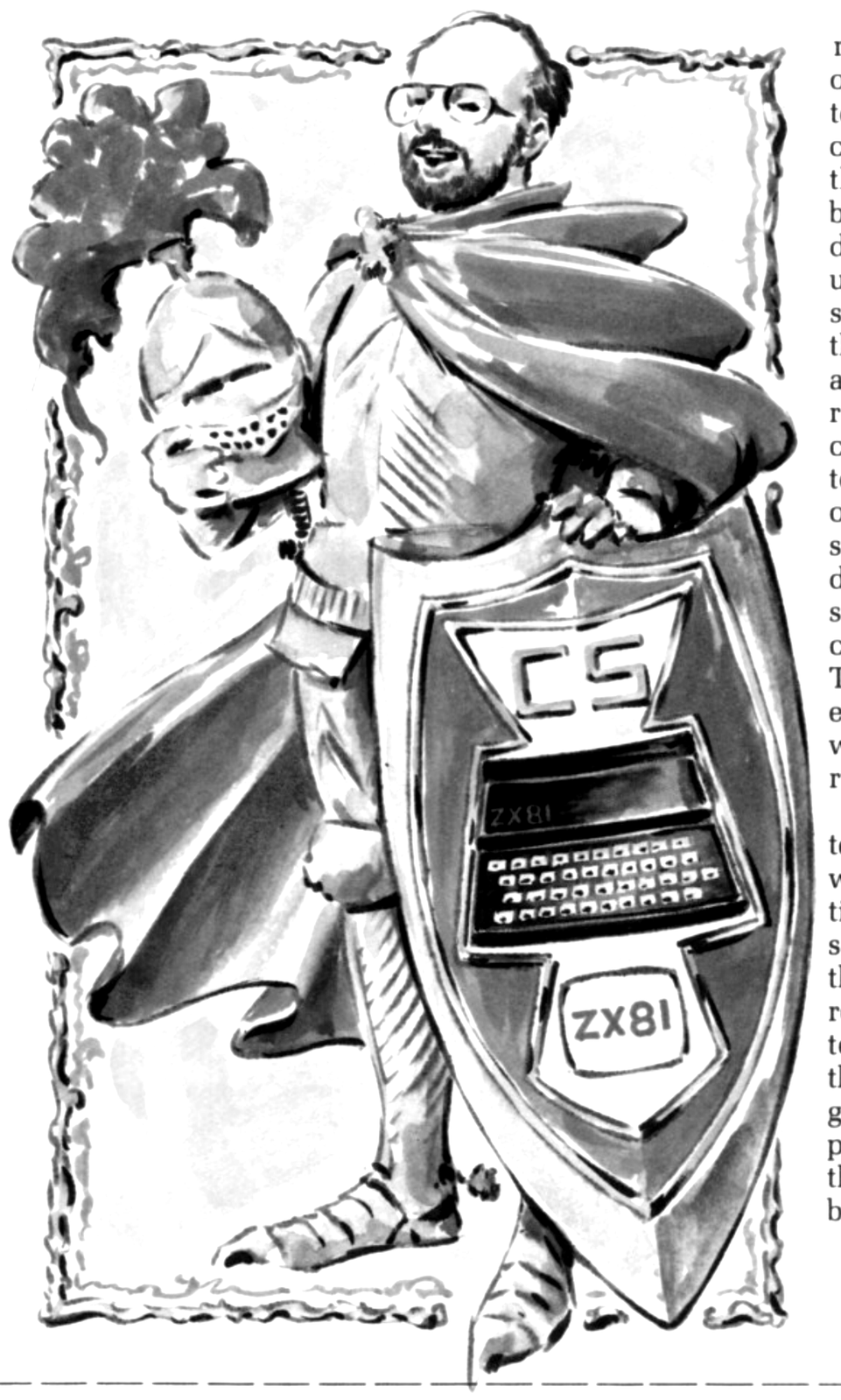
MICROCOMPUTERS have come of age in Britain. In the Queen’s official birthday honors list, Clive Sinclair received a knighthood, the establishment’s seal of approval.
While the honors are nominally given by the Queen, she usually relies on the Prime Minister of the day to advise her. Margaret Thatcher is known to be a fan of Clive Sinclair’s, although in a recent interview he said that he would not be voting for her in the recent election. She took an early Spectrum to show the Japanese what British enterprise could do when she visited the Far East last year. The award is probably in recognition of one of the few bright spots on the British industrial scene at the moment.
The depth of gratitude can be gauged by the fact that most people have to wait many many years before receiving a knighthood whereas Clive has been in business for a comparatively short time.
There is now a major problem for his many supporters. Do they address him as Sir Uncle Clive or Uncle Sir Clive? No doubt the difficulty will be quickly resolved.
The knighthood is only the latest in the signs of public acclaim for a man who has revolutionized the leisure industry in Britain. Frequent articles in newspapers and magazines and appearances on the radio and television all build up the image of Clive as the sort of person Britain needs to regain its place as one of the world’s great industrial countries.
That sort of build-up places great unnecessary pressure on a person who, despite having done a great deal to make computers more accessible to the average consumer in many parts of the world, is still only trading on one or two good ideas.
This pressure is in great danger of increasing rapidly with the news that he has taken an option on the former De Lorean car factory in Belfast for the production of his electric town car. Northern Ireland has long been an unemployed blackspot and when John De Lorean first suggested making his gull-winged car in the province he was given a large amount of support by the British government to help ease the job problems.
At the time De Lorean was seen as a savior, and this impression grew as he quickly built up the jobs to more than 2,000. Clive is in danger of taking over that mantle no matter how many provisos he makes about the difficulty of saying how many jobs will be brought.
Returning to the world of computers,the last few weeks have seen moves which could open up new markets for them. Pop music has long used light shows to enhance the music at live shows but in the past people at home have been unable to enjoy them. Now a number of companies are experimenting with home computers to achieve a similar effect.
One of the first was Island Records. Pete Shelley, a former member of the leading British punk band The Buzzcocks has brought out an album called XL1 on which the last track on side two is a program for the Spectrum.
It can be recorded on cassette and then loaded, and when played it displays the words and graphics synchronized to the music.
Not wishing to be left out, EMI has released a single by Chris Sievey, famed for his pioneering moves in the music industry. He was the first person to release a full length pop video film, and he has followed this up by bringing out a single called Camouflage on the B side of which are the three programs for the ZX81. The first displays the lyrics of the A side and the other two are games, one for the 1K version and the other for the 16K.
A third contender for the title of computer music innovator is a band called Mainframe, which is planning to release on a private label a record called Talk To Me. On the B side are four programs, one of each for the Spectrum and the ZX81 and the Apple II and the BBC MICRO.
Whether this is just a five-day wonder or the beginning of a new phenomenon in the record industry depends on how easily the technological problems can be dealt with. In theory it should be possible to load a program direct from the record using the computer’s ear socket. However so far the companies have been advising people to record the tracks on cassettes, being careful to use only one channel of stereo and making sure the record player does not have Dolby sound as both of these can distort the signal. The cassette is then entered in the normal way and the program is run.
The effects can be interesting, but whether it will act as a great incentive to buy remains to be seen. What is certain is that anyone playing the records must be sure not to get the wrong side or the wrong track. Programs may be good for providing graphics but they are definitely no benefit to the eardrums.